Adhyaya 5
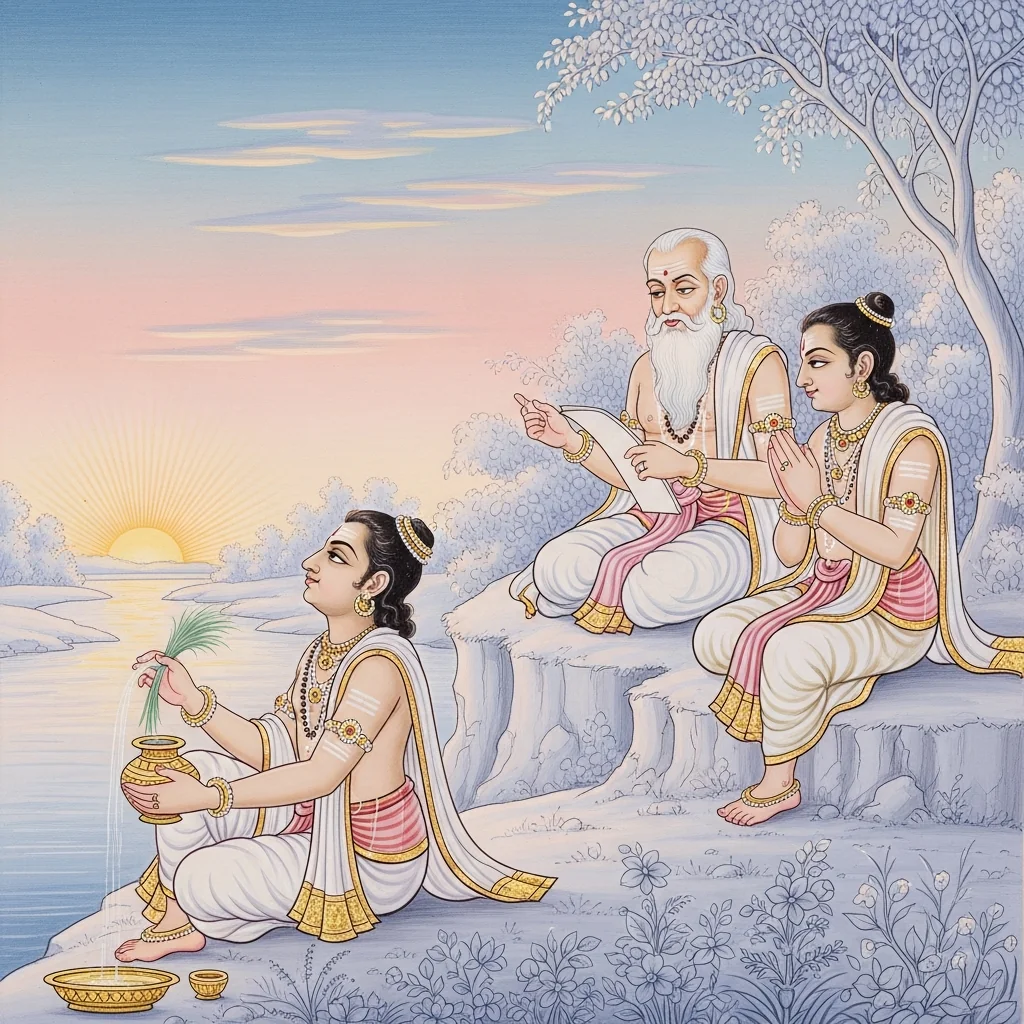
Chapter 5 unfolds as a didactic dialogue: Yudhiṣṭhira asks Vyāsa to explain sadācāra (good conduct) as the root of dharma and prosperity. Vyāsa sets forth a graded hierarchy of beings and excellences, culminating in the supremacy of Brāhmaṇa learning and brahma-tatparatā—an inward orientation toward Brahman. Sadācāra is defined as a dharma-root marked by freedom from hatred and attachment, while misconduct is said to bring social reproach, illness, and a shortened lifespan. The chapter then prescribes practical discipline: cultivating yama and niyama (truthfulness, non-violence, restraint, purity, study, fasting), conquering the inner enemies (kāma, krodha, moha, lobha, mātsarya), and accumulating dharma step by step. It stresses that one is born alone and dies alone, and that dharma alone accompanies the person beyond death. In its latter half it gives detailed guidance for daily observance: remembrance at brahma-muhūrta, regulated elimination away from habitation, cleansing rules with earth and water, standards of ācamana, restrictions on tooth-cleaning days, the merit of morning bathing, and a structured sandhyā practice—prāṇāyāma, aghamarṣaṇa, Gāyatrī-japa, offering arghya to Sūrya, followed by tārpaṇa and household rites. It concludes by presenting this as a steady nitya-dharma routine for the disciplined dvija.
Shlokas
Verse 1
व्यास उवाच । अतः परं प्रवक्ष्यामि धर्मारण्यनिवासिना । यत्कार्यं पुरुषेणेह गार्हस्थ्यमनुतिष्ठता
Vyāsa said: Next I shall explain what must be done here by a man who dwells in Dharmāraṇya, while duly practicing the householder’s way of life (gṛhastha).
Verse 2
धर्मारण्येषु ये जाता ब्राह्मणाः शुद्धवंशजा । अष्टादशसहस्राश्च काजेशैश्च विनिर्मिताः
Those brāhmaṇas who were born in Dharmāraṇya—of pure lineage—numbered eighteen thousand, and were established/formed by the Kājeśas.
Verse 3
सदाचाराः पवित्राश्च ब्राह्मणा ब्रह्मवित्तमाः । तेषां दर्शनमात्रेण महापापैर्विमुच्यते
Those brāhmaṇas are of noble conduct and pure, foremost among knowers of Brahman. By the mere sight of them, one is released from great sins.
Verse 4
युधिष्ठिर उवाच । पाराशर्य समाख्याहि सदाचारं च मे प्रभो । आचाराद्धर्ममाप्नोति आचाराल्लभते फलम् । आचाराच्छ्रियमाप्नोति तदाचारं वदस्व मे
Yudhiṣṭhira said: O son of Parāśara, O Lord, explain to me the path of right conduct. From conduct one attains Dharma; from conduct one receives its fruit; from conduct one gains prosperity—therefore tell me that conduct.
Verse 5
व्यास उवाच । स्थावराः कृमयोऽब्जाश्च पक्षिणः पशवो नराः । क्रमेण धार्मिकास्त्वेत एतेभ्यो धार्मिकाः सुराः
Vyāsa said: Immobile beings, worms, those born in water, birds, beasts, and humans—these, in ascending order, are progressively more capable of Dharma; and beyond them, the gods are yet more dharmic.
Verse 6
सहस्रभागात्प्रथमे द्वितीयानुक्रमास्तथा । सर्व एते महाभागाः पापान्मुक्तिसमाश्रयाः
From the first grade—as one part in a thousand—and likewise in the second and the further successive grades, all these fortunate beings are supports for liberation from sin.
Verse 7
चतुर्णामपि भूतानां प्राणिनोतीव चोत्तमाः । प्राणिकेभ्योपि मुनिश्रेष्ठाः सर्वे बुद्ध्युपजीविनः
Among the four kinds of beings, the living creatures are indeed the most excellent; and even among the living, the best are the great sages, for all of them live by—and through—awakened intelligence.
Verse 8
मतिमद्भ्यो नराः श्रेष्ठास्तेभ्य श्रेष्ठास्तु वाडवाः । विप्रेभ्योऽपि च विद्वांसो विद्वद्भ्यः कृतबुद्धयः
Superior to the merely intelligent are humans of cultivated character; superior to them are the vāḍavas; superior even to brāhmaṇas are the truly learned; and superior to the learned are those whose understanding is perfected and disciplined.
Verse 9
कृतधीभ्योऽपि कर्तारः कर्तृभ्यो ब्रह्मतत्पराः । न तेभ्योऽभ्यधिकः कश्चित्त्रिषु लोकेषु भारत
Superior even to those of perfected understanding are the doers who put Dharma into action; superior to the doers are those wholly devoted to Brahman. None is greater than them in the three worlds, O Bhārata.
Verse 10
अन्योन्यपूजकास्ते वै तपो विद्याविशेषतः । ब्राह्मणो ब्रह्मणा सृष्टः सर्वभूतेश्वरो यतः
Truly they honor one another, distinguished by tapas and sacred knowledge; for the Brāhmaṇa was created by Brahmā, and thus is regarded as a lord among all beings.
Verse 11
अतो जगत्स्थितं सर्वं ब्राह्मणोऽर्हति नापरः । सदाचारो हि सर्वार्हो नाचाराद्विच्युतः पुनः
Therefore the stability of the whole world rests upon dharma, and the Brāhmaṇa is worthy of honor—none other so; for one established in good conduct is worthy of all honor, but one fallen from conduct is not worthy again.
Verse 12
तस्माद्विप्रेण सततं भाव्यमाचारशीलिना । विद्वेषरागरहिता अनुतिष्ठन्ति यं मुने
Therefore a Brāhmaṇa should always be one whose nature is right conduct; free from hatred and attachment, O sage, he should practice that discipline which the wise continually follow.
Verse 13
सद्धि यस्तं सदाचारं धर्ममूलं विदुर्बुधाः । लक्षणैः परिहीनोऽपि सम्यगाचारतत्परः
The wise know that good conduct is indeed the very root of dharma; even if one lacks outward marks or distinctions, if one is devoted to proper conduct, one is truly established.
Verse 14
श्रदालुरनसूयुश्च नरो जीवेत्समाः शतम् । श्रुतिस्मृतिभ्यामुदितं स्वेषुस्वेषु च कर्मसु
A person who is faithful and free from fault-finding may live a hundred years, performing in each of his duties the acts enjoined by Śruti and Smṛti.
Verse 15
सदाचारं निषेवेत धर्ममूलमतन्द्रितः । दुराचाररतो लोके गर्हणीयः पुमा न्भवेत्
Let one diligently cultivate good conduct, the very root of dharma; but a man devoted to bad conduct becomes blameworthy in the world.
Verse 16
व्याधिभिश्चाभिभूयेत सदाल्पायुः सुदुःखभाक् । त्याज्यं कर्म पराधीनं कार्यमात्मवशं सदा
Overpowered by diseases, ever short-lived and a sharer of great sorrow—therefore one should abandon work done in dependence on others, and always undertake work that remains under one’s own self-control.
Verse 17
दुःखी यतः पराधीनः सदैवात्मवशः सुखी । यस्मिन्कर्मण्यंतरात्मा क्रियमाणे प्रसीदति
For one dependent on others is unhappy, while one ever self-governed is happy; that action is to be chosen in which, while it is being done, the inner self becomes serene.
Verse 18
अध्यापयेच्छुचीञ्छिष्यान्हितान्मे धासमन्वितान् । उपेयादीश्वरं चापि योगक्षेमादिसिद्धये
Let him teach pure disciples—well-wishing and endowed with intelligence; and let him also approach the Lord, for the attainment of welfare, security, and other fulfillments.
Verse 19
अतस्तेष्वेव वै यत्नः कर्तव्यो धर्ममिच्छता । सत्यं क्षमार्तवं ध्यानमानृशंस्यमहिंसनम्
Therefore, one who desires dharma should strive precisely in these virtues: truth, forgiveness, straightforwardness, meditation, compassion, and non-violence.
Verse 20
दमः प्रसादो माधुर्यं मृदुतेति यमा दश । शौचं स्नानं तपो दानं मौनेज्याध्ययनं व्रतम्
Self-restraint, serenity, sweetness of speech, and gentleness—these are counted among the ten yamas. Purity, bathing, austerity, charity, silence, worship, sacred study, and the keeping of vows—these are taught as disciplines that uphold dharma.
Verse 21
उपोषणोपस्थदंडो दशैते नियमाः स्मृताः । कामं क्रोधं दमं मोहं मात्सर्यं लोभमेव च
Fasting and the discipline of the senses are remembered as part of the ten niyamas. One should also subdue desire, anger, lack of self-control, delusion, envy, and greed.
Verse 22
अमून्षड्वैरिणो जित्वा सर्वत्र विजयी भवेत् । शनैः संचिनुयाद्धर्मं वल्मीकं शृंगवान्यथा
Having conquered these six enemies, one becomes victorious everywhere. One should gather dharma little by little, as a termite-mound rises grain by grain.
Verse 23
परपीडामकुर्वाणः पर लोकसहायिनम् । धर्म एव सहायी स्यादमुत्र परिरक्षितः
One who does not harm others secures a helper for the world beyond: dharma alone becomes one’s companion there, protecting one in the next life.
Verse 24
पितृमातृसुतभ्रातृयोषिद्बंधुजनाधिकः । जायते चैकलः प्राणी म्रियते च तथै कलः
Though surrounded by father, mother, sons, brothers, wife, and many relatives, a living being is born alone—and likewise dies alone.
Verse 25
एकलः सुकृतं भुंक्ते भुंक्ते दुष्कृतमेकलः । देहे पंचत्वमापन्ने त्यक्त्वैकं काष्ठलोष्टवत्
Alone one enjoys the fruit of good deeds; alone one suffers the fruit of evil deeds. When the body returns to the state of the five elements, it is cast off like a piece of wood or a clod of earth.
Verse 26
बांधवा विमुखा यांति धर्मो यांतमनु व्रजेत् । अतः संचिनुयाद्धर्म्ममत्राऽमुत्र सहायिनम्
Relatives turn away and depart, but dharma follows the one who departs. Therefore one should accumulate dharma—one’s helper here and in the world beyond.
Verse 27
धर्मं सहायिनं लब्ध्वा संतरेद्दुस्तरं तमः । संबंधानाचारेन्नित्यमुत्तमैरुत्तमैः सुधीः
Having gained dharma as a companion, one crosses over the difficult darkness. The wise should always cultivate association and right conduct with the best among the noble.
Verse 28
अधमानधमांस्त्यक्त्वा कुलमुत्कर्षतां नयेत् । उत्तमानुत्तमानेव गच्छेद्धीनांश्च वर्जयेत् । ब्राह्मणः श्रेष्ठतामेति प्रत्यवायेन शूद्रताम्
Abandoning base and ignoble company, one should lead one’s lineage toward excellence. One should go only to the best and the noblest, and avoid the degraded. A brāhmaṇa attains eminence through proper conduct—but through transgression and decline, falls into a lower state.
Verse 29
अनध्ययनशीलं च सदाचारविलंघिनम् । सालसं च दुरन्नादं ब्राह्मणं बाधतेंऽतकः
A brāhmaṇa who is devoted to no study, who violates right conduct, who is indolent, and who lives on improper food—such a one is assailed by ruin and the threat of death.
Verse 30
अतोऽभ्यस्येत्प्रयत्नेन सदाचारं सदा द्विजः । तीर्थान्यप्यभिलष्यंति सदाचारिसमागमम्
Therefore, the twice-born should always, with earnest effort, cultivate righteous conduct; for even the sacred tīrthas long for the company of those established in good conduct (sadācāra).
Verse 31
रजनीप्रांतयामार्द्धं ब्राह्मः समय उच्यते । स्वहितं चिंतयेत्प्राज्ञस्तस्मिंश्चोत्थाय सर्वदा
The latter half of the last watch of the night is called the brāhma time; rising then, the wise should always reflect upon what is truly beneficial for the self.
Verse 32
गजास्यं संस्मरेदादौ तत ईशं सहांबया । श्रीरंगं श्रीसमेतं तु ब्रह्माणं कमलोद्भवम्
At the outset one should remember Gajāsya (Gaṇeśa); then Īśa (Śiva) together with the Mother (Ambā); then Śrīraṅga (Viṣṇu) united with Śrī; and Brahmā, the lotus-born.
Verse 33
इंद्रादीन्सकलान्देवान्वसिष्ठादीन्मुनीनपि । गंगायाः सरितः सर्वाः श्रीशैलायखिलान्गिरीन्
One should also remember Indra and all the gods, Vasiṣṭha and the other sages, the Gaṅgā and all rivers, Śrīśaila, and indeed all mountains.
Verse 34
क्षीरोदादीन्समुद्रांश्च मानसादिसरांसि च । वनानि नंदनादीनि धेनूः कामदुघादयः
And one should remember the oceans beginning with the Milk Ocean, the lakes such as Mānasarovar, the divine forests beginning with Nandana, and the sacred cows such as Kāmadhenu.
Verse 35
कल्पवृक्षादिवृक्षांश्च धातून्कांचनमुख्यतः । दिव्यस्त्रीरुर्वशीमुख्याः प्रह्रादावद्यान्हरेः प्रियान्
One should remember the wish-fulfilling trees such as the Kalpavṛkṣa, the precious substances led by gold, the celestial women headed by Urvaśī, and the beloved devotees of Hari such as Prahlāda.
Verse 36
जननीचरणौ स्मृत्वा सर्वतीर्थोक्त्त मोत्तमौ । पितरं च गुरूंश्चापि हदि ध्यात्वा प्रसन्नधीः
Remembering the feet of one’s mother—proclaimed the most excellent of all tīrthas—and then, with a serene mind, meditating in the heart upon one’s father and one’s teachers as well.
Verse 37
ततश्चावश्यकं कर्त्तुं नैरृतीं दिशमाव्रजेत् । ग्रामाद्धनुःशतं गच्छेन्नगराच्च चतुर्गुण म्
Thereafter, to perform the necessary evacuation, one should go toward the south-western direction; one should go a hundred bow-lengths away from a village, and four times that distance from a city.
Verse 38
तृणैराच्छाद्य वसुधां शिरः प्रावृत्य वाससा । कर्णोपवीत उदग्वक्त्रो दिवसे संध्ययोरपि
Covering the ground with grass and covering the head with cloth, with the sacred thread placed over the ear, one should face north—by day, and also at the twilight junctions (sandhyā).
Verse 39
विण्मूत्रे विसृजेन्मौनी निशायां दक्षिणामुखः । न तिष्ठन्नाशु नो विप्र गोवन्ह्यनिलसंमुखः
In passing stool and urine, one should remain silent; at night one should face south. One should not do it while standing, nor hastily, O brāhmaṇa; and one should not face cows, fire, or the wind.
Verse 40
न फालकृष्टे भूभागे न रथ्यासेव्यभूतले । नालोकयेद्दिशो भागञ्ज्यो तिश्चक्रं नभो मलम्
One should not relieve oneself on land freshly turned by the plough, nor on ground used as a roadway. Nor should one gaze toward the quarters, the circle of the luminaries, the sky, or impure things while doing so—thus preserving modesty and ritual discipline.
Verse 41
वामेन पाणिना शिश्नं धृत्वोत्तिष्ठेत्प्रयत्नवान् । अथो मृदं समादद्याज्जंतुकर्क्करवर्जिताम्
Holding the organ with the left hand, the careful person should rise with due effort. Then he should take earth for cleansing—earth free from insects and pebbles.
Verse 42
विहाय मूषको त्खातां चोच्छिष्टां केशसंकुलाम् । गुह्ये दद्यान्मृदं चैकां प्रक्षाल्य चांबुना ततः
Avoid earth dug up by rats, polluted by leftovers, or mixed with hair. Apply a single portion of earth to the private part, and then wash it afterward with water.
Verse 43
पुनर्वामकरेणेति पंचधा क्षालयेद्गुदम् । एकैक पादयोर्दद्यात्तिस्रः पाण्योर्मृदस्तथा
Again, using the left hand, one should cleanse the anus five times. One should apply earth once to each foot, and likewise three portions of earth to the hands.
Verse 44
इत्थं शौचं गृही कुर्याद्गंधलेपक्षयावधि । क्रमाद्वैगुण्यतः कुर्याद्ब्रह्मचर्यादिषु त्रिषु
Thus a householder should perform purification until odor and smear are removed. In due order, he should perform it with increased rigor, as prescribed, in the three stages of life beginning with brahmacarya.
Verse 45
दिवाविहितशौचाच्च रात्रावर्द्धं समाचरेत् । परग्रामे तदर्धं च पथि तस्यार्धमेव च
Of the purification prescribed for daytime, one should perform half at night. In another village one should do half of that, and while on the road, only half again.
Verse 46
तदर्धं रोगिणां चापि सुस्थे न्यूनं न कार येत् । अपि सर्वनदीतोयैर्मृत्कूटैश्चाप्यगोपमैः
For the sick, even half of that may be done; but for a healthy person one should not do less. Even with water from any river, and with clods of earth—even those not specially prepared—purification should be carried out.
Verse 47
आपातमाचरेच्छौचं भावदुष्टो न शुद्धिभाक् । आर्द्रधात्रीफलोन्माना मृदः शौचे प्रकीर्तिताः
One should perform purification as required by the situation; yet one whose inner disposition is corrupt does not truly attain purity. For cleansing, the quantity of earth is declared to be measured by the size of a moist dhātrī fruit (amalakī).
Verse 48
सर्वाश्चाहुतयोऽप्येवं ग्रासाश्चांद्रायणेपि च । प्रागास्य उदगास्यो वा सूपविष्टः शुचौ भुवि
Likewise, all offerings (āhutis) and even the mouthfuls taken in the Cāndrāyaṇa observance should be done while seated properly on clean ground, facing east or facing north.
Verse 49
उपस्पृशेद्विहीनाभिस्तुषांगारास्थिभस्मभिः । अतिस्वच्छाभिरद्भिश्च यावद्धृद्गाभिरत्वरः
One should perform ācamana (ritual sipping/touching of water) even when proper water is unavailable—using water clarified with husk, charcoal, bone-ash, or the like; and, when possible, with very clear water deep enough to reach the chest, without haste.
Verse 50
ब्राह्मणो ब्रह्मतीर्थेन दृष्टिपूताभिराचमेत् । कण्ठगाभिर्नृपः शुध्येत्तालुगाभिस्तथोरुजः
A Brāhmaṇa should perform ācamana with water sanctified by his gaze, using the Brahma-tīrtha (the base of the thumb). A king is purified when the water reaches the throat; likewise a Vaiśya when it reaches the palate.
Verse 51
स्त्रीशूद्रावाथ संस्पर्शमात्रेणापि विशुध्यतः । शिरः शब्दं सकंठं वा जले मुक्तशिखोऽपि वा
Women and Śūdras are purified even by mere contact (with the water for ācamana). One should purify oneself by touching the head, the sense-organs, and the throat with water—even if one’s hair is loosened in the water.
Verse 52
अक्षालितपदद्वद्व आचांतोऽप्यशुचिर्म्मतः । त्रिः पीत्वांबु विशुद्ध्यर्थं ततः खानि विशोधयेत्
If one has not washed both feet, then even after ācamana one is considered impure. For purification one should sip water three times; thereafter one should cleanse the bodily openings, the sense-organs.
Verse 53
अंगुष्ठमूलदेशेन ह्यधरोष्ठौ परि मृजेत् । स्पृष्ट्वा जलेन हृदयं समस्ताभिः शिरः स्पृशेत्
With the region at the base of the thumb one should wipe the lower lip. Touching the heart with water, one should then touch the head with all the fingers (or both hands) together.
Verse 54
अंगुल्यग्रैस्तथा स्कन्धौ सांबु सर्व्वत्र संस्पृशेत् । आचांतः पुनराचामेत्कृत्वा रथ्योपसर्पणम्
With the tips of the fingers one should likewise touch the shoulders, and with water touch the body in all places. After having performed ācamana, one should perform ācamana again after approaching the street or public way.
Verse 55
स्नात्वा भुक्त्वा पयः पीत्वा प्रारंभे शुभकर्मणाम् । सुप्त्वा वासः परीधाय दृष्ट्वा तथाप्यमंगलम्
After bathing, after eating, after drinking milk, at the outset of auspicious rites, after sleep, after putting on one’s garments, and even after beholding an inauspicious sight—one should renew purity by performing ācamana again.
Verse 56
प्रमादादशुचि स्मृत्वा द्विराचांतः शुचिर्भवेत् । दंतधावनं प्रकुर्वीत यथोक्त धर्मशास्त्रतः । आचांतोऽप्यशुचिर्यस्मादकृत्वा दंतधावनम्
If, through negligence, one recalls an impurity, one becomes pure by performing ācamana twice. One should cleanse the teeth as enjoined in the Dharma-śāstras; for even one who has done ācamana remains impure if tooth-cleaning has not been done.
Verse 57
प्रतिपद्दर्शषष्ठीषु नवम्यां रविवासरे । दंतानां काष्ठसंयोगो दहेदासप्तमं कुलम्
On pratipad (the first lunar day), on darśa/amāvāsyā (the new-moon day), on the sixth and the ninth lunar days, and on Sundays—using a wooden tooth-stick upon the teeth is said to burn the lineage, bringing ruin up to the seventh generation.
Verse 58
अलाभे दंतकाष्ठानां निषिद्धे वाथ वासरे । गंडूषा द्वादश ग्राह्या मुखस्य परिशुद्धये
When tooth-sticks are unavailable, or when the day is prohibited, one should perform twelve mouth-rinses (gaṇḍūṣa) for the thorough purification of the mouth.
Verse 59
कनिष्ठाग्रपरीमाणं सत्वचं निर्व्रणारुजम् । द्वादशांगुलमानं च सार्द्रं स्याद्दंतधावनम्
The tooth-stick for cleansing should be as thick as the tip of the little finger, with its bark intact, free from harmful defects, twelve finger-breadths in length, and fresh and moist.
Verse 60
एकेकांगुलमानं तच्चर्वयेद्दंतधावनम् । प्रातः स्नानं चरित्वा च शुद्ध्यै तीर्थे विशेषतः
One should chew a tooth-cleaning twig measuring one finger-joint. Then, having performed the morning bath—especially at a sacred ford (tīrtha)—one attains purification.
Verse 61
प्रातः स्नानाद्यतः शुद्ध्येत्कायोऽयं मलिनः सदा । यन्मलं नवभिश्छिद्रैः स्रवत्येव दिवानिशम्
By the morning bath this body—ever impure—becomes cleansed; for its filth continually flows out day and night through the nine openings.
Verse 62
उत्साहमेधासौभाग्यरूपसंपत्प्रवर्द्धकम् । प्राजापत्यसमं प्राहुस्तन्महाघविनाशकृत्
They declare it to be equal to a prājāpatya rite: it increases vigor, intelligence, good fortune, beauty, and prosperity—and it destroys great sins.
Verse 63
प्रातः स्नानं हरेत्पापमलक्ष्मीं ग्लानिमेव च । अशुचित्वं च दुःस्वप्नं तुष्टिं पुष्टिं प्रयच्छति
Morning bathing removes sin, misfortune, and fatigue; it also dispels impurity and bad dreams, and it bestows contentment and strength.
Verse 64
नोपसर्पंति वै दुष्टाः प्रातस्नायिजनं क्वचित् । दृष्टादृष्टफलं यस्मात्प्रातःस्नानं समाचरेत्
The wicked do not approach one who bathes in the morning, at any time. Since morning bathing yields fruits both seen and unseen, one should practice the morning bath.
Verse 65
प्रसंगतः स्नानविधिं प्रवक्ष्यामि नृपोत्तमाः । विधिस्नानं यतः प्राहुः स्नाना च्छतगुणोत्तरम्
Since the occasion has arisen, O best of kings, I shall declare the proper rite of bathing; for they say that a bath performed according to rule is a hundredfold superior to mere bathing.
Verse 66
विशुद्धां मृदमादाय बर्हिषस्तिलगोमयम् । शुचौ देशे परिस्थाप्य ह्याचम्य स्नानमाचरेत्
Taking pure clay, kuśa grass, sesame, and cow-dung, and arranging them in a clean place, one should perform ācamana and then undertake the bath.
Verse 67
उपग्रही बद्ध शिखो जलमध्ये समाविशेत् । स्वशाखोक्तविधानेन स्नानं कुर्याद्यथाविधि
Wearing the proper bathing cloth and with the śikhā tuft tied, one should enter the water; and, following the procedure taught by one’s own Vedic school, one should bathe according to rule.
Verse 68
स्नात्वेत्थं वस्त्रमापीड्य गृह्णीयाद्धौतवाससी । आचम्य च ततः कुर्यात्प्रातःसंध्यां कुशान्वितः
Having bathed in this manner, wringing out the cloth, one should put on washed garments. Then, after performing ācamana, one should perform the morning sandhyā, holding kuśa grass.
Verse 69
प्राणायामांश्चरन्विप्रो नियम्य मानसं दृढम् । अहोरात्रकृतैः पापैर्मुक्तो भवति तत्क्षणात्
A brāhmaṇa, practicing prāṇāyāma and firmly restraining the mind, becomes at that very moment freed from the sins committed by day and by night.
Verse 70
दश द्वादशसंख्या वा प्राणायामाः कृता यदि । नियम्य मानसं तेन तदा तप्तं महत्तपः
If one performs prāṇāyāma ten times—or twelve times—and thereby disciplines the mind, then truly a great tapas (austerity) has been undertaken.
Verse 71
सव्याहृतिप्रणवकाः प्राणायामास्तु षोडश । अपि भ्रूणहनं मासात्पुनंत्यहरहः कृताः
Sixteen prāṇāyāmas performed with the vyāhṛtis and the praṇava (Oṃ)—even these, when done daily, purify within a month even the sin of embryo-slaying.
Verse 72
यथा पार्थिवधातूनां दह्यते धमनान्मलाः । तथेंद्रियैः कृता दोषा ज्वाल्यंते प्राणसंयमात्
Just as impurities in earthly metals are burned away in the furnace, so too the faults produced through the senses are set ablaze and destroyed by restraint of the breath.
Verse 73
एकाक्षरं परं ब्रह्म प्राणायामः परं तपः । गायत्र्यास्तु परं नास्ति पावनं च नृपोत्तम
The one-syllabled Oṃ is the Supreme Brahman; prāṇāyāma is the highest tapas. And beyond the Gāyatrī there is no greater purifier, O best of kings.
Verse 74
कर्मणा मनसा वाचा यद्रात्रौ कुरुते त्वघम् । उत्तिष्ठन्पूर्वसंध्यायां प्राणायामैर्विशोधयेत्
Whatever sin one commits at night by deed, by mind, or by speech—rising at the morning twilight, one should cleanse it by prāṇāyāmas.
Verse 75
यदह्ना कुरुते पापं मनोवाक्कायकर्मभिः । आसीनः पश्चिमां संध्यां प्राणायामैर्व्यपोहति । पश्चिमां तु समासीनो मलं हंति दिवाकृतम्
Whatever sin one commits by day through mind, speech, and bodily acts—seated at the evening sandhyā, one removes it by prāṇāyāmas. Indeed, seated at the western (evening) sandhyā, one destroys the impurity produced during the day.
Verse 76
नोपतिष्ठेत्तु यः पूर्व्वां नोपास्ते यस्तु पश्चिमाम् । स शूद्रवद्बहिष्कार्यः सर्वस्माद्द्विजकर्मणः
But one who does not attend the morning sandhyā and does not worship at the evening sandhyā—he is to be excluded like a Śūdra from all duties of the twice-born.
Verse 77
अपां समीपमासाद्य नित्यकर्म समाचरेत् । तत आचमनं कुर्याद्यथाविध्यनु पूर्वशः
Approaching the vicinity of water, one should perform the daily rite; then one should do ācamana according to the proper rule, in due sequence.
Verse 78
आपोहिष्ठेति तिसृभिर्मार्जनं तु ततश्चरेत् । भूमौ शिरसि चाकाश आकाशे भुवि मस्तके
Then one should perform mārjana, the purifying sprinkling, with the three verses beginning ‘Āpo hi ṣṭhā…’. (The rite is done according to the traditional placement of ‘earth’ and ‘sky’ in their respective positions.)
Verse 79
मस्तके च तथाकाशं भूमौ च नवधा क्षिपेत् । भूमिशब्देन चरणावाकाशं हृदयं स्मृतम् । शिरस्येव शिरःशब्दो मार्जनं तैरुदाहृतम्
Likewise, one should place ‘sky’ upon the crown of the head and ‘earth’ upon the ground in a ninefold manner. By the term ‘earth’ the feet are intended; by ‘sky’ the heart is understood; and by ‘head’ the head itself—thus is the sprinkling (mārjana) explained.
Verse 80
वारुणादपि चाग्नेयाद्वायव्यादपि चेंद्रतः । मंत्रस्थानादपि परं ब्राह्मं स्नानमिदं परम् । ब्राह्मस्नानेन यः स्नातः स बाह्याभ्यंतरं शुचिः
Higher than the Varuṇa-bath, higher than the Agni-bath, higher than the Vāyu-bath, and higher even than the Indra-bath—higher still than the mere “place of mantras”—is this supreme Brāhma-bath. Whoever has bathed by the Brāhma-snāna becomes pure both outwardly and inwardly.
Verse 81
सर्वत्र चार्हतामेति देवपूजादिकर्मणि । नक्तंदिनं निमज्ज्याप्सु कैवर्ताः किमु पावनाः
Only then does one become truly worthy everywhere—fit for acts such as worship of the gods. If fishermen, plunging into water night and day, were thereby purified, what need would there be for any higher discipline?
Verse 82
शतशोऽपि तथा स्नाता न शुद्धा भावदूषिताः । अंतःकरणशुद्धांश्च तान्विभूतिः पवित्रयेत्
Even if they bathe in that manner hundreds of times, those whose dispositions are tainted are not purified. But those whose inner organ (mind-heart) is cleansed—such persons are sanctified by sacred ash (vibhūti).
Verse 83
किं पावनाः प्रकीर्त्यंते रासभा भस्मधूसराः । स स्नातः सर्वतीर्थेषु मलैः सर्वैर्विवर्जितः
Why should donkeys, grey with ash, be proclaimed ‘pure’? The one who is free from every impurity—he alone is as though bathed in all sacred fords (tīrthas).
Verse 84
तेन क्रतुशतैरिष्टं चेतो यस्येह निर्मलम् । तदेव निर्मलं चेतो यथा स्यात्तन्मुने शृणु
For the one whose mind is pure here, it is as though he had performed hundreds of sacrifices. Now, O sage, listen to how that very mind becomes stainless.
Verse 85
विश्वेशश्चेत्प्रसन्नः स्यात्तदा स्यान्नान्यथा क्वचित् । तस्माच्चेतो विशुद्ध्यर्थं काशीनाथं समाश्रयेत्
If Viśveśa is pleased, then all is accomplished—never otherwise, anywhere. Therefore, for the purification of the mind, one should take refuge in Kāśīnātha.
Verse 86
इदं शरीरमुत्सृज्य परं ब्रह्माधिगच्छति । द्रुपदांतं ततो जप्त्वा जलमादाय पाणिना
Casting off this body, he attains the Supreme Brahman. Then, having recited up to the end of the hymn (drupadānta), taking water in the hand…
Verse 87
कुयादृतं च मंत्रेण विधिज्ञस्त्वघमर्षणम् । निमज्ज्याप्सु च यो विद्वाञ्जपेत्त्रिरघमर्षणम्
The knower of rite should perform the Aghamarṣaṇa with the mantra of Ṛta. And the learned one who immerses in water should recite the Aghamarṣaṇa three times.
Verse 88
जले वापि स्थले वापि यः कुर्यादघमर्ष णम् । तस्याघौघो विनश्येत यथा सूर्योदये तमः
Whether in water or on dry land, whoever performs the Aghamarṣaṇa—his mass of sins is destroyed, like darkness at sunrise.
Verse 89
गायत्रीं शिरसा हीनां महाव्याहृतिपूर्व्विकाम् । प्रणवाद्यां जपंस्तिष्ठन्क्षिपेदंभोंजलि त्रयम्
Standing, one should recite the Gāyatrī—without the Śiras portion, preceded by the great Vyāhṛtis, beginning with the Praṇava—and then offer three handfuls of water.
Verse 90
तेन वज्रोदकेनाशु मंदेहा नाम राक्षसाः । सूर्यतेजः प्रलोपंते शैला इव विवस्वतः
By that vajra-water—the sanctified arghya—the rākṣasas called Maṇḍehas swiftly perish; their might is undone by the Sun’s radiance, like mountains cast down before the blazing Vivatsvān.
Verse 91
सहायार्थं च सूर्यस्य यो द्विजो नांजलि त्रयम् । क्षिपेन्मंदेहनाशाय सोपि मंदेहतां व्रजेत्
That twice-born who, to aid the Sun, casts three handful-offerings of water (arghya) for the destruction of the Maṇḍehas—if he fails in proper conduct, he too falls into the state of a “Maṇḍeha,” being counted among them.
Verse 92
प्रातस्तावज्जपंस्तिष्ठेद्यावत्सूर्यस्य दर्शनम् । उपविष्टो जपेत्सायमृक्षाणामाविलोकनात्
In the morning one should stand and recite japa until the Sun is seen; in the evening, seated, one should recite until the stars become visible.
Verse 93
काललोपो न कर्त्तव्यो द्विजेन स्वहितेप्सुना । अर्द्धोदयास्तसमये तस्माद्वज्रोदकं क्षिपेत्
A twice-born who seeks his own welfare must not neglect the appointed time; therefore, at the moments of half-rising and half-setting, he should cast the vajra-water (arghya).
Verse 94
विधिनापि कृता संध्या कालातीता ऽफला भवेत् । अयमेव हि दृष्टांतो वंध्यास्त्रीमैथुनं यथा
Even when performed according to rule, Sandhyā worship done after its proper time becomes fruitless; the illustration is this—like intercourse with a barren woman.
Verse 95
जले वामकरं कृत्वा या संध्याऽचरिता द्विजैः । वृषली सा परिज्ञेया रक्षोगणमुदा वहा
That Sandhyā observance performed by the twice-born while placing the left hand in the water is to be known as vṛṣalī (debased), and it brings forth hosts of rākṣasas.
Verse 96
उपस्थानं ततः कुर्याच्छाखोक्तविधिना ततः । सहस्रकृत्वो गायत्र्याः शतकृत्वोथवा पुनः
Then one should perform the upasthāna (formal standing worship) according to the procedure taught in one’s own Vedic śākhā; thereafter one should repeat the Gāyatrī a thousand times—or again, a hundred times.
Verse 97
दशकृत्वोऽथ देव्यै च कुर्यात्सौ रीमुपस्थितिम् । सहस्रपरमां देवीं शतमध्यां दशावराम्
Then, ten times, one should also perform the upasthiti (invocatory worship) to the solar Goddess; by the measure of japa, the Goddess is supreme in the thousand-count, middling in the hundred-count, and lesser in the ten-count.
Verse 98
गायत्रीं यो जपेद्विप्रो न स पापैः प्रलिप्यते । रक्तचंदनमिश्राभिरद्भिश्च कुसुमैः कुशैः
The brāhmaṇa who recites the Gāyatrī is not stained by sins; (he should worship) with water mixed with red sandal, and with flowers and kuśa-grass.
Verse 99
वेदोक्तैरागमोक्तैर्वा मंत्रैरर्घं प्रदापयेत् । अर्चितः सविता येन तेन त्रैलोक्यमर्च्चितम्
With mantras taught in the Veda or in the Āgamas, one should offer arghya (a water oblation). By whom Savitṛ is worshiped, by him the three worlds are, as it were, worshiped.
Verse 100
अर्चितः सविता दत्ते सुतान्पशुव सूनि च । व्याधीन्हरेद्ददात्यायुः पूरयेद्वांछितान्यपि
When the Sun (Savitṛ) is duly worshipped, he grants sons and the increase of cattle and progeny. He removes diseases, bestows long life, and fulfills even cherished desires.
Verse 101
अयं हि रुद्र आदित्यो हरिरेष दिवाकरः । रविर्हिरण्यरूपोऽसौ त्रयीरूपोऽयमर्यमा
This very Sun is Rudra; he is Āditya; he is Hari, the maker of day. He is Ravi of golden form; he is the embodiment of the three Vedas; he is Aryaman.
Verse 102
ततस्तु तर्पणं कुर्यात्स्वशाखोक्तविधानतः । ब्रह्मादीनखिलान्देवान्मरीच्यादींस्तथा मुनीन्
Thereafter one should perform the rite of libations (tarpaṇa) according to the procedure taught in one’s own Vedic branch, satisfying Brahmā and all the gods, and likewise the sages beginning with Marīci.
Verse 110
अंगुल्यग्रेण वै दैवमार्षमंगुलिमूलगम् । ब्राह्ममंगुष्ठमूले तु पाणिमध्ये प्रजापतेः
The ‘divine’ offering is to be made with the tips of the fingers; the ‘ṛṣi’ offering at the bases of the fingers; the ‘brahmā’ offering at the base of the thumb; and the ‘prajāpati’ offering in the middle of the palm.
Verse 120
देवतां परिपूज्याथ नैमित्तिकं विधिं चरेत् । पवनाग्निं समुज्ज्वाल्य वैश्वदेवं समाचरेत्
Having duly worshipped the deity, one should then perform the occasional prescribed rites. Kindling the household fire with air, one should carry out the Vaiśvadeva offering.
Verse 130
ऐन्द्रवारुणवायव्याः सौम्या वै नैरृताश्च ये । प्रतिगृह्णंत्विमं पिंडं काका भूमौ मयार्पितम्
May the beings of Indra’s, Varuṇa’s, and Vāyu’s regions—together with those of Soma’s quarter and those of the Nairṛta direction—accept this piṇḍa, this rice-ball offering, O crows, which I have placed upon the earth.
Verse 140
ततो मौनेन भुञ्जीत न कुर्याद्दंतघर्षणम् । प्रक्षालितव्यहस्तस्य दक्षिणांगुष्ठमूलतः
Thereafter one should eat in silence and should not scrape or grind the teeth. With hands that have been washed, one should begin (in the prescribed manner) from the base of the right thumb.
Verse 145
उद्देशतः समाख्यात एष नित्यतनो विधिः । इत्थं समाचरन्विप्रो नावसीदति कर्हिचित्
This regimen of daily discipline has been explained in outline. A brāhmaṇa who observes it in this manner never falls into decline at any time.