Sukta 129
Sukta 10.129
Prajāpati Parameṣṭhin (traditionally ascribed for RV 10.129, Nā́sadīya)
Bhāva/Abhāva and the One (tad ekam) as the implicit absolute; not a single anthropomorphic devatā
Triṣṭubh
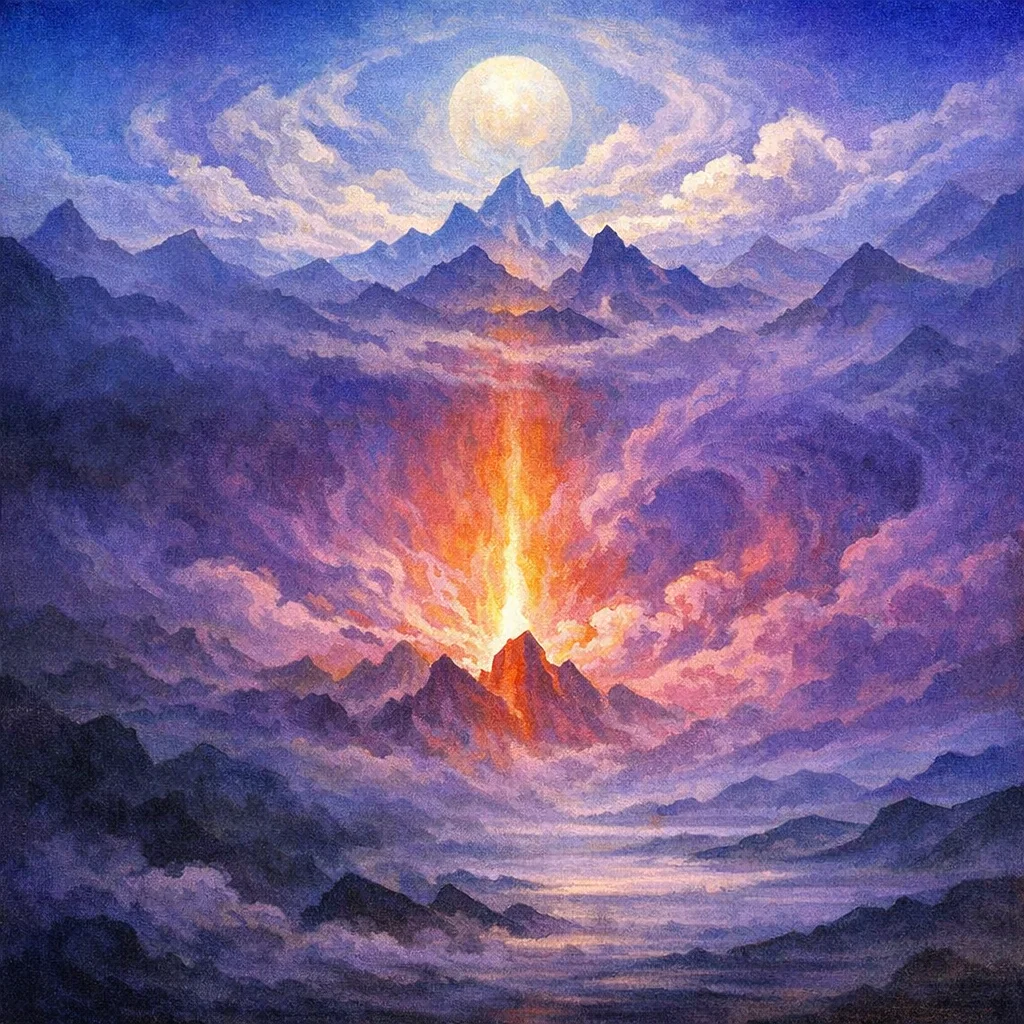
The Nā́sadīya Sūkta contemplates the mystery of origins, refusing easy certainty about what existed “before” existence and non-existence. It traces a subtle movement from undifferentiated concealment toward the first stirrings of mind and desire, while repeatedly questioning the limits of knowledge. The hymn’s purpose is not to narrate cosmogony dogmatically, but to sanctify wonder, inquiry, and reverent agnosticism before the Absolute (tad ekam).
Mantras
Mantra 1
नासदासीन्नो सदासीत्तदानीं नासीद्रजो नो व्योमा परो यत् । किमावरीवः कुह कस्य शर्मन्नम्भः किमासीद्गहनं गभीरम् ॥
Then there was neither the unformed nor the formed; there was no mid-world, no far heaven beyond. What was covering all, and where, and in whose shelter? Was it a vast flood—dense, hidden, and deep within?
Mantra 2
न मृत्युरासीदमृतं न तर्हि न रात्र्या अह्न आसीत्प्रकेतः । आनीदवातं स्वधया तदेकं तस्माद्धान्यन्न परः किं चनास ॥
There was no death then, nor any deathless state; no sign of night or day was manifest. The One breathed without breath by its own power; apart from That, nothing else at all existed.
Mantra 3
तम आसीत्तमसा गूळ्हमग्रेऽप्रकेतं सलिलं सर्वमा इदम् । तुच्छ्येनाभ्वपिहितं यदासीत्तपसस्तन्महिनाजायतैकम् ॥
In the beginning darkness was hidden by darkness; all this was a formless ocean without distinguishing sign. What lay covered by the void and the ungraspable—by the greatness of inner heat (tapas) That One was born.
Mantra 4
कामस्तदग्रे समवर्तताधि मनसो रेतः प्रथमं यदासीत् । सतो बन्धुमसति निरविन्दन्हृदि प्रतीष्या कवयो मनीषा ॥
Desire arose in the beginning upon That—desire, the first seed of mind. The seers, searching in the heart with insight, discovered the bond of the formed within the unformed.
Mantra 5
तिरश्चीनो विततो रश्मिरेषामधः स्विदासी३दुपरि स्विदासी३त् । रेतोधा आसन्महिमान आसन्त्स्वधा अवस्तात्प्रयतिः परस्तात् ॥
Their ray was stretched crosswise—was there below, or was there above? There were seed-bearers, there were mighty powers: self-law beneath, and the forward-impulse beyond.
Mantra 6
को अद्धा वेद क इह प्र वोचत्कुत आजाता कुत इयं विसृष्टिः । अर्वाग्देवा अस्य विसर्जनेनाथा को वेद यत आबभूव ॥
Who truly knows, and who here can declare—from where it was born, from where this outpouring came? The gods themselves are later than this creation; so who knows from where it first arose?
Mantra 7
इयं विसृष्टिर्यत आबभूव यदि वा दधे यदि वा न । यो अस्याध्यक्षः परमे व्योमन्त्सो अङ्ग वेद यदि वा न वेद ॥
This creation—from where it arose—whether it was upheld, or whether it was not: the overseer of it in the highest heaven, he surely knows… or perhaps even he does not know.
Frequently Asked Questions
It is a philosophical hymn on the mystery of creation. It questions what existed before the cosmos and points to “tad ekam,” the One beyond being and non-being.
The verse highlights humility about ultimate origins. It suggests that creation’s beginning may be beyond ordinary knowledge and even beyond any describable ‘overseer’.
Kāma is not merely desire in a worldly sense; it indicates the first impulse or intention—the earliest stir of mind that allows differentiation and manifestation to begin.