Sarga 15
विभीषण–इन्द्रजित् संवादः (Vibhishana and Indrajit: Counsel, Boast, and Rebuttal)
युद्धकाण्ड
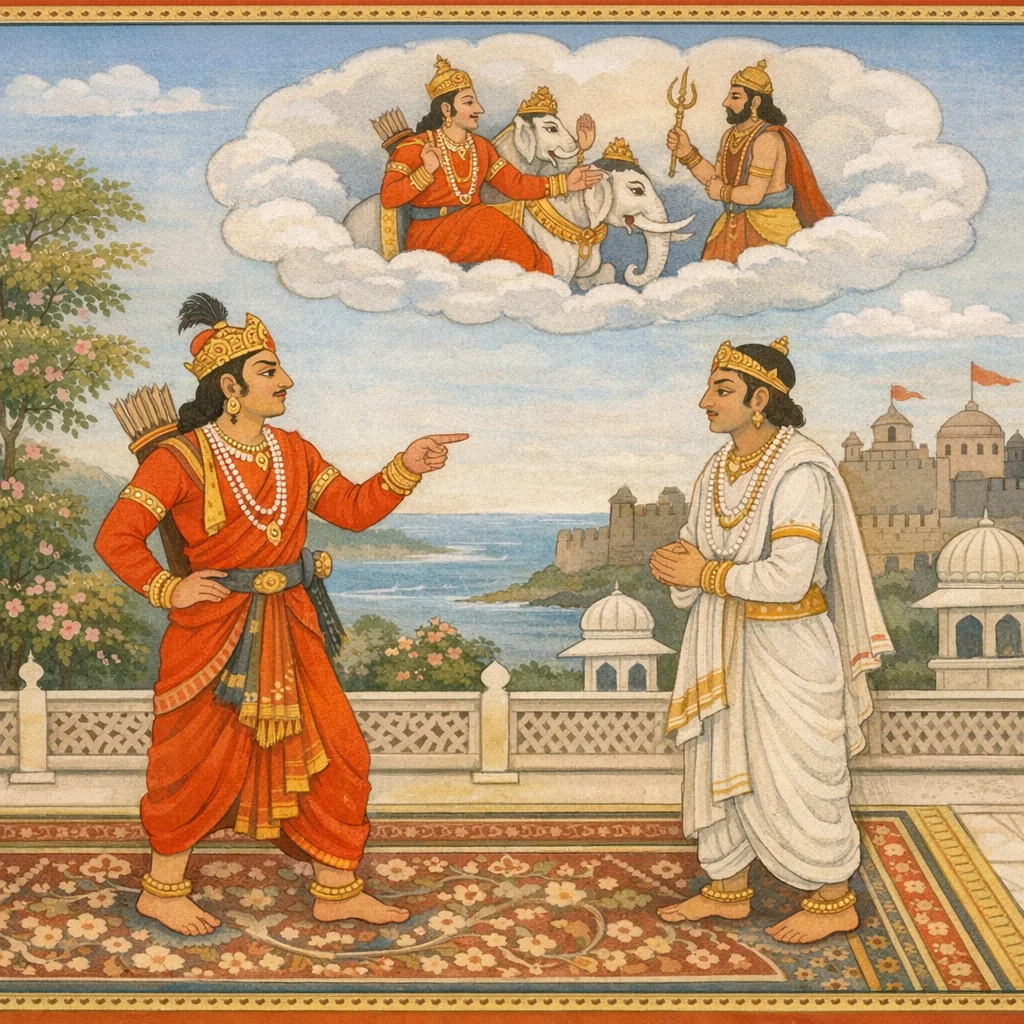
Sarga 15 presents a sharp rhetorical contest between Indrajit (Meghanāda), commander of the Rākṣasa host, and Vibhīṣaṇa, whose counsel is praised as Brihaspati-like in wisdom. Indrajit dismisses Vibhīṣaṇa’s warnings as fearful and unbecoming, derides him as lacking valor within the clan, and claims that even an ordinary Rākṣasa could slay the human princes Rāma and Lakṣmaṇa in battle. He then magnifies his standing through martial boasting—declaring that he once cast down Indra and subdued Airāvata—thereby framing Rāma and Lakṣmaṇa as merely “ordinary humans.” Vibhīṣaṇa replies with nīti-grounded correction: Indrajit is immature in judgment, self-destructive in speech, and deluded in approving Rāvaṇa’s course despite having heard the signs of impending ruin. The exchange rises into moral indictment—false friendship and harmful counsel—and culminates in a pragmatic proposal: surrender Sītā to Rāma, with wealth and ornaments, to end sorrow and avert annihilation. Thus the chapter sets prideful militarism against ethical statecraft and realistic assessment of danger.
Shlokas
Verse 1
बृहस्पतेस्तुल्यमतेर्वचस्तन्निशम्ययत्नेनविभीषणस्य ।ततोमहात्मावचनंबभाषेतत्रेन्द्रजिन्नैरृतयूथमुख्यः ।।6.15.1।।
Having attentively heard Vibhīṣaṇa’s words—wise as Bṛhaspati—Indrajit, the great-souled leader of the rākṣasa host, then spoke there.
Verse 2
किंनामतेतातकनिष्ठवाक्यमनर्थकंचेवेसुबसुभीतवच्च ।अस्मिन्कुलेयोऽपिभवेन्नजातस्सोऽपीदृशंनैववदेन्नकुर्यात् ।।6.15.2।।
“Uncle—my father’s younger brother—what is this utterly pointless talk you speak, like one seized by fear? Even a man not born in our lineage would neither say nor do anything so unbecoming.”
Verse 3
सत्त्वेनवीर्येणपराक्रमेणशौर्येणधैर्येणचतेजसाच ।एकःकुलेऽस्मिन्पुरुषोविमुक्तोविभीषणस्तातकनिष्ठएषः ।।6.15.3।।
“In this lineage, there is only one man who is bereft of strength, valor, prowess, heroism, courage, and splendor—this Vibhīṣaṇa, my father’s younger brother.”
Verse 4
किंनामतौमानुषराजपुत्रावस्माकमेकेनहिराक्षसेन ।सुप्राकृतेनापिरणेनिहन्तुमेतौशक्यौकुतोभीषयसेस्मभीरो ।।6.15.4।।
“Why speak as though those two princes—sons of a human king—cannot be slain? Even a single ordinary rākṣasa among us could kill them in battle. Timid man, why do you try to frighten us?”
Verse 5
त्रिलोकनाथोननुदेवराजश्शक्रोमयाभूमितलेनिविष्टः ।भयार्पिताश्चापिदिशःप्रपन्नास्सर्वेतथादेवगणास्समग्राः ।।6.15.5।।
Indeed, I once cast down upon the earth Śakra—Indra, king of the gods and lord of the three worlds; and then all the hosts of gods, terrified, fled away to the quarters.
Verse 6
ऐरावतोविस्वरमुन्नदन् सनिपातितोभूमितलेमयातु ।विकृष्यदन्तौतुमयाप्रसह्यवित्रासितादेवगणास्समग्राः ।।6.15.6।।
And Airāvata too—trumpeting loudly as he charged—was hurled down to the ground by me; I wrenched out his tusks by force, and the entire host of gods was driven into panic.
Verse 7
सोऽहंसुराणामपिदर्पहन्तादैत्योत्तमानामपिशोकदाता ।कथंनरेन्द्रात्मजयोर्नशक्तोमनुष्ययोःप्राकृतयोस्सुवीर्यः ।।6.15.7।।
I am the valiant one who has crushed the pride even of the gods and can bring sorrow even to the foremost among the Daityas. How, then, could I be incapable of overcoming the sons of a king—mere ordinary human beings?
Verse 8
अथेन्द्रकल्पस्यदुरासदस्यमहौजसस्तद्वचनंनिशम्य ।ततोमहार्थवचनंबभाषेविभीषणश्शस्त्रभृतांवरिष्ठः ।।6.15.8।।
Hearing those words of the formidable, Indra-like, and greatly powerful warrior, Vibhīṣaṇa—foremost among weapon-bearers—then spoke counsel of profound and beneficial import.
Verse 9
नतातमन्त्रेतवनिश्चयोऽस्तिबालस्त्वमद्याप्यविपक्वबुद्धि: ।तस्मात्त्वयाप्यात्मविनाशनायवचोऽर्धहीनंबहुविप्रलप्तम् ।।6.15.9।।
Dear one, you have no steadiness in deliberation; you are still a youth, your understanding not yet mature. Therefore you have spoken many words—half-formed and senseless—leading toward your own ruin.
Verse 10
पुत्रप्रवादेवतुरावणस्यत्वमिन्द्रजिन्मित्रमुखोऽसिशत्रुः ।यस्येदृशंराघवतोविनाशंनिशम्यमोहादनुमन्यसेत्वम् ।।6.15.10।।
Indrajit, though you proclaim yourself Rāvaṇa’s son, you are in truth his enemy—wearing the face of a friend. For after hearing of the devastation wrought by Rāghava, you still, out of delusion, approve this course.
Verse 11
त्वमेववध्यश्चसुदुर्मतिश्चसचापिवध्योयइहाऽनयत्त्वाम् ।बालंदृढंसाहसिकंचयोऽद्यप्रावेशयन्मन्त्रकृतांसमीपम् ।।6.15.11।।
You yourself—evil-minded—deserve to be slain; and he too deserves death who brought you here today, a headstrong, reckless youth, leading you into the reach of one skilled in counsel.
Verse 12
मूढोऽप्रगल्भोऽविनयोपपन्नस्तीक्षणस्वभावोऽल्पमतिर्दुरात्मा ।मूर्खस्त्वमत्यर्थसुदुर्मतिश्चत्वमिन्द्रजिद्बालतयाब्रवीषि ।।6.15.12।।
You are deluded, insolent, devoid of discipline—sharp-natured, small-minded, and cruel. You are a fool, utterly ill-intentioned, Indrajit; you speak with childishness.
Verse 13
कोब्रह्मदण्डप्रतिमप्रकाशानर्चिष्मतःकालनिकाशरूपान् ।सहेतबाणान्यमदण्डकल्पान्समक्षमुक्तान्युधिराघवेण ।।6.15.13।।
Who could endure in battle the arrows that Rāghava releases before one’s very eyes—shining like Brahmā’s rod, blazing with fire, taking the form of Death, like the very staff of Yama?
Verse 14
धनानिरत्नानिसुभूषणानिवासांसिदिव्यानिमणींश्च ।चित्रान् सीतांचरामायनिवेद्यदेवींवसेमराजन् निहवीतशोकाः ।।6.15.14।।
O King, let us offer to Rāma the goddess Sītā, along with wealth, jewels, fine ornaments, divine garments, and splendid gems; then we may dwell here free from grief.
Frequently Asked Questions
The dilemma is whether Laṅkā should persist in pride-driven war or adopt corrective statecraft: Vibhīṣaṇa argues for ending the conflict by returning Sītā to Rama with restitution, while Indrajit frames continued war as a matter of clan honor and personal prowess.
The upadeśa emphasizes that immature judgment and boastful speech can become self-destructive, whereas prudent counsel (nīti) prioritizes preservation of life and polity. The text contrasts delusion and arrogance with disciplined discernment and ethical realism.
Rather than naming a specific locale, the chapter foregrounds cultural landmarks of epic polity: the Rakṣasa court-and-war setting of Laṅkā (implicit), the divine sphere invoked via Indra and Airāvata, and the symbolic weapon-imagery of Brahma’s and Yama’s staffs used to describe Rama’s arrows.