Sarga 118
सीताप्रत्याख्यानम् / Rama’s Post-Victory Address to Sītā (Public Opinion and Royal Duty)
युद्धकाण्ड
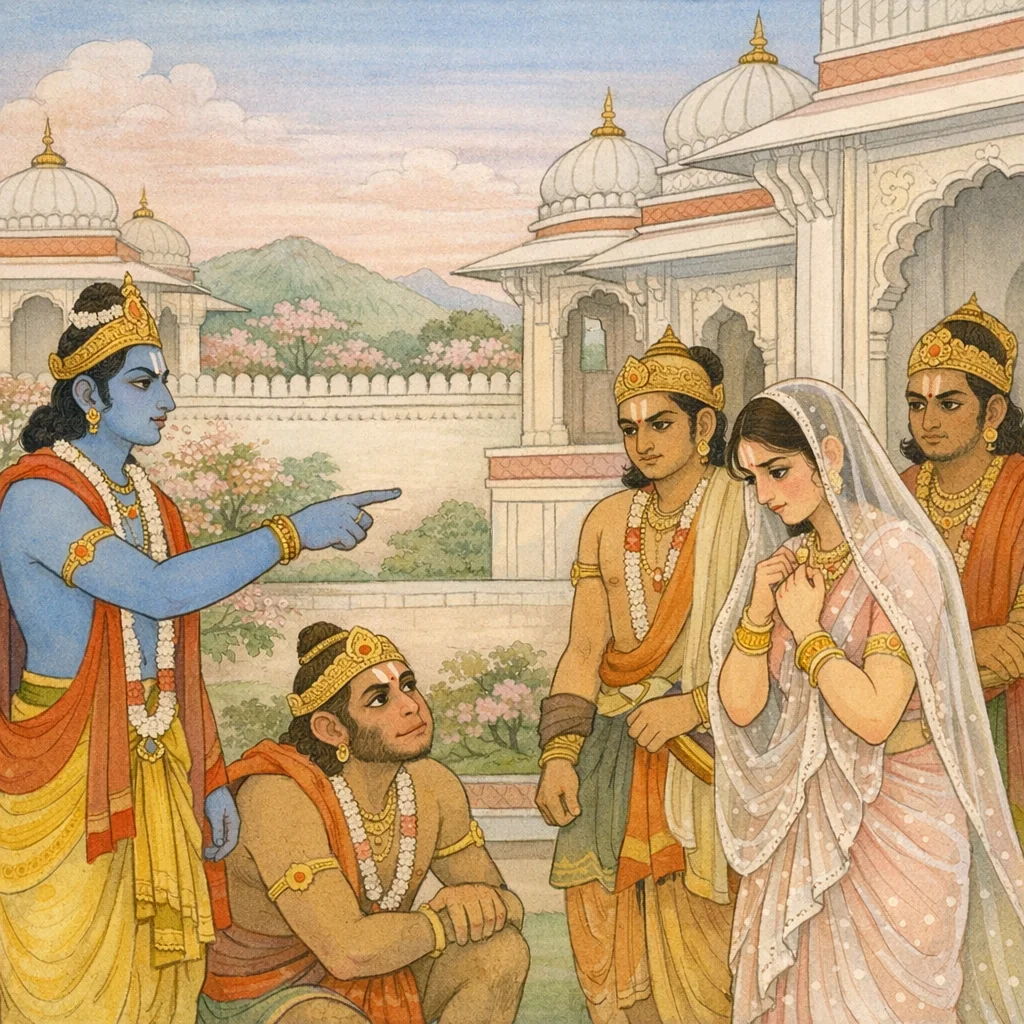
In Sarga 118, after the war, Rāma sees Sītā standing near him and chooses to speak aloud, before others, the anger and anxiety long held in his heart. He first presents the campaign as the fulfillment of human duty: the insult has been erased by slaying Rāvaṇa, vows are completed, and the labors of allies have borne fruit—Hanumān’s leap over the ocean and devastation of Laṅkā, Sugrīva’s counsel and military toil, and Vibhīṣaṇa’s defection. The speech then turns to rājanīti and reputation. Rāma declares that the war’s labor was not undertaken “for Sītā’s sake,” but to safeguard righteous conduct and the fame of his lineage from scandal and slander. He describes his heart as divided between private affection and fear of janavāda, the talk of the people. With harsh reasoning, he cites the perceived impropriety of accepting a wife who lived in another’s house and was seen with lustful eyes, concluding that Sītā may go wherever she wishes, even naming alternative protectors. Sītā’s reply here is chiefly emotional: she trembles and weeps, like a creeper struck by an elephant, revealing the inner violence of public repudiation after physical rescue.
Shlokas
Verse 1
तांतुपाश्वस्थितांप्रह्वांरामस्सम्प्रेक्ष्यमैथिलीम् ।हृदयान्तर्गतंक्रोधव्याहर्तुमुपचक्रमे ।।6.118.1।।
Seeing Maithilī standing near him, modest and bowed, Rāma began to give voice to the anger that lay hidden within his heart.
Verse 2
एषासिनिर्जिताभद्रेशत्रुंजित्वारणाजिरे ।पौरुषाद्यदनुष्ठेयंमयैतदुपपादितम् ।।6.118.2।।
You were tormented in Rāvaṇa’s embrace and looked upon with wicked eyes; how could I take you back again while claiming a great lineage?
Verse 3
गतोऽस्म्यन्तममर्षस्यधर्षणासम्प्रमार्जिता ।अवमानश्चशत्रुश्चयुगपन्निहतौमया ।।6.118.3।।
I have brought my pent-up indignation to its end; the outrage has been wiped away. In a single stroke, I destroyed at once both the insult and the enemy who caused it.
Verse 4
अद्यमेपौरुषंदृष्टमद्यमेसफल्श्रमः ।अद्यतीर्णप्रतिज्ञोऽत्वाप्रभवाम्यद्यचात्मनः ।।6.118.4।।
Today my valor stands proven; today my toil has borne fruit. Today I have fulfilled my vow, and today I am master of myself—and of my purpose concerning you.
Verse 5
यात्वंविरहितानीताचलचित्तेनरक्षसा ।दैवसम्पादितोदोषोमानुषेणमयाजितः ।।6.118.5।।
When you were left alone and carried off by that fickle-minded Rākṣasa, the calamity wrought by fate has now been overcome—by me, a mere man.
Verse 6
सम्प्राप्तमवमानंयस्तेजसा न प्रमार्जति ।कस्तस्यपुरुषार्थोमहताप्यल्पचेतसः ।।6.118.6।।
If one does not, by one’s own strength, wipe away the insult that has befallen him, what use is even great prowess to a man of petty mind?
Verse 7
लङ्घनं च समुद्रस्यलङ्कायाश्चापिमर्धनम् ।सफलंतस्य च श्लाघ्यमद्यकर्महनूमतः ।।6.118.7।।
Hanumān’s leap across the ocean and his crushing of Laṅkā have today borne fruit, and his deed is worthy of praise.
Verse 8
युद्धेविक्रमतश्चैवहितंमन्त्रयतस्तथा ।सुग्रीवस्यससैन्यस्यसफलोऽद्यपरिश्रमः ।।6.118.8।।
In battle, through valor and likewise through sound counsel, Sugrīva and his army have today found their exertions crowned with success.
Verse 9
विभीषणस्य च तथासफलोऽद्यपरिश्रमः ।विगुणंभ्रातरंत्यक्त्वायोमांस्वयमुपस्थितः ।।6.118.9।।
So too, Vibhīṣaṇa’s exertion has today borne fruit—he who, abandoning his brother bereft of virtue, came to me of his own accord.
Verse 10
इत्येवंवदत्श्रुत्वासीतारामस्यतद्वचः ।मृगीवोत्फुल्लनयनाबभूवाश्रुपरिप्लुता ।।6.118.10।।
Hearing those words as Rāma spoke thus, Sītā’s eyes—wide like a doe’s—filled with tears and overflowed.
Verse 11
पश्यतस्तांतुरामस्यसमीपेहृदयप्रियाम् ।जनवादभयाद्राज्ञोबभूवहृदयंद्विधा ।।6.118.11।।
Even as Rāma looked upon her—so dear to his heart, standing close—fear of public talk split the king’s heart in two.
Verse 12
सीतामुत्पलपत्राक्षींनीलकुञ्चितमूर्थजाम् ।अवदद्वैवरारोहंमध्येवानररक्षसाम् ।।6.118.12।।
In the midst of Vānaras and Rākṣasas, Rāma spoke to Sītā—lotus-petaled in eyes, dark-curled in hair, and graceful in form—his words heavy with a strained heart.
Verse 13
यत्कर्तव्यंमनुष्येणधर्षणांप्रतिमार्जता ।तत्कृतंरावणंहत्वामयेदंमानकाङ्क्षिणा ।।6.118.13।।
What a man must do to wipe away dishonor—that has been done: I have slain Rāvaṇa, driven by the need to restore honor.
Verse 14
निर्जिताजीवलोकस्यतपसाभावितात्मना ।अगस्त्येनदुराधर्षामुनिनादक्षिणेवधिक् ।।6.118.14।।
For the world of mortals, the southern quarter is hard to overcome; yet the sage Agastya—mastered in spirit and strengthened by austerity—conquered it. So too have I prevailed.
Verse 15
विदितश्चास्तुभत्रंतेयोऽयंरणपरिश्रमः ।सुतीर्णःसुहृदांवीर्यान्नत्वदर्थंमयाकृतः ।।6.118.15।।रक्षतातुमयावृत्तपमवादं च सर्वतः ।प्रख्यातस्यात्मवंशस्यव्यङ्ग्यं च परिमार्जता ।।6.118.16।।
Sītā—be it known to you, and may good befall you: this toil of war, successfully carried through by the valor of my loyal friends, was not undertaken by me for your sake.
Verse 16
विदितश्चास्तुभत्रंतेयोऽयंरणपरिश्रमः ।सुतीर्णःसुहृदांवीर्यान्नत्वदर्थंमयाकृतः ।।6.118.15।।रक्षतातुमयावृत्तपमवादं च सर्वतः ।प्रख्यातस्यात्मवंशस्यव्यङ्ग्यं च परिमार्जता ।।6.118.16।।
Rather, I acted to safeguard proper conduct and to ward off scandal from every side—cleansing the taint that could fall upon my renowned lineage.
Verse 17
प्राप्तचारित्रसन्देहाममप्रतिमुखेस्थिता ।दीपोनेत्रातुरस्येवप्रतिकूलासिमेदृढम् ।।6.118.17।।
With doubt cast upon your chastity, standing before me now, you feel to me like a bright lamp to one whose eyes are diseased—painful and, in truth, unbearable.
Verse 18
तद्गच्छत्वानुजानेऽद्ययथेष्टंजनकात्मजे ।एतादशदिशोभद्रेकार्यमस्ति न मेत्वया ।।6.118.18।।
Therefore go—today I grant you leave, O daughter of Janaka, to go wherever you wish, in whatever direction. Auspicious one, I have no further claim upon you.
Verse 19
कःपुमांस्तुकुलेजातस्स्त्रयंपरगृहाषिताम् ।तेजस्वीपुनरादद्यात्सुहृल्लेख्येनचेतसा ।।6.118.19।।
What illustrious man, born in a noble line, would knowingly take back a woman who has dwelt in another man’s house—especially when friends themselves would judge him for it?
Verse 20
रावणाङ्कपरिक्लिष्टांदृष्टांदुष्टेनचक्षुषा ।कथंत्वापुनरादद्यांकुलंव्यपदिशन् महत् ।।6.118.20।।
You were tormented in Rāvaṇa’s embrace and looked upon with wicked eyes; how could I take you back again while claiming a great lineage?
Verse 21
तदर्थंनिर्जितामेत्वंयशःप्रत्याहृतंमया ।नास्तिमेत्यय्यभिष्वङ्गोयथेष्टंगम्यतामितः ।।6.118.21।।
For that purpose alone you have been won back by me, and my honor retrieved. I have no attachment to you now—go from here wherever you wish.
Verse 22
तदद्यव्याहृतंभद्रेमयैतत् कृतबुधदिना ।लक्ष्मणेनाथभरतेकुरुबुधदिंयथासुखम् ।।6.118.22।।
Auspicious one, this has been spoken by me today with deliberation. Set your mind as you please—toward Lakṣmaṇa, or else toward Bharata—where you think you will find well-being.
Verse 23
शत्रुघ्नेवाथसुग्रीवेराक्षसेवाविभीषणे ।निवेशयमनस्सीतेयथावासुखमात्मनः ।।6.118.23।।
O Sītā, set your mind on dwelling with Śatrughna, or with Sugrīva, or even among the Rākṣasas with Vibhīṣaṇa—wherever you yourself would find ease and peace.
Verse 24
न हित्वांरावणोदृष्टवादिव्यरूपांमनोरमाम् ।मर्षयेतचिरंसीतेस्वगृहेपर्यवस्थिताम् ।।6.118.24।।
Surely, Sītā, once Rāvaṇa had seen you—radiant in divine form and charming—he could not have endured keeping you for long within his own house.
Verse 25
Then Maithilī, hearing from her beloved words painful to hear, wept for a long time; she trembled violently and shed abundant tears, like a creeper struck by the trunk-like hand of a mighty elephant.
Frequently Asked Questions
The chapter presents a dharma-conflict where Rāma, despite having rescued Sītā, prioritizes royal legitimacy and fear of public opinion (janavāda) over private marital acceptance, publicly authorizing her to go elsewhere (6.118.11, 18–23).
The sarga foregrounds the burden of kingship: victory in war does not end ethical accountability, and social trust/yaśas becomes a governing principle; it also warns that speech can function as moral judgment and as psychological harm when duty is argued through reputation alone.
Geographical references include Laṅkā and the ocean-crossing associated with Hanumān’s mission; culturally, the sarga highlights norms around kula (lineage), apavāda (scandal), and the authority of janavāda (public discourse) in evaluating royal conduct and marital legitimacy.