Sarga 56
सीताया रावणनिन्दा — अशोकवनिकाप्रवेशः (Sita’s Rebuke of Ravana; Removal to the Ashoka Grove)
अरण्यकाण्ड
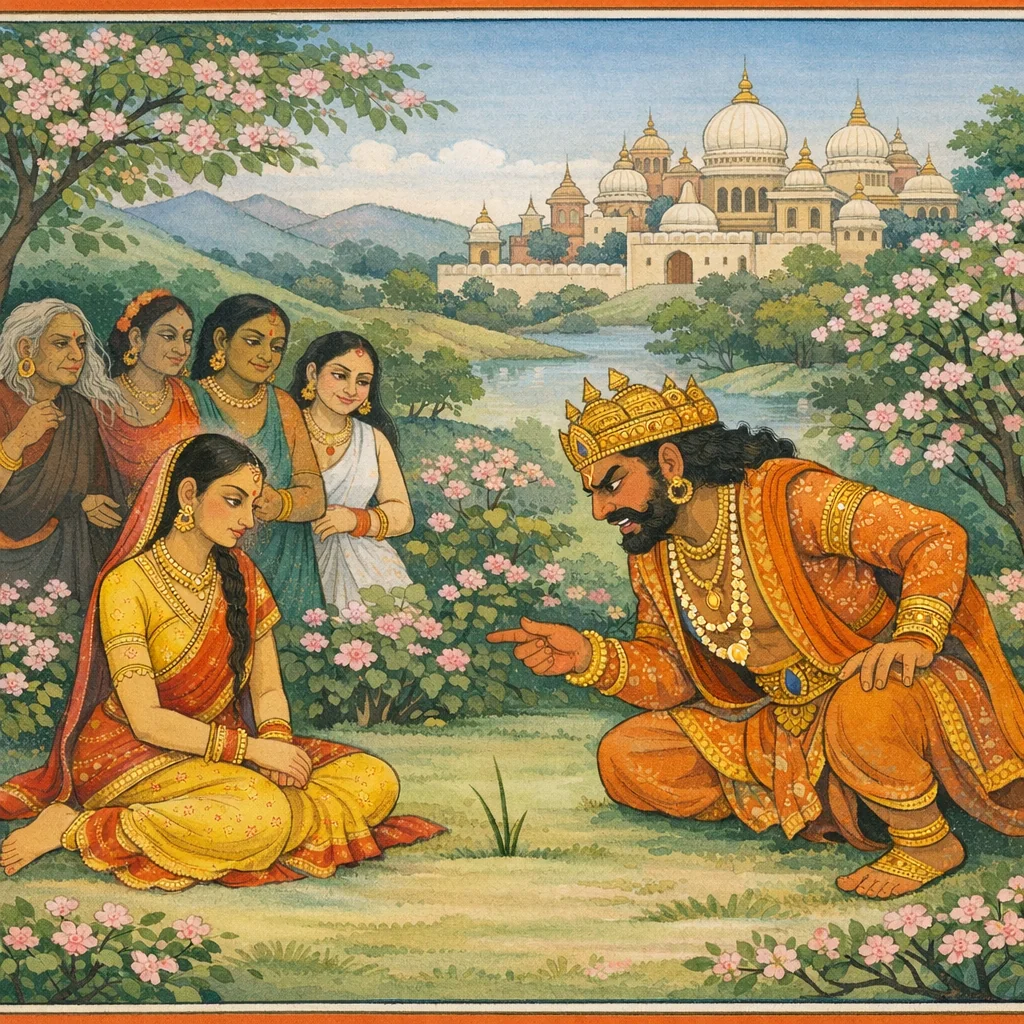
In this sarga, Sita is shown grief-stricken yet fearless as Ravana addresses her. In a gesture of contempt she places a blade of grass between them and replies by proclaiming the glory of Rama’s lineage, his steadfastness in dharma, and the valor of Rama with Lakshmana, shattering Ravana’s pride in his supposed invincibility. Sita declares that Ravana’s destruction is driven by time and fate: Lanka will fall into widow-like mourning, the rakshasa clan will be annihilated, and his inner palace will be ruined—fruits of his evil deeds. By a dharmic example—just as a chandala cannot defile a sacrificial altar—she affirms that, by her vow of pativrata, a sinner cannot touch her; and through pointed comparisons she exposes Ravana’s unworthiness and vows never to accept dishonor, even at the cost of her life. Ravana then utters terrifying threats: he grants her twelve months and warns that if she does not yield, she will be cut down and devoured. He commands the rakshasis to surround her and take her to the Ashoka grove; there Sita, held in their power like a doe among tigresses, is crushed by fear and sorrow and nearly faints, absorbed in remembrance of her Lord.
Shlokas
Verse 1
सा तथोक्ता तु वैदेही निर्भया शोककर्शिता।तृणमन्तरतः कृत्वा रावणं प्रत्यभाषत।।।।
Thus addressed, Vaidehī—though worn down by grief—fearlessly placed a blade of grass between herself and Rāvaṇa and spoke in reply.
Verse 2
राजा दशरथो नाम धर्मसेतुरिवाचलः।सत्यसन्धः परिज्ञातो यस्य पुत्रस्सराघवः।।।।
He is Raghava, the son of King Dasharatha—renowned, immovable as a bridge of righteousness safeguarding Dharma, and unwaveringly true to his vows.
Verse 3
रामो नाम स धर्मात्मा त्रिषु लोकेषु विश्रुतः।दीर्घबाहुर्विशालाक्षो दैवतं हि पतिर्मम।।।।
Rāma, righteous-souled, is renowned in the three worlds—long-armed, large-eyed; he is my husband, and truly my very deity.
Verse 4
इक्ष्वाकूणां कुले जातस्सिंहस्कन्धो महाद्युतिः।लक्ष्मणेन सह भ्रात्रा यस्ते प्राणान्हरिष्यति।।।।
Born in the Ikṣvāku line, radiant and lion-shouldered, he who will take your life will come—together with his brother Lakṣmaṇa.
Verse 5
प्रत्यक्षं यद्यहं तस्य त्वया स्यां धर्षिता बलात्।शयिता त्वं हतस्संख्ये जनस्थाने यथा खरः।।।।
If, in his very presence, you had assaulted me by force, you would have lain slain in battle at Jana-sthāna—just as Khara did.
Verse 6
य एते राक्षसाः प्रोक्ता घोररूपा महाबलाः।राघवे निर्विषास्सर्वे सुपर्णे पन्नगा यथा।।।।
Those rākṣasas you speak of—dreadful in form and mighty—become altogether harmless before Rāghava, like serpents made venomless in the presence of Suparṇa (Garuḍa).
Verse 7
तस्य ज्याविप्रमुक्तास्ते शराः काञ्चनभूषणाः।शरीरं विधमिष्यन्ति गङ्गाकूलमिवोर्मयः।।।।
Released from his bowstring, those arrows—adorned with gold—will shatter your body, as waves batter and break the bank of the Gaṅgā.
Verse 8
असुरैर्वा सुरैर्वा त्वं यद्यवध्योऽसि रावण।उत्पाद्य सुमहद्वैरं जीवंस्तस्य न मोक्ष्यसे।।।।
O Rāvaṇa, even if you are invulnerable to gods or demons, once you have provoked such great enmity with him, you will not escape with your life.
Verse 9
स ते जीवितशेषस्य राघवोऽन्तकरो बली।पशोर्यूपगतस्येव जीवितं तव दुर्लभम्।।।।
Powerful Rāghava will become the end of whatever little life remains to you; like a beast tied to the sacrificial post, survival will be hard for you to obtain.
Verse 10
यदि पश्येत्स रामस्त्वां रोषदीप्तेन चक्षुषा।रक्षस्त्वमद्य निर्धग्धो गच्छेस्सद्यः पराभवम्।।।।
O rākṣasa—if Rāma were to see you with eyes blazing in anger, even today you would be utterly burned and would at once meet your ruin.
Verse 11
यश्चन्द्रं नभसो भूमौ पातयेन्नाशयेत वा।सागरं शोषयेद्वापि स सीतां मोचयेदिह।।।।
Only one who could make the Moon fall from the sky to the earth—or destroy it—or even drain the ocean dry, could release Sītā from here.
Verse 12
गतायुस्त्वं गतश्रीको गतसत्त्व गतेन्द्रियः।लङ्का वैधव्यसंयुक्ता त्वत्कृतेन भविष्यति।।।।
Your life is spent; your splendor will depart; your strength will fail, your senses will be undone. Because of your deed, Laṅkā will become a land of widows.
Verse 13
न ते पापमिदं कर्म शुखोदर्कं भविष्यति।याऽहं नीता विनाभावं पतिपार्श्वात्त्वया वने।।।।
This sinful act of yours will not end in happiness. You have carried me away in the forest from my husband, without any right judgment or forethought.
Verse 14
स हि दैवतसंयुक्तो मम भर्ता महाद्युतिः।निर्भयो वीर्यमाश्रित्य शून्ये वसति दण्डके।।।।
My radiant husband—supported by divine power—dwells in the desolate Daṇḍaka, fearless, relying on his own valor.
Verse 15
स ते दर्पं बलं वीर्यमुत्सेकं च तथाविधम्।अपनेष्यति गात्रेभ्यश्शरवर्षेण संयुगे।।।।
In battle, he will strip from your very limbs that pride, power, valor, and arrogant excess—by a rain of arrows.
Verse 16
यदा विनाशो भूतानां दृश्यते कालचोदितः।तदा कार्ये प्रमाद्यन्ति नराः कालवशं गताः।।।।
When the destruction of beings, urged on by Time, comes into view, then people—fallen under Time’s dominion—begin to blunder in their deeds.
Verse 17
मां प्रधृष्य स ते कालः प्राप्तोऽयं राक्षसाधम।आत्मनो राक्षसानां च वधायान्तःपुरस्य च।।।।
Because you have violated me, the appointed Time has now come upon you, O vilest of rākṣasas—bringing destruction for you, for the rākṣasas, and for your inner chambers as well.
Verse 18
न शक्या यज्ञमध्यस्था वेदी सृग्भाण्डमण्डिता।द्विजातिमन्त्रपूता च चण्डालेनावमर्दितुम्।।।।
An altar standing in the midst of sacrifice—adorned with ladles and vessels, and sanctified by the mantras of the twice-born—cannot be profaned by a caṇḍāla.
Verse 19
तथाऽहं धर्मनित्यस्य धर्मपत्नी पतिव्रता।त्वया स्पृष्टुं न शक्यास्मि राक्षसाधम पापिना।।।।
So too am I—the faithful wife of Rāma, abiding ever in dharma, a pativratā. O basest rākṣasa, a sinner like you cannot touch me in any rightful sense.
Verse 20
क्रीडन्ती राजहंसेन पद्मषण्डेषु नित्यदा।हंसी सा तृणषण्डस्थं कथं पश्येत मद्गुकम्।।।।
How could a female swan, ever sporting among lotus-groves with a royal swan, even cast her gaze toward a madguka-bird perched in a clump of grass?
Verse 21
इदं शरीरं निस्संज्ञं बन्ध वा खातयस्व वा।नेदं शरीरं रक्षयं मे जीवितं वापि राक्षस।।।।न तु शक्ष्याम्युपक्रोशं पृथिव्यां दातुमात्मनः।
This body is now devoid of feeling—bind it or bury it as you please. To me, neither this body nor life itself is worth preserving at the cost of virtue; I cannot surrender my name to disgrace upon this earth.
Verse 22
एवमुक्त्वा तु वैदेही क्रोधात्सुपरुषं वचः।।।।रावणं मैथिली तत्र पुनर्नोवाच किञ्चन।
Having spoken these extremely harsh words in anger to Ravana, Vaidehi—the princess of Mithila—fell silent and uttered nothing further.
Verse 23
सीताया वचनं श्रुत्वा परुषं रोमहर्षणम्।।।।प्रत्युवाच ततस्सीतां भयसन्दर्शनं वचः।
Hearing Sita’s harsh, hair-raising words, Ravana then retorted with speech calculated to strike terror into her heart.
Verse 24
शृणु मैथिलि मद्वाक्यं मासान्द्वादश भामिनि।।।।कालेनानेन नाभ्येषि यदि मां चारुहासिनि।ततस्त्वां प्रातराशार्थं सूदाश्छेत्स्यन्ति लेशशः।।।।
“Listen, O Princess of Mithila—lovely one with the sweet smile—to my decree. If within twelve months you do not accept me, my cooks shall mince you into pieces for my morning meal.”
Verse 25
शृणु मैथिलि मद्वाक्यं मासान्द्वादश भामिनि।।3.56.24।।कालेनानेन नाभ्येषि यदि मां चारुहासिनि।ततस्त्वां प्रातराशार्थं सूदाश्छेत्स्यन्ति लेशशः।।3.56.25।।
Listen to my words, O Maithili! If within twelve months you do not accept me, O beautiful one, then the cooks shall cut you into pieces for my morning meal.
Verse 26
इत्युक्त्वा परुषं वाक्यं रावणश्शत्रुरावणः।राक्षसीश्च ततः क्रुद्ध इदं वचनमब्रवीत्।।।।
Having spoken these harsh words, Ravana, the tormentor of enemies, filled with rage, addressed the demonesses with this command.
Verse 27
शीघ्रमेव हि राक्षस्यो विकृता घोरदर्शनाः।दर्पमस्या विनेष्यध्वं मांसशोणितभोजनाः।।।।
O demonesses, misshapen and terrifying to behold, eaters of flesh and blood! Quickly break her pride and subdue her!
Verse 28
वचनादेव तास्तस्य सुघोरा राक्षसीगणाः।कृतप्राञ्जलयो भूत्वा मैथिलीं पर्यवारयन्।।।।
Upon his command, those exceedingly dreadful troops of demonesses, with palms joined in reverence, surrounded Maithili.
Verse 29
स ताः प्रोवाच राजा तु रावणो घोरदर्शनः।प्रचाल्य चरणोत्कर्षैर्दारयन्निव मेदिनीम्।।।।
King Ravana, terrifying in appearance, spoke to them while stamping the ground, as if tearing the earth apart with his heavy steps.
Verse 30
अशोकवनिकामध्ये मैथिली नीयतामियम्।तत्रेयं रक्ष्यतां गूढं युष्माभिः परिवारिता।।।।
Take this Maithilī into the midst of the Aśoka grove. There keep her guarded in secrecy, seated about her and enclosing her on every side.
Verse 31
तत्रैनां तर्जनैर्घोरैः पुनस्सान्त्वैश्च मैथिलीम्।आनयध्वं वशं सर्वा वन्यां गजवधूमिव।।।।
There, all of you bring Maithilī under control—by terrifying threats and again by gentle coaxing—just as one tames a wild she-elephant.
Verse 32
इति प्रतिसमादिष्टा राक्षस्यो रावणेन ताः।अशोकवनिकां जग्मुर्मैथिलीं परिगृह्य तु।।।।सर्वकालफलैर्वृक्षैर्नानापुष्पफलैर्वृताम्।सर्वकालमदैश्चापि द्विजैस्समुपसेविताम्।।।।
Thus instructed by Rāvaṇa, those rākṣasīs seized Maithilī and went to the Aśoka grove—encircled by trees bearing fruit in every season, adorned with many kinds of flowers and fruits, and frequented by birds ever lively throughout the year.
Verse 33
इति प्रतिसमादिष्टा राक्षस्यो रावणेन ताः।अशोकवनिकां जग्मुर्मैथिलीं परिगृह्य तु।।3.56.32।।सर्वकालफलैर्वृक्षैर्नानापुष्पफलैर्वृताम्।सर्वकालमदैश्चापि द्विजैस्समुपसेविताम्।।3.56.33।।
Thus instructed by Rāvaṇa, the rākṣasīs took hold of Maithilī and went to the Aśoka grove—surrounded by trees fruiting in every season, filled with many varieties of flowers and fruits, and frequented by birds ever joyful through all seasons.
Verse 34
सा तु शोकपरीताङ्गी मैथिली जनकात्मजा।राक्षसीवशमापन्ना व्याघ्रीणां हरिणी यथा।।।।
But Maithilī, Janaka’s daughter, her whole frame overwhelmed by sorrow, fell under the power of the rākṣasīs—like a doe among tigresses.
Verse 35
शोकेन महता ग्रस्ता मैथिली जनकात्मजा।न शर्म लभते भीरुः पाशबद्धा मृगी यथा।।।।
Consumed by profound grief, Maithilī, Janaka’s daughter, found no peace—like a frightened doe bound in a snare.
Verse 36
न विन्दते तत्र तु शर्म मैथिली विरूपनेत्राभिरतीव तर्जिता।पतिं स्मरन्ती दयितं च देवतं विचेतनाऽभूद्भयशोकपीडिता।।।।
There Maithilī found no peace, harshly threatened by those women with hideous eyes; remembering her beloved husband—her very deity—tormented by fear and grief, she fell unconscious.
Frequently Asked Questions
The pivotal action is Sita’s refusal to engage Ravana as a legitimate interlocutor—symbolized by placing a blade of grass between them—while asserting that bodily survival is secondary to moral reputation and chastity (she rejects any outcome that would brand her unchaste).
The dialogue frames dharma as non-negotiable: coercive power cannot override ethical identity. Sita’s speech links adharma to inevitable time-driven collapse (kāla), presenting moral order as ultimately self-correcting through consequence.
Ashoka-vanika is introduced as the guarded grove where Sita is concealed; Dandaka and Janasthana anchor the forest-exile theater; cultural-religious markers include the yajña-vedi and yūpa (sacrificial infrastructure) used as analogies for sanctity and inviolability.