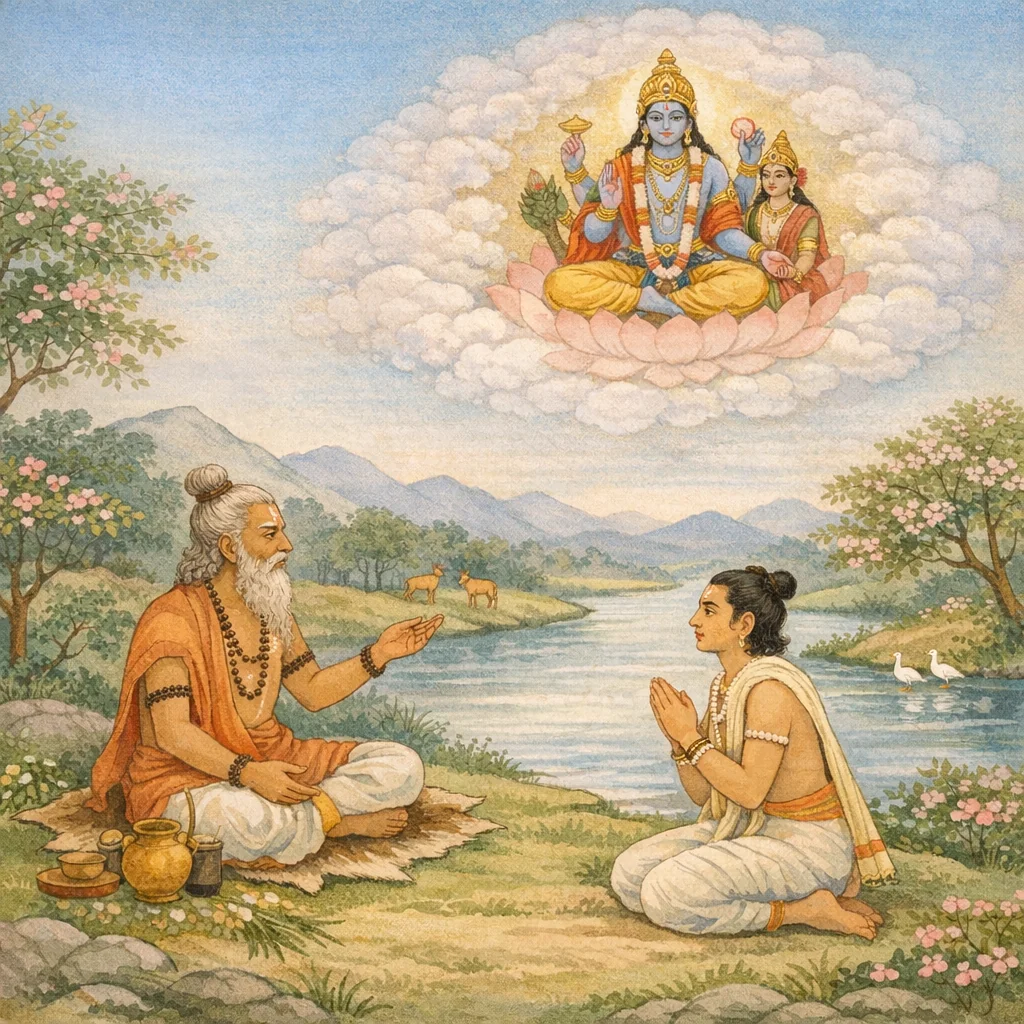
Adhyaya 76
The Marks of Merit and the Destinies of Beings (Divine vs Demonic Traits)
Sañjaya asks Vyāsa what destiny awaits asuras/daityas who die in battle—whether they fall while facing the enemy or while fleeing. Vyāsa answers with a moral division: a brave death confronting the foe brings spontaneous ascent to divine enjoyments, whereas cowardice, deceit, and unrighteous killing opposed to dharma lead to hell. The chapter then unfolds a diagnostic catalogue of “marks” by which demonic, preta-like, yakṣa-like, and godlike natures may be recognized among humans. These signs center on purity and impurity, truth and falsehood, reverence or hostility toward the gods and the Brāhmaṇas, and the ethics of social conduct. It concludes by praising dharmic life—worship, charity, self-control, and honoring Vaiṣṇavas—as world-sustaining merit, and promises auspicious results to those who listen to this teaching.
Shlokas
Verse 1
संजय उवाच । येऽसुराश्च मृता युद्धे संमुखे विमुखेऽपि वा । गतिं तेषामहं ब्रह्मन्श्रोतुमिच्छामि तत्त्वतः
Sanjaya said: “O Brahman, I wish to hear in truth what destiny awaits those asuras who died in battle—whether facing the enemy or even while fleeing.”
Verse 2
असंख्याता इमे दैत्यास्त्रैलोक्ये सचराचरे । अद्याप्यासन्गताः कुत्र एतन्मे शंस भो गुरो
These Daityas are innumerable throughout the three worlds, with all that moves and does not move. Even now, where have they gone? Tell me this, O revered teacher.
Verse 3
व्यास उवाच । ये मृतास्संमुखे शूरा दैत्यानां प्रवरा रणे । स्वयं प्राप्य च देवत्वं भोग्यमश्नंति शाश्वतम्
Vyāsa said: Those heroic warriors who die facing the enemy—the foremost among the Daityas in battle—attain divinity of their own accord and enjoy everlasting celestial pleasures.
Verse 4
प्रासादा यत्र सौवर्णा नानारत्नाविभूषिताः । सर्वकामप्रदा वृक्षाः स्वर्णदीतोय संयुताः
There, the mansions are made of gold and adorned with many kinds of jewels; the trees grant every desired object, and the rivers’ waters flow joined with gold.
Verse 5
पद्मोत्पलसुकल्हारैर्गंधाढ्यैरन्यपुष्पकैः । दधिदुग्धाज्यखंडैश्च युता पुष्करिणी शुभा
That auspicious lotus-pond was adorned with padma, utpala, and white kumuda, all rich in fragrance, along with other blossoms; and it was also furnished with portions of curd, milk, and ghee as offerings.
Verse 6
अतीवरूपसंपन्नाः सदैव नवयौवनाः । तत्र राज्यं प्रकुर्वंति तथैव वसुधातले
Endowed with surpassing beauty and ever abiding in the freshness of new youth, they rule there—just so—upon the surface of the earth.
Verse 7
एवं जन्माष्टकं प्राप्य धनिनोऽध्यक्षमंत्रिणः । अर्धसंमुखगात्रेण दिवमश्नंति शाश्वतम्
Thus, having attained the “eightfold birth,” the wealthy—serving as superintendents and ministers—enjoy the eternal heaven, their bodies turned half-facing toward the Divine.
Verse 8
विमुखाः कातरा भीता ये च मायाविनो रणे । ते यांति निरयं घोरं ये च देवद्विजद्विषः
Those who turn away from dharma, who are cowardly and afraid, and those who resort to deception in battle—such people go to a dreadful hell; likewise, those who hate the devas and the twice-born (brahmins) also go there.
Verse 9
पतितं मूर्च्छितं भग्नमन्ययोद्धारमाहवे । हंतारो निरयं यांति ते च म्लेच्छाः कुवाचकाः
Those who, in battle, strike down a fallen man, one who has fainted, one who is crippled, or another warrior who has turned away—such killers go to hell; they are also deemed mlecchas and foul-speakers.
Verse 10
परन्यासापहर्तारो विमुखास्संति तत्त्वतः । रात्रौ वा विपिने नष्टे चोरास्साहसकारिणः
In truth, those who misappropriate what has been entrusted to another are apostates (turned away from dharma). They are like thieves who commit violence—whether at night or in a forest where one has gone astray.
Verse 11
सर्वभक्षरता मूढा म्लेच्छा गोब्रह्मघातकाः । कुवाचकाः परे म्लेच्छा एते ये कूटयोनयः
Deluded and indiscriminate in what they consume, the mlecchas are slayers of cows and brāhmaṇas. They are foul-speakers—indeed, these are the mlecchas who are of corrupt origin.
Verse 12
तेषां पैशाचिकी भाषा लोकाचारो न विद्यते । नास्ति शौचं तपो ज्ञानं न देवपितृतर्पणम्
Their speech is said to be paiśācika (demonic/barbarous); among them, proper social conduct is not found. There is neither purity, nor austerity, nor true knowledge—nor do they offer libations to the gods and the ancestors.
Verse 13
दानश्राद्धादिकं यज्ञे सुराणां च प्रपूजनम् । पितॄणां च न शुश्रूषा द्विजदेवतपस्विनाम्
In sacrifice he performs acts like charity and śrāddha, and he duly worships the gods; yet he shows no service or reverent attendance to the ancestors, nor to the Brahmins, the deities, and the ascetics.
Verse 14
ज्ञानलोपादतस्तेषां मलशौचं न विद्यते । मातरं भगिनीं चान्यां गृहिणीं कामयंति च
Because their discernment has been lost, they have no sense of bodily purity or cleanliness; they even lust after their mother, their sister, and other women, including married women.
Verse 15
सर्वो विपर्ययो लोकात्सदाचारो मलीमसः । तार्क्ष्यस्योद्ववनानां च अन्येषां गोत्रवासिनाम्
In the world there is a complete reversal of right order: good conduct has become defiled—among Tārkṣya’s descendants, the people of Udvavana, and likewise among other dwellers of those lineages.
Verse 16
कुलजातास्सदा दैत्या येषां पुण्यमकारणम् । दुर्गतिं च मृता यांति द्विजस्त्रीशिशुघातिनः
Even if born in noble lineages, those whose merit has no true cause—unfounded in dharma—are ever like daityas; and when they die, killers of brahmins, women, and children go to an evil destiny.
Verse 17
गवाशिनो दुरात्मानो ह्यभक्ष्यभक्षणे रताः । कीटयोनिं व्रजंत्येते तरवश्च पिपीलिकाः
Those of wicked nature who live by consuming cows and delight in eating what ought not be eaten—such people fall into the womb of insects; they are reborn as trees and as ants.
Verse 18
न मंत्रेषु न देवेषु कल्पंते ते सुरद्विषः । अग्रजः सहजस्तेषां सदृङ्नो ग्राम्यवृत्तयः
Those who hate the devas find no standing—neither in sacred mantras nor among the deities. Their elder is one born among them, and their ways, like their outlook, are coarse and rustic.
Verse 19
लोमकेशप्रणेतारः क्रव्यभक्षरता भुवि । साहसं च व्रतं दानं स्नानं यज्ञादिकं च यत्
On earth they are led by Lomakeśa and delight in eating flesh; and whatever pertains to reckless violence—vows, gifts, ritual bathing, sacrifices (yajñas), and the like—is also spoken of in this context.
Verse 20
मत्स्यमांसादिषु प्रीता मृषावचनभाषिणः । सदाकामास्सदा लोभास्सदा क्रोधमदान्विताः
Delighting in fish, meat, and the like, and speaking falsehoods—ever lustful, ever greedy, ever filled with anger and intoxicated with pride.
Verse 21
वधबंधरतोद्वेगा द्यूतसंगीतसंप्रियाः । कुभृत्याः कुजनप्रीताः पूतिगंधरता नराः
Men agitated by violence and bondage, fond of gambling and song, given to base service, delighting in wicked company, and addicted to foul smells (impure habits) are thus described.
Verse 22
न देवेषु न विज्ञेषु न धर्मश्रवणेषु च । स्तोत्रमंत्रादिके पुण्ये यथाकार्येष्वनिश्चयाः
They have no firm resolve regarding the gods, nor the learned, nor even the hearing of dharma; and they remain undecided about meritorious acts such as hymns, mantras, and other duties to be performed as appropriate.
Verse 23
बहुरोगाधिरोषाश्च बहुरूपपरिच्छदाः । नरजातिषु दैत्यानां चिह्नान्येतानि भूतले
Afflicted with many diseases and prone to anger, and assuming many forms and disguises—these are the signs of the Daityas among the human races upon the earth.
Verse 24
न जानंति परं लोकं न गुरुं स्वं न चापरं । गर्भपूरणमिच्छंति नातिथिं न गुरून्द्विजान्
They do not know the higher world, nor their own teacher, nor any other; they desire only to fill their belly, showing no regard for guests, for gurus, or for the twice-born (brāhmaṇas).
Verse 25
न देवं न सुतं गोत्रं न मित्रं न च बान्धवं । स्वप्ने दानं न जानंति भक्षणान्न परिच्छदं
They recognize neither deity, nor son, nor lineage, nor friend, nor even relative. Even in dreams they know nothing of charity—only of eating, never of clothing or proper covering.
Verse 26
गोपायंति धनं यस्मात्ते यक्षा नररूपिणः । प्राणांतेपि धनं किचिन्न दिशंति च राजनि
Because they hoard wealth, those Yakṣas—though appearing in human form—do not give away even a little wealth, O King, not even at the time of death.
Verse 27
ते यक्षा दुर्गतिस्थाश्च परार्थे भारवाहकाः । प्रेतानां लक्षणं यद्वा सर्वलोकविगर्हितं
Those Yakṣas, abiding in an evil state, become burden-bearers for others. Such is the mark of the pretas (restless dead)—indeed, it is condemned by all the worlds.
Verse 28
स्त्रीणां च पुरुषाणां च शृणुष्वैकमना मम । मलपंकधरा नित्यं सत्यशौचविवर्जिताः
Listen to me with single-pointed attention about women and men: they are ever smeared with filth and muck, and are devoid of truthfulness and purity.
Verse 29
दंतकुंतलवस्त्राणां वपुषो मलसंचयाः । गृहपीठादिपात्राणां सकृच्छौचं न रोचते
Impurities accumulate on the teeth, hair, and clothes, and filth gathers on the body; likewise, household seats and other utensils do not become pleasingly clean by washing only once.
Verse 30
न पश्यंति सुखं स्त्रीणां विशंति कानने द्रुतं । विघसोच्छिष्टपूतीनां भक्षणेभिरता भुवि
They find no happiness with women; swiftly they enter the forest. On earth they remain intent on eating what is stale, leftover, and foul.
Verse 31
अन्नपानं च शयनमन्धकारेषु रोचते । कदाचित्स्वस्थता नास्ति क्वचिद्वा शुचितातनौ
Food and drink, and even sleep, seem pleasant only in darkness; at times there is no well-being, and at other times there is no bodily purity.
Verse 32
लक्षणं नरलोकेषु प्रेतानामीदृशं किल । हिताहितं न जानंति मित्रामित्रं गुणागुणम्
Such, indeed, is said to be the mark of pretas among humans: they do not discern what is beneficial or harmful, nor do they recognize friend from foe, virtue from vice.
Verse 33
पापपुण्यादिकं स्थानं स्नानं देवद्विजार्चनं । अरिमित्रमुदासीनं न विंदंति स्वभावतः
By their very nature, they do not recognize what leads to sin or merit, the proper place for righteous conduct, ritual bathing, worship of the gods and the twice-born, or even how to distinguish an enemy, a friend, and a neutral person.
Verse 34
मर्त्यस्थाः पशवस्ते च ज्ञायंते बुद्धिसंमतैः । बुद्ध्या नानात्वभावाश्च भ्रमंति च मृषा भुवि
Those creatures dwelling in the mortal realm are perceived as ‘beasts’ by those whose judgment is guided by intellect; and, through the mind’s construction of difference, they wander upon the earth in delusion, pursuing what is false.
Verse 35
यक्षरूपा नरास्ते च सर्वकर्मबहिष्कृताः । एषां भेदं प्रवक्ष्यामि लक्षणं धरणीतले
Those men are of yakṣa-like form and are excluded from all proper rites and duties. Now I shall declare their distinctions and their identifying marks upon the earth.
Verse 36
विजाता मर्त्यलोकेषु पापस्यैवानुरूपतः । मलीमस भुविप्रस्थं नागरं छद्मरूपिणं
In the mortal worlds it is born in forms befitting sin itself—impure, earth-bound, city-going, and wearing a guise.
Verse 37
विघसादिप्रभोक्तारं काकमाहुर्मनीषिणः । अभक्ष्ये निरतः पापः कुकुरः पूतिसंप्रियः
The wise declare the crow to be one who eats remnants and the like; but the sinful dog, devoted to what should not be eaten, is fond of foul things.
Verse 38
प्रवृत्तस्सर्वगृह्येषु भक्ष्याभक्ष्यसजीवनः । भूम्यां पश्वादियोनीनां कुलेषु प्राप्तसंभवाः
They become engaged in all kinds of domestic and worldly pursuits, living by whatever is edible or inedible; and upon the earth they attain birth among the families of animals and other womb-born species.
Verse 39
शुनो विगृह्य हस्तेन म्लेच्छानां भक्षणप्रियाः । विशेषात्सूकराणां च तथा च रणयोधिनां
Seizing with the hand, dogs—fond of devouring—attack especially foreigners; likewise boars, and also warriors amid battle.
Verse 40
पोषणे भक्षणे प्रीताः पूतिगर्ह्येष्वसाधुषु । पर्वतेकरणाद्वह्नेः काष्ठसंचयसंग्रहे
They delight in feeding and in devouring, in what is foul, blameworthy, and unrighteous; and they delight as well in raising a mountain of fuel for the fire, gathering and hoarding heaps of wood.
Verse 41
विज्ञेयास्ते सदा म्लेच्छाः क्षत्रियाणां भयाकुलाः । लोकानां नष्टधर्मे च सदा शौचविवर्जिते
They are ever to be known as mlecchas, shaken with fear of the kṣatriyas; and when the dharma of the people is ruined, they remain always bereft of purity and disciplined conduct.
Verse 42
कुलीनानां तदा म्लेच्छा भविष्यंति च दस्यवः । तेषां संसर्गतोन्ये च संबंधादन्नभोजनात्
Then, even among the well-born, mlecchas and bandits will arise. Others too will become like them through association—through ties and relations, and even through eating their food.
Verse 43
मैथुनात्तस्य योषासु तद्भावं तु व्रजंति ते । तस्मिन्काले जनास्सर्वे दुःखरोगप्रतापिताः
Through sexual union with him, those women take on his very condition. At that time, all people are afflicted and tormented by suffering and disease.
Verse 44
दुर्भिक्षान्न परामूढाः सदा राजप्रपीडिताः । तत्रासत्येरता मर्त्याः सर्वशौचविवर्जिताः
There, bewildered by famine, mortals are constantly oppressed by kings; they delight in falsehood and are devoid of all purity and cleanliness.
Verse 45
न श्रूयंते जनैरेव पुराणागमसंहिताः । मद्यमांसप्रियाः पापास्सर्वभक्षास्सुदारुणाः
Among the people, the compendia of the Purāṇas and the Āgamas are not even listened to; instead, sinful men—fond of liquor and meat—become indiscriminate eaters, exceedingly cruel in nature.
Verse 46
दारुणाचारनिरता नित्यं छलपरायणाः । न पुष्णंति सुतास्तातं प्रसुवं च गुरूनपि
Devoted to harsh conduct and ever intent on deceit, such sons do not support their father, their mother who bore them, nor even their teachers.
Verse 47
न शुश्रूषंति वै भृत्याः स्वामिनं गुणशालिनम् । भर्तारं न स्त्रियः काश्चिच्छ्वशुरौ च स्वमातरः
Servants do not truly attend upon a virtuous master; some wives do not honor their husbands; and likewise they do not respect their fathers-in-law and even their own mothers.
Verse 48
नित्यकष्टा नरास्तत्र कलहश्च गृहे गृहे । नृपा म्लेच्छाः सुरापाश्च तथा मंत्रिपुरोहिताः
There, people are perpetually afflicted, and in every household there is strife. The kings are mlecchas, and so too are the drunkards, as well as the ministers and the royal priests.
Verse 49
मनुष्यैश्च बलिस्तेषां मत्स्यैर्मांसैर्निरामिषः । पाषंडायासयोगेभ्यः प्रधाना गुणवार्तयोः
For them, offerings are made even with human beings; and with fish and meat—yet they themselves are without true substance. In place of genuine discipline and yoga, what predominates are heresy, wearying exertion, and mere talk about the guṇas.
Verse 50
धनिकैः कोकिलैर्मंदैर्व्याप्तं तैस्तु महीतलम् । ततोन्योन्यं प्रिया मूढा वने वा नगरेषु च
The earth’s surface was filled with gentle kokila-cuckoos and dhanika-birds. Then, lovers—infatuated and bewildered in mind—sought one another, whether in the forest or in the towns.
Verse 51
भक्ष्याभक्ष्यं समश्नंति मत्स्यमांसादिकं नराः । वने द्विजातयश्चान्ये भुंजते चानुपापकम्
People indiscriminately eat what is fit and unfit to be eaten—fish, meat, and the like. Yet there are other twice-born persons who, living in the forest, partake only of what incurs no sin.
Verse 52
भक्तिमंतं पशुं चान्यत्सर्वे यांत्यपुनर्भवम् । पातयंति पितॄन्पापाः सर्वे ते पूर्वदेवकाः
All those who are devoted—even an animal—and others as well, go to the state of no return (liberation). But sinful people cause their ancestors to fall; all such persons are like former gods who have fallen from their prior divine status.
Verse 53
पिशाचा राक्षसा ये च मुर्त्यका गुह्यका ध्रुवम् । एते चाविनयप्रीता न देवा न च मानुषाः
Piśācas and Rākṣasas, and likewise the Mūrtyakas and Guhyakas—certainly these beings delight in misconduct; they are neither gods nor humans.
Verse 54
संजय उवाच । कथं च मर्त्यभावेषु लक्षंजानंतितात्त्विकाः । एतं मे संशयं नाथ दूरीकुरु ततस्ततः
Sañjaya said: “How, indeed, do those who know the truth recognize the distinguishing mark while living in mortal conditions? O Lord, remove this doubt of mine completely and in every way.”
Verse 55
व्यास उवाच । कृतपापानुरूपास्तु द्विजातिष्वन्यजातिषु । असुरा राक्षसाः प्रेताः स्वभावं न त्यजंति ते
Vyāsa said: In keeping with the sins they have done, beings are born among the twice-born and among other castes. Asuras, Rākṣasas, and Pretas do not forsake their inborn nature.
Verse 56
जाता ये चासुरा मर्त्ये सदाते कलहोत्सुकाः । कुहकाः कच्चराः क्रूराः विज्ञेया राक्षसाभुवि
Those asuras who are born among mortals—ever eager for quarrel—deceitful, base, and cruel, are to be known on earth as rākṣasas.
Verse 57
जनोद्विग्नादिकं दानं तथा देवार्चनं भुवि । उग्रभावाद्धनं लब्ध्वा राज्यं भुञ्जंति शाश्वतम्
Those who give charity, first relieving the distress of people, and who worship the devas upon the earth, gain wealth through a forceful, ardent disposition and enjoy enduring sovereignty.
Verse 58
जयं शौर्यादिकं पुण्यं पुनःपापक्षयं व्रजेत् । एवमुर्व्यां तथा नाके नागलोके यमालये
One attains victory and the merit born of valor and the like, and again reaches the destruction of sins—thus it is on earth, and likewise in heaven, in the Nāga-world, and in Yama’s abode.
Verse 59
उग्रेण तपसा कश्चित्सुरत्वं लभते दिवि । वासुदेवं समाराध्य प्रह्लादः सुरपूजितः
By severe austerities, some attain the status of a deva in heaven; but by worshipping Vāsudeva, Prahlāda became one who is revered even by the devas.
Verse 60
हरं तथान्धको दैत्यः स्तुत्वा तत्सभ्यकोऽभवत् । तस्यैव गणमुख्यत्वं लेभे भृंगी महाबलः
In the same way, the demon Andhaka, having praised Hara (Śiva), became a member of His assembly; and the mighty Bhṛṅgī obtained the rank of chief among the gaṇas.
Verse 61
एते चान्ये च बहवो बलिरिंद्रो भविष्यति । गच्छंति सद्गतिं तात इहामुत्र च सर्वदा
These and many others too—Bali will become Indra. They attain the noble path, dear child, always, both here and hereafter.
Verse 62
केचिद्दैत्यकुले जाताः पृथिव्यां सुरसत्तमाः । भावयंति पितॄन्सर्वान्शतशोथ सहस्रशः
Some, though born in the lineage of the Daityas, are the best among the godlike on earth; they gladden and sustain all the ancestors, by the hundreds and even by the thousands.
Verse 63
एकेनापि सुपुत्रेण कुलत्राणं च धीमता । एकोपि वैष्णवः पुत्रः कुलकोटिं समुद्धरेत्
Even a single virtuous and wise son can protect and redeem the family; indeed, one Vaiṣṇava son alone can uplift and deliver ten million members of his lineage.
Verse 64
जितेंद्रियोपि धर्मात्मा द्विजदेवार्चने रतः । क्षये धर्मे कलौ शेषे पुरे जनपदेषु च
Even one who has conquered the senses, righteous at heart and devoted to the worship of brāhmaṇas and the gods—when Dharma declines and only the age of Kali remains—(may still be found) in cities and throughout the countryside as well.
Verse 65
एको रक्षति धर्मात्मा पुरे ग्रामं जनं कुलम् । विज्ञातृमेदुरं चासीद्ब्राह्मणानां पुरं महत्
A single man of righteous soul protects a city, a village, a people, and even a lineage. And that great city of the Brahmins was indeed rich in learned and discerning men.
Verse 66
तत्र सर्वे द्विजाः शश्वत्संध्योपासनतत्पराः । वेदपाठरता धीरा देवातिथिद्विजार्चकाः
There, all the twice-born were ever devoted to the worship of the Sandhyā prayers; steadfast and composed, they delighted in Vedic recitation and honored the gods, guests, and fellow Brahmins.
Verse 67
यज्ञव्रताग्निकर्माणः षट्कर्मपरिनिश्चयाः । अतिकृच्छ्रे च तेषां वै न पापे वर्तते मनः
Devoted to sacrificial rites, sacred vows, and the tending of the ritual fires—and firmly established in the six prescribed duties—they do not, even in extreme hardship, let their minds dwell in sin.
Verse 68
कुर्वंति सततं वीरा व्रतं यज्ञं सनातनम् । कदाचिद्दैवयोगाच्च गृहस्थश्च स कोविदः
Those heroic men constantly perform the eternal observances and sacrifices. Once, by a turn of divine fate, that wise man also became a householder.
Verse 69
वह्नौ जुहोति विप्रर्षि राज्यं मंत्रेण मंत्रवित् । तस्मिन्काले च तस्यैव मूत्रकृच्छ्रं सुदारुणम्
The mantra-knowing brahmin-sage offered oblations into the fire with a mantra, seeking sovereignty; and at that very time he himself was afflicted with a terribly severe difficulty in passing urine.
Verse 70
तत्प्रोज्झितुं गतः सोपि रक्षार्थं स्थाप्य चेटिकाम् । तस्यास्त्वनवधानेन शुना चाज्यं च भक्षितम्
He too went away to cast it out, having stationed a maidservant to guard it; but through her negligence, a dog also ate the ghee.
Verse 71
भिया तया ततः पात्रं स्वीयमूत्रेण संभृतम् । असंलक्ष्या जुहोदग्नौ स विप्रस्त्वरया ततः
Then, out of fear, he filled a vessel with his own urine; and, without being noticed, that brāhmaṇa quickly poured it into the fire as an offering.
Verse 72
आश्चर्यं च ततो वह्नौ लक्षितं तेन तत्क्षणात् । कूटं हेममयं साक्षात्स्वर्णं जांबूनदप्रभं
Then, at that very moment, he noticed a marvel in the fire: a peak made entirely of gold—visible as real gold—shining with the radiance of Jāmbūnada.
Verse 73
गृहीत्वा तन्मुदा विप्रः पापयोगं चकार ह । पप्रच्छ विस्मयाद्दासीं कथमेतद्वद प्रिये
Having taken it joyfully, the brāhmaṇa engaged in a sinful act. Then, astonished, he questioned the maidservant: “Beloved, tell me—how is this so?”
Verse 74
मुदा तत्र यथावृत्तं कथितं तु तया द्विज । ततो नित्यं यथाकालं तच्च तस्य प्रवर्तते
O brāhmaṇa, she there joyfully related everything exactly as it had occurred. From then on, at the proper times, that continued regularly for him.
Verse 75
समृद्धिरद्भुता गेहे लोकविस्मयकारिणी । ततः परस्पराच्छ्रुत्वा सर्वैरेव च तत्पुरे
A wondrous prosperity arose in the house, astonishing the people. Then, hearing of it from one another, everyone in that town came to know.
Verse 76
इति श्रीपाद्मपुराणे प्रथमे सृष्टिखंडे पुण्यव्यक्तिर्नाम षट्सप्ततितमोऽध्यायः
Thus ends the seventy-sixth chapter, called “Puṇyavyakti,” in the first section (Sṛṣṭikhaṇḍa) of the revered Padma Purāṇa.
Verse 77
पंकादेव भयान्मोहान्मतिभ्रंशोऽभवत्ततः । अथ किल्बिषकूटेन दग्धमेव पुरं च तत्
Then, from the mire itself—through fear and delusion—his mind became confused; and thereafter that very city was indeed burned down by the heap of sin (kilbiṣa).
Verse 78
स्त्रियो दुष्टा जना दुष्टाः सर्वे पापबलात्तदा । वृद्धो ज्ञाता द्विजस्तत्र तत्कार्ये न मतिं दधौ
At that time the women were corrupt, the people were corrupt—everyone, driven by the force of sin. There, an aged and knowledgeable Brahmin did not set his mind to that undertaking.
Verse 79
तस्य भार्या तदा साध्वी पुरुदुःखेन संयुता । भर्तारं कृच्छ्रसन्तप्ता पुरकार्यं जगाद सा
Then his virtuous wife, overwhelmed by great sorrow and distressed by hardship, spoke to her husband about what needed to be done in the city.
Verse 80
ब्राह्मण्युवाच । कष्टं मे वर्तते नाथ दृष्ट्वा त्वां दुःखसंयुतम् । ग्रामाचारमिमं यद्वाप्यऽपरं कर्तुमर्हसि
The Brahmin woman said: “O lord, I am distressed on seeing you burdened with sorrow. Either follow this village custom, or else do what is proper according to dharma.”
Verse 81
ततस्तत्र स दोषज्ञः स्मित्वा वचनमब्रवीत् । यस्तु जीवति पापेन त्यक्त्वा धर्मं परं हितम्
Then, there, that knower of faults smiled and spoke: “But whoever lives by sin, having abandoned dharma—the supreme good…”
Verse 82
स वैधेयो महाभागे प्रगच्छत्यपुनर्भवम् । एते विप्रा दुराचाराः सदारास्सपरिच्छदाः
O noble lady, that descendant of Vidhā (Brahmā) attains the state of no return—liberation. But these brahmins are of corrupt conduct, along with their wives and all their belongings.
Verse 83
अतिपातकयोगाच्च महापातकसंमताः । सह पापेन महता प्रयास्यंति रसातलम्
By association with exceedingly grievous sins, they are deemed guilty of the great crimes; and together with that immense wrongdoing, they go down to Rasātala, the nether regions.
Verse 84
अंतेऽपुनर्भवं प्राप्यापराधांतो न विद्यते । अहमेकोत्र तिष्ठामि स्वपुण्यपरिरक्षणात्
In the end, even after attaining the state of no rebirth, the end of wrongdoing is not found. I alone remain here, for the safeguarding of my own merit (puṇya).
Verse 85
ततस्सा तमुवाचेदं लोकहास्यवचस्तव । वक्तुमर्हसि नश्चाग्रे न पुरोऽन्यस्य कस्यचित्
Then she said to him: “Your words have become a matter of public ridicule. Speak it before us—never in the presence of anyone else.”
Verse 86
द्विज उवाच । यदि यास्यामि चान्यत्र इतोऽहं तत्क्षणात्प्रिये । सवित्तैः स्वजनैरेव पुरीयास्यत्यथोगतिम्
The brāhmaṇa said: “Beloved, if I leave here and go elsewhere, then at that very moment this city—together with its wealth and its own people—will surely meet its destined end.”
Verse 87
इत्युक्त्वा परमप्रीतः संगृह्य च धनं स्वकम् । क्षिप्रं स च तया सार्धं ययौ सीमांतरं द्विजः
Having spoken thus, and being exceedingly delighted, the twice-born gathered his own wealth and quickly set off with her, crossing the border into another region.
Verse 88
स्थित्वाऽपश्यत्पुरी तावत्स्थिरा तिष्ठति पूर्ववत् । सा चाह तं पतिं साध्वी पुरी चेयं न नश्यति
After waiting, she looked and saw that the city still stood firm, just as before. Then the virtuous wife said to her husband, “This city does not perish.”
Verse 89
विमृश्यतामुवाचेदं विप्रवर्यस्सुविस्मितः । किं नु तिष्ठति तत्रैव द्रव्यमस्मद्गृहाद्बहिः
After reflecting, the excellent brāhmaṇa, greatly astonished, said: “Why indeed is that wealth still lying there, outside our house?”
Verse 90
विचार्य सा धवं प्राह मया भ्रांत्या उपानहौ । नानीते तिष्ठतस्तत्र धारयिष्यामि किं नु वै
After reflecting, she said to her husband: “Through my mistake, the sandals were not brought. As you stand here, what indeed shall I do—how can I bear this?”
Verse 91
एवमुक्त्वा पतिं साध्वी गृहीत्वा ते उपागता । पत्युरभ्याशतो दृष्टं पुरं निर्व्यथनं गतम्
Having spoken thus, the virtuous wife took hold of her husband and they approached. From near her husband, the city was seen—having become free from affliction and pain.
Verse 92
ततो विप्रादयो वर्णाः कच्चराः पुरवासिनः । तिष्ठंति नरके घोरे दुःखिताश्चापुनर्भवे
Thereupon, the social orders beginning with the brāhmaṇas—those Kaccaras dwelling in the city—remain in a dreadful hell, afflicted with suffering, and without return.
Verse 93
कृच्छाद्यमपुरं यांति नास्ति तेषां च निष्कृतिः । पूतिगंधं ततो मेध्यं वर्जनीयं प्रकीर्तितम्
With difficulty they go to Yama’s city, and for them there is no expiation. Therefore, anything foul-smelling—even if otherwise considered ritually pure—is declared to be avoided.
Verse 94
पूर्ववद्भक्षणे प्रीतो ह्यद्यपापं करोति च । स्तेयशीलो निशाचारी बुधैर्ज्ञेयस्स वंचकः
Delighting in eating as before, he commits sin day by day. Given to theft and moving about by night—know him, the wise say, to be a deceiver.
Verse 95
अबुधः सर्वकार्येषु अज्ञातः सर्वकर्मसु । समयाचारहीनस्तु पशुरेव स बालिशः
One who is dull in every undertaking, ignorant in every duty, and bereft of proper conduct and timely social propriety—such a foolish person is no better than an animal.
Verse 96
एवमुष्ट्रादयस्संति भक्षादि नकुलादयः । हिंस्रो ज्ञातिजनोद्वेगरिते युद्धे च कातरः
Thus there are creatures such as camels and the like, and likewise the mongoose and others—predatory by nature; they stir fear and unrest among their own kin, and in battle they become timid.
Verse 97
विघसादिप्रियो नित्यं नरः श्वा कीर्तितो बुधैः । चौर्यकर्मरतो नित्यं बहुमित्रप्रवंचकः
A man ever fond of vighasa (leftover scraps) is described by the wise as a “dog”; and one who is constantly engaged in theft, ever deceiving many friends, is of the same nature.
Verse 98
मिथुने कलहो नित्यं मर्त्यस्तु परिकीर्तितः । प्रकृत्या चपलो नित्यं सदा भोजनचंचलः
One born under Mithuna (Gemini) is described as ever prone to quarrel—restless by nature and constantly fickle, especially in matters of food.
Verse 99
प्लवगः काननप्रीतो नरः शाखामृगो भुवि । सूचको भाषया बुध्या स्वजनेऽन्यजनेषु च
A monkey delights in the forest; on earth, a man is a “branch-roaming beast.” By his speech and by his intellect he reveals himself—among his own people and among strangers as well.
Verse 100
उद्वेगजनकत्वाच्च स पुमानुरगः स्मृतः । बलवान्क्रांतशीलश्च सततं चानपत्रपः
Because he causes fear and agitation, that being is remembered as an uraga (serpent). He is powerful, ever ready to strike, and constantly shameless, without restraint.
Verse 101
पूतिमांसप्रियो भोगी नृसिंहस्समुदाहृतः । तत्स्वनादेव सीदंति भीता अन्ये वृकादयः
The pleasure-seeking one, fond of putrid flesh, is called “Nṛsiṃha”; and merely by hearing his roar, other creatures such as wolves, terrified, are overwhelmed and sink into distress.
Verse 102
द्विरदादि नरा ये च ज्ञायंते दूरदर्शिनः । एवमादि क्रमेणैव विजानीयान्नरेषु च
Those men who are known to be like elephants and the rest are recognized by the far-sighted; in the same way, in due order, one should discern such types among people as well.
Verse 103
सुराणां लक्षणं ब्रूमो नररूपं व्यवस्थितम् । द्विजदेवातिथीनां च गुरुसाधुतपस्विनाम्
I shall describe the distinguishing marks of the devas, properly established in human form—namely among Brahmins, divine guests, and also among gurus, saints, and ascetics.
Verse 104
पूजातपोरतोनित्यं धर्मशास्त्रेषु नीतिषु । क्षमाशीलो जितक्रोधः सत्यवादी जितेंद्रिंयः
Ever devoted to worship and austerity, well-versed in the Dharma-śāstras and in righteous conduct—patient by nature, having conquered anger, speaking truth, and mastering the senses.
Verse 105
दयालुर्दयितो लोके रूपवान्मधुरस्वरः । वागीशः सर्वकार्येषु गुणी दक्षो महाबलः
He is compassionate and beloved in the world, handsome and sweet-voiced; eloquent, capable in all undertakings, virtuous, skillful, and of great strength.
Verse 106
साक्षरश्चापि विद्वांश्च गीतनृत्यार्थतत्त्ववित् । आत्मविद्यादिकार्येषु सर्वतंत्रीस्वरेषु च
He is also literate and learned—one who knows the true principles and meanings of song and dance, and who is proficient in works such as knowledge of the Self, as well as in all stringed instruments and their musical notes.
Verse 107
हविष्येषु च सर्वेषु गव्येषु च निरामिषे । सद्योगास्वादद्रव्ये च प्रत्यग्रे चातिशोभने
And in all oblations (havis), and in cow-derived substances free from meat; and in freshly prepared, pleasant-tasting materials—new and exceedingly splendid—this is to be duly observed.
Verse 108
गंधमाल्येषु वस्त्रेषु शास्त्रेष्वाभरणेषु च । संप्रीतश्चातिथौ दाने पार्वणादिषु कर्मसु
He delights in perfumes and garlands, in garments, in sacred scriptures, and in ornaments; and he is also pleased with honoring guests, with giving charity, and with rites performed on sacred observance-days (parvan) and the like.
Verse 109
स्नानदानादिभिः कार्ये व्रतैर्यज्ञैः सुरार्चनैः । कालो गच्छति पाठैश्च न क्लीबं वासरं भवेत्
Let the day be spent in worthy acts—bathing, charity and the like, vows, sacrifices (yajña), and worship of the devas; and let time pass also in sacred recitations. Let no day become fruitless and void.
Verse 110
अयमेव मनुष्याणां सदाचारो निरंतरम् । देववन्मानवाचारो गीयते मुनिसत्तमैः
This alone is the unceasing good conduct for humankind: the greatest sages sing the praise of human conduct that is like the conduct of the devas.
Verse 111
किंतु सत्त्वाधिको देवो मनुष्यो भीत एव च । गंभीरः सर्वदा देवः सदैव मानवो मृदुः
Yet the deva is predominant in sattva, while the human is indeed fearful. The deva is ever grave and profound; the human is ever gentle and soft.
Verse 112
द्वयोस्तुत्या च संप्रीतिर्न दैत्यादौ भवेत्किल । प्रीतिभावं परं सौख्यं सौहृदं सुकृतं शुभम्
By mutual praise, it is said, true affection does not arise in daityas and the like. Genuine goodwill is the highest happiness—friendship, virtuous merit, and an auspicious blessing.
Verse 113
दैवमानुषयोरेव दैत्यराक्षसयोस्तथा । प्रेतादीनां च प्रेतेषु पशौ प्रीतिः पशोरपि
Among devas and humans alike—and likewise among daityas and rākṣasas—there is mutual affection; so too pretas (and similar beings) toward pretas, and animals toward animals as well.
Verse 114
काकादयः स्वजातौ च तथान्ये च स्वजातिषु । प्रीता भवंति चाप्रीता विद्या तेषां च लक्षणम्
Crows and the like delight in their own kind; so too do other creatures within their respective species. Their being pleased or displeased is a mark of their (limited) understanding.
Verse 115
एवं पुण्यविशेषेण सविशेषा सुजातिषु । प्रियाप्रियं विजानीयात्पुण्यापुण्यं गुणागुणम्
Thus, by the particular distinctions of merit (puṇya), diverse distinctions arise among good births; one comes to discern what is pleasing and unpleasing, what is meritorious and non-meritorious, and what is virtuous and non-virtuous.
Verse 116
दंपत्योर्न सुखं किंचिज्जातिभेदान्नृणां भुवि । स्वजातिषु भवेत्प्रीतिर्मुक्तो वा निरयेपि वा
For a married couple, there is no happiness at all on earth when there is a difference of jāti. Affection tends to arise only within one’s own jāti—whether one is liberated or even in hell.
Verse 117
अतिपुण्याल्लभेदायुः शोभनाः पुण्यकारिणः । पापात्मानो लभंतेऽन्तं ये च दैत्यादयो नराः
Through abundant merit one obtains a long life; the virtuous—doers of dharma—attain auspicious outcomes. But the sinful-minded meet their end, as do those men who are like Daityas and the like.
Verse 118
कृते जाताः सुरा भूमौ न दैत्याश्चान्यजातयः । त्रेतायामेकपादं च द्विपदं द्वापरे युगे
In the Kṛta (Satya) age, only the devas were born upon the earth—there were no Daityas or other kinds of beings. In the Tretā age, it was one-footed; and in the Dvāpara age, it became two-footed.
Verse 119
संध्यायां च कलेरेव सर्वपादं च संकुलम् । देवादीनां भवेज्जातं भारतं यत्प्रवर्तितम्
At the twilight of the Kali age, when every quarter becomes confused and disorderly, then that Bhārata (Mahābhārata) which was set in motion will come to be regarded as originating from the devas and other divine beings.
Verse 120
ये ते दुर्योधनस्यैव योधाः सैन्यादयस्तथा । ते च दैत्यादयः सर्वे ये च कर्णादयो भुवि
Those warriors who belonged to Duryodhana—his soldiers and the rest—were all Daityas and the like; and so too on earth were those such as Karṇa and others.
Verse 121
गांगेयो वसुमुख्यश्च द्रोणो देवमुनिः प्रभुः । अश्वत्थामा हरः साक्षाद्धरिर्नंदकुलोद्भवः
Gāṅgeya (Bhīṣma) and Vasu, foremost of the Vasus; Droṇa—the lordly divine sage—and Aśvatthāmā: each is verily Hara himself; and Hari is the one born in the Nanda lineage.
Verse 122
पंचेंद्राः पांडवा जाता विदुरो धर्म एव च । गांधारी द्रौपदी कुंती चैता देव्यो धरातले
On the earth, the Pāṇḍavas were born as the five Indras; Vidura was Dharma himself. Gāndhārī, Draupadī, and Kuntī—these too were divine women upon the earth.
Verse 123
देवदैत्याः कलेर्मध्ये दैत्याश्शेषे च मानवाः । उत्पत्स्यंते सदा प्रेताः क्रव्यादाः पशुपक्षिणः
In the middle of the Kali age there will arise beings of divine and demonic nature; and toward its end, humans. At all times, however, ghosts and flesh-eating creatures—beasts and birds—will continue to come into being.
Verse 124
तेषां च कुलटा दासी नित्यकष्टा यवीयसी । नित्यं द्वंद्वेषु संप्रीत्या तेषामाचारभाषिणी
And among them there was a wanton maidservant—ever afflicted, younger in age—who constantly delighted in conflicts and kept speaking in the manner of their corrupt conduct.
Verse 125
किल्बिषेषु च सर्वेषु कलहेऽन्यायकर्मणि । रता दैत्यादयो ये ते सर्वे निरयगामिनः
Those—such as the Daityas—who delight in every kind of sin, in quarrel, and in unrighteous deeds: all of them go to hell.
Verse 126
वैशंपायन उवाच । दैत्यादीनां मृषाभावात्सुरत्वं न सुरालयम् । कथं भोग्यं कथं सौख्यमारोग्यं बलसंचयम्
Vaiśaṃpāyana said: “For the Daityas and others, because of their falsehood, there is no true divinity and no abode of the Devas. How, then, could there be enjoyments—how happiness, health, or the gathering of strength?”
Verse 127
राज्यमायुस्तथा कीर्तिरभीष्टं दयितं बलम् । नीतिविद्यादिकं भाव्यं जन्मवृद्धं सनातनम्
Sovereignty, long life, fame, cherished desires, what is dear, and strength—together with statecraft, learning, and the like—are to be understood as destined, growing from one’s birth, and enduring in their causal continuity.
Verse 128
दानाध्ययनकर्माणि यज्ञादि च कथं प्रभो । एतदाप्ताय शिष्याय मह्यं भो वक्तुमर्हसि
O Lord, how are acts such as charity, sacred study, and ritual duties—along with yajñas and the like—to be performed? Please deign to explain this to me, your trustworthy disciple.
Verse 129
व्यास उवाच । दैत्यानां साहसादेव तपो भवति निश्चितम् । व्रतं यज्ञादिकं चैव संप्रीतिः स्वजनस्य च
Vyāsa said: For the Daityas, austerity surely arises from sheer audacity; likewise their vows and sacrificial rites (yajñas), and even the affection of their own people.
Verse 130
यो दांतो विगुणैर्मुक्तो नीतिशास्रार्थतत्त्वगः । एतैश्च विविधैः पूतः स भवेत्सुरलक्षणः
He who is self-controlled, free from vices, and who truly knows the essential purport of the śāstras on right conduct—purified by these many virtues—comes to bear the marks of a godlike person.
Verse 131
पुराणागमकर्माणि नाकेष्वत्र च वै द्विज । स्वयमाचरते पुण्यं स धरोद्धरणक्षमः
O twice-born one, he who does not merely perform the ritual acts enjoined in the Purāṇas and Āgamas—whether in heaven or here on earth—but himself practices merit, is able to uplift and sustain the earth.
Verse 132
विशेषाद्वैष्णवं दृष्ट्वा प्रीयते पूजयेच्च यः । विमुक्तस्सर्वपापेभ्यस्स धरोद्धरणक्षमः
One who feels special joy upon seeing a Vaiṣṇava and who worships and honors him is freed from all sins; such a person becomes capable of uplifting even the earth.
Verse 133
षट्कर्मनिरतो विप्रस्सर्वयज्ञरतस्सदा । धर्माख्यानप्रियो नित्यं स धरोद्धरणक्षमः
That brāhmaṇa, devoted to the six prescribed duties, ever engaged in all yajñas, and always fond of narrations on dharma, is capable of uplifting the world.
Verse 134
विश्वासघातिनो ये च कृतघ्ना व्रतलोपिनः । द्विजदेवेषु विद्विष्टाः शातयंति धरां नराः
Those men who betray trust, who are ungrateful, who violate their vows, and who are hostile toward brāhmaṇas and the devas—such people bring ruin upon the earth.
Verse 135
ये च मद्यरताः पापा द्यूतकर्मरतास्तथा । पाषंडपतितालापाः शातयंति धरां नराः
And those sinful men who are addicted to intoxicants, and likewise devoted to gambling—who consort and converse with heretics and the fallen—such men bring affliction upon the earth.
Verse 136
सुकर्मरहिता ये च नित्योद्वेगाश्च निर्भयाः । स्मृतिशास्त्रार्थकोद्विग्नाश्शातयंति धरां नराः
Those people who are devoid of good deeds—ever agitated yet fearless—disturbed by the true import of the Smṛti-śāstras, bring affliction upon the earth.
Verse 137
निजवृत्तिं परित्यज्य कुर्वंति चाधमां च ये । गुरुनिंदारता द्वेषाच्छातयंति धरां नराः
Those men who abandon their rightful conduct and engage in base actions—out of hatred and a habit of reviling their teachers—bring ruin upon the earth.
Verse 138
दातारं ये रोधयंति पातके प्रेरयंति च । दीनानाथान्पीडयंति शातयंति धरां नराः
Those men who obstruct a giver, incite others toward sin, oppress the destitute and the unprotected, and torment the earth (its beings and order).
Verse 139
एते चान्ये च बहवः पापकर्मकृतो नराः । पुरुषान्पातयित्वा तु शातयंति धरां नराः
These and many others—people engaged in sinful and harmful deeds—after causing the downfall of others, go on to distress the earth itself.
Verse 140
य इदं शृणुयाद्रम्यं गुह्याद्गुह्यं परं हितम् । न तस्य दुर्गतिर्दुःखं दौर्भाग्यं दीनता भुवि
Whoever listens to this delightful teaching—most secret among secrets and supremely beneficial—will not suffer a bad fate, sorrow, misfortune, or poverty on earth.
Verse 141
न दैत्यादौ भवेज्जन्म स्वर्लोके शाश्वतं सुखम् । नाकाले मरणं तस्य न च पापैः प्रलिप्यते
He will not be born among the Daityas or the like; in heaven he will enjoy enduring happiness. His death will not come untimely, and he will not be tainted by sins.
Verse 142
इह सर्वजनाध्यक्षस्त्रिदिवे त्रिदिवेश्वरः । कल्पंकल्पं दिवं भुक्त्वा मोक्षमार्गं व्रजत्यसौ
Here, he becomes the overseer of all people; in heaven, he becomes the lord of the gods. Having enjoyed the heavenly realm age after age, he then proceeds on the path to liberation.