Adhyaya 56
धनंजयस्य आश्वासनम् (Dhanaṃjaya’s Reassurance and the Opening Engagement)
Upa-parva: Gograhaṇa (Cattle-Raid) Upa-Parva
Vaiśaṃpāyana narrates Arjuna’s immediate post-victory positioning after overcoming Karṇa (Vaikartana) and directing Uttara toward the sector marked by a golden palm-standard. Arjuna identifies Bhīṣma on the Kuru side and frames the encounter as a deliberate test of skill and resolve, forecasting a decisive, wheel-like penetration of the opposing formation. He employs vivid martial metaphors—blood as a river, bodies as a forest to be cut, and the enemy host as combustible fuel—while maintaining a strategic aim: stabilizing Uttara’s confidence and enabling coherent movement in battle. Arjuna further grounds legitimacy in prior divine-weapon acquisition, listing celestial astras received from Rudra, Varuṇa, Agni, Vāyu, and Indra, thereby presenting capability as disciplined knowledge rather than mere bravado. The engagement then begins: Kuru princes converge; Duḥśāsana wounds Uttara and strikes Arjuna; Arjuna counters by cutting Duḥśāsana’s bow and driving him back. Vikarṇa attacks and is felled from his chariot; Duḥsaha and Viviṃśati press forward but are disabled when Arjuna kills their horses, forcing withdrawal. The chapter ends with Arjuna advancing in all directions, undefeated, having secured tactical advantage and restored allied morale.
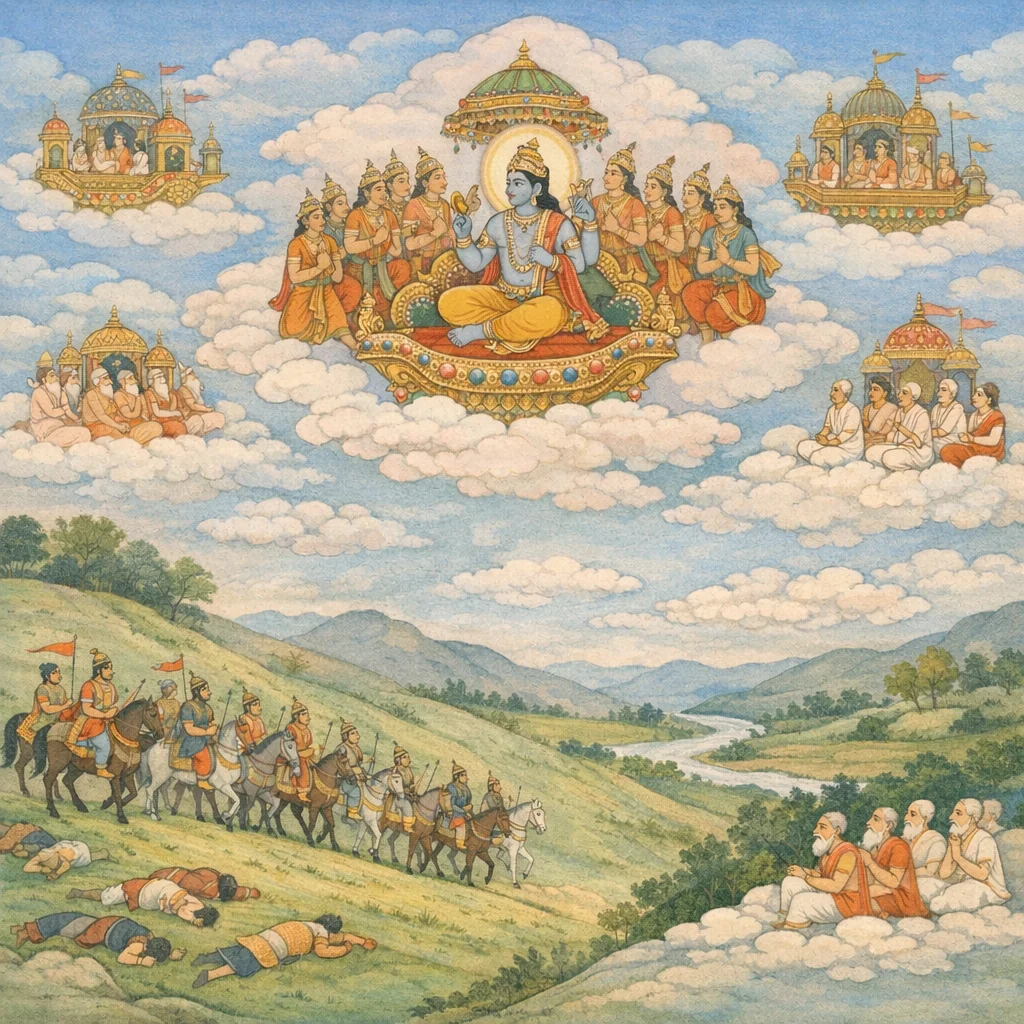
Chapter Arc: अर्जुन–कृप-संग्राम की गूँज अभी थमी ही थी कि रणभूमि के ऊपर एक अलौकिक हलचल उठती है—घुड़सवार योद्धा निकट आते हैं और आकाश में दिव्य विमानों की छाया फैलने लगती है। → कौरव-पक्ष के घुड़सवार, तोमर और अंकुश से प्रेरित उग्र अश्वों पर सवार होकर आगे बढ़ते हैं; उसी क्षण इन्द्र अपने सुदर्शन विमान पर देवगणों सहित प्रकट होते हैं। एक-एक कर विश्वेदेव, अश्विनीकुमार, मरुत, गन्धर्व, राक्षस, सर्प, पितर और महर्षि—सब युद्ध-दर्शन हेतु आ जुटते हैं। → आकाश ‘प्रभासित’ हो उठता है—रत्नजटित, चित्र-विचित्र विमानों की पंक्तियाँ रण के ऊपर स्थिर हो जाती हैं; इन्द्र सहित त्रयस्त्रिंशत् देव और प्राचीन राजर्षियों की उपस्थिति से अर्जुन का युद्ध मानो लोक-त्रय का दृश्य बन जाता है। → देव-समुदाय और सिद्ध-महर्षि अर्जुन तथा कौरवदल के संग्राम को देखने के लिए आसन ग्रहण करते हैं; युद्ध अब केवल मनुष्यों का नहीं, कीर्ति और धर्म के साक्ष्य का प्रसंग बनकर स्थिर हो जाता है। → आकाश में दिव्य दर्शक-मंडली सज चुकी है—अब पृथ्वी पर कौन-सा बाण-प्रहार इस सभा के सामने निर्णायक रूप लेगा?
Shlokas
Verse 1
इस प्रकार श्रीमह्याभारत विराटपर्वके अन्तर्गत योहरणपर्वमें अजुन-कृप-संग्रामविषयक पचपनवाँ अध्याय पूरा हुआ ॥/ ५५ ॥। हि >> आय न (0) है ० षट्पज्चाशत्तमो< ध्याय: अर्जुन और कृपाचार्यका युद्ध देखनेके लिये देवताओंका आकाशमें विमानोंपर आगमन वैशम्पायन उवाच तान्यनीकान्यदृश्यन्त कुरूणामुग्रधन्विनाम् । संसर्पन्ते यथा मेघा घर्मान्ते मन्दमारुता:,वैशम्पायनजी कहते हैं--जनमेजय! तदनन्तर भयंकर धनुष धारण करनेवाले कौरवोंके वे सैनिक शनै:-शनै: आगे बढ़ने लगे। उस समय वे ऐसे दिखायी देते थे, मानो ग्रीष्मके अन्त एवं वर्षकि प्रारम्भमें मन्द वायुद्वारा प्रेरित मेघ धीरे-धीरे आ रहे हों
Vaiśampāyana said: “O Janamejaya, thereafter those battle-formations of the Kurus—men bearing terrible bows—were seen advancing little by little. They appeared like clouds at the end of summer, slowly gathering and moving forward, urged on by gentle winds.”
Verse 2
अभ्याशे वाजिनस्तस्थु: समारूढा: प्रहारिण: । भीमरूपाश्न मातज्रास्तोमराड्कुशनोदिता: । महामात्रै: समारूढा विचित्रकवचोच्च्चला:,घुड़सवार योद्धा समीप आकर खड़े हो गये। घोड़ोंक साथ ही भयंकर हाथी भी आगे बढ़ आये। उन्हें महावत तोमर और अंकुशोंकी मारसे आगे बढ़नेकी प्रेरणा दे रहे थे और उन हाथियोंपर बैठे हुए शूर-वीर अपने विचित्र कवचोंकी प्रभासे प्रकाशित हो रहे थे
Vaiśampāyana said: The horsemen—mounted and ready to strike—drew up close at hand. Along with them, fearsome elephants advanced, urged forward by their mahouts with goads and spear-thrusts. Upon those elephants sat valiant warriors, their varied armor gleaming, as the forces pressed in with disciplined aggression and the will to overpower.
Verse 3
ततः शक्र: सुरगणै: समारुह[ सुदर्शनम् । सहोपायात् तदा राजन विश्वाश्वचिमरुतां गणै:,राजन्! इसी समय देवताओंसहित इन्द्र विमानपर बैठकर विश्वेदेव, अश्विनीकुमार तथा मरुदगणोंके साथ वहाँ आये, जहाँ परस्पर शत्रुता रखनेवाले दो दलोंका भयंकर संघर्ष छिड़ा हुआ था
Vaiśampāyana said: Then Śakra (Indra), mounting his splendid aerial car and accompanied by the hosts of gods, arrived there, O King, together with the Viśvedevas, the Aśvins, and the companies of Maruts—at the very place where a dreadful clash had erupted between two mutually hostile factions.
Verse 4
तद् देवयक्षगन्धर्वमहोरगसमाकुलम् । शुशुभे5 भ्रविनिर्मुक्त ग्रहाणामिव मण्डलम्,उस समय देवता, यक्ष, गन्धर्व तथा बड़े-बड़े नागों (के विमानों) से भरा हुआ वहाँका आकाश बादलोंके आवरणसे रहित ग्रहमण्डलकी भाँति शोभा पाने लगा
Vaiśampāyana said: Then the sky there—crowded with devas, yakṣas, gandharvas, and great serpents (in their aerial vehicles)—shone forth like the circle of the planets when freed from the covering of clouds.
Verse 5
अस्त्राणां च बल॑ तेषां मानुषेषु प्रयुझजताम् । तच्च भीम॑ महद् युद्ध कृपार्जुनसमागमे । द्रष्टम भ्यागता देवा: स्वविमानै: पृथक् पृथक्,कृपाचार्य और अर्जुनके संग्राममें देवताओंके उन अस्त्रोंकी शक्तिका मनुष्योंपर प्रयोग करनेवाले शूरवीरोंके उस महाभयंकर युद्धको अपनी आँखों देखनेके लिये देवतालोग पृथक्-पृथक् अपने विमानोंपर बैठकर आये थे
Vaiśampāyana said: “And to witness the power of those celestial weapons when employed among men, the gods arrived—each separately in his own aerial car—to see that dreadful, great battle that arose in the encounter between Kṛpa and Arjuna.”
Verse 6
शतं शतसहस्राणां यत्र स्थूणा हिरण्मयी । मणिरत्नमयी चान्या प्रासादं तदधारयत्,उन विमानोंमें देवराज इन्द्रका आकाशचारी विमान उस समय सबसे अधिक शोभा पा रहा था। वह इच्छानुसार चलनेवाला दिव्य यान सब प्रकारके रत्नोंसे विभूषित था। उस विमानको एक करोड़ खंभोंने धारण कर रखा था। उनमें एक ओर सोनेके और दूसरी ओर मणि एवं रत्नोंके खंभे लगे थे
Vaiśampāyana said: There stood a splendid palace supported by countless pillars—some fashioned of gold, others inlaid with gems and precious stones—so that the very structure appeared upheld by wealth and divine craftsmanship, evoking the grandeur associated with Indra’s celestial domain.
Verse 7
तत: कामगमं दिव्यं सर्वरत्नविभूषितम् । विमान देवराजस्य शुशुभे खेचरं तदा,उन विमानोंमें देवराज इन्द्रका आकाशचारी विमान उस समय सबसे अधिक शोभा पा रहा था। वह इच्छानुसार चलनेवाला दिव्य यान सब प्रकारके रत्नोंसे विभूषित था। उस विमानको एक करोड़ खंभोंने धारण कर रखा था। उनमें एक ओर सोनेके और दूसरी ओर मणि एवं रत्नोंके खंभे लगे थे
Vaiśaṃpāyana said: Then, among those aerial chariots, the sky-ranging vimāna of Indra, king of the gods, shone with surpassing splendor. It was a divine conveyance that moved according to desire, adorned with every kind of jewel—an image of celestial sovereignty and the effortless power that accompanies divine merit.
Verse 8
तत्र देवास्त्रयस्त्रिंशत् तिष्ठन्ति सहवासवा: । गन्धर्वा राक्षसा: सर्पा: पितरक्ष महर्षिभि:,उस विमानमें इन्द्रसहित तैंतीस देवता विराजमान थे। इनके सिवा गन्धर्व, राक्षस, सर्प, पितर, महर्षिगण, राजा वसुमना, बलाक्ष, सुप्रतर्दन, अष्टक, शिबि, ययाति, नहुष, गय, मनु, पूरु, रघु, भानु, कृशाश्व, सगर तथा नल--ये सब तेजस्वी रूप धारण करके देवराजके विमानमें दृष्टिगोचर हो रहे थे
There, in that celestial setting, the thirty-three gods stood resplendent together with Vāsava (Indra). Alongside them were also Gandharvas, Rākṣasas, serpents (Nāgas), the Pitṛs (ancestral spirits), and great seers—an assembly that proclaims the vast moral order of the cosmos, where divine authority, ancestral law, and ascetic insight are all present as witnesses.
Verse 9
तथा राजा वसुमना बलाक्ष: सुप्रतर्दन: । अष्टकश्न शिबिश्वैव ययातिर्नहुषो गयः,उस विमानमें इन्द्रसहित तैंतीस देवता विराजमान थे। इनके सिवा गन्धर्व, राक्षस, सर्प, पितर, महर्षिगण, राजा वसुमना, बलाक्ष, सुप्रतर्दन, अष्टक, शिबि, ययाति, नहुष, गय, मनु, पूरु, रघु, भानु, कृशाश्व, सगर तथा नल--ये सब तेजस्वी रूप धारण करके देवराजके विमानमें दृष्टिगोचर हो रहे थे
Vaiśampāyana said: “There too were seen King Vasumanā, Balākṣa, Supratardana, and also Aṣṭaka and Śibi, along with Yayāti, Nahuṣa, and Gaya.” In Indra’s celestial chariot (vimāna) the Thirty-three gods shone with Indra at their head; besides them, Gandharvas, Rākṣasas, serpents (Nāgas), the Pitṛs, and great seers were visible. The passage underscores a moral vision of heaven: those renowned for righteousness, generosity, and kingly virtue are portrayed as sharing the divine presence, suggesting that ethical excellence and dharma-oriented rule lead to exalted states.
Verse 10
मनु: पूरू रघुर्भानु: कृशाश्वः सगरो नलः । विमाने देवराजस्य समदृश्यन्त सुप्रभा:,उस विमानमें इन्द्रसहित तैंतीस देवता विराजमान थे। इनके सिवा गन्धर्व, राक्षस, सर्प, पितर, महर्षिगण, राजा वसुमना, बलाक्ष, सुप्रतर्दन, अष्टक, शिबि, ययाति, नहुष, गय, मनु, पूरु, रघु, भानु, कृशाश्व, सगर तथा नल--ये सब तेजस्वी रूप धारण करके देवराजके विमानमें दृष्टिगोचर हो रहे थे
Vaiśampāyana said: Manu, Pūru, Raghu, Bhānu, Kṛśāśva, Sagara, and Nala—radiant in splendor—were seen within the aerial car of the Lord of the gods, Indra. The scene presents a moral panorama: righteous kings and ancient progenitors are shown as honored in Indra’s presence, implying that fame and true eminence are grounded in dharma and worthy conduct rather than mere power.
Verse 11
अग्नेरीशस्य सोमस्य वरुणस्य प्रजापते: । तथा धातुर्विधातुश्च कुबेरस्थ यमस्य च,अग्नि, ईश, सोम, वरुण, प्रजापति, धाता, विधाता कुबेर, यम, अलम्बुष और उग्रसेन आदि गन्धर्व तथा गन्धर्वराज तुम्बुरुके भी पृथक्ू-पृथक् विमान अपनी-अपनी लंबाई- चौड़ाईके अनुसार आकाशके विभिन्न प्रदेशोंमें प्रकाशित हो रहे थे
Vaiśampāyana said: The aerial chariots belonging to Agni, Īśa, Soma, Varuṇa, Prajāpati, and likewise to Dhātṛ and Vidhātṛ, as well as to Kubera and Yama, were seen shining in different regions of the sky—each distinct, each manifest according to its own measure of length and breadth. The scene underscores a cosmic order in which even the mighty move within their allotted forms and domains, suggesting that power is meaningful only when aligned with rightful station and restraint.
Verse 12
अलनम्बुषोग्रसेनानां गन्धर्वस्य च तुम्बुरो: । यथामानं यथोद्देशं विमानानि चकाशिरे,अग्नि, ईश, सोम, वरुण, प्रजापति, धाता, विधाता कुबेर, यम, अलम्बुष और उग्रसेन आदि गन्धर्व तथा गन्धर्वराज तुम्बुरुके भी पृथक्ू-पृथक् विमान अपनी-अपनी लंबाई- चौड़ाईके अनुसार आकाशके विभिन्न प्रदेशोंमें प्रकाशित हो रहे थे
Vaiśampāyana said: The aerial chariots of the Gandharvas—Alambūṣā and Ugrasena—and also of Tumburu shone forth in the sky, each appearing in its proper measure and in its appointed region. The scene underscores a cosmic order: even celestial beings move according to fitting proportion and designated place, suggesting that splendor is governed by discipline and rightful arrangement rather than mere display.
Verse 13
सर्वदेवनिकायाश्न सिद्धाश्ष परमर्षय: । अर्जुनस्य कुरूणां च द्रष्ठ युद्धमुपागता:,ये सभी देवसमुदाय, सिद्ध और महर्षिगण अर्जुन तथा कौरवदलका युद्ध देखनेके लिये जुटे थे
Vaiśampāyana said: Hosts of gods, along with the Siddhas and the highest sages, gathered there to witness the battle between Arjuna and the Kurus—an event so weighty that even the celestial and ascetic orders came as spectators.
Verse 14
दिव्यानां सर्वमाल्यानां गन्ध: पुण्यो5थ सर्वशः । प्रससार वसन्ताग्रे वनानामिव भारत
Vaiśampāyana said: Then, the pure fragrance of all those divine garlands spread everywhere—O Bhārata—like the scent that pervades forests at the very onset of spring. The scene conveys an auspicious, elevating atmosphere, suggesting a moment of grace and favorable omens within the unfolding events.
Verse 15
जनमेजय! जैसे वसन्तके प्रारम्भमें वनके फ़ूलोंकी मनोहर सुगन्न्ध सब ओर फैलने लगती है, उसी प्रकार दिव्य मालाओंकी पुण्यमय गन्ध वहाँ सब ओर छा गयी ।। तत्र रत्नानि देवानां समदृश्यन्त तिष्ठताम् आततपत्राणि वासांसि स्रजशक्ष॒ व्यजनानि च,उन विमानोंमें बैठे हुए देवताओंके रत्न, छत्र, वस्त्र, मालाएँ और चँवर आदि स्पष्ट दिखायी दे रहे थे
Vaiśampāyana said: “O Janamejaya, just as at the onset of spring the delightful fragrance of forest blossoms spreads in every direction, so too the holy scent of divine garlands pervaded that place on all sides. There, the jewels of the gods who were seated in their vimānas were clearly visible—along with their parasols, garments, garlands, and yak-tail fans.”
Verse 16
उपाशाम्यद् रजो भौम॑ सर्व व्याप्तं मरीचिभि: । दिव्यगन्धानुपादाय वायुर्योधानसेवत,धरतीकी धूल शान्त हो गयी थी और पृथ्वीकी प्रत्येक वस्तुपर (दिव्य) किरणोंका प्रकाश छा गया था। वायु दिव्य गन्ध लेकर वहाँपर स्थित योद्धाओंका सेवन करती थी इति श्रीमहाभारते विराटपर्वणि गोहरणपर्वणि देवागमने षट्पञ्चाशत्तमो<ध्याय: ।। ५६ || इस प्रकार श्रीमह्याभारत विराटपर्वके अन्तर्गत गोहरणपर्वरमें देवागमनविषयक छप्पनवाँ अध्याय पूरा हुआ
Vaiśampāyana said: The earthly dust subsided, and rays of light spread everywhere. Bearing a divine fragrance, the wind moved among the warriors there as if ministering to them—signaling an auspicious, otherworldly presence amid the tense martial scene.
Verse 17
प्रभासितमिवाकाशं चित्ररूपमलंकृतम् । सम्पतद्धिः स्थितैश्ञापि नानारत्नविभासितै:,श्रेष्ठ देवताओंद्वारा लाये हुए भाँति-भाँतिके विचित्र विमान अनेकानेक रत्नोंसे उद्भासित थे। उनमेंसे कुछ स्थिर हो गये थे और कुछ (नीचे-ऊपर) उड़ रहे थे। उनके द्वारा उदभासित होनेवाले आकाशकी विचित्र शोभा हो रही थी। वहाँ विमानस्थ देवताओंसे घिरे हुए वज्रधारी महातेजस्वी इन्द्र पद्म और उत्पलोंकी माला पहने सुशोभित हो रहे थे। वे अनेक वीरोंके साथ छिड़े हुए अर्जुनके उस महान् संग्रामको बार-बार देखते थे, तो भी तृप्त नहीं होते थे
Vaiśampāyana said: The sky looked as though it were illuminated—adorned with wondrous, variegated forms—by many celestial aerial cars, some hovering in place and others moving about, all gleaming with diverse jewels. In that radiant spectacle, Indra the wielder of the thunderbolt, encircled by gods and resplendent with garlands of lotuses and blue lotuses, kept watching again and again Arjuna’s great battle against many heroes, yet could not be satisfied—so compelling was the sight of valor upheld in a righteous cause.
Verse 18
विमानैरविविधैश्षित्रैरुपानीतै: सुरोत्तमै: । वज्भच्छुशुभे तत्र विमानस्थै: सुरैर्वृत:,श्रेष्ठ देवताओंद्वारा लाये हुए भाँति-भाँतिके विचित्र विमान अनेकानेक रत्नोंसे उद्भासित थे। उनमेंसे कुछ स्थिर हो गये थे और कुछ (नीचे-ऊपर) उड़ रहे थे। उनके द्वारा उदभासित होनेवाले आकाशकी विचित्र शोभा हो रही थी। वहाँ विमानस्थ देवताओंसे घिरे हुए वज्रधारी महातेजस्वी इन्द्र पद्म और उत्पलोंकी माला पहने सुशोभित हो रहे थे। वे अनेक वीरोंके साथ छिड़े हुए अर्जुनके उस महान् संग्रामको बार-बार देखते थे, तो भी तृप्त नहीं होते थे
Vaiśampāyana said: Brought by the foremost of the gods, many wondrous aerial chariots—variegated and radiant—appeared there. In that splendid scene, Indra, the wielder of the thunderbolt, stood surrounded by deities stationed in their vimānas, his presence heightening the celestial grandeur as they looked on with admiration at the heroic contest unfolding below.
Verse 19
बिभ्रन्मालां महातेजा: पद्मोत्पलसमायुताम् । विप्रेक्षष्माणो बहुभिनातृप्पत् सुमहाहवम्,श्रेष्ठ देवताओंद्वारा लाये हुए भाँति-भाँतिके विचित्र विमान अनेकानेक रत्नोंसे उद्भासित थे। उनमेंसे कुछ स्थिर हो गये थे और कुछ (नीचे-ऊपर) उड़ रहे थे। उनके द्वारा उदभासित होनेवाले आकाशकी विचित्र शोभा हो रही थी। वहाँ विमानस्थ देवताओंसे घिरे हुए वज्रधारी महातेजस्वी इन्द्र पद्म और उत्पलोंकी माला पहने सुशोभित हो रहे थे। वे अनेक वीरोंके साथ छिड़े हुए अर्जुनके उस महान् संग्रामको बार-बार देखते थे, तो भी तृप्त नहीं होते थे
Vaiśampāyana said: Radiant with great splendor, Indra wore a garland woven with lotuses and blue lotuses. Surrounded by the gods stationed in their celestial chariots, he kept watching that mighty battle again and again, yet he was never satisfied—so compelling was Arjuna’s valor and the righteous contest unfolding before him.
Frequently Asked Questions
The dilemma is how to fulfill protective duty while operating under concealment: Arjuna must act decisively to defend Matsya and Uttara, yet regulate the extent and manner of self-revelation and force, balancing necessity with strategic restraint.
Competence joined to composure is ethically superior to impulsive display: disciplined knowledge (astravidyā), calm leadership, and morale stewardship enable effective action that remains aligned with duty even under political constraints.
No explicit phalaśruti appears in this chapter segment; its significance is contextual—demonstrating how regulated power and leadership under pressure function as practical dharma within the epic’s broader ethical architecture.