Adhyaya 98
दधीच्यास्थिवज्रनिर्माणोपाख्यानम् | The Forging of the Vajra from Dadhīca’s Bones
Upa-parva: Agastya–Vṛtra Vadha Upākhyāna (Dadhīca-Asthi Vajra Narrative)
Yudhiṣṭhira asks Lomaśa for a fuller account of the eminent sage Agastya’s actions. Lomaśa introduces a divine narrative from the Kṛta age: the formidable Kāleya dānavas, aligned around Vṛtra, harass the devas. Seeking a decisive method, the devas approach Brahmā with Indra at the fore. Brahmā explains that victory requires a vajra forged from the bones of the rishi Dadhīca, renowned for magnanimity; the devas must request his bones for the good of the three worlds. The devas, led by Nārāyaṇa, travel to Dadhīca’s āśrama on the far bank of the Sarasvatī, described with dense ecological imagery (birds, bees, forests, and fearless wildlife). They bow and request the boon as instructed. Dadhīca agrees, relinquishes his life by yogic mastery, and the devas collect his bones. They then approach Tvaṣṭṛ, who forges a fierce, six-edged vajra and hands it to Indra, declaring it fit to neutralize the hostile force; Indra receives it with readiness to restore order in the celestial realm.
Chapter Arc: लोमश ऋषि युधिष्ठिर को अगस्त्योपाख्यान सुनाते हुए बताते हैं कि कुम्भयोनि महर्षि अगस्त्य किसी जनपद की सीमा पर पधारते हैं और राजा को उनके आगमन का समाचार मिलता है। → राजा (श्रुतर्वा/श्रुतर्वन्) मंत्रियों सहित आगे बढ़कर अगस्त्य का सत्कार करता है, अर्घ्य-पाद्य देता है और विनयपूर्वक उनके आगमन का प्रयोजन पूछता है; ऋषि का उत्तर संकेत देता है कि यह साधारण अतिथि-धर्म नहीं, बल्कि धन-वितरण की कठोर परीक्षा है। → अगस्त्य स्पष्ट कहते हैं—हम ‘वित्तकाम’ होकर आए हैं; अहिंसा और न्याय के साथ हमें विभाजनपूर्वक धन दो—और साथ ही बताते हैं कि पृथ्वी पर सबसे अधिक धनी दानव इल्वल है, उसी को लक्ष्य कर वे धन-याचना हेतु आगे बढ़ेंगे। → लोमश के कथनानुसार यह निर्णय बनता है कि ऋषिगणों के लिए उचित भिक्षा-स्थान इल्वल ही है; अतः वे सब मिलकर इल्वल की ओर प्रस्थान/उपद्रव (याचना हेतु धावा) करते हैं। → ऋषियों का इल्वल के पास पहुँचना और दानव-धन के साथ होने वाली टकराहट अगले प्रसंग के लिए उत्कंठा छोड़ देती है।
Shlokas
Verse 1
इस प्रकार श्रीमह्याभारत वनपर्वके अन्तर्गत तीर्थयात्रापर्वमें लोगशती र्थयात्राके प्रसंगमें अगस्त्योपाख्यानविषयक सत्तानबेवाँ अध्याय पूरा हुआ ॥/ ९७ ॥ हि आम [चुके हि २ अष्टनवतितमोब् ध्याय: धन प्राप्त करनेके लिये अगस्त्यका श्रुतर्वा, ब्रध्नश्व और त्रसदस्यु आदिके पास जाना लोगश उवाच ततो जगाम कौरव्य सो5गस्त्यो भिक्षितुं वसु । श्रुतर्वाणं महीपालं यं वेदाभ्यधिकं नृपैः,लोमशजी कहते हैं--कुरुनन्दन! तदनन्तर अगस्त्यजी धन माँगनेके लिये महाराज श्रुतर्वाके पास गये, जिन्हें वे सब राजाओंसे अधिक वैभवसम्पन्न समझते थे
Lomaśa said: “Then, O scion of the Kurus, that Agastya went to beg for wealth. He approached King Śrutarvā, a ruler of the earth, whom he regarded as surpassing other kings in riches.”
Verse 2
स विदित्वा तु नृपतिः कुम्भयोनिमुपागतम् । विषयान्ते सहामात्य: प्रत्यगृह्नात् सुसत्कृतम्,राजाको जब यह मालूम हुआ कि महर्षि अगस्त्य मेरे यहाँ आ रहे हैं, तब वे मन्त्रियोंके साथ अपने राज्यकी सीमापर चले आये और बड़े आदर-सत्कारसे उन्हें अपने साथ लिवा ले गये
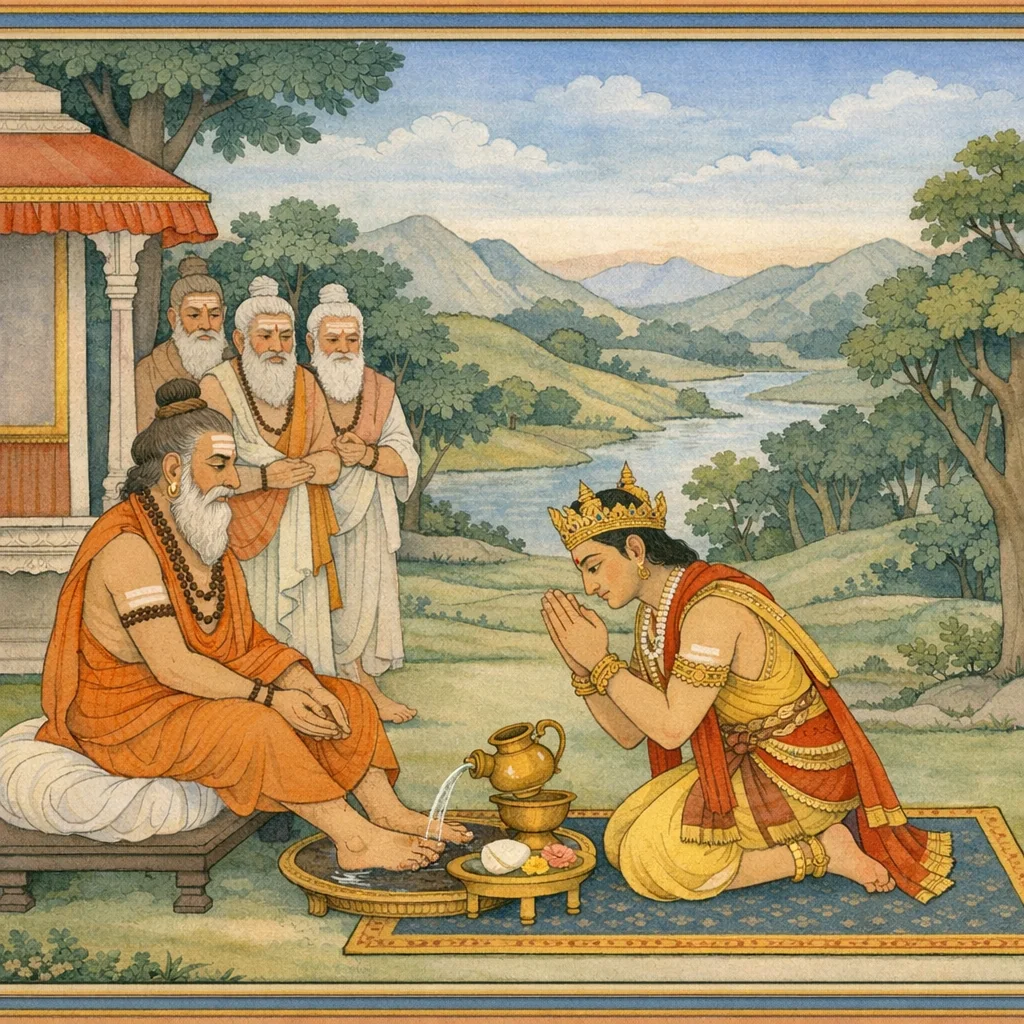
When the king learned that Agastya—born of a jar—had arrived, he went with his ministers to the border of his realm and received the sage with due honor, escorting him respectfully into his domain.
Verse 3
तस्मै चार््य यथान्यायमानीय पृथिवीपति: । प्राउ्जलि: प्रयतो भूत्वा पप्रच्छागमने<र्थिताम्,भूपाल श्रुतर्वाने उनके लिये यथायोग्य अर्घ्य निवेदन करके विनीतभावसे हाथ जोड़कर उनके पधारनेका प्रयोजन पूछा
Having brought the customary offering of welcome (arghya) in the proper manner, the lord of the earth approached with folded hands and a disciplined, humble demeanor, and asked the visitor the purpose for which he had come.
Verse 4
अगस्त्य उवाच वित्तार्थिनमनुप्राप्तं विद्धि मां पृथिवीपते । यथाशवक्त्यविहिंस्यान्यान् संविभागं प्रयच्छ मे,तब अगस्त्यजीने कहा--पृथ्वीपते! आपको मालूम होना चाहिये कि मैं धन माँगनेके लिये आपके यहाँ आया हूँ। दूसरे प्राणियोंको कष्ट न देते हुए यथाशक्ति अपने धनका जितना अंश मुझे दे सकें, दे दें
Agastya said: “O lord of the earth, know that I have come to you seeking wealth. Without causing harm to other living beings, grant me—according to your ability—a fair share from your resources.”
Verse 5
लोगश उवाच तत आयदब्ययौ पूर्णो तस्मै राजा न्यवेदयत् । अतो विद्वन्नुपादत्स्व यदत्र वसु मन््यसे,लोमशजी कहते हैं--युधिष्ठिर! तब राजा श्रुतर्वाने महर्षिके सामने अपने आय- व्ययका पूरा ब्योरा रख दिया और कहा--'ज्ञानी महर्षे! इस धनमेंसे जो आप ठीक समझें, वह ले लें!
Lomaśa said: “Then the king presented to the sage a complete account of his income and expenditure. Thereafter he said, ‘O wise Mahārṣi, from this wealth, take whatever you deem proper.’”
Verse 6
तत आयब्ययौ दृष्टवा समौ सममतिर्द्धिज: । सर्वथा प्राणिनां पीडामुपादानादमन्यत,ब्रह्मर्षि अगस्त्यकी बुद्धि सम थी। उन्होंने आय और व्यय दोनोंको बराबर देखकर यह विचार किया कि इसमेंसे थोड़ा-सा भी धन लेनेपर दूसरे प्राणियोंको सर्वथा कष्ट हो सकता है
Seeing income and expenditure as exactly equal, the twice-born sage—whose mind remained even—reflected that taking even a small portion of wealth could, in every way, cause suffering to other living beings. Thus the Brahmarṣi Agastya’s understanding remained balanced and scrupulous.
Verse 7
स श्रुतर्वाणमादाय ब्रथ्नश्वमगमत् ततः । सच तौ विषयस्यान्ते प्रत्यगृह्लाद् यथाविधि,तब वे श्रुतर्वाको साथ लेकर राजा ब्रध्नश्वके पास गये। उन्होंने भी अपने राज्यकी सीमापर आकर उन दोनों सम्माननीय अतिथियोंकी अगवानी की और विधिपूर्वक उन्हें अपनाया
Taking Śrutarvā with him, he then went to King Bradhnaśva. Bradhnaśva, for his part, came out to the boundary of his realm to welcome those two honored guests, and received them in accordance with proper rites.
Verse 8
तयोररघ्य च पाद्य॑ च ब्रथ्नश्वः प्रत्यवेदयत् । अनुज्ञाप्य च पप्रच्छ प्रयोजनमुपक्रमे,ब्रध्नश्चने उन दोनोंको अर्घ्य और पाद्य निवेदन किये, फिर उनकी आज्ञा ले अपने यहाँ पधारनेका प्रयोजन पूछा
Bradhnaśva duly offered the two guests the customary honors—arghya (a respectful offering) and pādya (water for washing the feet). After receiving their permission, he then inquired, at the very outset, what purpose had brought them to his dwelling.
Verse 9
अगस्त्य उवाच वित्तकामाविह प्राप्ती विद्धयावां पृथिवीपते । यथाशव/्त्यविहिंस्यान्यान् संविभागं प्रयच्छ नौ,अगस्त्यजीने कहा--पृथ्वीपते! आपको विदित हो कि हम दोनों आपके यहाँ धनकी इच्छासे आये हैं। दूसरे प्राणियोंको कष्ट न देते हुए जो धन आपके पास बचता हो, उसमेंसे यथाशक्ति कुछ भाग हमें भी दीजिये
Agastya said: “O lord of the earth, know that we two have come here desiring wealth. Without harming other living beings, grant us—according to your ability—a share from whatever surplus you possess.”
Verse 10
लोगश उवाच तत आयवब्ययौ पूर्ण ताभ्यां राजा न्यवेदयत् । अतो ज्ञात्वा तु गृह्नीतं यदत्र व्यतिरिच्यते,लोमशजी कहते हैं--युधिष्ठिर! तब राजा ब्रध्नश्वने भी उन दोनोंके सामने आय और व्ययका पूरा विवरण रख दिया और कहा--“आप दोनोंको इसमें जो धन अधिक जान पड़ता हो, वह ले लें!
Lomaśa said: “O Yudhiṣṭhira! Then King Bradhnaśva came before those two and set forth the full account of income and expenditure, saying, ‘If in this you deem any wealth to be in excess, take it.’”
Verse 11
तत आयब्ययौ दृष्टवा समौ सममतिर्द्धिज: । सर्वथा प्राणिनां पीडामुपादानादमन्यत,तब समान बुद्धिवाले ब्रह्मर्षि अगस्त्यने उस विवरणमें आय और व्यय बराबर देखकर यह निश्चय किया कि इसमेंसे यदि थोड़ा-सा भी धन लिया जाय तो दूसरे प्राणियोंको सर्वथा कष्ट हो सकता है
Then the twice-born sage Agastya, even-minded and impartial, examined the income and the expenditure and found them exactly equal. He concluded that taking even a little would, in some way, bring suffering upon other living beings; therefore he resolved to take nothing.
Verse 12
पौरुकुत्सं ततो जम्मुस्त्रसदस्युं महाधनम् | अगस्त्यश्ष श्रुतर्वा च ब्रध्नश्वश्न महीपति:,तब अगस्त्य, श्रुतर्वा और ब्रध्नश्च--तीनों पुरुकुत्सनन्दन-महाधनी त्रसदस्युके पास गये
Then Jammū, together with Agastya, Śrutarvā, and King Bradhnaśva, went to Trasadasyu, the immensely wealthy son of Purukutsa.
Verse 13
त्रसदस्युस्तु तान् दृष्टवा प्रत्यगृह्नाद् यथाविधि । अभिगम्य महाराज विषयान्ते महामना:,महाराज! भूपालोंमें श्रेष्ठ इक्ष्वाकुवंशी महामना त्रसदस्युने उन्हें आते देख राज्यकी सीमापर पहुँचकर विधिपूर्वक उन सबका स्वागत-सत्कार किया और उन सबसे अपने यहाँ पधारनेका प्रयोजन पूछा
Seeing them approach, King Trasadasyu, great-souled, went out to the border of his realm and received them with due rites of hospitality. Having honoured them respectfully, he asked the purpose of their visit.
Verse 14
अर्चयित्वा यथान्यायमिक्ष्वाकू राजसत्तम: । समस्तांश्व॒ ततो5पृच्छत् प्रयोजनमुपक्रमे,महाराज! भूपालोंमें श्रेष्ठ इक्ष्वाकुवंशी महामना त्रसदस्युने उन्हें आते देख राज्यकी सीमापर पहुँचकर विधिपूर्वक उन सबका स्वागत-सत्कार किया और उन सबसे अपने यहाँ पधारनेका प्रयोजन पूछा
O King, Trasadasyu of the Ikṣvāku line, best of rulers, duly honoured them according to proper custom; then, at the outset, he questioned them all about the purpose of their coming.
Verse 15
अगस्त्य उवाच वित्तकामानिह प्राप्तान् विद्धि नः पृथिवीपते । यथाशव/षत्यविहिंस्यान्यान् संविभागं प्रयच्छ न:,अगस्त्यने कहा--पृथ्वीपते! आपको विदित हो कि हम धनकी कामनासे यहाँ आये हैं। आप दूसरे प्राणियोंको पीड़ा न देते हुए यथाशक्ति अपने धनका कुछ भाग हम सबको दीजिये
Agastya said: “O lord of the earth, know that we have come here desiring wealth. Therefore, according to your ability, grant us a portion of your riches, without causing pain to other living beings.”
Verse 16
लोगश उवाच तत आयदब्ययौ पूर्ण तेषां राजा न्यवेदयत् । एतज्ज्ञात्वा ह्ुपादध्वं यदत्र व्यतिरिच्यते,लोमशजी कहते हैं--युधिष्ठिर! तब राजाने उन्हें अपने आय-व्ययका पूरा विवरण दे दिया और कहा--'इसे समझकर जो धन शेष बचता हो, वह आपलोग ले लें।' समबुद्धिवाले महर्षि अगस्त्यने वहाँ भी आय-व्ययका लेखा बराबर देखकर यही माना कि इसमेंसे धन लिया जाय तो दूसरे प्राणियोंको सर्वथा कष्ट हो सकता है
Lomaśa said: “Then the king presented them with a complete account of his income and expenditure, and said, ‘Having understood this, take whatever remains here as surplus.’”
Verse 17
तत आयब्ययौ दृष्टवा समौ सममतिर्द्धिज: । सर्वथा प्राणिनां पीडामुपादानादमन्यत,लोमशजी कहते हैं--युधिष्ठिर! तब राजाने उन्हें अपने आय-व्ययका पूरा विवरण दे दिया और कहा--'इसे समझकर जो धन शेष बचता हो, वह आपलोग ले लें।' समबुद्धिवाले महर्षि अगस्त्यने वहाँ भी आय-व्ययका लेखा बराबर देखकर यही माना कि इसमेंसे धन लिया जाय तो दूसरे प्राणियोंको सर्वथा कष्ट हो सकता है
Lomaśa said: “Then, having examined the income and expenditure and finding them exactly balanced, the even-minded sage—though a twice-born—concluded that taking anything from it would, in every way, cause suffering to living beings.”
Verse 18
ततः सर्वे समेत्याथ ते नृपास्तं महामुनिम् । इदमूचुर्महाराज समवेक्ष्य परस्परम्,महाराज! तब वे सब राजा परस्पर मिलकर एक-दूसरेकी ओर देखते हुए महामुनि अगस्त्यसे इस प्रकार बोले--
Then all those kings gathered together and, after looking at one another in mutual assent, addressed that great sage, saying—
Verse 19
अयं वै दानवो ब्रद्म॒न्निल्वलो वसुमान् भुवि । तमतिक्रम्य सर्वेड्द्य वयं चार्थामहे वसु,“ब्रह्म! यह इल्वल दानव इस पृथ्वीपर सबसे अधिक धनी है। हम सब लोग उसीके पास चलकर आज धन माँगें'
“O Brahmin, this is indeed the Dānava Ilvala, the most wealthy upon the earth. Let us all go to him today and, approaching him, ask for riches.”
Verse 20
लोगश उवाच तेषां तदासीदुचितमिल्वलस्यैव भिक्षणम् | ततस्ते सहिता राजन्निल्चलं समुपाद्रवन्,लोमशजी कहते हैं--युधिष्ठिर! उस समय उन सबको इल्वलके यहाँ याचना करना ही ठीक जान पड़ा, अतः वे एक साथ होकर इल्वलके यहाँ शीघ्रतापूर्वक गये
Lomaśa said: “O King (Yudhiṣṭhira), at that time it seemed proper for them to seek alms only at Ilvala’s place. Therefore, gathering together, they went swiftly to Ilvala.”
Verse 98
इति श्रीमहाभारते वनपर्वणि तीर्थयात्रापर्वणि लोमशतीर्थयात्रायामगस्त्योपाख्याने अष्टनवतितमो<ध्याय:
Thus ends the ninety-eighth chapter in the Śrī Mahābhārata, within the Vana Parva, in the section on the pilgrimage to sacred fords (Tīrtha-yātrā Parva), in the account of Lomāśa’s pilgrimage, in the episode concerning Agastya.
Frequently Asked Questions
The central dilemma is the legitimacy of requesting an ascetic’s bodily remains for public security: the narrative resolves it through consent, collective welfare (trailokya-hita), and Dadhīca’s voluntary, intentional relinquishment.
That the highest form of giving is deliberate, non-coerced tyāga oriented to universal welfare; personal embodiment is treated as secondary to dharma when the intention is purified and the act is freely chosen.
No explicit phalaśruti is stated in this chapter-unit; its meta-function is exemplary—embedding a model of righteous sacrifice and authorized strategy within the exile-frame’s moral education.