Adhyaya 94
अगस्त्य-वातापि-उपाख्यानम् (Agastya and Vātāpi: Ilvala’s stratagem; Lopāmudrā’s emergence)
Upa-parva: Agastya–Vātāpi Ākhyāna (Lomāśa–Yudhiṣṭhira dialogue)
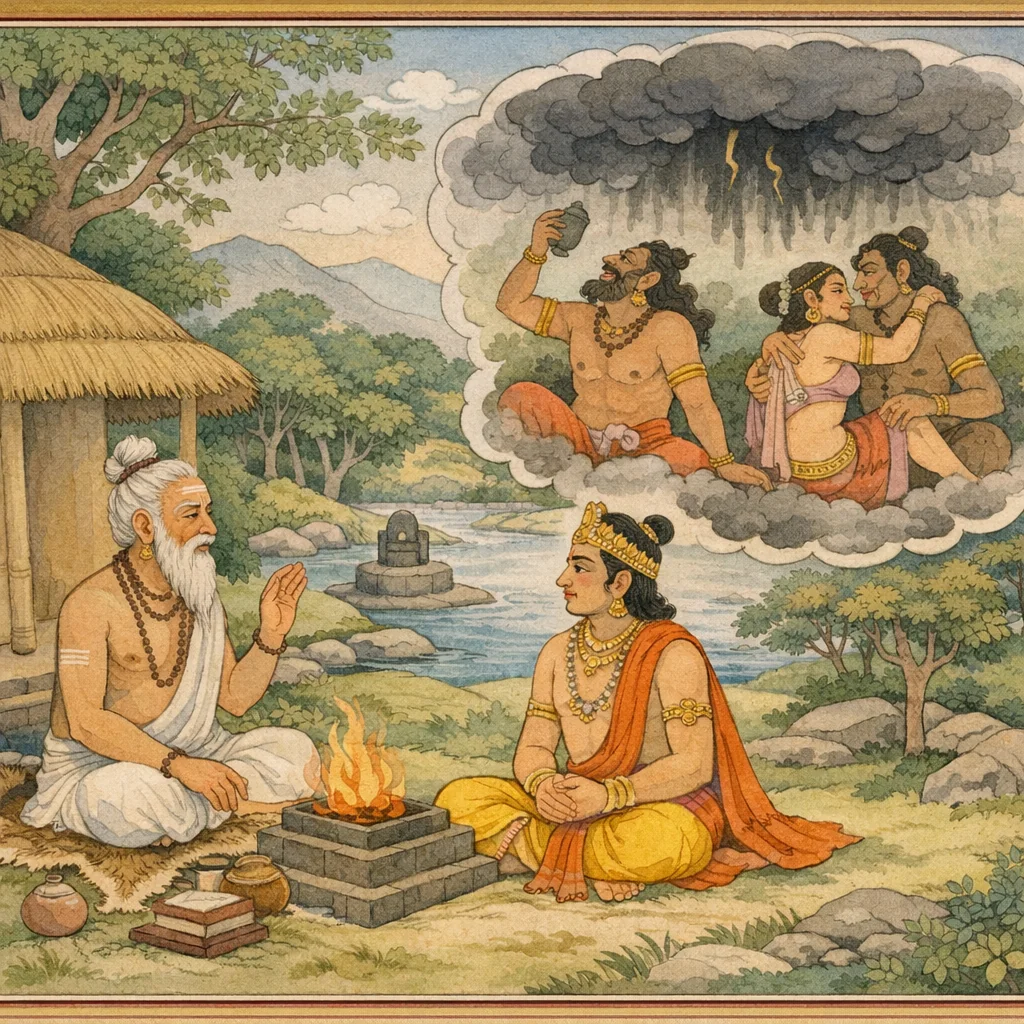
Vaiśaṃpāyana reports that the generous Kaunteya king proceeds and reaches Agastya’s āśrama. There Yudhiṣṭhira questions Lomāśa about why and how the daitya Vātāpi—described as destructive to humans—was subdued by the great-souled Agastya, and what provoked Agastya’s anger. Lomāśa begins the account: Ilvala, a daiteya in Maṇimatī, and his younger brother Vātāpi target brāhmaṇas through a recurring stratagem. Ilvala asks a tapasvin brāhmaṇa for an Indra-like son; refused, he turns hostile. Vātāpi is transformed into a goat, cooked, and served to brāhmaṇas; after the meal Ilvala calls Vātāpi back by voice, and Vātāpi re-emerges by tearing through the eater’s side, repeatedly killing guests. In parallel, Agastya sees his ancestors hanging upside down in a pit; they explain their condition depends on his producing offspring. Agastya vows to relieve them, searches for a suitable wife, and fashions an ideal woman from the best parts of various beings. He gives her to the Vidarbha king desiring a son; she is born and named Lopāmudrā by brāhmaṇas, grows in beauty and virtue, yet no man seeks her out of fear of the great ṛṣi’s claim, prompting her father to deliberate her marriage placement.
Chapter Arc: तीर्थयात्रा के पवित्र विराम में युधिष्ठिर का मन एक तीखा प्रश्न उठाता है—जो लोग धर्महीन, निर्गुण और अधर्म-रुचि हैं, वे इसी लोक में क्यों फलते-फूलते दिखते हैं? → युधिष्ठिर दुर्योधनादि शत्रुओं को ‘सात्त्विक गुणों से रहित’ मानकर लोमश से कारण पूछते हैं। प्रश्न केवल राजनीति का नहीं, जगत-व्यवस्था का है: क्या धर्म का फल देर से आता है, और अधर्म का फल तुरंत? → लोमश का निर्णायक उत्तर—‘नात्र दुःखं…’—और दैत्य-दानवों का दृष्टांत: जब लज्जा, क्षमा, सदाचार और स्वधर्म छूटते हैं, तब लक्ष्मी भी साथ छोड़ देती है; अलक्ष्मी, दर्प और ‘कलि’ का प्रवेश उन्हें भीतर से मार देता है। जो अभी उन्नति दिखती है, वह पतन का ही आरम्भ है। → लोमश धर्मशील देवताओं/देवर्षियों की स्थिर समृद्धि और यश का मार्ग दिखाते हैं, तथा युधिष्ठिर को आश्वस्त करते हैं कि ‘सनातन पन्था’ पर चलकर वे पुनः लक्ष्मी और कीर्ति पाएँगे—जैसे इक्ष्वाकु, मुचुकुन्द, मान्धाता, मरुत्त आदि ने पुत्र-सेवक-बन्धुओं सहित पुण्यकीर्ति पाई थी। → धृतराष्ट्रपुत्र ‘धर्मेण मोहेन च वशीकृता’ होकर दैत्यों की भाँति शीघ्र विनष्ट होंगे—यह भविष्यवाणी अगले प्रसंगों में प्रतिशोध/न्याय की अनिवार्यता का संकेत छोड़ती है।
Shlokas
Verse 1
इस प्रकार श्रीमह्ाा भारत वनप्वके अन्तर्गत तीर्थयात्रापर्वमें लोमशतीर्थयात्राविषयक तिरानबेवाँ अध्याय पूरा हुआ ॥/ ९३ ॥। #::3:.8 #::3:..7 (0) हि २ 7 चतुर्नवतितमो< ध्याय: देवताओं और धर्मात्मा राजाओंका उदाहरण देकर महर्षि लोमशका युधिष्ठिरको अधर्मसे हानि बताना और तीर्थयात्राजनित पुण्यकी महिमाका वर्णन करते हुए आश्वासन देना युधिछिर उवाच न वै निर्गुणमात्मानं मन्ये देवर्षिसत्तम । तथास्मि दुःखसंतप्तो यथा नान्यो महीपति:,युधिष्ठिर बोले--देवर्षिप्रवर लोमश! मेरी समझसे मैं अपनेको सात्त्विक गुणोंसे हीन नहीं मानता तो भी दु:ःखोंसे इतना संतप्त होता रहता हूँ जितना दूसरा कोई राजा नहीं हुआ होगा
Yudhiṣṭhira said: “O best of divine seers, I do not consider myself devoid of virtue; and yet I am scorched by sorrow in a way that no other king seems to have been.”
Verse 2
परांश्व निर्गुणान् मनन््ये न च धर्मगतानपि । ते च लोमश लोकेऊस्मिन्नृध्यन्ते केन हेतुना,इसके सिवा, दुर्योधनादि शत्रुओंको सात्त्विक गुणोंसे रहित समझता हूँ। साथ ही यह भी जानता हूँ कि वे धर्म-परायण नहीं हैं तो भी वे इस लोकमें उत्तरोत्तर समृद्धिशाली होते जा रहे हैं, इसका क्या कारण है?
Yudhiṣṭhira said: “I regard those men as devoid of noble qualities, and I know they are not established in dharma. Yet, O Lomaśa, they continue to prosper more and more in this world—what is the reason for this?”
Verse 3
लोगश उवाच नात्र दुःखं त्वया राजन् कार्य पार्थ कथंचन । यदधर्मेण वर्धेयुरधर्मरुचयो जना:,लोमशजीने कहा--राजन्! कुन्तीनन्दन! अधर्ममें रुचि रखनेवाले लोग यदि उस अधर्मके द्वारा बढ़ रहे हों तो इसके लिये तुम्हें किसी प्रकार दुःख नहीं मानना चाहिये
Lomaśa said: “O King, O Pārtha, you should not grieve over this in any way. If people who delight in unrighteousness are prospering by means of that very unrighteousness, it is not for you to take it as a cause for sorrow.”
Verse 4
वर्धत्यधर्मेण नरस्ततो भद्राणि पश्यति । ततः सपत्नाज्जयति समूलस्तु विनश्यति,पहले अधर्मद्वारा मनुष्य बढ़ सकता है, फिर अपने मनो5नुकूल सुख-सम्पत्तिरूप अभ्युदयको देख सकता है, तत्पश्चात् वह शत्रुओंपर विजय पा सकता है और अन्तमें जड़ मूलसहित नष्ट हो जाता है
Lomaśa said: “A man may prosper by unrighteous means, and for a time he even beholds agreeable gains and good fortune. Thereafter he may overcome his rivals; yet in the end he is destroyed utterly—root and all.”
Verse 5
मया हि दृष्टा दैतेया दानवाश्न महीपते । वर्धमाना ह्ुधर्मेण क्षयं चोपगता: पुन:,महीपाल! मैंने दैत्यों और दानवोंको अधर्मके द्वारा बढ़ते और पुनः नष्ट होते भी देखा है
Lomaśa said: “O king, I have indeed seen the Daityas and Dānavas: they prosper for a time by unrighteousness, yet again they fall into ruin.”
Verse 6
पुरा देवयुगे चैव दृष्टं सर्व मया विभो । अरोचयनू् सुरा धर्म धर्म तत्यजिरेडसुरा:,प्रभो! पहले देवयुगमें ही मैंने यह सब अपनी आँखों देखा है। देवताओंने धर्मके प्रति अनुराग किया और असुरोंने उसका परित्याग कर दिया
In the ancient age of the gods, O mighty one, I myself witnessed all this. The Devas embraced dharma with heartfelt inclination, while the Asuras, O lord, abandoned dharma and turned away from it.
Verse 7
तीर्थानि देवा विविशुर्नाविशन् भारतासुरा: । तानधर्मकृतो दर्प: पूर्वमेव समाविशत्,भरतनन्दन! देवताओंने स्नानके लिये तीर्थोमें प्रवेश किया, परंतु असुर उनमें नहीं गये। अधर्मजनित दर्प असुरोंमें पहलेसे ही समा गया था
The gods entered the sacred fords to bathe, but the Asuras did not enter them. For pride born of unrighteousness had already taken hold of those Asuras beforehand, O delight of the Bharatas.
Verse 8
दर्पान्मान: समभवन्मानात् क्रोधो व्यजायत । क्रोधादह्वीस्ततो5लज्जा वृत्तं तेषां ततोडनशत्,दर्पसे मान हुआ और मानसे क्रोध उत्पन्न हुआ। क्रोधसे निर्लज्जता आयी और निर्लज्जताने उनके सदाचारको नष्ट कर दिया
From arrogance, self-regard arose; from self-regard, anger was born. From anger came shamelessness, and that shamelessness then destroyed their good conduct.
Verse 9
तानलज्जान् गतद्वलीकान् हीनवृत्तान् वृथाव्रतान् | क्षमा लक्ष्मी: स्वधर्मश्व न चिरात् प्रजहुस्ततः,इस प्रकार लज्जा, संकोच और सदाचारसे हीन एवं निष्फल व्रतका आचरण करनेवाले उन असुरोंको क्षमा, लक्ष्मी और स्वधर्मने शीघ्र त्याग दिया। राजन! लक्ष्मी देवताओंके पास चली गयी और अलक्ष्मी असुरोंके यहाँ। अलक्ष्मीके आवेशसे युक्त होनेपर उनका चित्त दर्प और अभिमानसे दूषित हो गया। उस दशामें उन दैत्यों और दानवोंमें कलिका भी प्रवेश हो गया। जब वे दानव अलक्ष्मीसे संयुक्त, कलिसे तिरस्कृत और अभिमानसे अभिभूत हो सत्कर्मोंसे शून्य, विवेकरहित और मानसे उन्मत्त हो गये, तब शीघ्र ही उनका विनाश हो गया
Those beings, having become shameless, stripped of modest restraint, fallen in conduct, and practicing vows that were empty and fruitless—were soon abandoned there by forbearance, prosperity, and their own rightful duty. Deprived of these supports, their inner life turned toward arrogance and delusion, and the seeds of ruin took hold; when shame, ethical discipline, and dharma are cast aside, destruction quickly follows.
Verse 10
लक्ष्मीस्तु देवानगमदलक्ष्मीरसुरान् नृप । तानलक्ष्मीसमाविष्टान् दर्पोपहतचेतस:,इस प्रकार लज्जा, संकोच और सदाचारसे हीन एवं निष्फल व्रतका आचरण करनेवाले उन असुरोंको क्षमा, लक्ष्मी और स्वधर्मने शीघ्र त्याग दिया। राजन! लक्ष्मी देवताओंके पास चली गयी और अलक्ष्मी असुरोंके यहाँ। अलक्ष्मीके आवेशसे युक्त होनेपर उनका चित्त दर्प और अभिमानसे दूषित हो गया। उस दशामें उन दैत्यों और दानवोंमें कलिका भी प्रवेश हो गया। जब वे दानव अलक्ष्मीसे संयुक्त, कलिसे तिरस्कृत और अभिमानसे अभिभूत हो सत्कर्मोंसे शून्य, विवेकरहित और मानसे उन्मत्त हो गये, तब शीघ्र ही उनका विनाश हो गया
O king, Lakṣmī went over to the gods, while Alakṣmī came to the asuras. Once seized by Alakṣmī, their minds were struck down by arrogance—pride and self-conceit clouded their judgment, and their decline swiftly followed.
Verse 11
दैतेयान् दानवांश्नैव कलिरप्याविशत् ततः । तानलक्ष्मीसमाविष्टान् दानवान् कलिना हतान्,इस प्रकार लज्जा, संकोच और सदाचारसे हीन एवं निष्फल व्रतका आचरण करनेवाले उन असुरोंको क्षमा, लक्ष्मी और स्वधर्मने शीघ्र त्याग दिया। राजन! लक्ष्मी देवताओंके पास चली गयी और अलक्ष्मी असुरोंके यहाँ। अलक्ष्मीके आवेशसे युक्त होनेपर उनका चित्त दर्प और अभिमानसे दूषित हो गया। उस दशामें उन दैत्यों और दानवोंमें कलिका भी प्रवेश हो गया। जब वे दानव अलक्ष्मीसे संयुक्त, कलिसे तिरस्कृत और अभिमानसे अभिभूत हो सत्कर्मोंसे शून्य, विवेकरहित और मानसे उन्मत्त हो गये, तब शीघ्र ही उनका विनाश हो गया
Then Kali, too, entered the Daityas and Dānavas. Overpowered by Alakṣmī (misfortune), those Dānavas were struck down by Kali. The passage sets forth a moral sequence: when shame, restraint, and right conduct are cast aside, prosperity and the support of dharma depart; misfortune takes hold, pride and arrogance corrupt the mind, and the destructive force of Kali finds entry—bringing swift ruin.
Verse 12
दर्पाभिभूतान् कौन्तेय क्रियाहीनानचेतस: । मानाभिभूतानचिराद् विनाश: समपद्यत,इस प्रकार लज्जा, संकोच और सदाचारसे हीन एवं निष्फल व्रतका आचरण करनेवाले उन असुरोंको क्षमा, लक्ष्मी और स्वधर्मने शीघ्र त्याग दिया। राजन! लक्ष्मी देवताओंके पास चली गयी और अलक्ष्मी असुरोंके यहाँ। अलक्ष्मीके आवेशसे युक्त होनेपर उनका चित्त दर्प और अभिमानसे दूषित हो गया। उस दशामें उन दैत्यों और दानवोंमें कलिका भी प्रवेश हो गया। जब वे दानव अलक्ष्मीसे संयुक्त, कलिसे तिरस्कृत और अभिमानसे अभिभूत हो सत्कर्मोंसे शून्य, विवेकरहित और मानसे उन्मत्त हो गये, तब शीघ्र ही उनका विनाश हो गया
Lomaśa said: “O son of Kuntī, when beings are overpowered by arrogance, devoid of right action, and lacking discernment—when they are seized by pride—destruction soon befalls them. Thus those Asuras, bereft of modesty, restraint, and good conduct, were quickly abandoned by forbearance, prosperity, and their own dharma. Prosperity went over to the gods, while misfortune settled among the Asuras. Under the sway of misfortune their minds were tainted by insolence and conceit; in that condition even Kali entered them. When they became joined to misfortune, scorned by Kali, overwhelmed by pride, empty of virtuous deeds, without discrimination, and intoxicated by self-regard, their ruin came swiftly.”
Verse 13
निर्यशस्कास्तथा दैत्या: कृत्स्नशो विलयं गता: । देवास्तु सागरांश्वैव सरितश्च॒ सरांसि च,पुनर्वेत्स्यसि तां लक्ष्मीमेष पन्था: सनातन: । यशोहीन दैत्य पूर्णतः विनष्ट हो गये, किंतु धर्मशील देवताओंने पवित्र समुद्रों, सरिताओं, सरोवरों और पुण्यप्रद आश्रमोंकी यात्रा की। पाण्डुनन्दन! वहाँ तपस्या, यज्ञ और दान आदि करके महात्माओंके आशीर्वादसे वे सब पापोंसे मुक्त हो कल्याणके भागी हुए। इस प्रकार उत्तम नियम ग्रहण करके किसीसे भी कोई प्रतिग्रह न लेकर देवताओंने तीर्थोमें विचरण किया; इससे उन्हें उत्तम ऐश्वर्यकी प्राप्ति हुई। नृपश्रेष्ठ! जहाँ राजा धर्मके अनुसार बर्ताव करते हैं वहाँ वे सब शत्रुओंको नष्ट कर देते हैं और उनका राज्य भी बढ़ता रहता है। राजेन्द्र! इसलिये तुम भी भाइयोंसहित तीर्थोमें स्नान करके खोयी हुई राजलक्ष्मी प्राप्त कर लोगे। यही सनातन मार्ग है
Lomaśa said: “So too the Daityas, bereft of fame, perished utterly. But the gods went on pilgrimage to the holy seas, rivers, and lakes. By that timeless path, you too will regain that royal fortune.”
Verse 14
अभ्यगच्छन् धर्मशीला: पुण्यान्यायतनानि च । तपोभि: क्रतुभिदानिराशीवदिश्व॒ पाण्डव
Those who were steadfast in dharma approached the Pāṇḍavas, led them to holy sanctuaries, and honored them with austerities, sacrificial rites, and gifts, bestowing blessings.
Verse 15
प्रजहुः सर्वपापानि श्रेयश्व प्रतिपेदिरे । एवमादानवन्तश्न निरादानाश्च सर्वश:
Thus, they cast off all sins and attained what is truly beneficial. In this way, both those who possessed means and those who had nothing at all—everyone without exception—reached welfare through that course of conduct.
Verse 16
तीर्थान्यगच्छन् विबुधास्तेनापुर्भूतिमुत्तमाम् । (यत्र धर्मेण वर्तन्ते राजानो राजसत्तम । सर्वान् सपत्नान् बाधनते राज्यं चैषां विवर्धते ।।) तथा त्वमपि राजेन्द्र स्नात्वा तीर्थेषु सानुज:
The wise, by going to the sacred tīrthas, attained unsurpassed prosperity. For, O best of kings, where rulers walk in dharma, they subdue every rival claimant and their sovereignty increases. So too, O king—together with your younger brother—bathe at the holy tīrthas.
Verse 17
यथैव हि नूगो राजा शिबिरौशीनरो यथा,तथा त्वमपि राजेन्द्र लब्धासि विपुलां श्रियम् । जैसे राजा नृग, उशीनरपुत्र शिबि, भगीरथ, वसुमना, गय, पूरु तथा पुरूरवा आदि नरेशोंने सदा तपस्यापूर्वक तीर्थयात्रा करके वहाँके जलके स्पर्श और महात्माओंके दर्शनसे पावन यश और प्रचुर धन प्राप्त किये थे; उसी प्रकार तुम भी तीर्थयात्राके पुण्यसे विपुल सम्पत्ति प्राप्त कर लोगे
Lomaśa said: “Just as King Nṛga, and likewise Śibi the son of Uśīnara, attained great prosperity, so too will you, O best of kings, obtain abundant fortune. By undertaking pilgrimage and austerity—through the purifying touch of sacred waters and the sight of great-souled sages—kings of old gained stainless fame and wealth; in the same way, you will gain ample prosperity through the merit of pilgrimage.”
Verse 18
भगीरथो वसुमना गय: पूरु: पुरूरवा: । चरमाणास्तपो नित्य॑ स्पर्शनादम्भसक्ष ते,तथा त्वमपि राजेन्द्र लब्धासि विपुलां श्रियम् । जैसे राजा नृग, उशीनरपुत्र शिबि, भगीरथ, वसुमना, गय, पूरु तथा पुरूरवा आदि नरेशोंने सदा तपस्यापूर्वक तीर्थयात्रा करके वहाँके जलके स्पर्श और महात्माओंके दर्शनसे पावन यश और प्रचुर धन प्राप्त किये थे; उसी प्रकार तुम भी तीर्थयात्राके पुण्यसे विपुल सम्पत्ति प्राप्त कर लोगे
Lomaśa said: “Bhagīratha, Vasumanas, Gaya, Pūru, and Purūravas—kings of old—constantly undertook austerity while journeying on pilgrimage. By the mere touch of the sacred waters and by association with holy men, they attained stainless fame and abundant prosperity. In the same way, O best of kings, you too will obtain great fortune through the merit of pilgrimage.”
Verse 19
तीर्थाभिगमनात् पूता दर्शनाच्च महात्मनाम् | अलभन्त यश: पुण्यं धनानि च विशाम्पते,तथा त्वमपि राजेन्द्र लब्धासि विपुलां श्रियम् । जैसे राजा नृग, उशीनरपुत्र शिबि, भगीरथ, वसुमना, गय, पूरु तथा पुरूरवा आदि नरेशोंने सदा तपस्यापूर्वक तीर्थयात्रा करके वहाँके जलके स्पर्श और महात्माओंके दर्शनसे पावन यश और प्रचुर धन प्राप्त किये थे; उसी प्रकार तुम भी तीर्थयात्राके पुण्यसे विपुल सम्पत्ति प्राप्त कर लोगे
“By going to sacred fords they became purified, and by beholding great-souled sages they gained holy fame and wealth, O lord of the people. In the same way, O best of kings, you too will obtain abundant prosperity through the merit of pilgrimage.”
Verse 20
।। यथा चेक्ष्वाकुरभवत् सपुत्रजनबान्धव:
“Just as Ikṣvāku once became (prosperous and secure), together with his sons, his people, and his kinsmen.”
Verse 21
मुचुकुन्दो5थ मान्धाता मरुत्तश्न महीपति: । कीर्ति पुण्यामविन्दन्त यथा देवास्तपोबलात्
Lomaśa said: “So too did King Mucukunda, and then Māndhātṛ, and Marutta the lord of the earth—each attained holy, meritorious fame, just as the gods won theirs through the power of austerity (tapas).”
Verse 22
देवर्षयश्न कार्त्स्न्येन तथा त्वमपि वेत्स्यसि । धार्रराष्ट्रास्त्वर्मेण मोहेन च वशीकृता: । न चिराद् वै विनड्क्ष्यन्ति दैत्या इव न संशय:
“The divine seers know this fully, and you too will come to understand it in its entirety. The sons of Dhṛtarāṣṭra, overpowered by unrighteousness and delusion, will not last long; they will soon perish—like the Daityas—of this there is no doubt.”
Verse 94
जैसे पुत्र, सेवक तथा बन्धु-बान्धवोंसहित राजा इक्ष्वाकु, मुचुकुन्द, मान्धाता तथा महाराज मरुत्तने पुण्यकीर्ति प्राप्त की थी, जैसे देवताओं और देवर्षियोंने तपोबलसे यश और ऐश्वर्य प्राप्त किया था; उसी प्रकार तुम भी पूर्णरूपसे यश और धन-सम्पत्ति प्राप्त करोगे। धृतराष्ट्रके पुत्र पाप और मोहके वशीभूत हैं; अतः वे दैत्योंकी भाँति शीघ्र नष्ट हो जायँगे; इसमें संशय नहीं है ।। इति श्रीमहाभारते वनपर्वणि तीर्थयात्रापर्वणि लोमशतीर्थयात्रायां चतुर्नवतितमो< ध्याय:,इस प्रकार श्रीमहाभारत वनपर्वके अन्तर्गत तीर्थयात्रापर्चमें लोमशतीर्थयात्राविषयक चौरानबेवाँ अध्याय पूरा हुआ
Lomaśa said: “Just as King Ikṣvāku, Mucukunda, Māndhātā, and the great king Marutta—surrounded by sons, servants, and kinsmen—won a fame that was truly meritorious; and just as the gods and the divine seers, by the power of austerity (tapas), attained renown and sovereignty; so too will you, in full measure, obtain glory and wealth. The sons of Dhṛtarāṣṭra are mastered by sin and delusion; therefore, like the Daityas, they will swiftly perish—of this there is no doubt.”
Verse 163
पुनर्वेत्स्यसि तां लक्ष्मीमेष पन्था: सनातन: । यशोहीन दैत्य पूर्णतः विनष्ट हो गये, किंतु धर्मशील देवताओंने पवित्र समुद्रों, सरिताओं, सरोवरों और पुण्यप्रद आश्रमोंकी यात्रा की। पाण्डुनन्दन! वहाँ तपस्या, यज्ञ और दान आदि करके महात्माओंके आशीर्वादसे वे सब पापोंसे मुक्त हो कल्याणके भागी हुए। इस प्रकार उत्तम नियम ग्रहण करके किसीसे भी कोई प्रतिग्रह न लेकर देवताओंने तीर्थोमें विचरण किया; इससे उन्हें उत्तम ऐश्वर्यकी प्राप्ति हुई। नृपश्रेष्ठ! जहाँ राजा धर्मके अनुसार बर्ताव करते हैं वहाँ वे सब शत्रुओंको नष्ट कर देते हैं और उनका राज्य भी बढ़ता रहता है। राजेन्द्र! इसलिये तुम भी भाइयोंसहित तीर्थोमें स्नान करके खोयी हुई राजलक्ष्मी प्राप्त कर लोगे। यही सनातन मार्ग है
“You will regain that royal fortune again; this is the eternal path. The Daityas, bereft of true glory, were utterly ruined; but the gods, steadfast in dharma, undertook pilgrimages to holy seas, rivers, lakes, and merit-bestowing hermitages. O son of Pāṇḍu, there they practiced austerity, performed sacrifices, and gave gifts; by the blessings of great sages they were freed from all sin and became heirs to well-being. Thus, adopting excellent disciplines and accepting no gifts from anyone, the gods wandered among the tīrthas, and through this they attained supreme prosperity. O best of kings, where rulers act in accordance with dharma, they destroy all enemies and their realm continually grows. Therefore you too, together with your brothers, should bathe at the sacred fords and you will recover the lost Lakṣmī of kingship. This indeed is the timeless way.”
Frequently Asked Questions
The chapter juxtaposes the duty to honor hospitality and ritual feeding with the necessity of prudent discernment when norms are exploited for harm, raising the problem of how virtue is defended against systematic deception.
Ascetic power is presented as ethically purposive—protecting social order and fulfilling obligations—while lineage duty (pitṛ-ṛṇa) is framed as a continuing responsibility even for accomplished renunciants.
No explicit phalaśruti appears in the provided passage; the chapter functions primarily as an etiological and ethical exemplum within the larger frame-dialogue, contributing interpretive weight through narrative consequence rather than stated reward.