Adhyaya 58
नलस्य विवस्त्रीकरणं दमयन्ती-सहानुगमनं च (Nala’s Disrobing and Damayantī’s Companionship)
Upa-parva: Nalopākhyāna (The Tale of Nala and Damayantī)
Bṛhadaśva recounts the aftermath of Nala’s loss to Puṣkara: Puṣkara mocks the dispossessed king and proposes a further stake—Damayantī—intensifying humiliation and ethical outrage. Nala, overwhelmed, does not respond verbally; he removes his ornaments, abandons royal splendor, and departs in a single garment. Damayantī follows, likewise minimally clothed, and the pair remain near the city for three nights without receiving due hospitality, constrained by Puṣkara’s hostile proclamation. Pressed by hunger, Nala notices birds with golden-colored wings and attempts to trap them using his garment; the birds seize the cloth and reveal themselves as the dice (akṣāḥ), declaring their intent to strip him further. Now without clothing, Nala explains to Damayantī that hostile forces have displaced him and that even those who withheld honor now appear as birds taking his last possession. He indicates routes toward Vidarbha and other regions, implying a plan for survival. Damayantī, distressed, argues that she cannot abandon him in the forest; she offers companionship as medicine for suffering and insists they travel together to her father’s kingdom where Nala would be honored. The chapter centers on the ethics of abandonment, the social mechanics of disgrace, and the stabilizing force of spousal fidelity amid extreme vulnerability.
Chapter Arc: दमयन्ती के स्वयंवर में मनुष्य-राजा नल के वरण से असंतुष्ट कलि, देवसभा में अपना रोष लेकर उपस्थित होता है—और वहीं से अधर्म का बीज फूटता है। → इन्द्र (वृत्रहा) कलि को रोककर पूछते हैं कि वह कहाँ जाएगा; कलि निर्लज्जता से कहता है कि वह दमयन्ती के स्वयंवर में जाकर उसे वरेगा। कलि तर्क देता है कि देवताओं के रहते मनुष्य का वरण ‘अपराध’ है और दण्ड योग्य है। → देवता एक स्वर में नल के गुणों का गान करते हैं—धर्मज्ञ, सर्वगुणसम्पन्न, सत्यनिष्ठ—और कलि को चेताते हैं कि ऐसे राजा को शाप देने की इच्छा करने वाला स्वयं गहरे नरक में गिरेगा। → देवता कलि के आरोप को अस्वीकार कर देते हैं: दमयन्ती ने उनकी अनुमति से नल का वरण किया है; अतः कलि का क्रोध अधर्ममूलक है। देवता (द्वापर सहित) स्वर्ग लौट जाते हैं, पर कलि भीतर-भीतर प्रतिशोध का संकल्प बाँध लेता है। → देवताओं के चले जाने पर कलि द्वापर से गुप्त षड्यंत्र रचता है—नल को राज्य से भ्रंश करने और जुए (अक्ष) के माध्यम से उसे गिराने का; आगे नल के भाग्य पर अंधकार छा जाता है।
Shlokas
Verse 1
हि >> आय ० | हि २ 7 अष्टपञज्चाशत्तमो< ध्याय: देवताओंके द्वारा नलके गुणोंका गान और उनके निषेध करनेपर भी नलके विरुद्ध कलियुगका कोप बु॒हदश्व उवाच वृते तु नैषथे भैम्या लोकपाला महौजस: । यान्तो ददृशुरायान्तं द्वापरं कलिना सह,बृहदश्च मुनि कहते हैं--राजन! भीमकुमारी दमयन्तीद्वारा निषधनरेश नलका वरण हो जानेपर जब महातेजस्वी लोकपालगण स्वर्गलोकको जा रहे थे, उस समय मार्ममें उन्होंने देखा कि कलियुगके साथ द्वापर आ रहा है
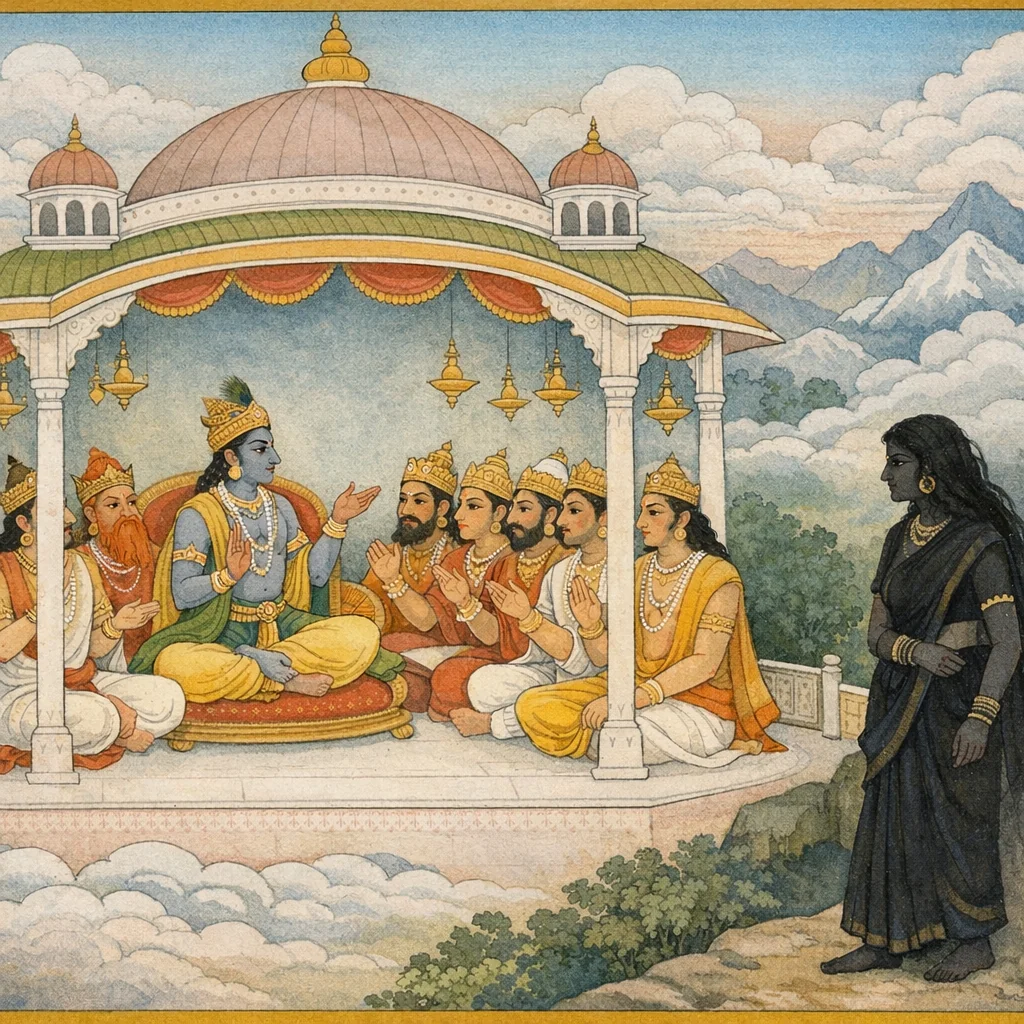
Bṛhadaśva said: When Damayantī, the daughter of Bhīma, had chosen Nala, the king of Niṣadha, the mighty guardians of the worlds set out for heaven. As they were departing, they saw the Dvāpara age approaching together with Kali—an ominous sign that even after a righteous choice and divine praise, the forces of decline and discord may still seek an opening in human life.
Verse 2
अथाब्रवीत् कलिं शक्र: सम्प्रेक्ष्य बलवृत्रहा । द्वापरेण सहायेन कले ब्रूहि क्व यास्यसि,कलियुगको देखकर बल और वृत्रासुरका नाश करनेवाले इन्द्रने पूछा--“कले! बताओ तो सही द्वापरके साथ कहाँ जा रहे हो?”
Then Śakra (Indra), the mighty slayer of Vṛtra, looked upon Kali and said: “O Kali, accompanied by Dvāpara—tell me, where are you going?”
Verse 3
ततो<ब्रवीत् कलि: शक्रं दमयन्त्या: स्वयंवरम् । गत्वा हि वरयिष्ये तां मनो हि मम तां गतम्,तब कलिने इन्द्रसे कहा--“देवराज! मैं दमयन्तीके स्वयंवरमें जाकर उसका वरण करूँगा; क्योंकि मेरा मन उसके प्रति आसक्त हो गया है”
Then Kali said to Śakra (Indra): “I will go to Damayantī’s svayaṃvara and choose her as my bride, for my mind has gone to her.”
Verse 4
तमब्रवीत् प्रहस्येन्द्रो निर्वृत्त: स स्वयंवर: । वृतस्तया नलो राजा पतिरस्मत्समीपत:,तब इन्द्रने हँलँकर कहा--“वह स्वयंवर तो हो गया। हमारे समीप ही दमयन्तीने राजा नलको अपना पति चुन लिया
Indra, smiling, said to him: “That svayaṃvara has now concluded. Right here in our very presence, Damayantī has chosen King Nala as her husband.”
Verse 5
एवमुक्तस्तु शक्रेण कलि: कोपसमन्वित: । देवानामन्त्रय तान् सर्वनिवाचेदं वचस्तदा,इन्द्रके ऐसा कहनेपर कलियुगको क्रोध चढ़ आया और उसी समय उसने उन सब देवताओंको सम्बोधित करके यह बात कही--
When thus addressed by Śakra (Indra), Kali—overcome with anger—then summoned all the gods and spoke these words.
Verse 6
देवानां मानुषं मध्ये यत् सा पतिमविन्दत । ततस्तस्या भवेन्न्याय्यं विपुलं दण्डधारणम्,“दमयन्तीने देवताओंके बीचमें मनुष्यका पतिरूपमें वरण किया है। अतः उसे बड़ा भारी दण्ड देना उचित प्रतीत होता है”
Bṛhadaśva said: “Since she chose a human husband from among the gods, it would therefore seem proper that a severe punishment be imposed upon her.”
Verse 7
एवमुक्ते तु कलिना प्रत्यूचुस्ते दिवौकस: । अस्माभि: समनुज्ञाते दमयन्त्या नलो वृत:
When Kali had spoken thus, the gods replied: “With our consent, Damayantī has chosen Nala.”
Verse 8
कलियुगके ऐसा कहनेपर देवताओंने उत्तर दिया--'दमयन्तीने हमारी आज्ञा लेकर नलका वरण किया है ।। का च सर्वगुणोपेतं नाश्रयेत नल॑ नृपम् यो वेद धर्मानखिलान् यथावच्चरितव्रत:,“राजा नल सर्वगुणसम्पन्न हैं। कौन स्त्री उनका वरण नहीं करेगी? जिन्होंने भलीभाँति ब्रह्मचर्यव्रतका पालन करके चारों वेदों तथा पंचम वेद समस्त इतिहास-पुराणका भी अध्ययन किया है, जो सब धर्मोंको जानते हैं, जिनके घरपर पंचयज्ञोंमें धर्मके अनुसार सम्पूर्ण देवता नित्य तृप्त होते हैं, जो अहिंसा-परायण, सत्यवादी तथा दृढ़तापूर्वक व्रतका पालन करनेवाले हैं, जिन नरश्रेष्ठ लोकपाल-सदृश तेजस्वी नलमें दक्षता, धैर्य, ज्ञान, तप, शौच, शम और दम आदि गुण नित्य निवास करते हैं। कले! ऐसे राजा नलको जो मूढ़ शाप देनेकी इच्छा रखता है, वह मानो अपनेको ही शाप देता है। अपने द्वारा अपना ही विनाश करता है
Bṛhadaśva said: When Kali spoke thus, the gods replied, “Damayantī chose King Nala only after receiving our sanction. And who would not seek refuge in King Nala, endowed with every excellence? He knows dharma in its entirety, and his vows are rightly observed.”
Verse 9
यो<थीते चतुरो वेदान् सर्वानाख्यानपञ्चमान् | नित्यं तृप्ता गृहे यस्य देवा यज्ञेषु धर्मत: । अहिंसानिरतो यश्च सत्यवादी दृढव्रत:,“राजा नल सर्वगुणसम्पन्न हैं। कौन स्त्री उनका वरण नहीं करेगी? जिन्होंने भलीभाँति ब्रह्मचर्यव्रतका पालन करके चारों वेदों तथा पंचम वेद समस्त इतिहास-पुराणका भी अध्ययन किया है, जो सब धर्मोंको जानते हैं, जिनके घरपर पंचयज्ञोंमें धर्मके अनुसार सम्पूर्ण देवता नित्य तृप्त होते हैं, जो अहिंसा-परायण, सत्यवादी तथा दृढ़तापूर्वक व्रतका पालन करनेवाले हैं, जिन नरश्रेष्ठ लोकपाल-सदृश तेजस्वी नलमें दक्षता, धैर्य, ज्ञान, तप, शौच, शम और दम आदि गुण नित्य निवास करते हैं। कले! ऐसे राजा नलको जो मूढ़ शाप देनेकी इच्छा रखता है, वह मानो अपनेको ही शाप देता है। अपने द्वारा अपना ही विनाश करता है
Bṛhadaśva said: “He has studied the four Vedas, along with the traditional narratives counted as the ‘fifth’—the whole body of ancient histories and lore; in whose house the gods are ever satisfied through sacrifices performed in accordance with dharma; who is devoted to non-violence, a speaker of truth, and steadfast in his vows—such is King Nala, complete in virtues. What woman would not choose him? To wish to curse such a man is like cursing oneself, bringing about one’s own ruin.”
Verse 10
यस्मिन् दाक्ष्यं धृतिरज्ञानं तप: शौचं दम: शम: । ध्रुवाणि पुरुषव्याप्रे लोकपालसमे नृपे,“राजा नल सर्वगुणसम्पन्न हैं। कौन स्त्री उनका वरण नहीं करेगी? जिन्होंने भलीभाँति ब्रह्मचर्यव्रतका पालन करके चारों वेदों तथा पंचम वेद समस्त इतिहास-पुराणका भी अध्ययन किया है, जो सब धर्मोंको जानते हैं, जिनके घरपर पंचयज्ञोंमें धर्मके अनुसार सम्पूर्ण देवता नित्य तृप्त होते हैं, जो अहिंसा-परायण, सत्यवादी तथा दृढ़तापूर्वक व्रतका पालन करनेवाले हैं, जिन नरश्रेष्ठ लोकपाल-सदृश तेजस्वी नलमें दक्षता, धैर्य, ज्ञान, तप, शौच, शम और दम आदि गुण नित्य निवास करते हैं। कले! ऐसे राजा नलको जो मूढ़ शाप देनेकी इच्छा रखता है, वह मानो अपनेको ही शाप देता है। अपने द्वारा अपना ही विनाश करता है
Bṛhadaśva said: In that tiger among men, that king who is the equal of the world-guardians, there abide unfailingly such qualities as skill, steadfastness, freedom from ignorance, austerity, purity, self-restraint, and inner calm.
Verse 11
एवंरूपं नल॑ यो वै कामयेच्छपितुं कले । आत्मानं स शपेन्मूढो हन्यादात्मानमात्मना,“राजा नल सर्वगुणसम्पन्न हैं। कौन स्त्री उनका वरण नहीं करेगी? जिन्होंने भलीभाँति ब्रह्मचर्यव्रतका पालन करके चारों वेदों तथा पंचम वेद समस्त इतिहास-पुराणका भी अध्ययन किया है, जो सब धर्मोंको जानते हैं, जिनके घरपर पंचयज्ञोंमें धर्मके अनुसार सम्पूर्ण देवता नित्य तृप्त होते हैं, जो अहिंसा-परायण, सत्यवादी तथा दृढ़तापूर्वक व्रतका पालन करनेवाले हैं, जिन नरश्रेष्ठ लोकपाल-सदृश तेजस्वी नलमें दक्षता, धैर्य, ज्ञान, तप, शौच, शम और दम आदि गुण नित्य निवास करते हैं। कले! ऐसे राजा नलको जो मूढ़ शाप देनेकी इच्छा रखता है, वह मानो अपनेको ही शाप देता है। अपने द्वारा अपना ही विनाश करता है
Bṛhadaśva said: “Kali, whoever would wish to curse Nala—such a man, deluded, would in truth be cursing his own self; by his own agency he would bring about his own destruction.”
Verse 12
एवंगुणं नल॑ यो वै कामयेच्छपितुं कले । कृच्छे स नरके मज्जेदगाधे विपुले हृदे । एवमुक्त्वा कलिं देवा द्वापरं च दिवं ययु:,“ऐसे सद्गुणसम्पन्न महाराज नलको जो शाप देनेकी कामना करेगा, वह कष्टसे भरे हुए अगाध एवं विशाल नरककुण्डमें निमग्न होगा।” कलियुग और द्वापरसे ऐसा कहकर देवतालोग स्वर्गमें चले गये
Bṛhadaśva said: “Whoever would wish to curse Kali, when he has fastened himself upon a king like Nala—so abundantly endowed with virtue—will, in grievous torment, sink into a vast and bottomless pit of hell.” Having spoken thus to Kali and to Dvāpara, the gods departed for heaven.
Verse 13
ततो गतेषु देवेषु कलिब्द्वापरमब्रवीत् | संहर्तु नोत्सहे कोपं नले वत्स्यामि द्वापर,तदनन्तर देवताओंके चले जानेपर कलियुगने द्वापरसे कहा--'द्वापर! मैं अपने क्रोधका उपसंहार नहीं कर सकता। नलके भीतर निवास करूँगा और उन्हें राज्यसे वंचित कर दूँगा। जिससे वे दमयन्तीसे रमण नहीं कर सकेंगे। तुम्हें भी जूएके पासोंमें प्रवेश करके मेरी सहायता करनी चाहिये”
When the gods had departed, Kali said to Dvāpara: “I cannot withdraw my wrath. I will dwell within Nala, and by that influence deprive him of his kingdom, so that he will no longer be able to live in joy with Damayantī.”
Verse 14
भ्रंशयिष्यामि तं राज्यान्न भैम्या सह रंस्यते । त्वमप्यक्षान् समाविश्य साहाय्य॑ कर्तुमहसि,तदनन्तर देवताओंके चले जानेपर कलियुगने द्वापरसे कहा--'द्वापर! मैं अपने क्रोधका उपसंहार नहीं कर सकता। नलके भीतर निवास करूँगा और उन्हें राज्यसे वंचित कर दूँगा। जिससे वे दमयन्तीसे रमण नहीं कर सकेंगे। तुम्हें भी जूएके पासोंमें प्रवेश करके मेरी सहायता करनी चाहिये”
“I shall drive him from his kingdom; he will not be able to enjoy life together with Bhīma’s daughter (Damayantī). You too should enter the dice and render me assistance.”
Verse 57
इस प्रकार श्रीमहाभारत वनपर्वके अन्तर्गत दमयन्ती-स्वयंवरविषयक सत्तावनवाँ अध्याय पूरा हुआ
Thus ends the fifty-seventh chapter of the Vana Parva of the Śrī Mahābhārata, dealing with the topic of Damayantī’s svayaṃvara.
Verse 58
इति श्रीमहाभारते वनपर्वणि नलोपाख्यानपर्वणि कलिदेवसंवादे अष्टपञज्चाशत्तमो5 ध्याय:,इस प्रकार श्रीमहाभारत वनपर्वके अन्तर्गत नलोपाख्यानपर्वमें कलि-देवता-संवादविषयक अद्लावनवाँ अध्याय पूरा हुआ
Thus, in the Mahābhārata, within the Vana Parva—specifically in the Nalopākhyāna section—ends the fifty-eighth chapter, which presents the dialogue between Kali and the deity.
Frequently Asked Questions
The dilemma concerns whether survival strategy can justify separation from one’s spouse under extreme vulnerability: Nala gestures toward routes and contingency planning, while Damayantī frames abandonment as ethically and emotionally untenable, insisting on shared responsibility.
Adversity exposes the difference between external sovereignty and internal governance: when wealth and status collapse, ethical stability is preserved through restraint, truthful counsel, and reciprocal care—especially within the marital bond.
No explicit phalaśruti appears in this chapter’s unit; its meta-function is exemplary—offering Yudhiṣṭhira a comparative case study on endurance, social disgrace, and dharma-maintenance during exile.