Adhyaya 236
दुर्योधनस्य हास्तिनपुरप्रवेशः (Duryodhana’s Return toward Hastinapura; Karṇa’s Consolation)
Upa-parva: Gandharva-saṅgrāma / Duryodhana-nivṛtti Episode (Āraṇyaka-parva contextual unit)
Janamejaya requests a detailed account of how Duryodhana—previously defeated, bound, and then released—could re-enter Hāstinapura given his habitual pride and contempt toward the Pāṇḍavas. Vaiśaṃpāyana narrates Duryodhana’s physical and psychological state: he proceeds with his fourfold army, yet remains downcast, ashamed, and mentally burdened by defeat. En route, he halts in a pleasant, well-watered area, arranges his troops by station, and sits in a radiant seat, described through a simile of the moon eclipsed by Rāhu—signaling reputational obscuration. Karṇa approaches and addresses him with reassurance: he expresses relief at Duryodhana’s survival, frames the encounter as extraordinary, and emphasizes that escaping such a non-human (amānuṣa) conflict with brothers and resources intact is itself remarkable. The chapter closes with Duryodhana responding with lowered head and tear-choked speech, indicating unresolved shame and an unstable emotional equilibrium that will condition subsequent counsel and policy.
Chapter Arc: मार्कण्डेय के कथन-प्रवाह के भीतर द्रौपदी–सत्यभामा संवाद का समापन-क्षण आता है—अब उपदेश नहीं, विदाई है; और विदाई के साथ आश्वासन की परीक्षा। → मधुसूदन के रथारोहण से पहले सत्यभामा द्रौपदी को आलिंगन कर हृदयस्पर्शी वचन कहती है—वनवास, अपमान और अनिश्चित भविष्य की पीड़ा के बीच द्रौपदी के मन में ‘कब न्याय होगा’ की उत्कण्ठा को शांत करने का प्रयत्न। → सत्यभामा का दृढ़ आश्वासन: ‘कृष्ण के विषय में तुझे उत्कण्ठा न हो, व्यथा न हो; तेरे पति देवतुल्य तेज से पृथ्वी को जीतेंगे’—और द्रौपदी के पुत्रों (प्रतिविन्ध्य, सुतसोम, श्रुतकर्मा, शतानीक, आदि) के कल्याण-रक्षण का भरोसा। → केशव सब से यथावत् संवाद कर विदा लेते हैं; सत्यभामा प्रदक्षिणा कर रथ पर चढ़ती है; कृष्ण द्रौपदी को सांत्वना देकर शीघ्रगामी अश्वों सहित द्वारका की ओर प्रस्थान करते हैं। → वन में रह गई द्रौपदी के लिए आश्वासन तो मिला, पर न्याय का समय अभी अनिर्णीत—कृष्ण का प्रस्थान भविष्य के प्रतिशोध/धर्म-स्थापन की प्रतीक्षा को और तीव्र कर देता है।
Shlokas
Verse 1
हि आय न [हुक हि 7 आम पज्चत्रिशर्दाधिकद्विशततमो< ध्याय: सत्यभामाका द्रौपदीको आश्वासन देकर श्रीकृष्णके साथ द्वारकाको प्रस्थान वैशम्पायन उवाच मार्कण्डेयादिभिरवविंप्रै: पाण्डवैश्व महात्मभि: । कथाभिरनुकूलाभि: सह स्थित्वा जनार्दन:,वैशम्पायनजी कहते हैं--जनमेजय! उस समय भगवान् श्रीकृष्ण मार्कण्डेय आदि ब्रह्मर्षियों तथा महात्मा पाण्डवोंके साथ अनुकूल बातें करते हुए कुछ कालतक वहाँ रहकर (द्वारका जानेको उद्यत हुए)
Vaiśampāyana said: Janamejaya, Lord Janārdana (Śrī Kṛṣṇa) stayed there for some time in the company of the brahmarṣis headed by Mārkaṇḍeya and the noble-souled Pāṇḍavas, engaging in agreeable and supportive conversation—thus consoling and steadying them before proceeding onward.
Verse 2
ततस्तै: संविदं कृत्वा यथावन्मधुसूदन: । आरुरुक्षू रथं सत्यामाह्दयामास केशव:,मधुसूदन केशवने उन सबसे यथावत्् वार्तालापके अनन्तर विदा लेकर रथपर चढ़नेकी इच्छासे सत्यभामाको बुलाया
Then Madhusūdana (Kṛṣṇa), having duly concluded his conversation with them, and wishing to mount the chariot, called for Satyā (Satyabhāmā).
Verse 3
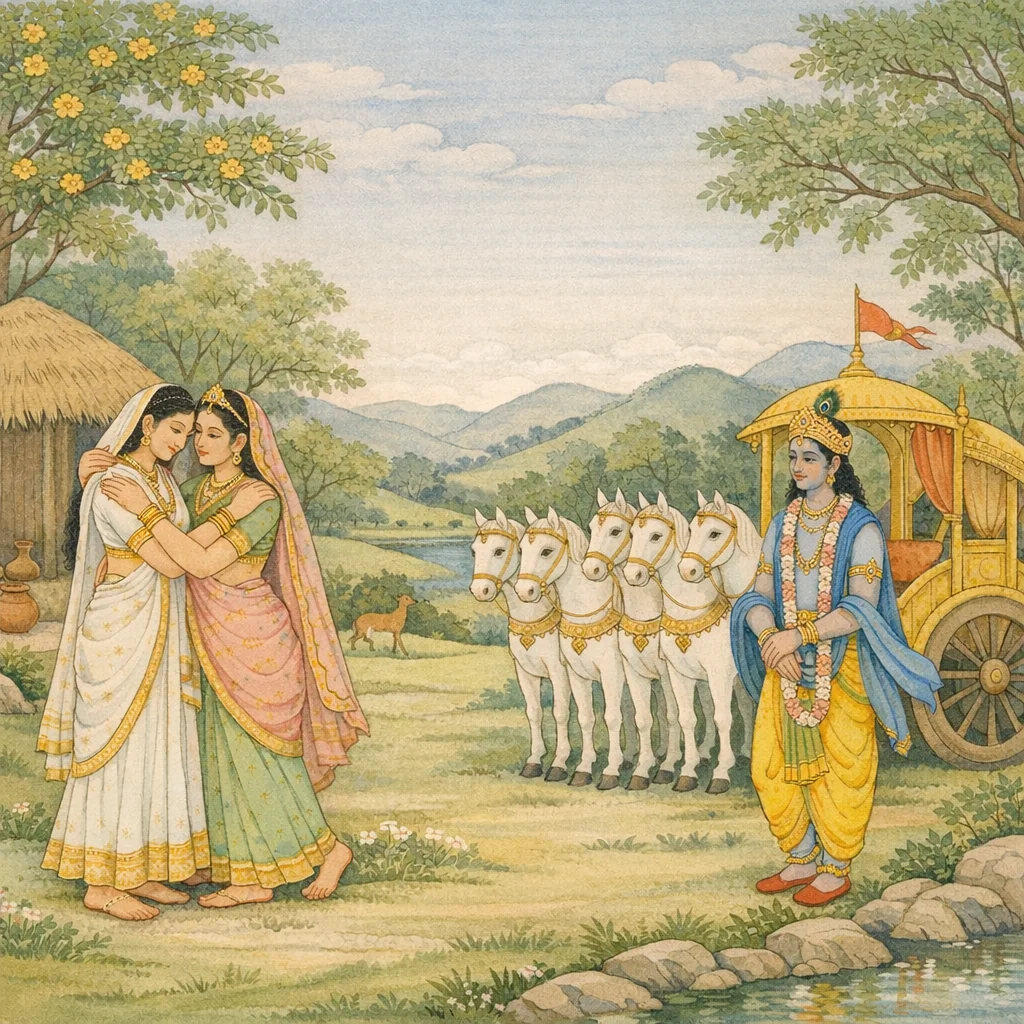
सत्यभामा ततत्तत्र स्वजित्वा टद्रुपदात्मजाम् | उवाच वचन हृद्यं यथाभावं समाहितम्,तब सत्यभामा वहाँ ट्रुपदकुमारीसे गले मिलकर अपने हार्दिक भावके अनुसार एकाग्रतापूर्वक मधुर वचन बोली--
Then Satyabhāmā, there, having embraced the daughter of Drupada, spoke sweet and heart-pleasing words, composed and attentive, expressing her feelings just as they truly were.
Verse 4
॥/४ ) ॥ ) ४ ) बन न प् 777 “#7#हम्न्ट्टल कृष्णे मा भूत् तवोत्कण्ठा मा व्यथा मा प्रजागर: । भर्तभिवेंवसंकाशैर्जितां प्राप्स्पसि मेदिनीम्,“सखी कृष्णे! तुम्हें राज्यके लिये चिन्तित और व्यथित नहीं होना चाहिये। तुम इस प्रकार रात-रातभर जागना छोड़ दो। तुम्हारे देवतुल्य पतियोंद्वारा जीती हुई इस पृथ्वीका राज्य तुम्हें अवश्य प्राप्त होगा
Vaiśampāyana said: “Kṛṣṇā (Draupadī), do not be consumed by longing; do not grieve; do not keep vigil through the nights. The sovereignty of this earth—won by your husbands, radiant like the gods—will surely come to you.”
Verse 5
न होवं शीलसम्पन्ना नैवं पूजितलक्षणा: । प्राप्तुवन्ति चिरं क्लेशं यथा त्वमसितेक्षणे,'श्यामलोचने! तुम्हें जैसा क्लेश सहन करना पड़ा है, वैसा कष्ट तुम्हारे-जैसी सुशीला तथा श्रेष्ठ लक्षणोंवाली देवियाँ अधिक दिनोंतक नहीं भोगा करती हैं
Vaiśampāyana said: “Women endowed with good conduct and honored for their auspicious qualities do not usually have to endure suffering for long. Yet you—dark-eyed, with lovely dark glances—have borne a distress as prolonged as it is undeserved.”
Verse 6
अवश्यं च त्वया भूमिरियं निहतकण्टका । भर्तृभि: सह भोक्तव्या निर्दन्द्धेति श्रुत मया,“मैंने (महात्माओंसे) सुना है कि तुम अपने पतियोंके साथ निश्चय ही इस पृथ्वीका निर्द्धद्ध तथा निष्कण्टक राज्य भोगोगी
Vaiśampāyana said: “I have heard that you will certainly enjoy this earth together with your husbands—an earth made free of thorns, with its dangers and oppressors destroyed, and its troubles burned away.”
Verse 7
धार्रराष्ट्रवर्धं कृत्वा वैराणि प्रतियात्य च । युधिष्ठिरस्थां पृथिवीं द्रक्ष्यसि द्रुपदात्मजे,“ट्रपदकुमारी! तुम शीघ्र ही देखोगी कि धृतराष्ट्रके पुत्रोंको मारकर और पहलेके वैरका भरपूर बदला चुकाकर तुम्हारे पतियोंने विजय पायी है और इस पृथ्वीपर महाराज युधिष्ठिरका अधिकार हो गया है
Vaiśampāyana said: “O daughter of Drupada, you will soon see this earth established under Yudhiṣṭhira’s rightful rule—after the sons of Dhṛtarāṣṭra have been struck down and the old enmities have been fully repaid. Thus will your husbands attain victory, completing the hard moral reckoning demanded by past wrongs.”
Verse 8
यास्ता: प्रव्रजमानां त्वां प्राहसन् दर्पमोहिता: । ताः क्षिप्रं हतसंकल्पा द्रक्ष्यसि त्वं कुरुस्त्रिय:,“तुम्हारे वन जाते समय अभिमानसे मोहित हो कुरुकुलकी जिन स्त्रियोंने तुम्हारी हँसी उड़ायी थी, उनकी आशाओंपर पानी फिर जायगा और तुम उन्हें शीघ्र ही दुरवस्थामें पड़ी हुई देखोगी
Vaiśampāyana said: “Those Kuru women who, deluded by pride, mocked you as you were departing for the forest—you will soon see them with their designs shattered, brought low and distressed.”
Verse 9
तव दुःखोपपन्नाया यैराचरितमप्रियम् । विद्धि सम्प्रस्थितान् सर्वास्तान् कृष्णे यमसादनम्,“कृष्णे! तुम दुःखमें पड़ी हुई थी, उस दशामें जिन लोगोंने तुम्हारा अप्रिय किया है, उन सबको तुम यमलोकमें गया हुआ ही समझो
Vaiśampāyana said: “Kṛṣṇā, when you were overwhelmed by sorrow, those who behaved toward you in a hateful and improper way—know them all to have already departed to Yama’s abode. Consider them as good as dead.”
Verse 10
पुत्रस्ते प्रतिविन्ध्यश्ष सुतसोमस्तथाविध: । श्रुतकर्मार्जुनिश्वैव शतानीकश्न नाकुलि:,'युधिष्ठिरकुमार प्रतिविन्ध्य, भीमसेननन्द्न सुतसोम, अर्जुनकुमार श्रुतकर्मा, नकुलनन्दन शतानीक तथा सहदेवकुमार श्रुतसेन--तुम्हारे ये सभी वीर पुत्र शस्त्रविद्यामें निपुण हो गये हैं और कुशलपूर्वक द्वारकापुरीमें रहते हैं
Vaiśampāyana said: “Your sons—Prativindhya, and Sutasoma of like prowess, and Śrutakarmā the son of Arjuna, and Śatānīka the son of Nakula—are all present.”
Verse 11
सहदेवाच्च यो जात: श्रुतसेनस्तवात्मज: । सर्वे कुशलिनो वीरा: कृतास्त्राश्व॒ सुतास्तव,'युधिष्ठिरकुमार प्रतिविन्ध्य, भीमसेननन्द्न सुतसोम, अर्जुनकुमार श्रुतकर्मा, नकुलनन्दन शतानीक तथा सहदेवकुमार श्रुतसेन--तुम्हारे ये सभी वीर पुत्र शस्त्रविद्यामें निपुण हो गये हैं और कुशलपूर्वक द्वारकापुरीमें रहते हैं
Vaiśampāyana said: “And Śrutasena, your son who was born of Sahadeva—along with all your other sons—are well and thriving. Those heroic youths have been trained in the use of weapons and are living safely and competently at Dvārakā.”
Verse 12
अभिमन्युरिव प्रीता द्वारवत्यां रता भृशम् । त्वमिवैषां सुभद्रा च प्रीत्या सर्वात्मना स्थिता,“वे सबके सब अभिमन्युकी भाँति बड़ी प्रसन्नताके साथ वहाँ रहते हैं। द्वारकामें उनका मन बहुत लगता है। सुभद्रादेवी तुम्हारी ही तरह उन सबके साथ सब प्रकारसे प्रेमपूर्ण बर्ताव करती हैं
Vaiśampāyana said: “They all live there with great joy, as though Abhimanyu himself were among them; their hearts are deeply attached to Dvāravatī. And Subhadrā, like you, stands by them with wholehearted affection, treating them with loving regard in every way.”
Verse 13
प्रीयते तव निर्द्धन्द्धा तेभ्यक्ष॒ु विगतज्वरा । दुःखिता तेन दुःखेन सुखेन सुखिता तथा,“वे किसीके प्रति भेदभाव न रखकर उन सबके प्रति निश्छल स्नेह रखती हैं। वे उन बालकोंके दुःखसे ही दुःखी और उन्हींके सुखसे सुखी होती हैं
Vaiśampāyana said: “She is pleased with all, free from inner conflict, and toward them she is without feverish agitation. She becomes sorrowful with their sorrow, and likewise she is happy with their happiness.”
Verse 14
भजेत् सर्वात्मना चैव प्रद्युम्नजननी तथा । भानुप्रभृतिभिश्वचैनान् विशिनष्टि च केशव:,'प्रद्यम्मकी माताजी भी उनकी सब प्रकारसे सेवा और देखभाल करती हैं। श्यामसुन्दर अपने भानु आदि पुत्रोंसे भी बढ़कर तुम्हारे पुत्रोंको मानते हैं
Vaiśampāyana said: “Pradyumna’s mother too serves them with her whole heart. And Keśava, through Bhānu and his other sons, shows special care for these children—treating them as even dearer than his own.”
Verse 15
भोजनाच्छादने चैषां नित्यं मे श्वशुरः स्थित: । रामप्रभृतय: सर्वे भजन्त्यन्धकवृष्णय:,मेरे श्वशुरजी प्रतिदिन इनके भोजन-वस्त्र आदिकी समुचित व्यवस्थापर दृष्टि रखते हैं। बलरामजी आदि सभी अन्धकवंशी तथा वृष्णिवंशी यादव उनकी सुख-सुविधाका ध्यान रखते हैं
Vaiśampāyana said: “As for their food and clothing, my father-in-law is constantly attentive, ensuring proper provision. And all the Andhakas and Vṛṣṇis—beginning with Balarāma—render service and look after their comfort.”
Verse 16
तुल्यो हि प्रणयस्तेषां प्रद्युम्नस्य च भाविनि । एवमादि प्रियं सत्यं हृद्यमुक्त्वा मनोडनुगम्,'भामिनि! उन सबका और प्रद्युम्नका भी तुम्हारे पुत्रोंपर समान प्रेम है।” इस प्रकार हृदयको प्रिय लगनेवाले, सत्य एवं मनके अनुकूल वचन कहकर श्रीकृष्णमहिषी सत्यभामाने अपने स्वामीके रथकी ओर जानेका विचार किया और द्रौपदीकी परिक्रमा की
Vaiśaṃpāyana said: “O passionate lady, their affection for your sons is equal—Pradyumna’s as well.” Having thus spoken words that were dear to the heart, truthful, and in harmony with the mind, Satyabhāmā, the chief queen of Śrī Kṛṣṇa, turned her thought toward going to her husband’s chariot and circumambulated Draupadī in respectful regard.
Verse 17
गमनाय मनश्षक्रे वासुदेवरथं प्रति । तां कृष्णां कृष्णमहिषी चकाराभिप्रदक्षिणम्,'भामिनि! उन सबका और प्रद्युम्नका भी तुम्हारे पुत्रोंपर समान प्रेम है।” इस प्रकार हृदयको प्रिय लगनेवाले, सत्य एवं मनके अनुकूल वचन कहकर श्रीकृष्णमहिषी सत्यभामाने अपने स्वामीके रथकी ओर जानेका विचार किया और द्रौपदीकी परिक्रमा की
Vaiśampāyana said: Resolving in her mind to depart toward Vāsudeva’s chariot, Kṛṣṇa’s chief queen respectfully circumambulated Kṛṣṇā (Draupadī).
Verse 18
आरुरोह रथं शौरे: सत्यभामाथ भाविनी । स्मयित्वा तु यदुश्नेष्ठो द्रौषपदीं परिसान्त्व्य च | उपावर्त्य ततः शीघ्रै्हयै: प्रायात् पुरं स्वकम्,तदनन्तर भागमिनी सत्यभामा श्रीकृष्णके रथपर आरूढ़ हो गयी। यदुश्रेष्ठ श्रीकृष्णने मुसकराकर द्रौपदीको सान्त्वना दी और उसे लौटाकर शीघ्रगामी घोड़ोंद्वारा अपनी पुरी द्वारकाको प्रस्थान किया
Vaiśampāyana said: Then the virtuous Satyabhāmā mounted the chariot of Śauri (Kṛṣṇa). The best of the Yadus, smiling, consoled Draupadī and, after sending her back, departed swiftly with fast horses to his own city, Dvārakā.
Verse 234
इस प्रकार श्रीमहाभारत वनपर्वके अन्तर्गत द्रौपदीसत्यभामासंवादपर्वमें द्रौपदीद्वारा स्त्रीकर्तत्यकथनविषयक दो सौ चौंतीसवाँ अध्याय पूरा हुआ
Thus ends the two-hundred and thirty-fourth chapter of the Vana Parva of the Śrī Mahābhārata, within the section known as the Dialogue of Draupadī and Satyabhāmā, in which Draupadī sets forth the duties and proper conduct of a woman, offering ethical guidance through exemplary counsel.
Verse 235
इति श्रीमहाभारते वनपर्वणि द्रौपदीसत्यभामासंवादपर्वणि कृष्णगमने पज्चत्रिंशदधिकद्विशततमो<ध्याय:
Thus ends, in the Śrī Mahābhārata, within the Vana Parva, the section entitled “The Dialogue of Draupadī and Satyabhāmā,” the chapter concerning Kṛṣṇa’s departure—Chapter 235. This closing colophon frames the episode as a morally instructive conversation between two exemplary women, and marks the narrative transition as Kṛṣṇa departs, signaling a shift from counsel and reflection back to unfolding action.
Frequently Asked Questions
The dilemma concerns how a ruler should face public life after humiliation: whether to withdraw under shame (lajjā) or to re-enter political space and manage the narrative of defeat while retaining authority.
The chapter illustrates that external power is inseparable from internal composure: counsel can stabilize a leader’s self-conception, but unresolved pride and shame remain potent drivers of future policy and conflict.
No explicit phalaśruti appears in the provided verses; the meta-function is narrative-ethical, emphasizing the psychological consequences of dishonor and the strategic role of speech in restoring political continuity.