Adhyaya 80
द्रौपदी-कृष्णसंवादः (Draupadī–Kṛṣṇa Dialogue on Settlement and Daṇḍa)
Upa-parva: Kṛṣṇa–Draupadī Saṃvāda (Udyoga-parva, contextual episode around Adhyāya 80)
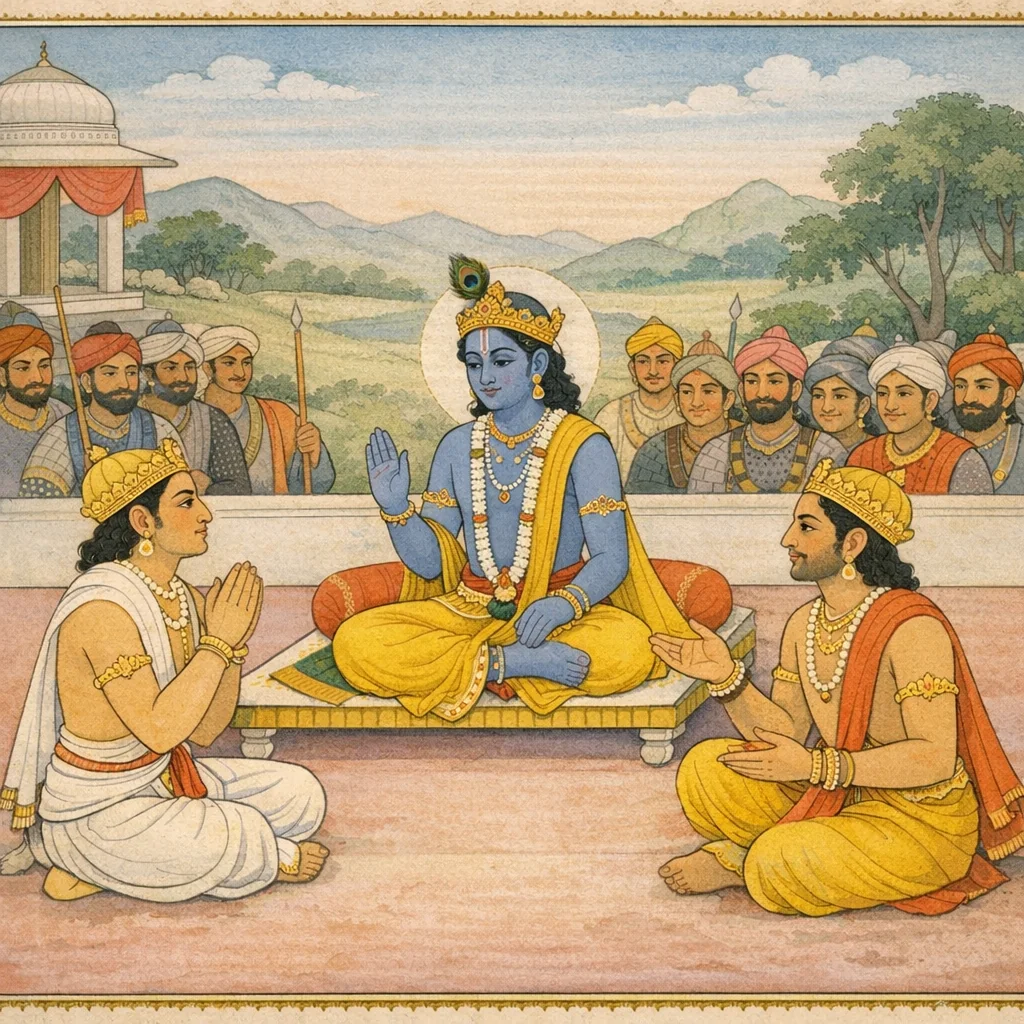
Vaiśaṃpāyana reports Draupadī’s grief-charged address to Kṛṣṇa. She recalls that Kṛṣṇa already knows the deceptive dispossession of the Pāṇḍavas and the confidential counsel conveyed via Sañjaya. She reiterates the minimal settlement proposal—five villages (including Kuśasthala, Vṛkasthala, Āsandī, Vāraṇāvata, and a fifth small holding)—and frames Duryodhana’s refusal as evidence that conciliation will not succeed. Draupadī advances an ethical argument for daṇḍa: enemies who do not desist through sāman or dāna must be restrained to protect life and order, while also noting the special status of brāhmaṇas within normative constraints. She then personalizes the political debate by invoking her public humiliation, grasping her hair as a mnemonic token and urging Kṛṣṇa to remember it when considering peace. She forecasts that her Pāñcāla kin and sons will participate in the coming conflict if reconciliation is hollow. Kṛṣṇa consoles her, promises that his words will not be futile, and asserts that those who ignore counsel will meet destruction, thereby closing the chapter with a pledge of consequential accountability.
Chapter Arc: कृष्ण के दूत-कार्य और शान्ति-प्रयासों की पृष्ठभूमि में सभा के भीतर सहदेव का उग्र, स्पष्ट मत उठता है—यदि कुरु शान्ति चाहें तब भी युद्ध की तैयारी और समय-सीमा निश्चित हो। → सहदेव द्रौपदी के अपमान और पाण्डवों के वनवास-काल की स्मृति को सामने रखकर कहता है कि सुयोधन के प्रति क्रोध कैसे शमे; यदि धर्मराज भी धर्म-मार्ग पर टिके रहें, तब भी वह संग्राम में उतरने को तत्पर है। → सात्यकि सहदेव के वचन को ‘सत्य’ और ‘नीति’ कहकर अनुमोदित करता है और दुर्योधन-वध को ही शान्ति का वास्तविक उपाय बताता है; उसी क्षण समस्त योद्धाओं में सिंहनाद-सा उत्साह फैलता है। → सभा में उपस्थित युद्धेच्छु वीर ‘साधु-साधु’ कहकर सात्यकि के समर्थन में एकमत हो जाते हैं; सहदेव का मत सामूहिक संकल्प में बदल जाता है। → कृष्ण के शान्ति-प्रयासों के समानान्तर पाण्डव-पक्ष का युद्ध-निश्चय कठोर हो चुका है—अब प्रश्न यह है कि कुरु-पक्ष क्या उत्तर देगा और दूत-कार्य किस दिशा में मुड़ेगा।
Shlokas
Verse 1
पम्प बछ। अर: एकाशीतितमो<ध्याय: युद्धके लिये सहदेव तथा सात्यकिकी सम्मति और समस्त योद्धाओंका समर्थन सहदेव उवाच यदेतत् कथित राज्ञा धर्म एब सनातन: । यथा च युद्धमेव स्यात् तथा कार्यमरिंदम,सहदेव बोले--शत्रुदमन श्रीकृष्ण! महाराज युधिष्ठिरने यहाँ जो कुछ कहा है, यह सनातनधर्म है; परंतु मेरा कथन यह है कि आपको ऐसा प्रयत्न करना चाहिये, जिससे युद्ध होकर ही रहे
Sahadeva said: “What the king has stated here is indeed the eternal law of dharma. Yet my counsel is this, O subduer of foes: act in such a way that the outcome is war itself.”
Verse 2
यदि प्रशममिच्छेयु: कुरव: पाण्डवैः सह । तथापि युद्ध दाशा्ह योजयेथा: सहैव तै:,दशाहईनन्दन! यदि कौरव पाण्डवोंके साथ संधि करना चाहें, तो भी आप उनके साथ युद्धकी ही योजना बनाइयेगा
Sahadeva said: “Even if the Kurus should seek reconciliation with the Pāṇḍavas, you must still, along with them, make preparations for war.”
Verse 3
कथं नु दृष्टवा पाज्चालीं तथा कृष्ण सभागताम् | अवधेन प्रशाम्येत मम मन्यु: सुयोधने,श्रीकृष्ण! पांचालराजकुमारी द्रौपदीको वैसी दशामें सभाके भीतर लायी गयी देखकर दुर्योधनके प्रति बढ़ा हुआ मेरा क्रोध उसका वध किये बिना कैसे शान्त हो सकता है?
Sahadeva said: “How, O Śrī Kṛṣṇa, could my wrath against Suyodhana ever be calmed without his death, after seeing Pāñcālī—Kṛṣṇā (Draupadī)—brought into the assembly in such a condition?”
Verse 4
यदि भीमार्जुनौ कृष्ण धर्मराजश्न धार्मिक: । धर्ममुत्सज्य तेनाहं योद्धुमिच्छामि संयुगे,श्रीकृष्ण! यदि भीमसेन, अर्जुन तथा धर्मराज युधिष्छिर धर्मका ही अनुसरण करते हैं तो मैं उस धर्मको छोड़कर रणभूमिमें दुर्योधनके साथ युद्ध ही करना चाहता हूँ
Sahadeva said: “O Kṛṣṇa, if Bhīma and Arjuna, and even King Dharmarāja Yudhiṣṭhira—though righteous—choose to follow such a ‘dharma’, then I too will abandon that dharma and desire to fight Duryodhana in battle.”
Verse 5
सात्यकिरुवाच सत्यमाह महाबाहो सहदेवो महामति: । दुर्योधनवधे शान्तिस्तस्य कोपस्य मे भवेत्,सात्यकिने कहा--महाबाहो! परम बुद्धिमान सहदेव ठीक कहते हैं। दुर्योधनके प्रति बढ़ा हुआ मेरा क्रोध उसके वधसे ही शान्त होगा
Sātyaki said: “O mighty-armed one, the highly intelligent Sahadeva speaks the truth. The swelling anger I bear toward Duryodhana will find peace only in his death.”
Verse 6
न जानासि यथा दृष्टवा चीराजिनधरान् वने । तवापि मन्युरुद्धूतो दुःखितानू प्रेक्ष्य पाण्डवान्,क्या आप भूल गये हैं; जब कि वनमें वलकल और मृगचर्म धारण करके दुःखी हुए पाण्डवोंको देखकर आपका भी क्रोध उमड़ आया था?
Sahadeva said: “Have you forgotten how, when you saw the Pāṇḍavas in the forest—wearing bark garments and deer-skins, reduced to misery—your own anger too surged up?”
Verse 7
तस्मान्माद्रीसुत: शूरो यदाह रणकर्कश: । वचन सर्वयोधानां तन्मतं पुरुषोत्तम,अतः पुरुषोत्तम! युद्धमें कठोरता दिखानेवाले माद्रीनन्दन शूरवीर सहदेवने जो बात कही है, वही हम सम्पूर्ण योद्धाओंका मत है
Therefore, O Puruṣottama, what the heroic son of Mādrī—Sahadeva, fierce and unyielding in battle—has spoken is the very voice and settled judgment of all the warriors.
Verse 8
वैशम्पायन उवाच एवं वदति वाक्यं तु युयुधाने महामतौ । सुभीम: सिंहनादो5भूद् योधानां तत्र सर्वश:,वैशम्पायनजी कहते हैं--जनमेजय! परम बुद्धिमान् सात्यकिके ऐसा कहते ही वहाँ सब ओरसे समस्त योद्धाओंका अत्यन्त भयंकर सिंहनाद शुरू हो गया
Vaiśampāyana said: As the wise Yuyudhāna (Sātyaki) spoke these words, a most dreadful lion-like roar arose there on all sides from the assembled warriors.
Verse 9
सर्वे हि सर्वशो वीरास्तद्वच: प्रत्यपूजयन् । साधु साध्विति शैनेयं हर्षयन्तो युयुत्सव:,युद्धकी इच्छा रखनेवाले उन सभी वीरोंने साधु-साधु कहकर सात्यकिका हर्ष बढ़ाते हुए उनके वचनकी सर्वथा भूरि-भूरि प्रशंसा की
Vaiśampāyana said: All those heroes, eager for battle, wholeheartedly honored his words. Crying “Well said! Well said!”, they increased the joy of Śaineya (Sātyaki) and praised his statement in every way.
Verse 81
इति श्रीमहाभारते उद्योगपर्वणि भगवद्यानपर्वणि सहदेवसात्यकिवाक्ये एकाशीतितमो<ध्याय:
Thus, in the Śrī Mahābhārata, within the Udyoga Parva, in the section concerning the Lord’s embassy, in the episode of the words spoken by Sahadeva and Sātyaki, ends the eighty-first chapter. This closing colophon frames the narrative as part of the diplomatic effort to avert war, foregrounding counsel and speech grounded in dharma before the inevitable turn to arms.
Frequently Asked Questions
Whether a peace process remains ethical when the opposing party refuses even minimal restitution: the chapter tests if seeking ‘agreement’ without justice becomes complicity, and when coercive enforcement can be construed as protective duty rather than aggression.
Policy must be proportionate and sequential: attempt nonviolent instruments first, but recognize conditions where they fail; at that point, daṇḍa is framed as a regulated tool to preserve order—while remaining attentive to moral constraints and the risk of wrongful harm.
No formal phalaśruti is stated; the chapter’s meta-level function is normative and mnemonic—using Draupadī’s remembered injury and Kṛṣṇa’s assurance to position the episode as ethical justification within the larger narrative of accountability and consequence.