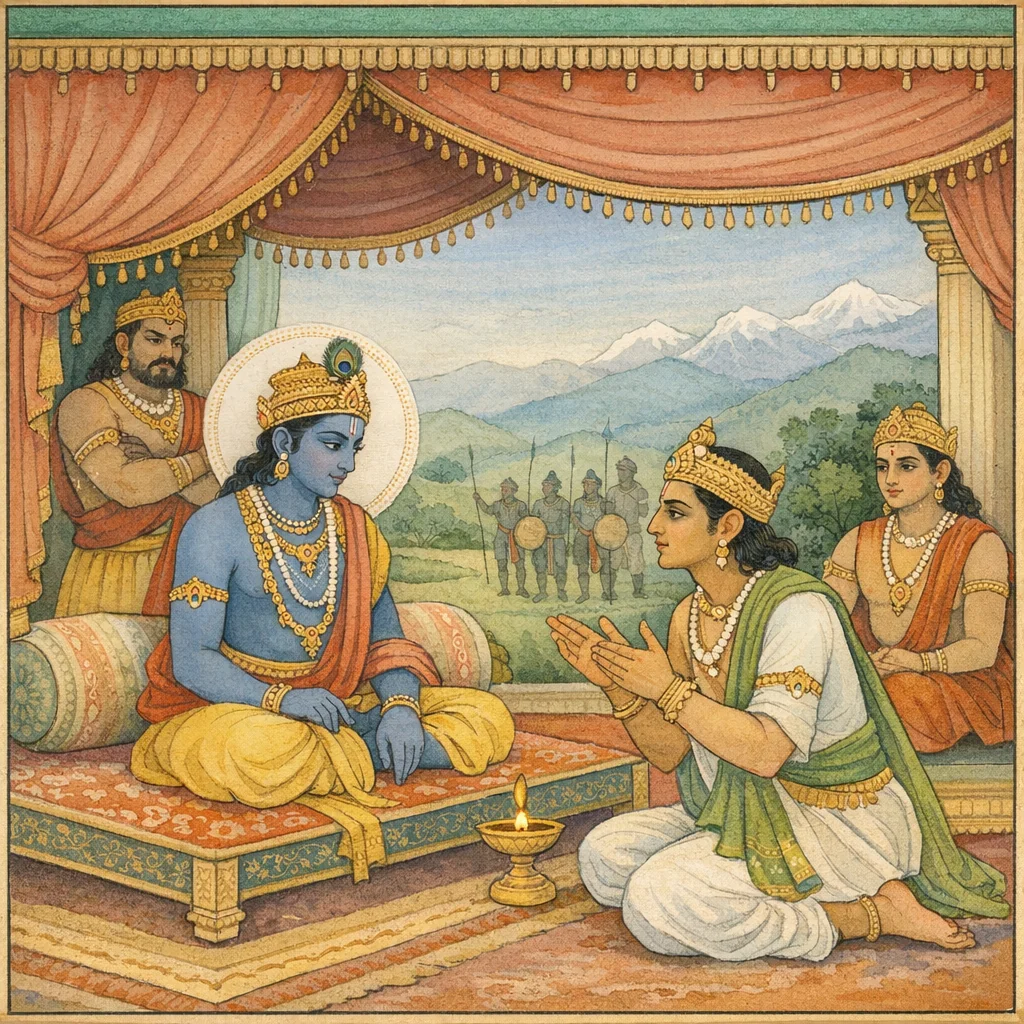
Adhyaya 79
सहदेव–सात्यकि संवादः (Sahadeva and Satyaki on resolve after failed conciliation)
Upa-parva: Yāna–Udyoga Context (War-Counsel and Mobilization Discourse)
Chapter 79 records a compact counsel sequence in which Sahadeva asserts that the “sanātana” dharma articulated by the king is acknowledged, yet insists that the practical outcome must be organized engagement rather than mere pacification. He argues that even if the Kurus were to desire reconciliation with the Pāṇḍavas, preparation for conflict should still proceed, reflecting distrust of durable settlement. Sahadeva grounds his resolve in remembered moral injury—Draupadī’s public humiliation—and states that his anger toward Suyodhana cannot be calmed without decisive redress. He further notes that even if leading figures (Bhīma, Arjuna, Kṛṣṇa, and the dharmic Yudhiṣṭhira) were to set aside dharma, he himself would still seek combat, emphasizing personal commitment to retributive justice. Sātyaki then affirms Sahadeva’s assessment, linking peace to the removal of Duryodhana as the condition for anger’s cessation, and recalls shared hardship in exile as a catalyst for indignation. Vaiśaṃpāyana closes the scene by describing widespread approval among the warriors, expressed through acclamation and heightened morale.
Chapter Arc: धर्मराज युधिष्ठिर के बहुविध, धर्मयुक्त वचनों को स्मरण कर नकुल श्रीकृष्ण से निवेदन करता है—अब निर्णायक प्रयत्न का समय है, और वह प्रयत्न स्वयं केशव हैं। → नकुल बताता है कि भीम ने पहले संधि का मार्ग रखा, फिर अपने बाहुबल का संकल्प प्रकट किया; अर्जुन ने भी अपना मत बार-बार स्पष्ट किया। पर कौरव-पक्ष में अचिन्त्य पराक्रमी, शस्त्रधारी वीरों की भीड़ देखकर किसी का भी मन डगमगा सकता है—यही भय और दुविधा तनाव बढ़ाते हैं। → नकुल का निर्णायक निष्कर्ष: ‘महाबाहो! आप वहाँ केवल जाने मात्र से धर्मराज का अभीष्ट सिद्ध कर देंगे’—क्योंकि विदुर श्रोता हैं और जनार्दन वक्ता; इन दोनों की संयुक्त नीति-शक्ति किसी भी भटके हुए प्रयोजन को मार्ग पर रोक सकती है। → नकुल कृष्ण को दूत-कार्य के लिए प्रेरित करता है और आश्वस्त करता है कि भीष्म, द्रोण, विदुर आदि भी ‘श्रेय’ (कल्याणकारी समाधान) के पक्ष में होंगे; अतः कृष्ण का प्रस्थान ही शांति-प्रयास की कुंजी है। → कृष्ण के गमन से कौरव सभा में क्या परिवर्तन होगा—धृतराष्ट्र-दुर्योधन नीति के आगे झुकेंगे या युद्ध अनिवार्य होगा?
Shlokas
Verse 1
अपन का छा ] अतडकडज अशीतितमो<ध्याय: नकुलका निवेदन नकुल उवाच उक्त बहुविध॑ वाक््यं धर्मराजेन माधव । धर्मज्ञेन वदान्येन श्रुतं चैव हि तत् त्वया,नकुल बोले--माधव! धर्मज्ञ और उदार धर्मराजने बहुत-सी बातें कही हैं और आपने उन्हें सुना है
Nakula said: “O Mādhava, the Dharmarāja—wise in dharma and generous—has spoken many things, and you have heard them.”
Verse 2
मतमाज्ञाय राज्ञश्न भीमसेनेन माधव । संशमो बाहुवीर्य च ख्यापितं माधवात्मन:,यदुकुलभूषण! राजाका मत जानकर भाई भीमसेनने भी पहले संधिस्थापनकी, फिर अपने बाहुबलकी बात बतायी है
Nakula said: “O Mādhava, having understood the king’s intention, Bhīmasena first spoke of making peace and reconciliation; then he declared the strength of his own arms. O ornament of the Yadu race, such was the course set forth by that noble-minded one.”
Verse 3
तथैव फाल्गुनेनापि यदुक्तं तत् त्वया श्रुवम् । आत्मनश्व मतं वीर कथितं भवतासकृत्
Nakula said: “In the same way, you have also heard what was spoken by Phālguna (Arjuna). And, O hero, you have repeatedly declared your own considered view as well.”
Verse 4
वीर! इसी प्रकार अर्जुनने भी जो कुछ कहा है, वह भी आपने सुन ही लिया है। आपका जो अपना मत है, उसे भी आपने अनेक बार प्रकट किया है ।। सर्वमेतदतिक्रम्य श्रुत्वा परमतं भवान् | यत् प्राप्तकालं मन्येथास्तत् कुर्या: पुरुषोत्तम,परंतु पुरुषोत्तम! इन सब बातोंको पीछे छोड़कर और विपक्षियोंके मतको अच्छी तरह सुनकर आपको समयके अनुसार जो कर्तव्य उचित जान पड़े, वही कीजियेगा
“O hero, you have already heard what Arjuna too has said, and you have repeatedly made your own view known. Yet, O best of men, setting all this aside and after carefully hearing the standpoint of the opposing side, do—according to the demands of the time—whatever you judge to be the right duty.”
Verse 5
तस्मिंस्तस्मिन् निमित्ते हि मतं भवति केशव । प्राप्तकालं मनुष्येण क्षमं कार्यमरिंदम,शत्रुओंका दमन करनेवाले केशव! भिन्न-भिन्न कारण उपस्थित होनेपर मनुष्योंके विचार भी भिन्न-भिन्न प्रकारके हो जाते हैं; अतः मनुष्यको वही कार्य करना चाहिये, जो उसके योग्य और समयोचित हो
O Keśava, subduer of foes! As different occasions arise, people’s judgments take different forms. Therefore a person should do only what is fitting for him and timely.
Verse 6
अन्यथा चिन्तितो हार्थ: पुनर्भवति सो3न्यथा । अनित्यमतयो लोके नरा: पुरुषसत्तम,पुरुषश्रेष्ठती किसी वस्तुके विषयमें सोचा कुछ और जाता है और हो कुछ और ही जाता है। संसारके मनुष्य स्थिर विचारवाले नहीं होते हैं
O best of men! A matter is often conceived in one way, yet it turns out otherwise. In this world people’s judgments are not steady; their intentions and expectations are impermanent.
Verse 7
अन्यथा बुद्धयो हासन्नस्मासु वनवासिषु । अदृश्येष्वन्यथा कृष्ण दृश्येषु पुनरन्यथा,श्रीकृष्ण! जब हम वनमें निवास करते थे, उस समय हमारे विचार कुछ और ही थे, अज्ञातवासके समय वे बदलकर कुछ और हो गये और उस अवधिको पूर्ण करके जब हम सबके सामने प्रकट हुए हैं, तबसे हमलोगोंका विचार कुछ और हो गया है
O Kṛṣṇa, when we were living in the forest, our thoughts were of one kind; during the time of concealment they changed into another; and now, having completed that period and appearing openly before all, our thinking has again become different.
Verse 8
अस्माकमपि वार्ष्णेय वने विचरतां तदा । न तथा प्रणयो राज्ये यथा सम्प्रति वर्तते
O Vārṣṇeya, even for us, while we were roaming in the forest in those days, our attachment to kingship was not as strong as it has become now.
Verse 9
वृष्णिनन्दन! वनमें विचरते समय राज्यके विषयमें हमारा वैसा आकर्षण नहीं था, जैसा इस समय है ।। निवृत्तवनवासान् नः श्रुत्वा वीर समागता: । अक्षौहिण्यो हि सप्तेमास्त्वत्प्रसादाज्जनार्दन,वीर जनार्दन! हमलोग वनवासकी अवधि पूरी करके आ गये हैं; यह सुनकर आपकी कृपासे ये सात अक्षौहिणी सेनाएँ यहाँ एकत्र हो गयी हैं
O delight of the Vṛṣṇis, while we wandered in the forest our pull toward kingship was not as it is now. But now that our term of exile is completed and we have returned, hearing this, heroes have gathered; indeed, by your favor, O Janārdana, these seven akṣauhiṇīs of troops have assembled here.
Verse 10
इमान् हि पुरुषव्याप्रानचिन्त्यवलपौरुषान् । आत्तशस्त्रान् रणे दृष्टवा न व्यथेदिह कः पुमान्,यहाँ जो पुरुषसिंह वीर उपस्थित हैं, इनके बल और पौरुष अचिन्त्य हैं। रणभूमिमें इन्हें अस्त्र-शस्त्रोंसे सुसज्जित देखकर किस पुरुषका हृदय भयभीत न हो उठेगा?
For these are lion-like men, ever intent on heroic action, whose strength and manly prowess are beyond imagining. Seeing them on the battlefield, weapons in hand, what man here would not feel his heart tremble with fear?
Verse 11
स भवान् कुरुमध्ये तं सान्त्वपूर्व भयोत्तरम् | ब्रूयाद् वाक््यं यथा मन्दो न व्यथेत सुयोधन:,आप कौदरवोंके बीचमें उससे पहले सान्त्वनापूर्ण बातें कहियेगा और अन्तमें युद्धका भय भी दिखाइयेगा, जिससे मूर्ख दुर्योधनके मनमें व्यथा न हो
Nakula said: “In the midst of the Kurus, address him with words that begin in conciliation and end by showing the fear of war—so that the dull-witted Suyodhana (Duryodhana) is not inwardly shaken. Speak in a way that restrains his agitation while still making him understand the peril of conflict.”
Verse 12
युधिष्ठिरं भीमसेनं बीभत्सुं चापराजितम् । सहदेवं च मां चैव त्वां च रामं च केशव,केशव! अपने शरीरमें मांस और रक्तका बोझ बढ़ानेवाला कौन ऐसा मनुष्य है, जो युद्धमें युधिष्ठि, भीमसेन, किसीसे पराजित न होनेवाले अर्जुन, सहदेव, बलराम, महापराक्रमी सात्यकि, पुत्रोंसहित विराट, मन्त्रियोंसहित द्रुपद, धृष्टद्युम्न, पराक्रमी काशिराज, चेदिनरेश धृष्टकेतु तथा आपका और मेरा सामना कर सके?
Nakula said: “Yudhiṣṭhira, Bhīmasena, and Arjuna (Bībhatsu), unconquered in battle; Sahadeva and I as well; and you too, O Keśava, along with Rāma—who is that man that would choose to burden his own body with flesh and blood by entering war against such a host?”
Verse 13
सात्यकिं च महावीर्य विराटं च सहात्मजम् । द्रपदं॑ च सहामात्य॑ धृष्टद्युम्नं च माधव,केशव! अपने शरीरमें मांस और रक्तका बोझ बढ़ानेवाला कौन ऐसा मनुष्य है, जो युद्धमें युधिष्ठि, भीमसेन, किसीसे पराजित न होनेवाले अर्जुन, सहदेव, बलराम, महापराक्रमी सात्यकि, पुत्रोंसहित विराट, मन्त्रियोंसहित द्रुपद, धृष्टद्युम्न, पराक्रमी काशिराज, चेदिनरेश धृष्टकेतु तथा आपका और मेरा सामना कर सके?
Nakula said: “And Sātyaki of great prowess; and Virāṭa together with his sons; and Drupada together with his ministers; and Dhṛṣṭadyumna as well—O Mādhava, O Keśava! Who is that man, one who only increases the burden of flesh and blood in his body, that could stand against you and me in battle when Yudhiṣṭhira, Bhīmasena, unconquerable Arjuna, Sahadeva, Balarāma, the mighty Sātyaki, Virāṭa with his sons, Drupada with his counselors, Dhṛṣṭadyumna, the valiant king of Kāśī, and Dhṛṣṭaketu of Cedi are on our side?”
Verse 14
काशिराजं च विक्रान्तं धृष्टकेतुं च चेदिपम् । मांसशोणित भभन्मर्त्य: प्रतियुध्येत को युधि,केशव! अपने शरीरमें मांस और रक्तका बोझ बढ़ानेवाला कौन ऐसा मनुष्य है, जो युद्धमें युधिष्ठि, भीमसेन, किसीसे पराजित न होनेवाले अर्जुन, सहदेव, बलराम, महापराक्रमी सात्यकि, पुत्रोंसहित विराट, मन्त्रियोंसहित द्रुपद, धृष्टद्युम्न, पराक्रमी काशिराज, चेदिनरेश धृष्टकेतु तथा आपका और मेरा सामना कर सके?
Nakula said: “O Keśava, who among mortals would choose to fight in battle—only to heap upon his own body the burden of flesh and blood—when facing such champions as the valiant king of Kāśī and Dhṛṣṭaketu, lord of the Cedis?”
Verse 15
स भवान् गमनादेव साधयिष्यत्यसंशयम् | इष्टमर्थ महाबाहो धर्मराजस्य केवलम्
Nakula said: “O mighty-armed one, merely by setting out you will—without any doubt—accomplish the very purpose desired by Dharmarāja alone.”
Verse 16
महाबाहो! आप वहाँ केवल जानेमात्रसे धर्मराजके अभीष्ट मनोरथको सिद्ध कर देंगे; इसमें संशय नहीं है ।। विदुरश्नैव भीष्मश्न द्रोणश्न सहबाह्विक: । श्रेय: समर्था विज्ञातुमुच्यमानास्त्वयानघ,निष्पाप श्रीकृष्ण! विदुर, भीष्म, द्रोणाचार्य तथा बाह्नीक--ये आपके बतानेपर कल्याणकारी मार्गको समझनेमें समर्थ हैं
Nakula said: “O mighty-armed one, by merely going there you will accomplish King Yudhiṣṭhira’s cherished purpose—there is no doubt. And Vidura, Bhīṣma, Droṇa, along with Bāhlīka, are able to discern the path of true welfare (śreyas) when you explain it, O blameless, sinless Śrī Kṛṣṇa.”
Verse 17
ते चैनमनुनेष्यन्ति धृतराष्ट्र जनाधिपम् | त॑ च पापसमाचारं सहामात्यं सुयोधनम्,ये लोग राजा धूृतराष्ट्र तथा मन्त्रियोंसहित पापाचारी दुर्योधनको (समझा-बुझाकर) राहपर लायँगे
They will counsel and bring back to the right course this king Dhṛtarāṣṭra, lord of men; and they will also admonish Suyodhana—whose conduct is sinful—together with his ministers.
Verse 18
श्रोता चार्थस्य विदुरस्त्वं च वक्ता जनार्दन । कमिवार्थ निवर्तन्तं स्थापयेतां न वर्त्मनि,जनार्दन! जहाँ विदुरजी किसी प्रयोजनको सुनें और आप उसका प्रतिपादन करें, वहाँ आप दोनों मिलकर किस बिगड़ते हुए कार्यको सिद्धिके मार्गपर नहीं ला देंगे?
Nakula said: “Vidura is the discerning listener who grasps the purpose, and you, Janārdana, are the one who can articulate it. When the two of you work together, what undertaking that is going astray would you not be able to set back upon the right path?”
Verse 79
इस प्रकार श्रीमह्याभारत उद्योगपर्वके अन्तर्गत भगवद्यानपर्वनें श्रीकृष्णवाक्यविषयक उन्नासीवाँ अध्याय पूरा हुआ
Thus ends the seventy-ninth chapter of the Bhagavadyāna section within the Udyoga Parva of the Śrī Mahābhārata, a chapter centered on the words of Śrī Kṛṣṇa.
Verse 80
इति श्रीमहाभारते उद्योगपर्वणि भगवद्यानपर्वणि नकुलवाक्ये अशीतितमो<ध्याय: ।। ८० || इस प्रकार श्रीमह्याभारत उद्योगपर्वके अन्तर्गत भगवद्यानपर्वमें नकुलवाक्यविषयक असीवाँ अध्याय पूरा हुआ
Thus, in the Mahābhārata, within the Udyoga Parva and specifically the Bhagavad-yāna section, the eightieth chapter—centered on Nakula’s words—comes to an end. This is a formal colophon marking the close of the chapter, underscoring the text’s careful structuring and transmission.
Frequently Asked Questions
The dilemma is whether reconciliation (śama) remains ethically credible after severe public wrongdoing; Sahadeva frames peace as insufficient without enforceable justice, asserting that mere verbal settlement cannot resolve moral injury.
The chapter emphasizes that ethical governance requires enforceability: when institutional remedies fail, leaders may prioritize coordinated preparedness and accountability, while still acknowledging the language of dharma.
No explicit phalaśruti is presented here; the meta-level closure is narrative—Vaiśaṃpāyana notes collective acclamation, functioning as an internal validation of the counsel’s persuasive force within the coalition.