Adhyaya 68
Dhṛtarāṣṭra’s Inquiry and Sañjaya’s Etymologies of Kṛṣṇa’s Names (Puruṣottama-nāma-nirvacana)
Upa-parva: Sañjaya–Dhṛtarāṣṭra Saṃvāda (Names and Epithets of Kṛṣṇa) — Udyoga-parva Adhyāya 68 Context Unit
Dhṛtarāṣṭra requests that Sañjaya again describe Puruṣottama by clarifying his names, actions, and significance. Sañjaya responds with a systematic nirvacana (etymological exposition) of Kṛṣṇa’s epithets, presenting each as an index of cosmic function and ethical capacity. The chapter links ‘Vāsudeva’ to indwelling and divine origin; ‘Mādhava’ to disciplined inwardness (silence, meditation, yoga); ‘Madhusūdana’ to the resolution of principles; and ‘Kṛṣṇa’ via semantic components associated with earth/being and cessation/beatitude. It continues with ‘Puṇḍarīkākṣa’ as aligned with an imperishable supreme abode; ‘Janārdana’ as a deterrent to predatory disorder; and ‘Sātvata/Vṛṣabhekṣaṇa’ as steadfastness of sattva and exemplary strength. Further epithets (‘Anīkajit’, ‘Dāmodara’, ‘Hṛṣīkeśa’, ‘Mahābāhu’, ‘Adhokṣaja’, ‘Nārāyaṇa’, ‘Puruṣottama’) depict transcendence, governance of faculties, sustaining power, and refuge-giving presence. The chapter culminates by characterizing this figure as the source and dissolution of all (sat and asat), ever-knowing, grounded in truth (‘Govinda’, ‘Satya’), victorious (‘Jiṣṇu’), all-pervading (‘Viṣṇu’), and eternal (‘Ananta’), arriving with sages for the purpose of non-cruelty and ethical stabilization (‘Acyuta’).
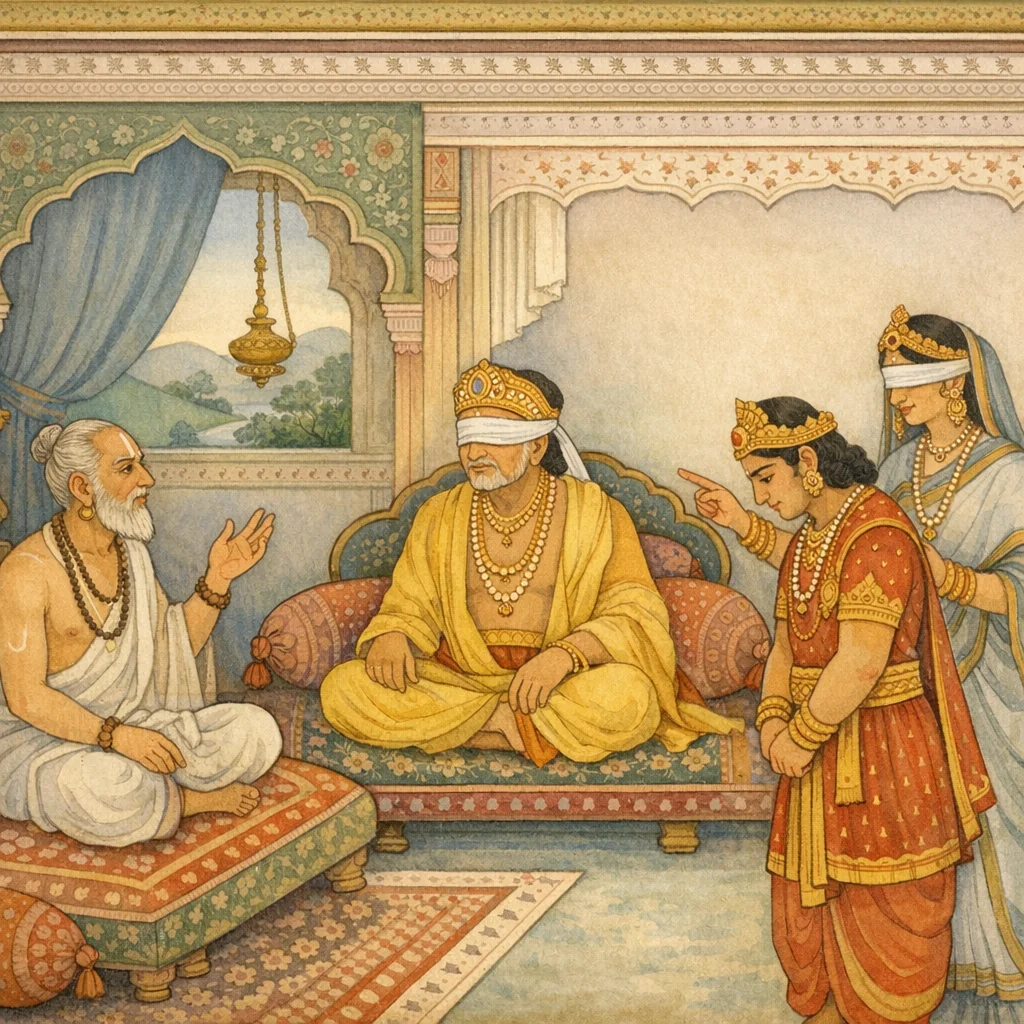
Chapter Arc: धृतराष्ट्र संजय से पूछते हैं—तुम माधव (श्रीकृष्ण) को कैसे जानते हो, जो समस्त लोकों के महेश्वर हैं? यह प्रश्न राजसभा के भीतर एक आध्यात्मिक द्वार खोल देता है। → संजय स्पष्ट करते हैं कि कृष्ण-ज्ञान विद्या से आता है; विद्या-हीन मनुष्य अंधकार में डूबा रहकर केशव को नहीं पहचानता। इसी बीच गान्धारी का तीखा प्रहार दुर्योधन पर पड़ता है—वह ऐश्वर्य-लालसा में वृद्धों की आज्ञा लांघ रहा है, पिता और माता को भी तुच्छ समझ रहा है। → संजय ‘एकायन पन्था’—एकमात्र मोक्षमार्ग—का उद्घोष करते हैं: इन्द्रिय-जय, एकाग्र शुश्रूषा, और तत्त्व में प्रसन्नता के बिना केशव अप्राप्य हैं; काममूढ़ जन यम-वश में बार-बार गिरते हैं, जैसे अंधे अंधों को कर्मों की डोर से खींचते हों। → अध्याय का निष्कर्ष यह है कि कृष्ण को जानना केवल वंश, पद या वाणी से नहीं—विद्या, योग, आगम-आधिगम और इन्द्रिय-संयम से संभव है; यही भय (महतो भयात्) से मुक्ति का साधन है। → गान्धारी की फटकार और संजय का तत्त्वोपदेश यह संकेत छोड़ते हैं कि यदि दुर्योधन ने इन्द्रिय-जय और वृद्ध-आज्ञा का मार्ग न अपनाया, तो नीति-वार्ता युद्ध की ओर ही ढलेगी।
Shlokas
Verse 1
अप्--#क+ एकोनसप्ततितमो< ध्याय: संजयका धृतराष्ट्रको श्रीकृष्ण-प्राप्ति एवं तत्त्वज्ञानका साधन बताना धृतराष्ट्र रवाच कथं त्वं माधवं वेत्थ सर्वलोकमहे श्वरम् कथमेनं न वेदाहं तन्ममाचक्ष्व संजय,धृतराष्ट्रने पूछा--संजय! मधुवंशी भगवान् श्रीकृष्ण समस्त लोकोंके महान् ईश्वर हैं, इस बातको तुम कैसे जानते हो? और मैं इन्हें इस रूपमें क्यों नहीं जानता? इसका रहस्य मुझे बताओ
Dhṛtarāṣṭra said: “How do you know Mādhava (Kṛṣṇa) to be the great Lord of all the worlds? And why do I not recognize him in that very form? Explain to me the reason for this, Sañjaya.”
Verse 2
संजय उवाच शृणु राजन न ते विद्या मम विद्या न हीयते । विद्याहीनस्तमो ध्वस्तो नाभिजानाति केशवम्,संजयने कहा--राजन्! सुनिये, आपको तत्त्वज्ञान प्राप्त नहीं है और मेरी ज्ञानदृष्टि कभी लुप्त नहीं होती है। जो मनुष्य तत्त्वज्ञानसे शून्य है और जिसकी बुद्धि अज्ञानान्धकारसे विनष्ट हो चुकी है, वह श्रीकृष्णके वास्तविक स्वरूपको नहीं जान सकता
Sanjaya said: “Listen, O King: you have not attained knowledge of truth, whereas my eye of understanding does not fade. One who is devoid of such knowledge, whose intellect has been ruined by the darkness of ignorance, cannot know the true nature of Keśava (Kṛṣṇa).”
Verse 3
विद्यया तात जानामि त्रियुगं मधुसूदनम् । कर्तारमकृतं देवं भूतानां प्रभवाप्ययम्,तात! मैं ज्ञानदृष्टिसे ही प्राणियोंकी उत्पत्ति और विनाश करनेवाले त्रियुगस्वरूप भगवान् मधुसूदनको, जो सबके कर्ता हैं, परंतु किसीके कार्य नहीं हैं, जानता हूँ
Sanjaya said: “Dear one, through the eye of knowledge I recognize Madhusudana—the divine Lord of the three ages—who is the maker of all, yet Himself unmade and untouched by any other’s action; He is the source from whom beings arise and into whom they pass away.”
Verse 4
धृतराष्ट्र रवाच गावल्गणे>त्र का भक्तिर्या ते नित्या जनार्दने । यया त्वमभिजानासि त्रियुगं मधुसूदनम्,धृतराष्ट्रने पूछा--संजय! भगवान् श्रीकृष्णमें जो तुम्हारी नित्य भक्ति है, उसका स्वरूप क्या है? जिससे तुम त्रियुगस्वरूप भगवान् मधुसूदनके तत्त्वको जानते हो
Dhṛtarāṣṭra said: “Sañjaya, what is the nature of that devotion of yours which is ever constant toward Janārdana (Śrī Kṛṣṇa)? By what devotion do you truly know Madhusūdana, the Lord whose being is ‘Triyuga’?”
Verse 5
संजय उवाच मायां न सेवे भद्रें ते न वृथा धर्ममाचरे । शुद्धभावं गतो भक््त्या शास्त्राद् वेझि जनार्दनम्,संजयने कहा--महाराज! आपका कल्याण हो। मैं कभी माया (छल-कपट)-का सेवन नहीं करता। व्यर्थ (पाखण्डपूर्ण) धर्मका आचरण नहीं करता। भगवान्की भक्तिसे मेरा अन्तःकरण शुद्ध हो गया है; अतः मैं शास्त्रके वचनोंसे भगवान् श्रीकृष्णके स्वरूपको यथावत् जानता हूँ
Sañjaya said: “May it be well with you, O King. I do not resort to deceit, nor do I practice religion in vain as mere show. Through devotion my inner disposition has been purified; therefore, on the authority of the scriptures, I truly know Janārdana (Śrī Kṛṣṇa) as He is.”
Verse 6
धृतराष्ट्र रवाच दुर्योधन हृषीकेशं प्रपद्यस्व जनार्दनम् आप्तो न: संजयस्तात शरणं गच्छ केशवम्,यह सुनकर धृतराष्ट्रने दुर्योधनसे कहा--बेटा दुर्योधन! संजय हमलोगोंका विश्वासपात्र है। इसकी बातोंपर श्रद्धा करके तुम सम्पूर्ण इन्द्रियोंके प्रेरक जनार्दन भगवान् श्रीकृष्णका आश्रय लो; उन्हींकी शरणमें जाओ
Dhṛtarāṣṭra said: “O Duryodhana, take refuge in Hṛṣīkeśa, in Janārdana. Dear son, Sañjaya is our trusted well-wisher; place faith in what he says and go for protection to Keśava—seek Kṛṣṇa alone as your shelter.”
Verse 7
दुर्योधन उवाच भगवान् देवकीपुत्रो लोकांभश्रैन्निहनिष्यति । प्रवदन्नर्जुने सख्यं नाहं गच्छेडद्य केशवम्,दुर्योधन बोला--पिताजी! माना कि देवकीनन्दन श्रीकृष्ण साक्षात् भगवान् हैं और वे इच्छा करते ही सम्पूर्ण लोकोंका संहार कर डालेंगे, तथापि वे अपनेको अर्जुनका मित्र बताते हैं; अतः अब मैं उनकी शरणमें नहीं जाऊँगा
Duryodhana said: “Father, even if Keśava, Devakī’s son, is truly the Blessed Lord and can, at will, destroy the worlds, still he proclaims friendship with Arjuna. Therefore, today I will not go to Keśava for refuge.”
Verse 8
धृतराष्ट्र रवाच अवाग गान्धारि पुत्रस्ते गच्छत्येष सुदुर्मति: । ईर्षुर्दुरात्मा मानी च श्रेयसां वचनातिग:,तब धृतराष्ट्रने गान्धारीसे कहा--गान्धारी! तुम्हारा दुर्बुद्धि, दुरात्मा, ईर्ष्यालु और अभिमानी पुत्र श्रेष्ठ पुरुषोंकी आज्ञाका उल्लंघन करके नरककी ओर जा रहा है
Then Dhṛtarāṣṭra said to Gāndhārī: “Gāndhārī, your son—foolish in counsel, envious, of crooked heart and swollen with pride—has transgressed the words of the noble and is going on toward hell.”
Verse 9
गान्धायुवाच ऐश्वर्यकाम दुष्टात्मन् वृद्धानां शासनातिग । ऐश्वर्यजीविते हित्वा पितरं मां च बालिश,गान्धारी बोली--दुष्टात्मा दुर्योधन! तू ऐश्वर्यकी इच्छा रखकर अपने बड़े-बूढ़ोंकी आज्ञाका उल्लंघन करता है! अरे मूर्ख! इस ऐश्वर्य, जीवन, पिता और मुझ माताको भी त्यागकर शत्रुओंकी प्रसन्नता और मेरा शोक बढ़ाता हुआ जब तू भीमसेनके हाथों मारा जायगा, उस समय तुझे पिताकी बातें याद आयेंगी
Gandhari said: “O Duryodhana, craving power, wicked at heart, you transgress the commands of your elders. Foolish one—clinging to sovereignty and life, you cast aside your father and even me, your mother, and you increase the enemies’ delight while deepening my grief. When you are slain by Bhimasena’s hands, then you will remember your father’s words.”
Verse 10
वर्धयन् दुर्हदां प्रीतिं मां च शोकेन वर्धयन् । निहतो भीमसेनेन स्मर्तासि वचन पितु:,गान्धारी बोली--दुष्टात्मा दुर्योधन! तू ऐश्वर्यकी इच्छा रखकर अपने बड़े-बूढ़ोंकी आज्ञाका उल्लंघन करता है! अरे मूर्ख! इस ऐश्वर्य, जीवन, पिता और मुझ माताको भी त्यागकर शत्रुओंकी प्रसन्नता और मेरा शोक बढ़ाता हुआ जब तू भीमसेनके हाथों मारा जायगा, उस समय तुझे पिताकी बातें याद आयेंगी
“You are increasing the joy of those who bear you ill-will, and at the same time increasing my grief. When you are slain by Bhīmasena, then you will remember your father’s words.”
Verse 11
व्यास उवाच प्रियोडसि राजन् कृष्णस्य धृतराष्ट्र निबोध मे । यस्य ते संजयो दूतो यस्त्वां श्रेयसि योक्ष्यते,तदनन्तर व्यासजीने कहा--राजा धृतराष्ट्र! मेरी बातोंपर ध्यान दो। वास्तवमें तुम श्रीकृष्णके प्रिय हो, तभी तो तुम्हें संजय-जैसा दूत मिला है, जो तुम्हें कल्याण-साधनमें लगायेगा
Vyāsa said: “O King Dhṛtarāṣṭra, understand what I say. You are dear to Kṛṣṇa; that is why you have obtained Sañjaya as your messenger—one who will yoke you to what is truly beneficial and lead you toward your highest good.”
Verse 12
जानात्येष हृषीकेशं पुराणं यच्च वै परम् । शुश्रूषमाणमेकाग्रं मोक्ष्यते महतो भयात्,यह संजय पुराणपुरुष भगवान् श्रीकृष्णको जानता है और उनका जो परमतत्त्व है, वह भी इसे ज्ञात है। यदि तुम एकाग्रचित्त होकर इसकी बातें सुनोगे तो यह तुम्हें महान् भयसे मुक्त कर देगा
“This Sañjaya knows Hṛṣīkeśa (Kṛṣṇa), the primeval Puruṣa, and he also knows His supreme truth. If you listen to his words with single-pointed attention, he will free you from great fear.”
Verse 13
वैचित्रवीर्य पुरुषा: क्रोधहर्षसमावृता: । सिता बहुविधे: पाशैर्ये न तुष्टाः स्वकैर्धनै:,विचित्रवीर्यकुमार! जो मनुष्य अपने धनसे संतुष्ट नहीं हैं और काम आदि विविध प्रकारके बन्धनोंसे बँधकर हर्ष और क्रोधके वशीभूत हो रहे हैं, वे काममोहित पुरुष अंधोंके नेतृत्वमें चलनेवाले अंधोंकी भाँति अपने कर्माद्वारा प्रेरित होकर बारंबार यमराजके वशमें आते हैं
Vyāsa said: “O son of Vicitravīrya, those men of Vicitravīrya’s line who are enveloped by anger and elation, and who are not content with their own wealth—bound fast by many kinds of snares (such as desire and delusion)—are driven by their deeds to fall again and again under the power of Yama (death), like blind men following the lead of the blind.”
Verse 14
यमस्य वशमायान्ति काममूढा: पुनः पुन: । अन्धनेत्रा यथैवान्धा नीयमाना: स्वकर्मभि:,विचित्रवीर्यकुमार! जो मनुष्य अपने धनसे संतुष्ट नहीं हैं और काम आदि विविध प्रकारके बन्धनोंसे बँधकर हर्ष और क्रोधके वशीभूत हो रहे हैं, वे काममोहित पुरुष अंधोंके नेतृत्वमें चलनेवाले अंधोंकी भाँति अपने कर्माद्वारा प्रेरित होकर बारंबार यमराजके वशमें आते हैं
Vyāsa says: Those who are deluded by desire repeatedly fall under the dominion of Yama (death). Like blind men being led by the blind, they are driven onward by their own actions and again and again come into the power of death—because their minds are bound by craving and confusion rather than guided by discernment and restraint.
Verse 15
एष एकायन: पन्था येन यान्ति मनीषिण: । त॑ं दृष्टवा मृत्युमत्येति महांस्तत्र न सज्जति,यह ज्ञानमार्ग एकमात्र परमात्माकी प्राप्ति करानेवाला है। जिसपर मनीषी (ज्ञानी) पुरुष चलते हैं, उस मार्गको देख या जान लेनेपर मनुष्य जन्म-मृत्युरूप संसारको लाँघ जाता है और वह महात्मा पुरुष कभी इस संसारमें आसक्त नहीं होता है
Vyasa said: “This is the single, direct path by which the wise proceed. Having beheld—i.e., truly known—that path, a person crosses beyond death itself; and the great-souled one does not cling to this realm of mortal becoming.”
Verse 16
धृतराष्ट उवाच अड़ संजय मे शंस पन्थानमकुतो भयम् । येन गत्वा हृषीकेशं प्राप्तुयां सिद्धिमुत्तमाम्,धृतराष्ट्र बोले--वत्स संजय! तुम मुझे वह निर्भय मार्ग बताओ, जिससे चलकर मैं सम्पूर्ण इन्द्रियोंके स्वामी परममोक्षस्वरूप भगवान् श्रीकृष्णको प्राप्त कर सकूँ
Dhṛtarāṣṭra said: “Sañjaya, tell me of the fearless path—by going upon which I may reach Hṛṣīkeśa, Śrī Kṛṣṇa, the Lord of all the senses, and attain the highest perfection.”
Verse 17
संजय उवाच नाकृतात्मा कृतात्मानं जातु विद्याज्जनार्दनम् आत्मनस्तु क्रियोपायो नान्यत्रेन्द्रियनिग्रहात्,संजयने कहा--महाराज! जिसने अपने मनको वशमें नहीं किया है, वह कभी नित्यसिद्ध परमात्मा भगवान् श्रीकृष्णको नहीं पा सकता। अपनी सम्पूर्ण इन्द्रियोंको वशमें किये बिना दूसरा कोई कर्म उन परमात्माकी प्राप्तिका उपाय नहीं हो सकता
Sañjaya said: One who has not mastered himself can never truly know Janārdana, the perfected Lord. For the self, there is no practical means of attainment other than the restraint of the senses.
Verse 18
इन्द्रियाणामुदीर्णानां कामत्यागो<5प्रमादत: । अप्रमादो<5विहिंसा च ज्ञानयोनिरसंशयम्,विषयोंकी ओर दौड़नेवाली इन्द्रियोंकी भोग-कामनाओंका पूर्ण सावधानीके साथ त्याग कर देना, प्रमादसे दूर रहना तथा किसी भी प्राणीकी हिंसा न करना--ये तीन निश्चय ही तत्त्वज्ञानकी उत्पत्तिमें कारण हैं
Sañjaya said: When the senses rush outward toward their objects, renouncing desire with vigilant care, remaining free from heedlessness, and refraining from harming any living being—these three, without doubt, become the very source from which true knowledge arises.
Verse 19
इन्द्रियाणां यमे यत्तो भव राजन्नतन्द्रित: । बुद्धिश्च ते मा च्यवतु नियच्छैनां यतस्तत:,राजन्! आप आलस्य छोड़कर इन्द्रियोंके संयममें तत्पर हो जाइये और अपनी बुद्धिको जैसे भी सम्भव हो, नियन्त्रणमें रखिये, जिससे वह अपने लक्ष्यसे भ्रष्ट न हो
Sañjaya said: “O King, be vigilant and free from sloth; apply yourself to the restraint of the senses. And do not let your understanding slip from its aim—hold it in check by every means, so that it does not stray from the right course.”
Verse 20
एतज्ज्ञानं विदुर्विप्रा ध्रुवमिन्द्रियधारणम् । एतऊज्ञानं च पन्थाक्ष येन यान्ति मनीषिण:,इन्द्रियोंको दृढ़तापूर्वक संयममें रखना चाहिये। विद्वान् ब्राह्मण इसीको ज्ञान मानते हैं। यह ज्ञान ही वह मार्ग है, जिससे मनीषी पुरुष चलते हैं
Sañjaya said: “The learned Brāhmaṇas know this as true knowledge—steadfast mastery of the senses. This indeed is knowledge, and this is the path by which the wise proceed.”
Verse 21
अप्राप्य: केशवो राजन्निन्द्रियेरजितैर्नभि: । आगमाधिगमाद्ू योगाद् वशी तत्त्वे प्रसीदति,राजन! मनुष्य अपनी इन्द्रियोंपर विजय प्राप्त किये बिना भगवान् श्रीकृष्णको नहीं पा सकते। जिसने शास्त्रज्ञान और योगके प्रभावसे अपने मन और इन्द्रियोंको वशमें कर रखा है, वही तत्त्वज्ञान पाकर प्रसन्न होता है
Sañjaya said: “O King, Keśava cannot be attained by men who have not conquered their senses. But one who, through scriptural understanding and the discipline of yoga, has brought mind and senses under control—such a self-mastered person attains true knowledge and rests in inner clarity and contentment.”
Verse 69
इति श्रीमहाभारते उद्योगपर्वणि यानसंधिपर्वणि संजयवाक्ये एकोनसप्ततितमो< ध्याय:,इस प्रकार श्रीमहाभारत उद्योगपर्वके अन्तर्गत यानसंधिपर्वमें संजयवाक्यविषयक उनहत्तरवाँ अध्याय पूरा हुआ
Thus, in the Śrī Mahābhārata, within the Udyoga Parva—specifically the section on the mission and negotiations (Yāna–Saṃdhi Parva)—the sixty-ninth chapter, consisting of Sañjaya’s narration, comes to an end.
Frequently Asked Questions
The chapter addresses the problem of rightful recognition: how a ruler or advisor should evaluate legitimate authority and moral capacity before decisive political action, using name-exegesis as a structured assessment of qualities.
Names are presented as compressed doctrines: Kṛṣṇa is framed as truth-grounded, all-knowing, sustaining, and transcendent—implying that ethical governance should align with truth, steadiness, and protection rather than coercive disorder.
No explicit phalaśruti formula is stated in the provided verses; the chapter’s meta-function is justificatory and orienting—establishing interpretive authority and ethical framing within the broader pre-conflict counsel.