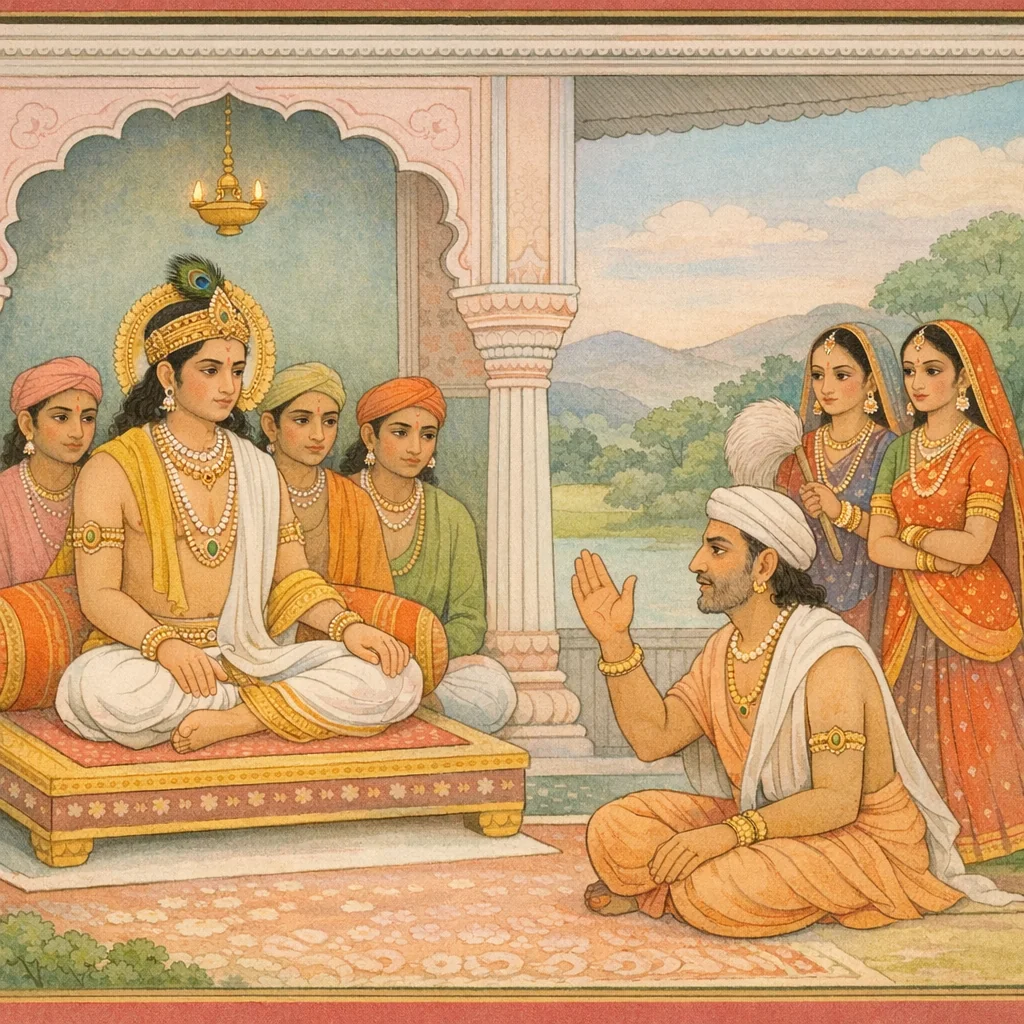
Adhyaya 23
अध्याय २३ — संजयस्योपप्लव्यगमनम् तथा युधिष्ठिरकुशलप्रश्नाः (Sanjaya’s Arrival at Upaplavya and Yudhiṣṭhira’s Welfare Inquiries)
Upa-parva: Sañjaya–Pāṇḍava Saṃvāda (Envoy Visit to Upaplavya)
Vaiśaṃpāyana narrates that Saṃjaya, having received Dhṛtarāṣṭra’s instructions, proceeds to Upaplavya to see the Pāṇḍavas. He approaches the dharmic king Yudhiṣṭhira, offers formal obeisance, and conveys Dhṛtarāṣṭra’s anāmaya inquiry, extending it to Bhīma, Arjuna, the Mādrī twins, and Draupadī. Yudhiṣṭhira welcomes Saṃjaya, affirms his own welfare with his brothers, and then pivots into a comprehensive sequence of kaccit-questions about the Kuru court: the health and conduct of elders (Bhīṣma), the status of Dhṛtarāṣṭra and principal warriors, and the condition of broader dependents (women, mothers, household staff, kin). He further probes institutional ethics—whether brāhmaṇas receive due protection and whether transgressions are checked—warning that unrestrained greed can precipitate collective ruin. The chapter also contains recollective assertions of Pāṇḍava martial capacity (not as incitement but as political signaling): reminders of Arjuna’s unmatched archery and the proven strength of Bhīma and the twins in prior engagements. The unit ends with a sober strategic reflection that a single virtuous act is insufficient to resolve the crisis unless the structural problem—Dhṛtarāṣṭra’s son’s intransigence—can be comprehensively addressed.
Chapter Arc: युधिष्ठिर के प्रश्नों के उत्तर में संजय वचन देता है कि वह धृतराष्ट्र का रात्रिकालीन संदेश ज्यों-का-त्यों सुनाएगा—और सभा का ध्यान एक ही बिंदु पर टिक जाता है: क्या हस्तिनापुर अभी भी धर्म की भाषा समझता है? → संजय धृतराष्ट्र के स्वभाव और राज्य की स्थिति का संकेत देता है—धृतराष्ट्र के यहाँ वृद्ध-साधु भी हैं और पापी-प्रवृत्ति वाले भी; फिर भी ब्राह्मणों का दान न रोकने वाला राजा क्या अपने ही भतीजों का न्याय रोक देगा? इसी के साथ दुर्योधन की कृतघ्नता/क्रूरता का चित्र उभरता है: पाण्डवों ने कभी द्रोह नहीं किया, फिर भी वह द्रोही-सा आचरण करता है। → संजय पाण्डव-वीरों की युद्ध-प्रतिष्ठा का स्मरण कराता है—भीमसेन की गदा-गर्जना, अर्जुन की विजय-ध्वनि, और माद्रीपुत्रों (नकुल-सहदेव) की रणभूमि में दिशाओं को कंपा देने वाली गति; यह स्मरण स्वयं एक चेतावनी बन जाता है कि अन्याय का परिणाम युद्ध में प्रकट होगा। → संजय युधिष्ठिर को यह भी कहता है कि भविष्य का पूर्ण ज्ञान किसी को नहीं; फिर भी यदि युधिष्ठिर सर्वधर्म-सम्पन्न होकर भी क्लेश में पड़े हैं, तो इस कठिन गाँठ को सुलझाने का उपाय भी उन्हें ही धर्म-बुद्धि से निकालना होगा—और अंततः वह धृतराष्ट्र का संदेश सुनाने के लिए प्रस्तुत होता है। → धृतराष्ट्र का वास्तविक संदेश अब आरम्भ होने को है—क्या वह न्याय की ओर झुकेगा या पुत्र-मोह की ओर?
Shlokas
Verse 1
अपन प्रा बछ। अ--क्ाजज चतुर्विशो$ध्याय: संजयका युधिष्ठिरको उनके प्रश्नोंका उत्तर देते हुए उन्हें राजा धृतराष्ट्रका संदेश सुनानेकी प्रतिज्ञा करना सयजय उवाच यथा5त्थ मे पाण्डव तत् तथैव कुरून् कुरुश्रेष्ठ जनं च पृच्छसि । अनामयास्तात मनस्विनस्ते कुरुश्रेष्ठान् पृच्छसि पार्थ यांस्त्वम्,संजय बोला--कुरुश्रेष्ठ पाण्डुनन्दन! आपने मुझसे जो कुछ कहा है, वह बिलकुल ठीक है। कौरवों तथा अन्य लोगोंके विषयमें आप जो कुछ पूछ रहे हैं, वह बताता हूँ, सुनिये। तात! कुन्तीनन्दन! आपने जिन श्रेष्ठ कुरुवंशियोंके कुशल-समाचार पूछे हैं, वे सभी मनस्वी पुरुष स्वस्थ और सानन्द हैं
Sañjaya said: “O Pāṇḍava, best of the Kurus, what you have said to me is indeed so. You ask about the Kurus and about the people as well; I shall tell you—listen. Dear child, O Pārtha: those eminent Kurus whose welfare you inquire after are all free from illness, high-spirited, and well.”
Verse 2
सन्त्येव वृद्धा: साधवो धार्राष्टर सन्त्येव पापा: पाण्डव तस्य विद्धि । दद्याद् रिपुभ्योडपि हि धारराष्ट्र: कुतो दायॉल्लोपयेद् ब्राह्मणानाम्,पाण्डव! धृतराष्ट्र-पुत्र दुर्योधनके पास जैसे बहुत-से पापी रहते हैं, उसी प्रकार उसके यहाँ साधुस्वभाववाले वृद्ध पुरुष भी रहते ही हैं। आप इस बातको सत्य समझें। दुर्योधन तो शत्रुओंको भी धन देता है, फिर वह ब्राह्मणोंकी जीविकाका लोप तो कर ही कैसे सकता है?
Sañjaya said: “O Pāṇḍava, know this as true: in the house of the Dhārtarāṣṭra there are indeed aged men of saintly disposition, just as there are many sinful men. Duryodhana, a son of Dhṛtarāṣṭra, would even give wealth to enemies; how, then, could he possibly deprive the Brāhmaṇas of their livelihood?”
Verse 3
यद् युष्माकं वर्तते सौनधर्म्य- मद्रग्धेषु द्रग्धवत् तन्न साधु । मित्रध्रुक् स्याद् धृतराष्ट्र: सपुत्रो युष्मान् द्विषन् साधुवृत्तानसाधु:
Sañjaya said: “O Saunadharmya, the way your party behaves—treating those who are not ‘burnt’ as though they were already burnt—this is not right. Dhṛtarāṣṭra, together with his sons, would become a betrayer of friends: hating you, who follow righteous conduct, he would act ignobly.”
Verse 4
आपलोगोंने दुर्योधनके प्रति कभी द्रोहका भाव नहीं रखा है, तो भी वह आपके प्रति जो क्रूरतापूर्ण व्यवहार करता है--द्रोही पुरुषोंके समान ही आचरण करता है, (दुर्योधनके लिये) यह उचित नहीं है। आप-जैसे साधु-स्वभाव लोगोंसे द्वेष करनेपर तो पुत्रोंसहित राजा धृतराष्ट्र असाधु और मित्रद्रोही ही समझे जायाँगे ।। न चानुजानाति भृशं च तप्यते शोचत्यन्त: स्थविरो5जातशत्रो | शृणोति हि ब्राह्मुणानां समेत्य मित्रद्रोह: पातकेभ्यो गरीयान्,अजातशत्रो! राजा धृतराष्ट्र अपने पुत्रोंकी आपसे द्वेष करनेकी आज्ञा नहीं देते; बल्कि आपके प्रति उनके द्रोहकी बात सुनकर वे मन-ही-मन अत्यन्त संतप्त होते तथा शोक किया करते हैं? क्योंकि वे अपने यहाँ पधारे हुए ब्राह्मणोंसे मिलकर सदा उनसे यही सुना करते हैं कि मित्रद्रोह सब पापोंसे बढ़कर है
Sañjaya said: “The aged king Dhṛtarāṣṭra—O Ajātaśatru—does not truly consent to his sons’ hostility toward you. Rather, when he hears of their treachery against you, he is deeply pained and grieves inwardly; for, having met with visiting brāhmaṇas, he repeatedly hears from them that betrayal of a friend is heavier than all other sins.”
Verse 5
स्मरन्ति तुभ्यं नरदेव संयुगे युद्धे च जिष्णोश्व युधां प्रणेतु: । समुत्कृष्टे दुन्दुभिशड्खशब्दे गदापार्णिं भीमसेन॑ स्मरन्ति,नरदेव! कौरवगण युद्धकी चर्चा चलनेपर आपको तथा वीराग्रणी अर्जुनको भी स्मरण करते हैं। युद्धकालमें जब दुन्दुभि और शंखकी ध्वनि गूँज उठती है, उस समय उन्हें गदापाणि भीमसेनकी बहुत याद आती है
Sañjaya said: “O king, in the press of battle they remember you, and they also remember Jishnu (Arjuna), the leader of warriors. And when the din rises high—drums and conches resounding—they especially call to mind Bhīmasena, the mace-bearer.”
Verse 6
माद्रीसुती चापि रणाजिमध्ये सर्वा दिश: सम्पतन्तौ स्मरन्ति | सेनां वर्षन्ती शरवर्षैरजस्तरं महारथौ समरे दुष्प्रकम्पौ,समरांगणमें जिन्हें हराना तो दूरकी बात है, विचलित या कम्पित करना भी अत्यन्त कठिन है, जो शत्रुसेनापर निरन्तर बाणोंकी वर्षा करते हैं और संग्राममें सम्पूर्ण दिशाओंमें आक्रमण करते हैं, उन महारथी माद्रीकुमार नकुल-सहदेवको भी कौरव सदा याद करते हैं
Sañjaya said: “Even the sons of Mādrī—Nakula and Sahadeva—are remembered by the Kauravas: in the very midst of battle they rush upon all directions, pouring down ceaseless showers of arrows upon the enemy host. Those two great chariot-warriors are so steady in combat that to shake or unsettle them in the field is exceedingly difficult.”
Verse 7
न त्वेव मन्ये पुरुषस्य राज- न्ननागतं ज्ञायते यद् भविष्यम् | त्वं चेत् तथा सर्वरधर्मोपपन्न: प्राप्त: क्लेशं पाण्डव कृच्छुरूपम् । त्वमेवैतत् कृच्छूगतश्न भूय: समीकुर्या: प्रज्ञयाजातशत्रो,पाण्डुनन्दन महाराज युधिष्ठिर! मेरा यह विश्वास है कि मनुष्यका भविष्य जबतक वह सामने नहीं आता, किसीको ज्ञात नहीं होता; क्योंकि आप-जैसे सर्वधर्मसम्पन्न पुरुष भी अत्यन्त भयंकर क्लेशमें पड़ गये। अजातशत्रो! संकटमें पड़नेपर भी आप ही अपनी बुद्धिसि विचारकर इस झगड़ेकी शान्तिके लिये पुनः कोई सरल उपाय ढूँढ़ निकालिये
Sañjaya said: “O king, I do not think a man can know what the future will be before it arrives. For even you—endowed with every virtue and grounded in dharma—have fallen into a grievous and dreadful distress, O Pāṇḍava. Therefore, even while caught in this crisis, you yourself, O Ajātaśatru, should again reflect with your wisdom and find some straightforward means to bring this quarrel to peace—O son of Pāṇḍu, great king Yudhiṣṭhira.”
Verse 8
न कामार्थ संत्यजेयूुर्हि धर्म पाण्डो: सुता: सर्व एवेन्द्रकल्पा: । त्वमेवैतत् प्रज्याजातशत्रो समीकुर्या येन शर्मप्नुयुस्ते
Sañjaya said: “The sons of Pāṇḍu—each of them like Indra—would never abandon dharma for the sake of desire or gain. Therefore, O Ajātaśatru, you yourself should bring about this settlement with your kinsmen, so that they may attain peace and well-being.”
Verse 9
यन्माब्रवीद् धृतराष्ट्रो निशाया- मजातशत्रो वचन पिता ते,महाराज युधिष्ठिर! आपके ताऊ धुृतराष्ट्रने रातके समय मुझसे आपलोगोंके लिये जो संदेश कहा था, उसे आप मन्त्रियों और पुत्रोंसहित मेरे इन शब्दोंमें सुनिये
Sañjaya said: “O Ajātaśatru, O King Yudhiṣṭhira! The message that your father’s elder brother Dhṛtarāṣṭra spoke to me at night for your sake—hear it now from my own words, together with your ministers and your sons.”
Verse 10
सहामात्य: सहतपुत्रश्न राजन् समेत्य तां वाचमिमां निबोध,महाराज युधिष्ठिर! आपके ताऊ धुृतराष्ट्रने रातके समय मुझसे आपलोगोंके लिये जो संदेश कहा था, उसे आप मन्त्रियों और पुत्रोंसहित मेरे इन शब्दोंमें सुनिये
Sañjaya said: “O King, assemble with your ministers and your sons and listen carefully to these words. O great King Yudhiṣṭhira, hear from me—together with your counsellors and your brothers—the message that your elder uncle Dhṛtarāṣṭra spoke to me at night for your sake.”
Verse 24
इति श्रीमहाभारते उद्योगपर्वणि सञ्जययानपर्वणि संजयवाक्ये चतुर्विशो5ध्याय: ।। २४ ।। इस प्रकार श्रीमह्ाभारत उद्योगपर्वके अन्तर्गत संजययानपर्वमें संजयवाक्यविषयक चौबीसवाँ अध्याय पूरा हुआ
Sañjaya said: “Thus, in the revered Mahābhārata, within the Udyoga Parvan, in the section known as the Sañjaya-yāna (Sañjaya’s mission), the twenty-fourth chapter—containing Sañjaya’s discourse—comes to an end.”
Verse 86
धार्तराष्ट्रा: पाण्डवा: सूंजया श्च ये चाप्यन्ये संनिविष्टा नरेन्द्रा: । पाण्डुके सभी पुत्र इन्द्रके समान पराक्रमी हैं। वे किसी भी स्वार्थके लिये कभी धर्मका त्याग नहीं करते। अतः अजातशत्रो! आप ही इस समस्याको हल कीजिये, जिससे धृतराष्ट्रके सभी पुत्र, पाण्डव, सूंजयवंशी क्षत्रिय तथा अन्य नरेश, जो आकर सेनाकी छावनीमें टिके हुए हैं, कल्याणके भागी हों
Sañjaya said: “The sons of Dhṛtarāṣṭra, the Pāṇḍavas, the Sūñjayas, and the other kings who have assembled and taken their stations—Pāṇḍu’s sons are all valorous like Indra. For no personal gain do they ever abandon dharma. Therefore, O Ajātaśatru, you must resolve this crisis in such a way that all may attain welfare: Dhṛtarāṣṭra’s sons, the Pāṇḍavas, the Sūñjaya-line kṣatriyas, and the other rulers who have come and are encamped with the army.”
Frequently Asked Questions
The tension is between diplomatic civility and moral accountability: how to maintain respectful interstate communication while scrutinizing whether governance is being undermined by partiality, factional counsel, and unrestrained greed.
A stable polity depends on institutional ethics—protecting brāhmaṇas, honoring elders, preventing ministerial factionalism, and restraining lobha—because moral failure at the top propagates systemic collapse.
No formal phalaśruti is stated; the meta-commentary is implicit in the warning that if leaders do not restrain greed and uphold social duties, collective ruin follows—positioning ethical governance as the chapter’s interpretive key.