Adhyaya 3
शोक-शमन उपदेशः (Instruction on the Pacification of Grief)
Upa-parva: Vidura–Dhṛtarāṣṭra Śoka-śamana Saṃvāda (Consolation Discourse)
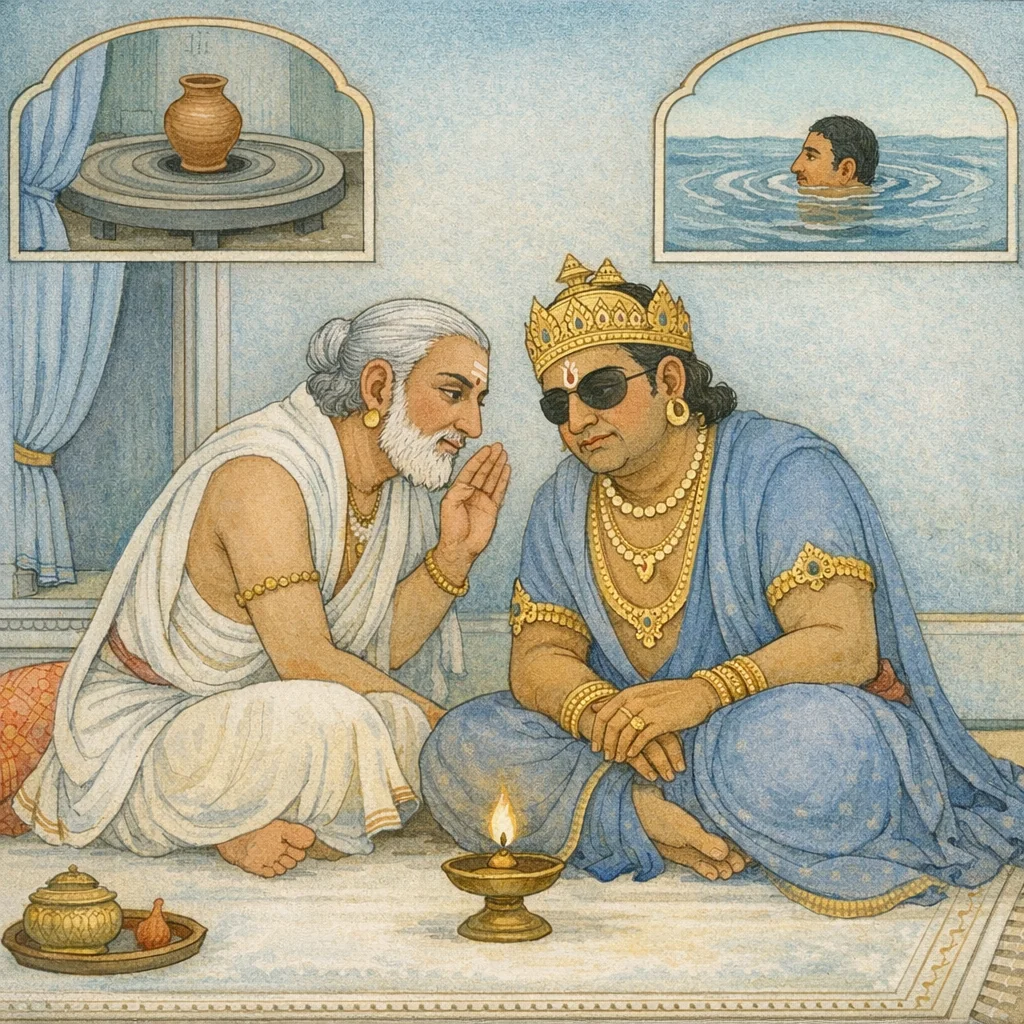
Dhṛtarāṣṭra states that Vidura’s well-formed counsel has reduced his grief and asks how learned persons free themselves from mental suffering arising from association with the undesirable and separation from the desirable (1–2). Vidura answers by describing a method of inner release: as the mind repeatedly disengages from both pleasure and pain, the wise attain śama and a ‘good course’ (sugati) (3). He grounds this in an analysis of impermanence: the world is unstable and lacks enduring essence, likened to a banana plant (4). The body is treated as a temporary dwelling, reassigned by time, while moral agency (sattva) is the commendable constant (5). He uses the garment metaphor—discarding old or unsuitable clothes—to explain embodiment and change (6). Experience of pleasure and pain is presented as the result of one’s own actions (svakṛta-karma), with karma bearing its load whether one feels in control or not (7–8). A sustained pottery analogy illustrates fragility at every stage of formation and use, paralleling bodily vulnerability across conditions (9–11). Mortality is shown to operate across all life stages—from womb to infancy to youth, midlife, and old age (12–13). Vidura concludes that beings arise and cease due to prior actions; therefore lamentation is conceptually misdirected in a world governed by such causality (14). He adds a saṃsāra metaphor of repeatedly surfacing and sinking in water; the unreflective are bound and afflicted by karmic enjoyment, while the wise, established in truth and understanding meetings and separations, proceed to the highest end (15–17).
Chapter Arc: कुरु-गृह पर शोक का घना आवरण है; धृतराष्ट्र अपने पुत्रों के विनाश से व्याकुल हैं, और विदुर शोक-निवारण के लिए अनित्यता का कठोर, पर करुण उपदेश आरम्भ करते हैं। → विदुर मन को दुःख-सुख के आवेगों से बार-बार खींचकर शान्ति में स्थिर करने की शिक्षा देते हैं—और फिर श्मशान की समता दिखाते हैं: विद्वान-मूर्ख, धनवान-निर्धन, सब अंततः एक ही ‘पितृवन’ में पहुँचते हैं; देह का भेद वहाँ मिट्टी, अस्थि और स्नायु में विलीन हो जाता है। → मिट्टी के बर्तन का दृष्टान्त चरम पर पहुँचता है—घड़ा चाक पर चढ़ते ही टूट सकता है, आधा बनकर, पूरा बनकर, काटे जाने पर, उतारे जाने पर; वैसे ही जीवन किसी भी क्षण टूट सकता है। तत्पश्चात संसार-समुद्र का रूपक आता है: क्रीड़ा में तैरता प्राणी जैसे कभी डूबता-कभी उभरता है, वैसे ही जीव कर्म-भोग के बन्धन से इस गहन संसार में उन्मज्जन-निमज्जन करता है। → विदुर का निष्कर्ष स्पष्ट है—जो बुद्धिमान है वह मन को संयमित कर, अनित्यता को स्वीकार कर, शोक का त्याग कर शान्ति प्राप्त करे; धृतराष्ट्र को भी यही मार्ग अपनाने का आग्रह है। → धृतराष्ट्र के भीतर यह उपदेश कितनी गहराई तक उतरता है—और क्या शोक सचमुच शान्त होगा—यह अगले प्रसंग की ओर कथा को धकेल देता है।
Shlokas
Verse 1
अपने-आप छा अर: तृतीयो<थध्याय: विदुरजीका शरीरकी अनित्यता बताते हुए धृतराष्ट्रको शोक त्यागनेके लिये कहना धृतराष्ट्र रवाच सुभाषितैर्महाप्राज्ञ शोको5यं विगतो मम । भूय एव तु वाक्यानि श्रोतुमिच्छामि तत्त्वतः,धृतराष्ट्र बोले--परम बुद्धिमान विदुर! तुम्हारा उत्तम भाषण सुनकर मेरा यह शोक दूर हो गया, तथापि तुम्हारे इन ताक््चिक वचनोंको मैं अभी और सुनना चाहता हूँ
Dhṛtarāṣṭra said: “O Vidura, great in wisdom! By your well-spoken words this grief of mine has been dispelled. Yet I still wish to hear more of your statements—truly and in their real purport.”
Verse 2
इस प्रकार श्रीमह्याभारत स्त्रीपर्वके अन्तर्गत जलप्रदानिकपर्वमें धृतराष्ट्रके शोकका निवारणविषयक दूसरा अध्याय पूरा हुआ,अनिष्टानां च संसर्गादिष्टानां च विसर्जनात् | कथं हि मानसैर्दु:खै: प्रमुच्यन्ते तु पण्डिता: विद्वान् पुरुष अनिष्टके संयोग और इष्टके वियोगसे होनेवाले मानसिक दुःखोंसे किस प्रकार छुटकारा पाते हैं?
Vidura asks: From association with what is undesirable and from separation from what is dear, mental suffering inevitably arises. By what understanding and discipline do the wise free themselves from such inner grief?
Verse 3
विदुर उवाच यतो यतो मनो दुःखात् सुखादू वा विप्रमुच्यते । ततस्ततो नियम्यैतच्छान्तिं विन्देत वै बुध:,विदुरजीने कहा--महाराज! विद्वान् पुरुषको चाहिये कि जिन-जिन साथनोंमें लगनेसे मन दुःख अथवा सुखसे मुक्त होता हो, उन्हींमें इसे नियमपूर्वक लगाकर शान्ति प्राप्त करे जो बुद्धिमान् मानव इस संसारमें सत्त्वगुणसे युक्त, सबका हित चाहनेवाले और प्राणियोंके समागमको कर्मानुसार समझनेवाले हैं, वे परम गतिको प्राप्त होते हैं ।। इति श्रीमहाभारते स्त्रीपर्वणि जलप्रदानिकपर्वणि धृतराष्ट्रविशोककरणे तृतीयो<डध्याय:
Vidura said: “O King, wherever the mind finds release from sorrow—or even from pleasure—there and there one should deliberately restrain and place it. By disciplining the mind in those wholesome directions, a wise person truly attains peace.”
Verse 4
अशाश्रृतमिदं सर्व चिन्त्यमानं नरर्षभ | कदलीसंनिभो लोक: सारो हास्य न विद्यते,नरश्रेष्ठ विचार करनेपर यह सारा जगत् अनित्य ही जान पड़ता है। सम्पूर्ण विश्व केलेके समान सारहीन है; इसमें सार कुछ भी नहीं है
Vidura said: “O bull among men, when one reflects, this entire world is seen to be impermanent. The world is like a banana plant—without any lasting core; in it, no enduring essence is found.”
Verse 5
यदा प्राज्ञाश्न मूढाश्न धनवन्तो5थ निर्धना: । सर्वे पितृवनं प्राप्प स्वपन्ति विगतज्वरा:,जब दिद्वान्-मूर्ख, धनवान् और निर्धन सभी श्मशान-भूमिमें जाकर निश्चिन्त सो जाते हैं, उस समय उनके मांसरहित नाड़ियोंसे बँधे हुए तथा अस्थिबहुल अंगोंको देखकर क्या दूसरे लोग वहाँ उनमें कोई ऐसा अन्तर देख पाते हैं, जिससे वे उनके कुल और रूपकी विशेषताको समझ सकें; फिर भी वे मनुष्य एक-दूसरेको क्यों चाहते हैं? इसलिये कि उनकी बुद्धि ठगी गयी है
When the wise and the foolish, the wealthy and the poor—all alike—reach the “forest of the ancestors” (the cremation ground) and lie down there free from all feverish striving, who can then discern any difference among them by which lineage, beauty, or social distinction might be known? Yet people still cling to one another and form attachments as though such differences were enduring—because their understanding is deluded.
Verse 6
निर्मासैरस्थिभूयिष्ठेगात्रि: सनायुनिबन्धनै: । कि विशेषं प्रपश्यन्ति तत्र तेषां परे जना:,जब दिद्वान्-मूर्ख, धनवान् और निर्धन सभी श्मशान-भूमिमें जाकर निश्चिन्त सो जाते हैं, उस समय उनके मांसरहित नाड़ियोंसे बँधे हुए तथा अस्थिबहुल अंगोंको देखकर क्या दूसरे लोग वहाँ उनमें कोई ऐसा अन्तर देख पाते हैं, जिससे वे उनके कुल और रूपकी विशेषताको समझ सकें; फिर भी वे मनुष्य एक-दूसरेको क्यों चाहते हैं? इसलिये कि उनकी बुद्धि ठगी गयी है
Vidura said: “When bodies lie in the cremation-ground—stripped of flesh, mostly bone, held together only by sinews—what distinguishing mark can other people truly perceive there? Who can then recognize lineage, beauty, or status? And yet, in life, people cling to one another and form attachments as though such differences were real—because their understanding has been deceived.”
Verse 7
येन प्रत्यवगच्छेयु: कुलरूपविशेषणम् | कस्मादन्योन्यमिच्छन्ति विप्रलब्धधियो नरा:,जब दिद्वान्-मूर्ख, धनवान् और निर्धन सभी श्मशान-भूमिमें जाकर निश्चिन्त सो जाते हैं, उस समय उनके मांसरहित नाड़ियोंसे बँधे हुए तथा अस्थिबहुल अंगोंको देखकर क्या दूसरे लोग वहाँ उनमें कोई ऐसा अन्तर देख पाते हैं, जिससे वे उनके कुल और रूपकी विशेषताको समझ सकें; फिर भी वे मनुष्य एक-दूसरेको क्यों चाहते हैं? इसलिये कि उनकी बुद्धि ठगी गयी है
Vidura said: By what sign could people truly discern distinctions of lineage and beauty? When the learned and the foolish, the wealthy and the poor alike go to the cremation-ground and lie down there without care, who can perceive any difference among them—seeing bodies reduced to bone-filled limbs, held together only by sinews stripped of flesh? And yet human beings still desire one another. It is because their understanding has been deceived.
Verse 8
गृहाणीव हि मर्त्यानामाहुर्देहानि पण्डिता: । कालेन विनियुज्यन्ते सत्त्वमेकं॑ तु शाश्वतम्,पण्डितलोग मरणधर्मा प्राणियोंके शरीरोंको घरके तुल्य बतलाते हैं; क्योंकि सारे शरीर समयपर नष्ट हो जाते हैं, किंतु उसके भीतर जो एकमात्र सत्त्वस्वरूप आत्मा है, वह नित्य है
The wise declare that the bodies of mortals are like houses: in time they are taken apart, but the one reality within—the Atman, the Self—is everlasting.
Verse 9
यथा जीर्णमजीर्ण वा वस्त्र त्यक्त्वा तु पूरुष: अन्यद् रोचयते वस्त्रमेवं देहा: शरीरिणाम्,जैसे मनुष्य नये अथवा पुराने वस्त्रको उतारकर दूसरे नूतन वस्त्रको पहननेकी रुचि रखता है, उसी प्रकार देहधारियोंके शरीर उनके द्वारा समय-समयपर त्यागे और ग्रहण किये जाते हैं
As a person casts off a garment—whether new or worn—and takes up another, so do embodied beings abandon one body and assume another, again and again, in the course of time.
Verse 10
वैचित्रवीर्य प्राप्पं हि दुः:खं वा यदि वा सुखम् । प्राप्रुवन्तीह भूतानि स्वकृतेनैव कर्मणा,विचित्रवीर्यनन्दन! यदि दुःख या सुख प्राप्त होनेवाला है तो प्राणी उसे अपने किये हुए कर्मके अनुसार ही पाते हैं
O descendant of Vicitravīrya, whether sorrow or happiness comes to a person and is spoken of as “fate” from Vicitravīrya’s line, beings in this world truly obtain it only in accordance with their own deeds. Therefore understand: pleasure and pain arise from one’s own action, not from mere lineage or chance.
Verse 11
कर्मणा प्राप्यते स्वर्ग: सुखं दु:खं च भारत । ततो वहति त॑ भारमवश: स्ववशो5पि वा,भरतनन्दन! कर्मके अनुसार ही परलोकमें स्वर्ग या नरक तथा इहलोकमें सुख और दुःख प्राप्त होते हैं; फिर मनुष्य सुख या दुःखके उस भारको स्वाधीन या पराधीन होकर ढोता रहता है
Vidura said: “O Bhārata, it is by one’s own actions that heaven is attained, and likewise pleasure and pain. Thereafter a person bears that burden—of happiness or suffering—whether helplessly compelled or even while imagining oneself to be in control, O joy of the Bharatas.”
Verse 12
यथा च मृण्मयं भाण्डं चक्रारूढं विपद्यते | किंचित् प्रक्रियमाणं वा कृतमात्रमथापि वा
Just as an earthen vessel set upon the potter’s wheel may come to ruin—whether it is only slightly being shaped, still in the process of being formed, or even just newly finished—so too can what is fragile and newly made be quickly destroyed.
Verse 13
छिन्न॑ वाप्यवरोप्यन्तमवतीर्णमथापि वा । आदी वाप्यथवा शुष्क॑ पच्यमानमथापि वा
Whether one is being cut down, dragged away, or has fallen; whether one is burning, or dried up and being scorched—even in such extremity, the wise do not abandon the path of right conduct, dharma.
Verse 14
उत्तार्यमाणमापाकादुद्धृतं चापि भारत । अथवा परिभुज्यन्तमेवं देहा: शरीरिणाम्
Vidura said: “O Bhārata, the body of an embodied being is like something being lifted out from a cooking-pot, or else like something being consumed and used up. Thus, the bodies of living beings are ever subject to being drawn out, exhausted, and destroyed.”
Verse 15
जैसे मिट्टीका बर्तन बनाये जानेके समय कभी चाकपर चढ़ाते ही नष्ट हो जाता है, कभी कुछ-कुछ बननेपर, कभी पूरा बन जानेपर, कभी सूतसे काट देनेपर, कभी चाकसे उतारते समय, कभी उतर जानेपर, कभी गीली या सूखी अवस्थामें, कभी पकाये जाते समय, कभी आवाँसे उतारते समय, कभी पाकस्थानसे उठाकर ले जाते समय अथवा कभी उसे उपयोगमें लाते समय फूट जाता है; ऐसी ही दशा देहधारियोंके शरीरोंकी भी होती है ।। गर्भस्थो वा प्रसूतो वाप्यथ वा दिवसान्तर: । अर्धमासगतो वापि मासमात्रगतो5पि वा,कोई गर्भमें रहते समय, कोई पैदा हो जानेपर, कोई कई दिनोंका होनेपर, कोई पंद्रह दिनका, कोई एक मासका तथा कोई एक या दो सालका होनेपर, कोई युवावस्थामें, कोई मध्यावस्थामें अथवा कोई वृद्धावस्थामें पहुँचनेपर मृत्युको प्राप्त हो जाता है
Vidura said: Just as a clay pot, while being made, may break at any point—when it is first set upon the wheel, when it is only partly shaped, when it is fully formed, when it is cut off with a thread, when it is lifted from the wheel, after it has been removed, while still wet or after it has dried, while being fired, when taken out of the kiln, when carried away from the firing place, or even when finally put to use—so too is the condition of embodied beings: their bodies can perish at any stage. Some die while still in the womb; some at birth; some after a few days; some at a fortnight; some at a month (and likewise at later ages).
Verse 16
संवत्सरगतो वापि द्विसंवत्सर एव वा | यौवनस्थो<5थ मध्यस्थो वृद्धों वापि विपद्यते,कोई गर्भमें रहते समय, कोई पैदा हो जानेपर, कोई कई दिनोंका होनेपर, कोई पंद्रह दिनका, कोई एक मासका तथा कोई एक या दो सालका होनेपर, कोई युवावस्थामें, कोई मध्यावस्थामें अथवा कोई वृद्धावस्थामें पहुँचनेपर मृत्युको प्राप्त हो जाता है
Vidura said that death does not wait for any fixed stage of life: one may perish at the age of one year, or even at two years; another may die in youth, another in middle age, and another in old age.
Verse 17
प्राक्कर्मभिस्तु भूतानि भवन्ति न भवन्ति च । एवं सांसिद्धिके लोके किमर्थमनुतप्यसे,प्राणी पूर्वजन्मके कर्मोके अनुसार ही इस जगत्में रहते और नहीं रहते हैं। जब लोककी ऐसी ही स्वाभाविक स्थिति है, तब आप किसलिये शोक कर रहे हैं?
Vidura said: “Beings come to be—and cease to be—according to their prior deeds. When the world moves by this natural and inevitable law of destiny shaped by past action, for what reason do you burn with grief?”
Verse 18
यथा तु सलिलं राजन् क्रीडार्थमनुसंतरत् । उन्मज्जेच्च निमज्जेच्च किंचित् सत्त्वं नराधिप
O King, just as some small creature, moving about in the water for sport, now rises to the surface and now sinks again—so too does a being, driven by circumstance and impulse, alternately emerge into prominence and then fall back into obscurity.
Verse 19
एवं संसारगहने उन््मज्जननिमज्जने । कर्मभोगेन बध्यन्ते क्लिश्यन्ते चाल्पबुद्धय:
Thus, in the dense thicket of worldly existence—rising up and sinking down again—people of little understanding are bound by the experience of their own actions and are continually afflicted.
Verse 20
राजन! नरेश्वर! जैसे क्रीडाके लिये पानीमें तैरता हुआ कोई प्राणी कभी डूबता है और कभी ऊपर आ जाता है, इसी प्रकार इस अगाध संसार-समुद्रमें जीवोंका डूबना और उतराना (मरना और जन्म लेना) लगा रहता है, मन्दबुद्धि मनुष्य ही यहाँ कर्मभोगसे बँधते और वष्ट पाते हैं ।। ये तु प्राज्ञा: स्थिता: सत्त्वे संसारेडस्मिन् हितैषिण: । समागमज्ञा भूतानां ते यान्ति परमां गतिम्
Vidura said: “O king, lord of men! Just as a creature, swimming in water for sport, now sinks and now rises again, so too in this unfathomable ocean of worldly existence beings continually go under and come up—dying and being born. It is only the dull-witted who, here, become bound by the experience of their own deeds and come to ruin. But those who are wise, established in purity, well-wishers within this world, and who understand the coming-together and parting of beings—such persons attain the highest goal.”
Frequently Asked Questions
Dhṛtarāṣṭra’s dilemma is how to ethically and psychologically respond to loss: whether grief should govern the mind when separation and association are structurally unavoidable in an impermanent world shaped by prior action.
The chapter teaches that repeated mental disengagement from both sukha and duḥkha, supported by insight into impermanence and karmic causality, yields śama; this composure differentiates the wise from those bound by reactive experience.
No explicit phalaśruti is stated here; the implied meta-point is soteriological: understanding impermanence, karma, and the mechanics of saṃsāra supports movement toward ‘paramā gati’ (the highest end) by reducing attachment-driven affliction.