Adhyaya 367
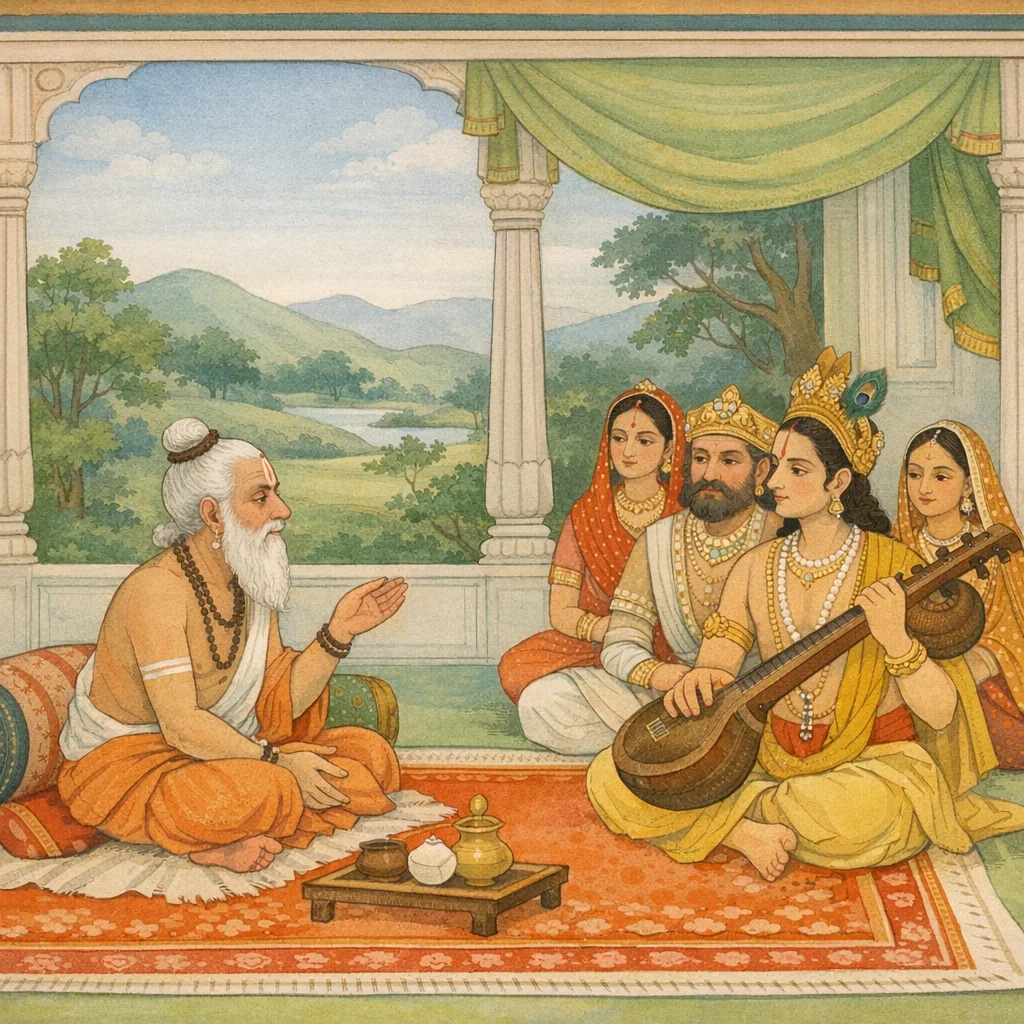
Chapter Arc: युधिष्ठिर के प्रश्न के उत्तर में कथावाचक धर्म का ‘श्रेष्ठ’ रूप बताने से पहले उसकी परम्परा खोलता है—यह कथा किस-किस महापुरुष के मुख से प्रवाहित होकर यहाँ तक पहुँची। → कथा की विश्वसनीयता और पवित्रता को स्थापित करने हेतु क्रमशः दीक्षा-संस्कार, धर्म-निष्ठा और राजसभाओं/देवलोक तक उसका प्रसार बताया जाता है—च्यवन/भार्गव, जनक, नारद, इन्द्र और श्रेष्ठ ब्राह्मणों की कड़ी बनती जाती है। → परम्परा का शिखर तब आता है जब वक्ता अपने निजी अनुभव से उसे जोड़ देता है—परशुराम के साथ ‘सुदारुण’ युद्ध के समय वसुओं द्वारा यह कथा/धर्म-तत्त्व उसे सुनाया गया था; अर्थात यह केवल श्रुति नहीं, परीक्षित सत्य है। → अंत में निष्कर्ष स्पष्ट होता है—जिस धर्म के विषय में पूछा गया, वह यही है: धीर ब्राह्मण निष्काम भाव से धर्म और अर्थ-संबंधी कर्मों में संलग्न रहकर, दीक्षा-संस्कार से शुद्ध होकर, उज्छवृत्ति (अल्प/अनासक्त आजीविका) के सहारे साधनपरायण रहता है।
Shlokas
Verse 1
ऑपन-माज बक। -ज:डिेि पज्चषष्ट्याधिेकात्रेशततमो< ध्याय: नागराजसे विदा ले ब्राह्मणका 0 38 निसे उज्छवृत्तिकी दीक्षा लेकर साधनपरायण होना और इस कथाकी परम्पराका वर्णन भीष्म उवाच सचामन्त्र्योरगश्रेष्ठ ब्राह्मण: कृतनिश्चय: । दीक्षाकाडुक्षी तदा राजंश्ष्यवनं भार्गव श्रित:,भीष्मजी कहते हैं--युधिष्ठिर! इस प्रकार नागराजकी अनुमति लेकर वह दृढ़ निश्चयवाला ब्राह्मण उज्छव्रतकी दीक्षा लेनेके लिये भृूगुवंशी च्यवन ऋषिके पास गया
Bhishma said: “O King (Yudhishthira), having consulted with and obtained the assent of the foremost of serpents, that Brahmin—firm in his resolve—then sought out Cyavana of the Bhargava lineage, in order to receive the initiation into the austere discipline of living by gleaned remnants (ucchvṛttikā).”
Verse 2
स तेन कृतसंस्कारो धर्ममेवाधितस्थिवान् । तथैव च कथामेतां राजन् कथितवांस्तदा,उन्होंने उसका दीक्षा-संस्कार सम्पन्न किया और वह धर्मका ही आश्रय लेकर रहने लगा। राजन! उसने उज्छवृत्तिकी महिमासे सम्बन्ध रखनेवाली इस कथाको च्यवन मुनिसे भी कहा
Bhishma said: Having thus received the prescribed consecratory initiation, he remained firmly established in Dharma alone. And in the same manner, O King, he then related this very account as well—this narrative connected with the glory of living by gleaning (uñchavṛtti)—to the sage Cyavana.
Verse 3
भार्गवेणापि राजेन्द्र जनकस्य निवेशने । कथैषा कथिता पुण्या नारदाय महात्मने,राजेन्द्र! च्यवनने भी राजा जनकके दरबारमें महात्मा नारदजीसे यह पवित्र कथा कही
Bhīṣma said: O king, this sacred tale was also narrated by the Bhārgava sage in King Janaka’s royal residence, to the great-souled sage Nārada.
Verse 4
नारदेनापि राजेन्द्र देवेन्द्रस्य निवेशने । कथिता भरतश्रेष्ठ पृष्टेनाक्लिष्टकर्मणा,नृपश्रेष्॒ भरतभूषण! फिर अनायास ही उत्तम कर्म करनेवाले नारदजीने भी देवराज इन्द्रके भवनमें उनके पूछनेपर यह कथा सुनायी
Bhīṣma said: O king, even Nārada—when questioned by Indra in the dwelling of the lord of the gods—recounted this very account. O best of the Bhāratas, it was spoken by that sage of unwearied righteous action, affirming dharma in the highest assemblies as guidance for rulers.
Verse 5
देवराजेन च पुरा कथितैषा कथा शुभा । समस्तेभ्य: प्रशस्तेभ्यो विप्रेभ्यो वसुधाधिप,पृथ्वीनाथ! तत्पश्चात् पूर्वकालमें देवराज इन्द्रने सभी श्रेष्ठ ब्राह्मणोंके समक्ष यह शुभ कथा कही
Bhīṣma said: O lord of the earth, in former times Indra, king of the gods, narrated this auspicious story in the presence of all the eminent and venerable Brāhmaṇas.
Verse 6
यदा च मम रामेण युद्धमासीत् सुदारुणम् । वसुभिश्न तदा राजन् कथेयं कथिता मम
And when I once had a most dreadful battle with Rāma, O king, this very account was then narrated to me in connection with the Vasus—so I relate it here as it was told.
Verse 7
राजन्! जब परशुरामजीके साथ मेरा भयंकर युद्ध हुआ था, उस समय वसुओंने मुझे यह कथा सुनायी थी ।। पृच्छमानाय तत्त्वेन मया चैवोत्तमा तव । कथेयं कथिता पुण्या धर्म्या धर्मभूृतां वर,धर्मात्माओंमें श्रेष्ठ युधिष्ठि? इस समय जब तुमने परम धर्मके सम्बन्धमें मुझसे प्रश्न किया है, तब उसीके उत्तरमें मैंने यथार्थरूपसे यह पुण्यमयी धर्मसम्मत श्रेष्ठ कथा तुमसे कही है
Bhīṣma said: O king! When I once fought a dreadful battle with Paraśurāma, the Vasus recounted this story to me. And now, since you—noblest of men—have questioned me in earnest about the highest dharma, I have truthfully told you this sacred and righteous account as your answer, O Yudhiṣṭhira, best among the righteous.
Verse 8
यदयं परमो धर्मो यन्मां पृच्छसि भारत । आसीदू धीरो हानाकाडक्षी धर्मार्थकरणे नूप
Bhīṣma said: “O Bhārata, the supreme dharma about which you question me—there once was a steadfast, clear-sighted ruler who applied himself to the pursuit and practice of dharma and artha.”
Verse 9
भरतनन्दन नरेश्वर! तुमने जिसके विषयमें मुझसे पूछा था, वह श्रेष्ठ धर्म यही है। वह धीर ब्राह्मण निष्काम-भावसे धर्म और अर्थसम्बन्धी कार्यमें संलग्न रहता था ।॥। सच किल कृतनिश्चयो द्विजो भुजगपतिप्रतिदेशितात्मकृत्य: । यमनियमसहो वनान्तरं परिगणितोज्छशिलाशन: प्रविष्ट:,नागराजके उपदेशके अनुसार अपने कर्तव्यको समझकर उस ब्राह्मणने उसके पालनका दृढ़ निश्चय कर लिया और दूसरे वनमें जाकर उज्छशिलवृत्तिसे प्राप्त हुए परिमित अन्नका भोजन करता हुआ यम-नियमका पालन करने लगा
Bhishma said: “O descendant of Bharata, O king! What you asked me about—this indeed is the highest dharma. That steadfast Brahmin remained engaged, without selfish desire, in actions connected with dharma and artha. Indeed, having firmly resolved upon his course, and having understood his own duty as instructed by the lord of serpents, the twice-born entered another forest. There, living on measured food obtained by the occhiṣṭa-śilā mode of subsistence, he practiced yama and niyama.”
Verse 364
इस प्रकार श्रीमह्ाभारत शान्तिपर्वके अन्तर्गत गोक्षधर्मपर्वमें उज्छवृत्तिका उपाख्यानविषयक तीन सौ चौसठवाँ अध्याय पूरा हुआ
Thus ends the three hundred and sixty-fourth chapter of the Śānti Parva of the Śrī Mahābhārata, within the section known as the Gokṣa-dharma Parva, dealing with the illustrative tale (upākhyāna) concerning Ujjhavṛttikā. This closing colophon marks the completion of that chapter’s teaching context within the broader discourse on dharma.
Verse 365
इति श्रीमहा भारते शतसाहरूयां संहितायां वैयासिक्यां शान्तिपर्वणि मोक्षधर्मपर्वणि उज्छवृत्त्युपाख्याने पञज्चषष्ट्यधिकत्रिशततमो<ध्याय:
Thus, in the sacred Mahābhārata—within the Vaiyāsika compilation of the hundred-thousand-verse Saṃhitā—this concludes the chapter in the Śānti Parvan, in the Mokṣa-dharma section, in the episode concerning Ujjhavaṛtti: the three-hundred-and-sixty-fifth chapter (i.e., the 365th).