Adhyaya 364
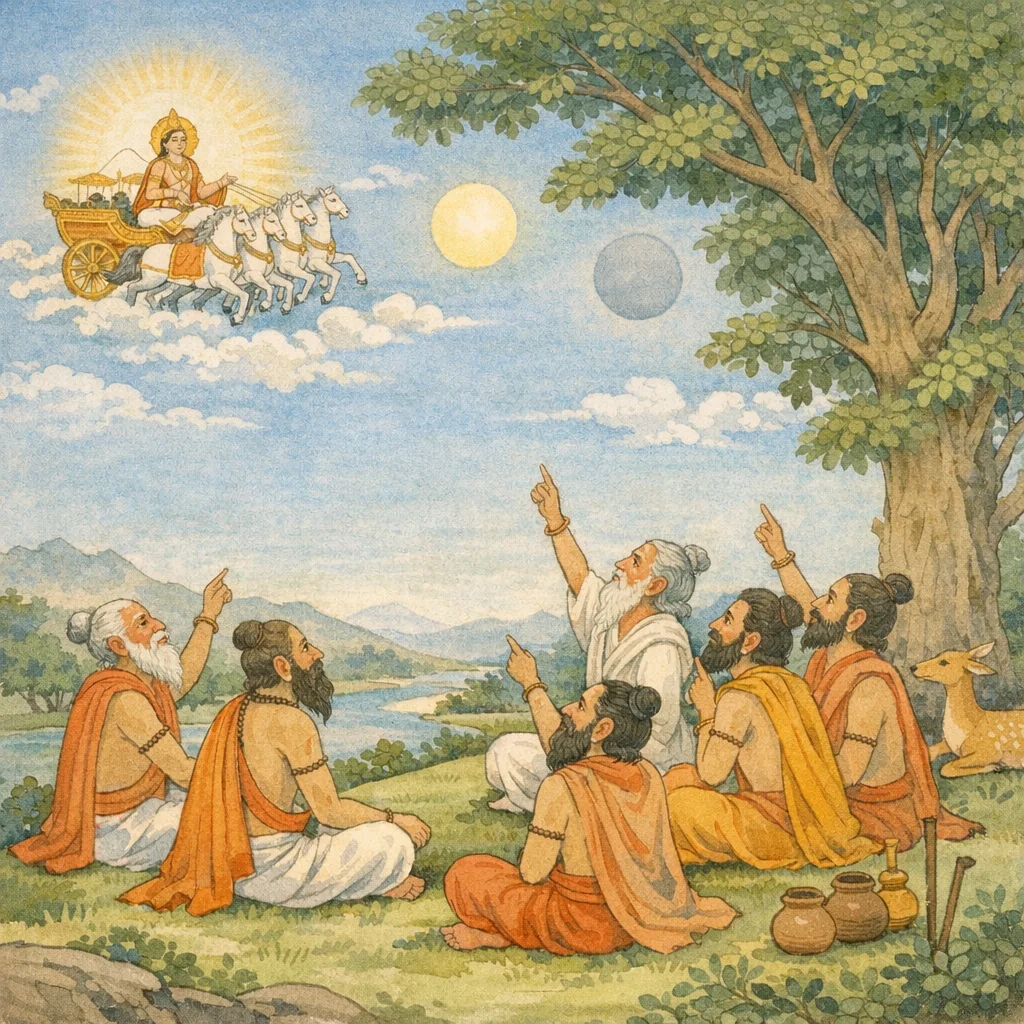
Chapter Arc: नागराज एक ब्राह्मण से पूछता है—अनेक आश्चर्यों की प्रतिष्ठा सूर्य ही है; बताइए, सूर्य-मण्डल में कौन-कौन से अद्भुत विधान घटते हैं? → ब्राह्मण सूर्य की किरणों के सहस्र-जाल का वर्णन करता है—जैसे वृक्ष-शाखाओं पर पक्षी, वैसे ही सिद्ध मुनि और देवता सूर्य-रश्मियों का आश्रय लेते हैं; फिर वह बताता है कि सूर्य प्रजाहित के लिए जल-वायु को विभाजित कर वर्षा-चक्र चलाता है और आठ मासों में शुद्ध किरणों से ‘उक्षित’ जल को समय आने पर पुनः खींच लेता है। → एक प्राचीन मध्याह्न में जब भास्कर लोकों को तपाता है, आकाश में सर्वत्र सूर्य-सा ही एक दूसरा तेजस्वी रूप प्रकट होता है—घृताहुति से प्रज्वलित अग्नि-सा, अनिर्देश्य रूप वाला ‘द्वितीय इव भास्कर’। → संदेहग्रस्त मुनि-समूह स्वयं सूर्य से प्रश्न करता है—यह कौन है जो आकाश को आक्रान्त कर दूसरे सूर्य की भाँति चल रहा है? अध्याय का फल यह है कि आश्चर्य का केंद्र ‘घटना’ नहीं, सूर्य-तत्त्व का नियमबद्ध, लोक-पालक विधान है। → सूर्य से पूछा गया प्रश्न—‘द्वितीय सूर्य’ का रहस्य क्या है?—अगले प्रसंग के लिए खुला रह जाता है।
Shlokas
Verse 1
न, 7: #::-४ द्विषष्ट्यधिकत्रिशततमो< ध्याय: नागराजका ब्राद्मणके पूछनेपर सूर्यमण्डलकी आश्चर्यजनक घटनाओंको सुनाना ब्राह्मण उवाच विवस्वतो गच्छति पर्ययेण वोढुं भवांस्तं रथमेकचक्रम् । आश्चर्यभूतं यदि तत्र किंचिद् दृष्ट त्वया शंसितुमरहसि त्वम्,ब्राह्मणने कहा--नागराज! आप सूर्यके एक पहियेके रथको खींचनेके लिये बारी- बारीसे जाया करते हैं। यदि वहाँ कोई आश्चर्यजनक बात आपने देखी हो तो उसे बतानेकी कृपा करें
The Brahmin said: “O Nāgarāja, you go in turn to draw that single-wheeled chariot of Vivasvat (the Sun). If you have seen anything wondrous there, you ought to tell it—please describe it.”
Verse 2
नाग उवाच आश्षर्याणामनेकानां प्रतिष्ठा भगवान् रवि: । यतो भूता: प्रवर्तन्ते सर्वे त्रैलोक्यसम्मता:,नागने कहा--ब्रह्मन! भगवान् सूर्य तो अनेकानेक आश्वर्योके स्थान हैं; क्योंकि तीनों लोकोंमें जितने भी प्राणी हैं, वे सब उन्हींसे प्रेरित होकर अपने-अपने कार्योँमें प्रवृत्त होते हैं
The Nāga said: “Brahman, the blessed Sun is the very foundation and abiding support of countless wonders. For it is from him that all beings—acknowledged throughout the three worlds—are stirred into activity and set in motion in their respective duties.”
Verse 3
यस्य रश्मिसहस्रेषु शाखास्विव विहंगमा: । वसन्त्यश्रित्य मुनय: संसिद्धा देवतै: सह,जैसे वृक्षकी शाखाओंपर बहुत-से पक्षी बसेरा लेते हैं, उसी प्रकार सूर्यदेवकी सहस्रों किरणोंका आश्रय ले देवताओंसहित सिद्ध और मुनि निवास करते हैं
Just as many birds take shelter and dwell upon the branches of a tree, so do perfected sages and accomplished beings, together with the gods, abide by taking refuge in the thousand rays of the Sun.
Verse 4
यतो वायुर्विनि:सृत्य सूर्यरश्म्याश्रितो महान् | विजृम्भत्यम्बरे तत्र किमाश्चर्यमत: परम्,महान् वायुदेव सूर्यमण्डलसे निकलकर सूर्यकी किरणोंका आश्रय ले समूचे आकाशमें फैल जाते हैं। इससे बढ़कर आश्चर्य और क्या होगा?
The Nāga said: “Behold the mighty Wind-god: issuing forth and taking refuge in the sun’s rays, he spreads out across the whole sky. What wonder could be greater than this?”
Verse 5
विभज्य तं तु विप्रर्षे प्रजानां हितकाम्यया । तोयं सृजति वर्षासु किमाश्नर्यमत: परम्,ब्रह्मर्ष! प्रजाके हितकी कामनासे भगवान् सूर्य उस वायुको अनेक भागोंमें विभक्त करके वर्षा-ऋतुमें जो जलकी वृष्टि करते हैं, उससे बढ़कर आश्चर्य और क्या होगा?
The Nāga said: “O brahmarṣi, O best of sages—seeking the welfare of creatures, the Blessed Sun divides that wind into many parts and, in the rainy season, releases water as rain. What wonder could be greater than this?”
Verse 6
यस्य मण्डलमध्यस्थो महात्मा परमत्विषा । दीप्त: समीक्षते लोकान् किमाश्चर्यमत: परम्,सूर्यमण्डलके मध्यमें उसके अन्तर्यामी महात्मा सूर्यदेव अपनी उत्तम प्रभासे प्रकाशित होते हुए समस्त लोकोंका निरीक्षण करते हैं, उससे बढ़कर आश्चर्य और क्या होगा?
The Nāga said: “Within the very center of the sun’s orb abides the great Self, blazing with supreme radiance, surveying all the worlds. What wonder could be greater than this?”
Verse 7
शुक्रो नामासित: पादो यश्न वारिधरो<म्बरे | तोयं सृजति वर्षासु किमाश्चर्यमत: परम्,शुक्र नामक काला मेघ, जो आकाशमें वर्षकि समय जल उत्पन्न करता है, वह इस सूर्यका ही स्वरूप है। इससे बढ़कर और क्या आश्चर्य होगा?
The Nāga said: “There is a dark cloud called Śukra that bears water in the sky and releases it as rain in the rainy season. Yet that very cloud is but a manifestation of the Sun. What wonder could be greater than this?”
Verse 8
योष्ष्टमासांस्तु शुचिना किरणेनोक्षितं पय: । प्रत्यादत्ते पुनः काले किमाश्चर्यमत: परम्
The Nāga said: “Milk, when touched and matured for eight months by the pure rays (of the sun), is later given back again in due season. What wonder could be greater than this?”
Verse 9
सूर्यदेव बरसातमें पृथ्वीपर जो पानी बरसाते हैं, उसे अपनी विशुद्ध किरणोंद्वारा आठ महीनेमें पुनः: खींच लेते हैं। इससे बढ़कर आश्वर्यकी बात और क्या होगी? ।। यस्य तेजोविशेषेषु स्वयमात्मा प्रतिष्ठित: । यतो बीजं मही चेयं धार्यते सचराचरा,विप्रवर! जिन सूर्यदेवके विशिष्ट तेजमें साक्षात् परमात्माका निवास है, जिनसे नाना प्रकारके बीज उत्पन्न होते हैं, जिनके ही सहारे चराचर प्राणियोंसहित यह समस्त पृथ्वी टिकी हुई है तथा जिनके मण्डलमें आदि-अन्तरहित महाबाहु सनातन पुरुषोत्तम भगवान् नारायण विराजमान हैं, उनसे बढ़कर आश्वर्यकी वस्तु और क्या हो सकती है?
The Nāga said: “In the season of rains the Sun causes water to fall upon the earth, and then, by his pure rays, draws it back again within eight months. What could be more wondrous than this? O best of Brahmins, in the Sun’s distinctive radiance the very Self is established. From him arise the various seeds of life; by his support this entire earth—together with all moving and unmoving beings—stands upheld. And within his solar orb shines Nārāyaṇa, the eternal, mighty-armed, beginningless and endless Supreme Person. What greater marvel could there be than he?”
Verse 10
यत्र देवो महाबाहु: शाश्वतः पुरुषोत्तम: । अनादिनिधनो विप्र किमाश्नर्यमत: परम्,विप्रवर! जिन सूर्यदेवके विशिष्ट तेजमें साक्षात् परमात्माका निवास है, जिनसे नाना प्रकारके बीज उत्पन्न होते हैं, जिनके ही सहारे चराचर प्राणियोंसहित यह समस्त पृथ्वी टिकी हुई है तथा जिनके मण्डलमें आदि-अन्तरहित महाबाहु सनातन पुरुषोत्तम भगवान् नारायण विराजमान हैं, उनसे बढ़कर आश्वर्यकी वस्तु और क्या हो सकती है?
The Nāga said: “O brāhmaṇa, what wonder could be greater than this—that within the Sun’s extraordinary radiance abides the eternal Supreme Person, the mighty-armed Puruṣottama, beginningless and endless? From him arise manifold seeds of life, and by his support this entire earth, together with all moving and unmoving beings, is sustained. If Nārāyaṇa himself shines in the Sun’s orb, what could surpass that in marvel?”
Verse 11
आश्चर्याणामिवाश्वर्यमिदमेकं तु मे शूणु । विमले यन्मया दृष्टमम्बरे सूर्यसंश्रयात्,किंतु इन सब आश्वर्योमें भी एक परम आश्वर्यकी यह बात जो मैंने सूर्यके सहारे निर्मल आकाशमें अपनी आँखों देखी है, उसे बता रहा हूँ--सुनिये
“Among all wonders, hear from me this single, supreme wonder. I shall tell you what I myself beheld in the spotless sky, taking the sun as my point of reference.”
Verse 12
पुरा मध्याह्नलसमये लोकांस्तपति भास्करे | प्रत्यादित्यप्रतीकाश: सर्वतः समदृश्यत,पहलेकी बात है, एक दिन मध्याह्नकालमें भगवान् भास्कर सम्पूर्ण लोकोंको तपा रहे थे। उसी समय दूसरे सूर्यके समान एक तेजस्वी पुरुष दिखायी दिया, जो सब ओरसे प्रकाशित हो रहा था
In former times, when the Sun scorched the worlds at the languid hour of midday, there appeared a radiant person—shining like a second sun—visible on every side in equal brilliance.
Verse 13
स लोकांस्तेजसा सर्वान् स्वभासा निर्विभासयन् । आदित्याभिमुखो<भ्येति गगनं पाटयन्निव,वह अपने तेजसे सम्पूर्ण लोकोंको प्रकाशित करता हुआ मानो आकाशको चीरकर सूर्यकी ओर बढ़ा आ रहा था
Radiating with his own splendor, he illuminated all the worlds; facing the Sun, he advanced as though cleaving the very sky.
Verse 14
हुताहुतिरिव ज्योतिर्वष्याप्प तेजोमरीचिभि: । ओनिर्देश्येन रूपेण द्वितीय इव भास्कर:,घीकी आहुति डालनेसे प्रज्वलित हुई अग्निके समान वह अपनी तेजोमयी किरणोंसे समस्त ज्योति-र्मण्डलको व्याप्त करके अनिर्वचनीयरूपसे द्वितीय सूर्यकी भाँति देदीप्यमान होता था
Like a sacrificial fire newly kindled by oblations, he blazed forth. With radiant beams he seemed to pervade the whole sphere of light, and—his form beyond description—he shone like a second sun.
Verse 15
तस्याभिगमनप्राप्ती हस्तौ दत्तौ विवस्वता । तेनापि दक्षिणो हस्तो दत्त: प्रत्यर्चितार्थिना,जब वह निकट आया, तब भगवान् सूर्यने उसके स्वागतके लिये अपनी दोनों भुजाएँ उसकी ओर बढ़ा दीं। उसने भी उनके सम्मानके लिये अपना दाहिना हाथ उनकी ओर बढ़ा दिया
As he drew near, Vivasvat (the Sun-god) extended both his hands in welcome. The other, seeking to return that honor, likewise offered his right hand in respectful greeting.
Verse 16
ततो भिन्त्वैव गगन प्रविष्टो रश्मिमण्डलम् । एकीभूतं च तत् तेज: क्षणेनादित्यतां गतम्,तत्पश्चात् आकाशको भेदकर वह सूर्यकी किरणोंके समूहमें समा गया और एक ही क्षणमें तेजोराशिके साथ एकाकार होकर सूर्यस्वरूप हो गया
Then, having pierced the sky itself, he entered the orb of rays. In a single instant that radiance became one—merging into a unified blaze—and attained the state of the Sun.
Verse 17
तत्र न: संशयो जातस्तयोस्तेज:समागमे । अनयो: को भवेत् सूर्यो रथस्थो योडयमागत:,उस समय उन दोनों तेजोंके मिल जानेपर हमलोगोंके मनमें यह संदेह हुआ कि इन दोनोंमें असली सूर्य कौन थे? जो उस रथपर बैठे हुए थे वे, अथवा जो अभी पधारे थे वे?
Then, when those two splendors met, a doubt arose in us: which of the two was the true Sun—he who was seated upon the chariot, or he who had just arrived?
Verse 18
ते वयं जातसंदेहा: पर्यपृच्छामहे रविम् | क एष दिवमाक्रम्य गत: सूर्य इवापर:,ऐसी शंका होनेपर हमने सूर्यदेवसे पूछा--“भगवन्! ये जो दूसरे सूर्यके समान आकाशको लाँघकर यहाँतक आये थे, कौन थे?”
Then we, seized by doubt, questioned Ravi (the Sun): “O Lord, who was that other one—like a second Sun—who, striding across the sky, came here?”
Verse 361
इस प्रकार श्रीमह्या भारत शान्तिपर्वके अन्तर्गत मोक्षधर्मपर्वमें उज्छवृत्तिका उपाख्यानविषयक तीन सौ इकसठवाँ अध्याय पूरा हुआ
Thus ends the three-hundred-and-sixty-first chapter of the Mokṣadharma section within the Śānti Parva of the great Mahābhārata, dealing with the narrative episode (upākhyāna) concerning Ucchavṛttikā.
Verse 362
इति श्रीमहाभारते शान्तिपर्वणि मोक्षधर्मपर्वणि उज्छवृत्त्युपाख्याने द्विषष्ट्यधिकत्रिशततमो< ध्याय:,इस प्रकार श्रीमहाभारत शान्तिपर्वके अन्तर्गत मोक्षधर्मपर्वमें उज्छवृत्तिका उपाख्यानविषयक तीन सौ बासठवाँ अध्याय पूरा हुआ
Thus, in the Śrī Mahābhārata, within the Śānti Parva and specifically the Mokṣa-dharma section, the chapter dealing with the episode (upākhyāna) of Ujjhavṛtti comes to an end—this being the three-hundred-and-sixty-second chapter.