Adhyaya 355
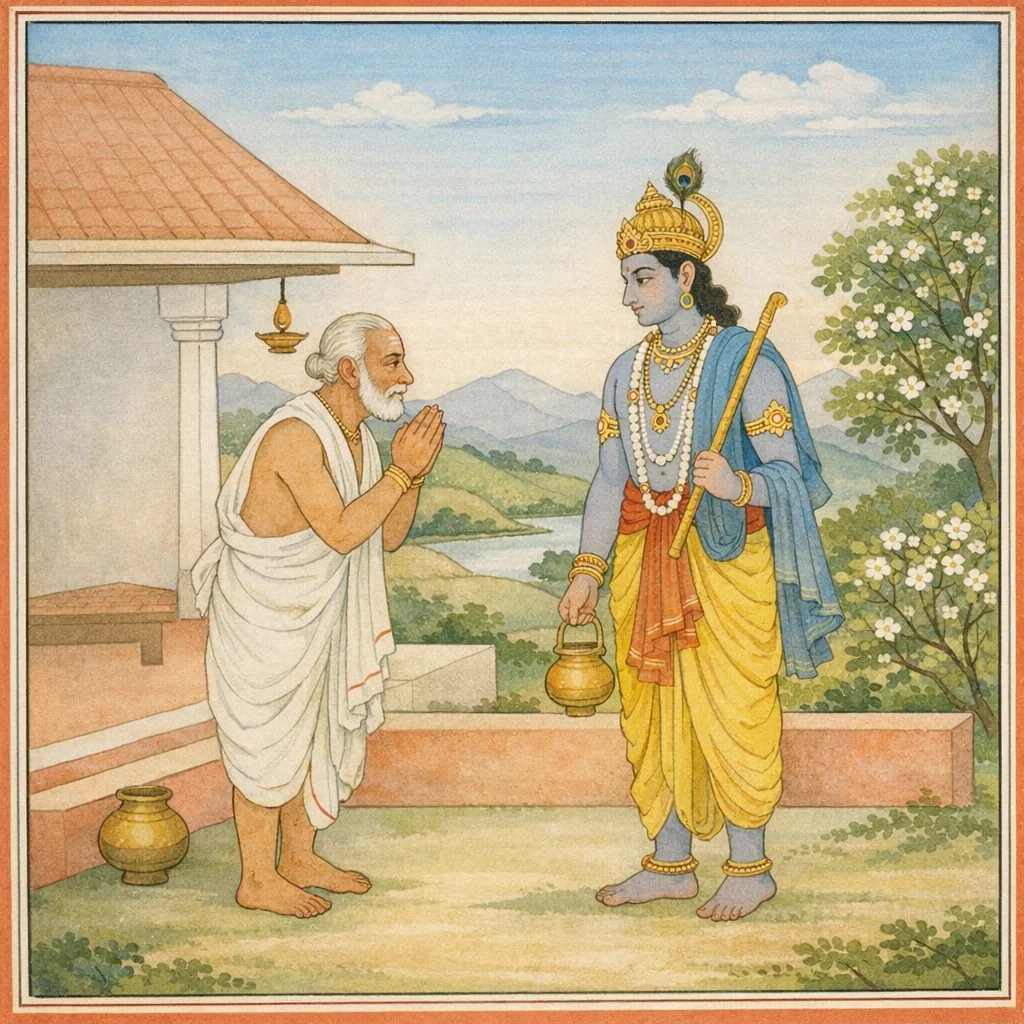
Chapter Arc: भीष्म युधिष्ठिर से कहते हैं कि नारद-प्रवचन में महापदपुर के एक श्रेष्ठ ब्राह्मण का वृत्तान्त आता है—वह वेद-वेत्ता, संशय-रहित, क्रोध-विजयी और इन्द्रिय-निग्रही है; उसके सदाचार की कीर्ति दूर तक है। → गृहस्थ-जीवन में पुत्र-परिवार बढ़ने पर भी वह कुलधर्म और शिष्टाचार में स्थित रहता है, पर भीतर-ही-भीतर तीन प्रकार के धर्म—वेदोक्त, शास्त्रोक्त और शिष्ट-आचरित—इनके बीच ‘मेरे लिए परम धर्म क्या है?’ इस प्रश्न से खिन्न होकर मनन करने लगता है। → इसी आत्म-संघर्ष के क्षण में एक दिन एक समाहित ब्राह्मण अतिथि उसके द्वार पर आ पहुँचता है—और गृहस्थ के लिए धर्म का निर्णायक अवसर उपस्थित हो जाता है। → वह ब्राह्मण गृहस्थ अतिथि-सत्कार को शास्त्रोक्त विधि से करता है, उसे विश्राम देकर आसन पर बैठाता है और फिर संवाद आरम्भ करने हेतु विनीत वचन कहता है—अपने धर्म-संशय का समाधान पाने की भूमिका बनती है। → अतिथि के सामने गृहस्थ का प्रश्न अब खुलने ही वाला है—तीनों धर्म-मार्गों में किसे प्रधान माने और गृहस्थ का आचरण किस कसौटी पर टिके?
Shlokas
Verse 1
हि ही बक। हि मा त्रिपठ्चाशरदाधिकत्रिशततमोब«् ध्याय: महापदपुरमें एक श्रेष्ठ ब्राह्मगके सदाचारका वर्णन और उसके घरपर अतिथिका आगमन भीष्म उवाच आसीत् किल नरश्रेष्ठ महापद्ये पुरोत्तमे । गज़ाया दक्षिणे तीरे कश्चिद् विप्र: समाहित:,भीष्मजी कहते हैं--नरश्रेष्ठ युधिष्ठिर! (नारदजीने जो कथा सुनायी, वह इस प्रकार है --) गंगाके दक्षिणतटपर महापद्म नामक कोई श्रेष्ठ नगर है। वहाँ एक ब्राह्मण रहता था। वह एकाग्रचित्त और सौम्य स्वभावका मनुष्य था। उसका जन्म चन्द्रमाके कुलमें-- अत्रिगोत्रमें हुआ था। वेदमें उसकी अच्छी गति थी और उसके मनमें किसी प्रकारका संदेह नहीं था। वह सदा धर्मपरायण, क्रोधरहित, नित्य संतुष्ट, जितेन्द्रिय, तप और स्वाध्यायमें संलग्न, सत्यवादी और सत्पुरुषोंके सम्मानका पात्र था। न्यायोपार्जित धन और अपने ब्राह्मणोचित शीलसे सम्पन्न था
Bhishma said: “O best of men, in the excellent city called Mahāpadya, on the southern bank of the Gaṅgā, there once lived a certain brāhmaṇa—composed, self-controlled, and steady in mind.”
Verse 2
सौम्य: सोमान्वये वेदे गताध्वा छिन्नसंशय: । धर्मनित्यो जितक्रोधो नित्यतृप्तो जितेन्द्रिय:,भीष्मजी कहते हैं--नरश्रेष्ठ युधिष्ठिर! (नारदजीने जो कथा सुनायी, वह इस प्रकार है --) गंगाके दक्षिणतटपर महापद्म नामक कोई श्रेष्ठ नगर है। वहाँ एक ब्राह्मण रहता था। वह एकाग्रचित्त और सौम्य स्वभावका मनुष्य था। उसका जन्म चन्द्रमाके कुलमें-- अत्रिगोत्रमें हुआ था। वेदमें उसकी अच्छी गति थी और उसके मनमें किसी प्रकारका संदेह नहीं था। वह सदा धर्मपरायण, क्रोधरहित, नित्य संतुष्ट, जितेन्द्रिय, तप और स्वाध्यायमें संलग्न, सत्यवादी और सत्पुरुषोंके सम्मानका पात्र था। न्यायोपार्जित धन और अपने ब्राह्मणोचित शीलसे सम्पन्न था
Bhishma said: “O gentle one—born in the lunar lineage—he was well-versed in the Veda, had completed the course of sacred learning, and was free from doubt. Ever devoted to dharma, he had conquered anger; he was always content and self-controlled.”
Verse 3
तपःस्वाध्यायनिरत: सत्य: सज्जनसम्मत: । न्यायप्राप्तेन वित्तेन स्वेन शीलेन चान्वित:,भीष्मजी कहते हैं--नरश्रेष्ठ युधिष्ठिर! (नारदजीने जो कथा सुनायी, वह इस प्रकार है --) गंगाके दक्षिणतटपर महापद्म नामक कोई श्रेष्ठ नगर है। वहाँ एक ब्राह्मण रहता था। वह एकाग्रचित्त और सौम्य स्वभावका मनुष्य था। उसका जन्म चन्द्रमाके कुलमें-- अत्रिगोत्रमें हुआ था। वेदमें उसकी अच्छी गति थी और उसके मनमें किसी प्रकारका संदेह नहीं था। वह सदा धर्मपरायण, क्रोधरहित, नित्य संतुष्ट, जितेन्द्रिय, तप और स्वाध्यायमें संलग्न, सत्यवादी और सत्पुरुषोंके सम्मानका पात्र था। न्यायोपार्जित धन और अपने ब्राह्मणोचित शीलसे सम्पन्न था
Bhishma said: “He was devoted to austerity and self-study, truthful, and approved by the virtuous. He was endowed with wealth acquired by just means and with his own noble conduct.”
Verse 4
ज्ञातिसम्बन्धिविपुले सत्त्वाद्याश्रयसम्मिते । कुले महति विख्याते विशिष्टां वृत्तिमास्थित:,उसके कुलमें सगे-सम्बन्धियोंकी संख्या अधिक थी। सभी लोग सच्त्वप्रधान सदगुणोंका सहारा लेकर श्रेष्ठ जीवन व्यतीत करते थे। उस महान् एवं विख्यात कुलमें रहकर वह उत्तम आजीविकाके सहारे जीवन-निर्वाह करता था
Bhishma said: In a great and renowned lineage, rich in kinsmen and relations and grounded in virtues such as sattva, he adopted an excellent mode of livelihood. Living within that illustrious family, he sustained himself by a noble and distinguished means of living—one consistent with the ethical standards upheld by his clan.
Verse 5
स पुत्रान् बहुलान् दृष्टवा विपुले कर्मणि स्थित: । कुलधर्मश्रितो राजन् धर्मचर्यास्थितो5भवत्,राजन! उसने देखा कि मेरे बहुत-से पुत्र हो गये, तब वह लौकिक कार्यसे विरक्त हो महान् कर्ममें संलग्न हो गया और अपने कुलधर्मका आश्रय ले धर्माचरणमें ही तत्पर रहने लगा
Bhishma said: “O king, when he saw that he had many sons, he grew disenchanted with worldly affairs and devoted himself to a greater work. Taking refuge in the dharma of his lineage, he became steadfast in the practice of righteousness.”
Verse 6
ततः स धर्म वेदोक्त तथा शास्त्रोक्तमेव च । शिष्टाचीर्ण च धर्म च त्रिविधं चिन्त्य चेतसा
Then one should reflect with a steady mind on dharma as threefold: (1) that which is taught in the Veda, (2) that which is laid down in the śāstras, and (3) that which is practiced by the cultured and exemplary (śiṣṭas).
Verse 7
तदनन्तर उसने वेदोक्त धर्म, शास्त्रोक्त धर्म तथा शिष्ट पुरुषोंद्वारा आचरित धर्म--इन तीन प्रकारके धर्मोंपर मन-ही-मन विचार करना आरम्भ किया-- ।। किन्नु मे स्याच्छुभं कृत्वा कि कृतं कि परायणम् । इत्येवं खिद्यते नित्यं न च याति विनिश्चयम,क्या करनेसे मेरा कल्याण होगा? मेरा क्या कर्तव्य है तथा कौन मेरे लिये परम आश्रय है?” इस प्रकार वह सदा सोचते-सोचते खिन्न हो जाता था; परंतु किसी निर्णयपर नहीं पहुँच पाता था
After that, he began to reflect inwardly on three kinds of dharma: dharma as taught in the Vedas, dharma as laid down in the treatises, and dharma as practiced by cultured and exemplary people. Yet he remained troubled, continually asking himself: “What action will bring me true good? What is my duty? And what is my highest refuge?” Thus he grew weary from constant deliberation, but could not arrive at a firm decision.
Verse 8
तस्यैवं खिद्यमानस्य धर्म परममास्थित: । कदाचिदतिथि: प्राप्तो ब्राह्मण: सुसमाहितः,एक दिन जब वह इसी तरह सोच-विचारमें पड़ा हुआ कष्ट पा रहा था, उसके यहाँ एक परम धर्मात्मा तथा एकाग्रचित्त ब्राह्मण अतिथिके रूपमें आ पहुँचा
As he was thus afflicted and inwardly troubled, yet firmly established in the highest dharma, there came to him on one occasion a Brahmin guest—an atithi—self-possessed and deeply collected in mind. The arrival of this atithi signaled a moral test: the householder’s distress was met by an opportunity to uphold righteousness through hospitality and right conduct.
Verse 9
स तस्मै सत्क्रियां चक्रे क्रियायुक्तेन हेतुना । विश्रान्तं सुसमासीनमिदं वचनमत्रवीत्,ब्राह्मणने उस अतिथिका क्रियायुक्त हेतु (शास्त्रोक्त विधि) से आदर-सत्कार किया और जब वह सुखपूर्वक बैठकर विश्राम करने लगा, तब उससे इस प्रकार कहा
He then offered that guest due honour and hospitality, following the proper ritual and ethical procedure. When the visitor had rested and was seated comfortably, he addressed him with these words—showing that reverence to a guest, performed in accordance with dharma, comes before any serious counsel or inquiry.
Verse 352
इस प्रकार श्रीमहाभारत शान्तिपर्वके अन्तर्गत गोक्षधर्मपर्वमें उज्छवृत्तिका उपाख्यानविषयक तीन सौ बावनवाँ अध्याय पूरा हुआ
Thus ends the three hundred and fifty-second chapter of the Śānti Parva of the Śrī Mahābhārata, within the section known as the Gokṣa-dharma Parva, dealing with the illustrative tale (upākhyāna) of Ujjhavṛttikā. The colophon signals the completion of this unit of instruction, framing the narrative as a dharma-oriented exemplum within Bhīṣma’s teaching to Yudhiṣṭhira.
Verse 353
इति श्रीमहाभारते शान्तिपर्वणि मोक्षधर्मपर्वणि उज्छवृत्त्युपाख्याने त्रिपठचाशदधिकत्रिशततमो<ध्याय:
Thus, in the Śrī Mahābhārata, within the Śānti Parva—specifically in the Mokṣa-dharma section—ends the episode known as the “Upākhyāna of the Unccha-vṛtti (gleaning livelihood).” This marks the conclusion of the three-hundred-and-fifty-third chapter, as indicated by the colophon.