Adhyaya 319
शुकस्य योगसिद्धिः (Śuka’s Yogic Attainment and Ascent)
Upa-parva: Mokṣa-dharma (Liberation Teachings) — Śuka’s Yogic Ascent Episode
Bhīṣma describes Śuka ascending a mountain and seating himself in a secluded, level place. He stabilizes the body progressively from the feet upward, faces east near sunrise, and enters a disciplined seated posture. In that silence—absent bird-flocks, sound, and ordinary visibility—Śuka perceives his self as released from all attachments and briefly expresses a spontaneous joy while gazing at the sun. Re-entering yogic absorption to discern the path of liberation, he attains a state described as ‘great lord of yoga’ and traverses the sky. He respectfully circumambulates and reports his yogic state to the devarṣi Nārada, declaring that the path has been seen and that, by Nārada’s favor, he will reach the desired goal. Authorized, Śuka resumes yoga and moves through the atmosphere, rising from Kailāsa and proceeding with resolve. Beings across realms observe and honor him with offerings; celestial groups express astonishment at an ascetic moving like a luminary. Hearing remarks about his filial devotion, Śuka surveys the directions, earth, mountains, forests, waters, and then requests a coordinated response: if Vyāsa follows calling “Śuka,” all directions and features of the world should answer back—an instruction they accept, indicating a narrative mechanism for managing separation between father and son while maintaining reverence.
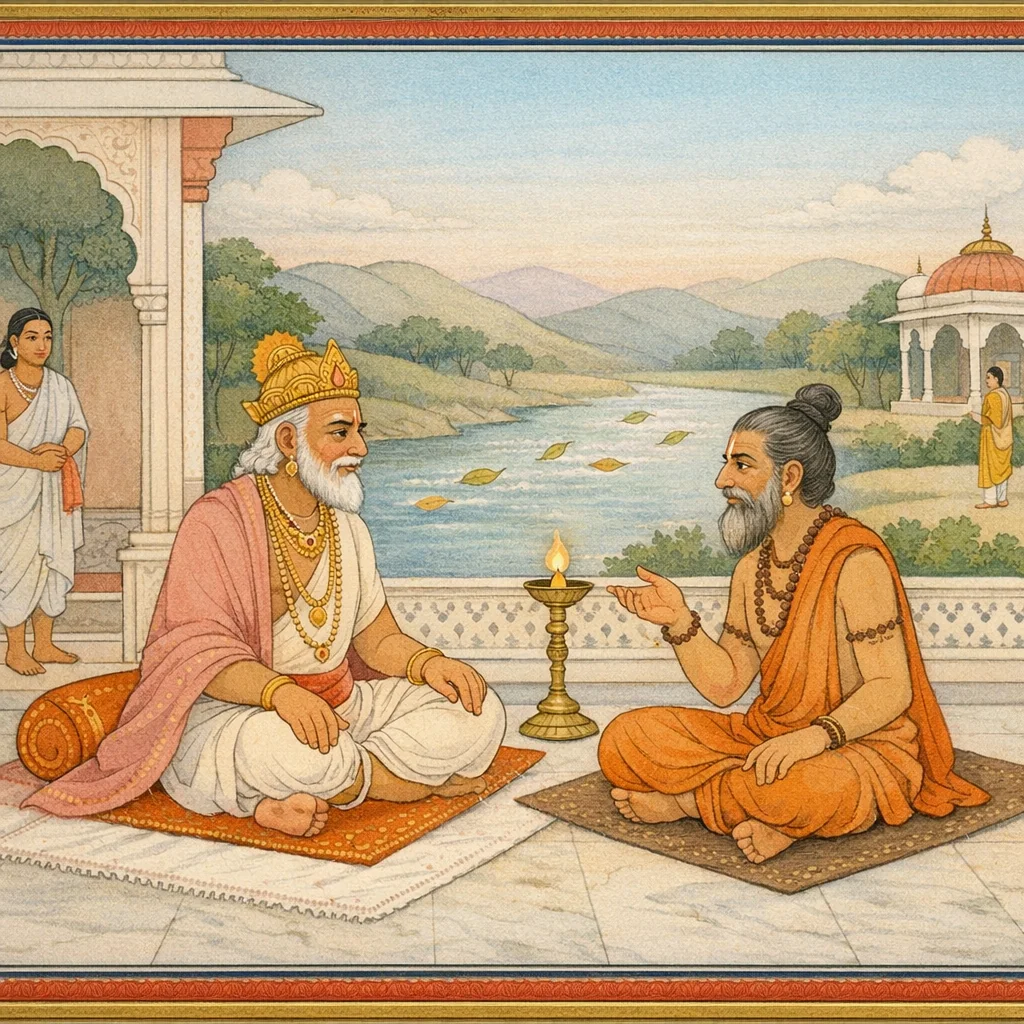
Chapter Arc: युधिष्ठिर के मन में एक तीखा प्रश्न उठता है—क्या तप, कर्म, श्रुति या रसायन-प्रयोग से जरा और मृत्यु को लांघा जा सकता है? भीष्म इस जिज्ञासा को एक प्राचीन संवाद की ओर मोड़ते हैं। → भीष्म जनक और संन्यासी पंचशिख के संवाद का आरम्भ करते हैं। जनक, धर्म-अर्थ के संशयों को काटने वाले महर्षि से पूछते हैं कि देह-धर्म, निवृत्ति-प्रवृत्ति, और जीवन के अंतिम सत्य के सामने मनुष्य का आश्रय क्या है—जब जरा-मृत्यु सबको ग्रसती है। → पंचशिख निर्णायक वाणी में स्थापित करते हैं कि जरा और मृत्यु ‘महाग्राह’ की तरह बलवान-दुर्बल, छोटे-बड़े सभी को पकड़ते हैं; कोई भी साधन उन्हें स्थायी रूप से नहीं रोक सकता। स्वर्ग-नरक का ‘द्रष्टा’ भी कर्मकर्ता स्वयं है—दूसरा कोई नहीं; न कोई किसी का है, न कोई किसी का स्वामी—आत्मा अपने कर्म-फल का अकेला भोक्ता है। → संवाद का निष्कर्ष यह बनता है कि बाह्य उपाय (तप, कर्मकाण्ड, औषध/रसायन) देह की सीमा के भीतर ही हैं; वास्तविक ‘उल्लंघन’ देह को अमर करना नहीं, बल्कि आसक्ति-भ्रम का क्षय और आत्म-ज्ञान की ओर निवृत्ति है। जनक का संशय शांत होता है—कर्तृत्व-अहंकार और पराश्रय की कल्पना ढहती है, और धर्म का सार अंतर्मुखी विवेक में प्रतिष्ठित होता है।
Shlokas
Verse 1
(दाक्षिणात्य अधिक पाठका १ श्लोक मिलाकर कुल ११३ श्लोक हैं) ऑपन--माजल बछ। अकाल एकोनविशर्त्याधिकॉत्रेशततमो< ध्याय: जरा-मृत्युका उल्लंघन करनेके विषयमें पजचशिख और राजा जनकका संवाद युधिछिर उवाच ऐश्वर्य वा महत् प्राप्प धनं वा भरतर्षभ । दीर्घमायुरवाप्याथ कथं मृत्युमतिक्रमेत्,युधिष्ठिरने पूछा--भरतश्रेष्ठ! महान् ऐश्वर्य या प्रचुर धन अथवा बहुत बड़ी आयु पाकर मनुष्य किस तरह मृत्युका उल्लंघन कर सकता है?
Yudhiṣṭhira said: “O bull among the Bharatas, even after attaining great sovereignty, abundant wealth, or a very long life, how can a person truly pass beyond death?”
Verse 2
तपसा वा सुमहता कर्मणा वा श्रुतेन वा । रसायनप्रयोगैर्वा कैर्नाप्रोति जरान्तकौ,वह गुरुतर तपस्या करके, महान् कर्मोका अनुष्ठान करके, वेद-शास्त्रोंका अध्ययन करके अथवा नाना प्रकारके रसायनोंका प्रयोग करके किन उपायोंद्वारा जरा और मृत्युको प्राप्त नहीं होता है?
“Is it by mighty austerity, or by the performance of great deeds, or by the study of the Vedas and the śāstras, or by the use of various rasāyana (rejuvenating elixirs)—by what means does one not come to old age and death?”
Verse 3
भीष्म उवाच अत्राप्युदाहरन्तीममितिहासं पुरातनम् । भिक्षो: पजचशिखस्येह संवादं जनकस्य च,भीष्मजीने कहा--युधिष्ठिर! इस विषयमें विद्वान् पुरुष संन्यासी पंचशिख तथा राजा जनकके संवादरूप इस प्राचीन इतिहासका उदाहरण दिया करते हैं
Bhīṣma said: “Here too, Yudhiṣṭhira, the wise cite an ancient precedent—this old historical exemplum—namely, the dialogue in this very context between the mendicant Panchashikha and King Janaka.”
Verse 4
वैदेहो जनको राजा महर्षि वेदवित्तमम् । पर्यपृच्छत् पञज्चशिखं छिन्नधर्मार्थसंशयम्
Bhīṣma said: King Janaka of Videha, seeking the highest understanding of the Vedas, questioned the sage Pañcaśikha—one whose doubts about dharma and artha had been cut away—so that right conduct and right purpose might be clearly known.
Verse 5
एक समयकी बात है, विदेहदेशके राजा जनकने वेद-वेत्ताओंमें श्रेष्ठ महर्षि पंचशिखसे, जिनके धर्म और अर्थ-विषयक संदेह नष्ट हो गये थे, इस प्रकार प्रश्न किया-- ।। केन वृत्तेन भगवन्नतिक्रामेज्जरान्तकौ । तपसा वाथ बुद्धा वा कर्मणा वा श्रुतेन वा,“भगवन्! किस आचार, तपस्या, बुद्धि, कर्म अथवा शास्त्रज्ञानके द्वारा मनुष्य जरा और मृत्युको लाँध सकता है?”
Bhishma said: Once, King Janaka of Videha questioned the great sage Panchashikha, foremost among the knowers of the Veda, whose doubts about dharma and worldly welfare had been dispelled. Janaka asked: “Revered sir, by what way of life can one pass beyond old age and death—by austerity, by insight, by action, or by learning from scripture? By what conduct, discipline, intelligence, deeds, or sacred knowledge can a person transcend decay and mortality?”
Verse 6
एवमुक्त: स वैदेहं प्रत्युवाचापरोक्षवित् । निवृत्तिर्न तयोरस्ति नानिवृत्ति: कथठ्चन,उनके इस प्रकार पूछनेपर अपरोक्ष ज्ञानसे सम्पन्न महर्षि पंचशिखने विदेहगाजको इस प्रकार उत्तर दिया--“जरा और मृत्युकी निवृत्ति नहीं होती है, परंतु ऐसा भी नहीं है कि किसी प्रकार उनकी निवृत्ति हो ही नहीं सकती (धन और ऐश्चर्य आदिसे उनकी निवृत्ति नहीं होती, परंतु ज्ञानसे तो पुनर्जन्मकी भी निवृत्ति हो जाती है; फिर जरा और मृत्युकी तो बात ही क्या?)
Thus addressed, the sage—endowed with direct, immediate knowledge—replied to the king of Videha: “There is no absolute cessation of those two—old age and death; yet it is not true that their cessation is impossible in every way. Not through wealth or worldly power are they overcome; but through knowledge the cycle of rebirth itself can be brought to an end—and then what need be said of old age and death?”
Verse 7
न हाहानि निवर्तन्ते न मासा न पुन: क्षपा: | सो<थयं प्रपद्यते5ध्वानं चिराय ध्रुवमध्रुव:
Bhīṣma said: “Days do not turn back, nor do months, nor again do nights. Thus this embodied being—himself unstable and perishable—sets forth upon a long journey toward what is fixed and certain (death).”
Verse 8
दिन, रात और महीनोंके जो चक्र चल रहे हैं, वे किसीके टाले नहीं टलते हैं। इसी प्रकार जन्म, मृत्यु और जरा आदिके क्रम प्रायः चलते ही रहते हैं। जिसके जीवनका कुछ ठिकाना नहीं, वह मरणधर्मा मानव कभी दीर्घ-कालके पश्चात् नित्यपथ (मोक्षमार्ग) का आश्रय लेता है ।। सर्वभूतसमुच्छेद: स्रोतसेवोहाुते सदा । ऊहामानं निमज्जन्तमप्लवे कालसागरे
Bhishma says: The wheel of days, nights, and months keeps turning and cannot be stopped by anyone. In the same way, the sequence of birth, death, and old age continues almost without pause. Since human life has no fixed certainty, a mortal person—often only after a long time—finally takes refuge in the eternal path, the way of liberation. For time is like a vast ocean without a raft: beings are continually swept along by its current, and even one who struggles and reasons is liable to sink in that sea of Time.
Verse 9
नैवास्य कश्चिद् भवति नासौ भवति कस्यचित्
Bhīṣma said: “In truth, no one truly ‘belongs’ to him, nor does he truly ‘belong’ to anyone.” In the ethical frame of Śānti, this points to the impermanence of worldly possession and attachment, urging a steadier vision of duty and self-mastery rather than clinging to “mine” and “yours”.
Verse 10
पथि सज्ज्तमेवेदं दारैरन्यैश्व बन्धुभि: । नायमत्यन्तसंवासो लब्धपूर्वो हि केनचित्
Bhīṣma said: “See how, on life’s road, one becomes entangled with spouse and with other relatives. Yet no one has ever truly obtained an absolute, unbroken togetherness (with them); such permanent cohabitation is not to be found.”
Verse 11
यहाँ इस जीवका कोई भी अपना नहीं है और वह भी किसीका अपना नहीं है। रास्तेमें मिले हुए राहगीरोंके समान यहाँ पत्नी तथा अन्य बन्धु-बान्धवोंका साथ हो जाता है, परंतु यहाँ पहले कभी किसीने किसीके साथ चिरकालतक सहवासका सुख नहीं उठाया है ।। क्षिप्यन्ते तेन तेनैव निष्टनन्त: पुनः पुन: । कालेन जाता याता हि वायुनेवा भ्रसंचया:,जैसे गर्जते हुए बादलोंको हवा बारंबार उड़ाकर छिजन्न-भिन्न कर देती है, उसी प्रकार काल यहाँ जन्म लेनेवाले प्राणियोंको उनके रोने-चिल्लानेपर भी विनाशकी आगमें झोंक देता है
Bhīṣma said: In this world no living being truly belongs to anyone, nor does anyone truly belong to him. Like travelers who meet upon the road, one comes into temporary association with a wife and other relatives; yet no one has ever enjoyed here, for long, the happiness of lasting companionship. Even as they cry out again and again, Time casts beings into destruction—just as the wind repeatedly drives and breaks apart masses of thunderclouds.
Verse 12
जरामृत्यू हि भूतानां खादितारी वृकाविव । बलिनां दुर्बलानां च हस्वानां महतामपि,कोई बलवान हों या दुर्बल, बड़ा हों या छोटा, उन सब प्राणियोंको बुढ़ापा और मौत व्याप्रकी भाँति खा जाती है
Bhīṣma said: “Indeed, old age and death devour all living beings like two wolves—whether one is strong or weak, whether small or great. Thus no embodied creature can claim exemption from decline and mortality.”
Verse 13
एवं भूतेषु भूतात्मा नित्यभूतो<च्रुवेषु च । कथं हि हृष्येज्जातेषु मृतेषु च कथं ज्वरेत्,इस प्रकार जब सभी प्राणी विनाशशील ही हैं, तब नित्य-स्वरूप जीवात्मा उन प्राणियोंके लिये जन्म लेनेपर हर्ष किसलिये माने और मर जानेपर शोक क्यों करे?
Bhīṣma said: When all embodied beings are perishable, how could the eternal Self that abides within them rightly exult when they are born, and why should it burn with grief when they die? The wise, seeing the instability of worldly conditions and the continuity of the inner Self, do not let joy and sorrow arise from birth and death.
Verse 14
कुतो5हमागत: को5स्मि क्व गमिष्यामि कस्य वा । कस्मिन् स्थित: क्व भविता कस्मात्किमनुशोचसि,मैं कौन हूँ? कहाँसे आया हूँ? कहाँ जाऊँगा? किसके साथ मेरा क्या सम्बन्ध है? किस स्थानमें स्थित होकर कहाँ फिर जन्म लूँगा? इन सब बातोंको लेकर तुम किसलिये क्या शोक कर रहे हो?
Bhishma said: “From where have I come? Who am I? Where shall I go? To whom do I truly belong? Standing in what condition, and into what state shall I be born again? If these matters are so uncertain and shifting, then for what reason—and over what exactly—do you grieve?”
Verse 15
द्रष्टा स्वर्गस्थ को5न्यो5स्ति तथैव नरकस्य च । आगरमांस्त्वनतिक्रम्य दद्याच्चैव यजेत च,जो शुभ और अशुभ कर्म करता है, उसके सिवा दूसरा कौन ऐसा है जो उन कर्मोंके फलस्वरूप स्वर्ग और नरकका दर्शन एवं उपभोग करेगा; अत: शास्त्रकी आज्ञाका उल्लंघन न करते हुए सब लोगोंको दान और यज्ञ आदि सत्कर्म करते रहना चाहिये
Bhishma said: “Who else, apart from the very doer of deeds, will behold and experience heaven and likewise hell? Therefore, without transgressing the injunctions of the scriptures, one should continue to give in charity and to perform sacrifices and other auspicious acts.”
Verse 83
जरामृत्युमहाग्राहे न कश्चिदभिपद्यते । काल समस्त प्राणियोंका उच्छेद कर डालता है। जैसे जलका प्रवाह किसी वस्तुको बहाये लिये जाता है, उसी प्रकार काल सदा ही प्राणियोंको अपने वेगसे बहाया करता है। यह काल बिना नौकाके समुद्रकी भाँति लहरा रहा है। जरा और मृत्यु विशाल ग्राहका रूप धारण करके उसमें बैठे हुए हैं। उस काल-सागरमें बहते और डूबते हुए जीवको कोई भी बचा नहीं सकता
Bhishma said: “No one can escape the great crocodile-like grasp of old age and death. Time cuts down all living beings. Just as a current carries an object along, so Time continually sweeps creatures away by its own force. That Time surges like an ocean without a boat; within it sit Old Age and Death, taking the form of vast crocodiles. A being drifting and sinking in that ocean of Time cannot be rescued by anyone.”
Verse 319
इति श्रीमहाभारते शान्तिपर्वणि मोक्षधर्मपर्वणि पञजचशिखजनकसंवादे एकोनविंशत्यधिकत्रिशततमो< ध्याय:,इस प्रकार श्रीमहाभारत शान्तिपवके अन्तर्गत गोक्षधर्मपर्वमें पंचशिख और जनकका संवादविषयक तीन सौ उन्नीयवाँ अध्याय पूरा हुआ
Thus ends, in the Śrī Mahābhārata, within the Śānti Parva and its Mokṣa-dharma section, the three-hundred-and-nineteenth chapter—being the dialogue between Pañcaśikha and King Janaka.
Frequently Asked Questions
The chapter juxtaposes renunciation and liberation-seeking with filial bonds: Śuka’s attainment and departure are praised, yet the text acknowledges Vyāsa’s attachment and designs a respectful mechanism (the world’s echoing reply) to manage separation.
Liberation practice is portrayed as methodical and verified: cultivate seclusion and composure, stabilize the body-mind progressively, maintain detachment, and proceed with guidance/authorization from realized authorities rather than impulse.
No explicit phalaśruti formula is stated here; instead, the chapter’s meta-function is demonstrative—using public recognition by sages, directions, and celestial witnesses to mark yogic attainment as an authoritative model within Mokṣa-dharma.