Adhyaya 309
Śuka’s Nirveda: Vyāsa’s Admonition on Dharma, Impermanence, and ‘Imperishable Wealth’ (अक्षय-धन)
Upa-parva: Mokṣa-dharma (Liberation Teachings) — Śuka-Nirveda / Vyāsa’s Instruction Episode
Yudhiṣṭhira asks Bhīṣma how Śuka (Vyaiāsaki) previously fell into dispassion (nirveda). Bhīṣma narrates that Vyāsa, after teaching Śuka the full course of study (svādhyāya), instructed him to practice dharma with disciplined senses: truth, straightforwardness, non-anger, non-envy, self-control, tapas, non-violence, and compassion. Vyāsa underscores impermanence through images of the body as foam and life as fragile, warning that time diminishes lifespan and that death searches for one whether standing or lying down. He advises avoiding nāstika and boundary-breaking counsel, seeking guidance from disciplined elders, and climbing the ‘ladder of dharma’ gradually. The chapter repeatedly reframes worldly assets—wealth, kin, reputation—as non-transferable at death, while karma alone accompanies the individual. Ethical urgency is stressed: do tomorrow’s work today, cultivate samādhi before faculties fail, and accumulate the only secure treasure—merit and right conduct—described as akṣaya and dhruva. The close notes that, having heard this beneficial instruction of Dvaipāyana, Śuka departed, leaving even his father who served as a guide to liberation.
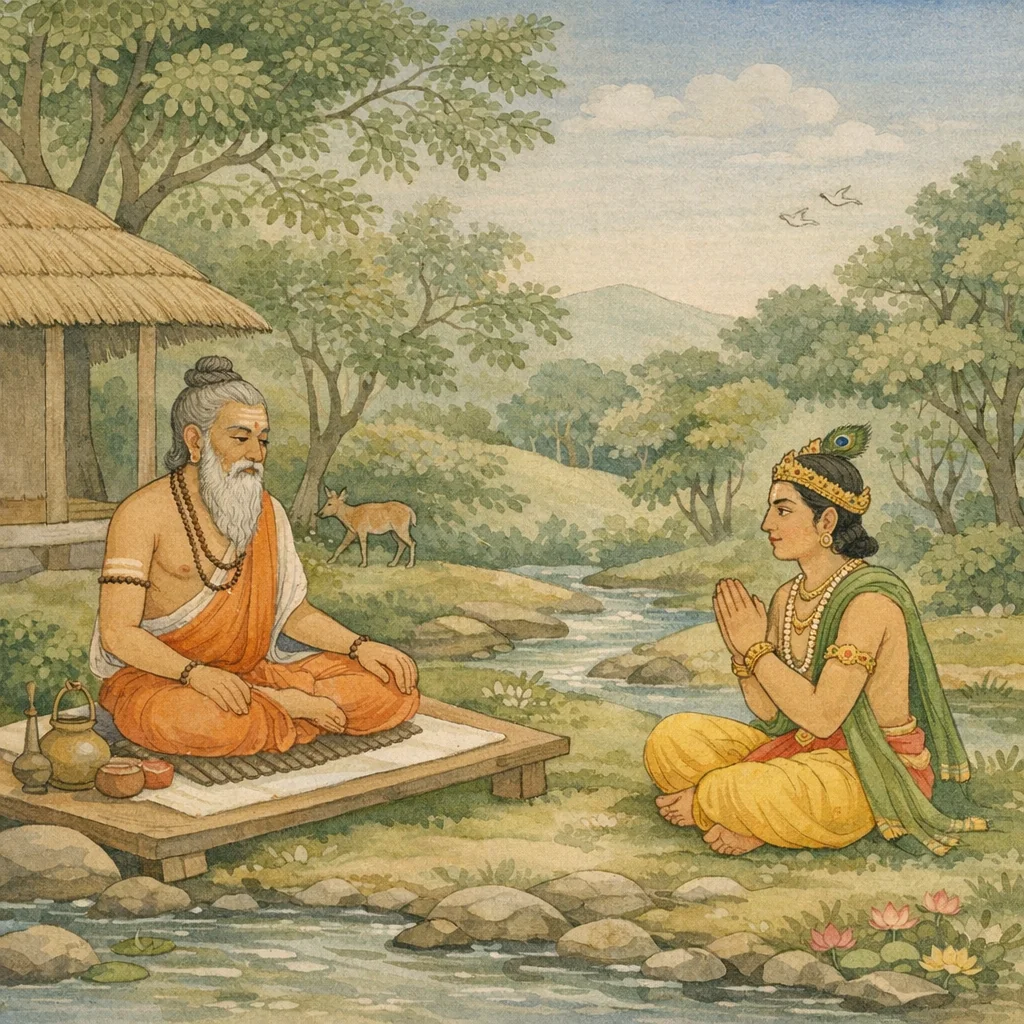
Chapter Arc: Janaka’s lineage is invoked as the stage shifts to Prince Vasuman approaching a seated sage, seeking a rule of life that will be good both here and after death. → Vasuman confesses the human predicament: the body is unstable and desire is tyrannical—so what, truly, is ‘shreyas’ for one dragged by kama? The sage answers with a hard demand: stop harming what the mind finds repugnant; withdraw the senses from what is hostile to beings. → The muni anchors everything in a single pillar: dharma is the welfare and refuge of the good, and from dharma the three worlds—moving and unmoving—proceed. The practical hinge is mental discipline: in every creature the mind runs toward auspicious and inauspicious; one must cast it away from the inauspicious and set it down in the auspicious. → The teaching turns concrete: seek the company and service of tapasvins, dharmatmas, and the learned to gain wide intelligence and attain shreyas. Hearing this, Vasuman—naturally well-disposed—turns his mind away from desire and fixes his understanding in dharma.
Shlokas
Verse 1
/ (दाक्षिणात्य अधिक पाठका ३ “लोक मिलाकर कुल ५१३ “लोक हैं) नफमशा (0) असऔअन+- नवाधिकत्रिशततमो< ध्याय: जनकवंशी वसुमान्को एक मुनिका धर्मविषयक उपदेश भीष्म उवाच मृगयां विचरन् कश्चिद् विजने जनकात्मज: । वने ददर्श विप्रेन्द्रमृषिं वंशधरं भूगो:,भीष्मजी कहते हैं--राजन्! एक समयकी बात है, जनकवंशका कोई राजकुमार शिकार खेलनेके लिये एक निर्जन वनमें घूम रहा था। उसने वनमें बैठे हुए एक मुनिको देखा; जो ब्राह्मणोंमें श्रेष्ठ एवं महर्षि भूगुके वंशधर थे
Bhishma said: O King, once a certain prince of Janaka’s line, while roaming about on a hunt in a lonely wilderness, saw in the forest a great sage—foremost among Brahmins—who was a descendant of the seer Bhṛgu.
Verse 2
उपासीनमुपासीन: प्रणम्य शिरसा मुनिम् | पश्चादनुमतस्तेन पप्रच्छ वसुमानिदम्,पास ही बैठे हुए मुनिको मस्तक झुकाकर प्रणाम करके वह राजकुमार उनके समीपमें ही बैठ गया। उसका नाम वसुमान् था। उसने महर्षिकी आज्ञा लेकर उनसे इस प्रकार पूछा --[
Bhishma said: Seeing the sage seated, the prince also sat down. Bowing his head, he paid reverence to the muni; then, having received the sage’s permission, Vasumān asked him the following—thus observing the discipline of approaching a teacher with humility, proper conduct, and consent before inquiry.
Verse 3
भगवन् किमिदं श्रेय: प्रेत्य चापीह वा भवेत् । पुरुषस्याध्रुवे देहे कामस्य वशवर्तिन:,“भगवन्! इस क्षणभंगुर शरीरमें कामके अधीन होकर रहनेवाले पुरुषका इस लोक और परलोकमें किस उपायसे कल्याण हो सकता है?
Bhishma said: “O Blessed Lord, what course leads to true welfare—both after death and here in this world—for a man who, dwelling in an impermanent body, lives under the sway of desire?”
Verse 4
सत्कृत्य परिपृष्ट: सन् सुमहात्मा महातपा: । निजगाद ततस्तस्मै श्रेयस्करमिदं वच:,सत्कारपूर्वक प्रश्न करनेपर उन महातपस्वी महात्मा मुनिने राजकुमार वसुमानसे यह कल्याणकारी वचन कहा
Bhishma said: When he had been respectfully honoured and then questioned, the great-souled, mighty ascetic spoke to him these words—counsel that leads to the highest good.
Verse 5
ऋषिरुवाच मनसोअप्रतिकूलानि प्रेत्य चेह च वाउ्छसि । भूतानां प्रतिकूलेभ्यो निवर्तस्व यतेन्द्रिय:,ऋषि बोले--राजकुमार! यदि तुम इस लोक और परलोकमें अपने मनके अनुकूल वस्तुएँ पाना चाहते हो तो अपनी इन्द्रियोंको संयममें रखकर समस्त प्राणियोंके प्रतिकूल आचरणोंसे दूर हट जाओ
The rishi said: “Prince, if you seek what is agreeable to the mind—both here and after death—then, with your senses restrained, turn away from all conduct that is hostile to living beings.”
Verse 6
धर्म: सतां हित: पुंसां धर्मश्वैवाश्रय: सताम् | धर्माल्लोकास्त्रयस्तात प्रवृत्ता: सचराचरा:,धर्म ही सत्पुरुषोंका कल्याण करनेवाला और धर्म ही उनका आश्रय है। तात! चराचर प्राणियोंसहित तीनों लोक धर्मसे ही उत्पन्न हुए हैं
Dharma brings welfare to the righteous, and dharma itself is the refuge of the righteous. Dear one, the three worlds—together with all moving and unmoving beings—have arisen and continue in their course through dharma alone.
Verse 7
स्वादुकामुक कामानां वैतृष्ण्यं कि न गच्छसि । मधु पश्यसि दुर्बुद्धे प्रपातं नानुपश्यसि,भोगोंका रस लेनेकी इच्छा रखनेवाले दुर्बुद्धि मानव! तुम्हारी कामपिपासा शान्त क्यों नहीं होती? अभी तुम्हें वृक्षकी ऊँची डालीमें लगा हुआ केवल मधु ही दिखायी देता है। वहाँसे गिरनेपर प्राणान्त हो सकता है, इसकी ओर तुम्हारी दृष्टि नहीं है (अर्थात् अभी तुम भोगोंकी मिठासपर ही लुभाये हुए हो। उससे होनेवाले पतनकी ओर तुम्हारा ध्यान नहीं जा रहा है)
Bhīṣma said: “O foolish man, eager to taste the sweetness of pleasures—why does your thirst for desire not subside? You see only the honey high upon the tree-branch, but you do not look at the fatal fall below. So too, you are captivated by the sweetness of enjoyment and fail to notice the ruin that follows attachment.”
Verse 8
यथा ज्ञाने परिचय: कर्तव्यस्तत्फलार्थिना | तथा धर्मे परिचय: कर्तव्यस्तत्फलार्थिना,जैसे ज्ञानका फल चाहनेवालेके लिये ज्ञानसे परिचित होना आवश्यक है, उसी प्रकार धर्मका फल चाहनेवाले मनुष्यको भी धर्मका परिचय प्राप्त करना चाहिये
Bhīṣma said: Just as one who seeks the fruit of knowledge must become truly acquainted with knowledge, so too must a person who seeks the fruit of dharma become genuinely acquainted with dharma. Mere desire for results is not enough; understanding and lived familiarity are required for dharma to bear its proper outcome.
Verse 9
असता धर्मकामेन विशुद्ध॑ कर्म दुष्करम् | सता तु धर्मकामेन सुकरं कर्म दुष्करम्,दुष्ट पुरुष यदि धर्मकी इच्छा करे तो भी उसके द्वारा विशुद्ध कर्मका सम्पादन होना कठिन है और साधु पुरुष यदि धर्मके अनुष्ठानकी इच्छा करे तो उसके लिये कठिन-से- कठिन कर्म भी करना सहज है
“For a wicked man, even if he desires dharma, it is hard to accomplish pure action; but for a virtuous man who longs for dharma, even the most difficult deeds become easy.”
Verse 10
वने ग्राम्यसुखाचारो यथा ग्राम्यस्तथैव सः । ग्रामे वनसुखाचारो यथा वनचरस्तथा,वनमें रहकर भी जो ग्रामीण सुखोंका उपभोग करनेमें लगा है, उसको ग्रामीण ही समझना चाहिये तथा गाँवोंमें रहकर भी जो वनवासी मुनियोंके-से बर्तावमें ही सुख मानता है, उसकी गिनती वनवासियोंमें ही करनी चाहिये
Bhīṣma said: “Even if one lives in a forest, if his conduct is devoted to the pleasures of village life, he should be regarded as truly ‘village-bred’ in spirit. And even if one lives in a village, if he finds his happiness in the disciplined ways of forest-dwelling sages, he should be counted among the forest-dwellers. A person is defined not by location, but by the kind of life and values he chooses to cultivate.”
Verse 11
मनोवाक्कायिके धर्मे कुरु श्रद्धां समाहितः । निवृत्तौ वा प्रवृत्त वा सम्प्रधार्य गुणागुणान्,पहले निवृत्ति और प्रवृत्ति-मार्गमें जो गुण-अवगुण हैं, उनका तुम अच्छी तरह निश्चय कर लो; फिर एकाग्रचित्त हो मन, वाणी और शरीरद्वारा होनेवाले धर्ममें श्रद्धा करो (अर्थात् श्रद्धापूर्वक धर्मके पालनमें लग जाओ)
Bhīṣma said: With a collected mind, place your faith in dharma as expressed through thought, speech, and bodily action. Whether you choose the path of withdrawal or the path of engagement, first weigh well their merits and faults, and then practice dharma with steady, focused conviction.
Verse 12
नित्यं च बहु दातव्यं साधुभ्यश्चञानसूयता । प्रार्थितं व्रतशौचा भ्यां सत्कृतं देशकालयो:,प्रतिदिन व्रत और शौचाचारका पालन करते हुए उत्तम देश और कालनमें साधु पुरुषोंको प्रार्थना और सत्कारपूर्वक अधिक-से-अधिक दान करना चाहिये और उनमें दोषदृष्टि नहीं रखनी चाहिये
One should always give—giving much—to the sādhus, without envy and without fault-finding. Observing one’s vows and purity each day, and considering proper place and time, one should give as requested, honoring them with due respect and welcome.
Verse 13
शुभेन विधिना लब्धमर्हाय प्रतिपादयेत् । क्रोधमुत्सृज्य दद्याच्च नानुतप्येन्न कीर्तयेत्,शुभकर्माद्वारा प्राप्त हुआ धन सत्पात्रको अर्पण करना चाहिये। क्रोधको त्यागकर दान देना चाहिये और देनेके बाद न तो उसके लिये पश्चात्ताप करना चाहिये और न उसे दूसरोंको बताना ही चाहिये
Wealth obtained through a righteous and auspicious means should be offered to a worthy recipient. One should give after casting away anger, and having given, one should neither regret it nor proclaim it to others.
Verse 14
अनृशंस: शुचिर्दान्त: सत्यवागार्जवे स्थित: । योनिकर्मविशुद्धश्न पात्र स्याद् वेदविद् द्विज:,दयालु, पवित्र, जितेन्द्रिय, सत्यवादी, सरलतापूर्ण बर्ताव करनेवाला तथा योनिसे अर्थात् जन्मसे और कर्मसे शुद्ध वेदवेत्ता ब्राह्मण ही दान पानेका उत्तम पात्र है
Bhishma said: A Brahmin who knows the Veda becomes the most worthy recipient of gifts when he is compassionate and non-cruel, pure in conduct, self-controlled, truthful in speech, and firmly established in straightforwardness; and when he is also pure both by birth (lineage) and by deeds.
Verse 15
सत्कृता चैकपत्नी च जात्या योनिरिहेष्यते । ऋग्यजु:सामगो विद्वान् षट्कर्मा पात्रमुच्यते,अपनी ही जातिके उत्तम कुलमें उत्पन्न हुई तथा पतिद्वारा सम्मानित पतित्रता स्त्री यहाँ उत्तम योनि मानी गयी है। अत: जिसका ऐसी मातासे जन्म हुआ हो वह जन्मसे शुद्ध है। ऋषक्, यजुष् और सामवेदका विद्वान् होकर सदा (यजन-याजन, अध्ययन-अध्यापन, दान और प्रतिग्रह इन) छ: कर्मोका अनुष्ठान करनेवाला ब्राह्मण कर्मसे शुद्ध एवं उत्तम पात्र बताया गया है
Bhīṣma says: A woman who is honored (by her husband), devoted to one husband alone, and born in a reputable lineage is regarded here as an “excellent womb”; therefore, one born of such a mother is considered pure by birth. Further, a Brāhmaṇa learned in the Ṛg-, Yajur-, and Sāma-veda, who consistently performs the six prescribed duties (sacrificing and officiating, studying and teaching, giving and accepting gifts), is said to be pure by conduct and fit to receive gifts.
Verse 16
स एव धर्म: सो<धर्मस्तं तं प्रति नरं भवेत् । पात्रकर्मविशेषेण देशकालाववेक्ष्य च,देश, काल, पात्र और कर्मविशेषपर विचार करनेसे एक ही कर्म भिन्न-भिन्न मनुष्यके लिये धर्म और अधर्मरूप हो जाता है
Bhīṣma said: The very same act may become, for this person or that, either dharma or adharma—depending on the agent and the specific nature of the act, and after considering place and time.
Verse 17
लीलयाल्पं यथा गात्रात् प्रमृज्यात् तु रज: पुमान् | बहुयत्नेन च महत् पापनिर्हरणं तथा,जैसे शरीरमें थोड़ी-सी धूल लगी हुई हो तो मनुष्य उसे अनायास ही झाड़-पोंछकर दूर कर देता है; परंतु बहुत अधिक मैल बैठ जाय तो उसे बड़े प्रयत्नसे दूर कर सकता है, उसी प्रकार थोड़ा पाप थोड़े-से प्रयत्नसे और महान् पाप महान प्रायश्चित्त करनेसे दूर होता है
Bhīṣma said: “Just as a man can effortlessly wipe away a little dust from his body, but must exert great effort to remove heavy grime, so too a small sin is removed by a small effort, whereas a great sin is removed only through a great expiation.”
Verse 18
विरिक्तस्य यथा सम्यग् घृतं भवति भेषजम् | तथा निर्ह्ठतदोषस्य प्रेत्य धर्म: सुखावह:,जैसे जिसने विरेचनके द्वारा अपने पेटको अच्छी तरह साफ कर लिया हो, वह मनुष्य यदि घी खाय तो वह उसके लिये दवाके समान लाभदायक होता है। उसी तरह जिसके सारे पाप-दोष दूर हो गये हैं, उसीके लिये धर्म परलोकमें सुख देनेवाला होता है
Bhishma said: “Just as clarified butter becomes truly medicinal for a person whose system has been properly cleansed by purgation, so too dharma becomes a source of happiness in the next world only for one whose faults and sins have been removed. Religious practice bears sweet fruit when the inner impurities that distort it have been expelled.”
Verse 19
मानसं सर्वभूतेषु वर्तते वै शुभाशुभम् । अशुभेभ्य: सदा55क्षिप्य शुभेष्वेवावतारयेत्,सभी प्राणियोंके मनमें शुभ और अशुभ विचार उठते रहते हैं। मनुष्यको चाहिये कि वह चित्तको सदा अशुभ विचारोंकी ओरसे हटाकर शुभ विचारोंमें ही लगाये
Bhishma said: In the minds of all beings, both wholesome and unwholesome impulses continually arise. Therefore, one should always draw the mind away from what is unwholesome and settle it only in what is wholesome.
Verse 20
सर्व सर्वेण सर्वत्र क्रियमाणं च पूजय । स्वथधर्मे यत्र रागस्ते काम॑ धर्मो विधीयताम्,अपने वर्ण और आश्रमके अनुसार सबके द्वारा सब जगह किये जानेवाले सब प्रकारके कर्मोका आदर करो। तुम भी अपने धर्मके अनुसार जिस कर्ममें तुम्हारा अनुराग हो, उसका इच्छानुसार पालन करते रहो
Honor every kind of work that people everywhere undertake, each in accord with their own varṇa and āśrama. And you too, in keeping with your own dharma, continue to practice—according to your wish—the duty toward which your heart feels devotion.
Verse 21
अधृतात्मन् धृतौ तिष्ठ दुर्बुद्धे बुद्धिमान् भव । अप्रशान्त: प्रशाम्य त्वमप्राज्ञ: प्राज्ञवच्चर,अधीरचित्त नरेश! धीरताका आश्रय लो। दुर्बुद्धे! बुद्धिमानू बनो। तुम सदा अशान्त रहते हो। अबसे शान्त हो जाओ और अबतक मूर्खोके-से बर्ताव करते रहे, अब विद्दानोंके समान आचरण करो
Bhishma said: “O unsteady-minded one, stand firm in self-control. O misguided one, become wise. You have remained restless—now calm yourself. You have acted like the ignorant—now conduct yourself like the truly discerning.”
Verse 22
तेजसा शक्यते प्राप्तुमुपाय: सहचारिणा । इह च प्रेत्य च श्रेयस्तस्य मूल धृति: परा,जो सत्पुरुषोंका संग करता है, उसे उन्हींके तेज या प्रतापसे कोई ऐसा उपाय प्राप्त हो सकता है, जो इस लोक और परलोकमें भी कल्याण करनेवाला हो। उत्तम धृति (मनकी स्थिरता) ही कल्याणका मूल है
Bhīṣma said: By the power and influence of noble companions, one can obtain a fitting means (upāya) that brings welfare both in this world and after death. The root of such welfare is supreme dhṛti—steadfastness and firmness of mind.
Verse 23
राजर्षिरधृति: स्वर्गात् पतितो हि महाभिष: । ययाति: क्षीणपुण्यो5पि धृत्या लोकानवाप्तवान्,राजर्षि महाभिष धृतिमान् न होनेके कारण ही स्वर्गसे नीचे गिरे और राजा ययाति अपना पुण्य क्षीण हो जानेके बाद भी धृतिके ही बलसे उत्तम लोकोंको प्राप्त हुए
Bhishma said: The royal sage Mahābhiṣa fell from heaven because he lacked steadfastness (dhṛti). Yet King Yayāti, even after his merit was exhausted, attained higher worlds by the power of steadfast resolve. The teaching is that inner firmness and self-control sustain one’s spiritual standing more reliably than mere accumulated merit.
Verse 24
तपस्विनां धर्मवतां विदुषां चोपसेवनात् । प्राप्स्यसे विपुलां बुद्धि तथा श्रेयोडभिपत्स्यसे,राजन! तपस्वी, धर्मात्मा एवं विद्वानोंकी सेवा करनेसे तुम्हें विशाल बुद्धि प्राप्त होगी, जिससे तुम कल्याणके भागी हो सकोगे
Bhishma said: By attending upon and serving ascetics, the righteous, and the learned, you will gain a broad and discerning intellect; and with that, O king, you will attain what is truly beneficial and auspicious for your life.
Verse 25
भीष्म उवाच स तु स्वभावसम्पन्नस्तच्छुत्वा मुनिभाषितम् । विनिवर्त्य मन: कामादू धर्मे बुद्धि चकार ह,भीष्मजी कहते हैं--युधिष्ठिर! राजकुमार वसुमान् अच्छे स्वभावसे सम्पन्न था। उसने मुनिके उस उपदेशको सुनकर अपने मनको कामनाओंसे हटा लिया और बुद्धिको धर्ममें ही लगा दिया
Bhīṣma said: O Yudhiṣṭhira! Prince Vasumān was endowed with a noble nature. Having heard the sage’s instruction, he turned his mind away from desire and set his understanding firmly upon dharma.
Verse 309
इति श्रीमहाभारते शान्तिपर्वणि मोक्षधर्मपर्वणि जनकानुशासने नवाधिकत्रिशततमो<ध्याय:
Thus, in the Śrī Mahābhārata, within the Śānti Parva—specifically the Mokṣa-dharma section—ends the three-hundred-and-ninth chapter, known as “Janaka’s Instruction.”
Frequently Asked Questions
The pressure is procrastination and moral negligence under the illusion of permanence: the chapter argues that delay in dharma is irrational because time, aging, and death advance without negotiation.
Practice dharma as a comprehensive discipline of conduct and attention: cultivate virtues (truth, non-violence, restraint), seek guidance from the wise, and treat karma as the only durable asset when social ties and possessions fall away.
A functional closure appears in the narrative consequence: Bhīṣma states that after hearing Dvaipāyana’s beneficial instruction, Śuka departed—marking the teaching as sufficient for initiating a liberation-directed orientation.