Adhyaya 286
अध्याय २८६ — पराशर-उपदेशः (Ethical Restraint, Mortality, and Karma)
Upa-parva: Mokṣa-dharma (Liberation-Oriented Instruction) — Parāśara–Videha Discourse (contextual unit)
Chapter 286 presents Parāśara’s didactic sequence, later reported by Bhīṣma, integrating ethics, state restraint, and liberation-oriented anthropology. It begins by classifying relational figures—father, friends, teachers, and women—as possessing mixed qualities, while elevating the father as a paramount object of reverence and linking self-control to the highest gain of knowledge. It then outlines norms of strategic engagement: a ruler should not harm the exhausted, fearful, disarmed, grieving, retreating, deprived, inactive, sick, supplicating, or the very young and old; conflict is framed as legitimate only among comparably equipped opponents, while killing the inferior or cowardly is condemned as blameworthy and morally degrading. The discourse pivots to mortality: no one can rescue a being overtaken by destiny, and harmful acts should be restrained even when urged by intimates, since longevity is not secured by violence. A compact body–self analysis follows—depicting the body as a composite of elements, senses, and guṇas, perishable and abandoned at death—paired with karmic continuity and rebirth imagery. Hierarchies of beings culminate in praise of the wise and ego-free. The chapter concludes with practical śreyas-instruments: disciplined learning, sacrifice within capacity, charity, gentle speech, equanimity, pilgrimage locales, and proper funerary rites, with Bhīṣma noting the teaching’s earlier delivery to the Videha king for the sake of highest good.
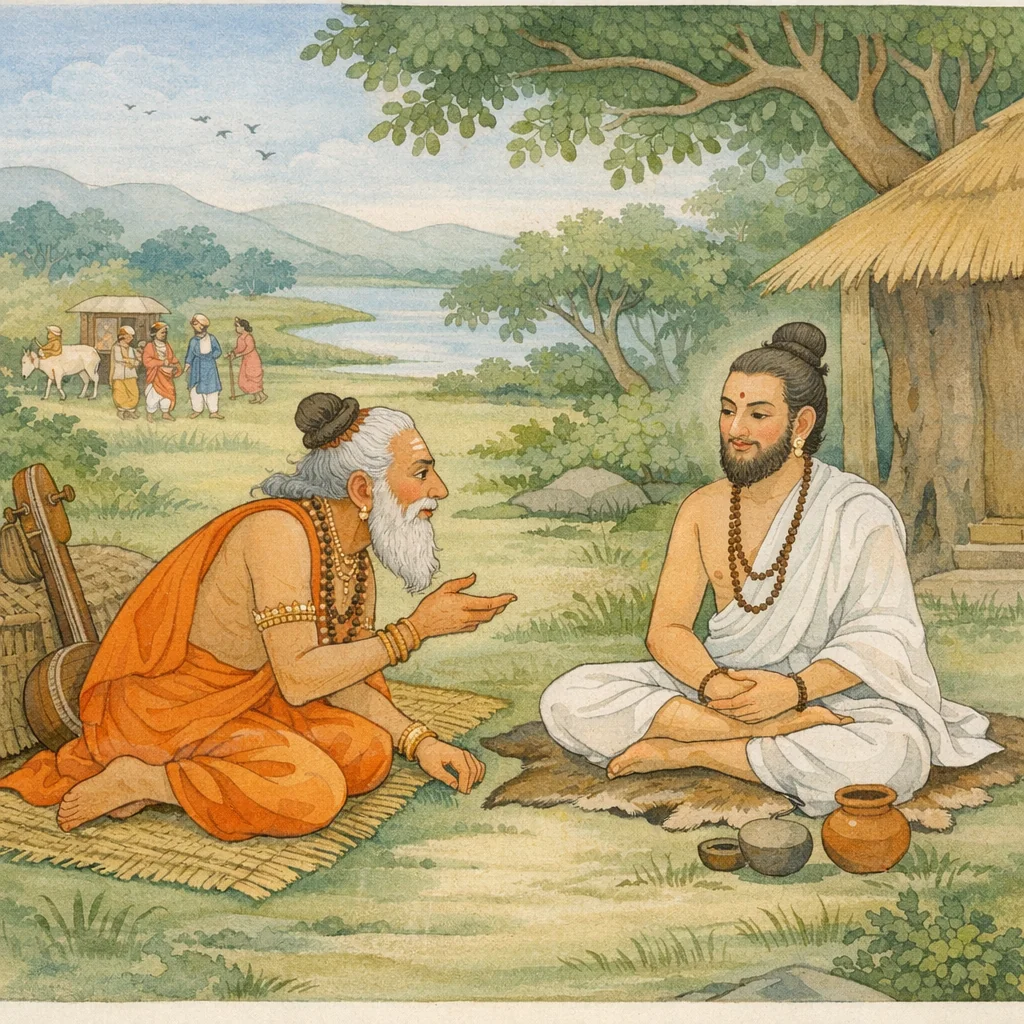
Chapter Arc: युधिष्ठिर के शोक-भय-त्रास से भरे प्रश्नों की पृष्ठभूमि में भीष्म एक प्राचीन संवाद का द्वार खोलते हैं—देवर्षि नारद और समङ्ग का, जहाँ एक मनुष्य असाधारण ‘विशोक’ अवस्था में दिखता है। → नारद समङ्ग की निर्भय, प्रसन्न, स्थिर देह-भाषा देखकर पूछते हैं—तुम्हें न मृत्यु का भय है, न हानि का, न दुःख का; यह कैसी उपलब्धि है? समङ्ग उत्तर में संसार की विषमता (धनी-निर्धन, बलवान-दुर्बल) और ‘विधान/प्रारब्ध’ के अधीन जीवन की समानता दिखाकर सामान्य मानवीय तुलना-ईर्ष्या-लालसा को चुनौती देता है। → समङ्ग का निर्णायक कथन: जो संसार को ‘भवात्मक’—निरन्तर बदलता हुआ—जान लेता है, वह न इष्ट-भोगों के पीछे जलता है, न आने वाले लाभ पर उछलता है, न बड़े लाभ में हर्षित होता है, न अर्थ-नाश में विषाद करता है; अमृतपान-सम निर्भयता से वह मृत्यु, अधर्म, लोभ—किसी से भी नहीं काँपता। → समङ्ग स्पष्ट करता है कि यह शोक-रहित स्थिति किसी संयोग से नहीं, ‘महान् और अक्षय तप’ से प्राप्त ब्रह्म-ज्ञान से उपजी है; इसलिए नारद, मुझे शोक बाधित नहीं करता। भीष्म इस दृष्टान्त को युधिष्ठिर के लिए शोक-निवारक उपदेश के रूप में स्थापित करते हैं।
Shlokas
Verse 1
/ भीकम (2 अमान षडशीर्त्याधिकद्विशततमो< ध्याय: समड़के द्वारा नारदजीसे अपनी शोकहीन स्थितिका वर्णन युधिछिर उवाच शोकाद् दुःखाच्च मृत्योश्च त्रसन्ते प्राणिन: सदा । उभयं नो यथा न स्यात् तन्मे ब्रूहि पितामह,युधिष्ठिरने पूछा--पितामह! संसारके सभी प्राणी सदा शोक, दुःख और मृत्युसे डरते रहते हैं; अतः आप हमें ऐसा उपदेश दें, जिससे हमलोगोंको उन दोनोंका भय न रहे
Yudhiṣṭhira said: “Grandfather, all living beings are always afraid of grief, suffering, and death. Tell me, then, the teaching by which these fears—both of them—may no longer arise for us.”
Verse 2
भीष्य उवाच अत्राप्युदाहरन्तीममितिहासं पुरातनम् । नारदस्य च संवादं समड्रस्य च भारत,भीष्मजीने कहा--भरतनन्दन! इस विषयमें विद्वान् पुरुष देवर्षि नारद और समड्ढके संवादरूप प्राचीन इतिहासका उदाहरण दिया करते हैं
Bhishma said: “Here too, O Bharata, the learned cite an ancient precedent—an old historical exemplum—namely the dialogue between the divine sage Narada and Samaṅga.”
Verse 3
नारद उवाच उरसेव प्रणमसे बाहुभ्यां तरसीव च । सम्प्रहृष्टमना नित्यं विशोक इव लक्ष्यसे,नारदजीने पूछा--समड़्जी! दूसरे लोग तो सिर झुकाकर प्रणाम करते हैं; परंतु आप हृदयसे प्रणाम करते जान पड़ते हैं। मालूम होता है, आप इस संसारसागरको अपनी इन दोनों भुजाओंसे ही तैरकर पार हो जायँगे। आपका मन नित्य प्रसन्न रहता है तथा आप सदा शोकशून्य-से दिखायी देते हैं
Narada said: “It seems you bow not merely with your head but with your very heart. And it appears as though you will cross this ocean of worldly existence by the strength of your own two arms. Your mind is ever gladdened, and you are seen as if free from sorrow.”
Verse 4
उद्वेगं न हि ते किंचित् सुसूक्ष्ममपि लक्षये । नित्यतृप्त इव स्वस्थो बालवच्च विचेष्टसे,मैं आपके चित्तमें कभी कोई थोड़ा-सा भी उद्वेग नहीं देख पाता हूँ। आप नित्य तृप्तकी भाँति अपने-आपमें ही स्थित रहकर बालकोंके समान चेष्टा करते हैं (इसका क्या कारण है?)
Nārada said: “I do not perceive in you even the slightest agitation—however subtle. You appear steady and self-possessed, as though ever content, and you move about with the simple spontaneity of a child. What is the reason for this?”
Verse 5
समड़ उवाच भूतं भव्यं भविष्यं च सर्वमेतत् तु मानद । तेषां तत्त्वानि जानामि ततो न विमना हाहम्,समज्जीने कहा--दूसरोंको मान देनेवाले देवर्षे! मैं भूत, वर्तमान और भविष्य इन सबका स्वरूप तथा तत्त्व जानता हूँ; इसलिये मेरे मनमें कभी विषाद नहीं होता
Samaḍa said: “O bestower of honor, I comprehend the reality and inner principles of all that is past, present, and yet to come. Therefore my mind does not sink into dejection.”
Verse 6
उपक्रमानहं वेद पुनरेव फलोदयान् । लोके फलानि चित्राणि ततो न विमना हाहम्,मुझे कर्मोके आरम्भका तथा उनके फलोदयकालका भी ज्ञान है और लोकमें जो भाँति-भाँतिके कर्मफल प्राप्त होते हैं, उनको भी मैं जानता हूँ; इसीलिये मेरे मनमें कभी खेद नहीं होता
“I understand the beginnings of actions and, again, the times when their results come to fruition. I also know how varied the fruits of deeds appear in the world. Therefore my mind does not sink into regret or despondency.”
Verse 7
अगाधाश्षाप्रतिष्ठाक्ष॒ गतिमन्तश्ष नारद । अन्धा जडाशक्ष जीवन्ति पश्यास्मानपि जीवत:,नारदजी! देखिये, जैसे जगतमें गम्भीर, अप्रतिष्ठित, प्रगतिशील, अन्धे और जड मनुष्य भी जीवित रहते हैं, उसी प्रकार हम भी जी रहे हैं
“O Nārada, even those who are plunged in unfathomable confusion, without any firm footing, yet driven onward—though blind and dull-witted—still manage to live in this world. Look at us too: in the same way, we are also living on.”
Verse 8
विहितेनैव जीवन्ति अरोगाड़ा दिवौकस: । बलवन्तोडबलाश्वैव तस्मादस्मान् सभाजय,नीरोग शरीरवाले देवता, बलवान् और निर्बल सभी अपने प्रारब्ध-विधानके अनुसार जीवन धारण करते हैं; अतः हम भी प्रारब्धपर ही अवलम्बित रहकर किसी कर्मका आरम्भ नहीं करते हैं, इसलिये हमारे प्रति भी आप आदर बुद्धि रखें (अकर्मण्य समझकर हमारा निरादर न करें)
Samada said: “The gods, though free from disease, live only in accordance with what has been ordained; both the strong and the weak alike sustain life by the same dispensation. Therefore, honor us as well: we too rely on destiny and do not initiate actions independently—do not treat us with contempt as though we were merely idle.”
Verse 9
सहस्रिणो5पि जीवन्ति जीवन्ति शतिनस्तथा । शाकेन चान्ये जीवन्ति पश्यास्मानपि जीवत:,जिनके पास हजारों रुपये हैं, वे भी जीते हैं। जिनके पास सैकड़ों रुपयोंका संग्रह है, वे भी जीवन धारण करते हैं। दूसरे लोग सागसे ही जीवन-निर्वाह करते हैं। उसी तरह हमें भी जीवित समझिये
Even those who possess thousands live; likewise those who have only hundreds also live. Others sustain life merely on leafy greens. In the same way, consider us too as living—able to maintain ourselves without excess. The point is that life and dignity do not depend on wealth; contentment and simple sustenance are sufficient.
Verse 10
यदा न शोचेमहि कि नु नः स्थाद् धर्मेण वा नारद कर्मणा वा । कृतान्तवश्यानि यदा सुखानि दुःखानि वा यन्न विधर्षयन्ति,नारदजी! जब अज्ञान दूर हो जानेके कारण हम शोक ही नहीं करते हैं तो धर्म अथवा लौकिक कर्मसे हमारा क्या प्रयोजन है। सारे सुख और दुःख कालके अधीन होनेके कारण क्षणभंगुर हैं, अत: वे ज्ञानी पुरुषको पराभूत नहीं कर सकते हैं
Samaḍa said: “When, with ignorance dispelled, we no longer grieve, what need have we of dharma—or even of worldly action, O Nārada? Since pleasures and pains are under the dominion of Time (Death) and thus fleeting, they cannot overpower the man of understanding.”
Verse 11
यस्मै प्राज्ञा: कथयन्ते मनुष्या: प्रज्ञामूलं हीन्द्रियाणां प्रसाद: । मुहान्ति शोचन्ति तथेन्द्रियाणि प्रज्ञालाभो नास्ति मूढेन्द्रियस्थ,ज्ञानी पुरुष जिसके लिये कहा करते हैं, उस प्रज्ञाकी जड़ है इन्द्रियोंकी निर्मलता। जिसकी इन्द्रियाँ मोह और शोकमें मग्न हैं, उस मोहाच्छन्न इन्द्रियवाले पुरुषको कभी प्रज्ञाका लाभ नहीं मिल सकता
People of discernment declare that the very root of wisdom is the clarity and serenity of the senses. But when the senses are sunk in delusion and grief, a person whose faculties are thus clouded never attains true understanding.
Verse 12
मूढस्य दर्प: स पुनर्मोह एव मूढस्य नायं न परोडस्ति लोक: । न होव दुःखानि सदा भवन्ति सुखस्य वा नित्यशो लाभ एव,मूढ़ मनुष्यको गर्व होता है। उसका वह गर्व मोहरूप ही है। मूढ़के लिये न तो यह लोक सुखद होता है ओर न परलोक ही। किसीको भी न तो सदा दुःख ही उठाने पड़ते हैं और न नित्य, निरन्तर सुखका ही लाभ होता है
Pride in a deluded person is nothing but delusion again. For the foolish, neither this world brings true well-being nor does the next. In human life, sorrow does not remain forever, nor is there an unbroken, perpetual gain of happiness.
Verse 13
भवात्मकं सम्परिवर्तमानं न मादृश:संज्वरं जातु कुर्यात् । इष्टान् भोगान् नानुरुध्येत् सुखं वा न चिन्तयेद् दुःखमभ्यागतं वा,संसारके स्वरूपको परिवर्तित होता देख मेरे-जैसा मनुष्य कभी संताप नहीं करता है। अभीष्ट भोग अथवा सुखका भी अनुसरण नहीं करता तथा दुःख आ जाय तो उसके लिये चिन्तित नहीं होता
Seeing the world as a ceaseless turning of conditioned existence, a person like me never gives way to burning distress. He does not chase after desired enjoyments or even happiness; and when sorrow arrives, he does not brood over it.
Verse 14
समाहितो न स्पृहयेत् परेषां नानागतं चाभिनन्देच्च लाभम् | न चापि ह्ृष्येद् विपुले<र्थला भे तथार्थनाशे च न वै विषीदेत्,सब प्रकारसे उपरत महापुरुष दूसरोंसे कुछ भी नहीं चाहता। भविष्यमें होनेवाले अर्थलाभका भी अभिनन्दन नहीं करता। बहुत-सी सम्पत्ति पाकर हर्षित नहीं होता तथा धनका नाश हो जानेपर भी खेद नहीं करता
A person who is inwardly collected and self-possessed does not crave what belongs to others, nor does he celebrate gains that have not yet come. He is not elated when great wealth is obtained, and he does not sink into grief when wealth is lost. The teaching praises equanimity and freedom from possessiveness as marks of the truly disciplined person.
Verse 15
न बान्धवा न च वित्त न कौल्यं नच श्रुतं न च मन्त्रा न वीर्यम् । दुःखात् त्रातुं सर्व एवोत्सहन्ते परत्र शीलेन तु यान्ति शान्तिम्,बन्धु-बान्धव, धन, उत्तम कुल, शास्त्राध्ययन, मन्त्र तथा पराक्रम--ये सब-के-सब मिलकर भी किसीको दुःखसे छुटकारा नहीं दिला सकते हैं। परलोकमें मनुष्य उत्तम स्वभावके कारण ही शान्ति पाते हैं
Samaḍa said: Neither kinsmen, nor wealth, nor noble lineage, nor learning, nor spells, nor even prowess—none of these, even together, can truly deliver a person from suffering. In the world beyond, it is by one’s character and conduct alone that people attain peace.
Verse 16
नास्ति बुद्धिरयुक्तस्य नायोगाद् विन्दते सुखम् । धृतिश्न दुःखत्यागश्नेत्युभयं तु सुखं नूप,जिसका चित्त योगयुक्त नहीं है, उसे समत्व बुद्धि नहीं प्राप्त होती। योगके बिना कोई सुख नहीं पाता है। नरेश्वर! दुःखोंके सम्बन्धका त्याग और धैर्य--ये ही दोनों सुखके कारण हैं
One whose mind is not joined to yoga does not gain the wisdom of equanimity; without yoga, no one finds happiness. O king, renouncing one’s entanglement with sorrow and abiding in steadfast endurance—these two alone are the causes of happiness.
Verse 17
प्रियं हि हर्षजननं हर्ष उत्सेकवर्धन: । उत्सेको नरकायैव तस्मात् तान् संत्यजाम्यहम्,प्रिय वस्तु हर्षजनक होती है। हर्ष अभिमानको बढ़ाता है और अभिमान नरकमें ही डुबानेवाला है। इसलिये मैं इन तीनोंका त्याग करता हूँ
What is dear gives rise to delight; delight, in turn, nourishes self-exaltation. And self-exaltation leads only to hell. Therefore I renounce these three—attachment to what is dear, the delight it produces, and the pride that follows.
Verse 18
एतान् शोकभयोत्सेकान् मोहनान् सुखदुःखयो: । पश्यामि साक्षिवल्लोके देहस्यास्य विचेष्टनात्,शोक, भय और अभिमान--ये प्राणियोंको सुख-दुःखमें डालकर मोहित करनेवाले हैं; इसलिये जबतक यह शरीर चेष्टा कर रहा है, तबतक मैं इन सबको साक्षीकी भाँति देखता हूँ
I behold, as a mere witness in this world, these forces—grief, fear, and pride—which delude beings by casting them into pleasure and pain. So long as this body continues its movements and activity, I watch all these states without identifying with them.
Verse 19
अर्थकामोौ परित्यज्य विशोको विगतज्वर: । तृष्णामोहौ तु संत्यज्य चरामि पृथिवीमिमाम्,अर्थ और कामको त्यागकर एवं तृष्णा और मोहका सर्वथा परित्याग करके मैं शोक और संतापसे रहित हुआ इस पृथ्वीपर विचरता हूँ
Having renounced wealth and pleasure, free from grief and feverish agitation, and having wholly abandoned craving and delusion, I now wander upon this earth in a state of inner peace.
Verse 20
न च मृत्योर्न चाधर्मान्न लोभान्न कुतश्चन । पीतामृतस्येवात्यन्तमिह वामुत्र वा भयम्,जैसे अमृत पीनेवालेको मृत्युसे भय नहीं होता, उसी प्रकार मुझे भी इहलोक या परलोकमें मृत्यु, अधर्म, लोभ तथा दूसरे किसीसे भी भय नहीं है
Samaḍa said: “I have no fear of death, nor of unrighteousness, nor of greed—nor from anything whatsoever. Like one who has drunk nectar and is therefore utterly beyond the dread of death, so too I am without fear, whether in this world or in the next.”
Verse 21
एतद् ब्रह्मन् विजानामि महत् कृत्वा तपोडव्ययम् । तेन नारद सम्प्राप्तो न मां शोक: प्रबाधते,ब्रह्मन! मैंने महान् और अक्षय तप करके यही ज्ञान पाया है; अत: नारदजी! शोककी परिस्थिति उपस्थित होकर भी मुझे व्याकुल नहीं कर सकती
“This, O Brahmin, I have come to know by undertaking great and inexhaustible austerity. Therefore, O Nārada, even when the occasion for grief arises, sorrow cannot overpower or disturb me.”
Verse 286
इति श्रीमहाभारते शान्तिपर्वणि मोक्षधर्मपर्वणि समड्रनारदसंवादे षडशीत्यधिकद्धिशततमो<ध्याय:
Thus, in the Śrī Mahābhārata, within the Śānti Parvan—specifically the Mokṣa-dharma section—ends the dialogue between Samaḍa and Nārada, constituting the two-hundred-and-eighty-sixth chapter.
Frequently Asked Questions
It constrains the use of force: harming those who are incapacitated, retreating, sick, supplicating, or otherwise non-comparable is censured; legitimate engagement is framed as conflict among equals, with condemnation of predatory or humiliating killing.
To pair governance and action with self-control and insight: death is unavoidable, the body is perishable, and karmic continuity persists—therefore one should restrain harmful impulses, cultivate knowledge and equanimity, and invest in merit through disciplined, benevolent conduct.
Yes. Bhīṣma closes by identifying the discourse as previously taught by the great sage to the Videha king for the purpose of śreyas (the highest good), functioning as an explicit transmission note that situates the teaching within the larger instructional architecture of Śānti-parva.