Adhyaya 252
Dharma-Pramāṇa-Vicāra: The Elusiveness of Dharma and the Limits of Rule-Lists
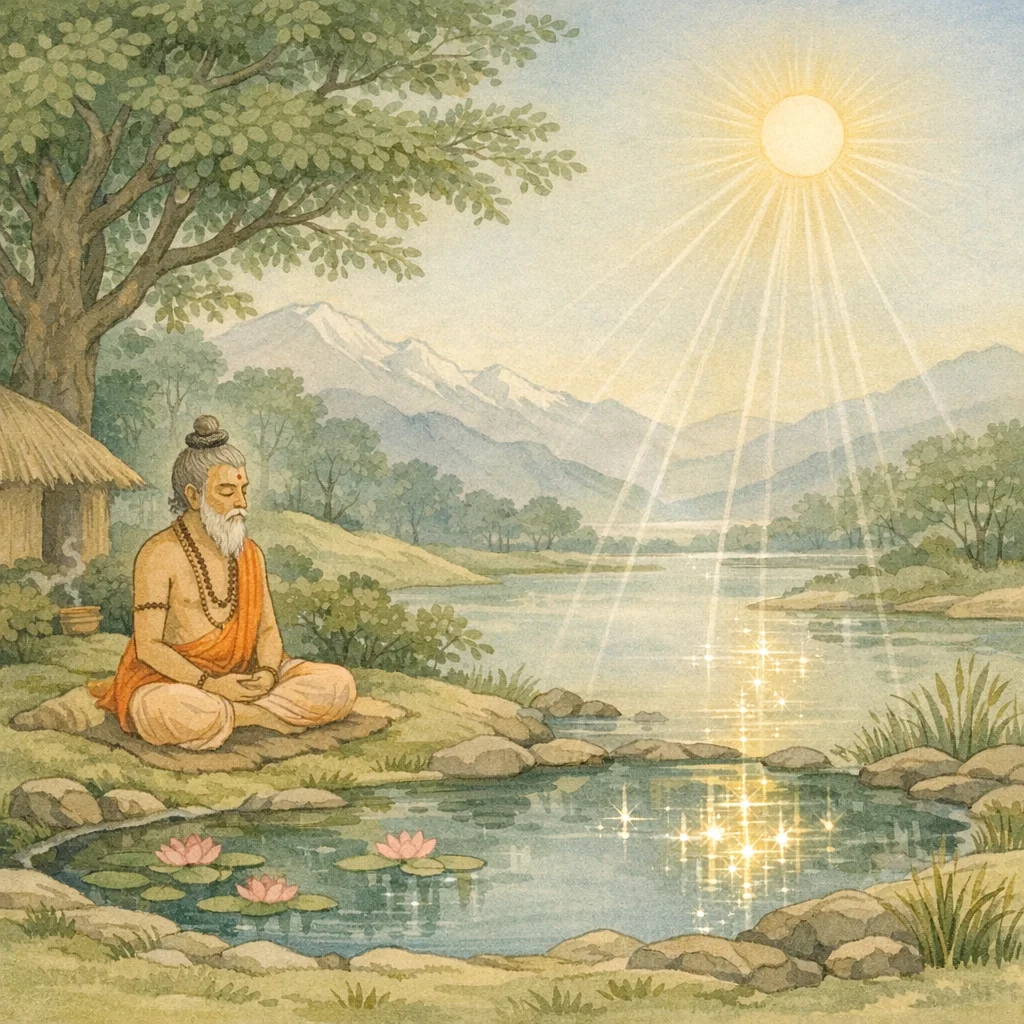
Upa-parva: Rājadharmānuśāsana (Teachings on Kingship and Public Ethics)
Yudhiṣṭhira continues an analytic inquiry into dharma, acknowledging Bhīṣma’s subtle instruction while proposing further reflections based on inference (anumāna). He argues that dharma cannot be known merely by paripāṭha (cataloguing/rote enumeration), since the duties of one in stable conditions differ from those in adversity (āpada). He introduces sadācāra (good conduct) as a practical marker of dharma, yet notes its definitional difficulty and the observable inversion wherein adharma may masquerade as dharma and vice versa. The chapter raises epistemic concerns about pramāṇa: Vedic statements and śāstric standards are said to diminish across yugas, and dharmas vary by age (kṛta, tretā, dvāpara, kali), complicating appeals to a single fixed authority. Yudhiṣṭhira describes how powerful, unethical actors distort institutions, causing established norms to collapse. He portrays dharma as exceedingly subtle—finer than a razor’s edge, heavier than a mountain—and likens it to a mirage-like “gandharva-city” that vanishes under scrutiny. The discourse concludes by observing the non-uniformity of social practices and the need to recognize long-standing, earlier-established conduct as a stabilizing basis for enduring institutions.
Chapter Arc: व्यास शुक से कहते हैं कि योगशास्त्र के ज्ञाता शास्त्रोक्त कर्म और संयम के द्वारा स्थूल देह से परे सूक्ष्म जीवात्मा को प्रत्यक्ष-सा देख लेते हैं—जैसे दृष्टि धुंध से निकलकर प्रकाश को पहचान ले। → उपमा-श्रृंखला के सहारे सूक्ष्म सत्ता की गति और सर्वव्याप्ति समझाई जाती है: सूर्य-किरणों की तरह वे देह से मुक्त होकर लोकों में विचरते हैं; जल में सूर्य-प्रतिबिम्ब की तरह एक ही चेतना अनेक देहों में अलग-अलग प्रतीत होती है। फिर भेद उभरता है—जितेन्द्रिय ‘सत्त्वज्ञ’ उस सूक्ष्म को अपने ही सूक्ष्म सत्त्व से पहचानते हैं, जबकि मन-बुद्धि के वश जीव स्वप्न में भी सुख-दुःख, क्रोध-लोभ के बंधन में पड़ता है। → शाण्डिल्य का निर्णायक कथन: चतुर्थाश्रम (संन्यास) के कर्मों में ‘समाधि’ ही योग का सार और शम (शान्ति) का सर्वोच्च उपाय है; और जो सात सूक्ष्म तत्त्वों (पञ्चतन्मात्रा, मन, बुद्धि) तथा ‘षडङ्ग’ महेश्वर/तत्त्व-व्यवस्था को जानकर प्रधान-विनियोग को समझता है, वह परब्रह्म का साक्षात्कार करता है। → अध्याय यह स्थापित करता है कि जीव नित्य, सूक्ष्म, गुण-संयुक्त और देहातीत है; अनुभूति का द्वार इन्द्रियनिग्रह और समाधि है। स्वप्न-जाग्रत दोनों में सुख-दुःख का अनुभव मन-बुद्धि-आसक्ति से चलता है; उससे परे उठना ही मोक्षमार्ग है। → अगले अध्यायों के लिए संकेत रहता है कि ‘सात सूक्ष्म’ और ‘षडङ्ग’ की अधिक सूक्ष्म व्याख्या तथा ब्रह्मानुभव की साधना-प्रक्रिया आगे और खोली जाएगी।
Shlokas
Verse 1
व्यासजी कहते हैं--पुत्र! योगशास्त्रके ज्ञाता शास्त्रोक्त कर्मोके द्वारा स्थूल शरीरसे निकले हुए सूक्ष्म स्वरूप जीवात्माको देखते हैं,इस प्रकार श्रीमह्याभारत शान्तिपर्वके अन्तर्गत गोक्षधर्मपर्वमें शुकदेवका अनुप्रश्नविषयक दी सौ तिरपनवाँ अध्याय पूरा हुआ ॥/ २५३ ॥/ पम्प बछ। अ-्-क्ााज चतुष्पञज्चाशर्दाधिकद्विशततमो< ध्याय: कामरूपी अदभुत वृक्षका तथा उसे काटकर मुक्ति प्राप्त करनेके उपायका और शरीररूपी नगरका वर्णन व्यास उवाच ह्ृदि कामद्रुमश्नित्रो मोहसंचयसम्भव: । क्रोधमानमहास्कन्धो विधित्सापरिषेचन:
Vyāsa said: “My son, those who know the science of yoga, by the acts enjoined in the śāstras, behold the subtle jīvātman that has gone forth from the gross body (sthūla-śarīra). Thus, in the Mahābhārata, within the Śānti Parva, in the Mokṣa-dharma section, the chapter concerning Śukadeva’s further inquiry—the two-hundred-and-fifty-third—has been completed.” Vyāsa then said: “Within the heart stands a wondrous wish-fulfilling tree of desire, born from the accumulated mass of delusion. Its great trunk is anger and pride, and it is watered by the impulse to act and to accomplish.”
Verse 2
यथा मरीच्य: सहिताश्षरन्ति सर्वत्र तिष्ठन्ति च दृश्यमाना: । देहैविमुक्तानि चरन्ति लोकां- स्तथैव सत्त्वान्यतिमानुषाणि,जैसे सूर्यकी किरणें परस्पर मिली हुई ही सर्वत्र विचरती हैं एवं स्थित हुई दृष्टिगोचर होती हैं, उसी प्रकार अलौकिक जीवात्मा स्थूल शरीरसे निकलकर सम्पूर्ण लोकोंमें जाते हैं। (यह ज्ञानदृष्टिसे ही जाननेमें आ सकता है)
Vyāsa said: “Just as the sun’s rays, though mutually conjoined, stream forth and are seen everywhere—moving and also appearing as if stationed—so too do superhuman beings, freed from their bodies, traverse all the worlds. This is something grasped only through the eye of knowledge.”
Verse 3
प्रतिरूप॑ यथैवाप्सु ताप: सूर्यस्य लक्ष्यते सत्त्ववत्सु तथा सत्त्वं प्रतिरूपं स पश्यति,जैसे विभिन्न जलाशयोंके जलमें सूर्यकी किरणोंका पृथक्-पृथक् दर्शन होता है, उसी प्रकार योगी पुरुष सभी सजीव शरीरोंके भीतर सूक्ष्मरूपसे स्थित पृथक्-पृथक् जीवोंको देखता है
As the sun’s radiance is seen separately in the waters of many different pools, so the yogin beholds, within all living bodies, the subtle beings—each distinct—abiding in their own form.
Verse 4
तानि सूक्ष्माणि सत्त्वानि विमुक्तानि शरीरत: । स्वेन सत्त्वेन सत्त्वज्ञा: पश्यन्ति नियतेन्द्रिया:,शरीरके तत्त्वको जाननेवाले जितेन्द्रिय योगीजन उन स्थूलशरीरोंसे निकले हुए सूक्ष्म लिंगशरीरोंसे युक्त जीवोंको अपने आत्माके द्वारा देखते हैं
Those subtle beings, released from the gross body, are perceived by self-controlled sages who know the principles of embodied existence; with their own purified consciousness they behold the living selves still connected with the subtle body (liṅga-śarīra) after departing the physical frame.
Verse 5
स्वपतां जाग्रतां चैष सर्वेषामात्मचिन्तितम् | प्रधानाद्वैधमुक्तानां जहतां कर्मजं रज:,जो अपने मनमें चिन्तित कर्मजनित रजोगुणका अर्थात् रजोगुणजनित काम आदिका योगबलसे परित्याग कर देते हैं तथा जो प्रकृतिके तादात्म्यभावसे भी मुक्त हैं, उन सभी योगपरायण योगी पुरुषोंका जीवात्मा जैसे दिनमें वैसे रातमें, जैसे रातमें वैसे दिनमें सोते- जागते समय निरन्तर उनके वशमें रहता है
Vyāsa said: For those yogins who have cast off the rajas born of action—desire and the like—by the power of yoga, and who are also freed from identification with Pradhāna (primordial Nature), the self remains steadily under their mastery at all times: in sleep and in wakefulness alike, by day as by night, in whatever state the mind may be engaged.
Verse 6
यथाहनि तथा रात्रौ यथा रात्रौ तथाहनि । वशे तिष्ठति सत्त्वात्मा सततं योगयोगिनाम्,जो अपने मनमें चिन्तित कर्मजनित रजोगुणका अर्थात् रजोगुणजनित काम आदिका योगबलसे परित्याग कर देते हैं तथा जो प्रकृतिके तादात्म्यभावसे भी मुक्त हैं, उन सभी योगपरायण योगी पुरुषोंका जीवात्मा जैसे दिनमें वैसे रातमें, जैसे रातमें वैसे दिनमें सोते- जागते समय निरन्तर उनके वशमें रहता है
Vyāsa said: For those yogins devoted to Yoga, whose inner being is governed by sattva, the self remains continually under their control—by day as by night, and by night as by day. In waking and in sleep alike, their disciplined awareness does not fall under the sway of restless desire; steadiness and mastery persist without interruption.
Verse 7
तेषां नित्यं सदा नित्यो भूतात्मा सततं गुणै: । सप्तभिस्त्वन्वित: सूक्ष्मैश्षरिष्णुरजरामर:,उन योगियोंका नित्य-स्वरूप जीव सदा सात सूक्ष्म गुणों (महत्तत््व, अहंकार और पाँच तन्मात्राओं)-से युक्त हो अजर-अमर देवताओंकी भाँति नित्यप्रति विचरता रहता है
Vyāsa said: For them, the individual self—everlasting by nature—remains perpetually endowed with subtle constituents. United with the seven subtle principles, it moves on continuously, undecaying and deathless, like the gods.
Verse 8
मनोबुद्धिपरा भूत: स्वदेहपरदेहवित् । स्वप्लेष्वपि भवत्येष विज्ञाता सुखदु:खयो:,जिन मूढ़ मनुष्योंका जीवात्मा मन और बुद्धिके वशीभूत रहता है, वह अपने और पराये शरीरको जाननेवाला मनुष्य स्वप्न-अवस्थामें भी सूक्ष्म शरीरसे सुख-दुःखका अनुभव करता है
Vyāsa said: When the individual self becomes governed by mind and intellect, it still recognizes ‘this is my body’ and ‘that is another’s.’ Even in the dream-state, such a knower experiences pleasure and pain through the subtle body—showing that bondage to mental functions carries felt consequences beyond waking life.
Verse 9
तत्रापि लभते दुः:खं तत्रापि लभते सुखम् | क्रोधलोभौ तु तत्रापि कृत्वा व्यसनमृच्छति,वहाँ (स्वप्नमें भी) उसे दुःख और सुख प्राप्त होते हैं। एवं उस स्वप्रमें भी (जाग्रत्॒की भाँति ही) क्रोध और लोभ करके वह संकटमें पड़ जाता है
Vyāsa said: Even there (in the dream-state), one experiences sorrow and happiness. And even there, by giving way to anger and greed, one falls into distress—just as in waking life.
Verse 10
प्रीणितश्चापि भवति महतोडर्थानवाप्य हि । करोति पुण्यं तत्रापि जीवन्निव च पश्यति,वहाँ भी महान् धन पाकर वह प्रसन्न होता है तथा पुण्यकर्मोंका अनुष्ठान करता है; इतना ही नहीं, जाग्रत् अवस्थाकी भाँति वह स्वप्नमें भी सब वस्तुओंको देखता है
Vyāsa said: Having obtained great wealth, he becomes delighted. Even there he performs meritorious deeds; indeed, in that state too he perceives things as though awake—seeing everything even within a dream.
Verse 11
महोष्मान्तर्गतश्नापि गर्भत्वं समुपेयिवान् । दश मासान् वसन् कुक्षौ नैषोऊन्ञमिव जीर्यते,(यह कितने बड़े आश्वर्यकी बात है कि) गर्भभावकी प्राप्त हुआ जीवात्मा दस मासतक माताके उदरमें निवास करता है और जठरानलकी अधिक आँचसे संतप्त होता रहता है तो भी अन्नकी भाँति पच नहीं जाता
Vyāsa said: Even after entering the state of an embryo and dwelling for ten months within the womb—scorched by the intense inner heat of the belly-fire—this embodied self is not digested like food. This is a great wonder.
Verse 12
तमेतमतितेजों5शं भूतात्मानं हृदि स्थितम् । तमोरजो भ्यामाविष्टा नानुपश्यन्ति मूर्तिषु,यह जीवात्मा परमात्माका ही अंश है और देहधारियोंके हृदयमें विराजमान है तथापि जो लोग रजोगुण और तमोगुणसे अभिभूत हैं वे देहके भीतर उस जीवात्माकी स्थितिको देख या समझ नहीं पाते हैं
Vyāsa said: This individual self is a supremely radiant portion of the Supreme Self, abiding within the heart of embodied beings. Yet those overwhelmed by tamas and rajas do not perceive it within their bodily forms.
Verse 13
योगशास्त्रपरा भूत्वा तमात्मानं परीप्सव: | अनुच्छवासान्यमूर्तानि यानि वज्रोपमान्यपि,जड स्थूल शरीर, अमूर्त सूक्ष्म शरीर तथा वज्तुल्य सुदृढ़ कारण शरीर--ये जो तीन प्रकारके शरीर हैं, इन्हें आत्माको प्राप्त करनेकी इच्छावाले योगीजन योगशास्त्रपरायण होकर लाँघ जाते हैं
Vyāsa said: Those who seek to realize that Self, becoming wholly devoted to the discipline of Yoga, transcend even those subtle, formless states—steady and adamantine like a thunderbolt—by which embodied existence is ordinarily sustained.
Verse 14
पृथग्भूतेषु सृष्टेषु चतुर्थाश्रमकर्मसु । समाधौ योगमेवैतच्छाण्डिल्य: शममब्रवीत्,संन्यास आश्रमके कर्म भिन्न-भिन्न प्रकारके बताये गये हैं। उनमें समाधिके विषयमें मैंने जो कुछ बताया है, इसीको शाण्डिल्य मुनिने शमके नामसे (छान्दोग्य&पनिषद् शाण्डिल्य ब्राह्मणमें) कहा है
Vyāsa said: “When beings have been created as distinct, and when the duties of the fourth stage of life (renunciation) are set forth, what I have described regarding samādhi is precisely this—yoga itself—which the sage Śāṇḍilya, in the Upaniṣadic teaching, called ‘śama’ (inner tranquility).”
Verse 15
विदित्वा सप्त सूक्ष्माणि षडड़ं च महेश्वरम् । प्रधानविनियोगज्ञ: परं ब्रह्मानुपश्यति,जो पञ्चतन्मात्रा तथा मन और बुद्धि--इन सात सूक्ष्म तत्त्वोंको शाश्वत जानकर एवं छः: अंगोंसे यानी ऐश्वर्योंसे युक्त महेश्वरका ज्ञान प्राप्त करके इस बातको जान लेता है कि त्रिगुणात्मिका प्रकृतिका परिणाम ही यह सम्पूर्ण जगत् है, वह परब्रह्म परमात्माका साक्षात्कार कर लेता है
Vyāsa said: “One who truly understands the seven subtle principles, and also knows Maheśvara endowed with the sixfold powers, and who is skilled in discerning how Pradhāna (primordial Nature) is deployed into manifestation—recognizing that the entire world is but a transformation of Prakṛti constituted of the three guṇas—comes to direct realization of the Supreme Brahman, the highest Self.”
Verse 253
इति श्रीमहाभारते शान्तिपर्वणि मोक्षधर्मपर्वणि शुकानुप्रश्ने त्रिपज्चाशदधिकद्धिशततमो< ध्याय:
Thus ends the two-hundred-and-fifty-second chapter in the Mokṣadharma section of the Śānti Parva of the Śrī Mahābhārata, in the context of Śuka’s inquiry. This is a colophon marking the close of a discourse oriented toward liberation and right understanding.
Frequently Asked Questions
The dilemma is epistemic and practical: how to identify dharma when duties change between stable life and crisis, when social customs diverge, and when dharma and adharma can appear in each other’s forms.
Ethical action requires discernment beyond memorized prescriptions—testing norms against context, reliable standards of knowledge, and the long-term integrity of institutions and communities.
No explicit phalaśruti appears in the cited verses; the meta-commentary is the chapter’s insistence that dharma is subtle and partially indeterminate, demanding interpretive rigor rather than mechanical rule-application.