Adhyaya 192
जापक–इक्ष्वाकु–सत्यविवादः (The Jāpaka, Ikṣvāku, and the Dispute on Truth and Merit)
Upa-parva: Dharma–Satya–Japa Phala Saṃvāda (Śānti-parva, Adhyāya 192 context unit)
Yudhiṣṭhira asks Bhīṣma to recount an earlier-mentioned dispute involving Kāla, Mṛtyu, and Yama. Bhīṣma narrates an ancient account: a renowned brāhmaṇa reciter (Paippalādi Kauśika) performs prolonged disciplined japa near the हिमवत् (Himālaya) and receives a boon from Sāvitrī—growth in devotion to recitation and mental concentration, along with assurance of a lofty destination and a foretold encounter with Kāla, Mṛtyu, and Yama. Dharma appears, urges him toward relinquishing the body for higher worlds; the brāhmaṇa declines, preferring embodied practice and doubting heaven without the self/body complex. Kāla, Mṛtyu, and Yama arrive; the brāhmaṇa receives them with ritual hospitality. King Ikṣvāku arrives on pilgrimage and requests a gift; the brāhmaṇa, identifying as nivṛtta (withdrawn from accepting gifts), refuses material exchange but offers “by speech” the fruit of his japa when the king asks for it. A dispute arises when the king hesitates to accept an unknown fruit; the brāhmaṇa argues that truth is superior to ritual and that breaking one’s word is adharma. Dharma and Svarga intervene to settle the matter, declaring an equitable outcome. The episode culminates in an allegorical disclosure: the disputants Virūpa and Vikṛta are Kāma and Krodha, demonstrating how desire and anger test ethical stability. Bhīṣma closes with a doctrinal note on the destinies attained by reciters and the movement from attachment to dispassion toward brahma-sthāna.
Chapter Arc: भरद्वाज ऋषि धर्म के सूक्ष्म फल-निर्णय को जानने की उत्कंठा से प्रश्न उठाते हैं—दान, सदाचार और तप का वास्तविक फल क्या है, और कौन-सा आचरण मनुष्य को शान्ति तथा परलोक-कल्याण देता है? → भृगु (भृगु/भगु) उत्तर देते हुए कर्मों के भिन्न-भिन्न फल गिनाते हैं—अग्निहोत्र से पाप-शमन, स्वाध्याय से उत्तम शान्ति, दान से भोग-सम्पदा, तप से स्वर्ग-प्राप्ति। फिर दान के ‘दो प्रकार’ बताकर (परत्रार्थ/इहैव) यह तनाव रचते हैं कि एक ही कर्म (दान) भी उद्देश्य और भाव के अनुसार भिन्न फल देता है। → गृहस्थाश्रम का निर्णायक महात्म्य-प्रतिपादन: गृहस्थ को ‘द्वितीय आश्रम’ कहकर उसके सम्यक् आचार-लक्षण, अतिथि-सत्कार का तीखा नैतिक विधान (जिसके घर से अतिथि निराश लौटे, वह गृहस्थ अपना पुण्य खोकर पाप दे बैठता है) और त्रिवर्ग (धर्म-अर्थ-काम) की सिद्धि का सूत्र—यहीं अध्याय का शिखर बनता है। → भृगु गृहस्थ-धर्म का संतुलित आदर्श रखते हैं—भोग-साधनों का वर्णन करते हुए भी ‘उञ्छवृत्ति/स्वधर्म-रत/त्यक्तकामसुखारम्भ’ गृहस्थ को स्वर्ग-सुलभ बताते हैं; अर्थात् गृहस्थ जीवन भोग का नहीं, संयमित कर्तव्य का क्षेत्र है, जहाँ दान, अतिथि-पूजा, स्वाध्याय और यज्ञ-भाव से लोक-परलोक दोनों साधे जाते हैं।
Shlokas
Verse 1
अप ह< बक। है २ >> एकनवर्त्याधिकशततमो< ध्याय: ब्रह्मचर्य और गार्हस्थ्य आश्रमोंके धर्मका वर्णन भरद्वाज उवाच दानस्य कि फल प्राहुर्धर्मस्थ चरितस्य च । तपसश्च सुतप्तस्य स्वाध्यायस्य हुतस्य वा,भरद्वाजने पूछा--ब्रह्मन! आचरणमें लाये हुए दानरूप धर्मका, भलीभाँति की हुई तपस्याका तथा स्वाध्याय और अग्निहोत्रका क्या फल बताया गया है?
Bharadvāja said: “O Brāhmaṇa, what result do the wise declare for charity when it is practiced while established in dharma? And what is said to be the fruit of well-performed austerity, of Vedic self-study, and of offerings made into the sacred fire?”
Verse 2
भूगुरुवाच हुतेन शाम्यते पापं स्वाध्यायै: शान्तिरुत्तमा दानेन भोगानित्याहुस्तपसा स्वर्गमाप्तुयात्,भगुजीने कहा--मुने! अग्निहोत्रसे पापका निवारण किया जाता है, स्वाध्यायसे उत्तम शान्ति मिलती है, दानसे भोगोंकी प्राप्ति बतायी गयी है और तपस्यासे मनुष्य स्वर्गलोक प्राप्त कर लेता है
Bhṛgu said: “Sin is pacified by offerings (such as the fire-rite). Through self-study comes the highest inner peace. By giving, people are said to obtain enjoyments and prosperity; and by austerity a person may attain the heavenly world.”
Verse 3
दानं तु द्विविध॑ प्राहुः परत्रार्थमिहैव च । सद्धभयो यद् दीयते किंचित् तत्परत्रोपतिष्ठते,दान दो प्रकारका बताया जाता है--एक परलोकके लिये है और दूसरा इहलोकके लिये। सत्पुरुषोंको जो कुछ दिया जाता है, वह दान परलोकमें अपना फल देनेके लिये उपस्थित होता है और असत्पुरुषोंको जो दान दिया जाता है, उसका फल यहीं भोगा जाता है। जैसा दान दिया जाता है, वैसा ही उसका फल भी भोगनेमें आता है
Bharadvāja said: “Gift-giving is declared to be of two kinds—one aimed at the hereafter and one aimed at this very world. Whatever is given, even a little, to the good and worthy becomes established for fruition in the next world; but what is given to the unworthy yields its result here itself. As the gift is made, so is its fruit experienced.”
Verse 4
असद्धयो दीयते यत्तु तद् दानमिह भुज्यते । यादृशं दीयते दानं तादृश॑ फलमश्चुते,दान दो प्रकारका बताया जाता है--एक परलोकके लिये है और दूसरा इहलोकके लिये। सत्पुरुषोंको जो कुछ दिया जाता है, वह दान परलोकमें अपना फल देनेके लिये उपस्थित होता है और असत्पुरुषोंको जो दान दिया जाता है, उसका फल यहीं भोगा जाता है। जैसा दान दिया जाता है, वैसा ही उसका फल भी भोगनेमें आता है
Bharadvāja said: ‘But whatever gift is given to unworthy persons, that charity is enjoyed (its result is reaped) here in this very world. Whatever kind of gift one gives, a result of the same kind does one obtain.’
Verse 5
भरद्वाज उवाच कि कस्य धर्माचरणं किं वा धर्मस्य लक्षणम् | धर्म: कतिविधो वापि तद् भवान् वक्तुमहति
Bharadvāja said: “What constitutes the practice of dharma, and for whom? And what is the defining mark of dharma? Also, in how many forms is dharma classified? Please, sir, you are worthy to explain this to me.”
Verse 6
भरद्वाजने पूछा--ब्रह्म! किसका धर्माचरण कैसा होता है अथवा धर्मका लक्षण क्या है? या धर्मके कितने भेद हैं? यह सब आप मुझे बतानेकी कृपा करें ।। भूगुरुवाच स्वधर्माचरणे युक्ता ये भवन्ति मनीषिण: । तेषां स्वर्गफलावाप्तियोडन्यथा स विमुहाते,भूगुजीने कहा--मुने! जो मनीषी पुरुष अपने वर्णाश्रमोचित धर्मके आचरणमें सावधानीके साथ लगे रहते हैं, उन्हें स्वर्गरूपी फलकी प्राप्ति होती है। जो इसके विपरीत अधर्मका आचरण करता है, वह मोहके वशीभूत होता है
Bharadvāja asked: “O Brahman, what does the practice of dharma look like for a person? What is the defining mark of dharma, and how many kinds of dharma are there? Please explain all this to me.” Bhṛgu replied: “Those wise people who are diligently engaged in the practice of their own prescribed duty (svadharma), in accordance with their station and discipline of life, attain the fruit of heaven. But one who acts otherwise—turning to what is contrary to dharma—falls under delusion.”
Verse 7
भरद्वाज उवाच यदेतच्चातुराश्रम्यं ब्रह्मर्षिविहितं पुरा । तेषां स्वे स्वे समाचारास्तान् मे वक्तुमिहाहसि,भरद्वाज ऋषिने पूछा--भगवन! ब्रह्मर्षियोंने पूर्वकालमें जो चार आश्रमोंका विभाग किया है, उनके अपने-अपने धर्म क्या हैं? उन्हें बतानेकी कृपा कीजिये
Bharadvāja said: “Revered one, in ancient times the Brahmarṣis established the fourfold system of āśramas. Please tell me here the respective codes of conduct and duties proper to each of them.”
Verse 8
भूगुरुवाच पूर्वमेव भगवता ब्रह्मणा लोकहितमनुतिष्ठता धर्मसंरक्षणार्थमाश्रमाश्ष॒त्वारो भिनिर्दिष्ट: | तत्र गुरुकुलवासमेव प्रथममाश्रममुदाहरन्ति । सम्यग् यत्र शौचसंस्कारनियमव्रतविनियतात्मा उभे संध्ये भास्कराग्निदैवतान्युपस्थाय विहाय तन्द्रयालस्ये गुरोरभिवादनवेदा भ्यासश्रवणपवित्रीकृतान्तरात्मा त्रिषवणमुपस्पृश्य ब्रह्मचर्याग्निपरिचरणगुरुशुश्रूषानि-त्यभि क्षा भैक्ष्यादि सर्वनिवेदितान्तरात्मा गुरुवचननि-र्देशानुष्ठानाप्रतिकूलो गुरुप्रसादलब्धस्वाध्यायतत्पर: स्थात्,भगुजीने कहा--मुने! जगत्का कल्याण करनेवाले भगवान् ब्रह्माने पूर्वकालमें ही धर्मकी रक्षाके लिये चार आश्रमोंका निर्देश किया था। उनमेंसे ब्रह्मचर्यपालनपूर्वक गुरुकुलवासको ही पहला आश्रम कहते हैं। उसमें रहनेवाले ब्रह्मचारीको बाहर-भीतरकी शुद्धि, वैदिक संस्कार तथा व्रत-नियमोंका पालन करते हुए अपने मनको वशमें रखना चाहिये। सुबह और शाम दोनों संध्याओंके समय संध्योपासना, सूर्योपस्थान और अन्निहोत्रके द्वारा अग्निदेवकी आराधना करनी चाहिये। तन्द्रा और आलस्यको त्यागकर प्रतिदिन गुरुको प्रणाम करे और वेदोंके अभ्यास तथा श्रवणसे अपनी अन्तरात्माको पवित्र करे। सबेरे, शाम और दोपहर तीनों समय स्नान करे। ब्रह्मचर्यका पालन, अग्निकी उपासना और गुरुकी सेवा करे। प्रतिदिन भिक्षा माँगकर लाये। भिक्षामें जो कुछ प्राप्त हो, वह सब गुरुको अर्पण कर दे। अपनी अनन््तरात्माको भी गुरुके चरणोंमें निछावर कर दे। गुरुजी जो कुछ कहें जिसके लिये संकेत करें और जिस कार्यके निमित्त स्पष्ट शब्दोंमें आज्ञा दें, उसके विपरीत आचरण न करे। गुरुके कृपाप्रसादसे मिले हुए स्वाध्यायमें तत्पर होवे
Bhṛgu said: Long ago, when the blessed Brahmā was engaged in promoting the welfare of the world, he laid down—so that dharma might be protected—the four āśramas (stages of disciplined life). Among them, they declare the first āśrama to be life in the teacher’s household, i.e., brahmacarya in the gurukula. There, the student should keep the mind under control, observing inner and outer purity, Vedic sacraments, and the prescribed vows and restraints. At both twilights, morning and evening, he should perform the proper acts of reverence—worship at the sandhyā, salutations to the Sun, and service to the sacred fire. Casting off drowsiness and laziness, he should daily bow to the teacher, and by study and hearing of the Veda make his inner self pure. He should perform the thrice-daily ablutions, maintain celibacy, tend the fire, and serve the teacher. He should go out for alms each day, and whatever is obtained should be offered entirely to the guru—indeed, he should surrender his whole inner being at the teacher’s feet. He must not act contrary to the teacher’s words, indications, or explicit commands, and he should devote himself to the self-study granted through the guru’s gracious favor.
Verse 9
भवति चात्र श्लोक:-- गुरुं यस्तु समाराध्य द्विजो वेदमवाप्रुयात् । तस्य स्वर्गफलावाप्ति: सिध्यते चास्य मानसमिति,इस विषयमें यह श्लोक है-- जो द्विज गुरुकी आराधना करके वेदाध्ययन करता है, उसे स्वर्गलोककी प्राप्ति होती है और उसका मानसिक संकल्प सिद्ध होता है
Verse 10
गार्स्थ्यं. खलु॒ द्वितीयमाश्रम॑ं वदन्ति । तस्य समुदाचारलक्षणं सर्वमनुव्याख्यास्याम: । समावृत्तानां सदाचाराणां सहधर्मचर्यफलार्थिना गृहाश्रमो विधीयते । धर्मार्थकामावाप्तिद्वात्र त्रिवर्गसाधनमपेक्ष्यागर्हितिन कर्मणा धनान्यादाय स्वाध्यायोपलब्धप्रकर्षण. वा ब्रद्धार्षिनिर्मितेन वा अद्रिसारगतेन वा । हव्यकव्यनियमाभ्यासदैवत-प्रसादोपलब्धेन वा धनेन गृहस्थो गार्हस्थ्यं वर्तयेत् । तद्धि सर्वाश्रमाणां मूलमुदाहरन्ति । गुरुकुलनिवासिन:ः परिव्राजका ये चान्ये संकल्पितव्रतनियम-धर्मानुष्ठायिनस्तेषामप्यत एव भिक्षाबलिसंविभागा: प्रवर्तन्ते,गार्हस्थ्यको दूसरा आश्रम कहते हैं। अब हम उसमें पालन करने योग्य समस्त उत्तम आचरणोंकी व्याख्या करेंगे। जो सदाचारका पालन करनेवाले ब्रह्मचारी विद्या पढ़कर गुरुकुलसे स्नातक होकर लौटते हैं, उन्हें यदि सहधर्मिणीके साथ रहकर धर्माचरण करने और उसका फल पानेकी इच्छा हो तो उनके लिये गृहस्थाश्रममें प्रवेश करनेकी विधि है। इस आश्रममें धर्म, अर्थ और काम तीनोंकी प्राप्ति होती है; इसलिये त्रिवर्गसाधनकी इच्छा रखकर गृहस्थको उत्तम कर्मके द्वारा धन संग्रह करना चाहिये, अर्थात् वह स्वाध्यायसे प्राप्त हुई विशिष्ट योग्यतासे, ब्रह्मर्षियोंद्वारा धर्मशास्त्रोंमें निश्चित किये हुए मार्गसे अथवा पर्वतसे उपलब्ध हुए उसके सारभूत मणि रत्न, दिव्यौषधि एवं स्वर्ण आदिसे धनका संचय करे। अथवा हव्य (यज्ञ), कव्य (श्राद्ध), नियम, वेदाभ्यास तथा देवताओंकी प्रसन्नतासे प्राप्त धनके द्वारा गृहस्थ पुरुष अपनी गृहस्थीका निर्वाह करे; क्योंकि गृहस्थ आश्रमको सब आश्रमोंका मूल कहते हैं। गुरुकुलमें निवास करनेवाले ब्रह्मचारी, वनमें रहकर संकल्पके अनुसार व्रत, नियम तथा धर्मोंका पालन करनेवाले अन्यान्य वानप्रस्थ एवं सब कुछ त्यागकर सर्वत्र विचरनेवाले संन्यासी भी इस गृहस्थाश्रमसे ही भिक्षा, भेंट, उपहार तथा दान आदि पाकर अपने-अपने धर्मके पालनमें प्रवृत्त होते हैं
Bharadvāja said: “They declare householdership to be the second stage of life. I shall explain in full the marks of proper conduct that belong to it. For those disciplined students who, having completed their study and returned (as graduates) with good conduct, desire to live with a lawful partner, practice dharma, and obtain its fruits, entry into the householder’s order is prescribed. Since this āśrama is a gateway to the three aims—dharma, prosperity, and legitimate enjoyment—the householder, seeking the means to these three, should acquire wealth through blameless work: by excellence gained from study and training, by the paths laid down in the dharma-teachings fashioned by the ancient seers, or by resources obtained from the mountains and the earth’s essences. Or he may sustain his household with wealth gained through the proper performance of offerings to gods and ancestors, observances, Vedic recitation, and by the favor of the deities. For they call the householder’s order the root of all the āśramas: students dwelling in the teacher’s house, forest-dwellers devoted to vows and disciplines, and wandering renunciants as well—all are enabled to pursue their own dharma through alms, offerings, and shares that flow from the householders.”
Verse 11
वानप्रस्थानां च द्रव्योपस्कार इति प्रायशः खल्वेते साधव: साधुपथ्यौदना: स्वाध्यायप्रसड्धिन-स्तीर्थाभिगमनदेशदर्शनार्थ. पृथिवीं पर्यटन्ति । तेषां प्रत्युत्थानाभिगमनाभिवादनानसूयवाक्प्रदानसुखश- क्त्यासनसुखशयनाभ्यवहारसत्क्रिया चेति,वानप्रस्थोंके लिये धनका संग्रह करना निषिद्ध है। ये श्रेष्ठ लोग प्राय: शुद्ध एवं हितकर अन्नमात्रके इच्छुक होकर स्वाध्याय, तीर्थयात्रा एवं देश-दर्शनके निमित्त सारी पृथ्वीपर घूमते-फिरते हैं। ये घरपर पधारें तो उठकर, आगे बढ़कर इनका स्वागत करे। इनके चरणोंमें मस्तक झुकावे, दोषदृष्टि न रखकर उनसे उत्तम वचन बोले। यथाशक्ति सुखद आसन दे, सुखद शय्यापर उन्हें सुलावे और उत्तम भोजन करावे। इस प्रकार उनका पूर्ण सत्कार करे। यही उन श्रेष्ठ पुरुषके प्रति गृहस्थका कर्तव्य है
Bharadvāja said: “As for those who have entered the forest-dweller stage (vānaprastha), the accumulation of wealth and possessions is, for the most part, not their way. These virtuous men, desiring only pure and wholesome food, wander over the whole earth for the sake of Vedic study (svādhyāya), pilgrimage to sacred places, and the seeing of various lands. When such forest-dwellers arrive at one’s home, one should rise to greet them, go forward to receive them, and offer respectful salutations. One should speak to them without fault-finding, offer them pleasant words, provide—according to one’s ability—a comfortable seat, a comfortable bed, and suitable food, and thus render them full hospitality. This is the householder’s duty toward such excellent persons.”
Verse 12
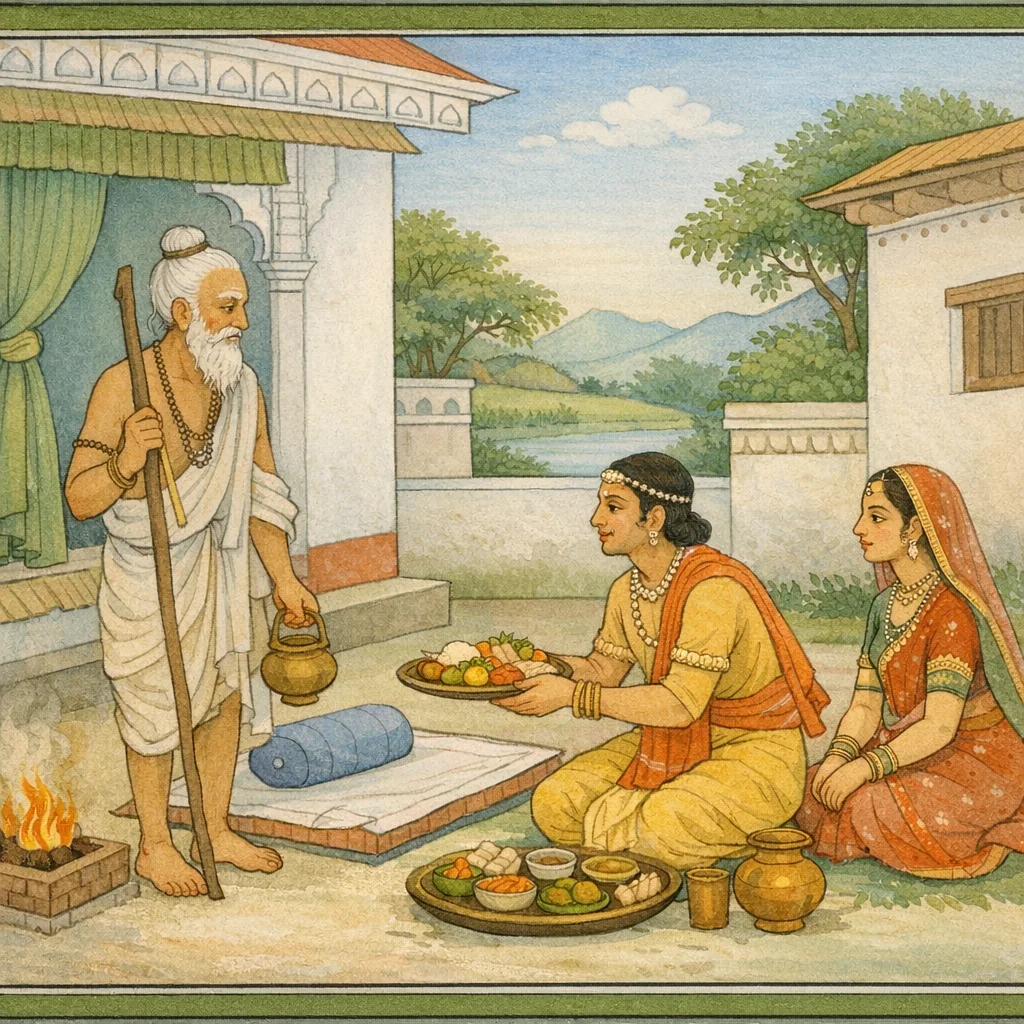
भवन्ति चात्र श्लोका:-- अतिथ्थिर्यस्य भग्नाशो गृहात् प्रतिनिवर्तते । स दत्त्वा दुष्कृतं तस्मै पुण्यमादाय गच्छति
Here, too, verses are cited: If a guest, his hope disappointed, turns back from someone’s house, that householder, having given his own demerit to the guest, departs with the guest’s merit. The teaching underscores the grave ethical cost of refusing hospitality and the spiritual consequence that the merit of the neglected guest is transferred away from the negligent host.
Verse 13
इस विषयमें ये श्लोक प्रसिद्ध हैं-- जिस गृहस्थके दरवाजेसे कोई अतिथि भिक्षा न पानेके कारण निराश होकर लौट जाता है, वह उस गृहस्थको अपना पाप दे उसका पुण्य लेकर चला जाता है ।। अपि चात्र यज्ञक्रियाभिददेवता: प्रीयन्ते । निवापेन पितरो विद्याभ्यासश्रवणधारणेन ऋषय: । अपत्योत्पादनेन प्रजापतिरिति,इसके सिवा गृहस्थाश्रममें रहकर यज्ञ करनेसे देवता, श्राद्ध-तर्पण करनेसे पितर, वेद- शास्त्रोंके श्रवण, अभ्यास और धारणसे ऋषि तथा संतानोत्पादनसे प्रजापति प्रसन्न होते हैं
Bharadvāja said: “On this matter, these verses are well known: if any guest leaves a householder’s door disappointed because he did not obtain alms, that guest departs after handing over his own sin to the householder and taking away the householder’s merit. Moreover, in the householder’s stage of life, the gods are pleased by sacrificial rites; the ancestors by offerings and oblations; the seers by the hearing, practice, and retention of sacred learning; and Prajāpati by the begetting of offspring.”
Verse 14
श्लोकौ चात्र भवत:-- वात्सल्यात्सर्व भूते भ्यो वाच्या: श्रोत्रसुखा गिर: । परितापोपघातकश्न पारुष्यं चात्र गर्हितम्,इस विषयमें ये दो श्लोक प्रसिद्ध हैं-- वाणी ऐसी बोलनी चाहिये, जिसमें सब प्राणियोंके प्रति स्नेह भरा हो तथा जो सुनते समय कानोंको सुखद जान पड़े। दूसरोंको पीड़ा देना, मारना और कटुवचन सुनाना--ये सब निन्दित कार्य हैं
Bharadvāja said: “Two well-known verses are cited here: One should speak words that arise from affectionate goodwill toward all living beings—words that are pleasant to the ear. Causing others distress, striking or injuring them, and harsh speech are all condemned here as blameworthy conduct.”
Verse 15
अवज्ञानमहंकारो दम्भश्नैव विगर्हित: । अहिंसा सत्यमक्रोध: सर्वाश्रमगतं तप:,किसीका अनादर करना, अहंकार दिखाना और ढोंग करना--इन दुर्गुणोंकी भी विशेष निन्दा की गयी है। किसी भी प्राणीकी हिंसा न करना, सत्य बोलना और मनमें क्रोध न आने देना--यह सभी आश्रमवालोंके लिये उपयोगी तप है
Bharadvāja said: Disrespect, self-conceit, and hypocrisy are indeed censured as blameworthy faults. Non-violence toward all beings, truthfulness, and the restraint that keeps anger from arising in the mind—these constitute an austerity beneficial for people of every āśrama (stage of life).
Verse 16
अपि चात्र माल्याभरणवत्त्रा भ्यड्डनित्योप भोग- नृत्यगीतवादित्रश्नुतिसुखनयनाभिरामदर्शनानां प्राप्तिर्भ- क्ष्यभोज्यलेह्पेयचोष्याणाम भ्यवहार्याणां विविधाना-मुपभोग: । स्वविहारसंतोष: कामसुखा-वाप्तिरिति,इसके सिवा इस गृहस्थ-आश्रममें फूलोंकी माला, नाना प्रकारके आभूषण, वस्त्र, अंगराग (तेल-उबटन), नित्य उपभोगकी वस्तु, नृत्य, गीत, वाद्य, श्रवणसुखद शब्द और नयनाभिराम रूपके दर्शनकी भी प्राप्ति होती है। भक्ष्य, भोज्य, लेह, पेय और चोष्यरूप नानाप्रकारके भोजनसम्बन्धी पदार्थ खाने-पीनेको भी मिलते हैं। अपने उद्यानमें घूमने- फिरनेका आनन्द प्राप्त होता है और कामसुखकी भी उपलब्धि होती है
Bharadvāja said: Moreover, in the householder’s stage one gains access to garlands of flowers, various ornaments, fine garments, and fragrant unguents; to daily enjoyments such as dance, song, and musical instruments; to sounds pleasing to the ear and sights delightful to the eye. One also enjoys many kinds of consumables—foods to chew and eat, to lick, to drink, and to suck. There is the contentment of strolling in one’s own gardens, and the attainment of sensual pleasure as well.
Verse 17
त्रिवर्गगुणनिर्व त्तिर्यस्य नित्यं गृहाश्रमे । स सुखान्यनुभूयेह शिष्टानां गतिमाप्नुयात्,जिस पुरुषको गृहस्थाश्रममें सदा धर्म, अर्थ और कामके गुणोंकी सिद्धि होती रहती है, वह इस लोकमें सुखका अनुभव करके अन्तमें शिष्ट पुरुषोंकी गतिको प्राप्त कर लेता है
Bharadvāja said: He for whom, while living constantly in the householder’s stage, the excellences of the three aims of life—dharma, artha, and kāma—are steadily fulfilled, experiences happiness in this world and, in the end, attains the destined course of the cultured and righteous.
Verse 18
उज्छवृत्तिर्गुहस्थो यः स्वधर्माचरणे रत: । त्यक्तकामसुखारम्भ: स्वर्गस्तस्य न दुर्लभ:,जो गृहस्थ ब्राह्मण अपने धर्मके आचरणमें तत्पर हो उज्छवृत्तिसे (खेत या बाजारमें बिखरे हुए अनाजके एक-एक दानेको बीनकर) जीविका चलाता है तथा काम-सुखका परित्याग कर देता है, उसके लिये स्वर्ग कोई दुर्लभ वस्तु नहीं है
Bharadvāja said: The householder who lives by gleaning—sustaining himself on what is left behind—who is devoted to the practice of his own dharma, and who has renounced undertakings driven by sensual pleasure, finds heaven not at all difficult to attain.
Verse 190
इस प्रकार श्रीमह्ाभारत शान्तिपर्वके अन्तर्गत मोक्षधर्मपर्वमें भगु- भरद्वाजसंवादाविषयक एक सौ नब्बेवाँ अध्याय पूरा हुआ
Thus ends the one hundred and ninety-second chapter of the Mokṣadharma section within the Śānti Parva of the Śrī Mahābhārata, dealing with the dialogue between Bhṛgu and Bharadvāja.
Verse 191
इति श्रीमहाभारते शान्तिपर्वणि मोक्षधर्मपर्वणि भुगुभरद्वाजसंवादे एकनवत्यधिकशततमो< ध्याय:,इस प्रकार श्रीमह्याभारत शान्तिपर्वके अन्तर्गत मोक्षधर्मपर्वमें भगु- भरद्वाजसंवादाविषयक एक सौ इक्यानबेवाँ अध्याय पूरा हुआ
Thus, in the Śrī Mahābhārata, within the Śānti Parvan, in the Mokṣa-dharma section, in the dialogue between Bhṛgu and Bharadvāja, the one-hundred-and-ninety-first chapter comes to an end.
Frequently Asked Questions
Whether a spoken commitment to “give” (even if improvidently made) must be honored when the requested object is intangible (the fruit of japa), and whether refusing to accept or retracting the exchange constitutes a breach of satya and social trust.
Satya is framed as foundational: it authorizes and stabilizes ritual, austerity, and gifts; without truthfulness, other practices are depicted as ethically insufficient for higher ends.
Yes in functional terms: Bhīṣma outlines the post-mortem trajectories of the saṃhitā-reciter—movement through luminous realms and, with dispassion, attainment of brahma-sthāna—positioning the chapter as a mokṣa-oriented commentary on disciplined recitation and truth.