Adhyaya 151
Nārada–Vāyu–Śalmali Upākhyāna: Enmity with the Strong and the Primacy of Buddhi (नारद-वायु-शल्मलि उपाख्यानम्)
Upa-parva: Rājadharmānuśāsana (राजधर्मानुशासन) — Instruction on Kingship and Public Ethics
Bhīṣma narrates to Yudhiṣṭhira an exemplum involving Nārada, Vāyu (the Wind), and a proud Śalmali tree. Nārada reports that the tree has spoken disparagingly of Vāyu but refrains from repeating the insults, acknowledging Vāyu’s superior power and volatility. Vāyu approaches the tree, asserts that the tree is protected only due to Brahmā’s earlier association with it, and challenges the tree’s contempt. The Śalmali responds with bravado, claiming fearlessness. Vāyu postpones the demonstration until the next day. Overnight, the Śalmali reasons that it cannot match Vāyu’s strength; it claims superiority only in intelligence and adopts a self-protective strategy by shedding branches, leaves, and blossoms. When Vāyu arrives in anger, he finds the tree already reduced and remarks that the damage mirrors what Vāyu would have done—underscoring that the tree’s own miscalculation and counterproductive choices brought the outcome. The Śalmali is shamed. Bhīṣma generalizes the lesson: the weak should not initiate hostility with the strong; great persons reveal their strength gradually; and intelligence is a paramount human asset, yet it must be used to prevent avoidable conflict rather than provoke it. The chapter closes by linking these principles back to rājadharma and the broader instruction already delivered on rājadharma and āpaddharma.
Chapter Arc: युधिष्ठिर के प्रश्न पर—‘जो पाप अज्ञानवश हो जाए, उससे मुक्ति कैसे?’—भीष्म एक प्राचीन, ऋषि-प्रशंसित आख्यान का द्वार खोलते हैं: इन्द्रोत मुनि और राजा जनमेजय का प्रसंग। → भीष्म बताते हैं कि परिक्षित-पुत्र जनमेजय पर ‘अबुद्धिपूर्व’ ब्रह्महत्या का कलंक आ पड़ा और वह भीतर-ही-भीतर पापकृत्य से दग्ध होने लगा। शांति की खोज में वह इन्द्रोत/शौनक-परंपरा के कठोरव्रती मुनि के आश्रम की ओर जाता है, पर वहाँ उसे तिरस्कार और निषेध का सामना करना पड़ता है—‘मुझे स्पर्श मत कर, यहाँ तेरा स्थान नहीं।’ → मुनि का शापवत् फटकारना चरम पर पहुँचता है: ‘तेरा जीवन व्यर्थ है; तू पाप के लिए ही रचा गया; इस लोक से गिरकर तू दीर्घकाल नरक में पड़ेगा—लोहे-सी चोंच वाले गीध-मोर तुझे नोचेंगे; फिर लौटकर भी पाप-योनियों में जन्म पाएगा।’ यह वाणी राजा के भीतर भय, ग्लानि और आत्म-विनाश की छाया को चरम तक ले जाती है। → भीष्म इस इतिहास को ‘धर्मस्य उपबृंहणम्’—धर्म-वृद्धि करने वाला—कहकर स्थापित करते हैं: अज्ञानजन्य पाप भी मनुष्य को जलाता है, पर उसका उपचार दंभ नहीं, विनय, प्रायश्चित्त और धर्म-आश्रय है। अध्याय का अंत कथा-धारा को आगे बढ़ाने के संकेत के साथ होता है—राजा का दग्ध-चित्त प्रायश्चित्त-मार्ग की ओर मुड़ने को बाध्य है। → जनमेजय इस कठोर भविष्यवाणी के बाद किस प्रकार प्रायश्चित्त/शरणागति का मार्ग पाएगा, और मुनि की वाणी से मुक्ति का उपाय क्या बनेगा—यह आगे के प्रसंग पर टिका रहता है।
Shlokas
Verse 1
औपनआक्ात बा 2 पजञज्चाशर्दाधिकशततमोब् ध्याय: इन्द्रोत मुनिका राजा जनमेजयको फटकारना युधिछ्िर उवाच अबुद्धिपूर्व यत् पापं कुर्याद् भरतसत्तम | मुच्यते स कथं तस्मादेतत् सर्व वदस्व मे,युधिष्ठिरने पूछा--भरतश्रेष्ठ)! यदि कोई पुरुष अनजानमें किसी तरहका पापकर्म कर बैठे तो वह उससे किस प्रकार मुक्त हो सकता है? यह सब मुझे बताइये
Yudhiṣṭhira said: “O best of the Bharatas, if a person commits a sinful act without prior understanding—out of ignorance or lack of discernment—how can he be released from that fault? Tell me fully about this.”
Verse 2
भीष्म उवाच अत्र ते वर्तयिष्यामि पुराणमृषिसंस्तुतम् । इन्द्रोत: शौनको विप्रो यदाह जनमेजयम्,भीष्मजीने कहा--राजन्! इस विषयमें ऋषियों-द्वारा प्रशंसित एक प्राचीन प्रसंग एवं उपदेश तुम्हें सुनाऊँगा, जिसे शुनकवंशी विप्रवर इन्दोतने राजा जनमेजयसे कहा था
Bhishma said: “Here I shall recount to you an ancient account, praised by the sages—what the Brahmin Indrota of the lineage of Śaunaka once told King Janamejaya.”
Verse 3
आसीद् राजा महावीर्य: परिक्षिज्जनमेजय: । अबुद्धिपूर्वामागच्छद् ब्रह्महत्यां महीपति:,पूर्वकालमें परिक्षित॒के- पुत्र राजा जनमेजय बड़े पराक्रमी थे; परन्तु उन्हें बिना जाने ही ब्रह्महत्याका पाप लग गया था
Bhīṣma said: “In former times there was a king of great valor—Janamejaya, the descendant of Parikṣit. Yet, without intending it and without understanding the full consequence, that lord of the earth came to incur the sin of brahmahatyā (the grave guilt of slaying a brāhmaṇa).”
Verse 4
ब्राह्मणा: सर्व एवैते तत्यजु: सपुरोहिता: । स जगाम वन राजा दहामानो दिवानिशम्,इस बातको जानकर पुरोहितसहित सभी ब्राह्मणोंने जनमेजयको त्याग दिया। राजा चिन्तासे दिन-रात जलते हुए वनमें चले गये
Bhishma said: “All those Brahmins, together with their family priests, abandoned him. The king then went into the forest, burning inwardly with anxiety day and night.”
Verse 5
प्रजाभि: स परित्यक्तश्नकार कुशलं महत् । अतिवेलं तपस्तेपे दह्मुमान: स मन्युना,प्रजाने भी उन्हें गददीसे उतार दिया था; अतः वे वनमें रहकर महान् पुण्य कर्म करने लगे। दुःखसे दग्ध होते हुए वे दीर्घकालतक तपस्यामें लगे रहे
Bhishma said: Abandoned by his own subjects, he could no longer accomplish any great welfare for them. Burning with grief and anger, he withdrew to the forest and for a long time undertook severe austerities, turning his suffering into sustained penance.
Verse 6
ब्रह्महत्यापनोदार्थमपृच्छद् ब्राह्मणान् बहून् । पर्यटन् पृथिवीं कृत्स्नां देशो देशे नराधिप:,राजाने सारी पृथ्वीके प्रत्येक देशमें घूम-घूमकर बहु-तेरे ब्राह्मणोंसे ब्रह्महत्या-निवारण के लिये उपाय पूछा
For the purpose of removing the sin of brahmin-slaying, the king questioned many Brahmins. Wandering over the entire earth, he went from region to region, seeking the proper means of expiation—showing that even a ruler must submit to dharma and to the counsel of the learned when burdened by grave wrongdoing.
Verse 7
तत्रेतिहासं वक्ष्यामि धर्मस्यास्योपबृंहणम् । दह्यमान: पापकृत्या जगाम जनमेजय:
Bhīṣma said: “Here I shall relate an ancient account that further illuminates this dharma. Tormented as he was by the burning consequence of sinful conduct, King Janamejaya set forth (in search of relief and right understanding).”
Verse 8
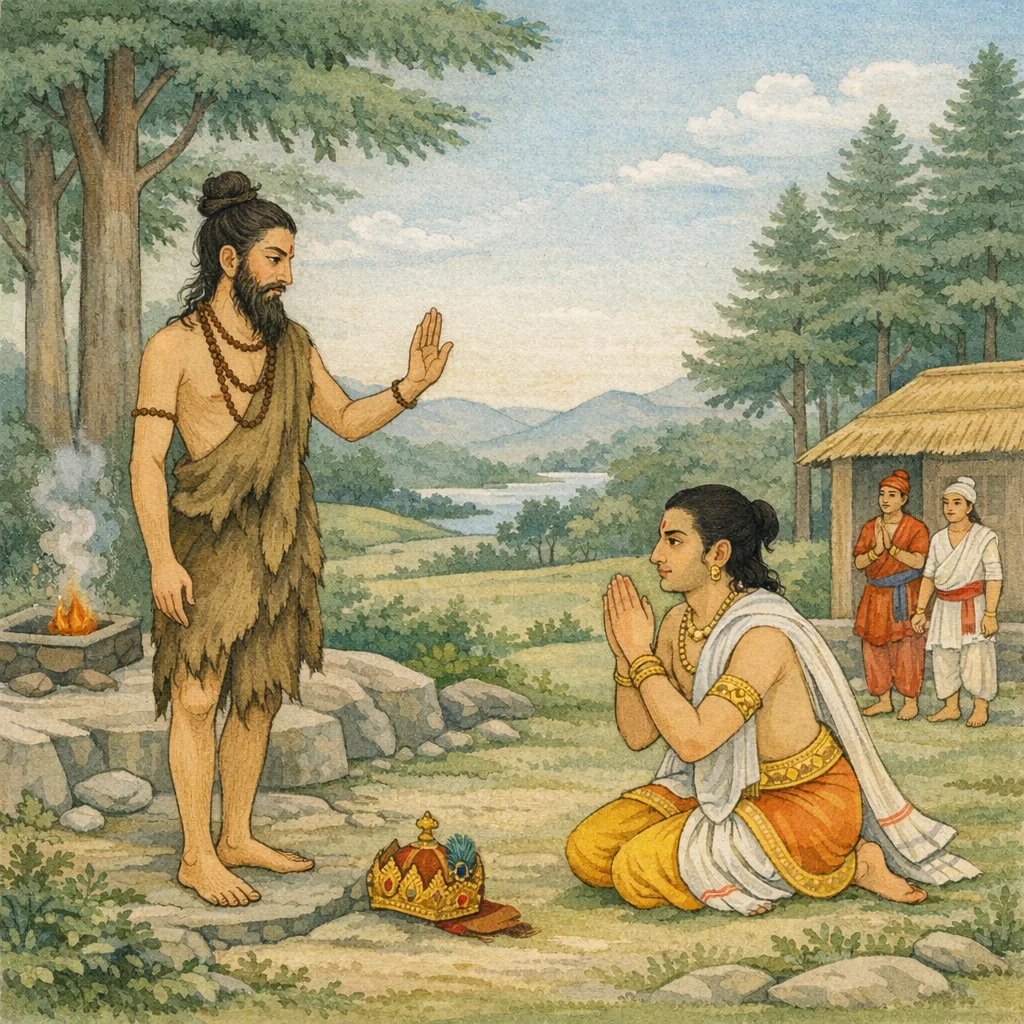
समासाद्योपजग्राह पादयो: परिपीडयन्,वहाँ जाकर उन्होंने मुनिके दोनों पैर पकड़ लिये और उन्हें धीरे-धीरे दबाने लगे। ऋषिने वहाँ राजाको देखकर उस समय उनकी बड़ी निन्दा की। वे कहने लगे--अरे! तू तो महान् पापाचारी और ब्रह्महत्यारा है। यहाँ कैसे आया? हमलोगोंसे तेरा क्या काम है? मुझे किसी तरह छूना मत। जा-जा, तेरा यहाँ ठहरना हमलोगोंको अच्छा नहीं लगता
Bhishma said: Having gone up to the sage, he clasped both of the muni’s feet and began gently pressing them. Seeing the king there, the rishi sharply condemned him at once, saying: “Alas, you are a great sinner, a slayer of a brāhmaṇa. How have you come here? What business do you have with us? Do not touch me in any way. Go—go! Your staying here is not pleasing to us.”
Verse 9
ऋषिर्दष्टवा नृपं तत्र जगहें सुभृशं तदा । कर्ता पापस्य महतो भ्रूणहा किमिहागत:,वहाँ जाकर उन्होंने मुनिके दोनों पैर पकड़ लिये और उन्हें धीरे-धीरे दबाने लगे। ऋषिने वहाँ राजाको देखकर उस समय उनकी बड़ी निन्दा की। वे कहने लगे--अरे! तू तो महान् पापाचारी और ब्रह्महत्यारा है। यहाँ कैसे आया? हमलोगोंसे तेरा क्या काम है? मुझे किसी तरह छूना मत। जा-जा, तेरा यहाँ ठहरना हमलोगोंको अच्छा नहीं लगता
Bhishma said: Seeing the king there, the sage harshly rebuked him at once: “You are the doer of a great sin, a slayer of an embryo—how have you come here? What business do you have with us? Do not touch me in any way. Go, go—your staying here is not pleasing to us.”
Verse 10
कि त्वयास्मासु कर्तव्यं मा मां स्प्राक्षी: कथंचन । गच्छ गच्छ न ते स्थान प्रीणात्यस्मानिति ब्रुवन्,वहाँ जाकर उन्होंने मुनिके दोनों पैर पकड़ लिये और उन्हें धीरे-धीरे दबाने लगे। ऋषिने वहाँ राजाको देखकर उस समय उनकी बड़ी निन्दा की। वे कहने लगे--अरे! तू तो महान् पापाचारी और ब्रह्महत्यारा है। यहाँ कैसे आया? हमलोगोंसे तेरा क्या काम है? मुझे किसी तरह छूना मत। जा-जा, तेरा यहाँ ठहरना हमलोगोंको अच्छा नहीं लगता
Bhishma said: “What business have you with us? Do not touch me in any way. Go—go! There is no place for you here; your staying does not please us,”—so he spoke, expressing moral revulsion and social-religious exclusion toward one deemed grievously sinful.
Verse 11
रुधिरस्थेव ते गन्ध: शवस्येव च दर्शनम् । अशिव: शिवसंकाशो मृतो जीवन्निवाटसि,“तुमसे रुधिरकी-सी गन्ध निकलती है। तेरा दर्शन वैसा ही है, जैसा मुर्देका दीखना। तू देखनेमें मंगलमय है; परंतु है अमंगलरूप। वास्तवमें तू मर चुका; परंतु जीवित की भाँति घूम रहा है
Bhīṣma said: “A smell like clotted blood clings to you, and your very appearance is like that of a corpse. Though you seem outwardly auspicious, you are in truth inauspicious. In reality you are already dead, yet you wander about as if alive.”
Verse 12
ब्रह्ममृत्युरशुद्धात्मा पापमेवानुचिन्तयन् । प्रबुद्धासे प्रस्वपिषि वर्तसे परमे सुखे,'तू ब्राह्मणकी मृत्युका कारण है। तेरा अन्तःकरण नितान्त अशुद्ध है। तू पापकी ही बात सोचता हुआ जागता और सोता है और इसीसे अपनेको परम सुखी मानता है
Bhishma said: “You are the cause of a Brahmin’s death. Your inner self is utterly impure. Thinking only of sin, you persist in that mindset both when awake and when asleep—and on that very account you imagine yourself to be supremely happy.”
Verse 13
मोघं ते जीवितं राजन् परिक्लिष्टं च जीवसि । पापायैव हि सृष्टोडसि कर्मणे हि यवीयसे,“राजन! तेरा जीवन व्यर्थ और अत्यन्त क्लेशमय है। तू पापके लिये ही पैदा हुआ है। खोटे कर्मके लिये ही तेरा जन्म हुआ है
Bhishma said: “O King, your life is futile, and you live in deep affliction. You have been brought forth only for sin; indeed, you are driven toward base deeds.”
Verse 14
बहुकल्याणमिच्छन्ति ईहन्ते पितर: सुतान् । तपसा दैवतेज्याभिरवरन्दनेन तितिक्षया,माता-पिता तपस्या, देवपूजा, नमस्कार और सहनशीलता या क्षमा आदिके द्वारा पुत्र प्राप्त करना चाहते हैं और प्राप्त हुए पुत्रोंसे परम कल्याण पानेकी इच्छा रखते हैं
Bhishma said: Fathers (and parents) strive to obtain sons, desiring abundant welfare through them. They seek this through austerity, worship of the gods, acts of reverent salutation, and patient endurance—for they hope that, once a son is born, he will become a source of the highest good for the family and lineage.
Verse 15
पितृवंशमिमं पश्य त्वत्कृते नरकं गतम् । निरर्था: सर्व एवैषामाशाबन्धास्त्वदाश्रया:,“परंतु तेरे कारण तेरे पितरोंका यह समुदाय नरकमें पड़ गया है। तू आँख उठाकर उनकी दशा देख ले। उन्होंने तुझसे जो जो आशाएँ बाँध रक्खी थीं, उनकी वे सभी आशाएँ आज व्यर्थ हो गयीं
Bhishma said: “Look upon this line of your forefathers—because of you it has fallen into hell. Raise your eyes and see their plight. All the hopes they had fastened upon you, relying on you alone, have today become futile.”
Verse 16
यान् पूजयन्तो विन्दन्ति स्वर्गमायुर्यश: प्रजा: । तेषु त्वं सततं द्वेष्टा ब्राह्मणेषु निरर्थक:,“जिनकी पूजा करनेवाले लोग स्वर्ग, आयु, यश और संतान प्राप्त करते हैं। उन्हीं ब्राह्मणोंसे तू सदा द्वेष रखता है। तेरा जीवन व्यर्थ है
Bhishma said: “Those Brahmins, by honoring whom people attain heaven, long life, fame, and offspring—toward those very Brahmins you continually bear hatred. Your life is purposeless.”
Verse 17
इमं लोकं विमुच्य त्वमवाड्मूर्द्धां पतिष्यसि । अशाश्षती: शाशक्षृती क्ष समा: पापेन कर्मणा,“इस लोकको छोड़नेके बाद तू अपने पापकर्मके फलस्वरूप अनन्त वर्षोतक नीचा सिर किये नरकमें पड़ा रहेगा
Bhishma said: “When you depart from this world, you will fall into hell with your head bent downward. As the consequence of your sinful deeds, you will remain there for years—both those that are fleeting and those that seem unending—enduring the moral weight of your own actions.”
Verse 18
अर्ठमानो यत्र गृप्रै: शितिकण्ठैरयोमुखै: । ततश्न पुनरावृत्त: पापयोनिं गमिष्यसि
Bhīṣma said: “When you are being dragged there by the iron-beaked, dark-throated birds of prey, and then, after that experience, you return again, you will enter a sinful womb.”
Verse 19
“वहाँ लोहेके समान चोंचवाले गीध और मोर तुझे नोच-नोचकर पीड़ा देंगे और उसके बाद भी नरकसे लौटनेपर तुझे किसी पापयोनिमें ही जन्म लेना पड़ेगा ।। यदिदं मन्यसे राजन् नायमस्ति कुतः पर: । प्रतिस्मारयितारस्त्वां यमदूता यमक्षये,“राजन! तू जो यह समझता है कि जब इसी लोकमें पापका फल नहीं मिल रहा है, तब परलोकका तो अस्तित्व ही कहाँ है? सो इस धारणाके विपरीत यमलोकमें जानेपर यमराजके दूत तुझे इन सारी बातोंकी याद दिला देंगे
Bhishma said: “There, vultures and peacocks with beaks hard as iron will tear at you, bringing you pain; and even when you return from hell, you will still be born only into a sinful womb. O King, if you imagine, ‘Since in this very world I do not see the fruit of sin, how could there be any existence of the other world at all?’—then know this: when you reach Yama’s realm, Yama’s messengers in Yama’s abode will make you remember all these deeds and their consequences.”
Verse 76
चरिष्यमाण इन्द्रोतं शौनकं संशितव्रतम् | राजन! यहाँ मैं जो इतिहास बता रहा हूँ, वह धर्मकी वृद्धि करनेवाला है। राजा जनमेजय अपने पाप-कर्मसे दग्ध होते और वनमें विचरते हुए कठोर व्रतका पालन करनेवाले शुनकवंशी इन्द्रोत मुनिके पास जा पहुँचे
Bhishma said: “O King, the ancient account I am about to relate is one that strengthens dharma. King Janamejaya, scorched by the consequences of his own sinful deeds and wandering in the forest, came to the sage Indrota of the Shaunaka lineage, a man steadfast in austere vows.”
Verse 150
इति श्रीमहाभारते शान्तिपर्वणि आपद्धर्मपर्वणि इन्द्रोतपारिक्षितीयसंवादे पञ्चाशदधिकशततमो<ध्याय:
Thus, in the Śrī Mahābhārata, within the Śānti Parva—specifically the section on conduct in times of distress (Āpaddharma Parva)—in the dialogue concerning Indrota and King Parīkṣit, ends the one-hundred-and-fiftieth chapter.
Frequently Asked Questions
Whether to sustain pride-driven antagonism against a stronger power or to adopt restraint and prudent self-management; the narrative demonstrates that misjudging power asymmetry converts conflict into self-inflicted loss.
Intelligence (buddhi) is decisive only when it guides de-escalation and realistic appraisal; initiating enmity from weakness is portrayed as a predictable pathway to regret and destabilization.
Yes. Bhīṣma explicitly generalizes the fable into rājadharma guidance—do not manufacture hostility with stronger parties, recognize that the wise disclose their power gradually, and treat buddhi as the superior human resource when aligned with restraint.