Adhyaya 54
युधिष्ठिरस्य द्यूते द्रव्यवर्णनम् (Yudhiṣṭhira’s Enumeration of Stakes in the Dice Match)
Upa-parva: Dyūta Parva (Dice-Game Episode)
Chapter 54.0 records a patterned exchange: Yudhiṣṭhira, speaking in the assembly context, proposes successive wagers of increasing magnitude—(1) large quantities of gold and treasure; (2) an eminent royal chariot with renowned horses; (3) a thousand elephants described by training and ornamentation; (4) female attendants skilled in service arts; (5) male attendants characterized by competence and hospitality duties; (6) chariots and troops with paid retainers; (7) exceptional horses gifted earlier; (8) extensive stores of vehicles and mounts; and (9) guarded hoards of struck gold. After each offer, Vaiśaṃpāyana narrates Shakuni’s response: a repeated, minimal verdict—“jitam” (“won”)—signaling that the wagers are immediately lost. The chapter’s technical function is inventory and escalation: it documents the scope of royal resources and dramatizes how rapid, repetitive loss under an asymmetric game reduces deliberative capacity and normalizes dispossession through a ritualized refrain.
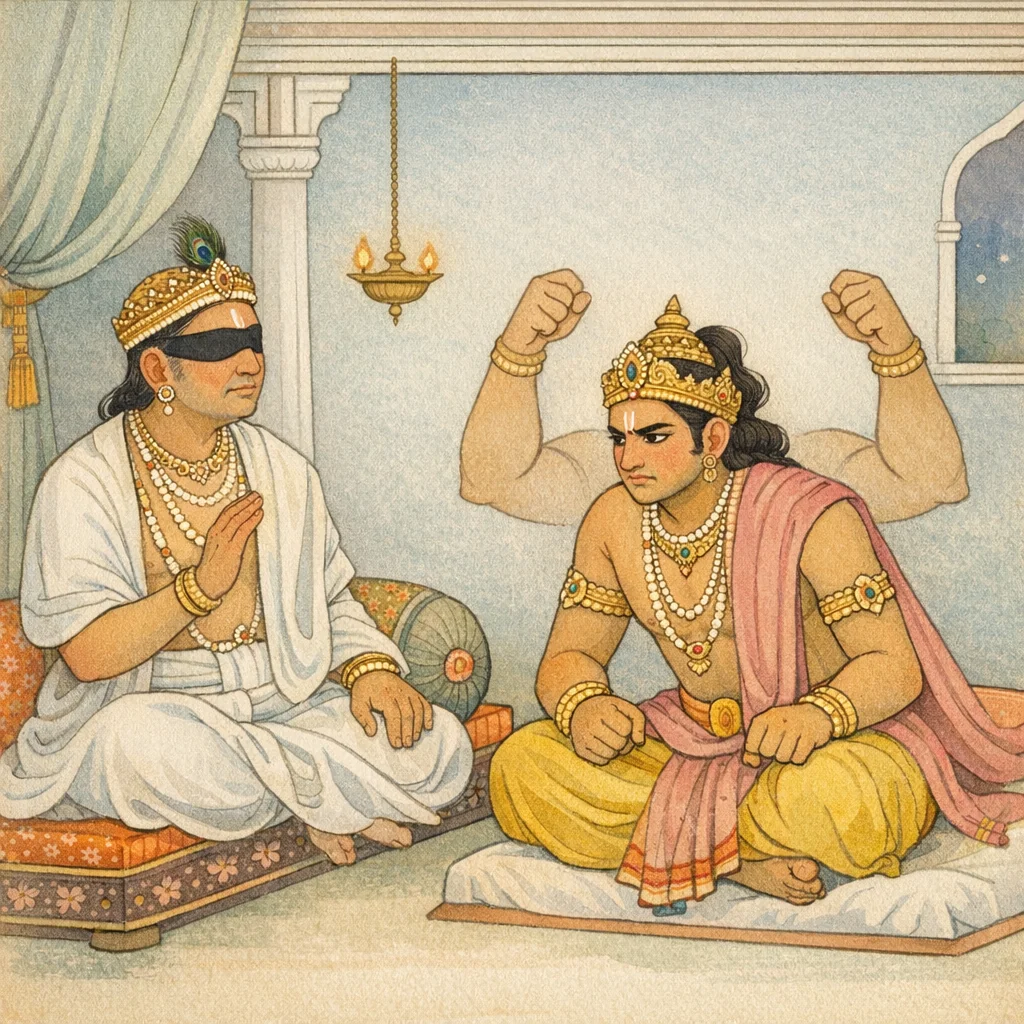
Chapter Arc: दुर्योधन के भीतर जलती असूया और पाण्डव-वैभव की चुभन को देखकर धृतराष्ट्र उसे पास बुलाकर पिता-राजा की वाणी में समझाने बैठते हैं। → धृतराष्ट्र दुर्योधन को याद दिलाते हैं कि युधिष्ठिर छल-कपट से रहित हैं, उनका धन-वैभव तुम्हारे समान ही है, और जो तुम्हारे मित्र हैं वे उनके भी मित्र हैं—अतः द्वेष का कोई कारण नहीं। फिर वे दुर्योधन की ‘यज्ञ-वैभव’ की चाह को सही दिशा देते हैं: यदि वैभव चाहिए तो धर्मपूर्वक यज्ञ करो; राजागण प्रेम से धन-रत्न लाएँगे। → धृतराष्ट्र का तीखा नैतिक निषेध—‘दूसरे के धन की स्पृहा नीचता है’—और निर्णायक चेतावनी: पाण्डु-पुत्र तुम्हारी भुजाओं के समान हैं, उन्हें काटने जैसा व्यवहार मत करो; भ्रातृ-धन के लोभ में मित्रद्रोह मत करना, क्योंकि मित्रद्रोह महान अधर्म है। → धृतराष्ट्र दुर्योधन को वैकल्पिक मार्ग बताते हैं—यज्ञ में दान, प्रिय भोगों का संयमित उपभोग, क्रीड़ा और उत्सव द्वारा मन को शांत करना—और पाण्डवों से द्वेष त्यागकर कुल-एकता में स्थित होने का उपदेश देते हैं। → दुर्योधन के संताप का शमन हुआ या नहीं—यह अनकहा रह जाता है; उपदेश के बाद भी उसके भीतर की ईर्ष्या आगे किस रूप में फूटेगी, यही अगले प्रसंग का संकेत बनता है।
Shlokas
Verse 1
अप-#-रू+ चतु:पञ्चाशत्तमो< ध्याय: धृतराष्ट्रका दुर्योधनको समझाना घतरयाट्र उवाच त्वं वै ज्येष्ठो ज्यैप्लिनेय: पुत्र मा पाण्डवान् द्विष: । देष्टा हासुखमादत्ते यथैव निधनं तथा
Dhṛtarāṣṭra said: “You are indeed the eldest, the foremost among your brothers, my son. Do not hate the Pāṇḍavas. For one who hates only takes misery to himself—just as surely as he takes his own ruin.”
Verse 2
धृतराष्ट्र बोले--दुर्योधन! तुम मेरे ज्येष्ठ पुत्र हो, जेठी रानीके गर्भसे उत्पन्न हुए हो। बेटा! पाण्डवोंसे द्वेष मत करो; क्योंकि द्वेष करनेवाला मनुष्य मृत्युके समान कष्ट पाता है ।। अव्युत्पन्नं समानार्थ तुल्यमित्रं युधिष्ठिरम् । अद्विषन्तं कथं द्विष्यात् त्वाद्शो भरतर्षभ
Dhṛtarāṣṭra said: “Duryodhana, you are my eldest son, born from the womb of the chief queen. My child, do not bear hatred toward the Pāṇḍavas, for one who hates suffers anguish as though it were death itself. Yudhiṣṭhira is straightforward and plain-spoken, consistent in meaning, and a friend to all alike; he does not hate. How could a man like you, O bull among the Bharatas, come to hate one who bears no hatred?”
Verse 3
युधिष्ठिर किसीके साथ छल नहीं करते, उनका धन तुम्हारे ही जैसा है। जो तुम्हारे मित्र हैं, वे उनके भी मित्र हैं और युधिष्ठिर तुमसे कभी द्वेष नहीं करते। भरतकुलतिलक! फिर तुम्हारे-जैसे पुरुषको उनसे द्वेष क्यों करना चाहिये? ।। तुल्याभिजनवीर्यश्व॒ कथं भ्रातु: श्रियं नृप पुत्र कामयसे मोहान्मैवं भू: शाम्य मा शुच:,राजन! तुम्हारा और युधिष्ठिरका कुल एवं पराक्रम एक-सा है। बेटा! तुम मोहवश अपने भाईकी लक्ष्मीकी इच्छा क्यों करते हो? ऐसे अधम न बनो; शान्तभावसे रहो। शोक न करो
Dhṛtarāṣṭra said: “Yudhiṣṭhira does not practice deceit with anyone; his wealth is of the same kind as yours. Those who are your friends are his friends as well, and Yudhiṣṭhira never bears hatred toward you. O ornament of the Bharata line, why should a man like you hate him? Your lineage and valor are equal; why, out of delusion, do you desire your brother’s prosperity? Do not become so base—be calm, and do not grieve.”
Verse 4
अथ यज्ञविभूतिं तां काड्क्षसे भरतर्षभ । ऋषत्विजस्तव तन्वन्तु सप्ततन्तुं महाध्वरम्,भरतश्रेष्ठ।! यदि तुम उस यज्ञ-वैभवको पानेकी अभिलाषा रखते हो तो ऋत्विजलोग तुम्हारे लिये भी गायत्री आदि सात छन्दरूपी तन्तुओंसे युक्त राजसूय महायज्ञका अनुष्ठान करा देंगे
Dhṛtarāṣṭra said: “O bull among the Bharatas, if you desire that splendor and prosperity that comes from sacrifice, then let the seer-priests perform for you the great royal rite—a mighty sacrifice woven with seven ‘threads’ (the sacred metres such as Gāyatrī).”
Verse 5
आहरिष्यन्ति राजानस्तवापि विपुलं धनम् । प्रीत्या च बहुमानाच्च र॒त्नान्याभरणानि च,उसमें देश-देशके राजालोग तुम्हारे लिये भी बड़े प्रेम और आदरसे रत्न, आभूषण तथा बहुत धन ले आयेंगे
Dhṛtarāṣṭra said: “Kings will bring you abundant wealth as well—out of affection and out of respect—along with precious gems and ornaments.”
Verse 6
(मही कामदुघा सा हि वीरपत्नीति चोच्यते । तथा वीरयश्रिता भूमिस्तनुते हि मनोरथम् ।। तवाप्यस्ति हि चेद् वीर्य भोक्ष्यसे हि महीमिमाम् ।।) बेटा! यह पृथ्वी कामधेनु है। इसे वीरपत्नी भी कहते हैं। अपने पराक्रमसे जीती हुई भूमि मनोवांछित फल प्रदान करती है। यदि तुममें भी बल और पराक्रम हो तो तुम इस पृथ्वीका यथेष्ट उपभोग कर सकते हो। अनार्याचरितं तात परस्वस्पृहणं भूशम् । स्वसंतुष्ट: स्वधर्मस्थो यः स वै सुखमेधते
Dhṛtarāṣṭra said: “This earth is indeed like the wish-fulfilling cow Kāmadhenu; it is also called the ‘wife of heroes.’ Land won and upheld by valor yields the fruits one desires. If you too possess strength and heroism, you may enjoy this earth to your full content. But, my son, to covet what belongs to another is ignoble conduct. The one who is content with his own lot and stands firm in his own dharma truly prospers in happiness.”
Verse 7
अव्यापार: परार्थेषु नित्योद्योग: स्वकर्मसु । रक्षणं समुपात्तानामेतद् वैभवलक्षणम्
Dhṛtarāṣṭra said: “Not meddling in the affairs of others, constant diligence in one’s own appointed duties, and safeguarding what has been rightly acquired—these are the marks of true prosperity and power.”
Verse 8
तात! दूसरेके धनकी स्पृहा रखना नीच पुरुषोंका काम है। जो भलीभाँति अपने धनसे संतुष्ट तथा अपने धर्ममें ही स्थित है, वही सुखपूर्वक उन्नतिशील होता है। दूसरेके धनको हड़पनेकी कोई चेष्टा न करना, अपने कर्तव्यको पूरा करनेके लिये सदा प्रयत्नशील रहना और अपनेको जो कुछ प्राप्त है, उसकी रक्षा करना--यही उत्तम वैभवका लक्षण है ।। विपत्तिष्वव्यथो दक्षो नित्यमुत्थानवान् नर: । अप्रमत्तो विनीतात्मा नित्यं भद्राणि पश्यति,जो विपत्तिमें व्यथित नहीं होता, सदा उद्योगशील बना रहता है, जिसमें प्रमादका अभाव है तथा जिसके हृदयमें विनयरूप सद्गुण है, वह चतुर मनुष्य सदा कल्याण ही देखता है
Dhṛtarāṣṭra said: “My son, craving another man’s wealth is the work of base-minded people. The one who is truly content with his own means and remains established in his own dharma advances steadily and happily. Do not even attempt to seize what belongs to others; strive constantly to fulfill your own duties; and protect what has come to you—these are the marks of genuine prosperity. A capable man who is not shaken in adversity, who remains ever industrious, who is free from negligence, and whose inner nature is disciplined and humble, continually encounters what is auspicious.”
Verse 9
बाहूनिवैतान् मा छेत्सी: पाण्डुपुत्रास्तथैव ते । भ्रातृणां तद्धनार्थ वै मित्रद्रोहं च मा कुरु,ये पाण्डुपुत्र तुम्हारी भुजाओंके समान हैं, इन्हें काटो मत। इसी प्रकार तुम भाइयोंके धनके लिये मित्रद्रोह न करो
Dhṛtarāṣṭra said: “Do not cut them down—these Pāṇḍu sons are to you like your own arms. And do not, for the sake of your brothers’ wealth, commit betrayal of friends.”
Verse 10
पाण्डो: पुत्रान् मा द्विषस्वेह राजं- स्तथैव ते भ्रातृधनं समग्रम् । मित्रद्रोहे तात महानधर्म: पितामहा ये तव तेडपि तेषाम्,राजन! तुम पाण्डवोंसे द्वेष न करो। वे तुम्हारे भाई हैं और भाइयोंका सारा धन तुम्हारा ही है। तात! मित्रद्रोहसे बहुत बड़ा पाप होता है। देखो, जो तुम्हारे बाप-दादे हैं, वे ही उनके भी हैं
Dhṛtarāṣṭra said: “O king, do not hate the sons of Pāṇḍu here. They are your brothers, and all the wealth of your brothers is, in truth, also yours. Dear son, betrayal of friends is a very great unrighteousness. Remember: the grandsires who are yours are also theirs.”
Verse 11
अन्तर्वेद्यां ददद् वित्तं कामाननुभवन् प्रियान् क्रीडन् स्त्रीभिर्निरातडुक: प्रशाम्य भरतर्षभ,भरतश्रेष्ठ! तुम यज्ञमें धन दान करो, मनको प्रिय लगनेवाले भोग भोगो और निर्भय होकर स्त्रियोंके साथ क्रीड़ा करते हुए शान्त रहो
Dhṛtarāṣṭra said: “O bull among the Bharatas, remain at peace—make gifts of wealth within the sacrificial enclosure, enjoy the pleasures that are dear to your mind, and, free from fear and anxiety, sport with women.”
Verse 54
इति श्रीमहाभारते सभापर्वणि द्यूतपर्वणि दुर्योधनसंतापे चतु:ःपञ्चाशत्तमो<5ध्याय: ।। ५४ |। इस प्रकार श्रीमह्ाभारत सभापर्वके अन्तर्गत झ्टूतपर्वमें दुर्योधनसंतापविषयक चौवनवाँ अध्याय पूरा हुआ
Thus, in the Śrī Mahābhārata, within the Sabhā Parva—specifically in the Dyūta section—ends the fifty-fourth chapter, dealing with Duryodhana’s anguish.
Frequently Asked Questions
The dilemma is whether adherence to a socially binding contest and spoken commitments remains dharmic when the contest is effectively engineered through deception, producing harm to dependents and undermining responsible kingship.
The refrain models how repetition and procedural finality can normalize injustice; it cautions that ethical agency erodes when one accepts a rigged framework as authoritative, even while escalating personal and public stakes.
No explicit phalaśruti appears here; the meta-commentary is indirect through Vaiśaṃpāyana’s characterization of Shakuni as resorting to nikṛti (deceptive stratagem), guiding the reader to interpret the losses as structurally manipulated rather than merely accidental.