Adhyaya 18
Jarāsandha-vadha-upadeśa and the Departure toward Magadha (जरासन्धवधोपदेशः मागधप्रस्थानं च)
Upa-parva: Jarāsandha-vadha-upāya (Strategic Counsel for the Fall of Jarāsandha)
Kṛṣṇa (Vāsudeva) frames the strategic situation: Haṃsa and Ḍibhaka—associates of Kaṃsa—have fallen, and the time has come to address Jarāsandha. He assesses Jarāsandha as not readily conquerable in open battle even by collective forces, implying the necessity of a life-and-death duel as the appropriate tactical form. Kṛṣṇa allocates functional roles among the trio—policy in himself, strength in Bhīma, and protective support in Arjuna—arguing that a threefold coordinated approach will compel Jarāsandha to accept single combat, particularly due to reputational pressure and perceived affront. Yudhiṣṭhira responds by affirming Kṛṣṇa as the Pāṇḍavas’ refuge and acknowledges that success in liberating kings and obtaining rājasūya depends on Kṛṣṇa’s direction. The discourse expands into a general principle of governance: force must be led by the wise, as water follows gradients and skilled agents exploit openings. The chapter closes with the party’s departure toward Magadha and a geographically specific itinerary across rivers and regions, culminating in sighting the Magadhan city near the Goratha mountain.
Chapter Arc: राजसूय-यज्ञ की छाया में कथा अचानक मगध के भयावह सम्राट जरासंध की उत्पत्ति पर लौटती है—एक ऐसा जन्म, जो स्वयं असंभवता से बना है। → एक राक्षसी-स्वरूप गृहदेवी का रहस्योद्घाटन होता है: वह कहती है कि वह हर घर में निवास करती है, दानव-विनाश के लिए नियुक्त है, और जिसकी दीवारों पर उसकी पुत्रों सहित यौवनयुक्त आकृति भक्तिभाव से लिखी-पूजी जाती है, वहाँ वृद्धि होती है, अन्यथा क्षय। वह अपने पूजन के प्रत्युपकार के रूप में राजा को एक विचित्र बालक (दो टुकड़ों में जन्मे) के संस्कार और भविष्य की व्यवस्था बताती है। → राजा बृहद्रथ उस बालक का नामकरण करते हैं—‘जरया संधितः’ (जरा द्वारा जोड़ा गया) इसलिए इसका नाम ‘जरासंध’ हो; जन्म का रहस्य नाम में ही स्थिर हो जाता है। → जरासंध मगधाधिपति का तेजस्वी पुत्र बनकर बढ़ता है—अग्नि में आहुति की तरह प्रबल, माता-पिता को आनंद देने वाला, शुक्लपक्ष के चंद्रमा की भाँति बढ़ता हुआ। गृहदेवी के वरदान/उपकार का फल राजवंश की दृढ़ता में प्रकट होता है। → यह तेजस्वी बालक आगे चलकर राजसूय के मार्ग में सबसे बड़ा अवरोध बनेगा—उसकी शक्ति और क्रूर नीति का संकेत कथा को अगले प्रसंगों की ओर धकेलता है।
Shlokas
Verse 1
इस प्रकार श्रीमह्याभारत सभापव॑के अन्तर्गत राजसूयारम्भपर्वमें जरासंधकी उत्पत्तिविषयक सत्रहवाँ अध्याय पूरा हुआ ॥/ १७ ॥। (दाक्षिणात्य अधिक पाठके ९३ “लोक मिलाकर कुल ६१३ “लोक हैं) >> ह्य हि की अष्टादशो<् ध्याय: जरा राक्षसीका अपना परिचय देना और उसीके नामपर बालकका नामकरण होना राक्षस्युवाच जरा नामास्मि भद्रें ते राक्षमी कामरूपिणी । तव वेश्मनि राजेन्द्र पूजिता न्यवसं सुखम्,राक्षसीने कहा--राजेन्द्र! तुम्हारा कल्याण हो। मेरा नाम जरा है। मैं इच्छानुसार रूप धारण करनेवाली राक्षसी हूँ और तुम्हारे घरमें पूजित हो सुखपूर्वक रहती चली आयी हूँ
The rākṣasī spoke: “O king, blessings upon you. My name is Jarā. I am a rākṣasī who can assume forms at will. In your household, O lord of kings, I have long dwelt comfortably, honored with due regard.”
Verse 2
गृहे गृहे मनुष्याणां नित्यं तिष्ठामि राक्षसी | गृहदेवीति नाम्ना वै पुरा सृष्टा स्वयंभुवा,मैं मनुष्योंके घर-घरमें सदा मौजूद रहती हूँ। कहनेको मैं राक्षसी ही हूँ; किंतु पूर्वकालमें ब्रह्माजीने गृहदेवीके नामसे मेरी सृष्टि की थी
“In every human household I dwell continually. Though I am spoken of as a rākṣasī, in ancient times the Self-born Creator, Brahmā, brought me forth under the name ‘Gṛhadevā’—the household goddess.”
Verse 3
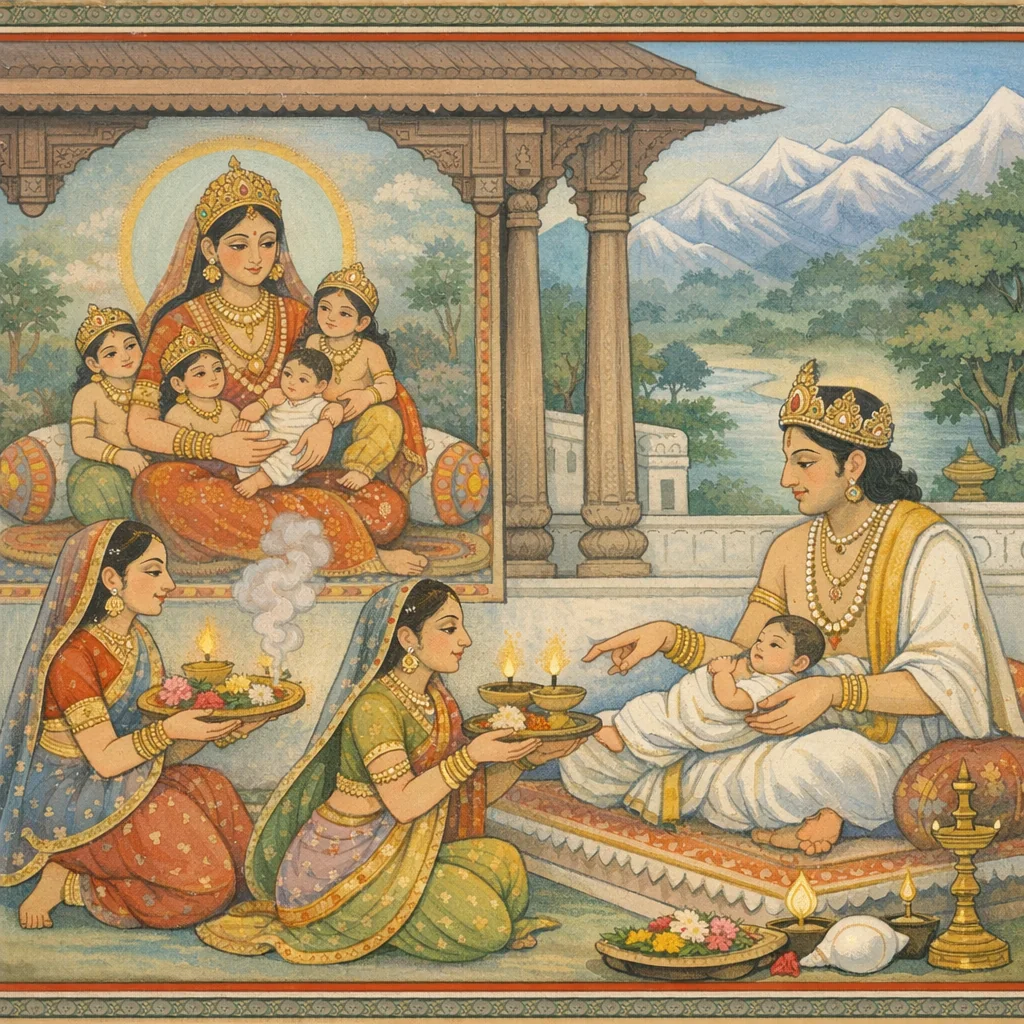
दानवानां विनाशाय स्थापिता दिव्यरूपिणी । यो मां भक्त्या लिखेत् कुड्ये सपुत्रां यौवनान्विताम्,और उन्होंने मुझे दानवोंके विनाशके लिये नियुक्त किया था। मैं दिव्य रूप धारण करनेवाली हूँ। जो अपने घरकी दीवारपर मुझे अनेक पुत्रोंसहित युवती स्त्रीके रूपमें भक्तिपूर्वक लिखता है (मेरा चित्र अंकित करता है), उसके घरमें सदा वृद्धि होती है; अन्यथा उसे हानि उठानी पड़ती है। प्रभो! मैं तुम्हारे घरमें रहकर सदा पूजित होती चली आयी हूँ
“I was appointed for the destruction of the Dānavas, assuming a divine form. Whoever, with devotion, depicts me on the wall of his house as a youthful woman accompanied by sons—his household continually prospers; otherwise, he incurs loss.”
Verse 4
गृहे तस्य भवेद् वृद्धिरन्यथा क्षयमाप्नुयात् । त्वदगृहे तिष्ठमानाहं पूजिताहं सदा विभो,और उन्होंने मुझे दानवोंके विनाशके लिये नियुक्त किया था। मैं दिव्य रूप धारण करनेवाली हूँ। जो अपने घरकी दीवारपर मुझे अनेक पुत्रोंसहित युवती स्त्रीके रूपमें भक्तिपूर्वक लिखता है (मेरा चित्र अंकित करता है), उसके घरमें सदा वृद्धि होती है; अन्यथा उसे हानि उठानी पड़ती है। प्रभो! मैं तुम्हारे घरमें रहकर सदा पूजित होती चली आयी हूँ
“In that person’s house there will be prosperity; otherwise he will meet with decline. O Lord, dwelling in your house, I have always been worshipped.”
Verse 5
लिखिता चैव कुड्येषु पुत्रैबहुभिरावृता । गन्धपुष्पैस्तथा धूपैर्भक्ष्यभोज्यै: सुपूजिता,एवं तुम्हारे घरकी दीवारोंपर मेरा ऐसा चित्र अंकित किया गया है, जिसमें मैं अनेक पुत्रोंसे घिरी हुई खड़ी हूँ। उस चित्रके रूपमें मेरा गन्ध, पुष्प, धूप और भक्ष्य-भोज्य पदार्थोद्वारा भलीभाँति पूजन होता आ रहा है
And on the walls there is indeed a painted likeness of me—shown standing surrounded by many sons. In that form I have long been duly worshipped with perfumes, flowers, incense, and offerings of foods and delicacies.
Verse 6
साहं प्रत्युपकारार्थ चिन्तयाम्पनिशं तव । तवेमे पुत्रशकले दृष्टवत्यस्मि धार्मिक,अतः मैं उस पूजनके बदले तुम्हारा कोई उपकार करनेकी बात सदा सोचती रहती थी। धर्मात्मन! मैंने तुम्हारे पुत्रके शरीरके इन दोनों टुकड़ोंको देखा और दोनोंको जोड़ दिया। महाराज! दैववश तुम्हारे भाग्यसे ही उन टुकड़ोंके जुड़नेसे यह राजकुमार प्रकट हो गया है। मैं तो इसमें केवल निमित्तमात्र बन गयी हूँ
I have continually been thinking of how I might repay your kindness. O righteous one, I have seen these two pieces of your son’s body.
Verse 7
संश्लेषिते मया दैवात् कुमार: समपद्यत । तव भाग्यान्महाराज हेतुमात्रमहं त्विह,अतः मैं उस पूजनके बदले तुम्हारा कोई उपकार करनेकी बात सदा सोचती रहती थी। धर्मात्मन! मैंने तुम्हारे पुत्रके शरीरके इन दोनों टुकड़ोंको देखा और दोनोंको जोड़ दिया। महाराज! दैववश तुम्हारे भाग्यसे ही उन टुकड़ोंके जुड़नेसे यह राजकुमार प्रकट हो गया है। मैं तो इसमें केवल निमित्तमात्र बन गयी हूँ
When I joined them together, by the force of destiny the prince came into being. O great king, it is through your good fortune that this occurred; here I am only a mere instrument.
Verse 8
(तस्य बालस्य यत् कृत्यं तत् कुरुष्व नराधिप । मम नाम्ना च लोके5स्मिन् ख्यात एष भविष्यति ।।) राजन्! अब इस बालकके लिये जो आवश्यक संस्कार हैं, उन्हें करो। यह इस संसारमें मेरे ही नामसे विख्यात होगा। मेरुं वा खादितुं शक्ता कि पुनस्तव बालकम् | गृहसम्पूजनात् तुष्ट्या मया प्रत्यर्पितस्तव,मुझमें सुमेरु पर्वतको भी निगल जानेकी शक्ति है; फिर तुम्हारे इस बच्चेको खा जाना कौन बड़ी बात है? किंतु तुम्हारे घरमें जो मेरी भलीभाँति पूजा होती आयी है, उसीसे संतुष्ट होकर मैंने तुम्हें यह बालक समर्पित किया है
O king, perform for this child whatever rites and duties are proper for him. In this world he will become renowned by my very name. I have the power to swallow even Mount Meru—what then of your child? Yet, being pleased by the faithful worship long offered in your house, I return this child to you.
Verse 9
श्रीकृष्ण उवाच एवमुक््त्वा तु सा राजंस्तत्रैवान्तरधीयत । स संगृहा कुमारं तं॑ प्रविवेश गृहं नूप:,श्रीकृष्ण कहते हैं--राजन्! ऐसा कहकर जरा राक्षसी वहीं अन्तर्धान हो गयी और राजा उस बालकको लेकर अपने महलमें चले आये
Śrī Kṛṣṇa said: “O King, having spoken thus, that rākṣasī vanished on the very spot. The king then took the boy into his care and returned with him into his palace.”
Verse 10
तस्य बालस्य यत् कृत्यं तच्चकार नृपस्तदा । आज्ञापयच्च राक्षस्या मगधेषु महोत्सवम्,उस समय राजाने उस बालकके जातकर्म आदि सभी आवश्यक संस्कार सम्पन्न किये और मगधदेशमें जरा राक्षसी (गृहदेवी)-के पूजनका महान् उत्सव मनानेकी आज्ञा दी
Then the king performed for that child whatever rites were proper—such as the birth-ceremonies and other required sacraments—and he also commanded that, throughout the land of Magadha, a grand festival be held in honor of Jarā, the rākṣasī regarded as the household and protective deity.
Verse 11
तस्य नामाकरोच्चैव पितामहसम: पिता । जरया संधितो यस्माज्जरासंधो भवत्वयम्,ब्रह्माजीके समान प्रभावशाली राजा बृहद्रथने उस बालकका नाम रखते हुए कहा --“इसको जराने संधित किया (जोड़ा) है, इसलिये इसका नाम जरासंध होगा”
Then the father—renowned like a grandsire in wisdom and authority—bestowed a name upon the child, declaring: “Since he has been joined together by Jarā, let this one be called Jarāsandha.”
Verse 12
सो<वर्धत महातेजा मगधाधिपते: सुतः । प्रमाणबलसम्पन्नों हुताहुतिरिवानल: । मातापित्रोर्नन्दिकर: शुक्लपक्षे यथा शशी,मगधराजका वह महातेजस्वी बालक माता-पिताको आनन्द प्रदान करते हुए आकार और बलसे सम्पन्न हो घीकी आहुति दी जानेसे प्रज्वलित हुई अग्नि और शुक्लपक्षके चन्द्रमाकी भाँति दिनोदिन बढ़ने लगा
Thus the son of the lord of Magadha, endowed with great splendor, grew day by day. Possessing a well-formed stature and strength, he blazed like fire fed by oblations, and—bringing joy to his mother and father—waxed like the moon in the bright fortnight.
Verse 18
इति श्रीमहाभारते सभापर्वणि राजसूयारम्भपर्वणि जरासंधोत्पत्तौ अष्टादशो< ध्याय:,इस प्रकार श्रीमह्याभारत सभापव॑के अन्तर्गत राजसूयारम्भपर्वमें जरासंधकी उत्पत्तिविषयक अठारहवाँ अध्याय पूरा हुआ
Thus, in the Śrī Mahābhārata, within the Sabhā Parva—specifically in the section on the commencement of the Rājasūya—ends the eighteenth chapter, dealing with the origin (birth-story) of Jarāsandha.
Frequently Asked Questions
The chapter stages an ethical-policy tension: whether confronting a powerful ruler should rely on mass warfare or a constrained form of engagement (single combat) designed to limit broader harm while still achieving a politically necessary objective.
Power is not self-justifying; it becomes effective and ethically defensible when guided by discernment (naya) and appropriate means (upāya). The text underscores that unled strength is ‘blind,’ whereas wise direction converts capacity into successful action.
No explicit phalāśruti appears in this chapter; its meta-commentary is implicit in the governance analogies (water following the low point; strength directed through openings), positioning the episode as instructional rājadharma material within the broader narrative.