Adhyaya 90
द्रोणपर्व — अध्याय ९०: हार्दिक्यस्य पराक्रमः (Kṛtavarmā’s Stand against the Pāṇḍavas)
Upa-parva: Kṛtavarmā–Pāṇḍava-saṃgharṣa (Tactical Engagement Episode)
Sañjaya addresses Dhṛtarāṣṭra with a moral diagnosis: the present calamity is described as self-caused (ātmāparādha), intensified by partiality toward one’s sons, wavering commitment to dharma, and envy toward the Pāṇḍavas. He then transitions to war reporting, describing a severe, “deva–asura-like” engagement. As the Pandava forces advance—fronted by Bhīma—Kṛtavarmā (Hārdikya) single-handedly checks them, earning astonishment for preventing their breakthrough. A dense exchange of missiles follows: Bhīma and other leaders (including Sahadeva, Nakula, the Draupadeyas, Ghaṭotkaca, Dhṛṣṭadyumna, Virāṭa, Drupada, and Śikhaṇḍī) strike Kṛtavarmā; he counters by wounding key opponents and disrupting equipment. Bhīma’s thrown spear, described as blazing, is cut in two by Kṛtavarmā, after which Bhīma renews the fight with bow and arrows. Śikhaṇḍī’s weapon is severed; he attempts a sword attack that is also neutralized. Kṛtavarmā then presses Yājñaseni (Dhṛṣṭadyumna), heavily wounding him until he collapses on his chariot; Kaurava troops honor Kṛtavarmā’s performance. The chapter closes with Kṛtavarmā driving back the Pandava fighters under sustained arrow volleys, presenting a tactical reversal amid broader strategic decline.
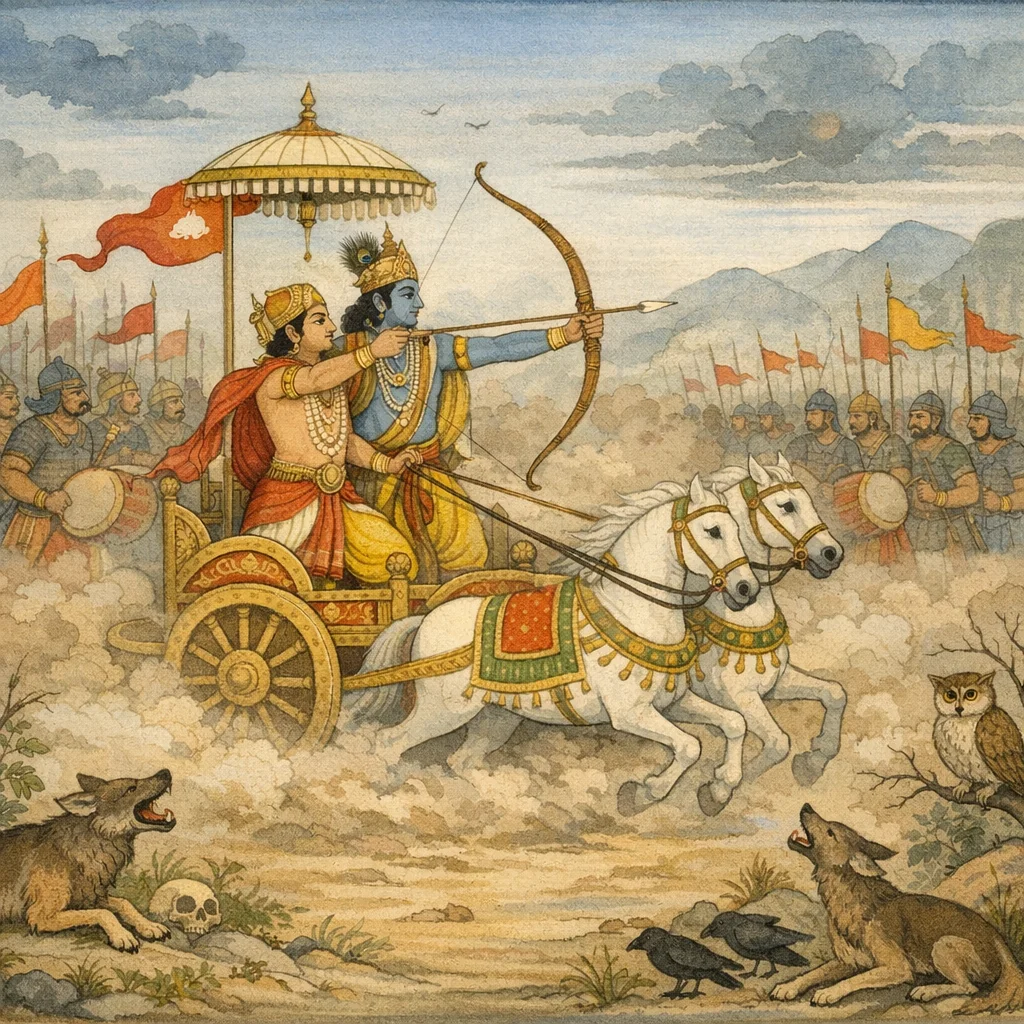
Chapter Arc: शंख-नाद, वाद्यों की गर्जना और सेनाओं की व्यूह-रचना के बाद रणभूमि का आकाश ध्वनि से फटने लगता है—और उसी लोमहर्षक कोलाहल में ‘सव्यसाची’ अर्जुन का प्रकट होना युद्ध की दिशा बदल देने वाला संकेत बनता है। → कौरव-पक्ष आगे बढ़ता है तो अपशकुन साथ चलते हैं—घोर नाद करने वाले पशु, अशिव-दर्शन शिवाएँ, और मन में बैठता भय। इसी बीच अर्जुन, ‘नर-नारायण’ के अनुगामी, रथ पर आरूढ़ होकर गाण्डीव को झकझोरता है; दोनों सेनाएँ सिंहनाद, ताल-ठोंक और रणवाद्यों से उन्मत्त हो उठती हैं। → अर्जुन का युद्ध-प्रवेश सूर्य-उदय की तरह चमकता है—वह घोषणा-सा बन जाता है कि आज रण में धनंजय की असह्य शक्ति देखी जाएगी; और कौरव-वीर भी प्रतिज्ञा करते हैं कि वे गाण्डीवधारी को रोकेंगे, जैसे समुद्र को तट रोकता है। → अध्याय का अंत निर्णायक भिड़ंत की ‘स्थापना’ पर होता है—व्यूह बन चुका है, सेनाएँ आमने-सामने हैं, अर्जुन का क्रोध और तेज स्पष्ट है, और प्रतिरोध करने वाले कौरव-वीरों की चुनौती भी। → अगले क्षण किसका रथ किसके सामने आकर टकराएगा—अर्जुन का वेग व्यूह को चीर देगा या कौरव-प्रतिरोध उसे थाम लेगा?
Shlokas
Verse 1
इस प्रकार श्रीमहाभारत द्रोणपर्वके अन्तर्गत जयद्रथवधपर्वमें कौरव-सेनाके व्यूहका निर्माणविषयक सतासीवाँ अध्याय पूरा हुआ ॥/ ८७ ॥। ऑपन-- मा बछ। अकाल अष्टाशीतितमो<् ध्याय: कौरव-सेनाके लिये अपशकुन, दुर्मर्षणका अर्जुनसे लड़नेका उत्साह तथा अर्जुनका रणभूमिमें प्रवेश एवं शंखनाद संजय उवाच ततो व्यूकेष्वनीकेषु समुत्क्ुष्टेषु मारिष । ताड्यमानासु भेरीषु मृदज्गेषु नदत्सु च,संजय कहते हैं--आर्य! जब इस प्रकार कौरव-सेनाओंकी व्यूह-रचना हो गयी, युद्धके लिये उत्सुक सैनिक कोलाहल करने लगे, नगाड़े पीटे जाने लगे, मृदंग बजने लगे, सैनिकोंकी गर्जनाके साथ-साथ रणवाद्योंकी तुमुल ध्वनि फैलने लगी, शंख फूँके जाने लगे, रोमांचकारी शब्द गूँजने लगा और युद्धके इच्छुक भरतवंशी वीर जब कवच धारण करके धीरे-धीरे प्रहारके लिये उद्यत होने लगे, उस समय उग्र मुहूर्त आनेपर युद्धभूमिमें सव्यसाची अर्जुन दिखायी दिये
Sañjaya said: “O noble one, when the battle-formations of the Kaurava host had been fully drawn up and the divisions stood arrayed, the war-drums were struck and the kettledrums and mṛdaṅgas resounded. Amid the swelling din that roused the warriors’ ardor for combat, the army’s readiness for violence became palpable—an outward order of ranks and instruments masking the inward surge of fear, pride, and resolve that precedes slaughter.”
Verse 2
अनीकानां च संह्वादे वादित्राणां च निःस्वने । प्रध्मापितेषु शड्खेषु संनादे लोमहर्षणे,संजय कहते हैं--आर्य! जब इस प्रकार कौरव-सेनाओंकी व्यूह-रचना हो गयी, युद्धके लिये उत्सुक सैनिक कोलाहल करने लगे, नगाड़े पीटे जाने लगे, मृदंग बजने लगे, सैनिकोंकी गर्जनाके साथ-साथ रणवाद्योंकी तुमुल ध्वनि फैलने लगी, शंख फूँके जाने लगे, रोमांचकारी शब्द गूँजने लगा और युद्धके इच्छुक भरतवंशी वीर जब कवच धारण करके धीरे-धीरे प्रहारके लिये उद्यत होने लगे, उस समय उग्र मुहूर्त आनेपर युद्धभूमिमें सव्यसाची अर्जुन दिखायी दिये
Sañjaya said: “O noble one, as the battle-formations pressed together and the tumult rose—amid the blare of war-instruments and their resounding din—when conches were being blown and a hair-raising roar spread across the field, the armies’ collective voice swelled into an overwhelming martial clamor, signaling the irreversible onset of combat.”
Verse 3
अभिहारयत्सु शनकैर्भरतेषु युयुत्सुषु । रौद्रे मुहूर्तो सम्प्राप्ते सब्यसाची व्यदृश्यत,संजय कहते हैं--आर्य! जब इस प्रकार कौरव-सेनाओंकी व्यूह-रचना हो गयी, युद्धके लिये उत्सुक सैनिक कोलाहल करने लगे, नगाड़े पीटे जाने लगे, मृदंग बजने लगे, सैनिकोंकी गर्जनाके साथ-साथ रणवाद्योंकी तुमुल ध्वनि फैलने लगी, शंख फूँके जाने लगे, रोमांचकारी शब्द गूँजने लगा और युद्धके इच्छुक भरतवंशी वीर जब कवच धारण करके धीरे-धीरे प्रहारके लिये उद्यत होने लगे, उस समय उग्र मुहूर्त आनेपर युद्धभूमिमें सव्यसाची अर्जुन दिखायी दिये
Sañjaya said: As the Bhārata warriors, eager to fight, advanced slowly in their martial array, and when the fierce, ominous moment had arrived, Savyasācī (Arjuna) came into view on the battlefield—appearing amid the rising tumult that signals the ethical gravity of war: disciplined movement, readiness for violence, and the foreboding of imminent slaughter.
Verse 4
बलानां वायसानां च पुरस्तात् सव्यसाचिन: । बहुलानि सहस्राणि प्राक्रीडंस्तत्र भारत,भारत! वहाँ सव्यसाची अर्जुनके सम्मुख आकाशमें कई हजार कौए और वायस क्रीडा करते हुए उड़ रहे थे
Sañjaya said: In front of Savyasācin (Arjuna), O Bhārata, many thousands of crows were sporting and wheeling about there in the sky—an ominous sight amid the war, hinting at the nearness of death and the grim harvest of battle.
Verse 5
मृगाश्न घोरसंनादा: शिवाश्लाशिवदर्शना: । दक्षिणेन प्रयातानामस्माकं प्राणदंस्तथा,और जब हमलोग आगे बढ़ने लगे, तब भयंकर शब्द करनेवाले पशु और अशुभ दर्शनवाले सियार हमारे दाहिने आकर कोलाहल करने लगे
Sañjaya said: As our forces began to advance, beasts raised dreadful cries, and jackals—portending ill—appeared on our right and howled, as if to bite at our very life-breath. The omen signaled a moral and strategic forewarning: when violence is about to intensify, nature itself seems to protest, hinting at the ruin that adharma-driven war brings upon those who pursue it.
Verse 6
(लोकक्षये महाराज यादृशास्तादृशा हि ते | अशिवा धार॑राष्ट्राणां शिवा: पार्थस्य संयुगे ।।) महाराज! उस लोक-संहारकारी युद्धमें जैसे-तैसे अपशकुन प्रकट होने लगे, जो आपके पुत्रोंक लिये अमंगलकारी और अर्जुनके लिये मंगलकारी थे। सनिर्घाता ज्वलन्त्यश्व पेतुरुल्का: सहस्रश: । चचाल च मही कृत्स्ना भये घोरे समुत्थिते,महान् भय उपस्थित होनेके कारण आकाशसे भयंकर गर्जनाके साथ सहस्रों जलती हुई उल्काएँ गिरने लगीं और सारी पृथ्वी काँपने लगी
Sañjaya said: O King, in that world-destroying war, omens of every kind began to appear—inauspicious for the sons of Dhṛtarāṣṭra, yet auspicious for Pārtha (Arjuna) in the clash of arms. With thunderous detonations, thousands of blazing meteors fell from the sky, and as a great terror rose, the entire earth trembled. The narrative frames the battle not merely as physical violence but as a moral crisis in which nature itself signals the differing ethical destinies of the two sides.
Verse 7
विष्वग्वाता: सनिर्घाता रूक्षा: शर्करवर्षिण: । ववुरायाति कौन्तेये संग्रामे समुपस्थिते,अर्जुनके आने और संग्रामका अवसर उपस्थित होनेपर रेतकी वर्षा करनेवाली विकट गर्जन-तर्जनके साथ रूखी एवं चौवाई हवा चलने लगी
Sañjaya said: When the battle was at hand and Arjuna, son of Kuntī, was approaching, harsh winds began to blow in all directions—accompanied by thunderous, ominous roaring—and they rained down grit and pebbles, as if nature itself were announcing the dread gravity of the coming slaughter.
Verse 8
नाकुलिश्न शतानीको धृष्टय्युम्नश्न पार्षत: । पाण्डवानामनीकानि प्राज्ञौ तौ व्यूहतुस्तदा,उस समय नकुलपुत्र शतानीक और ट्रुपदकुमार धृष्टद्युम्न--इन दोनों बुद्धिमान् वीरोंने पाण्डव सैनिकोंके व्यूहका निर्माण किया
Sañjaya said: Then Nakula’s son Śatānīka and Dhṛṣṭadyumna, the son of Pārṣata (Drupada), both wise and capable warriors, arranged the battle-formations of the Pāṇḍava forces. In the moral texture of the epic, this moment underscores disciplined leadership and strategic responsibility—ordering one’s side not for chaos or cruelty, but to meet a grave duty in war with clarity and control.
Verse 9
ततो रथसहस्रेण द्विरदानां शतेन च । त्रिभिरश्वसहसौैश्ष पदातीनां शतै: शतै:,तदनन्तर एक हजार रथी, सौ हाथीसवार, तीन हजार घुड़सवार और दस हजार पैदल सैनिकोंके साथ आकर अर्जुनसे डेढ़ हजार धनुषकी दूरीपर स्थित हो समस्त कौरव सैनिकोंके आगे होकर आपके पुत्र दुर्मर्षणने इस प्रकार कहा--
Sañjaya said: Thereafter, accompanied by a thousand chariots, a hundred elephants, three thousand horsemen, and hundreds upon hundreds of foot-soldiers, Durmarṣaṇa—placing himself at the head of the Kaurava host—took up a position at a measured distance from Arjuna and spoke as follows. The scene underscores how martial power is deliberately arranged and displayed, yet its moral weight depends on the purpose it serves and the restraint with which it is used.
Verse 10
अध्यर्धमात्रे धनुषां सहस्रे तनयस्तव । अग्रतः सर्वसैन्यानां स्थित्वा दुर्मर्षणो5ब्रवीत्,तदनन्तर एक हजार रथी, सौ हाथीसवार, तीन हजार घुड़सवार और दस हजार पैदल सैनिकोंके साथ आकर अर्जुनसे डेढ़ हजार धनुषकी दूरीपर स्थित हो समस्त कौरव सैनिकोंके आगे होकर आपके पुत्र दुर्मर्षणने इस प्रकार कहा--
Sañjaya said: Then your son Durmarṣaṇa, hard to endure in battle, stationed himself at the head of all the Kaurava forces, at a distance of about one and a half thousand bow-lengths, and spoke. The scene underscores the martial code of the day: leaders step forward first, asserting resolve and challenging the foe, even as the vast machinery of war gathers behind them.
Verse 11
“जिस प्रकार तटभूमि समुद्रको आगे बढ़नेसे रोकती है, उसी प्रकार आज मैं युद्धमें उन्मत्त होकर लड़नेवाले शत्रु-संतापी गाण्डीवधारी अर्जुनको रोक दूँगा
Sañjaya said: “Just as the shoreline holds back the sea when it surges forward, so today, in the frenzy of battle, I will check Arjuna—the bearer of Gāṇḍīva, the scourge of his foes.”
Verse 12
अद्य पश्यन्तु संग्रामे धनंजयममर्षणम् । विषक्तं मयि दुर्धर्षमश्मकूटमिवाश्मनि,“आज सब लोग देखें, जैसे पत्थर दूसरे प्रस्तरसमूहसे टकराकर रह जाता है, उसी प्रकार अमर्षशील दुर्धर्ष अर्जुन युद्धस्थलमें मुझसे भिड़कर अवरुद्ध हो जायँगे
Sanjaya said: “Today, let all behold in the battle how Dhanañjaya (Arjuna)—impatient of affront and hard to withstand—when he clashes with me, will be checked and held fast, just as a mass of rock is stopped when it strikes solid stone.”
Verse 13
तिष्ठ ध्वं रथिनो यूय॑ संग्राममभिकड्क्षिण: । युध्यामि संहतानेतान् यशो मान॑ च वर्धयन्,'संग्रामकी इच्छा रखनेवाले रथियो! आपलोग चुपचाप खड़े रहें। मैं कौरवकुलके यश और मानकी वृद्धि करता हुआ आज इन संगठित होकर आये हुए शत्रुओंके साथ युद्ध करूँगा”
Sañjaya said: “O chariot-warriors, you who long for battle—stand firm and hold your ground. I shall fight these foes who have come together in close array, seeking to increase the glory and honor of the Kuru line.”
Verse 14
एवं ब्रुवन्महाराज महात्मा स महामति: । महेष्वासैर्व॒तो राजन् महेष्वासो व्यवस्थित:,राजन्! महाराज! ऐसा कहता हुआ वह महामनस्वी महाबुद्धिमान् एवं महाधनुर्धर दुर्मर्षण बड़े-बड़े धनुर्धरोंसे घिरकर युद्धके लिये खड़ा हो गया
Sanjaya said: “O great king, as he spoke thus, that high-souled and clear-minded hero—himself a mighty archer—stood ready for battle, surrounded on all sides by other great bowmen.”
Verse 15
ततो<न्तक इव क्रुद्ध: सवज्ञ इव वासव: । दण्डपाणिरिवासहा मृत्यु: कालेन चोदित:,तत्पश्चात् क्रोधमें भरे हुए यमराज, वज्रधारी इन्द्र, दण्डधारी असह्य अन्तक, कालप्रेरक मृत्यु, किसीसे भी क्षुब्ध न होनेवाले त्रिशूलधारी रुद्र, पाशधारी वरुण तथा पुनः समस्त प्रजाको दग्ध करनेके लिये उठे हुए ज्वालाओंसे युक्त प्रलयकालीन अग्निदेवके समान दुर्धर्ष वीर अर्जुन युद्धस्थलमें अपने श्रेष्ठ रथपर आरूढ़ हो गाण्डीव धनुषकी टंकार करते हुए नवोदित सूर्यके समान प्रकाशित होने लगे। वे क्रोध, अमर्ष और बलसे प्रेरित होकर आगे बढ़ रहे थे। उन्होंने ही पूर्वकालमें निवातकवच नामक दानवोंका संहार किया था। वे जय नामके अनुसार ही विजयी होते थे। सत्यमें स्थित होकर अपने महान् व्रतको पूर्ण करनेके लिये उद्यत थे। उन्होंने कवच बाँध रखा था। मस्तकपर जाम्बूनद सुवर्णका बना हुआ किरीट धारण किया था। उनके कमरमें तलवार लटक रही थी। वे नरस्वरूप अर्जुन नारायणस्वरूप भगवान् श्रीकृष्णका अनुसरण करते हुए सुन्दर अंगदों (बाजूबन्द) और मनोहर कुण्डलोंसे सुशोभित हो रहे थे। उन्होंने श्वेत माला और श्वेत वस्त्र पहन रखे थे
Sañjaya said: Then Arjuna blazed forth—like Antaka in wrath, like Vāsava (Indra) in irresistible might, like the unbearable Death bearing a staff and driven on by Time. Mounted on his excellent chariot, he made the Gāṇḍīva resound and shone like the newly risen sun. Driven by anger, wounded honor, and strength, he pressed forward, steadfast in truth and intent on fulfilling his great vow—following Nārāyaṇa in the form of Śrī Kṛṣṇa—adorned with armor, a crown of Jāmbūnada gold, sword at his waist, white garlands and garments, and radiant armlets and earrings.
Verse 16
शूलपाणिरिवाक्षोभ्यो वरुण: पाशवानिव । युगान्ताग्निरिवार्चिष्मान् प्रधक्ष्यन् वै पुनः प्रजा:,तत्पश्चात् क्रोधमें भरे हुए यमराज, वज्रधारी इन्द्र, दण्डधारी असह्य अन्तक, कालप्रेरक मृत्यु, किसीसे भी क्षुब्ध न होनेवाले त्रिशूलधारी रुद्र, पाशधारी वरुण तथा पुनः समस्त प्रजाको दग्ध करनेके लिये उठे हुए ज्वालाओंसे युक्त प्रलयकालीन अग्निदेवके समान दुर्धर्ष वीर अर्जुन युद्धस्थलमें अपने श्रेष्ठ रथपर आरूढ़ हो गाण्डीव धनुषकी टंकार करते हुए नवोदित सूर्यके समान प्रकाशित होने लगे। वे क्रोध, अमर्ष और बलसे प्रेरित होकर आगे बढ़ रहे थे। उन्होंने ही पूर्वकालमें निवातकवच नामक दानवोंका संहार किया था। वे जय नामके अनुसार ही विजयी होते थे। सत्यमें स्थित होकर अपने महान् व्रतको पूर्ण करनेके लिये उद्यत थे। उन्होंने कवच बाँध रखा था। मस्तकपर जाम्बूनद सुवर्णका बना हुआ किरीट धारण किया था। उनके कमरमें तलवार लटक रही थी। वे नरस्वरूप अर्जुन नारायणस्वरूप भगवान् श्रीकृष्णका अनुसरण करते हुए सुन्दर अंगदों (बाजूबन्द) और मनोहर कुण्डलोंसे सुशोभित हो रहे थे। उन्होंने श्वेत माला और श्वेत वस्त्र पहन रखे थे
Sañjaya said: Unshaken like Rudra bearing the trident, like Varuṇa holding the noose, and blazing like the fire at the end of the age rising to consume all creatures again—so did the irresistible hero Arjuna appear on the battlefield. Mounted on his excellent chariot, sounding the twang of the Gāṇḍīva, he shone like the newly risen sun. Driven forward by wrath, righteous indignation, and strength, he advanced to fulfill his great vow, steadfast in truth.
Verse 17
क्रोधामर्षबलोद्धूतो निवातकवचान्तक: । जयो जेता स्थित: सत्ये पारयिष्यन् महाव्रतम्,तत्पश्चात् क्रोधमें भरे हुए यमराज, वज्रधारी इन्द्र, दण्डधारी असह्य अन्तक, कालप्रेरक मृत्यु, किसीसे भी क्षुब्ध न होनेवाले त्रिशूलधारी रुद्र, पाशधारी वरुण तथा पुनः समस्त प्रजाको दग्ध करनेके लिये उठे हुए ज्वालाओंसे युक्त प्रलयकालीन अग्निदेवके समान दुर्धर्ष वीर अर्जुन युद्धस्थलमें अपने श्रेष्ठ रथपर आरूढ़ हो गाण्डीव धनुषकी टंकार करते हुए नवोदित सूर्यके समान प्रकाशित होने लगे। वे क्रोध, अमर्ष और बलसे प्रेरित होकर आगे बढ़ रहे थे। उन्होंने ही पूर्वकालमें निवातकवच नामक दानवोंका संहार किया था। वे जय नामके अनुसार ही विजयी होते थे। सत्यमें स्थित होकर अपने महान् व्रतको पूर्ण करनेके लिये उद्यत थे। उन्होंने कवच बाँध रखा था। मस्तकपर जाम्बूनद सुवर्णका बना हुआ किरीट धारण किया था। उनके कमरमें तलवार लटक रही थी। वे नरस्वरूप अर्जुन नारायणस्वरूप भगवान् श्रीकृष्णका अनुसरण करते हुए सुन्दर अंगदों (बाजूबन्द) और मनोहर कुण्डलोंसे सुशोभित हो रहे थे। उन्होंने श्वेत माला और श्वेत वस्त्र पहन रखे थे
Sañjaya said: Stirred and driven onward by wrath, righteous indignation, and strength, Arjuna—slayer of the Nivātakavaca demons—stood firm. True to his very name ‘Jaya’ (Victory), he was a conqueror who, established in truth, was resolved to carry his great vow through to completion.
Verse 18
आमुक्तकवच: खड्गी जाम्बूनदकिरीटभृत् । शुभ्रमाल्याम्बरधर: स्वड्भदश्चारुकुण्डल:,तत्पश्चात् क्रोधमें भरे हुए यमराज, वज्रधारी इन्द्र, दण्डधारी असह्य अन्तक, कालप्रेरक मृत्यु, किसीसे भी क्षुब्ध न होनेवाले त्रिशूलधारी रुद्र, पाशधारी वरुण तथा पुनः समस्त प्रजाको दग्ध करनेके लिये उठे हुए ज्वालाओंसे युक्त प्रलयकालीन अग्निदेवके समान दुर्धर्ष वीर अर्जुन युद्धस्थलमें अपने श्रेष्ठ रथपर आरूढ़ हो गाण्डीव धनुषकी टंकार करते हुए नवोदित सूर्यके समान प्रकाशित होने लगे। वे क्रोध, अमर्ष और बलसे प्रेरित होकर आगे बढ़ रहे थे। उन्होंने ही पूर्वकालमें निवातकवच नामक दानवोंका संहार किया था। वे जय नामके अनुसार ही विजयी होते थे। सत्यमें स्थित होकर अपने महान् व्रतको पूर्ण करनेके लिये उद्यत थे। उन्होंने कवच बाँध रखा था। मस्तकपर जाम्बूनद सुवर्णका बना हुआ किरीट धारण किया था। उनके कमरमें तलवार लटक रही थी। वे नरस्वरूप अर्जुन नारायणस्वरूप भगवान् श्रीकृष्णका अनुसरण करते हुए सुन्दर अंगदों (बाजूबन्द) और मनोहर कुण्डलोंसे सुशोभित हो रहे थे। उन्होंने श्वेत माला और श्वेत वस्त्र पहन रखे थे
Sanjaya said: Arjuna, having fastened on his armor, bearing a sword, and wearing a crown of Jāmbūnada gold, appeared on the battlefield upon his excellent chariot. Adorned with a white garland and white garments, with beautiful armlets and charming earrings, he shone like the newly risen sun while making the Gāṇḍīva resound. Following Nārāyaṇa in the form of Śrī Kṛṣṇa, he advanced driven by wrath, righteous indignation, and strength—terrible to face, like Yama, Indra with the thunderbolt, the rod-bearing Antaka, death impelled by Time, Rudra with the trident unmoved by any provocation, Varuṇa with the noose, and the blazing fire of cosmic dissolution risen to burn all creatures. Firm in truth and intent on fulfilling his great vow, he moved forward as one who had formerly slain the Nivātakavaca demons, victorious in accordance with his very name, ‘Jaya’ (victory).
Verse 19
रथप्रवरमास्थाय नरो नारायणानुग: । विधुन्वन् गाण्डिवं संख्ये बभौ सूर्य इवोदित:,तत्पश्चात् क्रोधमें भरे हुए यमराज, वज्रधारी इन्द्र, दण्डधारी असह्य अन्तक, कालप्रेरक मृत्यु, किसीसे भी क्षुब्ध न होनेवाले त्रिशूलधारी रुद्र, पाशधारी वरुण तथा पुनः समस्त प्रजाको दग्ध करनेके लिये उठे हुए ज्वालाओंसे युक्त प्रलयकालीन अग्निदेवके समान दुर्धर्ष वीर अर्जुन युद्धस्थलमें अपने श्रेष्ठ रथपर आरूढ़ हो गाण्डीव धनुषकी टंकार करते हुए नवोदित सूर्यके समान प्रकाशित होने लगे। वे क्रोध, अमर्ष और बलसे प्रेरित होकर आगे बढ़ रहे थे। उन्होंने ही पूर्वकालमें निवातकवच नामक दानवोंका संहार किया था। वे जय नामके अनुसार ही विजयी होते थे। सत्यमें स्थित होकर अपने महान् व्रतको पूर्ण करनेके लिये उद्यत थे। उन्होंने कवच बाँध रखा था। मस्तकपर जाम्बूनद सुवर्णका बना हुआ किरीट धारण किया था। उनके कमरमें तलवार लटक रही थी। वे नरस्वरूप अर्जुन नारायणस्वरूप भगवान् श्रीकृष्णका अनुसरण करते हुए सुन्दर अंगदों (बाजूबन्द) और मनोहर कुण्डलोंसे सुशोभित हो रहे थे। उन्होंने श्वेत माला और श्वेत वस्त्र पहन रखे थे
Sañjaya said: Mounting his excellent chariot, Arjuna—Nara, following Nārāyaṇa (Kṛṣṇa)—shook the Gāṇḍīva amid the battle and shone like the newly risen sun. Driven by wrath, unyielding resolve, and strength, he pressed forward, established in truth and intent on fulfilling his great vow. Armored, crowned with Jāmbūnada gold, sword at his waist, adorned with fine armlets and earrings, and clad in white garland and white garments, Arjuna in the form of Nara followed the Lord Nārāyaṇa, Śrī Kṛṣṇa.
Verse 20
सो5ग्रानीकस्य महत इषुपाते धनंजय: । व्यवस्थाप्य रथं राजन् शड्खं दध्मौ प्रतापवान्,राजन! प्रतापी अर्जुनने अपने सामने खड़ी हुई विशाल शत्रुसेनाके सम्मुख, जितनी दूरसे बाण मारा जा सके उतनी ही दूरीपर अपने रथको खड़ा करके शंख बजाया
Sañjaya said: O King, the mighty Dhanañjaya (Arjuna), having stationed his chariot at bowshot range before the vast vanguard of the enemy host, blew his conch—an unmistakable sign of resolute challenge and disciplined readiness.
Verse 21
अथ कृष्णो5प्यसम्भ्रान्त: पार्थेन सह मारिष | प्राध्मापयत् पाउचजन्यं शड्खं प्रवरमोजसा,आर्य! तब श्रीकृष्णने भी अर्जुनके साथ बिना किसी घबराहटके अपने श्रेष्ठ शंख पांचजन्यको बलपूर्वक बजाया
Sañjaya said: Then Kṛṣṇa too, unshaken and composed, together with Pārtha (Arjuna), forcefully sounded his excellent conch Pāñcajanya—proclaiming steadfast courage amid the turmoil of war.
Verse 22
तयो: शड्खप्रणादेन तव सैन्ये विशाम्पते । आसन संहृष्टरोमाण: कम्पिता गतचेतस:,प्रजानाथ! उन दोनोंके शंखनादसे आपकी सेनाके समस्त योद्धाओंके रोंगटे खड़े हो गये, सब लोग काँपते हुए अचेत-से हो गये
Sañjaya said: O lord of the people, O King, at the thunder of those two conches, the warriors in your army were seized with shock—hair standing on end; they trembled and seemed to lose their composure.
Verse 23
यथा त्रस्यन्ति भूतानि सर्वाण्यशनिनि:स्वनात् । तथा शड्खप्रणादेन वित्रेसुस्तव सैनिका:,जैसे वज़्की गड़गड़ाहटसे सारे प्राणी थर्रा उठते हैं, उसी प्रकार उन दोनों वीरोंकी शंखध्वनिसे आपके समस्त सैनिक संत्रस्त हो उठे
Sañjaya said: Just as all creatures tremble when the thunderbolt roars, so too did your entire army recoil in fear at the blaring call of the conches of those two heroes.
Verse 24
प्रसुखुवु: शकृन्मूत्रं वाहनानि च सर्वश: । एवं सवाहनं सर्वमाविग्नम भवद् बलम्
Sañjaya said: In utter distress, they voided excrement and urine, and the animals of transport too did so everywhere. Thus the entire force—together with its mounts and vehicles—fell into panic and disorder, showing how fear can unman even a great army when its inner steadiness collapses.
Verse 25
सेनाके सभी वाहन भयके मारे मल-मूत्र करने लगे। इस प्रकार सवारियोंसहित सारी सेना उद्धिग्न हो गयी ।। सीदन्ति सम नरा राजन् शड्खशब्देन मारिष | विसंज्ञाश्नाभवन् केचित् केचिद् राजन् वितत्रसु:
Sañjaya said: “O King, O venerable one, at the blare of the conches the warriors began to falter. Some lost consciousness, and others, O King, were seized with terror.”
Verse 26
आदरणीय महाराज! अपनी सेनाके सब मनुष्य वह शंखनाद सुनकर शिथिल हो गये। नरेश्वर! कितने ही तो मूर्च्छिंत हो गये और कितने ही भयसे थर्रा उठे ।। ततः कपिर्महानादं सह भूतैर्ध्वजालयै: । अकरोद् व्यादितास्यश्न भीषयंस्तव सैनिकान्
Sañjaya said: Then the great ape—Hanūmān, stationed upon the banner—opened his mouth wide and let out a thunderous roar, together with the spirits and beings that attended him. Hearing that terrifying sound, your soldiers lost their steadiness: many fainted, and many trembled in fear. The cry did not merely announce strength; it struck at the enemy’s morale, revealing how inner resolve can collapse when confronted by a sign of overwhelming power.
Verse 27
तत्पश्चात् अर्जुनकी थ्वजामें निवास करनेवाले भूतगणोंके साथ वहाँ बैठे हुए हनूमानजीने मुँह बाकर आपके सैनिकोंको भयभीत करते हुए बड़े जोरसे गर्जना की ।। ततः शड्खाश्न भेर्यश्व मृदड़ाश्चानकै: सह । पुनरेवाभ्यहन्यन्त तव सैन्यप्रहर्षणा:,तब आपकी सेनामें भी पुनः मृदंग और ढोलके साथ शंख तथा नगाड़े बज उठे, जो आपके सैनिकोंके हर्ष और उत्साहको बढ़ानेवाले थे
Sañjaya said: Thereafter, Hanūmān, seated there with the hosts of bhūtas dwelling upon Arjuna’s banner, opened his mouth and roared mightily, terrifying your soldiers. Then, in your army too, conches, kettledrums, mṛdaṅgas, and great war-drums were sounded again, to heighten your troops’ joy and fighting spirit.
Verse 28
नानावादित्रसंह्वादैः क्षेडितास्फोटिताकुलै: । सिंहनादै: समुत्क्तु्टै: समाधूतैर्महारथै:,नाना प्रकारके रणवाद्योंकी ध्वनिसे, गर्जन-तर्जन करनेसे, ताल ठोंकनेसे, सिंहनादसे और महारथियोंके ललकारनेसे जो शब्द होते थे, वे सब मिलकर भयंकर हो उठे और भीरु पुरुषोंके हृदयमें भय उत्पन्न करने लगे। उस समय अत्यन्त हर्षमें भरे हुए इन्द्रपुत्र अर्जुनने भगवान् श्रीकृष्णसे कहा
Sañjaya said: The battlefield swelled into a single, terrifying roar—made from the clamour of many kinds of war-instruments, from stamping and loud hand-clapping, from lion-like shouts, and from the challenges hurled by the great chariot-warriors. That combined din grew dreadful, striking fear into the hearts of the timid. Then Arjuna, the son of Indra, filled with intense exhilaration, addressed Bhagavān Śrī Kṛṣṇa.
Verse 29
तम्मिंस्तु तुमुले शब्दे भीरूणां भयवर्धने । अतीव ह्वष्टो दाशार्हमब्रवीत् पाकशासनि:,नाना प्रकारके रणवाद्योंकी ध्वनिसे, गर्जन-तर्जन करनेसे, ताल ठोंकनेसे, सिंहनादसे और महारथियोंके ललकारनेसे जो शब्द होते थे, वे सब मिलकर भयंकर हो उठे और भीरु पुरुषोंके हृदयमें भय उत्पन्न करने लगे। उस समय अत्यन्त हर्षमें भरे हुए इन्द्रपुत्र अर्जुनने भगवान् श्रीकृष्णसे कहा
Sañjaya said: Amid that tumultuous roar—one that swelled the fear of the timid—Pākaśāsani (Arjuna, Indra’s son), filled with intense exhilaration, addressed Dāśārha (Śrī Kṛṣṇa). The many sounds of war—drums and martial instruments, roars and threats, the striking of chests, lion-cries, and the challenges of great chariot-warriors—merged into a dreadful din that shook the faint-hearted, even as it hardened the resolve of the heroic.
Verse 88
इति श्रीमहाभारते द्रोणपर्वणि जयद्रथवधपर्वणि अर्जुनरणप्रवेशे अष्टाशीतितमो<ध्याय:
Sañjaya concludes: Thus, in the sacred Mahābhārata, within the Droṇa Parva—specifically the section concerning the slaying of Jayadratha—ends this eighty-eighth chapter, describing Arjuna’s entry into the thick of battle. The closing formula frames the episode as a decisive moral turning-point, where vows, responsibility, and the consequences of guarding or betraying dharma converge on the battlefield.
Verse 131
अद्य गाण्डीवधन्वानं तपन्तं युद्धदुर्मदम् । अहमावारयिष्यामि वेलेव मकरालयम्
“Today I shall check the wielder of the Gāṇḍīva—Arjuna—who burns with fierce battle-pride. I will hold him back, as the shoreline holds back the ocean, the abode of makaras.”
Frequently Asked Questions
The dilemma concerns leadership culpability: Dhṛtarāṣṭra is told that partiality and inconsistency in dharma produce collective ruin, raising the ethical question of whether a ruler can mourn outcomes rooted in his own governance failures.
The text foregrounds moral causality: political and personal choices (bias, envy, wavering judgment) are treated as antecedent causes whose effects manifest as strategic defeat and social suffering.
No explicit phalaśruti is stated here; the meta-commentary is functional rather than devotional—Sañjaya’s diagnostic preface frames the battle narrative as evidence for a theory of responsibility and consequence.