Adhyaya 57
Adhyāya 57 — Arjuna’s Vow-Anxiety, Kṛṣṇa’s Counsel, and the Pāśupata Authorization
Upa-parva: Jayadratha-vadha-prastāva (Upa-Parva context: Arjuna’s vow and the Pāśupata counsel episode)
Saṃjaya reports Arjuna’s internal destabilization as he recalls a prior mantra and struggles to uphold his vow to kill Jayadratha by the next day. Kṛṣṇa approaches the grief-stricken Arjuna (in a visionary/dreamlike encounter), receives formal respect, and delivers a concise therapeutic counsel: do not collapse into viṣāda; kāla is difficult to overcome and governs beings; grief undermines purpose, empowers adversaries, and exhausts the self. Arjuna then states the operational problem: Jayadratha is protected by major formations, and failure would render his life ethically untenable given the vow. Kṛṣṇa responds with a doctrinal-strategic solution: seek Śiva (Vṛṣabhadhvaja) and the ancient Pāśupata astra, positioning devotion and mental concentration as prerequisites. A visionary ascent follows in which Arjuna, with Kṛṣṇa, beholds cosmic regions and reaches Śiva, who is praised through extended stotra. Śiva offers guidance to retrieve a divine bow and arrow from an amṛta-like lake, mediated by nāga forms that transform into weapon-pair. Through instruction and mantra, Arjuna receives authorization and the Pāśupata as a vow-fulfilling remedy. The chapter closes with Śiva’s leave-taking and the return to camp, emphasizing sanctioned power, disciplined acquisition, and the restoration of resolve.
Chapter Arc: नारद का वचन—पौरवक-राजा सृञ्जय के अद्भुत दान और अश्वमेध की कीर्ति का वृत्तान्त, मानो रणभूमि के धूल-धूसरित आकाश में एक दिव्य दीपक जल उठता है। → देश-देश से वेदवेत्ता, शिक्षाशास्त्र-निपुण, व्रत-स्नातक ब्राह्मण और विविध जनसमूह यज्ञ में उमड़ पड़ते हैं; दान की तैयारी बढ़ती जाती है—रथ, अश्व, गज, गृह-क्षेत्र-गोधन, स्वर्णमालाएँ, रत्न और अन्न-पर्वतों के समान ढेर। → यज्ञ के विस्तार में दक्षिणा का चरम—हजारों गौएँ अनुचरों सहित, कन्याएँ रथ-अश्व-गज पर आरूढ़, दास-दासी, ऊँट-गधे, अजाविक, तथा स्वर्ण-शृंग, रजत-खुर, कांस्य-दुग्धपात्र वाली बछड़ों सहित गौएँ; पुराणविदों द्वारा गायी जाने वाली गाथाएँ इस दान को अमर कर देती हैं। → नारद के वर्णन से यह स्थापित होता है कि पौरवक की कीर्ति दान-धर्म से स्थिर हुई; अश्वमेध का यज्ञ ‘संवितत’ होकर पूर्णता की ओर बढ़ता है और दक्षिणा-वितरण से यज्ञ की सिद्धि घोषित-सी हो जाती है। → रणकथा के बीच यह उपाख्यान क्यों—और किसके मन में किस धर्म-संकट का उत्तर देने हेतु—यह संकेत अगले प्रसंगों में खुलने को छोड़ दिया जाता है।
Shlokas
Verse 1
अर-क्रा् सप्तपजञ्चाशत्तमो< ध्याय: राजा पौरवके अद्भुत दानका वृत्तान्त नारद उवाच राजानं पौरवं वीरं मृतं सृज्जय शुश्रुम । सहस््र॑ यः सहस्राणां श्वेतानश्वानवासृजत्,नारदजी कहते हैं--सृंजय! हमने वीर राजा पौरवकी भी मृत्यु हुई सुनी है, जिन्होंने दस लाख श्वेत घोड़ोंका दान किया था
Narada said: “O Sṛñjaya, we have heard that the heroic king of the Paurava line has also died—he who gave away a thousand thousands of white horses in charity.”
Verse 2
तस्याश्वमेधे राजर्षेदेशाद्देशात् समीयुषाम् । शिक्षाक्षरविधिज्ञानां नासीत् संख्या विपश्चिताम्,उन राजर्षिके अश्वमेध-यज्ञमें देश-देशसे आये हुए शिक्षाशास्त्र, अक्षर (विभिन्न देशोंकी लिपि) और यज्ञविधिके ज्ञाता विद्वानोंकी गिनती नहीं थी
O royal sage, at that Aśvamedha sacrifice of his, learned men arrived from region after region; and of those wise experts—versed in śikṣā (phonetics), in akṣara (letters and scripts), and in the ritual procedures (vidhi)—there was no counting their number.
Verse 3
वेदविद्याव्रतस्नाता वदान्या: प्रियदर्शना: । सुभिक्षाच्छादनगृहा: सुशय्यासनभोजना:,वेदविद्याके अध्ययनका व्रत पूर्ण करके स्नातक बने हुए उदार और प्रियदर्शन पण्डितजन राजासे उत्तम अन्न, वस्त्र, गृह, सुन्दर शय्या, आसन और भोजन पाते थे
Nārada said: Those learned brāhmaṇas—who had completed their vows of Vedic study and taken the ceremonial bath (snāta) marking the end of studentship—were generous and pleasing in appearance. From the king they received abundant provisions: good food, clothing, houses, and also fine beds, seats, and meals.
Verse 4
नटनर्तकगन्धर्व: पूर्णकैर्वर्धमानकै: । नित्योद्योगैश्ष क्रीडद्धिस्तत्र सम परिहर्षिता:,नित्य उद्योगशील एवं खेल-कूद करनेवाले नट, नर्तक और गन्धर्वगण कुक्कुटकी-सी आकृतिवाले आरतीके प्यालोंसे अपनी कला दिखाकर उक्त दिद्वानोंका मनोरंजन एवं हर्षवर्द्धन करते रहते थे
There, actors, dancers, and the Gandharvas—ever industrious and ever sporting—displayed their art with ārati cups shaped like cocks, delighting those learned men and continually increasing their joy.
Verse 5
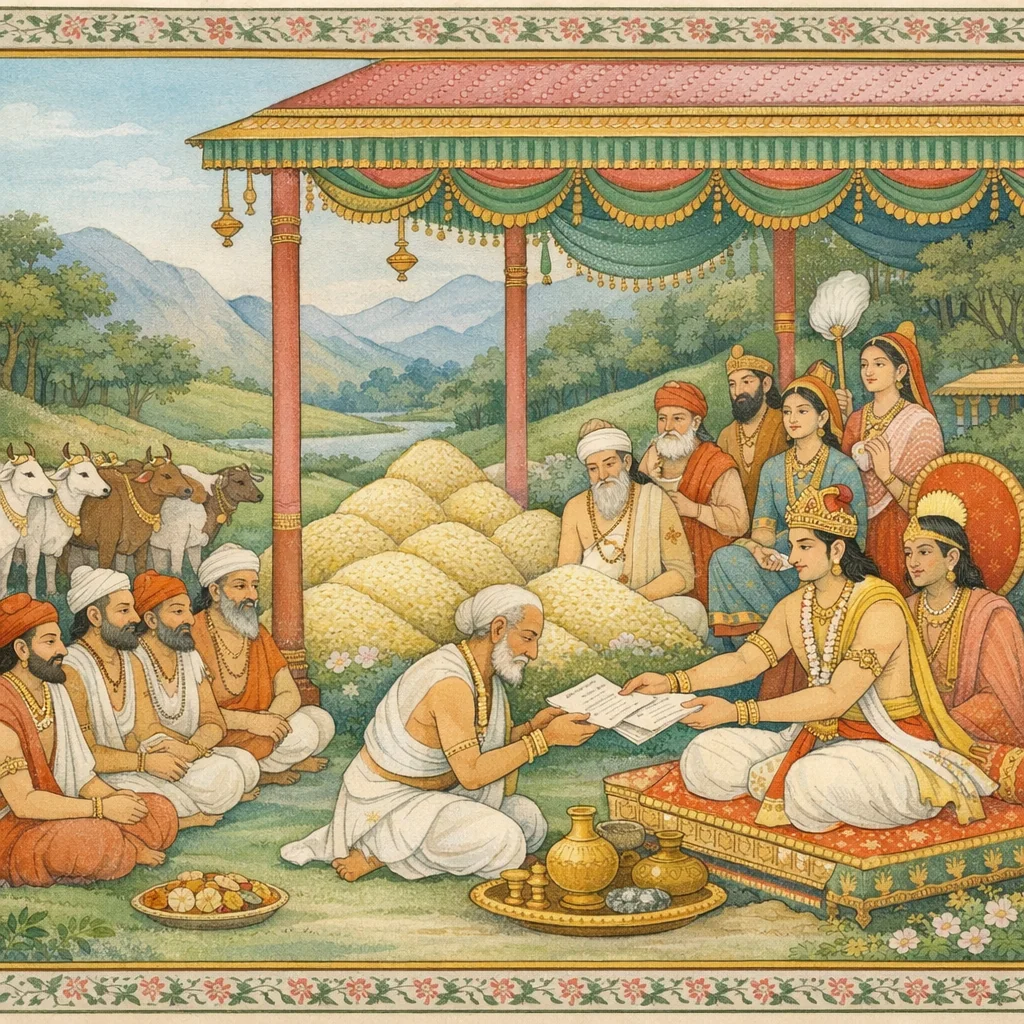
यज्ञे यज्ञे यथाकालं दक्षिणा: सो5त्यकालयत् | द्विपा दशसहस्राख्या: प्रमदा: काउचनप्रभा:,राजा पौरव प्रत्येक यज्ञमें यथासमय प्रचुर दक्षिणा बाँटते थे। उन्होंने स्वर्णकी-सी कान्तिवाले दस हजार मतवाले हाथी, ध्वजा और पताकाओंसहित सुवर्णमय बहुत-से रथ तथा एक लाख स्वर्णभूषित कन्याओंका दान किया था
Nārada said: “At each and every sacrifice, at the proper time, he distributed the prescribed dakṣiṇā in abundance. He gave away ten thousand elephants, and maidens radiant like gold—royal generosity that upholds the sacrificial order and the ethic of giving.”
Verse 6
सध्वजा: सपताकाश्च रथा हेममयास्तथा । यः: सहस्र॑ं सहस्नाणि कन्या हेमविभूषिता:,राजा पौरव प्रत्येक यज्ञमें यथासमय प्रचुर दक्षिणा बाँटते थे। उन्होंने स्वर्णकी-सी कान्तिवाले दस हजार मतवाले हाथी, ध्वजा और पताकाओंसहित सुवर्णमय बहुत-से रथ तथा एक लाख स्वर्णभूषित कन्याओंका दान किया था
Nārada said: “There were chariots of gold, furnished with standards and banners; and likewise thousands upon thousands of maidens adorned with golden ornaments. Thus the king, at each sacrifice and at the proper time, distributed abundant dakṣiṇā—bestowing splendid war-chariots and richly adorned attendants—so that his ritual generosity became a public sign of dharma, prosperity, and royal responsibility.”
Verse 7
धूर्युजाश्वगजारूढा: सगृहक्षेत्रगोशता: । शतं शतसहस्राणि स्वर्णमालिमहात्मनाम्
Nārada said: “There were men of high station, mounted on chariots, horses, and elephants, possessing households, fields, and hundreds of cattle—noble persons adorned with golden garlands—numbering in the hundreds and in the hundreds of thousands.”
Verse 8
हेमशृड्ग्यो रौप्यखुरा: सवत्सा: कांस्यदोहना:
Narada said: “(They were) cows with horns of gold and hooves of silver, each with her calf, and yielding milk into vessels of bronze.”
Verse 9
रत्नानां विविधानां च विविधांश्चान्नपर्वतान्
Nārada said: “(He offered) many kinds of precious gems, and also various mountains of food”—a vivid image of lavish giving that underscores the ethical ideal of generosity and hospitality, especially in honoring guests and the worthy.
Verse 10
तत्रास्य गाथा गायन्ति ये पुराणविदो जना:,उस यज्ञके सम्बन्धमें प्राचीन बातोंको जाननेवाले लोग इस प्रकार गाथा गाते हैं --
There, those people who are learned in the ancient lore (Purāṇas) sing a traditional verse about this sacrifice—recounting the old account connected with that rite.
Verse 11
अड्गस्य यजमानस्य स्वधर्माधिगता: शुभा: । गुणोत्तरास्तु क्रतवस्तस्यासन् सार्वकामिका:,“यजमान अंगनरेशके सभी यज्ञ स्वधर्मके अनुसार प्राप्त और शुभ थे। वे उत्तरोत्तर गुणवान् और सम्पूर्ण कामनाओंकी सिद्धि करनेवाले थे”
Nārada said: “For that sacrificer, the king of Aṅga, the sacrifices he performed were auspicious and duly obtained in accordance with his own rightful duty. Moreover, his rites became progressively more excellent in quality, and they were capable of fulfilling every legitimate desire.”
Verse 12
स चेन्ममार सृञ्जय चतुर्भद्रतरस्त्वया । पुत्रात् पुण्यतरस्तुभ्यं मा पुत्रमनुतप्यथा: । अयज्वानमदाक्षिण्यमश्रि श्वैत्येत्युदाहरत्,सूंजय! राजा पौरव धर्म, ज्ञान, वैराग्य और ऐश्वर्य--इन चारों बातोंमें तुमसे बढ़कर थे और तुम्हारे पुत्रसे भी अधिक पुण्यात्मा थे। श्वैत्य सृंजय! जब वे भी मर गये, तब तुम यज्ञ और दक्षिणासे रहित अपने पुत्रके लिये शोक न करो। नारदजीने राजा सूंजयसे यही बात कही
Nārada said: “O Sṛñjaya, if that king Śvaiti has died—he who was more blessed in four ways than you, and even more meritorious than your son—then do not grieve for your son. O Sūñjaya, let Śvaiti be cited as an example: though he too has passed away, you should not sink into sorrow for your son, who was without sacrifice and without gifts (dakṣiṇā).” Thus Nārada instructed King Sūñjaya, turning his mind from personal lamentation toward a broader moral perspective on merit, duty, and the inevitability of death.
Verse 57
इति श्रीमहा भारते द्रोणपर्वणि अभिमन्युवधपर्वणि षोडशराजकीये सप्तपञ्चाशत्तमोडध्याय:
Thus ends the fifty-seventh chapter in the Droṇa Parva of the Śrī Mahābhārata, within the section narrating the slaying of Abhimanyu, in the sub-episode concerning the sixteen kings.
Verse 73
गवां सहस्रानुचरान् दक्षिणामत्यकालयत् | वे कन्याएँ रथ, अश्व एवं हाथियोंपर आरूढ़ थीं। उनके साथ ही उन्होंने सौ-सौ घर, क्षेत्र और गौएँ प्रदान की थीं। राजाने सुवर्णमालामण्डित विशालकाय एक करोड़ गाय-बैलों और उनके सहस्रों अनुचरोंको दक्षिणारूपसे दान किया था
Nārada said: The king arranged an extraordinary dakṣiṇā, granting herds of cattle together with their thousands of attendants. The maidens were mounted on chariots, horses, and elephants; and with them he bestowed hundreds of households, fields, and cows. Thus, adorned with golden garlands, he donated an immense gift—said to amount to a crore of cows and bulls—together with their many attendants, exemplifying royal generosity and the dharmic duty of giving in a rite.
Verse 83
दासीदासखरोष्टराश्व प्रादादाजाविकं बहु । सोनेके सींग, चाँदीके खुर और कांसेके दुग्ध-पात्रवाली बहुत-सी बछड़ेसहित गौएँ तथा दास, दासी, गदहे, ऊँट एवं बकरी और भेड़ आदि भारी संख्यामें दान किये
Nārada said: He bestowed abundant gifts—male and female servants, donkeys, camels, and horses, along with many goats and sheep. He also donated numerous cows with calves, adorned with golden horns, silver hooves, and bronze vessels for milking. The passage emphasizes lavish, socially sustaining charity: wealth is redirected toward dependents, livestock, and the means of livelihood, presenting dāna as a dharmic act even amid the pressures of war and royal ambition.
Verse 96
तस्मिन् संवितते यज्ञे दक्षिणामत्यकालयत् । उस विशाल यज्ञमें नाना प्रकारके रत्नों तथा भाँति-भाँतिके अन्नोंके पर्वत-समान ढेर उन्होंने दक्षिणारूपमें दिये
Nārada said: When that sacrifice had been duly arranged and set in motion, he apportioned an extraordinary dakṣiṇā. In that vast rite, he bestowed as gifts immense heaps—like mountains—of many kinds of jewels and of varied grains, displaying the ethic of lavish generosity that upholds sacrificial order and social duty.
Frequently Asked Questions
Arjuna faces a dharma-sankat between vow-integrity (pratijñā) and realistic battlefield constraints: failure would violate his ethical self-conception, yet success appears blocked by large-scale protective strategy.
Grief-driven cognition is portrayed as functionally destructive; disciplined composure under kāla enables right action, and extraordinary solutions must be pursued through authorized, devoted, and instructed channels.
No explicit phalaśruti is stated; the chapter’s meta-function is to anchor later battlefield efficacy in a prior framework of sanctioned power, disciplined reception (mantra), and ethical intent rather than mere force.