Adhyaya 50
Droṇa-parva Adhyāya 50 — Arjuna’s foreboding and lament for Abhimanyu; Kṛṣṇa’s dharma-consolation
Upa-parva: Abhimanyu-vadha-śoka (Grief after the fall of Abhimanyu) — Episode within Droṇa Parva
Saṃjaya reports that as evening falls after intense combat, Arjuna (Kapidhvaja) returns from defeating the Saṃśaptakas. En route, Arjuna expresses somatic and psychological foreboding—fear, inauspicious bodily signs, and ominous portents—asking Kṛṣṇa to interpret them. Kṛṣṇa replies that Arjuna’s brother and allies will be safe, but that an inauspicious event is imminent. Arriving at the Pāṇḍava camp, Arjuna notes an absence of celebratory instruments, songs, and customary greetings; warriors avert their faces, indicating collective distress. He fails to see Abhimanyu and infers the operational context: Droṇa has formed the cakravyūha, and Abhimanyu alone is described as capable of breaching it, while the method of exit was not fully taught. Arjuna then laments in extended, highly descriptive recollection of Abhimanyu’s virtues, appearance, and conduct, and anticipates the grief of Subhadrā and Draupadī. Yuyutsu is noted rebuking the Kauravas’ celebratory cries. Arjuna’s grief intensifies into accusatory speech toward his own side for failing to protect Abhimanyu and into vows of retribution. Kṛṣṇa restrains him and articulates a normative doctrine: for steadfast warriors, death in battle is a prescribed path; Abhimanyu has reached the worlds of the meritorious, having faced battle and slain many. Kṛṣṇa urges Arjuna to cease destabilizing grief and to comfort his brothers and allied kings. The chapter closes with the Pāṇḍava king beginning to address the enraged, grieving Arjuna.
Chapter Arc: संजय धृतराष्ट्र से कहता है—तेरहवें दिन का युद्ध थम चुका है; दोनों पक्ष रणभूमि को देखते हुए थके, ग्लानिग्रस्त और विचेत होकर धीरे-धीरे शिविरों की ओर लौटते हैं। → संध्या उतरते ही रणक्षेत्र का भयावह रूप उभरता है—रथ, घोड़े, हाथी, कवच-आभूषण, अस्त्र-शस्त्र और कटे अंगों से धरती विकराल दिखती है; रक्तपायी पक्षी, श्वान, सियार, भेड़िये और राक्षसी-प्रेतगणों की कल्पना-सी उपस्थिति वातावरण को और अशिव बनाती है। → रणभूमि के बीचोंबीच लोगों की दृष्टि उस दृश्य पर टिकती है—इन्द्र के समान महाबली अभिमन्यु गिरा पड़ा है; उसके बहुमूल्य भूषण बिखरे हैं, देह रण में निस्तेज पड़ी है, जैसे यज्ञसभा में अग्नि का हव्य छिन गया हो। → रात्रि के साथ युद्धस्थल ‘यमराज्य-वर्धन’ जैसा प्रतीत होता है; जीवित बचे योद्धा उस नृत्य-से कटे धड़ों और शवों से भरे मैदान को देखकर चुपचाप हटते हैं, और शिविरों की ओर लौटकर अगले दिन के लिए मन में भारी बोझ लेकर जाते हैं। → अभिमन्यु-वध की यह छाया पाण्डवों के प्रतिशोध को कैसे भड़काएगी और अगले दिन युद्ध की दिशा किस ओर मुड़ेगी—यह अनकहा रह जाता है।
Shlokas
Verse 1
ऑपन--माज छा अकाल पजञ्चाशत्तमो<्ध्याय: तीसरे (तेरहवें) दिनके युद्धकी समाप्तिपर सेनाका शिविरको प्रस्थान एवं रणभूमिका वर्णन संजय उवाच वयं तु प्रवरं हत्वा तेषां तैः शरपीडिता: । निवेशायाभ्युपायाम: सायाह्वे रुधिरोक्षिता:,संजय कहते हैं--राजन्! हमलोग शत्रुओंके उस प्रमुख वीरका वध करके उनके बाणोंसे पीड़ित हो संध्याके समय शिविरमें विश्रामके लिये चले आये। उस समय हमलोगोंके शरीर रक्तसे भीग गये थे
Sañjaya said: O King, having slain that foremost warrior among the enemy, and ourselves tormented by their arrows, we withdrew at evening toward the camp to rest—our bodies drenched in blood. The verse marks the grim reciprocity of battle: even victory is bound to suffering and the moral weight of violence.
Verse 2
निरीक्षमाणास्तु वयं परे चायोधनं शनै: । अपयाता महाराज ग्लानिं प्राप्ता विचेतस:,महाराज! हम और शत्रुपक्षके लोग युद्धस्थलको देखते हुए धीरे-धीरे वहाँसे हट गये। पाण्डवदलके लोग अत्यन्त शोकग्रस्त हो अचेत हो रहे थे
Sañjaya said: “O King, as we and the opposing side kept looking upon the battlefield, we slowly withdrew from that place. The warriors were overcome by exhaustion and grief, their minds unsteady and confused.”
Verse 3
ततो निशाया दिवसस्य चाशिव: शिवारुतै: संधिरवर्तताद्भधुत: । कुशेशयापीडनिभे दिवाकरे विलम्बमाने<स्तमुपेत्य पर्वतम्,उस समय जब सूर्य अस्ताचलपर पहुँचकर ढल रहे थे, कमलनिर्मित मुकुटके समान जान पड़ते थे। दिन और रात्रिकी संधिरूप वह अद्भुत संध्या सियारिनोंके भयंकर शब्दोंसे अमंगलमयी प्रतीत हो रही थी
Sañjaya said: Then the wondrous junction of night and day set in, yet it felt inauspicious, made ominous by the howling cries of jackals. As the sun lingered and approached the mountain of setting, it seemed like a lotus-crown being pressed down—an eerie twilight falling upon the battlefield, hinting at the moral darkness that war unleashes.
Verse 4
वरासिशव्त्यूष्टिवरूथचर्मणां विभूषणानां च समाक्षिपन् प्रभा: । दिव॑ं च भूमिं च समानयत्निव प्रियां तनुं भानुरुपैति पावकम्,सूर्यदेव श्रेष्ठ तलवार, शक्ति, ऋष्टि, वरूथ, ढाल और आभूषणोंकी प्रभाको छीनते तथा आकाश और पृथ्वीको समान अवस्थामें लाते हुए-से अपने प्रिय शरीर--अग्निमें प्रवेश कर रहे थे
Sañjaya said: “As though drawing into himself the radiance of excellent swords, spears, lances, armor, shields, and ornaments, and as though making heaven and earth appear of one level, the Sun—beloved of all—seemed to enter into fire with his cherished body.”
Verse 5
महाभ्रकूटाचलश्ज्जञसंनिभै- गजैरनेकैरिव वज्रपातितै: । स वैजयन्त्यड्कुशवर्मयन्तृभि- न्पातितैर्नष्टगतिक्षिता क्षिति:,महान् मेघोंके समुदाय तथा पर्वतशिखरोंके समान विशालकाय बहुसंख्यक हाथी इस प्रकार पड़े थे, मानो वज्से मार गिराये गये हों। वैजयन्ती पताका, अंकुश, कवच और महावतोंसहित धराशायी किये गये उन गजराजोंकी लाशोंसे सारी धरती पट गयी थी, जिसके कारण वहाँ चलने-फिरनेका मार्ग बंद हो गया था
Sañjaya said: Many huge elephants lay strewn about, resembling lofty mountain-peaks and as if struck down by thunderbolts. With those elephant-kings felled—together with their vaijayantī standards, goads, armor, and drivers—the very earth was carpeted with their bodies, so that movement became impossible there. The scene underscores the crushing cost of war: power and pageantry collapse alike, and the battlefield turns into an obstruction to life itself.
Verse 6
हतेश्वरैश्वूर्णितपत्त्युपस्करै- हताश्वसूतैर्विपताककेतुभि: । महारथीैर्भू: शुशुभे विचूर्णिति: पुरैरिवामित्रहतैर्नराधिप,नरेश्वर! शत्रुओंके द्वारा तहस-नहस किये गये विशाल नगरोंके समान बड़े-बड़े रथ चूर- चूर होकर गिरे थे। उनके घोड़े और सारथि मार दिये गये थे तथा ध्वजा-पताकाएँ नष्ट कर दी गयी थीं। इसी प्रकार उनके सवार मरे पड़े थे, पैदल सैनिक तथा युद्धसम्बन्धी अन्य उपकरण चूर-चूर हो गये थे। इन सबके द्वारा उस रणभूमिकी अद्भुत शोभा हो रही थी
Sañjaya said: O king, O lord of men, the earth shone—though strewn with ruin—through the presence of great chariots smashed to pieces, their horses and charioteers slain, their banners and standards torn down, and their infantry and other implements of war crushed and scattered. The battlefield’s dreadful splendor resembled that of vast cities laid waste by enemy conquerors—an image that underscores the moral cost of victory when dharma is pursued through devastating violence.
Verse 7
रथाश्ववृन्दै: सह सादिभिष॑तै: प्रविद्धभाण्डा भरणै: पृथग्विधै: । निरस्तजिह्दादशनान्त्रलोचनै- र्धरा बभौ घोरविरूपदर्शना,रथों और अश्वोंके समूह सवारोंके साथ नष्ट हो गये थे। भिन्न-भिन्न प्रकारके भाण्ड और आभूषण छित्न-भिन्न होकर पड़े थे। मनुष्यों और पशुओंकी जिह्ठा, दाँत, आँत और आँखें बाहर निकल आयी थीं। इन सबसे वहाँकी भूमि अत्यन्त घोर और विकराल दिखायी देती थी
Sañjaya said: The ground appeared terrifying and grotesque to behold—strewn with shattered chariots and clusters of horses along with their riders, scattered equipment and various ornaments flung apart, and with tongues, teeth, entrails, and eyes of men and beasts cast out. Thus the battlefield itself became a grim testimony to the ruin that war brings.
Verse 8
प्रविद्धवर्माभरणाम्बरायुधा विपन्नहस्त्यश्वरथानुगा नरा: | महार्हशय्यास्तरणोचितास्तदा क्षितावनाथा इव शेरते हता:,योद्धाओंके कवच, आभूषण, वस्त्र और आयुध छिन्न-भिन्न हो गये। हाथी, घोड़े तथा रथोंका अनुसरण करनेवाले पैदल मनुष्य अपने प्राण खोकर पड़े थे। जो राजा और राजकुमार बहुमूल्य शय्याओं तथा बिछौनोंपर शयन करनेके योग्य थे, वे ही उस समय मारे जाकर अनाथकी भाँति पृथ्वीपर पड़े थे
Sañjaya said: Their armor, ornaments, garments, and weapons lay scattered and shattered. The foot-soldiers who had followed behind elephants, horses, and chariots had fallen lifeless. Those very kings and princes who were fit to recline upon costly beds and fine coverings now lay slain upon the bare earth—like the forsaken and unprotected.
Verse 9
अतीव हृष्टा: श्वशृूगालवायसा बका: सुपर्णाश्च वृकास्तरक्षव: । वयांस्यसृक्पान्यथ रक्षसां गणा: पिशाचसंघाश्व सुदारुणा रणे,कुत्ते, सियार, कौए, बगुले, गरुड़, भेड़िये, तेंदुए, रक्त पीनेवाले पक्षी, राक्षसरोंके समुदाय तथा अत्यन्त भयंकर पिशाचगण उस रणभूमिमें बहुत प्रसन्न हो रहे थे
Sañjaya said: On that battlefield, the scavengers and predators were exceedingly delighted—dogs, jackals, crows, herons, and great birds of prey; wolves and leopards; birds that drink blood; and also the bands of Rākṣasas and the dread companies of Piśācas. Their grim joy signals how war, when it turns into slaughter, becomes a feast for forces that thrive on death, standing as an ominous moral commentary on the devastation of the conflict.
Verse 10
त्वचो विनिर्भिद्य पिबन् वसामसृक् तथैव मज्जा: पिशितानि चाश्रुवन् । वपां विलुम्पन्ति हसन्ति गान्ति च प्रकर्षमाणा: कुणपान्यनेकश:,वे मृतकोंकी त्वचा विदीर्ण करके उनके वसा तथा रक्तको पी रहे थे, मज्जा और मांस खा रहे थे, चर्बियोंको काटकर चबा लेते थे तथा बहुत-से मृतकोंको इधर-उधर खींचते हुए वे हँसते और गीत गाते थे
Sañjaya said: Tearing open the skins of the dead, they drank the fat and blood; likewise they devoured marrow and flesh. They ripped away and chewed the caul-fat, and—dragging many corpses here and there—they laughed and even sang. The scene underscores the war’s collapse into adharma: when restraint and reverence for life are lost, violence turns into grotesque delight, revealing the moral ruin that follows unchecked rage.
Verse 11
शरीरसंघातवहा हा[सृग्जला रथोडुपा कुज्जरशैलसड्कटा । मनुष्यशीर्षोपलमांसकर्दमा प्रविद्धनानाविधशस्त्रमालिनी,उस समय श्रेष्ठ योद्धाओंने रणभूमिमें रक्तकी नदी बहा दी, जो वैतरणीके समान दुष्कर एवं भयंकर प्रतीत होती थी। उसमें जलकी जगह रक्तकी ही धारा बहती थी। ढेर-के-ढेर शरीर उसमें बह रहे थे। उसमें तैरते हुए रथ नावके समान जान पड़ते थे। हाथियोंके शरीर वहाँ पर्वतकी चट्टानोंके समान व्याप्त हो रहे थे। मनुष्योंकी खोपड़ियाँ प्रस्तरखण्डोंके समान और मांस कीचड़के समान जान पड़ते थे। वहाँ टूटे-फूटे पड़े हुए नाना प्रकारके शस्त्रसमूह मालाओंके समान प्रतीत होते थे। वह अत्यन्त भयंकर नदी रणक्षेत्रके मध्यभागमें बहती और मृतकों तथा जीवितोंको भी बहा ले जाती थी
Sanjaya said: At that time the foremost warriors caused a river of blood to flow across the battlefield—hard to cross and terrifying, like the Vaitaraṇī. In place of water it ran with streams of blood; heaps of bodies were borne along in its current. Chariots seemed like boats upon it, and the bodies of elephants lay like rocky hills. Human skulls looked like stones, flesh like mire, and shattered weapons of many kinds appeared like garlands strewn upon it. That dreadful river coursed through the middle of the field, sweeping away not only the dead but even the living—an image of war’s moral horror and the ruin that follows when violence overwhelms restraint.
Verse 12
भयावहा वैतरणीव दुस्तरा प्रवर्तिता योधवरैस्तदा नदी । उवाह मध्येन रणाजिरे भृशं भयावहा जीवमृतप्रवाहिनी,उस समय श्रेष्ठ योद्धाओंने रणभूमिमें रक्तकी नदी बहा दी, जो वैतरणीके समान दुष्कर एवं भयंकर प्रतीत होती थी। उसमें जलकी जगह रक्तकी ही धारा बहती थी। ढेर-के-ढेर शरीर उसमें बह रहे थे। उसमें तैरते हुए रथ नावके समान जान पड़ते थे। हाथियोंके शरीर वहाँ पर्वतकी चट्टानोंके समान व्याप्त हो रहे थे। मनुष्योंकी खोपड़ियाँ प्रस्तरखण्डोंके समान और मांस कीचड़के समान जान पड़ते थे। वहाँ टूटे-फूटे पड़े हुए नाना प्रकारके शस्त्रसमूह मालाओंके समान प्रतीत होते थे। वह अत्यन्त भयंकर नदी रणक्षेत्रके मध्यभागमें बहती और मृतकों तथा जीवितोंको भी बहा ले जाती थी
Sañjaya said: Then the foremost warriors set in motion a river on the battlefield—terrifying and hard to cross, like the Vaitaraṇī. It surged violently through the very middle of the combat-ground, a dreadful current that swept along both the living and the dead. The image frames the battle not as heroic sport but as a moral catastrophe: when martial prowess is severed from restraint, it becomes a force that carries away life indiscriminately.
Verse 13
पिबन्ति चाश्नन्ति च यत्र दुर्देशा: पिशाचसंघास्तु नदन्ति भैरवा: । सुनन्दिता: प्राणभृतां क्षयड्करा: समानभक्षा: श्वशृगालपक्षिण:,जिनकी ओर देखना भी कठिन था, ऐसे भयंकर पिशाचसमूह वहाँ खाते-पीते और गर्जना करते थे। समस्त प्राणियोंका विनाश करनेवाले वे पिशाच बहुत ही प्रसन्न थे। कुत्तों, सियारों और पक्षियोंको भी समानरूपसे भोजनसामग्री प्राप्त हुई थी
Sañjaya said: “In that dreadful quarter—hard even to look upon—terrifying hordes of piśācas were seen drinking and eating, roaring with fearsome cries. Delighting in the ruin of living beings, those agents of destruction exulted; and dogs, jackals, and birds too found the same fare, feeding alike amid the carnage.”
Verse 14
तथा तदायोधनमुमग्रदर्शनं निशामुखे पितृपतिराष्ट्रवर्धनम् । निरीक्षमाणा: शनकैर्जहुर्नरा: समुत्थिता नृत्तकबन्धसंकुलम्,प्रदोषकालमें यमराजके राज्यकी वृद्धि करनेवाली वह युद्धभूमि बड़ी भयंकर दिखायी देती थी। वहाँ सब ओर नाचते हुए कबन्ध (धड़) व्याप्त हो रहे थे। यह सब देखते हुए उभय पक्षके योद्धाओंने वहाँसे धीरे-धीरे चलकर उस युद्धस्थलको त्याग दिया
Sañjaya said: At dusk that battlefield appeared terrifying to behold, like a realm of Yama, Lord of the Fathers, where the dominion of Death swelled. Seeing it filled on every side with headless trunks that rose as if to dance, the warriors of both sides slowly withdrew and abandoned the field.
Verse 15
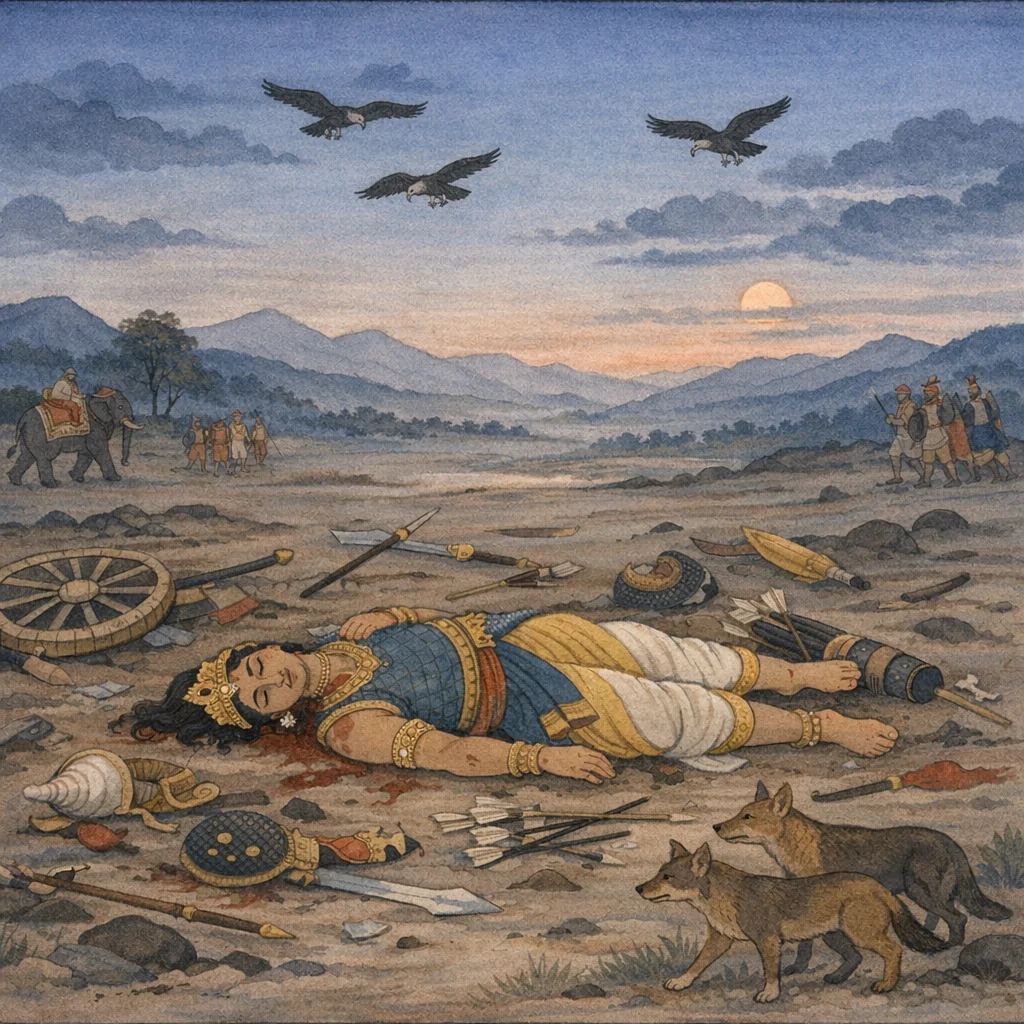
अपेतविध्वस्तमहार्ह भूषणं निपातितं शक्रसमं महाबलम् । रणे5भिमन्युं ददृुशुस्तदा जना व्यपोढहव्यं सदसीव पावकम्
Sañjaya said: Then the people beheld Abhimanyu fallen on the battlefield—his precious ornaments stripped away and scattered, that mighty warrior who had been like Indra in prowess. He lay there like a sacrificial fire in an assembly after the oblations have been removed: once radiant and revered, now left bereft.
Verse 50
उस समय लोगोंने देखा, इन्द्रके समान महाबली अभिमन्यु रणक्षेत्रमें गिरा दिया गया है। उसके बहुमूल्य आभूषण छिलन्न-भिन्न होकर शरीरसे दूर जा पड़े हैं और वह यज्ञवेदीपर हविष्यरहित अग्निके समान निस्तेज हो गया है ।। इति श्रीमहा भारते द्रोणपर्वणि अभिमन्युवधपर्वणि तृतीयदिवसावहारे समरभूमिवर्णने पञ्चाशत्तमो<5ध्याय:
Then the people beheld Abhimanyu—mighty as Indra—struck down upon the battlefield. His precious ornaments, shattered and torn, were flung away from his body, and he lay bereft of radiance, like a sacrificial fire on the altar when no oblation is offered.
Frequently Asked Questions
Arjuna confronts a dharma-sankat between personal grief and retaliatory impulse versus the leadership obligation to maintain composure, interpret events responsibly, and protect the remaining polity and allies.
Kṛṣṇa frames death-facing battle as a normative destination for non-retreating warriors and emphasizes role-duty: grief must be governed so that ethical agency and collective stability are preserved.
No explicit phalaśruti is stated; the meta-function is doctrinal—embedding a dharma rationale for battlefield mortality and modeling counsel as a stabilizing instrument within the epic’s wider ethics of action and consequence.