Adhyaya 83
Rājagṛhe Magadheśvarasya yuddhāhvānam — Arjunena saṃyamaḥ (The Rājagṛha Challenge and Arjuna’s Restraint)
Upa-parva: Aśvamedha-anuyātrā (Arjuna’s Escort of the Sacrificial Horse) — Magadha/Rājagṛha Encounter
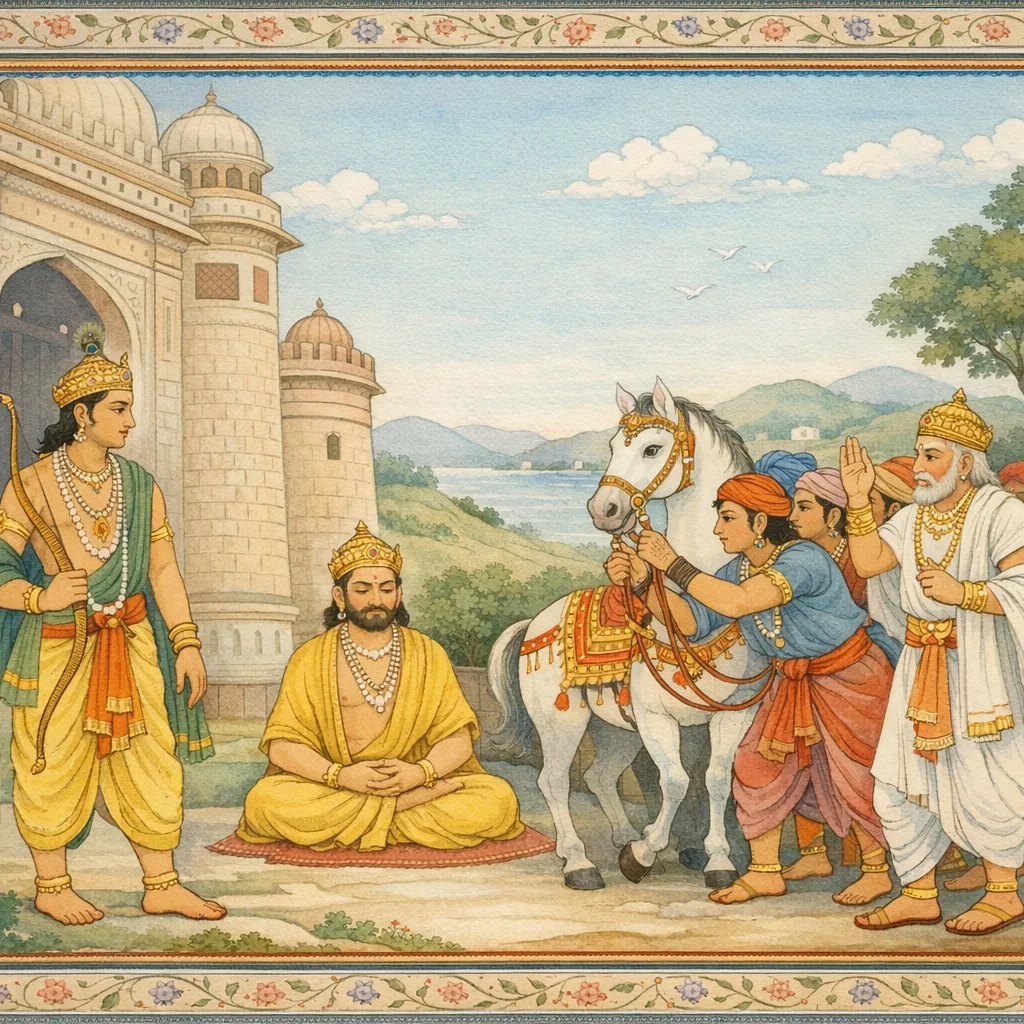
Vaiśaṃpāyana reports that the Aśvamedha horse, after roaming the ocean-bounded earth, turns back toward Nāgāhvaya (Hāstinapura). Arjuna follows and reaches Rājagṛha. A Magadha ruler of the Jarāsandha line challenges him in the kṣatriya mode and advances in chariot warfare. The challenger speaks with youthful bravado, threatening to seize the horse and demanding combat. Arjuna replies that obstructors must be checked, yet he bears no personal anger and invites the opponent to strike with full strength. The Magadha king releases torrents of arrows; Arjuna neutralizes them and responds with precise counterfire aimed at the chariot’s standards, equipment, and horses rather than the king’s body, demonstrating controlled violence. When the opponent persists, Arjuna decisively disables the chariot—killing the horses, beheading the charioteer, cutting the bow and emblems—forcing the king to rush with a mace, which Arjuna shatters with arrows. Seeing him disarmed and without vehicle, Arjuna refuses to strike further, consoles him, and states that Yudhiṣṭhira has instructed that kings are not to be slain. The Magadha ruler acknowledges the truth, honors Arjuna and the horse, and is invited to attend the Aśvamedha at the appointed time. The chapter closes by noting further coastal campaigns where Arjuna subdues various forces with the Gāṇḍīva.
Chapter Arc: युधिष्ठिर के अश्वमेध का यज्ञीय अश्व, दक्षिण-पश्चिम समुद्र-तटवर्ती देशों को लाँघता हुआ द्वारका, पंचनद और गान्धार की ओर बढ़ता है—जहाँ-जहाँ वह जाता है, वहीं राजधर्म की परीक्षा बन जाता है। → कामचारी, बलवान अश्व चेदियों की रमणीय राजधानी शुक्तिमती पहुँचता है; शिशुपाल-पुत्र शरभ पहले युद्ध का आह्वान करता है, फिर पूजन-सत्कार करता है। आगे-आगे अनेक जनपद—चित्रांगद जैसे शत्रुमर्दन नरेश, तथा द्रविड, आन्ध्र, रौद्र, माहिषक, कोल-गिरि-प्रदेश—अर्जुन के सामने खड़े होते हैं; हर विजय के साथ यज्ञ की प्रतिष्ठा बढ़ती है, पर प्रतिरोध की श्रृंखला भी लंबी होती जाती है। → द्वारका-परिसर में यदुवंशी वीरों के कुमार अश्व को बलपूर्वक पकड़कर युद्ध के लिए उद्यत हो उठते हैं; कुरुश्रेष्ठ अर्जुन (किरीटिन) और वसुदेव (मातुल) के साथ विधिवत् प्रीतिपूर्वक मिलन के बीच, अपने ही पक्ष के भीतर से उठी यह चुनौती सबसे तीखी बनकर सामने आती है। → सौराष्ट्र, गोकर्ण, प्रभास आदि प्रदेशों को मृदुल पराक्रम से वश में कराते हुए अश्व अंततः द्वारका में सुरक्षित पहुँचता है; उग्रसेन हस्तक्षेप कर यदुकुमारों की उग्रता को रोकते हैं और यज्ञ-धर्म की मर्यादा को स्थिर करते हैं। → अश्व के लौट आने से मार्ग की विजय तो पूर्ण होती है, पर यह संकेत रह जाता है कि यज्ञ की अंतिम प्रतिष्ठा के लिए अभी भी भीतर-बाहर की अहं-प्रतिस्पर्धा को शांत करना होगा।
Shlokas
Verse 1
अफ्--णक+ ग्रय्शीतितमो<ध्याय: दक्षिण और पश्चिम समुद्रके तटवर्ती देशोंमें होते हुए अश्वका द्वारका, पज्चनद एवं गान्धार देशमें प्रवेश वैशम्पायन उवाच मागधेनार्चितो राजन् पाण्डव: श्वेतवाहन: । दक्षिणां दिशमास्थाय चारयामास तं हयम्,वैशम्पायनजी कहते हैं--जनमेजय! मगधराजसे पूजित हो पाण्डुपुत्र श्वेतवाहन अर्जुनने दक्षिण दिशाका आश्रय ले उस घोड़ेको घुमाना आरम्भ किया
Vaiśampāyana said: O King Janamejaya, the Pāṇḍava Arjuna—he whose chariot is drawn by white horses—having been honored by the king of Magadha, set out toward the southern quarter and began to lead the sacrificial horse of the Aśvamedha on its roaming course.
Verse 2
ततः स पुनरावर्त्य हयः कामचरो बली । आससाद पुरी रम्यां चेदीनां शुक्तिसाह्वयाम्,वह इच्छानुसार विचरनेवाला अश्व पुनः: उधरसे लौटकर चेदियोंकी रमणीय राजधानीमें जो शुक्तिपुरी (या माहिष्मतीपुरी)-के नामसे विख्यात थी, आया
Then the powerful horse, roaming wherever it pleased, turned back again and arrived at the delightful city of the Cedis, renowned by the name Śukti.
Verse 3
शरभेणार्चितस्तत्र शिशुपालसुतेन सः । युद्धपूर्व तदा तेन पूजया च महाबल:,वहाँ शिशुपालके पुत्र शरभने पहले तो युद्ध किया और फिर स्वागत-सत्कारके द्वारा उस महाबली अश्वका पूजन किया
Vaiśampāyana said: There, Śarabha, the son of Śiśupāla, honored the mighty one. First he engaged him in battle, and afterward he offered him due reception and worship—showing that even amid conflict, respect and proper conduct were not abandoned.
Verse 4
ततोड<र्चितो ययौ राजंस्तदा स तुरगोत्तम: । काशीनगान् कोसलांश्व किरातानथ तड़णान्,राजन्! शरभसे पूजित हो वह उत्तम अश्व काशी, कोसल, किरात और तड़ण आदि जनपदोंमें गया
Vaiśampāyana said: Then, having been duly honored, that finest of horses set out, O King. It went on to the lands of Kāśī and Kośala, and then to the Kirātas and the Taṅgaṇas.
Verse 5
पूजां तत्र यथान्यायं प्रतिगृह्य धनंजय: । पुनरावृत्य कौन्तेयो दशार्णानगमत् तदा,उन सभी राज्योंमें यथोचित पूजा ग्रहण करके कुन्तीनन्दन अर्जुन पुनः लौटकर दशार्ण देशमें आये
Having duly accepted the honors and offerings there in accordance with proper custom, Dhanaṃjaya (Arjuna), the son of Kuntī, turned back and at that time proceeded to the land of Daśārṇa.
Verse 6
तत्र चित्राड़दी नाम बलवानरिमर्दन: । तेन युद्धम भूत् तस्य विजयस्यातिभैरवम्,वहाँ उस समय महाबली शत्रुमर्दन चित्रांगद नामक नरेश राज्य करते थे। उनके साथ अर्जुनका बड़ा भयंकर युद्ध हुआ
Vaiśampāyana said: There, a mighty king named Citrāṅgada, famed as a crusher of enemies, was ruling. With him Arjuna fought a battle of extreme terror and intensity—a grim contest whose outcome would decide victory.
Verse 7
त॑ चापि वशमानीय किरीटी पुरुषर्षभ: । निषादराज्ञो विषयमेकलव्यस्य जग्मिवान्,पुरुषप्रवर किरीटधारी अर्जुन दशार्णराज चित्रांगरको भी वशमें करके निषादराज एकलव्यके राज्यमें गये
Vaiśampāyana said: Having also brought him under control, Arjuna—crowned and foremost among men—proceeded to the territory of the Niṣāda king Ekalavya.
Verse 8
एकलव्यसुतसश्चैनं युद्धेन जगृहे तदा । तत्र चक्रे निषादै: स संग्रामं लोमहर्षणम्,वहाँ एकलव्यके पुत्रने युद्धके द्वारा उनका स्वागत किया। अर्जुनने निषादोंके साथ रोमांचकारी संग्राम किया
Vaiśaṃpāyana said: Then the son of Ekalavya confronted him in battle. There Arjuna fought a hair-raising, thrilling combat against the Niṣādas.
Verse 9
ततस्तमपि कौन्तेय: समरेष्वपराजित: । जिगाय युधि दुर्धर्षो यज्ञविघ्नार्थभागतम्,युद्धमें किसीसे परास्त न होनेवाले दुर्धर्ष वीर पार्थने यज्ञमें विघ्न डालनेके लिये आये हुए एकलव्य-कुमारको भी परास्त कर दिया
Vaiśampāyana said: Then the Kaunteya—unconquered in battles—overcame in combat that formidable warrior as well, who had come with the purpose of obstructing the Aśvamedha sacrifice.
Verse 10
स तं जित्वा महाराज नैषादिं पाकशासनि: । अर्चित: प्रययौ भूयो दक्षिणं सलिलार्णवम्,महाराज! एकलव्यके पुत्रको पराजित करके उसके द्वारा पूजित हुए इन्द्रकुमार अर्जुन फिर दक्षिण समुद्रके तटपर गये
Vaiśampāyana said: O King, having defeated the Niṣāda chief, Arjuna—the son of Indra, famed as the chastiser of the wicked—was honored by him. Thereafter Arjuna proceeded again toward the southern ocean.
Verse 11
तत्रापि द्रविडैरान्ध्रै रौद्रैमाहिषकैरपि । तथा कोल्लगिरेयैश्न युद्धमासीत् किरीटिन:,वहाँ भी द्रविड, आन्ध्र, रौद्र, माहिषक और कोलाचलके प्रान्तोंमें रहनेवाले वीरोंके साथ किरीटधारी अर्जुनका खूब युद्ध हुआ
There too, diadem-wearing Arjuna fought a fierce battle with the warriors of the Draviḍas and Āndhras, as well as with the Raudras, the Māhiṣakas, and those dwelling in the Kollagiri (Kollācala) region.
Verse 12
तांक्षापि विजयो जित्वा नातितीव्रेण कर्मणा । तुरज़्मवशेनाथ सुराष्ट्रानभितो ययौ
Vaiśampāyana said: Having also subdued them, Vijaya did so without resorting to excessively harsh measures. Then, compelled by the wandering course of the sacrificial horse, he proceeded around the region of Surāṣṭra.
Verse 13
ततो द्वारवतीं रम्यां वृष्णिवीराभिपालिताम्
Then they went to lovely Dvāravatī, a splendid city safeguarded and governed by the heroic Vṛṣṇi warriors.
Verse 14
तमुन्मथ्य हयश्रेष्ठ यादवानां कुमारका:
Having roused and driven on that excellent horse, the young princes of the Yādavas set it in motion.
Verse 15
ततः पुराद् विनिष्क्रम्य वृष्ण्यन्धकपतिस्तदा
Then, departing from the city, the lord of the Vṛṣṇis and Andhakas set out at that time.
Verse 16
सहितो वसुदेवेन मातुलेन किरीटिन: । तौ समेत्य कुरुश्रेष्ठ विधिवत् प्रीतिपूर्वकम्
Vaiśaṃpāyana said: Accompanied by his maternal uncle Vāsudeva, the diademed Arjuna approached the foremost of the Kurus. The two met in due form, with affection and goodwill—an encounter marked by proper etiquette and reconciliatory warmth after the strains of war.
Verse 17
परया भारतमश्रेष्ठ पूजया समवस्थितौ । ततस्ताभ्यामनुज्ञातो ययौ येन हयो गत:
Vaiśampāyana said: O best of the Bhāratas, the two of them stood engaged in the highest reverential worship. Then, having received their permission, he departed by the very route along which the sacrificial horse had gone.
Verse 18
।/ ९०७)... 2 5 हे हे, )0९ (हा ४ 90%) | हि 5) 9/ के ऐडल+- 4 7.0] ०४४ |] | पे ये प्री हक | कन्न 52६ १6 ,. 0१३ 0, >> #. ४ कैीडाी [१ ज २५9-*। सन्नी ततः स पश्चिम देशं समुद्रस्य तदा हयः । क्रमेण व्यचरत् स्फीतं तत: पठ्चनदं ययौ,वहाँसे पश्चिम समुद्रके तटवर्ती देशोंमें विचरता हुआ वह घोड़ा क्रमश: आगे बढ़ने लगा और समृद्धिशाली पञ्चनद प्रदेशमें जा पहुँचा
Vaiśampāyana said: Then the sacrificial horse, thus guided onward, ranged through the western lands along the seacoast. Moving step by step in due course, it wandered through prosperous regions and thereafter reached the rich country of Pañcanada—signaling the orderly, unhindered progress of the Aśvamedha and the king’s expanding, dharma-governed sovereignty.
Verse 19
तस्मादपि स कौरव्य गन्धारविषयं हय: । विचचार यथाकामं कौन्तेयानुगतस्तदा,कुरुनन्दन! वहाँसे भी वह घोड़ा गान्धारदेशमें जाकर इच्छानुसार विचरने लगा। कुन्तीनन्दन अर्जुन भी उसके पीछे-पीछे वहीं जा पहुँचे
Vaiśampāyana said: From there as well, O scion of the Kurus, the sacrificial horse went on into the land of Gandhāra and roamed wherever it pleased. At that time Arjuna, the son of Kuntī, followed close behind and reached that very region.
Verse 20
ततो गान्धारराजेन युद्धमासीत् किरीटिन: । घोरं शकुनिपुत्रेण पूर्ववैरानुसारिणा,फिर तो पूर्व वैरका अनुसरण करनेवाले गान्धारराज शकुनिपुत्रके साथ किरीटधारी अर्जुनका घोर युद्ध हुआ
Then a dreadful battle arose for the diadem-wearing Arjuna with the king of Gandhāra—Śakuni’s son—who was acting in accordance with his former enmity. The encounter is framed as a resurgence of old hostility, showing how unresolved hatred can reappear even after great wars and continue to drive violent choices.
Verse 82
इस प्रकार श्रीमह्याभारत आश्वमेधिकपववके अन्तर्गत अनुगीतापर्वमें मपधराजकी पराजयविषयक बयासीवाँ अध्याय पूरा हुआ
Thus ends the eighty-second chapter, concerning the defeat of the king of Madra, within the Anugītā section of the Aśvamedhika Parva of the sacred Mahābhārata. This closing colophon marks the completion of a narrative unit and signals the text’s orderly transmission, reminding the listener that events—victory and defeat alike—are framed within the larger moral and dharmic arc of the epic.
Verse 83
इति श्रीमहा भारते आश्वमेधिके पर्वणि अनुगीतापर्वणि अश्वानुसरणे त्रयशीतितमो<ध्याय:
Thus ends the eighty-third chapter, titled “The Pursuit of the Horse,” within the Anugītā section of the Āśvamedhika Parva of the sacred Mahābhārata.
Verse 126
गोकर्णमथ चासाद्य प्रभासमपि जग्मिवान् | उन सबको मृदुल पराक्रमसे ही जीतकर वे घोड़ेकी इच्छानुसार उसके पीछे चलनेमें विवश हुए सौराष्ट्र, गोकर्ण और प्रभासक्षेत्रोंमें गये
Vaiśampāyana said: Having reached Gokarṇa, he also proceeded to Prabhāsa. Those who opposed were subdued by gentle yet effective prowess, and, compelled to follow the horse according to its will—as required by the Aśvamedha rite—they went on through Saurāṣṭra, Gokarṇa, and the sacred field of Prabhāsa.
Verse 136
आससाद हय: श्रीमान् कुरुराजस्य यज्ञिय: । तत्पश्चात् कुरुराज युधिष्ठिरका वह यज्ञसम्बन्धी कान्तिमान् अश्व वृष्णिवीरोंद्वारा सुरक्षित द्वारकापुरीमें जा पहुँचा
Vaiśampāyana said: The splendid sacrificial horse belonging to the Kuru king reached its destined course. Thereafter, the radiant horse connected with King Yudhiṣṭhira’s Aśvamedha—carefully guarded by the heroes of the Vṛṣṇi clan—arrived at the city of Dvārakā.
Verse 143
प्रययुस्तांस्तदा राजन्नुग्रसेनो न्यवारयत् | राजन! वहाँ यदुवंशी वीरोंके बालकोंने उस उत्तम अश्वको बलपूर्वक पकड़कर युद्धके लिये उद्योग किया; परंतु महाराज उग्रसेनने उन्हें रोक दिया
Vaiśampāyana said: “O King, just then, as they were setting out, Ugrasena restrained them. For the young sons of the Yadu heroes had forcefully seized that excellent sacrificial horse and prepared themselves for battle; yet King Ugrasena checked their impulse, preventing a rash conflict.”
Frequently Asked Questions
The dilemma is how to uphold kṣatra-dharma when challenged while avoiding excess harm in a post-war ritual campaign: Arjuna must protect the horse and assert sovereignty, yet restrain lethal force against a royal opponent once dominance is established.
Power is ethically legitimate when governed by restraint: victory is not merely defeating an opponent but controlling one’s capacity to harm, distinguishing enforcement of order from personal anger, and converting conflict into reconciliation and participation in a shared dharmic framework.
No explicit phalaśruti is stated in these verses; the meta-commentary is implicit in Arjuna’s citation of Yudhiṣṭhira’s directive—positioning the episode as an instructive model of post-conflict rājadharma and disciplined kṣatra conduct.