Adhyaya 67
Janmaveśma-praveśa and Uttarā’s Śaraṇāgati (Entry into the Birth-Chamber and Uttarā’s Appeal)
Upa-parva: Garbha-rakṣaṇa (Protection of the Unborn Heir) Episode
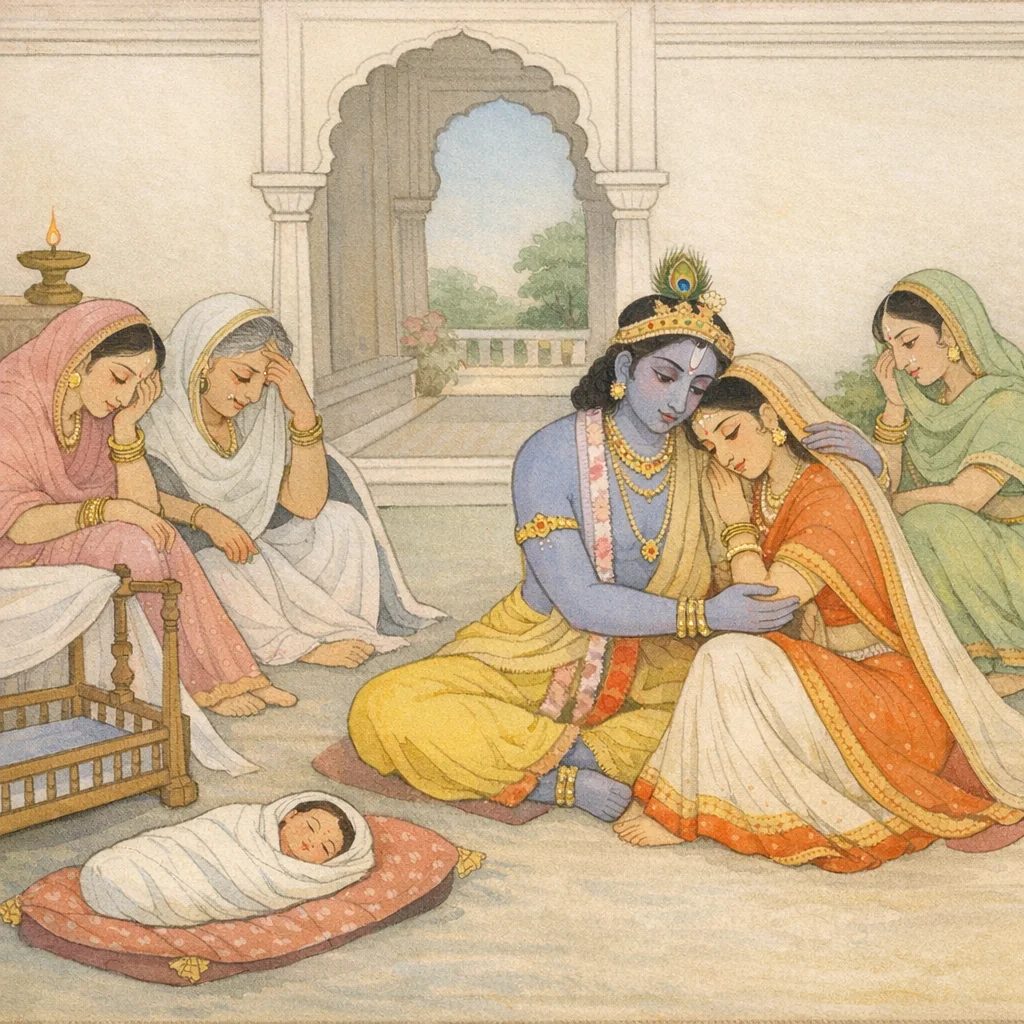
Vaiśaṃpāyana reports that Keśihā/Hṛṣīkeśa (Kṛṣṇa) responds affirmatively and, by his words, heartens the gathered people. He enters the janmaveśma associated with the listener’s father, described as properly honored and ritually arranged. The chamber is prepared with full water jars placed in all directions, substances such as ghee and mustard, and protective implements; clean weapons and fires are positioned around, and capable physicians and attendants are present. Seeing the orderly preparations, Kṛṣṇa expresses approval (“sādhu, sādhu”). Draupadī quickly goes to Vairāṭī (Uttarā) to announce Kṛṣṇa’s arrival. Uttarā, restraining tears, approaches in a composed manner yet inwardly distressed, and laments that her child—along with Abhimanyu’s line—has been struck down by Droṇa’s son’s weapon. She bows and petitions Kṛṣṇa to revive the unborn heir, reflecting on the futility of her hopes, the perceived cruelty of the act, and her fear of facing Arjuna after failing to come earlier despite a prior resolve.
Chapter Arc: कुरुवंश के क्षीण हो जाने पर अभिमन्यु का पुत्र जन्म लेता है—समाचार से पहले अपार हर्ष, पर शिशु में जीवन-चिह्न न देखकर वही हर्ष क्षण में शोक बनकर उमड़ पड़ता है। → कुन्ती के बैठ जाने के बाद सुभद्रा अपने भाई श्रीकृष्ण की ओर देखकर फूट-फूटकर रोती है और कहती है कि अभिमन्यु-जैसे वीर का पुत्र मरा हुआ पैदा होना इससे बड़ा दु:ख क्या हो सकता है; वह कृष्ण के सामर्थ्य को जानकर उनसे करुणा की याचना करती है। → सुभद्रा कृष्ण से आग्रह करती है—‘अभिमन्युज को संजीवित करो’; वह उन्हें धर्मात्मा, सत्यवान, सत्यविक्रम कहकर स्मरण कराती है कि सत्पुरुषों की वाणी को सत्य करने का सामर्थ्य उन्हीं में है, और बहिन/शरणागत/हतपुत्रा समझकर दया करने की प्रार्थना करती है। → अध्याय का केंद्र सुभद्रा की करुण पुकार और कृष्ण के प्रति पूर्ण शरणागति है—परिणाम (जीवनदान) का निर्णायक कर्म अगले प्रसंग/अध्याय की ओर संकेतित रहता है। → क्या श्रीकृष्ण अपने प्रभाव से मृतप्राय शिशु को जीवन देंगे और कुरुवंश की अंतिम आशा को बचाएंगे?
Shlokas
Verse 1
/ >> हज भी -्िसस > पहले तो पुत्र-जन्मके समाचारसे सबको अपार हर्ष हुआ; किंतु उनमें जीवनका कोई चिह्न न देखकर तत्काल शोकका समुद्र उमड़ पड़ा। सप्तषष्टितमो< ध्याय: परीक्षित्को जिलानेके लिये सुभद्राकी श्रीकृष्णसे प्रार्थना वैशम्पायन उवाच उत्थितायां पृथायां तु सुभद्रा भ्रातरं तदा । दृष्टवा चुक्रोश दुःखार्ता वचन चेदमब्रवीत्
Vaiśampāyana said: When Pṛthā (Kuntī) had risen, Subhadrā, seeing her brother at that moment, cried out in anguish and spoke these words. The scene frames a family’s grief and urgency, as the elders and kin turn toward Kṛṣṇa for refuge and right action amid the fear that the newborn heir shows no sign of life.
Verse 2
पुण्डरीकाक्ष पश्य त्वं पौत्रं पार्थस्य धीमतः । परिक्षीणेषु कुरुषु परिक्षीणं गतायुषम्,'भैया कमलनयन! तुम अपने सखा बुद्धिमान् पार्थके इस पौत्रकी दशा तो देखो। कौरवोंके नष्ट हो जानेपर इसका जन्म हुआ; परंतु यह भी गतायु होकर नष्ट हो गया
“O lotus-eyed one, look at this grandson of the wise Pārtha. When the Kurus had been exhausted and destroyed, he was born; and now he too lies exhausted, his allotted span cut short.”
Verse 3
वैशम्पायनजी कहते हैं-जनमेजय! कुन्तीदेवीके बैठ जानेपर सुभद्रा अपने भाई श्रीकृष्णणी ओर देखकर फूट-फ़ूटकर रोने लगी और दु:ःखसे आर्त होकर यों बोली --,इषीका द्रोणपुत्रेण भीमसेनार्थमुद्यता । सोत्तरायां निपतिता विजये मयि चैव ह 'टद्रोणपुत्र अश्वत्थामाने भीमसेनको मारनेके लिये जो सींकका बाण उठाया था, वह उत्तरापर, तुम्हारे सखा विजयपर और मुझपर गिरा है
Vaiśampāyana said: “O Janamejaya! When Queen Kuntī had taken her seat, Subhadrā, looking toward her brother Śrī Kṛṣṇa, burst into tears. Overwhelmed by grief, she spoke: ‘The reed-like missile that Droṇa’s son raised, intending it for Bhīmasena, has fallen upon Uttarā—upon Vijaya, your companion—and upon me as well.’”
Verse 4
सेयं विदीर्णे हृदये मयि तिष्ठति केशव । यन्न पश्यामि दुर्धर्ष सहपुत्र तु तं॑ प्रभो,“दुर्धष वीर केशव! प्रभो! वह सींक मेरे इस विदीर्ण हुए हृदयमें आज भी कसक रही है; क्योंकि इस समय मैं पुत्रसहित अभिमन्युको नहीं देख पाती हूँ
“O Keśava, O unconquerable Lord—this pain still abides within me, even as my heart lies torn. For I do not see him—Abhimanyu—together with his son.”
Verse 5
कि नु वक्ष्यति धर्मात्मा धर्मराजो युधिष्ठिर: । भीमसेनार्जुनौ चापि माद्रवत्या: सुतौ च तौ,“अभिमन्युका बेटा जन्म लेनेके साथ ही मर गया--इस बातको सुनकर धर्मात्मा राजा युधिष्ठिर क्या कहेंगे? भीमसेन, अर्जुन तथा माद्रीकुमार नकुल-सहदेव भी क्या सीचेंगे? श्रीकृष्ण! आज द्रोणपुत्रने पाण्डवोंका सर्वस्व लूट लिया
Vaiśampāyana said: “What indeed will the righteous king Yudhiṣṭhira—steadfast in dharma—say now? And what will Bhīmasena and Arjuna say, and those two sons of Mādrī as well?”
Verse 6
श्रुत्वाभिमन्योस्तनयं जातं च मृतमेव च । मुषिता इव वार्ष्णेय द्रोणपुत्रेण पाण्डवा:,“अभिमन्युका बेटा जन्म लेनेके साथ ही मर गया--इस बातको सुनकर धर्मात्मा राजा युधिष्ठिर क्या कहेंगे? भीमसेन, अर्जुन तथा माद्रीकुमार नकुल-सहदेव भी क्या सीचेंगे? श्रीकृष्ण! आज द्रोणपुत्रने पाण्डवोंका सर्वस्व लूट लिया
Vaiśampāyana said: “Hearing that Abhimanyu’s son was born and yet died at once, the Pāṇḍavas felt as though they had been robbed of everything—O Vārṣṇeya—by Droṇa’s son. The news strikes at the very hope of their lineage and future, turning victory into moral anguish and grief.”
Verse 7
अभिमन्यु: प्रिय: कृष्ण भ्रातृणां नात्र संशय: । ते श्र॒त्वा कि नु वक्ष्यन्ति द्रोणपुत्रास्त्रनिर्जिता:,“श्रीकृष्ण! अभिमन्यु पाँचों भाइयोंको अत्यन्त प्रिय था--इसमें संशय नहीं है। उसके पुत्रकी यह दशा सुनकर अभ्वृत्थामाके अस्त्रसे पराजित हुए पाण्डव कया कहेंगे?
Vaiśampāyana said: “O Kṛṣṇa, Abhimanyu was dearly loved by the brothers—of this there is no doubt. When they hear of the condition of his son, what indeed will the Pāṇḍavas—already overcome by the weapon of Droṇa’s son—be able to say?”
Verse 8
भवितात: परं दु:खं कि तदन्यज्जनार्दन । अभिमन्यो: सुतात् कृष्ण मृताज्जातादरिंदम,'शत्रुसूदन! जनार्दन! श्रीकृष्ण! अभिमन्यु-जैसे वीरका पुत्र मरा हुआ पैदा हो, इससे बढ़कर दुःखकी बात और क्या हो सकती है?
Vaiśampāyana said: “O Janārdana, what sorrow could be greater than this? O Kṛṣṇa, subduer of foes— that the son of Abhimanyu, a hero like him, should be born dead.”
Verse 9
साहं प्रसादये कृष्ण त्वामद्य शिरसा नता । पृथेयं द्रौपदी चैव ता: पश्य पुरुषोत्तम,“पुरुषोत्तम! श्रीकृष्ण! आज मैं तुम्हारे चरणोंपर मस्तक रखकर तुम्हें प्रसन्न करना चाहती हूँ। बूआ कुन्ती और बहिन द्रौपदी भी तुम्हारे पैरोंपर पड़ी हुई हैं। इन सबकी ओर देखो
Vaiśampāyana said: “O Kṛṣṇa, today I bow my head and seek to win your gracious favor. Kuntī, the daughter of Pṛthā, and Draupadī as well have fallen at your feet. O Puruṣottama, look upon them.”
Verse 10
यदा द्रोणसुतो गर्भान् पाण्डूनां हन्ति माधव । तदा किल त्वया द्रौणि: क्रुद्धेनोक्तोडरिमर्दन,'शत्रुमर्दन माधव! जब द्रोणपुत्र अश्वत्थामा पाण्डवोंके गर्भकी भी हत्या करनेका प्रयत्न कर रहा था, उस समय तुमने कुपित होकर उससे कहा था
Vaiśampāyana said: “O Mādhava, when Droṇa’s son (Aśvatthāmā) sought to destroy even the unborn heirs of the Pāṇḍavas, then—so it is remembered—you, in righteous anger, addressed that son of Droṇa, O crusher of foes.”
Verse 11
अकाम त्वां करिष्यामि ब्रह्मुबन्धो नराधम । अहं संजीवयिष्यामि किरीटितनयात्मजम्,“ब्रह्मबन्धो! नराधम! मैं तेरी इच्छा पूर्ण नहीं होने दूँगा। अर्जुनके पौत्रको अपने प्रभावसे जीवित कर दूँगा
Vaiśampāyana said: “O brahmabandhu, O lowest of men! I will not allow your desire to be fulfilled. By my own power I shall restore to life the child of the son of Kirīṭin (Arjuna).”
Verse 12
इत्येतद् वचन श्र॒ुत्वा जानानाहं बलं तव | प्रसादये त्वां दुर्धष जीवतामभिमन्युज:,'भैया! तुम दुर्धर्ष वीर हो। मैं तुम्हारी उस बातको सुनकर तुम्हारे बलको अच्छी तरह जानती हूँ। इसीलिये तुम्हें प्रसन्न करना चाहती हूँ। तुम्हारे कृपा-प्रसादसे अभिमन्युका यह पुत्र जीवित हो जाय
Vaiśaṃpāyana said: “Having heard these words, I now understand your strength. O unassailable hero, I therefore seek to win your favor—may Abhimanyu’s son remain alive through your gracious boon.”
Verse 13
यद्येतत् त्वं प्रतिश्रुत्य न करोषि वच: शुभम् | सकल वृष्णिशार्दूल मृतां मामवधारय,*वृष्णिवंशके सिंह! यदि तुम ऐसी प्रतिज्ञा करके अपने मंगलमय वचनका पूर्णतः पालन नहीं करोगे तो यह समझ लो, सुभद्रा जीवित नहीं रहेगी--मैं अपने प्राण दे दूँगी
Vaiśampāyana said: “If, after making this promise, you do not carry out your auspicious word, then know this for certain, O tiger among the Vṛṣṇis: I shall be as good as dead.”
Verse 14
अभिमन्यो: सुतो वीर न संजीवति यद्ययम् । जीवति त्वयि दुर्धर्ष कि करिष्याम्यहं त्वया,“दुर्धर्ष वीर! यदि तुम्हारे जीते-जी अभिमन्युके इस बालकको जीवनदान न मिला तो तुम मेरे किस काम आओगे
Vaiśampāyana said: “O hero, if this son of Abhimanyu does not come back to life, then even if you remain alive, O unassailable one, what use are you to me? If, while you still live, this child of Abhimanyu is not granted life, of what value will your prowess be to my purpose?”
Verse 15
संजीवयैन दुर्धर्ष मृतं त्वमभिमन्युजम् । सदृशाक्षसुतं वीर सस्य॑ वर्षन्निवाम्बुद:,“अजेय वीर! जैसे बादल पानी बरसाकर सूखी खेतीको भी हरी-भरी कर देता है, उसी प्रकार तुम अपने ही समान नेत्रवाले अभिमन्युके इस मरे हुए पुत्रको जीवित कर दो
Vaiśampāyana said: “O unconquerable hero, restore to life this dead son of Abhimanyu—one whose eyes resemble his father’s. Just as a rain-cloud, by pouring water, makes even a parched crop flourish again, so may you revive him.”
Verse 16
त्वं हि केशव धर्मात्मा सत्यवान् सत्यविक्रम: । सतां वाचमृतां कर्तुमहसि त्वमरिंदम,'शत्रुदमन केशव! तुम धर्मात्मा, सत्यवादी और सत्यपराक्रमी हो; अतः तुम्हें अपनी कही हुई बातको सत्य कर दिखाना चाहिये
Vaiśampāyana said: “You, O Keśava, are righteous at heart—truthful, and steadfast in the power of truth. Therefore, O subduer of foes, it is fitting that you make the word you have given come to pass, turning the promise of the good into accomplished reality.”
Verse 17
इच्छन्नपि हि लोकांस्त्रीन् जीवयेथा मृतानिमान् । किं पुनर्दयितं जात॑ स्वस्रीयस्यात्मजं मृतम्,“तुम चाहो तो मृत्युके मुखमें पड़े हुए तीनों लोकोंको जिला सकते हो, फिर अपने भानजेके इस प्यारे पुत्रको, जो मर चुका है, जीवित करना तुम्हारे लिये कौन बड़ी बात है
“If you but will it, you could restore to life the three worlds themselves, though they had fallen into the jaws of death. How much less, then, is it for you to revive this beloved son of your nephew, though he lies dead?”
Verse 18
प्रभावज्ञास्मि ते कृष्ण तस्मात् त्वां याचयाम्यहम् । कुरुष्व पाण्डुपुत्राणामिमं परमनुग्रहम्,“श्रीकृष्ण! मैं तुम्हारे प्रभावको जानती हूँ। इसीलिये तुमसे याचना करती हूँ। इस बालकको जीवनदान देकर तुम पाण्डवोंपर यह महान् अनुग्रह करो
Vaiśampāyana said: “O Kṛṣṇa, I know the measure of your divine power; therefore I earnestly implore you. Grant this supreme favor to the sons of Pāṇḍu—restore this child to life, and thereby bestow upon the Pāṇḍavas a great act of grace.”
Verse 19
स्वसेति वा महाबाहो हतपुत्रेति वा पुन: । प्रपन्ना मामियं चेति दयां कर्तुमिहाहसि,“महाबाहो! तुम यह समझकर कि यह मेरी बहिन है अथवा जिसका बेटा मारा गया है, वह दुखिया है अथवा शरणमें आयी हुई एक दयनीय अबला है, मुझपर दया करने योग्य हो”
“O mighty-armed one, whether you regard her as my sister, or again as a woman whose son has been slain, or as one who has come to me for refuge—seeing her thus, you ought to show compassion here.”
Verse 66
इस प्रकार श्रीमह्ााभारत आश्वमेधिकपर्वके अन्तर्गत अनुगीतापर्वमें परीक्षित॒के जन्मका वर्णनविषयक छाछठवाँ अध्याय पूरा हुआ
Thus ends the sixty-sixth chapter of the Anugītā section within the Aśvamedhika Parva of the revered Mahābhārata, dealing with the account of Parīkṣit’s birth. The narrator marks the completion of this unit, framing the episode as a significant continuation of dharma after the war—where lineage, responsibility, and the restoration of righteous order are reaffirmed through the arrival of the next heir.
Verse 67
इति श्रीमहाभारते आश्चवमेधिके पर्वणि अनुगीतापर्वणि सुभद्रावाक््ये सप्तषष्टितमो5ध्याय:
Thus ends the sixty-seventh chapter in the Anugītā section of the Aśvamedhika Parva of the Śrī Mahābhārata, in the episode concerning Subhadrā’s words—so declared Vaiśampāyana. (This is a colophon marking the close of the chapter rather than a narrative verse.)
Frequently Asked Questions
The crisis is the attempted destruction of an unborn heir through extraordinary force, raising questions about moral limits in conflict and the duty to protect vulnerable life to preserve social and dynastic order.
The chapter models crisis-response as both procedural and compassionate: ritual preparedness, skilled care (physicians/attendants), and a turn toward ethical appeal rather than retaliation.
No explicit phalaśruti appears in the provided passage; the meta-significance is implicit, positioning this episode as a hinge where post-war dharma is tested through the safeguarding of lineage and the remediation of harm.