Adhyaya 33
अध्याय ३३ — धृतराष्ट्रस्य कुशलप्रश्नाः तथा विदुरस्य योगसमाधिः (Chapter 33: Dhṛtarāṣṭra’s Welfare-Inquiries and Vidura’s Yogic Absorption)
Upa-parva: Vidura–Yudhiṣṭhira Saṃvāda and Vidura’s Yogic Dissolution (Vidura-episode within Āśramavāsika Parva)
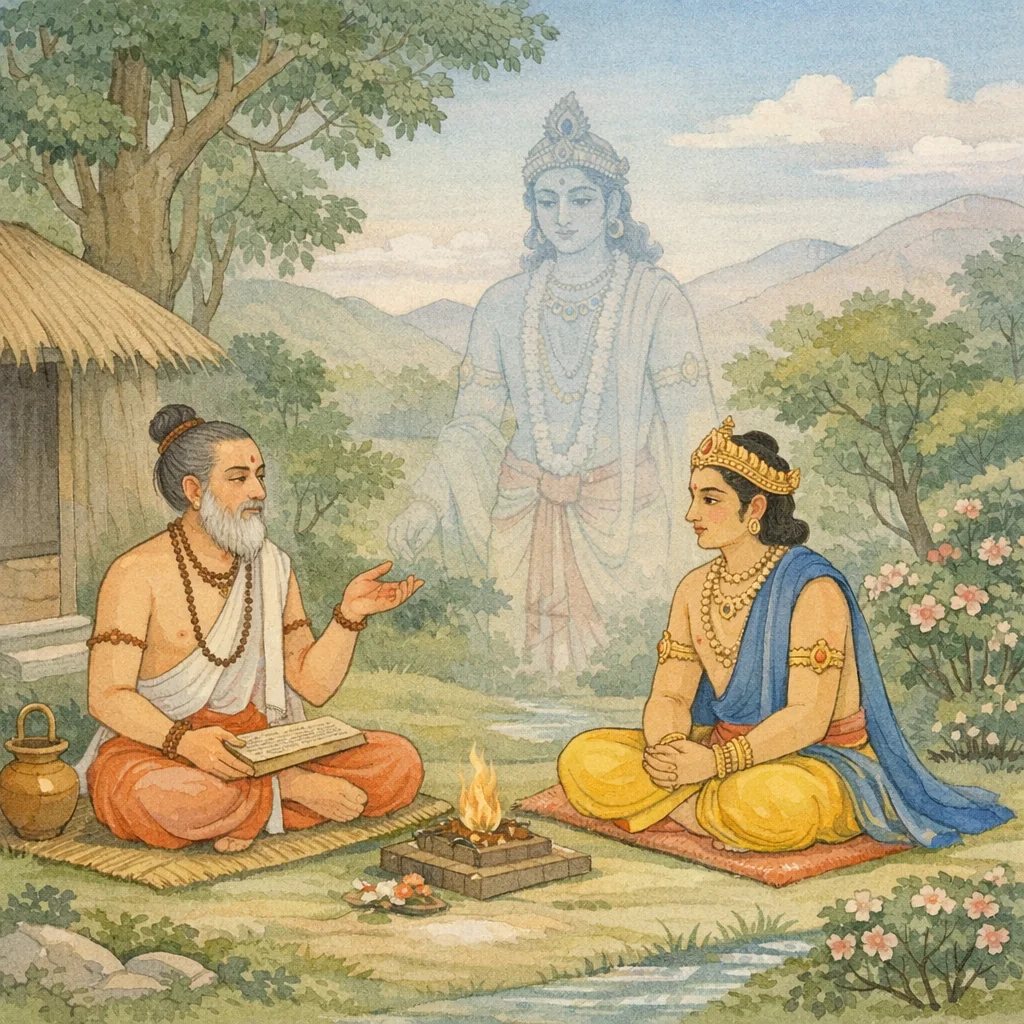
Dhṛtarāṣṭra addresses Yudhiṣṭhira with a structured series of ‘kaccit’ inquiries that function as a governance audit: the king’s personal well-being; the health of dependents, ministers, servants, and teachers; adherence to ancient royal conduct; uninterrupted revenue and replenished treasury; proportionate dealings with enemies, neutrals, and allies; proper patronage of Brahmins; and the satisfaction of citizens, staff, and kin. He further asks about sacrificial observances, ancestral and divine rites, and hospitality, extending the welfare lens to social orders (vipra, kṣatriya, vaiśya, śūdra) and to vulnerable groups—women, children, and the elderly—along with respect shown to in-laws within the household. Vaiśaṃpāyana notes Yudhiṣṭhira’s apt reply, after which Yudhiṣṭhira questions Dhṛtarāṣṭra regarding the austerities of the elders and the whereabouts of Vidura and Saṃjaya. Dhṛtarāṣṭra reports Vidura’s severe asceticism. Vidura is then seen in the forest in an emaciated, unadorned, dust-covered state; Yudhiṣṭhira follows and identifies him. In a secluded spot, Vidura fixes his gaze and, through yogic power, is described as merging bodily and vital faculties into Yudhiṣṭhira, leaving his own body inert against a tree. When Yudhiṣṭhira considers funerary rites, a disembodied injunction prohibits cremation, asserting this is the eternal rule for one who has attained yati-dharma and is therefore not an object of grief. Yudhiṣṭhira returns and reports the event; the group reacts with astonishment. Dhṛtarāṣṭra offers forest fare (water, roots, fruits) as hospitality, and the party spends the night at the tree-roots subsisting on simple ascetic provisions.
Chapter Arc: जनमेजय की जिज्ञासा उठती है—जो पुरुष देह त्याग चुके, वे उसी पूर्व-शरीर और रूप में फिर कैसे दिखाई दे सकते हैं? पुनरागमन का यह रहस्य उसे चकित करता है। → वैशम्पायन, व्यास-शिष्य और वक्ताओं में श्रेष्ठ, प्रश्न को कर्म-सिद्धान्त की कठोर भूमि पर रख देते हैं: कर्म का ‘अविप्रणाश’ है; कर्मजन्य शरीर और आकृतियाँ नियम से फलित होती हैं। फिर भी श्रोता के मन में संशय बना रहता है—यदि आत्मा असंग है, तो रूप-प्रत्यावर्तन कैसे? → वैशम्पायन निर्णायक रूप से बताते हैं कि जीव जिस-जिस शरीर से कर्म करता है, उसी-उसी शरीर-रूप का फल उसे अवश्य उपासित/भोगित करना पड़ता है; भूत-इन्द्रिय आदि अनेक तत्त्व शरीर में एकत्व पाकर भी पृथक्-भाव जानने वालों के लिए भिन्न-भिन्न प्रतीत होते हैं—यही ‘रूप-दर्शन’ की संगति है। → अश्वमेध के श्रुति-संदर्भ और प्राण-देह के लोकान्तर-गमन की चर्चा से यह स्पष्ट किया जाता है कि देह-रूप का प्राकट्य/अप्राकट्य नियमबद्ध है; मुक्त पुरुष अव्यक्त से प्रकट होकर पुनः अव्यक्त में लीन हो सकता है—अतः ‘दर्शन’ असंभव नहीं, वह कर्म-नियम और तत्त्व-व्यवस्था के भीतर घटित होता है। → पुत्रदर्शन-प्रसंग की पृष्ठभूमि में यह सिद्धान्त-स्थापन आगे आने वाले प्रत्यक्ष ‘दर्शन’ की ओर संकेत करता है, जहाँ सिद्धान्त अनुभव का रूप लेगा।
Shlokas
Verse 1
है ० बक। ] अति: चतुस्त्रिंशो 5 ध्याय: मरे हुए पुरुषोंका अपने पूर्व शरीरसे ही यहाँ पुन: दर्शन देना सम्भव है, जनमेजयकी इस शंकाका वैशम्पायनद्धारा समाधान सौतिर्वाच एतच्छुत्वा नृपो विद्वान् हृष्टो>भूज्जनमेजय: । पितामहानां सर्वेषां गमनागमनं तदा,सौति कहते हैं--अपने समस्त पितामहोंके इस प्रकार परलोकसे आने और जानेका वृत्तान्त सुनकर विद्वान् राजा जनमेजय बड़े प्रसन्न हुए
Sauti said: Hearing this account, the wise king Janamejaya became greatly delighted—on learning how all his forefathers, at that time, came and went (between the other world and this one). The passage underscores reverent attention to ancestral continuity and the king’s satisfaction at having his doubt about posthumous manifestation resolved.
Verse 2
अब्रवीच्च मुदा युक्त: पुनरागमन प्रति । कथं नु त्यक्तदेहानां पुनस्तद्रूपदर्शनम्,प्रसन्न होकर वे पुनरागमनके विषयमें संदेह करते हुए बोले--“भला, जिन्होंने अपने शरीरका परित्याग कर दिया है, उन पुरुषोंका उसी रूपमें दर्शन कैसे हो सकता है?
Vaiśampāyana said: With a mind brightened by joy, yet still doubtful about the matter of returning, he spoke: “How can those who have cast off their bodies be seen again in that very same form?”
Verse 3
इत्युक्त: स द्विजश्रेष्ठो व्यासशिष्य: प्रतापवान् | प्रोवाच वदतां श्रेष्ठस्तं नृूपं जनमेजयम्,उनके ऐसा कहनेपर वक्ताओंमें श्रेष्ठ प्रतापी व्यासशिष्य विप्रवर वैशम्पायनने उन राजा जनमेजयसे कहा
Thus addressed, the foremost of Brahmins—Vaiśampāyana, the illustrious disciple of Vyāsa and best among speakers—began to speak to King Janamejaya.
Verse 4
वैशम्पायन उवाच अविप्रणाश: सर्वेषां कर्मणामिति निश्चय: । कर्मजानि शरीराणि तथैवाकृतयो नृप,वैशम्पायनजी बोले--नरेश्वर! यह सिद्धान्त है कि समस्त कर्मोका फल भोग किये बिना उनका नाश नहीं होता। जीवात्माको जो शरीर और नाना प्रकारकी आकृतियाँ प्राप्त होती हैं, वे सब कर्मजनित ही हैं
Vaiśampāyana said: “This is the settled truth: none of one’s deeds perish without yielding their results. The bodies a being obtains—and likewise the many forms and conditions it assumes, O king—are all born of karma.”
Verse 5
महाभूतानि नित्यानि भूताधिपतिसंश्रयात् । तेषां च नित्यसंवासो न विनाशो वियुज्यताम्,भूतनाथ भगवान्के आश्रयसे पाँचों महाभूत हमारे शरीरोंकी अपेक्षा नित्य हैं। उन नित्य महाभूतोंका अनित्य शरीरोंके साथ संसार-दशामें नित्य संयोग है। अनित्य शरीरोंका नाश होनेपर इन नित्य महाभूतोंका उनसे वियोगमात्र होता है, विनाश नहीं
Vaiśaṃpāyana said: “The great elements are eternal, for they rest upon the Lord of beings. Their association is constant; when separation occurs, it is only a parting, not destruction.”
Verse 6
अनायासकृतं कर्म सत्य: श्रेष्ठ फलागम: । आत्मा चैशि: समायुक्त: सुखदुःखमुपाश्षुते,कर्तृत्व-अभिमानके बिना अनायास किये जानेवाले कर्मका जो फल प्राप्त होता है, वह सत्य और श्रेष्ठ है अर्थात् मुक्तिदायक है। कर्तृत्व-अभिमान और परिश्रमपूर्वक किये हुए कर्मोसे बँधा हुआ जीवात्मा सुख-दुःखका उपभोग करता है
Vaiśampāyana said: “Action performed without strain and without the ego of doership yields a true and superior result—one that leads toward liberation. But the embodied self, bound up with the sense of ‘I am the doer’ and driven by effortful, self-assertive action, comes to experience the alternating fruits of pleasure and pain.”
Verse 7
अविनाश्यस्तथायुक्तः क्षेत्रज्ञ इति निश्चय: । भूतानामात्मको भावो यथासौ न वियुज्यते,क्षेत्रज् इस प्रकार कर्मोंसे संयुक्त होकर भी वास्तवमें अविनाशी ही है, यह निश्चित है। किंतु भूतोंके साथ तादात्म्यभाव स्वीकार कर लेनेके कारण वह ज्ञानके बिना उनसे अलग नहीं हो पाता
Vaiśampāyana said: “It is firmly concluded that the knower of the field (the conscious Self), though seemingly bound up with conditions, is in truth imperishable. Yet, because it accepts an identity with embodied beings, it does not become separated from them without true knowledge.”
Verse 8
यावन्न क्षीयते कर्म तावत् तस्य स्वरूपता । क्षीणकर्मा नरो लोके रूपान्यत्वं नियच्छति,जबतक शरीरके प्रारब्ध-कर्मोंका क्षय नहीं होता तबतक उस जीवकी उस शरीरसे एकरूपता रहती है। जब कर्मोंका क्षय हो जाता है, तब वह दूसरे स्वरूपको प्राप्त हो जाता है
Vaiśampāyana said: So long as a being’s karma has not been exhausted, it remains identified with that very embodied form. But when the store of karma is spent, a person in this world passes on to another state and form—showing that embodiment persists only as long as the force of past action sustains it.
Verse 9
नानाभावास्तथैकत्वं शरीर प्राप्प संहता: । भवन्ति ते तथा नित्या: पृथग्भावं विजानताम्,भूत-इन्द्रिय आदि नाना प्रकारके पदार्थ शरीरको पाकर एकत्वको प्राप्त हो गये हैं। जो देह आदिको आत्मासे पृथक् जानते हैं, उन योगियोंके लिये वे सारे पदार्थ नित्य आत्मस्वरूप हो जाते हैं
Vaiśampāyana said: “Diverse principles—such as the elements and the senses—having come together upon attaining a body, appear as a single whole. Yet for those yogins who discern the separateness (of the Self) from the body and its constituents, these factors are understood in their true status: distinct from the Self and not to be mistaken for the eternal reality.”
Verse 10
अश्वमेधे श्रुतिश्वेयमश्व॒संज्ञपनं प्रति । लोकान्तरगता नित्यं प्राणा नित्यं शरीरिणाम्,अश्वमेध यज्ञमें जब अश्वका वध किया जाता है, उस समय जो 'सूर्य ते चक्षु: वात॑ प्राण:” (तुम्हारे नेत्र सूर्यकोी और प्राण वायुको प्राप्त हों) इत्यादि मन्त्र पढ़े जाते हैं, उनसे यह सूचित होता है कि देहधारियोंके प्राण--इन्द्रियाँ निश्चितरूपसे सर्वदा लोकान्तरमें स्थित होती हैं। (अतः परलोकमें गये हुए जीवोंका वैसे ही रूपसे इस लोकमें पुनः प्रकट हो जाना असम्भव नहीं है)
Vaiśampāyana said: “In the Aśvamedha there is this Vedic teaching connected with the consecration and killing of the horse: the vital forces of embodied beings are ever established in another world. The mantras recited at that moment—such as ‘May your eye go to the Sun; may your breath go to the Wind’—indicate that the senses and life-breath do not simply perish with the body but abide in their proper cosmic destinations. Therefore, it is not impossible for those who have gone to the other world to appear again here in a corresponding form.”
Verse 11
अहं हितं वदाम्येतत् प्रियं चेत् तव पार्थिव । देवयाना हि पन्थान: श्रुतास्ते यज्ञसंस्तरे,पृथ्वीनाथ! तुम्हें प्रिय लगे तो मैं तुम्हारे हितकी बात बताता हूँ। यज्ञ आरम्भ करते समय तुमने देवयान-मार्गोकी बात सुनी होगी। वे ही तुम्हारे योग्य हैं
Vaiśampāyana said: “If it pleases you, O king, I shall speak what is truly for your welfare. The paths known as the ‘Devayāna’ have indeed been heard by you at the time of the sacrificial rite; those very paths are fitting for you.”
Verse 12
आह्तो यत्र यज्ञस्ते तत्र देवा हितास्तव । यदा समन्विता देवा: पशूनां गमनेश्वचरा:,जब तुमने यज्ञका अनुष्ठान आरम्भ किया, तभीसे देवतालोग तुम्हारे हितैषी सुहृद् हो गये। जब इस प्रकार देवता मित्रभावसे युक्त होते हैं, तब वे जीवोंको लोकान्तरकी प्राप्ति करानेमें समर्थ होनेके कारण उनपर अनुग्रह करके उन्हें अभीष्ट लोकोंकी प्राप्ति करा देते हैं
Vaiśampāyana said: Wherever your sacrifice was duly undertaken, there the gods became well-disposed and friendly toward you. And when the gods are thus united in a spirit of friendship, they are able—by showing favor—to guide living beings on their onward journey and grant them attainment of the desired worlds.
Verse 13
गतिमन्तकश्न तेनेष्टवा नानन््ये नित्या भवत्न्युत | नित्येडस्मिन् पञ्चके वर्गे नित्ये चात्मनि पूरुष:,इसलिये नित्य जीव यज्ञोंद्वारा देववाओंकी आराधना करके लोकान्तरमें जानेकी शक्ति पाते हैं। जो यज्ञ नहीं करते, वे वैसे नहीं हो पाते। यह पाञज्चभौतिक वर्ग नित्य है और आत्मा भी नित्य है। ऐसी दशामें जो मनुष्य उस आत्माका अनेक प्रकारके देहोंसे सम्बन्ध तथा उनके जन्म और नाशसे आत्माका भी जन्म और नाश समझता है, उसकी बुद्धि व्यर्थ है। इसी प्रकार किसीसे किसीका वियोग हो जानेपर जो अत्यन्त शोक करता है, वह भी मेरे मतमें बालक ही है
Vaiśampāyana said: By performing sacrifice, beings gain the power to pass on to other worlds; those who do not sacrifice do not attain such a course. This fivefold aggregate of elements is enduring in its continuity, and the Self within the person is also enduring. Therefore, one who imagines that the Self is born and perishes because it is associated with many kinds of bodies—whose births and destructions are seen—has a futile understanding. Likewise, one who grieves excessively when separation occurs is, in my view, still childish.
Verse 14
अस्य नानासमायोगं य: पश्यति वृथामति: । वियोगे शोचते>त्यर्थ स बाल इति मे मति:,इसलिये नित्य जीव यज्ञोंद्वारा देववाओंकी आराधना करके लोकान्तरमें जानेकी शक्ति पाते हैं। जो यज्ञ नहीं करते, वे वैसे नहीं हो पाते। यह पाञज्चभौतिक वर्ग नित्य है और आत्मा भी नित्य है। ऐसी दशामें जो मनुष्य उस आत्माका अनेक प्रकारके देहोंसे सम्बन्ध तथा उनके जन्म और नाशसे आत्माका भी जन्म और नाश समझता है, उसकी बुद्धि व्यर्थ है। इसी प्रकार किसीसे किसीका वियोग हो जानेपर जो अत्यन्त शोक करता है, वह भी मेरे मतमें बालक ही है
Vaiśampāyana said: “He whose understanding is futile imagines that the Self truly enters into many kinds of unions with bodies. Likewise, one who grieves excessively when separation occurs is, in my view, only a child.”
Verse 15
वियोगे दोषदर्शी य: संयोगं स विसर्जयेत् । असड़े सड़मो नास्ति दुःखं भूवि वियोगजम्,जो वियोगमें दोष देखता है, वह संयोगका त्याग कर दे; क्योंकि असंग आत्मामें संगम या संयोग नहीं है। जो उसमें संयोगका आरोप करता है, उसीको इस भूतलपर वियोगका दुःख सहना पड़ता है
Vaiśampāyana said: “One who, in separation, keeps seeing faults should abandon attachment to union itself. For in true non-attachment there is no ‘bond’ or ‘union’ at all. It is only the person who superimposes the idea of union upon the unattached Self that must endure, on this earth, the sorrow born of separation.”
Verse 16
परापरज्ञस्त्वपरो नाभिमानादुदीरित: । अपरक्ञ: परां बुद्धि ज्ञात्वा मोहाद् विमुच्यते,दूसरा जो अपने-परायेके ज्ञानमें ही उलझा रहता है, वह अभिमानसे ऊपर नहीं उठ पाता। जो किसीके लिये पराया नहीं है, उस परमात्माको जाननेवाला पुरुष उत्तम बुद्धिको पाकर मोहसे मुक्त हो जाता है
Vaiśaṃpāyana said: One who remains entangled in the notions of “mine” and “other” cannot rise beyond pride. But the person who knows the Supreme—who is ‘other’ to none—attains the highest understanding and is released from delusion.
Verse 17
अदर्शनादापतित: पुनश्चादर्शनं गत: । नाहं तं वेशझि नासौ मां न च मे5स्ति विरागता,वह मुक्त पुरुष अव्यक्तसे ही प्रकट हुआ था और पुनः अव्यक्तमें ही लीन हो गया। न मैं उसे जानता हूँ न वह मुझेः। (फिर तुम भी वैसे ही बन्धनमुक्त क्यों न हो गये? ऐसा प्रश्न होनेपर कहते हैं।) मुझमें वैराग्य नहीं है (पर वैराग्य ही मोक्षका मुख्य साधन है।)
Vaiśampāyana said: “From invisibility he appeared, and again he passed back into invisibility. I do not truly know him, nor does he know me; and in me there is no dispassion.” (Thus, when asked why he too did not become freed from bondage like that liberated being, he replies that the principal means—vairāgya, inner detachment—is not present in him.)
Verse 18
येन येन शरीरेण करोत्ययमनीभश्वर: । तेन तेन शरीरेण तदवश्यमुपाश्चुते । मानसं मनसा<5प्रोति शरीरं च शरीरवान्,यह पराधीन जीव जिस-जिस शरीरसे कर्म करता है, उस-उस शरीरसे उसका फल अवश्य भोगता है। मानस कर्मका फल मनसे और शारीरिक कर्मका फल शरीर धारण करके भोगता है
Vaiśampāyana said: Whatever deed this dependent, unfree soul performs through whatever body, through that very body it inevitably experiences the result. The fruit of a mental act is met within the mind, and the fruit of a bodily act is met by taking on a body and enduring it there.
Verse 34
इति श्रीमहाभारते आश्रमवासिके पर्वणि पुत्रदर्शनपर्वणि जनमेजयं प्रति वैशम्पायनवाक्ये चतुस्त्रिंशो&ध्याय:
Thus, in the Śrī Mahābhārata, within the Āśramavāsika Parva—specifically in the section called the “Vision of the Sons”—in Vaiśampāyana’s narration addressed to King Janamejaya, ends the thirty-fourth chapter.
Frequently Asked Questions
The tension between royal obligation and ascetic law: Yudhiṣṭhira’s impulse to perform standard funerary rites conflicts with an injunction grounded in yati-dharma, requiring the king to restrain customary action in deference to ascetic attainment.
Ideal governance is measured by the well-being of dependents and social groups, while spiritual maturity includes recognizing legitimate renunciant norms—suggesting that dharma is context-sensitive across āśramas (life-stages) and roles.
A direct normative statement functions as meta-guidance: the body of one established in yati-dharma is ‘not to be cremated’ and ‘not to be grieved for,’ positioning ascetic attainment as a criterion that alters customary ritual expectations.