Adhyaya 92
Śrāddha-utpatti and Nivāpa–Agni Precedence (श्राद्धोत्पत्तिः—निवापेऽग्निपूर्वकत्वम्)
Upa-parva: Śrāddha–Nivāpa–Tarpana-vidhi (Ancestral Rite Procedure Unit)
Bhīṣma explains that sages engaged in pitṛyajña performed nivāpa offerings and tarpaṇa using tīrtha-water. The narrative presents a ritual problem: ancestors and deities become distressed by undigested (ajīrṇa) offering-food, and they appeal to Soma. Soma directs them to Svayaṃbhū (Brahmā), who indicates Agni as the remedy. Agni agrees to ‘digest’ the offering in conjunction with the ancestors, establishing the rule that offerings should be preceded by Agni (agni-pūrvaka). The chapter then states protective consequences: when nivāpa is offered with Agni established, brahmarākṣasas and other disruptive beings do not violate the offering, and hostile forces withdraw. Procedurally, Bhīṣma specifies the piṇḍa order—first to the father, then grandfather, then great-grandfather—and recitation elements (Sāvitrī, and formulae such as “somāya” and “pitṛmate”). It also includes boundary conditions for participation near the nivāpa, and a practical tarpaṇa sequence: honoring one’s lineage first, then friends and relations, with water offerings performed at a river; temporal guidance is given for the dark fortnight’s mid-period, with stated benefits (puṣṭi, āyus, vīrya, śrī) for one devoted to the ancestors. The unit closes by naming revered rishis and identifying the rite as a superior śrāddha-vidhi that releases pretas through the piṇḍa-connection, before transitioning to a forthcoming discussion on dāna.
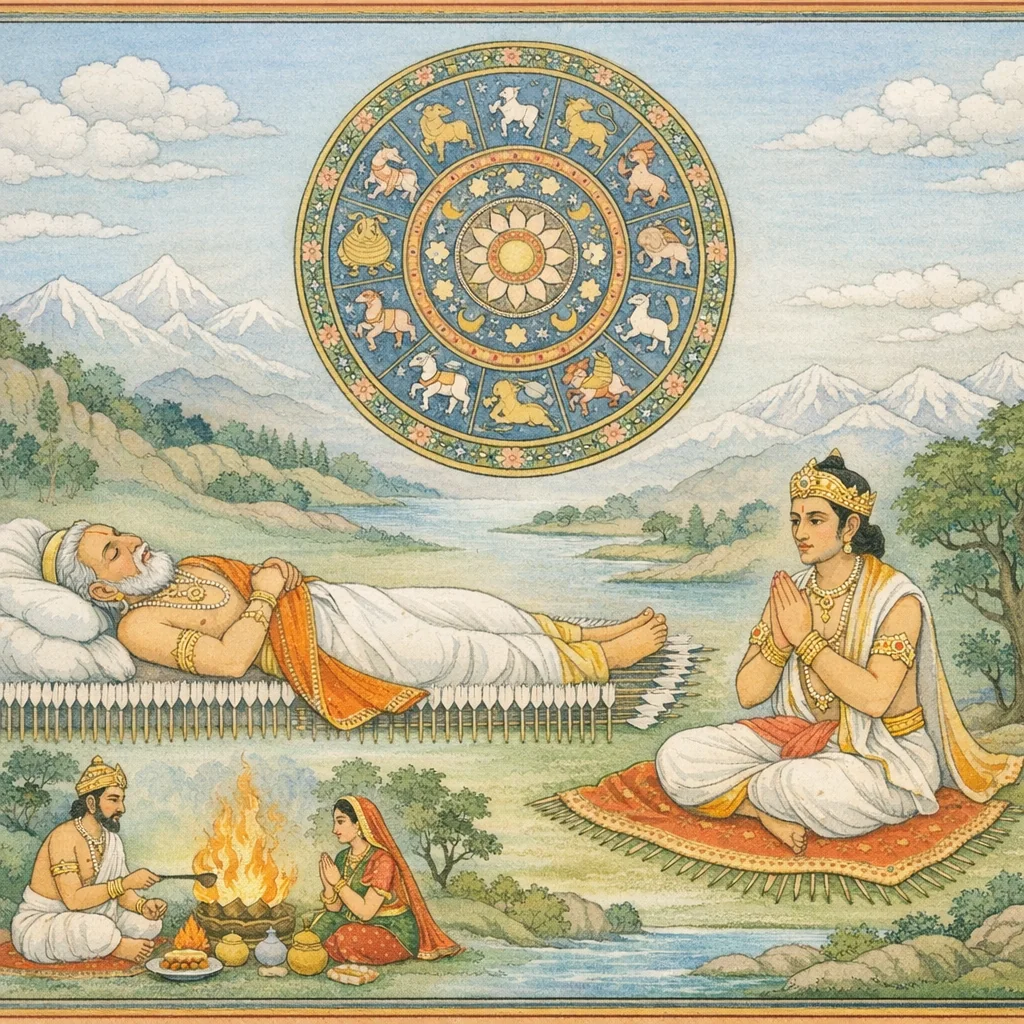
Chapter Arc: शरशय्या पर लेटे भीष्म युधिष्ठिर से कहते हैं—यम ने राजा शशबिन्दु को जिन ‘काम्य’ श्राद्धों का उपदेश दिया था, उन्हें सुनो; नक्षत्र-योग के अनुसार श्राद्ध का फल बदलता है। → भीष्म क्रमशः नक्षत्रों के साथ श्राद्ध-दान के विशिष्ट फल जोड़ते जाते हैं—कृत्तिका में अग्न्याधान सहित श्राद्ध, रोहिणी में संतान-प्राप्ति, मृगशिरा में तेज, आर्द्रा में क्रूर कर्म की प्रवृत्ति, चित्रा में रूपवान पुत्र, स्वाती में वाणिज्य-जीविका, विशाखा में बहुपुत्रता, अनुराधा में राजचक्र/राज्य-व्यवस्था का प्रवर्तन, धनिष्ठा में राज्य-भाग, वारुण नक्षत्र में वैद्य-सिद्धि, पूर्व/उत्तर भाद्रपदा में पशुधन, रेवती में बहुमूल्य संपदा, अश्विनी में अश्व-लाभ, भरणी में उत्तम आयु आदि। → उपदेश का शिखर तब आता है जब यह नक्षत्र-श्राद्ध-विधान केवल सिद्धांत नहीं रहता—भीष्म बताते हैं कि शशबिन्दु ने इसे सुनकर वैसा ही आचरण किया और ‘अक्लेशेन’ पृथ्वी को जीतकर सुशासन किया; अर्थात् विधि का फल प्रत्यक्ष राजसिद्धि बनकर प्रकट हुआ। → अध्याय श्राद्ध-कल्प के रूप में निष्कर्ष देता है कि पितृ-पूजन, दान और काल/नक्षत्र की संगति से इच्छित फल (संतान, तेज, व्यापार, राज्य, आयु, पशुधन, वैद्य-सिद्धि) प्राप्त होते हैं; शशबिन्दु का उदाहरण प्रमाण-रूप में स्थापित होता है।
Shlokas
Verse 1
अपन बछ। है २ >> एकोननवतितमो< ध्याय: विभिन्न नक्षत्रोंमें श्राद्ध करनेका फल भीष्म उवाच यमस्तु यानि श्राद्धानि प्रोवाच शशबिन्दवे । तानि मे शृणु काम्यानि नक्षत्रेषु पृथक् पृथक्,भीष्मजी कहते हैं--युधिष्ठिर! यमने राजा शशबिन्दुको भिन्न-भिन्न नक्षत्रोंमें किये जानेवाले जो काम्य श्राद्ध बताये हैं; उनका वर्णन मुझसे सुनो
Bhishma said: “O Yudhishthira, listen to me as I recount the desire-motivated (kāmya) śrāddha rites that Yama once taught to King Śaśabindu—each to be performed under specific lunar mansions (nakṣatras), with distinct results.”
Verse 2
श्राद्ध यः कृत्तिकायोगे कुर्वीत सततं नर: । अग्नीनाधाय सापत्यो यजेत विगतज्वर:,जो मनुष्य सदा कृत्तिका नक्षत्रके योगमें अग्निकी स्थापना करके पुत्रसहित श्राद्ध या पितरोंका यजन करता है, वह रोग और चिन्तासे रहित हो जाता है
Bhīṣma said: A man who regularly performs the śrāddha rite when the asterism Kṛttikā is in conjunction, and who—having established the sacred fires—offers worship to the ancestral powers together with his son, becomes free from feverish affliction and inner distress.
Verse 3
अपत्यकामो रोहिण्यां तेजस्कामो मृगोत्तमे । क्रूरकर्मा ददच्छाद्धमाद्रायां मानवो भवेत्,संतानकी इच्छावाला पुरुष रोहिणीमें और तेजकी कामनावाला पुरुष मृगशिरा नक्षत्रमें श्राद्ध करे। आर्दरा नक्षत्रमें श्राद्धका दान देनेवाला मनुष्य क्रूरकर्मा होता है (इसलिये आर्द्रा नक्षत्रमें श्राद्ध नहीं करना चाहिये)
Bhishma said: “He who longs for offspring should perform the śrāddha under the nakṣatra Rohiṇī; he who longs for brilliance and vigor should do so under Mṛgaśīrṣa, the best among the ‘mṛga’ stars. But the man who gives the śrāddha-offering under Ārdrā grows inclined to cruel deeds; therefore, śrāddha should not be performed under Ārdrā.”
Verse 4
धनकामो भवेन्मर्त्य: कुर्वन् श्राद्ध पुनर्वसौ । पुष्टिकामो5थ पुष्येण श्राद्धमीहेत मानव:,धनकी इच्छावाले पुरुषको पुनर्वसु नक्षत्रमें श्राद्ध करना चाहिये। पुष्टिकी कामनावाला पुरुष पुष्यनक्षत्रमें श्राद्ध करे
Bhishma said: “A mortal who seeks wealth should perform the śrāddha rite when the lunar mansion is Punarvasu. Likewise, one who desires nourishment and flourishing should undertake śrāddha when the lunar mansion is Puṣya.”
Verse 5
आश्लेषायां ददच्छाद्धं धीरान् पुत्रान् प्रजायते । ज्ञातीनां तु भवेच्छेष्ठो मघासु श्राद्धमावपन्,आश्लेषामें श्राद्ध करनेवाला पुरुष धीर पुत्रोंको जन्म देता है। मघामें श्राद्ध एवं पिण्डदान करनेवाला मनुष्य अपने कुट॒म्बी जनोंमें श्रेष्ठ होता है
Bhishma said: “One who offers the śrāddha rite when the Moon is in Āśleṣā is blessed with steadfast and courageous sons. And one who performs śrāddha and offers piṇḍa-oblations when the Moon is in Maghā becomes foremost among his kinsmen—gaining honor and preeminence within the family through faithful ancestral duty.”
Verse 6
फल्गुनीषु ददच्छाद्धं सुभग: श्राद्धदो भवेत् । अपत्यभागुनत्तरासु हस्तेन फलभाग् भवेत्,पूर्वाफाल्गुनीमें श्राद्धका दान देनेवाला मानव सौभाग्यशाली होता है। उत्तराफाल्गुनीमें श्राद्ध करनेवाला संतानवान् और हस्तनक्षत्रमें श्राद्ध करनेवाला अभीष्ट फलका भागी होता है
Bhīṣma said: “One who offers a śrāddha during the Phalgunī asterisms becomes fortunate and auspicious. One who performs śrāddha in Uttara-Phalgunī gains the blessing of offspring; and one who performs it under the Hasta asterism becomes a sharer in the desired fruit.”
Verse 7
चित्रायां तु ददच्छाद्धं लभेद् रूपवत: सुतान् | स्वातियोगे पितृनर्च्य वाणिज्यमुपजीवति,चित्रामें श्राद्धका दान करनेवाले पुरुषको रूपवानू पुत्र प्राप्त होते हैं। स्वातीके योगमें पितरोंकी पूजा करनेवाला वाणिज्यसे जीवन-निर्वाह करता है
Bhishma said: “One who offers the śrāddha-gift when the lunar mansion Citrā prevails gains handsome sons. And one who worships the Pitṛs when the lunar mansion Svātī is in conjunction makes his livelihood through trade—prospering by commerce.”
Verse 8
बहुपुत्रो विशाखासु पुत्रमीहन् भवेन्नर: । अनुराधासु कुर्वाणो राजचक्रं प्रवर्तयेत्,विशाखामें श्राद्ध करनेवाला मनुष्य यदि पुत्र चाहता हो तो बहुसंख्यक पुत्रोंसे सम्पन्न होता है। अनुराधामें श्राद्ध करनेवाला पुरुष दूसरे जन्ममें राजमण्डलका शासक होता है
Bhishma said: He who performs the śrāddha under the nakṣatra Viśākhā, if he longs for a son, becomes possessed of many sons. And he who performs the śrāddha under Anurādhā becomes, in another birth, a ruler over the circle of royal power.
Verse 9
आधिपत्य॑ व्रजेन्मर्त्यो ज्येष्ठायामपवर्जयन् । नर: कुरुकुलश्रेष्ठ ऋद्धो दमपुर:सर:,कुरुकुलश्रेष्ठ)! ज्येष्ठा नक्षत्रमें इन्द्रियसंयमपूर्वक पिण्डदान करनेवाला मनुष्य समृद्धिशाली होता है और प्रभुत्व प्राप्त करता है
Bhishma said: O best of the Kuru line, a mortal who, on the nakṣatra Jyeṣṭhā, offers the piṇḍas after first restraining the senses attains prosperity and comes to exercise lordship.
Verse 10
मूले त्वारोग्यमृच्छेत यशो55षाढासु चोत्तमम् | उत्तरासु त्वषाढासु वीतशोकश्चरेन्महीम्,मूलमें श्राद्ध करनेसे आरोग्यकी प्राप्ति होती है और पूर्वाषाढ़ामें उत्तम यशकी। उत्तराषाढ़ामें पितृयज्ञ करनेवाला पुरुष शोकशून्य होकर पृथ्वीपर विचरण करता है
Bhishma said: If one performs the śrāddha under the nakṣatra Mūla, one attains health; under Pūrvāṣāḍhā, one gains excellent fame. And if one performs the ancestral rite under Uttarāṣāḍhā, that person, freed from grief, moves about the earth.
Verse 11
श्राद्ध त्वभिजिता कुर्वन् भिषक्सिद्धिमवाप्रुयात् । श्रवणेषु ददच्छाद्धं प्रेत्य गच्छेत् स सद्गोतिम्,अभिजित् नक्षत्रमें श्राद्ध करनेवाला वैद्यविषयक सिद्धि पाता है। श्रवण नक्षत्रमें श्राद्धका दान देनेवाला मानव मृत्युके पश्चात् सदगतिको प्राप्त होता है
Bhishma said: One who performs the śrāddha under the nakṣatra Abhijit attains success in the calling of a physician. And one who gives the śrāddha-offering when Śravaṇa prevails, after death goes to a good and auspicious state.
Verse 12
राज्यभागी धनिष्ठायां भवेत नियतं नरः । नक्षत्रे वारुणे कुर्वन् भिषक्सिद्धिमवाप्रुयात्,धनिष्ठामें श्राद्ध करनेवाला मनुष्य नियमपूर्वक राज्यका भागी होता है। वारुण नक्षत्र- शतभिषामें श्राद्ध करनेवाला पुरुष वैद्यविषयक सिद्धिको पाता है
Bhishma said: A man who performs the śrāddha with disciplined observance under the nakṣatra Dhaniṣṭhā is assuredly destined to obtain a share in sovereignty and governance. And one who performs the śrāddha under the Varuṇa-star—Śatabhiṣā—attains accomplishment in the healing art, gaining success as a physician.
Verse 13
पूर्वप्रोष्ठपदा: कुर्वन् बहून् विन्दत्यजाविकान् । उत्तरासु प्रकुर्वाणो विन्दते गा: सहस्रश:,पूर्वभाद्रपदा्में श्राद्ध करनेवाला बहुत-से भेड़-बकरोंका लाभ लेता है और उत्तराभाद्रपदामें श्राद्ध करनेवाला सहस्रों गौएँ पाता है
Bhīṣma said: “He who performs the śrāddha rites when the lunar mansion Pūrvaproṣṭhapadā (Pūrvabhādrapadā) prevails gains many goats and sheep; and he who performs them under Uttarāproṣṭhapadā (Uttarabhādrapadā) obtains cows by the thousands.”
Verse 14
बहुकुप्यकृतं वित्तं विन्दते रेवतीं श्रित: । अश्रिनीष्वश्वान् विन्देत भरणीष्वायुरुत्तमम्,श्राद्धमें रेवतीका आश्रय लेनेवाला (अर्थात् रेवतीमें श्राद्ध करनेवाला) पुरुष सोने- चाँदीके सिवा अन्य नाना प्रकारके धन पाता है। अअश्रिनीमें श्राद्ध करनेसे घोड़ोंकी और भरणीमें श्राद्धका अनुष्ठान करनेसे उत्तम आयुकी प्राप्ति होती है
Bhīṣma said: “One who performs the śrāddha rite under the lunar mansion Revatī obtains abundant wealth of many kinds (beyond mere gold and silver). By performing śrāddha in Aśvinī one gains horses, and by performing śrāddha in Bharaṇī one attains an excellent span of life.”
Verse 15
इमं श्राद्धविधिं श्रुत्वा शशबिन्दुस्तथाकरोत् । अक्लेशेनाजयच्चापि महीं सोडनुशशास ह,इस श्राद्धविधिका श्रवण करके राजा शशबिन्दुने वही किया। उन्होंने बिना किसी क्लेशके ही पृथ्वीको जीता और उसका शासनसूत्र अपने हाथमें ले लिया
Bhīṣma said: “Having heard this prescribed rite of Śrāddha, King Śaśabindu acted accordingly. Without hardship he conquered the earth as well, and thereafter held and administered its rule.”
Verse 89
इति श्रीमहाभारते अनुशासनपर्वणि दानधर्मपर्वणि श्राद्धकल्पे एकोननवतितमो<ध्याय:
Thus, in the Śrī Mahābhārata, within the Anuśāsana Parva—specifically in the section on the dharma of gifts and in the rite-instructions concerning śrāddha—ends the eighty-ninth chapter.
Frequently Asked Questions
A procedural dilemma: offering-food causes distress (ajīrṇa) to ancestors and deities, raising the question of how the rite should be structured so that the offering becomes beneficial rather than burdensome.
Dharma is enacted through disciplined method: correct mediation (Agni), correct sequence (piṇḍa order), and mindful speech (mantra/formulae) convert intention into a stable, socially transmissible practice.
Yes. The chapter attributes protective stability to Agni-preceded offerings (non-violation by brahmarākṣasas and withdrawal of disruptive forces) and states benefits for pitṛ-devotion (puṣṭi, āyus, vīrya, śrī), alongside the claim that pretas are released through the piṇḍa-connection.