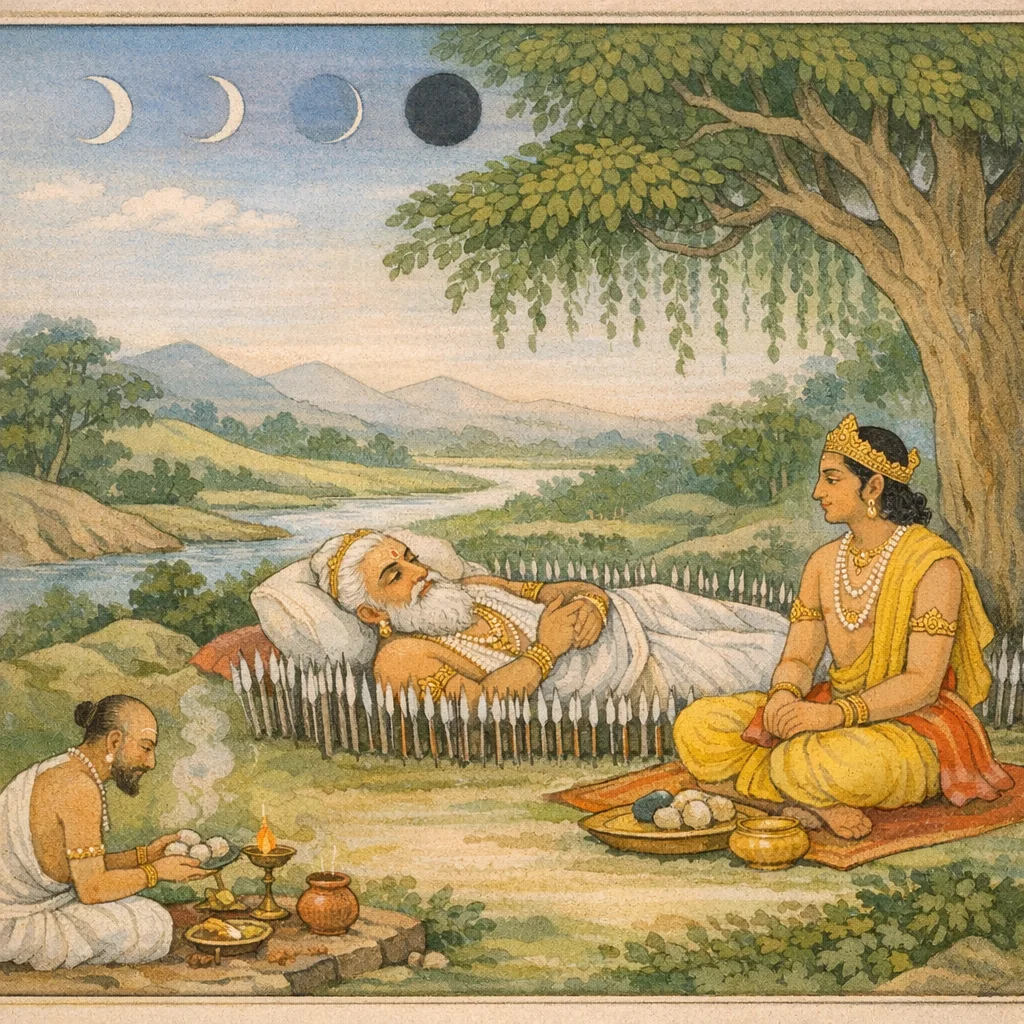
Adhyaya 90
Śrāddha-dvija-parīkṣā: Paṅkti-dūṣa and Paṅkti-pāvana (श्राद्धे द्विजपरीक्षा—पङ्क्तिदूष-पङ्क्तिपावन)
Upa-parva: Dāna–Śrāddha Anuśāsana (Guidelines on Gifts and Śrāddha Eligibility)
Yudhiṣṭhira asks Bhīṣma which dvijas should receive śrāddha offerings. Bhīṣma differentiates between general charity—where a kṣatriya should not habitually test brāhmaṇas—and ritual contexts (daiva/pitṛ) where examination is deemed appropriate. He outlines markers for evaluating invitees (lineage, conduct, age, appearance, learning, family standing) and enumerates categories treated as non-eligible (apāṅkteya) or line-impairing (paṅkti-dūṣa). He then lists line-purifying (paṅkti-pāvana) qualities and profiles: Vedic learning, vows, disciplined conduct, truthfulness, restraint, ritual competence, and commitment to svadharma. The chapter further stresses that improper presence or improper conduct during the meal is believed to negate results; gifts given without faith or with malice are assigned a contrary destination. Practical cautions include shielding the rite from disruptive observers and emphasizing that feeding the unqualified yields no benefit, analogized to sowing seed on barren land or offering into extinguished fire. The unit closes by prioritizing learned and mantra-competent recipients over mere quantity, and by advising neutrality in selection rather than favoritism toward friends.
Chapter Arc: युधिष्ठिर, चातुर्वर्ण्य-धर्मों के उपदेश के बाद, पितृयज्ञ-रूप श्राद्ध के सूक्ष्म विधान और ‘किस तिथि में करने से क्या फल मिलता है’—यह जानने की उत्कंठा से भीष्म से प्रश्न करते हैं। → वैशम्पायन के माध्यम से भीष्म श्राद्ध-विधि का क्रम खोलते हैं—श्राद्ध ‘शुभ, धन्य, यशस्य, पुत्रीय’ है; पर तिथियों का चयन साधारण नहीं: कुछ तिथियाँ प्रशस्त, कुछ वर्ज्य; और समय-निर्णय (पूर्वाह्न/अपराह्न) भी फल को बदल देता है। → तिथि-फल का निर्णायक कथन: नवमी के श्राद्ध से एक-खुर वाले पशुओं (घोड़े आदि) की बहुलता; दशमी के श्राद्ध से गौ-वृद्धि; त्रयोदशी के श्राद्ध से कुटुम्ब में श्रेष्ठता, पर साथ ही घर में युवाओं की अकाल-मृत्यु का कठोर संकेत—और कृष्णपक्ष में चतुर्दशी का निषेध, दशमी से अमावस्या तक की प्रशस्तता; साथ ही श्राद्ध में अपराह्न की विशेषता। → भीष्म तिथियों की प्रशस्तता/वर्ज्यता और समय-श्रेष्ठता का नियम-रूप निष्कर्ष देते हैं: जैसे शुक्लपक्ष की अपेक्षा कृष्णपक्ष श्राद्ध के लिए अधिक उपयुक्त, वैसे ही पूर्वाह्न की अपेक्षा अपराह्न श्राद्ध के लिए अधिक विशिष्ट—अर्थात पितृ-तृप्ति हेतु ‘काल’ ही प्रधान साधन है।
Shlokas
Verse 1
अपन का बछ। अर: सप्ताशीतितमोब ध्याय: विविध तिथियोंमें श्राद्ध करनेका फल युधिछिर उवाच चातुर्वर्ण्यस्य धर्मात्मन् धर्मा: प्रोक्ता यथा त्वया । तथैव मे श्राद्धविर्धि कृत्स्न॑ प्रब्रूहि पार्थिव,युधिष्ठिरने कहा--धर्मात्मन्! पृथ्वीनाथ! आपने जैसे चारों वर्णोंके धर्म बताये हैं, उसी प्रकार अब मेरे लिये श्राद्ध-विधिका वर्णन कीजिये
Yudhiṣṭhira said: “O righteous one, O king of the earth! Just as you have explained the duties of the four social orders, so too now explain to me in full the proper procedure for śrāddha rites.”
Verse 2
वैशम्पायन उवाच युधिष्ठिरेणैवमुक्तो भीष्म: शान्तनवस्तदा | इमं॑ श्राद्धविधिं कृत्स्नं वक्तुं समुपचक्रमे,वैशम्पायनजी कहते हैं--(जनमेजय!) राजा युधिष्ठिरके इस प्रकार अनुरोध करनेपर उस समय शान्तनुनन्दन भीष्मने इस सम्पूर्ण श्राद्धवेधिका इस प्रकार वर्णन आरम्भ किया
Vaiśampāyana said: Thus addressed by Yudhiṣṭhira, Bhīṣma—the son of Śāntanu—then began to expound in full the complete procedure of śrāddha rites.
Verse 3
भीष्म उवाच शृणुष्वावहितो राजन् श्राद्धकर्मविधिं शुभम् धन्यं यशस्यं पुत्रीयं पितृयज्ञं परंतप,भीष्मजी बोले--शत्रुओंको संताप देनेवाले नरेश! तुम श्राद्ध-कर्मके शुभ विधिको सावधान, होकर सुनो। यह धन, यश और पुत्रकी प्राप्ति करानेवाला है। इसे पितृयज्ञ कहते हैं
Bhīṣma said: “Listen attentively, O king who scorches his foes, to this auspicious procedure of the śrāddha rite. It bestows wealth, fame, and sons; therefore it is called Pitṛyajña—the sacrifice offered to the Fathers.”
Verse 4
देवासुरमनुष्याणां गन्धर्वोरगरक्षसाम् | पिशाचकिज्नराणां च पूज्या वै पितर: सदा,देवता, असुर, मनुष्य, गन्धर्व, नाग, राक्षस, पिशाच और किन्नर--इन सबके लिये पितर सदा ही पूज्य हैं
“For gods, asuras, humans, gandharvas, nāgas, rākṣasas, piśācas, and kiṁnaras alike, the Pitṛs—the ancestral fathers—are ever worthy of reverence.”
Verse 5
पितृन् पूज्यादितः पश्चाद्देवतास्तर्पयन्ति वै । तस्मात् तान् सर्वयज्ञेन पुरुष: पूजयेत् सदा,मनीषी पुरुष पहले पितरोंकी पूजा करके पीछे देवताओंकी पूजा करते हैं। इसलिये पुरुषको चाहिये कि वह सदा सम्पूर्ण यज्ञोंके द्वारा पितरोंकी पूजा करे
“The wise first honor the Pitṛs, and only thereafter satisfy the deities with offerings. Therefore, one should always revere the Pitṛs through every form of sacrifice and sacred rite.”
Verse 6
अन्वाहार्य महाराज पित्णां श्राद्धमुच्यते । तस्माद् विशेषविधिना विधि: प्रथमकल्पित:,महाराज! पितरोंके श्राद्धको अन्वाहार्य कहते हैं। अतः विशेष विधिके द्वारा उसका अनुष्ठान पहले करना चाहिये
Bhīṣma said: “O great king, the śrāddha offered to the Pitṛs (ancestral fathers) is called ‘Anvāhārya’. Therefore it has been ordained that this rite should be performed first, in accordance with the special prescribed procedure.”
Verse 7
सर्वेष्वह:सु प्रीयन्ते कृते श्राद्धे पितामहा: । प्रवक्ष्यामि तु ते सर्वास्तिथ्यातिथ्यगुणागुणान्,सभी दिनोंमें श्राद्ध करनेसे पितर प्रसन्न रहते हैं। अब मैं तिथि और अतिथिके सब गुणागुणका वर्णन करूँगा
Bhīṣma said: “On every day, when the śrāddha rite is performed, the forefathers are pleased. Now I shall explain to you in full the merits and demerits connected with lunar dates (tithi) and with the proper reception of guests (atithi).”
Verse 8
येष्वह:सु कृतै: श्राद्धैर्यत् फलं प्राप्पतेडनघ । तत् सर्व कीर्तयिष्यामि यथावत् तन्निबोध मे,निष्पाप नरेश! जिन दिनोंमें श्राद्ध करनेसे जो फल प्राप्त होता है, वह सब मैं यथार्थरूपसे बताऊँगा, ध्यान देकर सुनो
Bhīṣma said: “O blameless king, I shall describe in full—and exactly as it is—the results obtained by performing śrāddha on particular days. Listen attentively to me, O sinless ruler.”
Verse 9
पितृनर्च्य प्रतिपदि प्राप्तुयात् सुगृहे स्त्रियः । अभिरूपप्रजायिन्यो दर्शनीया बहुप्रजा:
Bhīṣma said: “Having duly worshipped the Pitṛs (ancestral spirits) at each rite and occasion, one should obtain wives from good households—women of pleasing form, capable of bearing worthy offspring, attractive in appearance, and blessed with many children.”
Verse 10
प्रतिपदा तिथिको पितरोंकी पूजा करनेसे मनुष्य अपने उत्तम गृहमें मनके अनुरूप सुन्दर एवं बहुसंख्यक संतानोंको जन्म देनेवाली दर्शनीय भार्या प्राप्त करता है ।। स्त्रियो द्वितीयां जायन्ते तृतीयायां तु वाजिन: । चतुर्थ्या क्षुद्रपशवो भवन्ति बहवो गृहे,द्वितीयाको श्राद्ध करनेसे कन््याओंका जन्म होता है। तृतीयाके श्राद्धसे घोड़ोंकी प्राप्ति होती है, चतुर्थीको पितरोंका श्राद्ध किया जाय तो घरमें बहुत-से छोटे-छोटे पशुओंकी संख्या बढ़ती है
Bhīṣma said: “If a man worships the Pitṛs on the Pratipadā lunar day, he gains in his excellent household a pleasing and beautiful wife, according to his heart’s desire, who bears many children. When the ancestral rite is performed on the Dvitīyā, daughters are born; on the Tṛtīyā, horses are obtained; and if the Pitṛs are honored on the Caturthī, many small domestic animals increase in the home.”
Verse 11
पज्चम्यां बहव: पुत्रा जायन्ते कुर्वतां नृप । कुर्वाणास्तु नरा: षष्ठ्यां भवन्ति द्युतिभागिन:,नरेश्वर! पंचमीको श्राद्ध करनेवाले पुरुषोंके बहुत-से पुत्र होते हैं। षष्ठीको श्राद्ध करनेवाले मनुष्य कान्तिके भागी होते हैं
Bhīṣma said: “O king, those who perform the śrāddha on the fifth lunar day are blessed with many sons. Those who perform the śrāddha on the sixth day become sharers in radiance and splendor.”
Verse 12
कृषिभागी भवेच्छाद्धं कुर्वाण: सप्तमीं नूप । अष्टम्यां तु प्रकुर्वाणो वाणिज्ये लाभमाप्नुयात्,राजन! सप्तमीको श्राद्ध करनेवाला मनुष्य कृषिकर्ममें लाभ उठाता है और अष्टमीको श्राद्ध करनेवाले पुरुषको व्यापारमें लाभ होता है
Bhīṣma said: “O king, one who performs the śrāddha on the seventh lunar day becomes a sharer in the gains of agriculture; and one who performs it on the eighth attains profit in trade. Thus the rite, when done with due timing, is taught to yield fitting worldly prosperity while remaining grounded in duty toward the ancestors.”
Verse 13
नवम्यां कुर्वत: श्राद्ध भवत्येकशफं बहु । विवर्धन्ते तु दशर्मीं गाव: श्राद्धान् विकुर्वतः
Bhīṣma said: “When one performs the śrāddha on the ninth day, it yields abundant benefit in the form of single-hoofed animals (such as horses). But for one who performs the śrāddha on the tenth day, cows increase and prosper.”
Verse 14
नवमीको श्राद्ध करनेवाले पुरुषके यहाँ एक खुरवाले घोड़े आदि पशुओंकी बहुतायत होती है और दशमीको श्राद्ध करनेवाले मनुष्यके घरमें गौओंको वृद्धि होती है ।। कुप्यभागी भवेन्मर्त्य: कुर्वन्नेकादशीं नूप । ब्रह्मवर्चस्विन: पुत्रा जायन्ते तस्य वेश्मनि,महाराज! एकादशीको श्राद्ध करनेवाला मानव सोने-चाँदीको छोड़कर शेष सभी प्रकारके धनका भागी होता है। उसके घरमें ब्रह्मतेजसे सम्पन्न पुत्र जन्म लेते हैं
Bhishma said: “A man who performs the śrāddha on the ninth day gains abundance of one-hoofed animals such as horses and similar beasts; and one who performs the śrāddha on the tenth day finds an increase of cows in his household. But, O king, he who performs the śrāddha on the eleventh day becomes a possessor of all kinds of wealth except gold and silver; and in his home are born sons endowed with brahmanical radiance (spiritual lustre and learning).”
Verse 15
द्वादश्यामीहमानस्य नित्यमेव प्रदृश्यते । रजतं बहुवित्तं च सुवर्ण च मनोरमम्,द्वादशीको श्राद्धके लिये प्रयत्न करनेवाले पुरुषको सदा ही मनोरम सुवर्ण, चाँदी तथा बहुत-से धनकी प्राप्ति होती देखी जाती है
Bhishma said: “For one who consistently strives to perform the rites of the Dvādaśī (especially the śrāddha observance on that lunar day), it is repeatedly seen that pleasing prosperity arises—silver, abundant wealth, and delightful gold.”
Verse 16
ज्ञातीनां तु भवेच्छेष्ठ: कुर्वन् श्राद्ध त्रयोदशीम् । अवश्यं तु युवानो<स्य प्रमीयन्ते नरा गृहे,त्रयोदशीको श्राद्ध करनेवाला पुरुष अपने कुट॒म्बी-जनोंमें श्रेष्ठ होता है; परंतु जो चतुर्दशीको श्राद्ध करता है, उसके घरमें नवयुवकोंकी मृत्यु अवश्य होती है तथा श्राद्ध करनेवाला मनुष्य स्वयं भी युद्धका भागी होता है (इसलिये चतुर्दशीको श्राद्ध नहीं करना चाहिये)। अमावास्याको श्राद्ध करनेसे वह अपनी सम्पूर्ण कामनाओंको प्राप्त कर लेता है
Bhīṣma said: “Among one’s kinsmen, a man becomes foremost when he performs the śrāddha on the thirteenth lunar day (trayodaśī). But if he performs the śrāddha on the fourteenth (caturdaśī), then in his household young men surely die prematurely.”
Verse 17
युद्धभागी भवेन्मर्त्य: कुर्वन् श्राद्ध चतुर्दशीम् । अमावास्यां तु निर्वापात् सर्वकामानवाप्लुयात्,त्रयोदशीको श्राद्ध करनेवाला पुरुष अपने कुट॒म्बी-जनोंमें श्रेष्ठ होता है; परंतु जो चतुर्दशीको श्राद्ध करता है, उसके घरमें नवयुवकोंकी मृत्यु अवश्य होती है तथा श्राद्ध करनेवाला मनुष्य स्वयं भी युद्धका भागी होता है (इसलिये चतुर्दशीको श्राद्ध नहीं करना चाहिये)। अमावास्याको श्राद्ध करनेसे वह अपनी सम्पूर्ण कामनाओंको प्राप्त कर लेता है
Bhīṣma said: “A mortal who performs the śrāddha on the fourteenth lunar day (caturdaśī) becomes a sharer in war—drawn into the portion of conflict. But by offering the śrāddha on the new-moon day (amāvāsyā), he attains the fulfillment of all his aims.”
Verse 18
कृष्णपक्षे दशम्यादौ वर्जयित्वा चतुर्दशीम् श्राद्धकर्मणि तिथ्यस्तु प्रशस्ता न तथेतरा:,कृष्ण-पक्षमें केवल चतुर्दशीको छोड़कर दशमीसे लेकर अमावास्यातककी सभी तिथियाँ श्राद्धकर्ममें जैसे प्रशस्त मानी गयी हैं, वैसे दूसरी प्रतिपदासे नवमीतक नहीं
Bhīṣma said: “In the dark fortnight (kṛṣṇa-pakṣa), from the tenth lunar day (daśamī) onward up to the new-moon day (amāvāsyā), the lunar dates are regarded as commendable for the rite of śrāddha—except the fourteenth (caturdaśī). The other dates (such as those from the first to the ninth) are not held in the same esteem for this purpose.”
Verse 19
यथा चैवापर: पक्ष: पूर्वपक्षाद् विशिष्यते । तथा श्राद्धस्य पूर्वाह्नादपराह्नो विशिष्यते,जैसे पूर्व (शुक्ल) पक्षकी अपेक्षा अपर (कृष्ण) पक्ष श्राद्धके लिये श्रेष्ठ माना है, उसी प्रकार पूर्वाह्नकी अपेक्षा अपराह्न उत्तम माना जाता है
Bhīṣma said: “Just as the latter fortnight is regarded as superior to the former fortnight, so too, for the rite of śrāddha, the afternoon (aparāhṇa) is considered superior to the forenoon (pūrvāhṇa).”
Verse 86
इस प्रकार श्रीमह्या भारत अनुशासनपर्वके अन्तर्गत दानधर्मपर्वमें तारकवधका उपाख्यान नामक छियासीवाँ अध्याय पूरा हुआ
Thus ends the eighty-sixth chapter, titled “The Episode of the Slaying of Tāraka,” within the section on the Dharma of Gifts (Dāna-dharma) in the Anuśāsana Parva of the sacred Mahābhārata.
Verse 87
इति श्रीमहाभारते अनुशासनपर्वणि दानथधर्मपर्वणि श्राद्धकल्पे सप्ताशीतितमो<ध्याय:
Thus ends the eighty-seventh chapter in the Anuśāsana Parva of the Śrī Mahābhārata, within the section on the dharma of gifts, in the portion dealing with the rules and procedure of śrāddha rites. The narrative frame remains Bhīṣma’s instruction, emphasizing that righteous giving and properly performed ancestral offerings are integral to dharma.
Frequently Asked Questions
How to balance respect toward dvijas with necessary discernment in pitṛ rites: avoiding habitual suspicion in general giving while applying careful selection to preserve śrāddha’s intended ritual efficacy.
Śrāddha should be performed with śraddhā and procedural care, inviting recipients characterized by learning, restraint, and proper conduct; indiscriminate feeding of the unqualified is presented as yielding negligible or null result.
Yes: it asserts that improper invitees, disruptive observation, or faithless/malicious giving undermines the rite’s fruit, while the presence of qualified, disciplined recipients is described as preserving or enhancing the intended benefit.