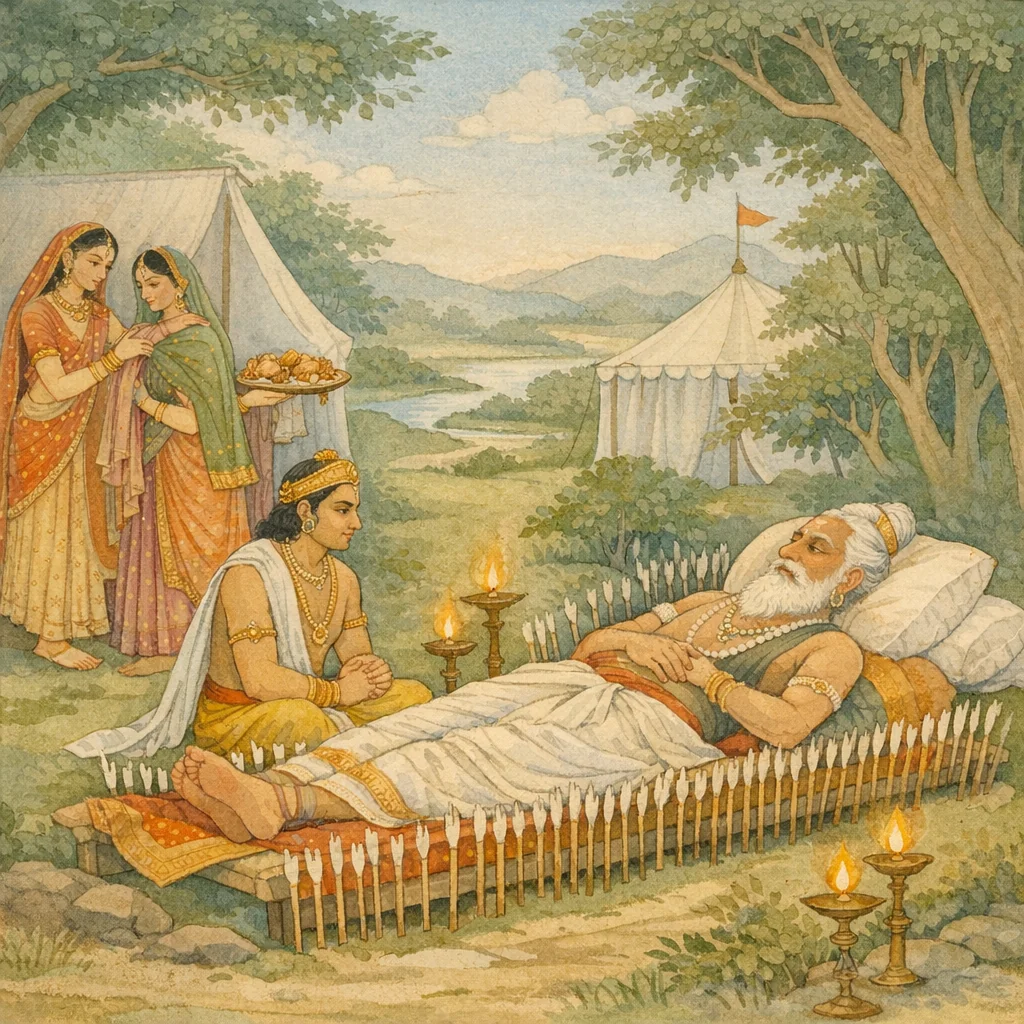
Adhyaya 49
Putra-Bheda: Kṣetraja, Kṛtaka, Apasada, and Saṃskāra Determinations (पुत्रभेद-निर्णयः)
Upa-parva: Putra-Dharma and Varṇa-Lineage Classifications (Paternity, Adoption, and Saṃskāra Norms)
Yudhiṣṭhira asks Bhīṣma to enumerate, distinctly, the kinds of sons spoken of in tradition and to resolve uncertainties produced by multiple doctrinal claims (1–2). Bhīṣma outlines recognized son-categories, beginning with the ‘self-born’ (ātmā/ātmāja) and proceeding through categories associated with subsequent birth, appointment (niyukta), and other socially recognized modes (3–5). Yudhiṣṭhira requests clarification of the ‘ṣaḍapadhvaṃsajāḥ’ and the apasada categories (6). Bhīṣma explains mixed-varṇa offspring classifications, indicating how many such categories are recognized relative to the father’s varṇa and listing named apasada types such as caṇḍāla, vrātya, veṇa, māgadha, vāmaka, and sūta in the described pairings (7–11). Yudhiṣṭhira then probes the equivalence or distinction between kṣetraja and retaja/śukraja sons and asks how abandonment or breach of agreement affects attribution (12–14). Bhīṣma replies that juridical paternity may attach to the ‘field-owner’ (kṣetrasvāmin) in cases of abandonment, and emphasizes the primacy of the ‘field’ criterion in certain contexts (15–17). The discussion turns to the kṛtaka (artificial/adopted) son, defined by social collection/recognition, especially a foundling whose parents are unknown (18–20). Bhīṣma states that a same-varṇa guardian who assumes ownership/care establishes a same-varṇa affiliation for the child (21). Finally, Yudhiṣṭhira asks about saṃskāra performance and marriageability (kanyā-dāna); Bhīṣma instructs that rites should be performed as for one’s own, aligned to the receiving group’s gotra/varṇa when a foundling joins a same-varṇa community, while maternal gotra/varṇa considerations govern certain determinations; he notes kānīna and adhyūḍha as ‘putra-kilbiṣa’ yet still to be ritually treated as sons, and generalizes that Brahmins and others should apply saṃskāra norms accordingly; he closes by citing Dharmaśāstra consensus (22–28).
Chapter Arc: शरशय्या पर लेटे भीष्म युधिष्ठिर से कहते हैं कि प्राचीन आचार्यों ने एक सनातन नीति गाई है—कन्याओं और स्त्रियों का वस्त्र-भूषणों से सत्कार केवल शिष्टाचार नहीं, राज्य-धर्म और कुल-कल्याण की जड़ है। → भीष्म तर्क को कठोर यथार्थ से जोड़ते हैं: यदि स्त्री की रुचि और सम्मान की पूर्ति न हो तो वह पति को प्रसन्न नहीं कर सकती; और जहाँ प्रसन्नता नहीं, वहाँ संतान-वृद्धि, गृह-स्थिरता और लोक-यात्रा डगमगा जाती है। वे पिता, भाई, श्वशुर और देवर—सबको ‘बहुकल्याण’ की इच्छा रखने वाला मानकर स्त्री-पूजा का दायित्व सौंपते हैं। → नीति का शिखर-वाक्य बनकर उभरता है—‘जहाँ स्त्रियाँ अपूजित हों, वहाँ सब क्रियाएँ निष्फल हैं’; और जहाँ उनका आदर है, वहाँ देवता प्रसन्न होकर निवास करते हैं। स्त्री-सम्मान को धर्म की कसौटी और कर्मफल की शर्त के रूप में स्थापित कर भीष्म अध्याय का निर्णायक विधान देते हैं। → भीष्म स्त्री-आश्रित गृहधर्म के तीन स्तम्भ स्पष्ट करते हैं—संतानोत्पत्ति, उत्पन्न संतान का पालन, और लोक-यात्रा का प्रीतिपूर्वक निर्वाह; साथ ही यह भी कि सम्मानित स्त्रियाँ समस्त कार्यों की सिद्धि कराती हैं। नीति ‘उपदेश’ से ‘आचरण’ की ओर मुड़ती है: सत्कार, परिचर्या, नमस्कार, और आवश्यक दान—ये घर-राज्य की समृद्धि के साधन हैं। → युधिष्ठिर के लिए संकेत छोड़ दिया जाता है कि यह उपदेश केवल गृह-नीति नहीं—राजा के शासन-धर्म में स्त्री-सुरक्षा/सम्मान की परीक्षा भी है; आगे के अध्यायों में इसी व्यापक धर्म-व्यवस्था का विस्तार होगा।
Shlokas
Verse 1
अपन क्रा छा अं क्ााज षट्चत्वारिशो5 ध्याय: स्त्रियोंके वस्त्रा भूषणोंसे सत्कार करनेकी आवश्यकताका प्रतिपादन भीष्म उवाच प्राचेतसस्य वचन कीर्तयन्ति पुराविद: । यस्या: किंचिन्नाददते ज्ञातयो न स विक्रय:,भीष्मजी कहते हैं--युधिष्ठिर! प्राचीन इतिहासके जाननेवाले विद्वान् दक्षप्रजापतिके वचनोंको इस प्रकार उद्धृत करते हैं। कन्याके भाई-बन्धु यदि उसके वस्त्र-आभूषणके लिये धन ग्रहण करते हैं और स्वयं उसमेंसे कुछ भी नहीं लेते हैं तो वह कन्याका विक्रय नहीं है। वह तो उन कनन््याओंका सत्कारमात्र है। वह परम दयालुतापूर्ण कार्य है। वह सारा धन जो कन्याके लिये ही प्राप्त हुआ हो, सब-का-सब कन्याको ही अर्पित कर देना चाहिये
Bhishma said: “O Yudhishthira, the learned who know the ancient traditions recount a statement of Pracetas (Daksha Prajapati). If a maiden’s kinsmen accept wealth meant for her clothing and ornaments, yet do not take any portion of it for themselves, that is not a ‘sale’ of the maiden. It is only an honoring of the girl—an act grounded in compassion—and whatever is obtained in her name should be offered entirely to her.”
Verse 2
अर्हणं तत्कुमारीणामानृशंस्यतमं च तत् । सर्व च प्रतिदेयं स्थात् कन््यायै तदशेषत:,भीष्मजी कहते हैं--युधिष्ठिर! प्राचीन इतिहासके जाननेवाले विद्वान् दक्षप्रजापतिके वचनोंको इस प्रकार उद्धृत करते हैं। कन्याके भाई-बन्धु यदि उसके वस्त्र-आभूषणके लिये धन ग्रहण करते हैं और स्वयं उसमेंसे कुछ भी नहीं लेते हैं तो वह कन्याका विक्रय नहीं है। वह तो उन कनन््याओंका सत्कारमात्र है। वह परम दयालुतापूर्ण कार्य है। वह सारा धन जो कन्याके लिये ही प्राप्त हुआ हो, सब-का-सब कन्याको ही अर्पित कर देना चाहिये
Bhishma said: “That is a fitting honor for maidens, and indeed the most compassionate course. And whatever is received should be given back entirely to the maiden—without remainder.”
Verse 3
पितृभिभ्भ्रातृभिश्चापि श्वशुरैरथ देवरै: । पूज्या भूषयितव्याश्न॒ बहुकल्याणमीप्सुभि:,बहुविध कल्याणकी इच्छा रखनेवाले पिता, भाई, श्वशुर और देवरोंको उचित है कि वे नववधूका पूजन--वस्त्राभूषणोंद्वारा सत्कार करें
Bhishma said: “A newly married woman should be honored and adorned by those who seek abundant welfare—by fathers, brothers, fathers-in-law, and brothers-in-law. By reverent welcome and gifts of clothing and ornaments, they uphold auspiciousness and the ethical order of the family.”
Verse 4
यदि वै स्त्री न रोचेत पुमांसं न प्रमोदयेत् । अप्रमोदात् पुन: पुंस: प्रजनो न प्रवर्धते
Bhishma said: “If a woman does not find a man agreeable and does not gladden him, then, because of that lack of mutual delight, a man’s progeny does not flourish.”
Verse 5
स्त्रियों यत्र च पूज्यन्ते रमन्ते तत्र देवता:
Bhishma said: “Where women are honored and treated with reverence, there the divine powers find joy and dwell in contentment.”
Verse 6
तदा चैतत् कुलं नास्ति यदा शोचन्ति जामय:,जब कुलकी बहू-बेटियाँ दुःख मिलनेके कारण शोकमग्न होती हैं तब उस कुलका नाश हो जाता है। वे खिन्न होकर जिन घरोंको शाप दे देती हैं, वे कृत्याके द्वारा नष्ट हुए के समान उजाड़ हो जाते हैं। पृथ्वीनाथ! वे श्रीहीन गृह न तो शोभा पाते हैं और न उनकी वृद्धि ही होती है
Bhīṣma said: “Then that lineage is as good as lost—when its womenfolk are left to grieve. When the daughters-in-law and daughters of a family are overwhelmed by sorrow born of suffering and neglect, the clan’s very foundations collapse. And the households they curse in their anguish become desolate, as though destroyed by their own deeds. O lord of the earth, such homes, bereft of śrī—prosperity and auspiciousness—neither shine with dignity nor attain growth.”
Verse 7
जामीश पप्तानि गेहानि निकृत्तानीव कृत्यया । नैव भान्ति न वर्धन्ते श्रिया हीनानि पार्थिव,जब कुलकी बहू-बेटियाँ दुःख मिलनेके कारण शोकमग्न होती हैं तब उस कुलका नाश हो जाता है। वे खिन्न होकर जिन घरोंको शाप दे देती हैं, वे कृत्याके द्वारा नष्ट हुए के समान उजाड़ हो जाते हैं। पृथ्वीनाथ! वे श्रीहीन गृह न तो शोभा पाते हैं और न उनकी वृद्धि ही होती है
Bhishma said: “When the women of a family—its daughters and daughters-in-law—are driven into grief by suffering, that lineage moves toward ruin. The houses they, in their dejection, curse become desolate, as though cut down by a malignant rite. O king, homes bereft of śrī—prosperity and auspiciousness—neither shine with dignity nor grow in strength.”
Verse 8
स्त्रिय: पुंसां परिददे मनुर्जिगमिषुर्दिवम् । अबला: स्वल्पकौपीना: सुहृद: सत्यजिष्णव:,महाराज मनु जब स्वर्गको जाने लगे तब उन्होंने स्त्रियोंको पुरुषोंके हाथमें सौंप दिया और कहा--'मनुष्यो! स्त्रियाँ अबला, थोड़ेसे वस्त्रोंस काम चलानेवाली, अकारण हितसाधन करनेवाली, सत्यलोकको जीतनेकी इच्छावाली (सत्यपरायणा), ईर्ष्यालु, मान चाहनेवाली, अत्यन्त कोप करनेवाली, पुरुषके प्रति मैत्रीभाव रखनेवाली और भोली-भाली होती हैं। स्त्रियाँ सम्मान पानेके योग्य हैं, अतः तुम सब लोग उनका सम्मान करो; क्योंकि सत्री-जाति ही धर्मकी सिद्धिका मूल कारण है। तुम्हारे रतिभोग, परिचर्या और नमस्कार स्त्रियोंक ही अधीन होंगे
Bhishma said: “When Manu was about to depart for heaven, he entrusted women to the care of men. He declared that women are physically vulnerable, live with little, are naturally well-wishing, and are intent on conquering the world of truth (that is, devoted to satya). Therefore, they are worthy of honor. Men should respect and protect women, for the welfare of society and the fulfillment of dharma depend upon them.”
Verse 9
ईर्षवो मानकामाश्च चण्डाश्न सुहृदो5बुधा: । स्त्रियस्तु मानमर्हन्ति ता मानयत मानवा:,महाराज मनु जब स्वर्गको जाने लगे तब उन्होंने स्त्रियोंको पुरुषोंके हाथमें सौंप दिया और कहा--'मनुष्यो! स्त्रियाँ अबला, थोड़ेसे वस्त्रोंस काम चलानेवाली, अकारण हितसाधन करनेवाली, सत्यलोकको जीतनेकी इच्छावाली (सत्यपरायणा), ईर्ष्यालु, मान चाहनेवाली, अत्यन्त कोप करनेवाली, पुरुषके प्रति मैत्रीभाव रखनेवाली और भोली-भाली होती हैं। स्त्रियाँ सम्मान पानेके योग्य हैं, अतः तुम सब लोग उनका सम्मान करो; क्योंकि सत्री-जाति ही धर्मकी सिद्धिका मूल कारण है। तुम्हारे रतिभोग, परिचर्या और नमस्कार स्त्रियोंक ही अधीन होंगे
Bhishma said: “Women may be jealous, desirous of honor, quick to anger, affectionate as friends, and often simple-hearted. Yet women are worthy of respect. Therefore, O men, honor them.”
Verse 10
स्त्रीप्रत्ययो हि वै धर्मो रतिभोगाश्ष केवला: । परिचर्या नमस्कारास्तदायत्ता भवन्तु व:,महाराज मनु जब स्वर्गको जाने लगे तब उन्होंने स्त्रियोंको पुरुषोंके हाथमें सौंप दिया और कहा--'मनुष्यो! स्त्रियाँ अबला, थोड़ेसे वस्त्रोंस काम चलानेवाली, अकारण हितसाधन करनेवाली, सत्यलोकको जीतनेकी इच्छावाली (सत्यपरायणा), ईर्ष्यालु, मान चाहनेवाली, अत्यन्त कोप करनेवाली, पुरुषके प्रति मैत्रीभाव रखनेवाली और भोली-भाली होती हैं। स्त्रियाँ सम्मान पानेके योग्य हैं, अतः तुम सब लोग उनका सम्मान करो; क्योंकि सत्री-जाति ही धर्मकी सिद्धिका मूल कारण है। तुम्हारे रतिभोग, परिचर्या और नमस्कार स्त्रियोंक ही अधीन होंगे
Bhishma said: “Indeed, dharma rests upon women as its foundation. Your pleasures of love, your service, and your acts of reverence all depend upon them, O great king. Therefore let these—enjoyment, attendance, and respectful salutations—be directed with awareness of their dependence on women, and let women be honored as essential to the fulfillment of righteous life.”
Verse 11
उत्पादनमपत्यस्य जातस्य परिपालनम् | प्रीत्यर्थ लोकयात्राया: पश्यत स्त्रीनिबन्धनम्
Bhishma said: “Behold the bond that women represent in worldly life: the begetting of offspring, the nurturing and protection of the child once born, and the sustaining of the household’s onward course for the sake of affection and social continuity.”
Verse 12
विदेहराजदुहिता चात्र श्लोकमगायत,(स्त्रियोंके कर्तव्यके विषयमें) विदेहग़ाज जनककी पुत्रीने एक श्लोकका गान किया है, जिसका सारांश इस प्रकार है--स्त्रीके लिये कोई यज्ञ आदि कर्म, श्राद्ध और उपवास करना आवश्यक नहीं है। उसका धर्म है अपने पतिकी सेवा। उसीसे स्त्रियाँ सस््वर्गलोकपर विजय पा लेती हैं
Bhīṣma said: “Here, the daughter of the king of Videha sang a verse concerning a woman’s duties. The daughter of Janaka of Videha expressed, in essence, that for a woman there is no compulsory need for sacrificial rites, ancestral offerings (śrāddha), or fasting; her dharma is devoted service to her husband. By that very devotion, women attain victory in heaven.”
Verse 13
नास्ति यज्ञक्रिया काचिन्न श्राद्धं नोपवासकम् | धर्म: स्वभर्तशुश्रूषा तया स्वर्ग जयन्त्युत,(स्त्रियोंके कर्तव्यके विषयमें) विदेहग़ाज जनककी पुत्रीने एक श्लोकका गान किया है, जिसका सारांश इस प्रकार है--स्त्रीके लिये कोई यज्ञ आदि कर्म, श्राद्ध और उपवास करना आवश्यक नहीं है। उसका धर्म है अपने पतिकी सेवा। उसीसे स्त्रियाँ सस््वर्गलोकपर विजय पा लेती हैं
Bhishma said: “For a woman there is no obligatory sacrificial rite, nor the performance of śrāddha, nor fasting. Her dharma is devoted attendance upon her own husband; by that alone women indeed win (attain) heaven.”
Verse 14
पिता रक्षति कौमारे भर्ता रक्षति यौवने । पुत्राश्न॒ स्थाविरे भावे न स्त्री स्वातन्त्रयमहति,कुमारावस्थामें स्त्रीकी रक्षा उसका पिता करता है, जवानीमें पति उसका रक्षक है और वृद्धावस्थामें पुत्रणजण उसकी रक्षा करते हैं। अतः स्त्रीको कभी स्वतन्त्र नहीं करना चाहिये
Bhīṣma said: “In childhood a woman is protected by her father; in youth she is protected by her husband; and in old age she is protected by her sons. Therefore, a woman is not regarded as fit for independent autonomy.”
Verse 15
श्रिय एता: स्त्रियो नाम सत्कार्या भूतिमिच्छता । पालिता निगृहीता च श्री: स्त्री भवति भारत
Bhīṣma said: “Women are, as it were, embodiments of prosperity. Therefore, one who seeks welfare and flourishing should honor them. When they are protected and also rightly restrained within the bounds of dharma, prosperity itself abides in the household through the woman, O Bhārata.”
Verse 46
पूज्या लालयितव्याश्ष स्त्रियो नित्यं जनाधिप । नरेश्वर! यदि स्त्रीकी रुचि पूर्ण न की जाय तो वह अपने पतिको प्रसन्न नहीं कर सकती और उस अवस्थामें उस पुरुषकी संतानवृद्धि नहीं हो सकती। इसलिये सदा ही स्त्रियोंका सत्कार और दुलार करना चाहिये,भरतनन्दन! स्त्रियाँ ही घरकी लक्ष्मी होती हैं। उन्नति चाहनेवाले पुरुषको उनका भलीभाँति सत्कार करना चाहिये। अपने वशमें रखकर उनका पालन करनेसे स्त्री श्री (लक्ष्मी)-का स्वरूप बन जाती है ।। इति श्रीमहाभारते अनुशासनपर्वणि दानधर्मपर्वणि विवाहधर्मे स्त्रीप्रशंसा नाम षट्चत्वारिंशो5ध्याय:
Bhishma said: “O ruler of men, women should always be honored and treated with affectionate care. If a woman’s wishes and inclinations are not fulfilled, she cannot remain pleased with her husband; and in such a condition, the man’s line does not prosper through offspring. Therefore, O descendant of Bharata, one should continually show women respect and tenderness. Women are indeed the Lakshmi of the household. A man who seeks prosperity should honor them properly; when he maintains and protects them within the order of the household, the woman becomes the very embodiment of Śrī (fortune).”
Verse 56
अपूजिताश्च यत्रैता: सर्वास्तित्राफला: क्रिया: । जहाँ स्त्रियोंका आदर-सत्कार होता है वहाँ देवतालोग प्रसन्नतापूर्वक निवास करते हैं तथा जहाँ इनका अनादर होता है वहाँकी सारी क्रियाएँ निष्फल हो जाती हैं
Bhishma teaches that honoring women is a decisive measure of righteousness: where women are respected and duly honored, the divine powers are pleased to dwell; but where they are dishonored, every rite, duty, and undertaking becomes fruitless, yielding no true spiritual or moral result.
Verse 113
सम्मान्यमानाश्ैता हि सर्वकार्याण्यवाप्स्यथ । 'संतानकी उत्पत्ति, उत्पन्न हुए बालकका लालन-पालन तथा लोकयात्राका प्रसन्नतापूर्वक निर्वाह--इन सबको स्त्रियोंक ही अधीन समझो। यदि तुमलोग स्त्रियोंका सम्मान करोगे तो तुम्हारे सब कार्य सिद्ध होंगे”
Bhīṣma said: If you honor these women, you will attain success in all your undertakings. Know that the begetting of offspring, the nurturing and protection of the child once born, and the smooth, contented conduct of household and social life—all these depend upon women. Therefore, if you show women due respect, all your aims and duties will be fulfilled.
Frequently Asked Questions
How dharma discourse distinguishes types of sons—by birth, appointment, abandonment, adoption/foundling recognition—and how these distinctions regulate lineage attribution and social-ritual standing.
If a child of unknown parentage is accepted and maintained by a same-varṇa household/community, saṃskāra is to be performed as for one’s own, aligned to the receiving group’s gotra/varṇa rules as stated in the chapter.
No explicit phalaśruti appears here; instead, the closure functions as a normative seal by appealing to Dharmaśāstra visibility/consensus (dharmashāstreṣu… niścayaḥ), indicating the chapter’s role as procedural clarification.