Adhyaya 39
Adhyāya 39 — Yudhiṣṭhira’s inquiry on attachment (saṅga) and relational restraint
Upa-parva: Strī-dharma / Saṅga-vicāra (Women, attachment, and ethical restraint) — didactic dialogue unit within Anuśāsana-parva
This chapter is composed as Yudhiṣṭhira’s interrogative address to a senior authority figure (Kuru elder), asking why humans repeatedly become attached to women and why women likewise become attached to men, describing this as a publicly observable fact (lokasākṣikam). He frames a persistent internal doubt regarding the mechanisms of attraction—whether affection arises, fades, or shifts—and asks how such relationships can be ethically “protected” or regulated. The verses employ rhetorical generalizations about persuasion and emotional mirroring (laughing with the laughing, weeping with the weeping), and reference mythic exemplars of māyā (Śambara, Namuci, Bali, Kumbhīnasa) as analogies for deceptive or shifting appearances. The chapter’s function is preparatory: it articulates the problem-statement for Bhīṣma’s forthcoming normative explanation, centering on self-mastery, discernment, and the social risks of unexamined attachment.
Chapter Arc: दान-धर्म के उपदेश में भीष्म एक विलक्षण आख्यान उठाते हैं—देवराज इन्द्र स्वयं अज्ञातरूप धारण कर दानव-राज शम्बर से पूछते हैं कि वह किस आचरण से अपनी जाति में श्रेष्ठ माना जाता है। → इन्द्र का प्रश्न शम्बर की प्रतिष्ठा की जड़ पर चोट करता है: ‘किस वृत्त से तू स्वजाति में अधिष्ठित है?’ शम्बर उत्तर में बाहुबल नहीं, बल्कि ब्राह्मणों के प्रति विनय, श्रवण, सेवा, और उनके वचनों को ग्रहण करने की साधना का विधान रखता है—और यह उलटबाँसी (दानव का ब्राह्मण-भक्त होना) कथा को तीखा बनाती है। → शम्बर अपने आचरण का सार उद्घाटित करता है: वह विद्वानों के वचनों का अपमान नहीं करता, उनके चरण पकड़ता है, संतुष्ट ब्राह्मण जो कहते हैं उसे मेधा से ग्रहण कर आत्म-समाधि को अनुकूल दिशा में स्थिर करता है; ब्रह्मचर्य, प्रणव-अध्ययन, क्लेश-सहन, निर्मन्यता और समदर्शन जैसे गुणों को ब्राह्मण-सेवा का फल बताता है—यही ‘श्रेष्ठता’ का रहस्य है। → इन्द्र शम्बर के मुख से ब्राह्मण-प्रशंसा और आचार-धर्म का मर्म सुनकर उसे सत्य मानते हैं; स्वयं द्विजों का पूजन करते हैं और महेन्द्रत्व (ऐश्वर्य/श्रेष्ठता) की सिद्धि का कारण ब्राह्मण-सम्मान को ठहराते हैं।
Shlokas
Verse 1
(दाक्षिणात्य अधिक पाठके दो श्लोक मिलाकर कुल २५ श्लोक हैं) अपर < बक। है २ >> षट्त्रिशो5ध्याय: ब्राह्मणकी प्रशंसाके विषयमें इन्द्र और शम्बरासुरका संवाद भीष्म उवाच अत्राप्युदाहरन्तीममितिहासं पुरातनम् । शक्रशम्बरसंवादं तन्निबोध युधिष्ठिर,भीष्मजी कहते हैं--युधिष्ठिर! इस विषयमें इन्द्र और शम्बरासुरके संवादरूप इस प्राचीन इतिहासका उदाहरण दिया जाता है, इसे सुनो
Bhishma said: “Here too, an ancient precedent is cited. Listen, O Yudhishthira, to the old dialogue between Shakra (Indra) and the asura Shambara.”
Verse 2
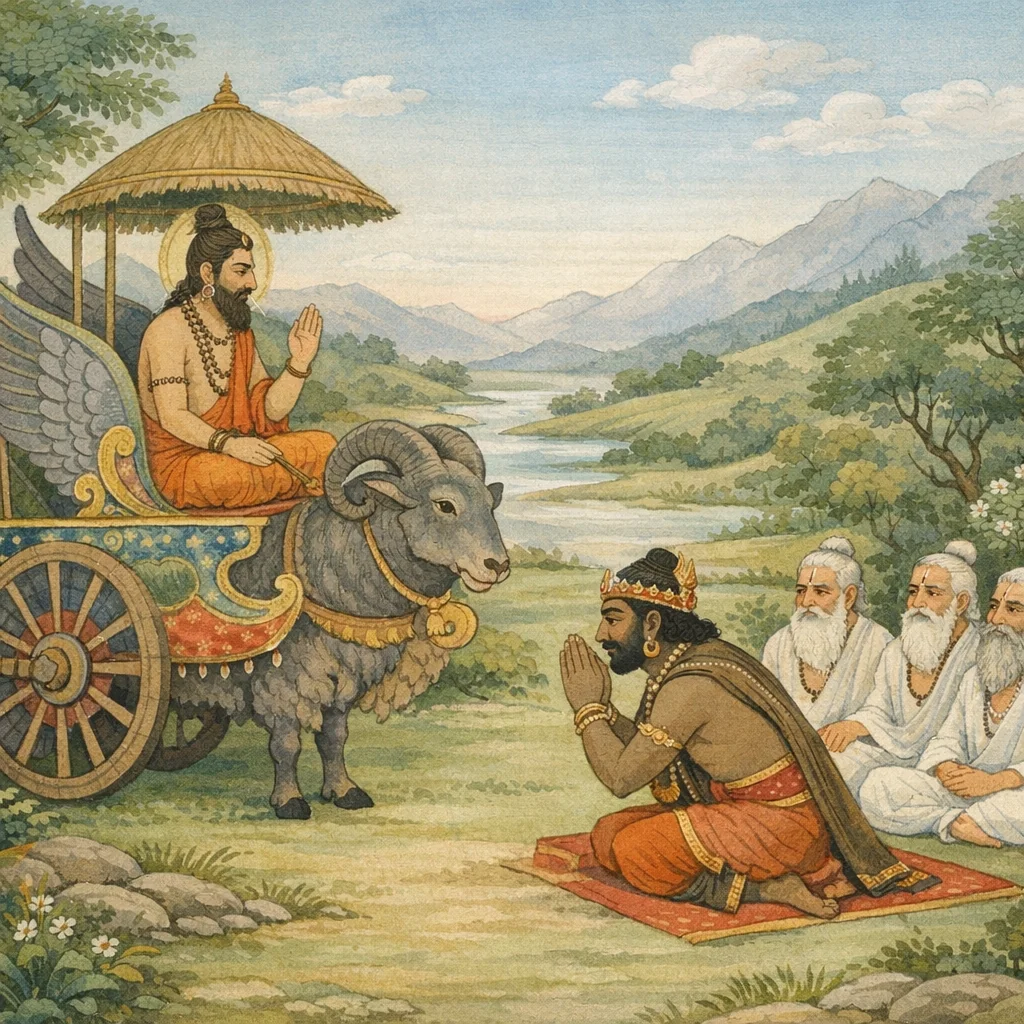
शक्रो हाज्ञातरूपेण जटी भूत्वा रजोगुण: । विरूपं रथमास्थाय प्रश्न॑ पप्रच्छ शम्बरम्,एक समयकी बात है, देवराज इन्द्र अज्ञातरूपसे रजोगुणसम्पन्न जटाधारी तपस्वी बनकर एक बेडौल रथपर सवार हो शम्बरासुरके पास गये। वहाँ पहुँचकर उन्होंने उससे पूछा
Bhishma said: Once, Shakra (Indra), assuming an unrecognized disguise, became a matted-haired ascetic marked by the quality of rajas. Mounting an ungainly chariot, he went to the asura Shambara and, on reaching him, put a question—setting the stage for a test of understanding and conduct rather than a display of force.
Verse 3
शक्र उवाच केन शम्बर वृत्तेन स्वजात्यानधितिष्ठसि । श्रेष्ठ त्वां केन मन्यन्ते तद् वै प्रब्रूहि तत्त्वतः,इन्द्र बोले--शम्बरासुर! किस बर्तावसे अपनी जातिवालोंपर शासन करते हो? वे किस कारण तुम्हें सर्वश्रेष्ठ मानते हैं? यह ठीक-ठीक बतलाओ
Śakra said: “O Śambara, by what conduct do you rule over your own people? For what reason do they regard you as the foremost among them? Tell me that truly and in exact detail.”
Verse 4
शम्बर उवाच नासूयामि यदा वित्रान् ब्राह्ममेव च मे मतम् । शास्त्राणि वदतो विप्रान् सम्मन्यामि यथासुखम्,शम्बरासुरने कहा--मैं ब्राह्मणोंमें कभी दोष नहीं देखता। उनके मतको ही अपना मत समझता हूँ और शास्त्रोंकी बात बतानेवाले विप्रोंका सदा सम्मान करता हूँ--उन्हें यथासाध्य सुख देनेकी चेष्टा करता हूँ
Śambara said: “I never harbor malice or fault-finding toward the brāhmaṇas. I take what is brāhmaṇa—what accords with sacred learning and right conduct—as my own conviction. And I honor those brāhmaṇa sages who expound the śāstras, striving, as far as I am able, to provide them comfort and support.”
Verse 5
श्रुत्वा च नावजानामि नापराध्यामि कर्हिचित् । अभ्यर्च्यभ्यनुपृच्छामि पादौ गृह्नामि धीमताम्,सुनकर उनके वचनोंकी अवहेलना नहीं करता। कभी उनका अपराध नहीं करता। उनकी पूजा करके कुशल पूछता हूँ और बुद्धिमान ब्राह्मणोंके पाँव पकड़ता हूँ
Having listened, I do not slight them, nor do I ever offend them. After honoring them, I inquire after their welfare, and I clasp the feet of the wise—especially the discerning brāhmaṇas—showing reverence and restraint as my rule of conduct.
Verse 6
ते विश्रब्धा: प्रभाषन्ते सम्पृच्छन्ते च मां सदा । प्रमत्तेष्वप्रमत्तो5स्मि सदा सुप्तेषु जागृमि,ब्राह्मण भी अत्यन्त विश्वस्त होकर मेरे साथ बातचीत करते और मेरी कुशल पूछते हैं। ब्राह्मणोंके असावधान रहनेपर भी मैं सदा सावधान रहता हूँ। उनके सोते रहनेपर भी मैं जागता रहता हूँ
Those brāhmaṇas, feeling completely at ease, speak freely with me and constantly inquire after my welfare. Even when they are careless, I remain ever vigilant; when they sleep, I stay awake.
Verse 7
ते मां शास्त्रपथे युक्त ब्रह्मण्पमनसूयकम् । समासिज्चन्ति शास्तार: क्षौद्रं मथ्विव मक्षिका:,मुझे शास्त्रीय मार्गपर चलनेवाला ब्राह्मणभक्त तथा अदोषदर्शी जानकर वे उपदेशक ब्राह्मण मुझे उसी प्रकार सदुपदेशके अमृतसे सींचते रहते हैं जैसे मधुमक्खियाँ मधुके छत्तेको
Knowing me to be devoted to the path of the śāstras, a reverent servant of the brāhmaṇas, and one who does not fault-find, those brāhmaṇa teachers continually bathe me in the nectar of sound instruction—like bees drawing honey from the comb.
Verse 8
यच्च भाषन्ति संतुष्टास्तच्च गृह्नामि मेधया । समाधिमात्मनो नित्यमनुलोममचिन्तयम्,संतुष्ट होकर वे मुझसे जो कुछ कहते हैं उसे मैं अपनी बुद्धिके द्वारा ग्रहण करता हूँ। सदा ब्राह्मणोंमें अपनी निष्ठा बनाये रखता हूँ और नित्यप्रति उनके अनुकूल विचार रखता हूँ
Whatever those contented brāhmaṇas say, I grasp it with discerning intelligence. I keep my mind steadily composed, and day after day I reflect in a way that is agreeable to them—maintaining constant alignment and loyalty toward the brāhmaṇas.
Verse 9
सोऊहं वागग्रमृष्टानां रसानामवलेहक: । स्वजात्यानधितिष्ठामि नक्षत्राणीव चन्द्रमा:,उनकी वाणीसे जो उपदेशका मधुर रस प्रवाहित होता है उसका मैं आस्वादन करता रहता हूँ। इसीलिये नक्षत्रोंपर चन्द्रमाकी भाँति मैं अपनी जातिवालोंपर शासन करता हूँ
Śambara said: “I continually taste and relish the sweet essence that flows from their speech—words refined at the very forefront of utterance. Therefore, like the moon presiding over the stars, I hold authority and exercise rule over those of my own kind.”
Verse 10
एतत् पृथिव्याममृतमेतच्चक्षुरनुत्तमम् । यद् ब्राह्मणमुखात् शास्त्रमिह श्रुत्वा प्रवर्तते,ब्राह्मणके मुखसे शास्त्रका उपदेश सुनकर इस जीवनमें उसके अनुसार बर्ताव करना ही पृथ्वीपर सर्वोत्तम अमृत और सर्वोत्तम दृष्टि है
This is the finest nectar upon the earth, and this is the unsurpassed “eye” of discernment: that a person, having heard the teaching of śāstra from the mouth of a brāhmaṇa, conducts oneself accordingly in this very life. In other words, true immortality and true vision here are gained by listening to authoritative instruction and living it as one’s practice.
Verse 11
एतत् कारणमाज्ञाय दृष्टवा देवासुरं पुरा । युद्ध पिता मे हृष्टात्मा विस्मित: समपद्यत
Having understood this reason, and having formerly witnessed the battle between the gods and the asuras, my father—his mind uplifted—became filled with astonishment in the midst of that war.
Verse 12
इस कारणको जानकर अर्थात् ब्राह्मणके उपदेशके अनुसार चलना ही अमृत है--इस बातको भलीभाँति समझकर पूर्वकालमें देवासुरसंग्रामको उपस्थित हुआ देख मेरे पिता मन-ही-मन प्रसन्न और विस्मित हुए थे ।। दृष्टवा च ब्राह्म॒णानां तु महिमानं महात्मनाम् | पर्यपृच्छत् कथममी सिद्धा इति निशाकरम्,महात्मा ब्राह्मणोंकी इस महिमाको देखकर उन्होंने चन्द्रमासे पूछा--“निशाकर! इन ब्राह्मणोंको किस प्रकार सिद्धि प्राप्त हुई?”
Knowing this cause—that living in accordance with a brāhmaṇa’s instruction is itself nectar—and understanding it well, when he had once witnessed the ancient war between the gods and the asuras, my father rejoiced and was astonished within. And seeing the greatness of those high-souled brāhmaṇas, he asked Niśākara (the Moon): “O Niśākara, how have these brāhmaṇas attained siddhi, spiritual accomplishment?”
Verse 13
सोम उवाच ब्राह्म॒णास्तपसा सर्वे सिध्यन्ते वाग्वला: सदा । भुजवीर्याश्व राजानो वागस्त्राश्न द्विजातय:,चन्द्रमाने कहा--दानवराज! सम्पूर्ण ब्राह्मण तपस्यासे ही सिद्ध हुए हैं। इनका बल सदा इनकी वाणीमें ही होता है। राजाओंका बल उनकी भुजाएँ हैं और ब्राह्मणोंका बल उनकी वाणी
Soma said: “All brāhmaṇas attain success through austerity (tapas); their strength always lies in their speech. Kings, by contrast, possess strength in the power of their arms; and the twice-born (dvija) have speech itself as their weapon.”
Verse 14
प्रणवं चाप्यधीयीत ब्राद्मीर्दुर्वसतीर्वसन् । निर्मन्युरपि निर्वाणो यदि स्यात् समदर्शन:,पहले गुरुके घरमें ब्रह्मचर्यका पालन करते हुए क्लेश-सहनपूर्वक निवास करके प्रणवसहित वेदका अध्ययन करना चाहिये। फिर अन्तमें क्रोध त्यागकर शान्तभावसे संन्यास ग्रहण करना चाहिये। यदि संन्यासी हो तो सर्वत्र समान दृष्टि रखे
Soma said: Living in the teacher’s house and enduring hardships while observing brahmacarya, one should study the Veda together with the sacred syllable Oṃ (pranava). In the end, having abandoned anger and become inwardly tranquil, one should take up renunciation; and if one is a renunciant, one should maintain an equal vision toward all beings and situations.
Verse 15
अपि च ज्ञानसम्पन्न: सर्वान् वेदान् पितुर्गृहि । श्लाघमान इवाधीयादू ग्राम्य इत्येव त॑ विदु:,जो सम्पूर्ण वेदोंको पिताके घरमें रहकर पढ़ता है वह ज्ञानसम्पन्न और प्रशंसनीय होनेपर भी दिद्वानोंके द्वारा ग्रामीण (गँवार) ही समझा जाता है। (वास्तवमें गुरुके घरमें क्लेश-सहनपूर्वक रहकर वेद पढ़नेवाला ही श्रेष्ठ है)
Moreover, even if a man is endowed with knowledge and studies all the Vedas while remaining in his father’s house—appearing as though he were worthy of praise—learned people still regard him as merely “rustic”. The ethical point implied is that true excellence in Vedic learning is associated with disciplined studentship under a teacher, enduring hardship in the guru’s household, rather than comfortable study at home.
Verse 16
भूमिरेतो निगिरति सर्पो बिलशयानिव । राजानं चाप्ययोद्धारं ब्राह्मणं चाप्रवासिनम्,जैसे साँप बिलमें रहनेवाले छोटे जीवोंको निगल जाता है, उसी प्रकार युद्ध न करनेवाले क्षत्रिय और विद्याके लिये प्रवास न करनेवाले ब्राह्मणको यह पृथ्वी निगल जाती है
Soma said: “As a serpent swallows up small creatures that dwell in holes, so does the earth ‘swallow’ (i.e., bring to ruin and obscurity) a king who will not fight and a Brahmin who will not go forth in pursuit of learning. In other words, neglect of one’s proper duty—valor and protection for the Kshatriya, disciplined study through travel and training for the Brahmin—leads to decline, as surely as prey is consumed by a snake.”
Verse 17
अभिमान: श्रियं हन्ति पुरुषस्याल्पमेधस: । गर्भेण दुष्यते कन्या गृहवासेन च द्विज:,मन्दबुद्धि पुरुषके भीतर जो अभिमान होता है वह उसकी लक्ष्मीका नाश करता है। गर्भ धारण करनेसे कन्या दूषित हो जाती है और सदा घरमें रहनेसे ब्राह्मण दूषित समझे जाते हैं
Soma said: “Pride destroys the prosperity of a man of little understanding. A maiden is considered tainted by pregnancy, and a Brahmin is deemed tainted by constant residence at home.” The verse warns that inner arrogance erodes one’s fortune and reputation, and it uses socially recognized examples of ‘defilement’ to stress the need for restraint, vigilance, and disciplined conduct.
Verse 18
(विद्याविदो लोकविद: तपोबलसमन्विता: । नित्यपूज्याश्र वन्द्याश्न द्विजा लोकद्वयेच्छुभि: ।।) जो इहलोक और परलोक दोनोंको सुधारना चाहते हों, उन्हें विद्वान, लौकिक बातोंके ज्ञाता, तपस्वी और शक्तिशाली ब्राह्मणोंकी सदा पूजा और वन्दना करनी चाहिये ।। इत्येतन्मे पिता श्रुत्वा सोमादद्भुतदर्शनात् । ब्राह्मणान् पूजयामास तथैवाहं महाव्रतान्,अदभुत दर्शनवाले चन्द्रमासे यह बात सुनकर मेरे पिताजीने महान् व्रतधारी ब्राह्मणोंका पूजन किया। वैसे ही मैं भी करता हूँ
Soma said: “Those who seek the welfare of both this world and the next should always honor and bow to Brahmins who are learned in sacred knowledge, skilled in worldly understanding, and endowed with ascetic power and strength. Having heard this teaching from Soma—of wondrous appearance—my father worshipped such great-vowed Brahmins; and I too do the same.”
Verse 19
भीष्म उवाच श्रुत्वैतद् वचन शक्रो दानवेन्द्रमुखाच्च्युतम् । द्विजान् सम्पूजयामास महेन्द्रत्वमवाप च,भीष्मजी कहते हैं--भारत! दानवराज शम्बरके मुखसे यह वचन सुनकर इन्द्रने ब्राह्मणोंका पूजन किया, इससे उन्हें महेन्द्रपदकी प्राप्ति हुई
Bhishma said: O Bharata, having heard these words that issued from the mouth of the lord of the Dānavas (Śambara), Śakra (Indra) honored the Brahmins; and by that act he attained the status of Mahendra. The passage underscores that reverence to the learned and righteous is a direct cause of exalted sovereignty and divine prosperity.
Verse 36
इति श्रीमहाभारते अनुशासनपर्वणि दानधर्मपर्वणि ब्राह्मणप्रशंसायामिन्द्रशम्बरसंवादे षट्त्रिंशो5ध्याय:
Thus, in the sacred Śrī Mahābhārata, within the Anuśāsana Parva—specifically in the section on the dharma of giving—during the praise of the Brāhmaṇa, in the dialogue between Indra and Śambara, ends the thirty-sixth chapter. This colophon signals the passage’s ethical frame: generosity guided by dharma and the exaltation of brāhmaṇical virtues, set forth through an instructive divine dialogue.
Frequently Asked Questions
The dilemma concerns how a person should maintain ethical judgment and social responsibility when attraction and attachment can distort perception, generate instability, and challenge ideals of restraint and trust.
The implied takeaway is that relational ethics must be approached through self-governance—examining desire, recognizing persuasive dynamics, and seeking principled guidance rather than assuming simple external control of outcomes.
No explicit phalaśruti appears in this adhyāya; its meta-function is diagnostic, formulating the inquiry that motivates subsequent instruction within Anuśāsana-parva’s broader didactic sequence.