Adhyaya 15
Uccaiḥśravas and the Counsel to Churn the Ocean (उच्चैःश्रवसः प्रादुर्भावः — समुद्रमन्थन-परामर्शः)
Upa-parva: Pauloma Parva (Pulomā-upākhyāna)
This chapter continues the Sauti–Śaunaka exchange. Śaunaka requests an account of where and how the devas churned amṛta, the process by which the radiant horse-king Uccaiḥśravas arose, and the circumstances of that emergence. Sauti responds by evoking Mount Meru in elevated descriptive detail—its blazing splendor, golden peaks, divine attendance, formidable inaccessibility to adharmic persons, and its rivers, trees, and birds—thereby establishing a sacral setting suitable for cosmic enterprise. The devas ascend Meru and convene in disciplined observance to deliberate on obtaining amṛta. Nārāyaṇa addresses Brahmā, proposing that devas and asuras churn the ‘kalaśa-udadhi’ (the ocean) to bring forth amṛta, instructing them to cast all herbs and treasures into the waters as inputs to the churning. Thematically, the passage links cosmology to policy: desired outcomes require counsel, cooperation, and method, and divine ‘ratna’ (exemplary treasures like Uccaiḥśravas) are framed as emergent products of structured, collective action.
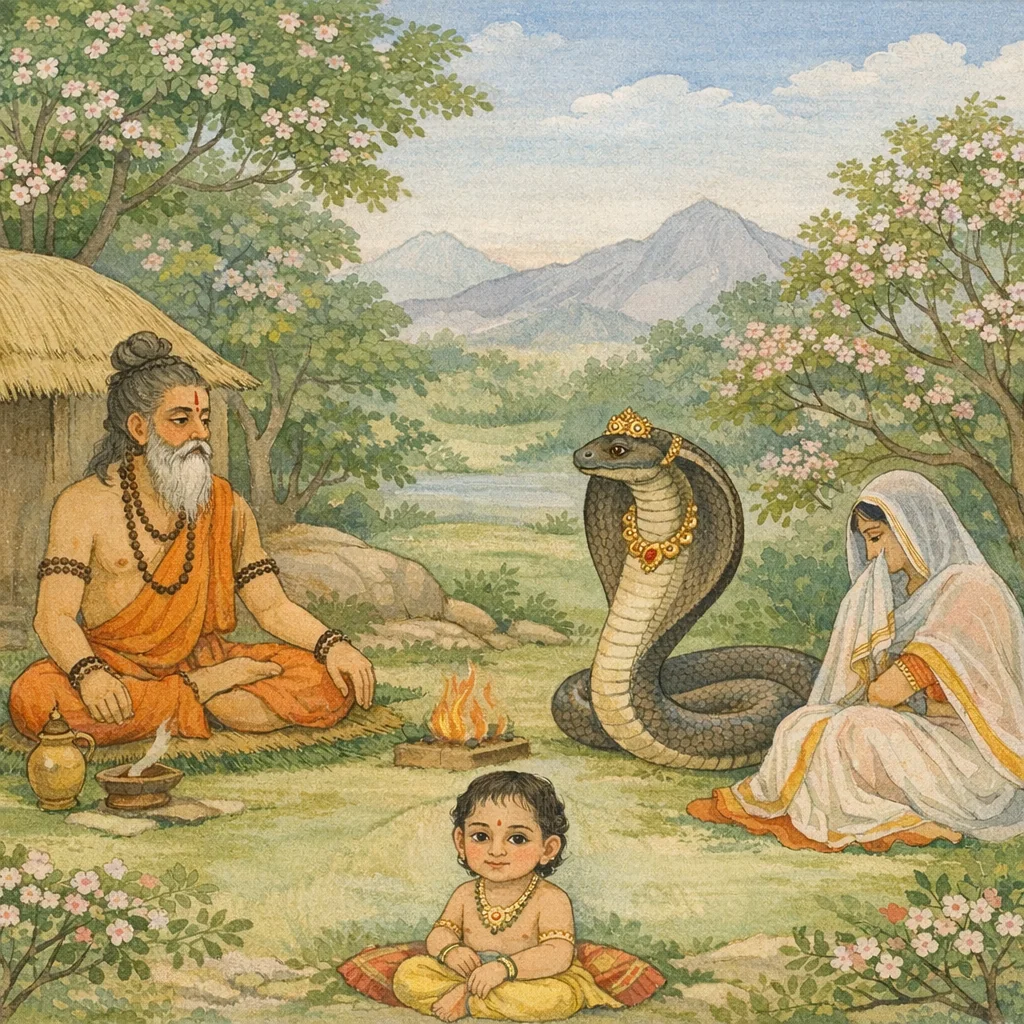
Chapter Arc: Sauti announces the fifteenth adhyaya: the dread maternal curse upon the serpents and the seed of their possible salvation—Astika’s birth and destiny to shield the Nāga line from annihilation at the Sarpa-satra. → The curse hangs like a noose over the serpent race; to pacify it, the foremost Nāga Vāsuki offers his sister Jaratkāru to the austere ṛṣi Jaratkāru, binding the marriage to a single, urgent purpose: a son who can avert the foretold destruction. → From that union is born Astika—learned in Veda and Vedāṅga, a great tapasvin, equal-minded toward all—his very existence framed as the counter-force to the curse and the coming sacrificial fire of Janamejaya. → Astika grows through vows, study, and rites; the narrative points forward to the later time when King Janamejaya of the Pāṇḍava line undertakes the great serpent-sacrifice, while the sage Jaratkāru, having fulfilled dharma through progeny, attains heaven. → The stage is set: Janamejaya’s Sarpa-satra looms, and Astika’s promised intervention is implied but not yet enacted.
Shlokas
Verse 1
अकाल पञ्चदशो<् ध्याय: आस्तीकका जन्म तथा मातृशापसे सर्पसत्रमें नष्ट होनेवाले नागवंशकी उनके द्वारा रक्षा सौतिर्वाच मात्रा हि भुजगा: शप्ता: पूर्व ब्रह्मविदां वर । जनमेजयस्य वो यज्ञे धक्ष्यत्यनिलसारथि:,उग्रश्रवाजी कहते हैं--ब्रह्मवेत्ताओंमें श्रेष्ठ शौनक! पूर्वकालमें नागमाता कद्भूने सर्पोको यह शाप दिया था कि तुम्हें जनमेजयके यज्ञमें अग्नि भस्म कर डालेगी
Śaunaka asked. Sauti replied: “O best of the knowers of Brahman, long ago the serpents were cursed by their mother: ‘In King Janamejaya’s sacrifice, Agni—driven by the wind—will burn you to ashes.’”
Verse 2
तस्य शापस्य शान्त्यर्थ प्रददौ पन्नगोत्तम: । स्वसारमृषये तस्मै सुव्रताय महात्मने,उसी शापकी शान्तिके लिये नागप्रवर वासुकिने सदाचारका पालन करनेवाले महात्मा जरत्कारुको अपनी बहिन ब्याह दी थी। महामना जरत्कारने शास्त्रीय विधिके अनुसार उस नागकन्याका पाणिग्रहण किया और उसके गर्भसे आस्तीक नामक पुत्रको जन्म दिया
To bring about the pacification of that curse, the foremost of serpents (Vāsuki) gave his own sister in marriage to that sage—an exalted soul, steadfast in righteous vows. The act is presented as a dharmic remedy: a responsible, lawful alliance undertaken to avert the destructive consequences of a curse and to restore order.
Verse 3
सचतां प्रतिजग्राह विधिदृष्टेन कर्मणा । आस्तीको नाम पुत्रश्न तस्यां जज्ञे महामना:,उसी शापकी शान्तिके लिये नागप्रवर वासुकिने सदाचारका पालन करनेवाले महात्मा जरत्कारुको अपनी बहिन ब्याह दी थी। महामना जरत्कारने शास्त्रीय विधिके अनुसार उस नागकन्याका पाणिग्रहण किया और उसके गर्भसे आस्तीक नामक पुत्रको जन्म दिया
Śaunaka said: “He accepted her hand in marriage through the rites prescribed by scripture. From her, a noble-minded son named Āstīka was born.”
Verse 4
तपस्वी च महात्मा च वेदवेदाड़पारग: । सम: सर्वस्य लोकस्य पितृमातृभयापह:,आस्तीक वेद-वेदांगोंके पारंगत विद्वान, तपस्वी, महात्मा, सब लोगोंके प्रति समानभाव रखनेवाले तथा पितृकुल और मातृकुलके भयको दूर करनेवाले थे
Śaunaka said: “Āstīka was an ascetic and a great-souled man, fully accomplished in the Vedas and their auxiliary disciplines. He regarded all people with equal-mindedness, and he became the remover of fear that had arisen for both the paternal and maternal lines.”
Verse 5
अथ दीर्घस्य कालस्य पाण्डवेयो नराधिप: । आज हार महायज्ञं सर्पसत्रमिति श्रुति:,तदनन्तर दीर्घकालके पश्चात् पाण्डववंशीय नरेश जनमेजयने सर्पसत्र नामक महान् यज्ञका आयोजन किया, ऐसा सुननेमें आता है। सर्पोके संहारके लिये आरम्भ किये हुए उस सत्रमें आकर महातपस्वी आस्तीकने नागोंको मौतसे छुड़ाया
Śaunaka said: “After a long lapse of time, the Pāṇḍava-descended king performed a great sacrifice known—by tradition—as the Sarpa-satra (the serpent-sacrifice).”
Verse 6
तस्समिन् प्रवत्ते सत्रे तु सर्पाणामन्तकाय वै | मोचयामास तान् नागानास्तीक: सुमहातपा:,तदनन्तर दीर्घकालके पश्चात् पाण्डववंशीय नरेश जनमेजयने सर्पसत्र नामक महान् यज्ञका आयोजन किया, ऐसा सुननेमें आता है। सर्पोके संहारके लिये आरम्भ किये हुए उस सत्रमें आकर महातपस्वी आस्तीकने नागोंको मौतसे छुड़ाया
When that sacrificial session was underway—intended indeed to bring about the death of the serpents—the great ascetic Āstīka rescued those Nāgas from destruction.
Verse 7
भ्रातृश्व मातुलांश्वैव तथैवान्यान् स पन्नगान् । पितृश्च तारयामास संतत्या तपसा तथा,उन्होंने मामा तथा ममेरे भाइयोंको एवं अन्यान्य सम्बन्धोंमें आनेवाले सब नागोंको संकटमुक्त किया। इसी प्रकार तपस्या तथा संतानोत्पादनद्वारा उन्होंने पितरोंका भी उद्धार किया
He delivered from peril the serpents—his maternal uncles, his maternal cousins, and other pannage besides. In the same way, through austerity and through the continuance of his line, he also brought deliverance to the Pitṛs, the ancestors.
Verse 8
व्रतैश्न विविधैर््रह्मन् स्वाध्यायैश्वानूणो5भवत् | देवांक्ष॒ तर्पयामास यज्ञैविविधदक्षिणै:,ब्रह्मन! भाँति-भाँतिके व्रतों और स्वाध्यायोंका अनुष्ठान करके वे सब प्रकारके ऋणोंसे उऋण हो गये। अनेक प्रकारकी दक्षिणावाले यज्ञोंका अनुष्ठान करके उन्होंने देवताओं, ब्रह्मचर्यव्रतके पालनसे ऋषियों और संतानकी उत्पत्तिद्वारा पितरोंको तृप्त किया। कठोर व्रतका पालन करनेवाले जरत्कारु मुनि पितरोंकी चिन्ताका भारी भार उतारकर अपने उन पितामहोंके साथ स्वर्गलोकको चले गये। आस्तीक-जैसे पुत्र तथा परम धर्मकी प्राप्ति करके मुनिवर जरत्कारने दीर्घकालके पश्चात् स्वर्गलोककी यात्रा की। भूगुकुलशिरोमणे! इस प्रकार मैंने आस्तीकके उपाख्यानका यथावत् वर्णन किया है। बताइये, अब और क्या कहा जाय?
Śaunaka said: “O Brāhmaṇa, by undertaking many kinds of vows and by the discipline of Vedic study (svādhyāya), he became free from all obligations. And by sacrifices endowed with varied gifts (dakṣiṇās), he satisfied the gods.”
Verse 9
ऋषीं श्व ब्रह्मचर्येण संतत्या च पितामहान् । अपहृत्य गुरुं भारं पितृणां संशितव्रतः,ब्रह्मन! भाँति-भाँतिके व्रतों और स्वाध्यायोंका अनुष्ठान करके वे सब प्रकारके ऋणोंसे उऋण हो गये। अनेक प्रकारकी दक्षिणावाले यज्ञोंका अनुष्ठान करके उन्होंने देवताओं, ब्रह्मचर्यव्रतके पालनसे ऋषियों और संतानकी उत्पत्तिद्वारा पितरोंको तृप्त किया। कठोर व्रतका पालन करनेवाले जरत्कारु मुनि पितरोंकी चिन्ताका भारी भार उतारकर अपने उन पितामहोंके साथ स्वर्गलोकको चले गये। आस्तीक-जैसे पुत्र तथा परम धर्मकी प्राप्ति करके मुनिवर जरत्कारने दीर्घकालके पश्चात् स्वर्गलोककी यात्रा की। भूगुकुलशिरोमणे! इस प्रकार मैंने आस्तीकके उपाख्यानका यथावत् वर्णन किया है। बताइये, अब और क्या कहा जाय?
Śaunaka said: “By steadfast celibate discipline (brahmacarya) he satisfied the seers, and by begetting offspring he satisfied the forefathers. Having thus lifted the heavy burden of anxiety that weighed upon his ancestors, the sage of firm vows became free of the ancestral debt and, in due course, attained the heavenly world together with those forefathers.”
Verse 10
जरत्कारुर्गत: स्वर्ग सहित: स्वै: पितामहै: । आस्तीकं च सुतं प्राप्य धर्म चानुत्तमं मुनि:,ब्रह्मन! भाँति-भाँतिके व्रतों और स्वाध्यायोंका अनुष्ठान करके वे सब प्रकारके ऋणोंसे उऋण हो गये। अनेक प्रकारकी दक्षिणावाले यज्ञोंका अनुष्ठान करके उन्होंने देवताओं, ब्रह्मचर्यव्रतके पालनसे ऋषियों और संतानकी उत्पत्तिद्वारा पितरोंको तृप्त किया। कठोर व्रतका पालन करनेवाले जरत्कारु मुनि पितरोंकी चिन्ताका भारी भार उतारकर अपने उन पितामहोंके साथ स्वर्गलोकको चले गये। आस्तीक-जैसे पुत्र तथा परम धर्मकी प्राप्ति करके मुनिवर जरत्कारने दीर्घकालके पश्चात् स्वर्गलोककी यात्रा की। भूगुकुलशिरोमणे! इस प्रकार मैंने आस्तीकके उपाख्यानका यथावत् वर्णन किया है। बताइये, अब और क्या कहा जाय?
Śaunaka said: “The sage Jaratkāru, having obtained a son—Āstīka—and having attained unsurpassed dharma, departed for heaven together with his own forefathers.”
Verse 11
जरत्कारु: सुमहता कालेन स्वर्गमेयिवान् । एतदाख्यानमास्तीकं यथावत् कथितं मया । प्रत्रूहि भूगुशार्दूल किमन्यत् कथयामि ते,ब्रह्मन! भाँति-भाँतिके व्रतों और स्वाध्यायोंका अनुष्ठान करके वे सब प्रकारके ऋणोंसे उऋण हो गये। अनेक प्रकारकी दक्षिणावाले यज्ञोंका अनुष्ठान करके उन्होंने देवताओं, ब्रह्मचर्यव्रतके पालनसे ऋषियों और संतानकी उत्पत्तिद्वारा पितरोंको तृप्त किया। कठोर व्रतका पालन करनेवाले जरत्कारु मुनि पितरोंकी चिन्ताका भारी भार उतारकर अपने उन पितामहोंके साथ स्वर्गलोकको चले गये। आस्तीक-जैसे पुत्र तथा परम धर्मकी प्राप्ति करके मुनिवर जरत्कारने दीर्घकालके पश्चात् स्वर्गलोककी यात्रा की। भूगुकुलशिरोमणे! इस प्रकार मैंने आस्तीकके उपाख्यानका यथावत् वर्णन किया है। बताइये, अब और क्या कहा जाय?
Śaunaka said: “After a very long time, the sage Jaratkāru went to heaven. I have now related, in due order, this narrative of Āstīka. Tell me, O tiger among the Bhṛgus—what else should I narrate to you, O Brahman?”
Verse 14
इस प्रकार श्रीमहाभारत आदिपर्वके अन्तर्गत आस्तीकपर्वमें वायुकिकी बहिनके वरणसे सम्बन्ध रखनेवाला चौदहवाँ अध्याय पूरा हुआ
Thus ends the fourteenth chapter of the Āstīka section within the Ādi Parva of the Śrī Mahābhārata, a chapter connected with the account concerning the choice (in marriage) of Vāyukī’s sister. The statement functions as a formal colophon, marking the completion of a narrative unit and preserving the text’s orderly transmission.
Verse 15
इति श्रीमहाभारते आदिपर्वणि आस्तीकपर्वणि सर्पाणां मातृशापप्रस्तावे पज्चदशो<ध्याय:
Thus, in the Śrī Mahābhārata, within the Ādi Parva, in the Āstīka section, in the episode introducing the mother’s curse upon the serpents, ends the fifteenth chapter. This colophon marks a turn in the narration toward the moral causality of a curse—how wrongdoing and anger can set in motion consequences that shape the fate of entire lineages.
Frequently Asked Questions
The implicit tension concerns means and ends: the pursuit of amṛta requires cooperation with rival powers (asuras) and strict procedure, raising the question of how far pragmatic alliance and instrumental methods can be aligned with dharmic propriety.
Desired outcomes arise from disciplined, collective, and well-counseled action—deliberation (mantra), regulated conduct (niyama), and appropriate preparation (placing herbs/treasures as causal inputs) precede attainment.
No explicit phalaśruti is stated in the supplied verses; the meta-function is architectural—anchoring later mythic and genealogical references by locating Uccaiḥśravas and amṛta within a narrated causal history.