Adhyaya 17
Daṇḍanāthāviniryāṇa (The Departure/March of Daṇḍanāthā)
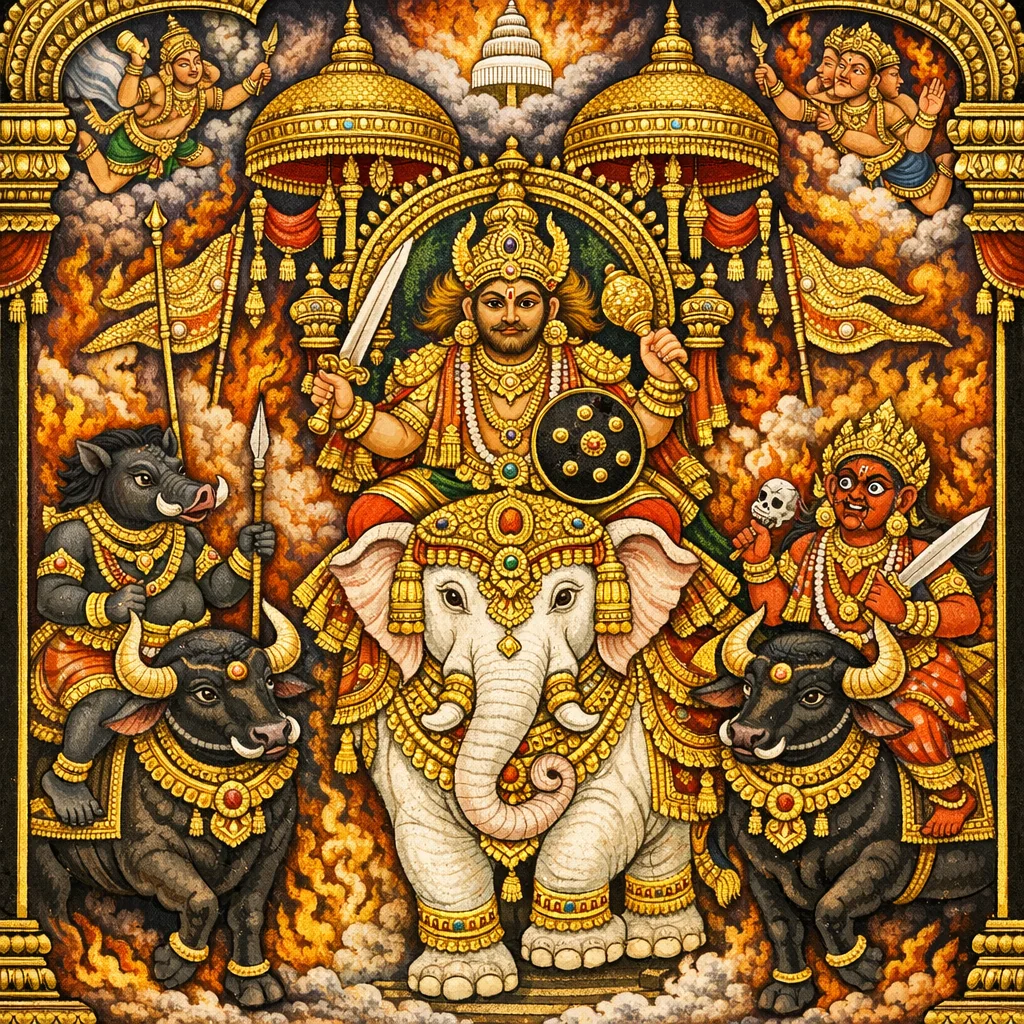
Set within the Lalitopākhyāna of the Brahmāṇḍa Purāṇa (Hayagrīva–Agastya dialogue), this adhyāya portrays the martial mobilization and outward march (viniryāṇa) of Daṇḍanāthā, Śrī Lalitā’s commander. It evokes a vast procession—countless white parasols lighting the sky, standards and fans, and fearsome śakti-forces advancing in ordered ranks. Specialized goddess-troops appear with distinct forms: sūkarānana (boar-faced) units mounted on buffaloes, and the fierce Potrīmukhī Devī with her retinue, smoky-fire in hue and terrifying in teeth. Daṇḍanāthā changes mounts, descending from a great lion and riding Vajraghoṣa, whose roar and fangs are said to shake the directions and threaten to churn earth and underworld. The three worlds (trailokya) react in alarm, signaling that Lalitā’s campaign is a trans-cosmic correction of adharma and asura power, not merely local warfare.
Shlokas
Verse 1
इति श्रीब्रह्माण्डे महापुराणे उत्तरभागे हयग्रीवागस्त्यसंवादे ललितोपाख्याने ससेनविजययात्रा नाम षोडशो ऽध्यायः दण्डनाथाविनिर्याणे संख्यातीतैः सितप्रभैः / छत्रैर्गगनमारेजे निःसंख्याशशिमण्डितम्
Thus, in the Śrī Brahmāṇḍa Mahāpurāṇa, in the Uttara section, in the dialogue of Hayagrīva and Agastya, within the Lalitopākhyāna, is the sixteenth chapter called “The Victorious March with the Army”. When Daṇḍanāthā set forth, the sky shone with countless white-radiant parasols, as though adorned with innumerable moons.
Verse 2
अन्योन्यसक्तैर्थवलच्छत्रैरन्तर्घनीभवत् / तिमिरं नुनुदे भूयस्तत्काण्डमणिरोचिषा
With the great parasols pressed close to one another, the space within grew dense; yet the radiance of the jewels set upon their staffs again drove away the darkness.
Verse 3
वज्रप्रभाधगधगच्छायापूरितदिङ्मुखाः / तालवृन्ताः शतविधाः क्रोडमुख्या बले ऽचलन्
The blazing shadow of vajra-like radiance filled the faces of the quarters; palm-leaf fans of a hundred kinds, led by the boar-faced chiefs, moved forth within the host.
Verse 4
चण्डो दण्डादयस्तीव्राभैरवाः शुलपाणयः / ज्वलत्केशापिशङ्गाभास्तडिद्भासुरदिङ्मुखाः
Caṇḍa, Daṇḍa, and the other fierce Bhairavas bore tridents in their hands; their hair blazed like fire, with tawny radiance, and the quarters shone brilliant as lightning.
Verse 5
दहत्य इव दैत्यौघांस्तीक्ष्णैर्मार्गणवह्निभिः / प्रचेलुर्दण्डनाथायास्सेना नासीरधाविताः
With sharp arrows like fire, as though burning the hordes of the Daityas, Dandanatha’s army surged forward, rushing toward Nasira.
Verse 6
अथ पोत्रीमुखीदेवीसमानाकृतिभूषणाः / तत्समानायुधकरास्तत्समानस्ववाहनाः
Then appeared those like the Goddess Potrīmukhī—adorned with the same form and ornaments, bearing the same weapons in their hands, and mounted upon similar steeds.
Verse 7
तीक्ष्मदंष्ट३विनिष्ठ्यूतवह्रिधूमामितांबराः / तमालश्यामलाकाराः कपिलाः क्रूरलोचनाः
With sharp tusks spewing fire and smoke so that their garments seemed smoke-stained, they were dark as the tamāla tree, of kapila hue, and cruel-eyed.
Verse 8
सहस्रमहिषारूढाः प्रचेलुः सूकराननाः / अथ श्रीदण्डनाथा च करिचक्ररथोत्तमात्
The boar-faced warriors, mounted upon a thousand buffaloes, advanced; then Śrī Dandanāthā too descended from her splendid chariot with elephant-like wheels.
Verse 9
अवरुह्य महासिंहमारुरोह स्ववाहनम् / वज्रघोष इति ख्यातं धूतकेसरमण्डलम्
Dismounting from the great lion, she mounted her own steed, famed as Vajraghoṣa, its mane shaken free of dust and shining bright.
Verse 10
व्यक्तास्यं विकटाकारं विशङ्कटविलोचनम् / दंष्ट्राकटकटत्कारबधिरीकृतदिक्तटम्
Her face stood revealed, her form was fearsome, her gaze dreadful; the clattering of her fangs made the very borders of the directions go deaf.
Verse 11
आदिकूर्मकठोरास्थि खर्परप्रतिमैर्नखैः / विबन्तमिव भूचक्रमापातालं निमज्जिभिः
With nails like shells, hard as the bones of the primal Kūrma, she seemed to pierce the earth’s disk and sink down to Pātāla.
Verse 12
योजनत्रयमुत्तुङ्गं वगादुद्धूतवालधिम् / सिंहवाहनमारुह्य व्यचलद्दण्डनायिका
Mounting her lion-steed, three yojanas tall, its tail whipped up by speed, the Lady Dandanāyikā did not waver.
Verse 13
तस्यामसुरसंहारे प्रवृत्तायां ज्वलत्क्रुधि / उद्वेगं बहुलं प्राप त्रैलोक्यं सचराचरम्
When she, blazing with wrath, set about the slaughter of the asuras, the entire three worlds—moving and unmoving—were seized by great alarm.
Verse 14
किमसौ धक्ष्यति रुषा विश्वमद्यैव पोत्रिणी / किं वा मुसलघातेन भूमिं द्वेधा करिष्यति
O Potriṇī! Will she, in wrath, burn the whole universe this very day? Or will she, with a blow of the musala, split the earth in two?
Verse 15
अथ वा हलनिर्घातैः क्षोभयिष्यति वारिधीन् / इति त्रस्तहृदः सर्वे गगने नाकिनां गणाः
“Or else, with the thunderous blows of the plough, he will churn the oceans”—thus, all the hosts of the gods in the sky became fearful at heart.
Verse 16
दूराद्रुतं विमानैश्च सत्रासं ददृशुर्गताः / ववन्दिरे च ता देवा बद्धाञ्जलिपुटान्विताः / मुहुर्द्वादशनामानि कीर्तयन्तो नभस्तले
The gods, withdrawing far away in their vimānas, beheld the fearful sight. Then, with palms joined in reverence, they bowed and again and again in the sky chanted the twelve names of the Goddess.
Verse 17
अगस्त्य उवाच कानि द्वादशनामानि तस्या देव्या वद प्रभो / अश्वानन महाप्राज्ञ येषु मे कौतुकं महत्
Agastya said: “O Lord, tell me the twelve names of that Goddess. O Aśvānana, O greatly wise one—my curiosity about them is profound.”
Verse 18
हयग्रीव उवाच शृणु द्वादशनामानि तस्या देव्या घटोद्भव / यदाकर्णनमात्रेण प्रसन्ना सा भविष्यति / पञ्चमी दण्डनाथा च संकेता समयेश्वरी
Hayagrīva said: “Hear, O Pot-born one, the twelve names of that Goddess; by mere hearing she becomes gracious: Pañcamī, Daṇḍanāthā, Saṃketā, Samayeśvarī.”
Verse 19
तथा समयसंकेता वाराही पोत्रिणी तथा / वार्ताली च महासेनाप्याज्ञा चक्रेश्वरी तथा
Likewise: Samayasaṃketā, Vārāhī, Potriṇī; and also Vārtālī, Mahāsenā, Ājñā, and Cakreśvarī.
Verse 20
अरिघ्नी चेति सम्प्रोक्तं नामद्वादशकं मुने / नामद्वादशकाभिख्यवज्रपञ्जरमध्यगः / संकटे दुःखमाप्नोति न कदाचन मानवः
O sage, “Arighnī” and the rest are declared as the set of twelve Names. The man who abides within this vajra-cage of the twelve Names never meets sorrow, even in times of peril.
Verse 21
एतैर्नामभिरभ्रस्थाः संकेतां बहु तुष्टुवुः / तेषामनुग्रहार्थाय प्रचचालच सा पुनः
With these Names, the Śaktis dwelling in the clouds praised Saṅketā again and again. To bestow grace upon them, the Goddess moved onward once more.
Verse 22
अथ संकेतयोगिन्या मन्त्रनाथा पदस्पृशः / निर्याणसूचनकरी दिवि दध्वान काहली
Then, at the touch of Saṅketayoginī’s footsteps, the trumpet of the Mantranāthas resounded in the heavens, proclaiming the signal to depart.
Verse 23
शृङ्गारप्रायभूषाणां शार्दूलश्यामलत्विषाम् / वीणासंयतपाणीनां शक्तीनां निर्ययौ बलम्
Forth went the host of the Śaktis—adorned with ornaments of beauty, darkly radiant like leopards, their hands poised upon the vīṇā.
Verse 24
काश्चद्गायन्ति नृत्यन्ति मत्तकोकिलनिःस्वनाः / वीणावेणुमृदङ्गाद्याः सविलासपदक्रमाः
Some among them sang and danced with notes sweet as an intoxicated cuckoo; with vīṇā, veṇu, mṛdaṅga and other instruments, their steps moved in playful, graceful rhythm.
Verse 25
प्रचेलुः शक्तयः श्यामा हर्षयन्त्यो जगज्जनान् / मयूरवाहनाः काश्चित्कतिचिद्धंसवाहनाः
The dark-hued Śaktis moved forth, gladdening the people of the world; some bore the peacock as their vāhana, and some the sacred swan.
Verse 26
कतिचिन्नकुलारूढाः कतिचित्कोकिलासनाः / सर्वाश्च श्यामलाकाराः काश्चित्कर्णीरथस्थिताः
Some rode upon nakulas, some sat upon seats of kokilas; all were of darkened form, and some stood upon the chariot of Karṇī.
Verse 27
कादंबमधुमत्ताश्च काश्चिदारूढसैन्धवाः / मन्त्रनाथां पुरस्कृत्य संप्रचेलुः पुरः पुरः
Some were intoxicated with kādamba-honey, and some had mounted saindhava steeds; placing Mantranāthā in the fore, they advanced ever onward.
Verse 28
अथारुह्य समुत्तुङ्गध्वजचक्रं महारथम् / बालार्कवर्णकवचा मदालोलविलोचना
Then she mounted the great chariot, with towering banner and cakra-like wheel; her armor shone the hue of the young sun, and her eyes swayed with rapturous intoxication.
Verse 29
ईषत्प्रस्वेदकणिकामनोहरमुखांबुजा / प्रेक्षयन्ती कटाक्षौधौः किञ्चिद्भ्रूवल्लिताण्डवैः
Her lotus-face, made lovely by faint beads of sweat, was enchanting; she cast a flood of sidelong glances, and with the rippling play of her brows showed a subtle, dance-like grace.
Verse 30
समस्तमपि तत्सैन्यं शक्तीनामुद्धतोद्धतम् / पिच्छत्रिकोणच्छत्रेण बिरुदेन महीयसा
All that host of the Śaktis was fierce and exultant; it shone with a mighty emblem of renown and the majestic triangular sacred parasol (picchatrikoṇa).
Verse 31
आसां मध्ये न चान्यासां शक्तीनामुज्ज्वलोदया / निर्जगाम घनश्यामश्यामला मन्त्रनायिका
Among those Śaktis—unequalled by any other—there emerged Śyāmalā, dark as a rain-cloud, the Mantranāyikā, rising in radiant splendor.
Verse 32
तां तुष्टुवुः षोडशभिर्नामभिर्नाकवासिनः / तानि षोडशनामानि शृणु कुंभसमुद्भव
The dwellers of heaven praised her with sixteen names. O Kumbhasamudbhava, born of the jar, listen to those sixteen names.
Verse 33
संगीतयोगिनी श्यामा श्यामला मन्त्रनायिका / मन्त्रिणी सचिवेशी च प्रधानेशी शुकप्रिया
She is hailed as Saṃgītayoginī, Śyāmā, Śyāmalā, the Mantranāyikā; also as Mantriṇī, Saciveśī, Pradhāneśī, and Śukapriyā.
Verse 34
वीणावती वैणिकी च मुद्रिणी प्रियकप्रिया / निपप्रिया कदंबेशी कदंबवनवासिनी
She is also called Vīṇāvatī, Vaiṇikī, Mudriṇī, Priyakapriyā; and likewise Nipapriyā, Kadaṃbeśī, and Kadaṃbavanavāsinī, dweller in the kadamba grove.
Verse 35
सदामदा च नामानि षोडशैतानि कुंभज / एतैर्यः सचिवेशानीं सकृत्स्तौति शरीरवान् / तस्य त्रैलोक्यमखिलं हस्ते तिष्ठत्यसंशयम्
O Kumbhaja! These are the sixteen names, beginning with “Sadāmadā.” Whoever, embodied, praises Saciveśānī even once with them—of him the entire three worlds stand in the hand, without doubt.
Verse 36
मन्त्रिनाथा यत्रयत्र कटाक्षं विकिरत्यसौ / तत्रतत्र गताशङ्कं शत्रुसैन्यं पतत्यलम्
Wherever Mantrināthā scatters her sidelong glance, there and there the enemy host, rid of all dread, falls utterly.
Verse 37
ललितापरमेशान्या राज्यचर्चा तु यावती / शक्तीनामपि चर्चा या सा सर्वत्र जयप्रदा
As far as the discourse goes on the sovereignty of Lalitāparameśānī, and as far as the discourse goes on the Śaktis as well—this bestows victory everywhere.
Verse 38
अथ संगीतयोगिन्याः करस्थाच्छुकपोतकात् / निर्जगाम धनुर्वेदो वहन्सज्जंशरासनम्
Then, from the little parrot in Saṃgītayoginī’s hand, Dhanurveda emerged, bearing a ready bow and arrows.
Verse 39
चतुर्बाहुयुतो वीरस्त्रिशिरास्त्रिविलोचनः / नमस्कृत्य प्रधानेशीमिदमाह स भक्तिमान्
That hero, endowed with four arms, three heads, and three eyes, bowed to Pradhāneśī in devotion and spoke these words.
Verse 40
देवि भण्डासुरेद्रस्य युद्धाय त्वं प्रवर्त्तसे / अतस्तव मया साह्यं कर्तव्यं मन्त्रिनायिके
O Goddess, you are setting forth to battle Bhāṇḍāsurendra; therefore, O leader among ministers, it is my duty to aid you.
Verse 41
चत्रजीवमिमं नाम कोदण्डं सुमहत्तरम् / गृहाण जगतामंब दानवानां निबर्हणम्
O Jagadambā, accept this exceedingly mighty Kodaṇḍa bow named Catrajīva; it is for the destruction of the Dānava hosts.
Verse 42
इमौ चाक्षयबाणाढ्यौ तूणीरौ स्वर्णचित्रितौ / गृहाण दैत्यनाशाय ममानुग्रहहेतवे
Accept these two quivers, adorned with gold and filled with inexhaustible arrows; for the destruction of the Daitya and as a boon of grace to me.
Verse 43
इति प्रणम्य शिरसा धनुर्वेदेन भक्तितः / अर्पितांश्चापतूणीराञ्जग्राह प्रियकप्रिया
So saying, the one skilled in Dhanurveda bowed with devotion, head lowered in reverence; and Priyakapriyā accepted the bow and quivers that were offered.
Verse 44
चित्रजीवं महाचापमादाय च शूकप्रिया / विस्फारं जनयामास मौर्वीमुद्वाद्य भूरिशः
Śūkapriyā took up the great bow Citrajīva and, repeatedly drawing and twanging the maurvī bowstring, raised a mighty resounding snap.
Verse 45
संगीतयोगिनी चापध्वनिना पूरितं जगत् / नाकालयानां च मनोन यनानन्दसंपदा
The world was filled with the bow’s resonance of the Yoginī of sacred song; even the minds of the dwellers of Naka-loka were enriched with a treasure of bliss.
Verse 46
यन्त्रिणी चेति द्वे तस्याः परिचारिके / शुकं वीणां च सहसा वहन्त्यौ परिचेरतुः
She had two attendants known as Yantriṇī; at once they bore a parrot and a vīṇā, and ministered to her.
Verse 47
आलोलवलयक्वाणवर्धिष्णुगुणनिस्वनम् / धारयन्ती घनश्यामा चकारातिमनोहरम्
Ghānaśyāmā bore the sweet resonance of the notes, ever heightened by the chiming of swaying bangles, and made it supremely enchanting.
Verse 48
चित्रजीवशरासेन भूषिता गीतयोगिनी / कदंबिनीव रुरुचे कदम्बच्छत्रकार्मुका
Adorned with a quiver of arrows made from the feathers of the citrajīva bird, the Yoginī of song—bearing a bow like a kadamba parasol—shone forth like a mass of clouds.
Verse 49
कालीकटाक्षवत्तीक्ष्णो नृत्यद्भुजगभीषणः / उल्लसन्दक्षिणे पाणौ विललास शिलीमुखः
That arrow—keen as Kālī’s sidelong glance, dreadful as a dancing serpent—shone forth in the right hand, radiant in its splendor.
Verse 50
गेयचक्ररथारूढां तां पश्चाच्च सिषेविरे / तद्वच्छ्यामलशोभाढ्या देव्यो बाणधनुर्धराः
Mounted upon the wheel-chariot that rang with song, she was attended from behind in service; likewise the Goddesses, adorned with Śyāmalā’s dark splendor, bore bow and arrows.
Verse 51
सहस्राक्षौहिणीसंख्यास्तीव्रवेगा मदालसाः / आपूरयन्त्यः ककुभं कलैः किलिकिलारवैः
Numbering like thousands of akṣauhiṇī hosts, swift and vehement, as if intoxicated with might, they filled the quarters with sweet, ringing cries of “kilikilā.”
Frequently Asked Questions
It describes Daṇḍanāthā’s viniryāṇa—her organized departure and advance with Śrī Lalitā’s forces—highlighting the army’s iconography, vehicles, and the cosmic impact of the march.
They are fierce śakti-manifestations within Lalitā’s military retinue: Potrīmukhī Devī and boar-faced (sūkarānana) troops, depicted with terrifying martial attributes and mounts, functioning as specialized divine power-units against asuric hosts.
The three-world reaction is a Purāṇic significance cue: the campaign is framed as a trans-cosmic reordering, not a regional battle—Daṇḍanāthā’s movement signals a level of śakti that can disturb earth, oceans, and even nether realms.