Adhyaya 8
लोकज्ञान-वर्णन (Lokajñāna-varṇana) — Description of World-Knowledge / Cosmogonic Classification
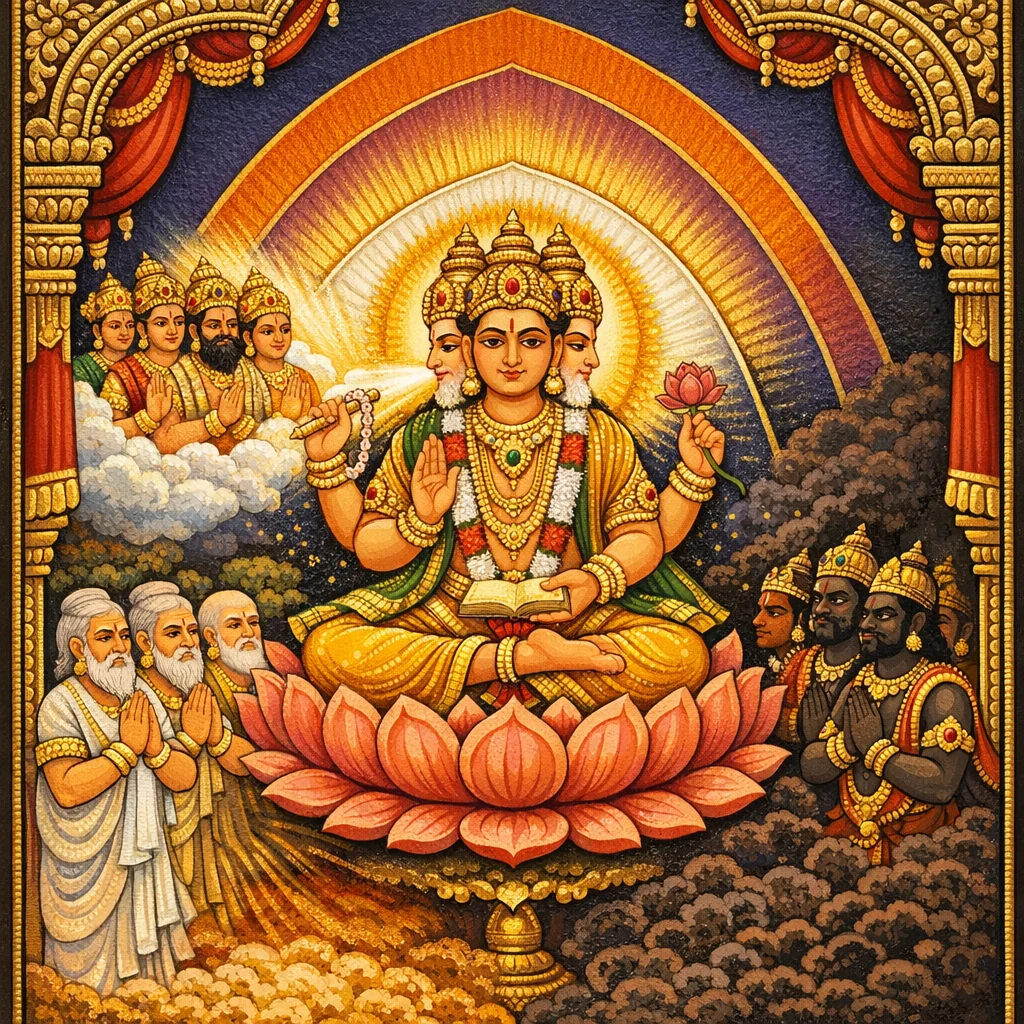
This chapter, narrated by Sūta within the Vāyu-proclaimed Brahmāṇḍa Purāṇa, presents a technical cosmogony in which Prajāpati’s mental intention (mānasa) and bodily emanation produce ordered classes of beings. It describes kṣetrajñas (knowers of the field) arising in relation to the kṣetra (field), then a fourfold division of devas, asuras, pitṛs, and humans. Creation proceeds through successive assumed bodies (tanu): a tamas-dominant phase after the asuras gives rise to night (rātri); a sattva-dominant phase brings forth devas from the mouth (linked to divy, “shining/playing”), and the discarded divine body becomes day (ahaḥ). A further sattvic emanation produces the pitṛs, and the discarded body becomes twilight (saṃdhyā), mapping guṇa-patterns onto the observable divisions of time.
Shlokas
Verse 1
इति श्रीब्रह्मांडे महापुराणे वायुप्रोक्ते पूर्वभागे द्वितीये ऽनुषंगपादे लोकज्ञान वर्णनं नाम सप्तमो ऽध्यायः सूत उवाच ततोभिध्यायतस्तस्य मानस्यो जज्ञिरे प्रजाः / तच्छरीरसमुत्पन्नैः कार्यैस्तैः कारणैः सह
Thus, in the Śrī Brahmāṇḍa Mahāpurāṇa, proclaimed by Vāyu, in the former section, the second Anuṣaṅgapāda, is the seventh chapter called “The Description of Knowledge of the Worlds.” Sūta said: as he meditated, mind-born creatures arose, together with the effects and causes that sprang from his body.
Verse 2
क्षेत्रज्ञाः समवर्त्तन्त क्षेत्रस्यैतस्य धीमतः / ततो देवासुरपितॄन्मनुष्यांश्च चतुषृयम्
In this field of the Wise One, the knowers of the field came forth; then the fourfold order arose—Devas, Asuras, the Pitṛs, and humankind.
Verse 3
सिसृक्षुरयुतातानि स चात्मानमयूयुजत् / युक्तात्मनस्ततस्तस्य तमोमात्रासमुद्भवः
Wishing to bring forth creations beyond count, he yoked himself in yoga; and when his self was perfectly composed, from him arose tamomātrā—the measure of darkness (tamas).
Verse 4
तदाभिध्यायतः सर्गं प्रयत्नो ऽभूत्प्रजापतेः / ततो ऽस्य जघ नात्पूर्वमसुरा जज्ञिर सुताः
Then, as Prajāpati contemplated creation, a great effort for bringing forth the cosmos arose in him. From his posterior part, first were born sons known as the Asuras.
Verse 5
असुः प्राणः स्मृतो विज्ञैस्तज्जन्मानस्ततो ऽसुराः / सृष्टा यया सुरास्तन्वा तां तनुं स व्यपोहत
The wise declare ‘asu’ to be prāṇa, the vital breath; therefore those born of it were called Asuras. The very body by which the Devas were fashioned, Prajāpati cast aside.
Verse 6
सापविद्धा तनुस्तेन सद्यो रात्रिरजायत / सा तमोबहुला यस्मात्ततो रात्रिस्त्रियामिका
That body, cast off by him, at once became Rātri—Night. And because she is filled with dense darkness, Night is called Triyāmikā.
Verse 7
आवृतास्तमसा रात्रौ प्रजा स्तस्मात्स्वयं पुनः / सृष्ट्वासुरांस्ततः सो ऽथ तनुमन्यामपद्यत
In the Night, when beings were veiled by darkness, they again arose of themselves from it. Having created the Asuras, Prajāpati then assumed another body.
Verse 8
अव्यक्तां सत्त्वबहुलां ततस्तां सो ऽभ्ययुञ्जत / ततस्तां युञ्ज मानस्य प्रियमासीत्प्रभोः किल
Then he assumed that unmanifest body, abundant in sattva. As he joined himself to it, the Lord’s mind, it is said, found it dear.
Verse 9
ततो मुखात्समुत्पन्ना दीव्यतस्तस्य देवताः / यतो ऽस्य दीव्यतो जातास्तेन देवाः प्रकीर्त्तिताः
Then, from his radiant face the deities arose; since they were born of his divine splendor, they are therefore renowned as “Devas”.
Verse 10
धातुर्दिव्येति यः प्रोक्तः क्रीडायां स विभाव्यते / तस्मात्तन्वास्तु दिव्याया जज्ञिरे तेन देवताः
He who is spoken of as “Dhātā, the Divine” is beheld in his sacred play; from that divine body the deities were born.
Verse 11
देवान् सृष्ट्वा ततः सो ऽथ तनुं दिव्यामपोहत / उत्सृष्टा सा तनुस्तेन अहः समभवत्तदा
Having created the Devas, he then set aside his divine body; that body, cast off by him, became at that time ‘ahaḥ’—the day.
Verse 12
तस्मादहःकर्मयुक्ता देवताः समुपासते / देवान्सृष्ट्वा ततः सो ऽथ तनुमन्यामपद्यत
Therefore the deities, engaged in the works of the day, worship him; having created the Devas, he then assumed another body.
Verse 13
सत्त्वमात्रात्मिकामेव ततो ऽन्यामभ्ययुङ्क्त वै / पितेव मन्यमानस्तान्पुत्रान्प्रध्याय स प्रभुः
Then he assumed another body, composed solely of sattva; the Lord, regarding them as sons, contemplated them like a father.
Verse 14
पितरो ह्यभवंस्तस्या सध्ये रात्र्यहयोः पृथक् / तस्मात्ते पितरो देवाः पितृत्वं तेषु तत्स्मृतम्
From that Sandhyā, as night and day became distinct, the Pitṛs came into being. Therefore they are remembered as Pitṛ-Devas, and in them the state of fatherhood is held to abide.
Verse 15
ययासृष्टास्तु पितरस्तां तनुं स व्यपोहत / सापविद्धा तनुस्तेन सद्यः संध्या व्यजायत
The very body by which the Pitṛs were created, he cast away. That body, thus discarded by him, was at once born as Sandhyā.
Verse 16
तस्मादहर्देवतानां रात्रिर्या साऽसुरी स्मृता / तयोर्मध्ये तु वै पैत्री या तनुः सा गरीयसी
Therefore the day belongs to the Devas, while the night is remembered as asuric. Between the two, the Pitṛ-born form is held to be the most exalted.
Verse 17
तस्माद्देवासुराश्चैव ऋषयो मानवास्तथा / युक्तास्तनुमुपासंते उषाव्युष्ट्योर्यदन्तरम्
Therefore Devas and Asuras alike, and the Ṛṣis and humankind as well, in disciplined devotion worship that form which lies between Uṣā and Vyushti.
Verse 18
तस्माद्रात्र्यहयोः संधिमुपासंते तथा द्विजाः / ततो ऽन्यस्यां पुनर्ब्रह्मा स्वतन्वामुपपद्यत
Therefore the twice-born also worship the junction of night and day. Thereafter Brahmā once more assumed another form of his own.
Verse 19
रजोमात्रात्मिका या तु मनसा सो ऽसृजत्प्रभुः / मनसा तु सुतास्तस्य प्रजनाज्जज्ञिरे प्रजाः
That creation whose nature was purely rajas, the Lord brought forth by mind alone. From his mind-born sons, through procreation, the beings called “prajās” were born.
Verse 20
मननाच्च मनुषयास्ते प्रजनात्प्रथिताः प्रजाः / सृष्ट्वा पुनः प्रजाः सो ऽथ स्वां तनुं स व्यपोहत
Through contemplation they came to be called “humans,” and through procreation they became renowned as prajās. Having created the beings again, he then set aside his own body.
Verse 21
सापविद्धा तनुस्तेन ज्योत्स्ना सद्यस्त्वजायत / तस्माद्भवन्ति संहृष्टा ज्योत्स्नाया उद्भवे प्रजाः
From the body he cast off, Jyotsnā—moonlight—was born at once. Therefore, at the arising of Jyotsnā, the creatures become filled with joy.
Verse 22
इत्येतास्तनवस्तेन ह्यपविद्धा महात्मना / सद्यो रात्र्यहनी चैवसंध्या ज्योत्स्ना च जज्ञिरे
Thus, from those bodies cast off by the great-souled one, there arose at once night and day, and also twilight and moonlight.
Verse 23
ज्योत्स्ना संध्याहनी चैव सत्त्वमात्रात्मकं त्रयम् / तमोमात्रात्मिका रात्रिः सा वै तस्मान्नियामिका
Moonlight, twilight, and day—these three are of the nature of sattva alone. Night is of the nature of tamas alone; therefore it serves as the restraining regulator.
Verse 24
तस्माद्देवा दिव्यतन्वा तुष्ट्या सृष्टा सुखात्तु वै / यस्मात्तेषां दिवा जन्म बलिनस्तेन ते दिवा
Therefore the Devas, of divine bodies, were created in contentment and in bliss. Since their birth was by day and they are mighty, they are thus called “divā” (day-born).
Verse 25
तन्वा यदसुरान्रत्र्या जघनादसृजत्प्रभुः / प्राणेभ्यो रात्रिजन्मानो ह्यजेया निशि तेन ते
When the Lord, in the night, struck down the Asuras with His own body, then indeed He brought them forth. Born from the vital breaths (prāṇas), they are night-born and unconquerable by night; thus are they known.
Verse 26
एतान्येव भविष्याणां देवानामसुरैः सह / पितॄणां मानुषाणां च अतीताना गतेषु वै
These very same are the portents for the Devas yet to come, together with the Asuras; and for the Pitṛs and for humankind as well, even in ages that have already passed.
Verse 27
मन्वन्तरेषु सर्वेषु निमित्तानि भवन्ति हि / ज्योत्स्ना रात्र्यहनी संध्या चत्वार्येतानि तानि वा
In every Manvantara, these portents indeed appear: moonlight (jyotsnā), night, day, and twilight (saṃdhyā)—these four alone.
Verse 28
भान्ति यस्मात्ततो भाति भाशब्दो व्याप्तिदीप्तिषु / अंभांस्येतानि सृष्ट्वा तु देवदानवमानुषान्
Because they shine, the word “bhā” bears the sense of pervasion and radiance. Having created these “ambhāṃsi”, (the Lord) then brought forth Devas, Dānavas, and humankind.
Verse 29
पितॄंश्चैव तथा चान्यान्विविधान्व्य सृजत्प्रजाः / तामुत्सृज्य ततो च्योत्स्नां ततो ऽन्यां प्राप्य स प्रभुः
The Lord created the Pitṛs and many other beings of diverse kinds. Then, leaving that creation behind, he attained jyotsnā—radiant light—and thereafter entered upon another creation.
Verse 30
मूर्त्तिं रजस्तमोद्रिक्तां ततस्तां सो ऽभ्ययुञ्जत / ततो ऽन्याः सोंऽधकारे च क्षुधाविष्टाः प्रजाः सृजन्
Then he assumed a form in which rajas and tamas were predominant. Thereafter, in darkness, he created beings seized by hunger.
Verse 31
ताः सृष्टास्तु क्षुधाविष्टा अम्भांस्यादातुमुद्यताः / अम्भांस्येतानि रक्षाम उक्तवन्तस्तु तेषु ये
Those beings, once created, were seized by hunger and set out to take the waters. Yet some among them said, “Let us guard these waters.”
Verse 32
राक्षसास्ते स्मृतास्तस्मात्क्षुधात्मानो निशाचराः / ये ऽब्रुवन् क्षिणुमो ऽम्भांसि तेषां त्दृष्टाः परस्परम्
Because they said “Let us protect,” they came to be known as Rākṣasas—hunger-natured beings who roam by night. But those who said “Let us consume the waters” looked at one another.
Verse 33
तेन ते कर्मणा यक्षा गुह्यकाः क्रूरकर्मिणः / रक्षेति पालने चापि धातुरेष विभाव्यते
By that deed they became known as Yakṣas and Guhyakas, performers of fierce acts. Here it is also understood that the verbal root rakṣ means “to guard and to protect.”
Verse 34
य एष क्षीतिधातुर्वै क्षपणे स निरुच्यते / रक्षणाद्रक्ष इत्युक्तं क्षपणाद्यक्ष उच्यत
This is the earth-element (kṣiti-dhātu), so explained because of kṣapaṇa, “diminishing.” From protecting it is called rakṣa, and from diminishing it is called yakṣa.
Verse 35
तान्दृष्ट्वा त्वप्रियेणास्य केशाः शीर्णाश्च धीमतः / ते शीर्णा व्युत्थिता ह्यूर्द्धमारो हन्तः पुनः पुनः
Seeing them with displeasure, the wise one’s hairs fell away. Yet those fallen hairs rose up again and again, springing upward as though ready to strike.
Verse 36
हीना ये शिरसो बालाः पन्नाश्चैवापसर्पिणः / बालात्मना स्मृता व्याला हीनत्वादहयः स्मृताः
Those bereft of heads were called bāla; and those that fell and crawled away were called panna. By their bāla-like nature they are remembered as vyāla, and by their lowliness they are known as ahaya.
Verse 37
पन्नत्वात्पन्नगाश्चापि व्यपसर्पाच्च सर्प्पता / तेषां लयः पृथिव्यां यः सूर्याचन्द्रमसौ घनाः
Because they became panna they were also called pannaga, and because they slithered away they were called sarpa. Their dissolution into the earth manifested as the dense radiance of the Sun and the Moon.
Verse 38
तस्य क्रोधोद्भवो यो ऽसावग्निगर्भः सुदारुणः / स तान्सर्प्पान् सहोत्पन्नानाविवेश विषात्मकः
From his wrath arose the dread Agnigarbha, fierce as fire itself; and, being of the very nature of poison, he entered those serpents that were born along with him.
Verse 39
सर्प्पान्सृष्ट्वा ततः क्रोधात् क्रोधात्मानो विनिर्मिताः / वर्णेन कपिशेनोग्रास्ते भूताः पिशिताशनाः
After creating the serpents, then from wrath were fashioned fierce beings whose very nature was anger; they were bhūtas of tawny hue, devourers of flesh.
Verse 40
भूतत्वात्ते रमृता भूताः पिशाचा पिशिताशनात् / गायतो गां ततस्तस्य गन्धर्वा जज्ञिरे सुताः
Because of their bhūta-nature they were called “bhūtas”, and because they ate flesh they were called “piśācas”; then, as he sang, gandharvas were born as his sons.
Verse 41
धयेति धातुः कविभिः पानार्थे परिपठ्यते / पिबतो जज्ञिरे वाचं गन्धर्वास्तेन ते स्मृताः
The poets expound the root “dhaye” in the sense of drinking; as he drank, vāc—sacred speech—arose, and thus they are remembered as gandharvas.
Verse 42
अष्टास्वेतासु सृष्टासु देवयोनिषु स प्रभुः / छन्दतश्चैव छन्दासि वयांसि वयसासृजत्
When the eight divine wombs (devayonis) had been created, the Lord brought forth the chandas according to their metre, and the birds according to the stages of age.
Verse 43
पक्षिणस्तु स सृष्ट्वा वै ततः पशुगणान्सृजन् / मुखतोजाः सृजन्सो ऽथ वक्षसश्चाप्यवीः सृजन्
He first created the birds; then he brought forth the herds of beasts. Thereafter he produced goats from his mouth, and from his breast he created sheep.
Verse 44
गावश्चैवोदराद्ब्रह्मा पाश्वीभ्यां च विनिर्ममे / पादतो ऽश्वान्समातङ्गान् रासभान् गवयान्मृगान्
Brahmā fashioned the cows from his belly, and from his two sides he formed other creatures; from his feet he brought forth horses, mighty elephants, asses, gavayas, and deer.
Verse 45
उष्ट्रांश्चैव वराहांश्च शुनो ऽन्यांश्चैव जातयः / ओषध्यः फल मूलिन्यो रोमभ्यस्तस्य जज्ञिरे
Camels, boars, dogs, and other kinds were also born; and from his hairs arose medicinal plants bearing fruit and root.
Verse 46
एवं पञ्चौषधीः सृष्ट्वा व्ययुञ्जत्सो ऽध्वरेषु वै / अस्य त्वादौ तु कल्पस्य त्रेतायुगमुखेपुरा
Thus, having created five kinds of medicinal herbs, they were indeed employed in the sacrificial rites; and this was in the beginning of this kalpa, long ago, at the opening of the Tretā Yuga.
Verse 47
गौरजः पुरुषो ऽथाविरश्वाश्वतरगर्दभाः / एते ग्राम्याः समृताः सप्त आरण्याः सप्त चापरे
Gauraja, man, avira, horses, mules (aśvatara), and asses—these are reckoned as seven domestic kinds; and apart from them, seven others are spoken of as wild.
Verse 48
श्वापदो द्वीपिनो हस्ती वानरः पक्षिपञ्चमः / औदकाः पशवः षष्ठाः सप्तमास्तु सरीसृपाः
Beasts of prey, tigers and the like, the elephant, and the monkey; the fifth are the birds; the sixth are the creatures of the waters; and the seventh are the crawling reptiles.
Verse 49
महिषा गवयोष्ट्राश्च द्विखुराः शरभो द्विषः / मर्कटः सप्तमो ह्येषां चारण्याः पशवस्तु ते
Buffalo, gavaya and camel; the cloven-hoofed beasts, the śarabha, the dviṣa, and as the seventh the monkey—these are the animals of the forest.
Verse 50
गायत्रीं च ऋचं चैव त्रिवृत्सतोमरथन्तरे / अग्निष्टोमं च यज्ञानां निर्ममे प्रथमान्मुखात्
From the first mouth he fashioned the Gāyatrī, the Ṛk, the trivṛt-stoma and the rathantara, and among sacrifices the Agniṣṭoma.
Verse 51
यजूंषि त्रैष्टुभं छन्दः स्तोमं पञ्चदशं तथा / बृहत्साम तथोक्तं च दक्षिणात्सो ऽसृजन्मुखात्
From the southern mouth he brought forth the Yajus, the traiṣṭubha metre, the fifteenth stoma, and also the famed Bṛhat-sāman.
Verse 52
सामानि जगतीं चैव स्तोमं सप्तदशं तथा / वैरूप्यमतिरात्रं च पश्चिमात्सो ऽसृजन्मखात्
From the western mouth he brought forth the Sāmans, the jagatī metre, the seventeenth stoma, the vairūpya, and the Atirātra sacrifice.
Verse 53
एकविंशमथर्वाणमाप्तोर्यामं तथैव च / अनुष्टुभं सवैराजं चतुर्थादसृजन्मुखात्
From the fourth mouth he brought forth the ekaviṃśa-stoma, the Atharvaveda, the āptoryāma rite, the anuṣṭubh metre, and also the vairāja.
Verse 54
विद्युतो ऽशनिमेघांश्व रोहितेद्रधनूंषि च / सृष्ट्वासौ भगवान्देवः पर्जन्यमितिविश्रुतम्
That Bhagavān, the Divine Lord, created lightning, the thunderbolt, the clouds, and crimson rainbows; thus he became renowned as “Parjanya”.
Verse 55
ऋचो यजूंषि सामानि निर्ममे यज्ञसिद्धये / उच्चावचानि भूतानि गात्रेभ्यस्तस्य जज्ञिरे
For the fulfillment of sacrifice, he fashioned the Ṛk, Yajus, and Sāma hymns; and from his limbs were born beings of many kinds.
Verse 56
ब्रह्मणास्तु प्रजासर्गं सृजतो हि प्रजापतेः / सृष्ट्वा चतुष्टयं पूर्वं देवर्षिपितृमानवान्
When Prajāpati Brahmā set about creating progeny, he first brought forth the fourfold order—gods, seers, ancestors, and humankind.
Verse 57
ततो ऽसृजत भूतानि चराणि स्थावराणि च / सृष्ट्वा यक्षपिशाचांश्च गन्धर्वप्सरसस्तदा
Then he created beings both moving and unmoving; and at that time he also brought forth yakṣas and piśācas, as well as gandharvas and apsarās.
Verse 58
नरकिन्नररक्षांसि वयःपशुमृगोरगान् / अव्ययं च व्ययं चैव द्वयं स्थावरजङ्गमम्
He created humans, kinnaras, and rākṣasas—birds, cattle, wild beasts, and serpents; and he established the twofold condition, imperishable and perishable, among the unmoving and the moving.
Verse 59
तेषां ये यानि कर्माणि प्राक् सृष्टानि प्रपेदिरे / तान्येव प्रतिपद्यन्ते सृज्यमानाः पुनःपुनः
Whatever deeds were allotted to them in the former creation, those very deeds they meet again and again, as they are created repeatedly.
Verse 60
हिंस्राहिंस्रे सृजन् क्रूरे धर्माधर्मावृतानृते / तद्भाविताः प्रपद्यन्ते तस्मात्तत्तस्य रोचते
Creating violence and non‑violence, cruelty, and truth and untruth veiled by dharma and adharma, beings shaped by such dispositions turn to them; therefore that alone pleases each.
Verse 61
महाभूतेषु नानात्वमिन्द्रियार्तेषु मूर्तिषु / विनियोगं च भूतानां धातैव व्यदधात्स्वयम्
Diversity among the great elements, differences in embodied forms that meet the senses, and the allotment of beings—Dhātā himself arranged all this.
Verse 62
केचित्पुरुषकारं तु प्राहुः कर्म च मानवाः / दैवमित्यपरे विप्राः स्वभावं भूतचिन्तकाः
Some declare human effort and karma to be the cause; other vipras call it daiva, divine destiny; thinkers on the elements deem it svabhāva, inherent nature.
Verse 63
पौरुषं कर्म दैवं च फलवृत्तिस्वभावतः / न चैव तु पृथग्भावमधिकेन ततो विदुः
By the very nature of how results unfold, human effort, karma, and daiva all operate together; the wise do not sunder them, exalting one as greater.
Verse 64
एतदेवं च नैवं च न चोभे नानुभे न च / स्वकर्मविषयं ब्रूयुः सत्त्वस्थाः समदर्शिनः
They say neither “it is thus” nor “it is not thus”; neither both, nor “neither of the two.” Abiding in sattva, the even‑seeing speak only of the sphere of their own karma.
Verse 65
नानारूपं च भूतानां कृतानां च प्रपञ्चनम् / वेदशब्देभ्य एवादौ निर्ममे स महेश्वरः
In the beginning, Maheshvara fashioned—solely from the words of the Veda—the many forms of beings and the vast unfolding of the created world.
Verse 66
आर्षाणि चैव नामानि याश्च देवेषु दृष्टयः / शर्वर्यन्ते प्रसूतानां पुनस्तेभ्यो दधात्यजः
The seers’ names and the visions beheld among the gods—at the end of the night, to the beings then brought forth, Aja (Brahma) bestows them again from that very source.
Frequently Asked Questions
The chapter’s sampled sequence foregrounds asuras first (from a tamas-linked phase), then devas (from a sattva-dominant ‘divine’ body), and then pitṛs (from a further sattvic emanation), alongside a fourfold classification that includes humans as a category in the overall grouping.
Each arises from a ‘discarded’ creative body (tanu): after producing asuras the rejected body becomes night (tamas-bahulā), after producing devas the rejected divine body becomes day, and after producing pitṛs the rejected body becomes twilight (saṃdhyā).
It signals a metaphysical framing in which beings (kṣetrajña-s, ‘knowers’) are related to the manifested field (kṣetra), allowing creation to be read not only as material production but also as the emergence of embodied consciousness within an ordered cosmos.