Adhyaya 30
Saṃkhyāvarta (संख्यावर्त्त): Commencement of Yajña at the Dawn of Tretāyuga
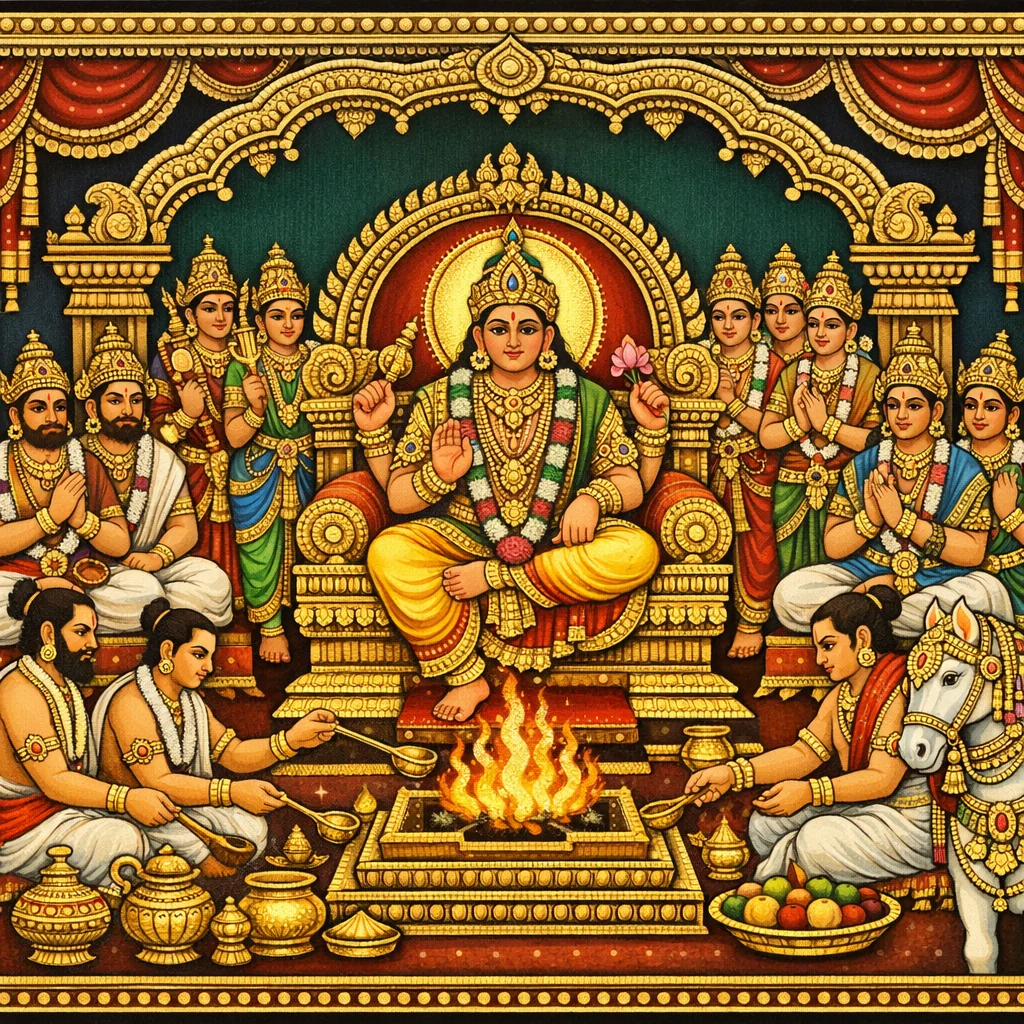
This adhyāya unfolds as a Purāṇic question-and-answer. Śāṃśapāyana asks how yajña begins at the dawn of Tretāyuga, seeking the account “as it was” in the Svāyambhuva creation setting. Sūta replies by laying out the sequence of prerequisites: the yuga-sandhyā fades with the end of Kṛtayuga; Tretā commences; herbs arise and the process of rain-creation becomes active; then livelihood (vārttā) and the householder stage (gṛhāśrama) are established. With society stabilized, varṇāśrama is organized, and mantras are gathered and applied to actions “here and hereafter.” The narrative then credits Indra (Viśvabhuj) with inaugurating yajña—especially an Aśvamedha—fully furnished with ritual implements and attended by devas and great ṛṣis. Technical ritual scenes follow: officiants at work, sāmagāna and recitations proceeding, animals declared medhya, agnihotrins pouring offerings into the sacrificial fire, and devas receiving their allotted shares—portraying yajña as the means that binds cosmic powers to social order at the start of a new yuga.
Shlokas
Verse 1
इति श्री ब्रह्माण्डे महापुराणे वायुप्रोक्ते पूर्वभागे द्वितीये ऽनुषङ्गपादे संख्यावर्त्तो नामैकोनत्रिशत्तमो ऽध्यायः शांशापायनिरुवाच कथं त्रेतायुगमुखे यज्ञस्य स्यात्प्रवर्त्तनम् / पूर्वं स्वायंभुवे सर्गे यथावत्तच्च ब्रूहि मे
Thus, in the Śrī Brahmāṇḍa Mahāpurāṇa, in the former section spoken by Vāyu, within the second Anuṣaṅga-pāda, is the twenty-ninth chapter called “Saṅkhyāvartta.” Śāṃśapāyana said: “How, at the dawn of the Tretā Yuga, did the yajña come into operation? Tell me rightly, as it occurred before in the Svāyambhuva creation.”
Verse 2
अन्तर्हितायां संध्यायां सार्द्धं कृतयुगेन वै / कालाख्यायां प्रवृत्तायां प्राप्ते त्रेतायुगे तदा
When the twilight of transition that accompanied the Kṛta Yuga had vanished, and the current known as Kāla began to move, then the Tretā Yuga arrived.
Verse 3
औषधीषु च जातासु प्रवृत्ते वृष्टिसर्जने / प्रतिष्ठितायां वार्त्तायां गृहाश्रमपरे पुनः
When medicinal herbs had arisen, when the sending forth of rains began, when vārttā—livelihood through agriculture and trade—was established, people once more turned toward the gṛhastha āśrama.
Verse 4
वर्णाश्रमव्यवस्थानं कृतवन्तश्च संख्यया / संभारांस्तांस्तु मंभृत्य कथं यज्ञः प्रवर्त्तितः
They established, in due order, the arrangement of varṇa and āśrama; then, having gathered those various requisites, how was the yajña set in motion?
Verse 5
एतच्छुत्वाब्रवीत्सूतः श्रूयतां शांशपायने / यथा त्रेतायुगमुखे यज्ञस्य स्यात्प्रवर्तनम्
Hearing this, Sūta said: “Listen, Śāṃśapāyana; I shall relate how the yajña came to be instituted at the beginning of the Tretā Yuga.”
Verse 6
पूर्वं स्वायंभुवे सर्गे तद्वक्ष्याम्यानुपूर्व्यतः / अन्तर्हितायां संध्यायां सार्द्धं कृतयुगेन तु
In the primeval creation of Svāyambhuva, I shall recount it in due order. When the twilight had vanished from sight, together with the age of Kṛtayuga.
Verse 7
कालाख्यायां प्रवृत्तायां प्रप्ते त्रेतायुगे तदा / औषधीषु च जातासु प्रवृत्ते वृष्टिसर्जने
When the reckoning of Time set forth and the Tretāyuga arrived, medicinal herbs sprang forth, and the sending of rains commenced.
Verse 8
प्रतिष्ठितायां वार्त्तायां गृहश्रमपरेषु च / वर्णाश्रमव्यवस्थानं कृत्वा मन्त्रांस्तु संहतान्
When livelihood (husbandry and trade) had become established and people were devoted to the labors of household life, the order of varṇa and āśrama was set in place, and the mantras were gathered into a compendium.
Verse 9
मन्त्रांस्तान्योजयित्वाथ इहामुत्र च कर्मसु / तदा विश्वभुगिन्द्रश्च यज्ञं प्रावर्त्तयत्प्रभुः
Having applied those mantras to rites and deeds in this world and the next, the Lord Viśvabhug Indra then set the yajña in motion.
Verse 10
दैवतैः सहितैः सर्वैः सर्वसंभारसंभृतैः / तस्याश्वमेधे वितते समाजग्मुर्महर्षयः
With all the deities in attendance and every requisite offering prepared, the great sages assembled at his expansive Aśvamedha sacrifice.
Verse 11
यजन्तं पशुभिर्मे ध्यैरूचुः सर्वे समागताः / कर्मव्यग्रेषु ऋत्विक्षु संतते यज्ञकर्मणि
As the sacrifice was being performed with consecrated beasts, all who had assembled spoke; and while the ṛtviks were intent on their duties, the work of the yajña went on unbroken.
Verse 12
संप्रगीथेषु सर्वेषु सामगेष्वथ सुस्वग्म् / परिक्रान्तेषु लघुषु ह्यध्वर्युवृषभेषु च
When all the saṃpragīthas and Sāma-chants were sung in sweet measure, the swift and stalwart adhvaryus too—moving about in their rounds—were intent upon their rites.
Verse 13
आलब्धेषु च मेध्येषु तथा पशुगणेषु च / हविष्यग्नौ हूयमाने ब्राह्मणैश्चाग्निहोत्रिभिः
And when the consecrated victims and the herds of beasts were bound, the brāhmaṇas who tended the agnihotra poured the oblations into the offering-fire (haviṣyāgni).
Verse 14
आहूतेषु च सर्वेषु यज्ञभाक्षु क्रमात्तदा / य इन्द्रियात्मका देवास्तदा ते यज्ञभागिनः
Then, in due order, all the deities entitled to a share of the yajña were invoked; and the gods who preside over the senses likewise became, at that time, partakers of the sacrifice.
Verse 15
तद्यचन्ते तदा देवान्कल्पादिषु भवन्ति ये / अध्वर्यवः प्रैषकाले व्यत्थिता वै महर्षयः
Then they beseech the gods who manifest in the kalpas and other ages; and at the time of the praiṣa-call, the adhvaryus and the great ṛṣis indeed rose up in keen readiness.
Verse 16
महर्षयस्तु तान्दृष्ट्वा दीनान्पशुगणांस्तदा / प्रपच्छुरिद्रं संभूय को ऽयं यज्ञ विधिस्तव
Seeing those wretched herds of beasts, the great sages gathered and asked Indra: “What is this rite of yajña that you follow?”
Verse 17
अधर्मो बलवानेष हिंसाधर्मेप्सया ततः / ततः पशुवधश्चैष तव यज्ञे सुरोत्तम
O best of the gods, by yearning for a dharma of violence this adharma has grown strong; therefore, in your yajña there is the slaughter of animals.
Verse 18
अधर्मो धर्मघाताय प्रारब्धः पशुहिसया / नायं धर्मो ह्यधर्मो ऽयं न हिंसा धर्म उच्यते
This adharma has been set in motion through violence to beasts to strike down dharma; this is not dharma but adharma—violence is not called dharma.
Verse 19
आगमेन भवान्यज्ञं करोतु यदिहेच्छति / विधिदृष्टेन यज्ञेन धर्मेणाव्यपसेतुना
If you wish to perform a yajña, do so according to the Āgamas—by a yajña sanctioned by proper rule, grounded in dharma, and without deviation.
Verse 20
यज्ञबीचैः सुरेश्रष्ठ येषु हिंसा न विद्यते / त्रिवर्षं परमं कालमुषितैरप्ररोहिभिः
O best of the gods, (perform the yajña) with yajña-seeds in which no violence is found—seeds that, even after lying for the utmost term of three years, do not sprout.
Verse 21
एष धर्मो महाप्राज्ञ विरञ्चिविहितः पुरा / एवं विश्वभुगिन्द्रस्तु ऋषिभिस्तत्त्वदर्शिभिः
O great sage, this Dharma was ordained long ago by Virañci (Brahmā); thus did the seers of truth declare it to Indra, lord who sustains the world.
Verse 22
तदा विवादः सुमहानिन्द्रस्यासीन्महर्षिभिः / जङ्गमस्थावरैः कैर्हि यष्टव्यमिति चोच्यते
Then a mighty dispute arose between Indra and the great seers: it was debated which among the moving and the unmoving should be offered in sacrifice.
Verse 23
ते तु खिन्ना विवादेन तत्त्वमुत्त्वा महर्षयः / सन्धाय वाक्यमिन्द्रेण पप्रच्छुः खेचरं वसुम्
Wearied by the dispute, the great seers discerned the truth; having come to an understanding with Indra, they questioned Vasu, the sky-roaming one.
Verse 24
सहाप्राज्ञ कथं दृष्टस्त्वया यज्ञविधिर्नृप / औत्तानपादे प्रब्रूहि संशयं नो नुद प्रभो
O wise king, how did you behold the ordinance of sacrifice in the matter of Auttānapāda? O lord, tell us and dispel our doubt.
Verse 25
श्रुत्वा वाक्यं वसुस्तेषाम विचार्य बलाबलम् / वेदशास्त्रमनुस्मृत्य यज्ञतत्त्वमुवाच ह
Hearing their words, Vasu weighed strength and weakness; recalling the Vedas and the śāstras, he spoke of the true essence of sacrifice.
Verse 26
यथोपनीर्तैर्यष्टव्यमिति होवाच पार्थिवः / यष्टव्यं पशुभिर्मे ध्यैरथ बीजैः फलैरपि
The king said: “The yajña must be performed exactly as it has been prescribed. Let my sacrifice be offered with sacrificial beasts, with pure oblations, and also with seeds and fruits.”
Verse 27
हिंसास्वभावो यज्ञस्य इति मे दर्शनागमौ / यथेह देवता मन्त्रा हिंसालिङ्गा महर्षिभिः
In my darśana and āgama it is taught that yajña is, by nature, bound up with hiṃsā; for here the mantras to the deities have been declared by the great ṛṣis to bear the mark of such violence.
Verse 28
दीर्घेण तपसा युक्तैर्दर्शनैस्तारकादिभिः / तत्प्रामाण्यान्मया चोक्तं तस्मात्स प्राप्तुमर्हथ
I have spoken thus on the strength of the authoritative darśanas—Tāraka and the rest—upheld by long austerities; therefore you are fit to accept and attain this conclusion.
Verse 29
यदि प्रमाणं तान्येव मन्त्रवाक्यानि वै द्विजाः / तथा प्रवततां यज्ञो ह्यन्यथा वो ऽनृतं वचः
O dvijas, if those very mantra-sentences are the sole authority, then let the yajña proceed accordingly; otherwise your words will be untrue.
Verse 30
एवं कृतोत्तरास्ते वै युक्तात्मानस्तपोधनाः / अवश्यभावितं दृष्ट्वा तमथो वाग्यताभवन्
Having thus replied, those sages—self-possessed and rich in austerity—seeing it to be inevitable, restrained their speech and fell silent.
Verse 31
इत्युक्तमात्रे नृपतिः प्रविवेश रसातलम् / ऊर्ध्वचारी वसुर्भूत्वा रसातलचरो ऽभवत्
No sooner was it spoken than the king entered Rasātala; becoming an upward-moving Vasu, he became one who dwelt and wandered in Rasātala.
Verse 32
वसुधा तलवासी तु तेन वाक्येन सो ऽभवत् / धर्माणां संशयच्छेत्ता राजा वसुरधोगतः
By that very utterance he became a dweller in the nether levels of the earth; King Vasu, who dispelled doubts about dharma, went to a downward fate.
Verse 33
तस्मान्न वाच्यमेकेन बहुज्ञेनापि संशये / बहुद्वारस्य धर्मस्य सूक्ष्मा दूरतरा गतिः
Therefore, in a matter of doubt, no single person—even one of great learning—should speak with finality; the course of dharma, with its many gates, is subtle and far-reaching.
Verse 34
तस्मान्न निश्चयाद्वक्तुं धर्मः शक्यस्तु केनचित् / देवानृषीनुपादाय स्वायंभुवमृते मनुम्
Therefore, without taking refuge in the gods and the rishis—except for Svāyambhuva Manu—no one can speak of dharma with certainty.
Verse 35
तस्मादहिंसा धर्मस्य द्वारमुक्तं महर्षिभिः / ऋषिकोटिसहस्राणि स्वतपोभिर्दिवं ययुः
Therefore the great rishis declared ahimsa to be the gate of dharma; countless rishis—by their own austerities—went to the heavenly realm.
Verse 36
तस्मान्न दानं यज्ञं वा प्रशंसंति महर्षयः / उञ्छमूलफलं शाकमुदपात्रं तपोधनाः
Therefore the great ṛṣis do not praise gifts or yajña; the wealthy in tapas extol the uñcha way of life—roots, fruits, greens, and a vessel of pure water.
Verse 37
एतद्दत्वा विभवतः स्वर्गे लोके प्रतिष्ठिताः / अद्रोहश्चाप्य लोभश्च तपो भुतदया दमः
Having given these, those of means are established in the heavenly world: non-malice, non-greed, tapas, compassion for beings, and self-restraint.
Verse 38
ब्रह्मचर्यं तथा सत्यमनुक्रोशः क्षमा धृतिः / सनातनस्य धर्मस्य मूलमेतद्दुरासदम्
Brahmacarya, truth, compassion, forgiveness, and steadfastness—this is the hard-to-attain root of Sanātana Dharma.
Verse 39
श्रूयन्ते हि तपःसिद्धा ब्रह्मक्षत्रादयो ऽनघाः / प्रियव्रतोत्तानपादौ ध्रुवो मेधातिथिर्वसुः
Indeed it is heard that blameless brahmins, kṣatriyas, and others attained perfection through tapas—Priyavrata, Uttānapāda, Dhruva, Medhātithi, and Vasu.
Verse 40
सुधामा विरजाश्चैव शङ्खः पाण्ड्यज एव च / प्राजीनबर्हिः पर्जन्यो हविर्धानादयो नृपः
Likewise Sudhāmā, Virajā, Śaṅkha, and Pāṇḍyaja; and the kings Prājīnabarhi, Parjanya, Havirdhāna, and others are also spoken of as perfected through tapas.
Verse 41
एते चान्ये च बहवः स्वैस्तपोभिर्दिवं गताः / राजर्षयो महासत्त्वा येषां कीर्त्तिः प्रतिष्ठिता
These and many others, by their own austerities, have gone to heaven—great-souled royal seers whose fame stands firmly established.
Verse 42
तस्माद्विशिष्यते यज्ञात्तपः सर्वैस्तु कारणः / ब्रह्मणा तपसा सृष्टं जगद्विश्वमिदं पुरा
Therefore austerity surpasses sacrifice, for it is the cause of all. In ancient times Brahmā created this entire universe by austerity.
Verse 43
तस्मान्नान्वेति तद्यज्ञस्तपोमूलमिदं स्मृतम् / द्रव्यमन्त्रात्मको यज्ञस्तपस्त्वनशनात्मकम्
Therefore that sacrifice does not measure up; this is remembered as rooted in austerity. Sacrifice consists of offerings and mantras, whereas austerity is of the nature of fasting.
Verse 44
यज्ञेन देवानाप्नोति वैराजं तपसा पुनः / ब्राह्मं तु कर्म संन्यासाद्वैराग्यात्प्रकृतेर्जयम्
By sacrifice one attains the gods; by austerity, the rank of Vairāja. But through renunciation and dispassion one gains the Brahmic attainment—victory over Prakṛti.
Verse 45
ज्ञानात्प्राप्नोति कैवल्यं पञ्चैतागतयः स्मृताः / एवं विवादः सुमहान्य ज्ञस्यासीत्प्रवर्त्तने
Through knowledge one attains Kaivalya; these five destinations are remembered. Thus a very great dispute arose concerning the institution of sacrifice.
Verse 46
देवतानामृषीणां च पूर्व स्वायंभुवे ऽन्तरे / ततस्तमृषयो दृष्ट्वा हतं धर्मबलेन तु
In the ancient Svāyambhuva Manvantara of the gods and the seers, the ṛṣis beheld him struck down by the power of Dharma.
Verse 47
वसोर्वाक्यमना दृत्य जगमुः सर्वे यथागतम् / गतेषु मुनिसंघेषु देवा यज्ञं समाप्नुवन्
Disregarding Vasu’s words, they all departed just as they had come. When the assemblies of munis had gone, the gods brought the yajña to completion.
Verse 48
यज्ञप्रवर्त्तनं ह्येवमासीत्स्वायंभुवे ऽन्तरे / ततः प्रभृति यज्ञो ऽयं युगैः सह विवर्त्तितः
Thus was the yajña set in motion in the Svāyambhuva Manvantara. From that time onward, this yajña has continued, unfolding along with the yugas.
Frequently Asked Questions
The transition into Tretāyuga after the Kṛta-yuga sandhyā, alongside ecological and social stabilization (herbs, rain, settled livelihood, gṛhāśrama), culminating in organized varṇāśrama and consolidated mantras fit for ritual action.
Indra, identified as Viśvabhuj, is said to inaugurate the sacrificial order through an Aśvamedha performed with full ritual apparatus and attended by devas and mahārṣis.
Devas are depicted as yajña-bhāgins (recipients of sacrificial shares) in an ordered sequence; offerings into the fire and priestly performance operationalize a reciprocal cosmic economy that stabilizes the new yuga’s dharma.