Adhyaya 71
Sāttvata–Vṛṣṇi–Andhaka Vamśa (Genealogical Enumeration of the Yādava Clans)
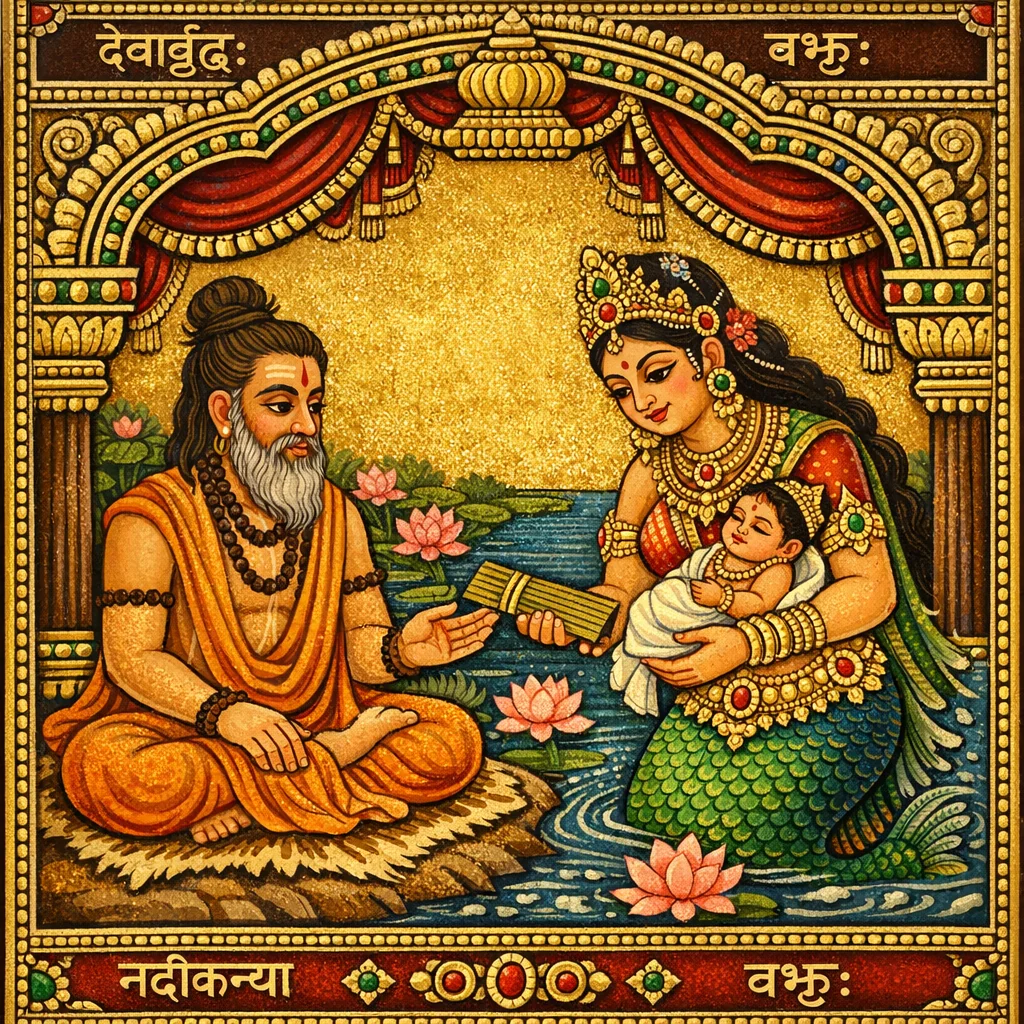
This chapter proceeds in the Purāṇic vamśa (genealogical) style: Sūta recounts the rise of powerful sons in the Sāttvata line, naming figures tied to the Vṛṣṇi–Andhaka complex and related branches. It signals an orderly expansion in “four sargas” (four enumerative sections) and then traces family connections through spouses, sibling relations, and lists of offspring. A prominent narrative unit centers on King Devāvṛdha: his austerities (tapas) to obtain an ideal son, the resolve of a river maiden, their union, and the birth of Babhru—praised in a remembered gāthā preserved by tradition-keepers. Overall, Adhyāya 71 functions as a dense genealogical register, preserving clan memory through names, sub-branches, and exemplary births, and situating Yādava-associated lineages within the Purāṇic historiographical frame.
Shlokas
Verse 1
[वेर्सेस् २,७०।३ - ४९ नोत् अवैलब्ले अत् प्रेसेन्त्] सूत उवाच सात्त्वताज्जज्ञिरे पुत्राः कौशल्यायां महाबलाः / भजमानो भजिर्द्दिव्यो वृष्णिर्देवावृधो ऽन्धकः
[Verses 2.70.3–49 are not available at present] Sūta said: From Sāttvata, in Kauśalyā, were born sons of great might—Bhajamāna, Bhaji, Divya, Vṛṣṇi, Devāvṛdha, and Andhaka.
Verse 2
महाभोजश्च विख्यातो ब्रह्मण्यस्सत्यसंगरः / तेषां हि सर्गाश्चत्वारः शृणुध्वं विस्तरेण वै
Mahābhoja was renowned, devoted to the brāhmaṇas, and steadfast in the battle for truth. Their account has four sargas—hear it in full detail.
Verse 3
भजमानस्य सृंजय्यो बाह्यका चोपवाह्यका / सृंज यस्य सुते द्वे तु बाह्यके ते उदावहत्
Bhajamāna’s wives were Sṛṃjayyā, Bāhyakā, and Upavāhyakā. Sṛṃjaya had two daughters, and Bāhyakā gave them in marriage.
Verse 4
तस्य भार्ये भगिन्यौ ते प्रसूते तु सुतान्बहून् / निम्लोचिः किङ्कणश्चैव धृष्टिः पर पुरञ्जयः
His two wives, who were sisters, bore many sons: Nimloci, Kiṅkaṇa, Dhṛṣṭi, and Para-purañjaya.
Verse 5
ते बाह्यकाया सृंजय्या भजमानाद्विजज्ञिरे / अयुताजित्सहस्राजिच्छताजिदिति नामतः
From Bāhyakā and Sṛṃjayyā, Bhajamāna begot sons known by name as Ayutājit, Sahasrājit, and Śatājit.
Verse 6
बाह्यकायां भगिन्यां ते भजमानाद्विजज्ञिरे / तेषां देवावृधो राजा चचार परमं तपः / पुत्रः सर्वगुणोपेतो मम भूयादिति स्म ह
From the sister named Bāhyakā as well, they were born through Bhajamāna. Among them, King Devāvṛdha performed supreme austerity, praying: “May I have a son endowed with every virtue.”
Verse 7
संयोज्या त्मानमेवं स पर्णाशजलमस्पृशत्
Thus, having composed himself, he touched the sacred waters of the Parṇāśā.
Verse 8
सा चोपस्पर्शनात्तस्य चकार प्रियमापगा / कल्याणत्वान्नरपतेस्तस्य सा निम्नगोत्तमा
At his touch the river Apagā was pleased and wrought what was dear to the king; that finest of streams became auspicious for the ruler.
Verse 9
चिन्तयाभिपरीताङ्गी जगामाथ विनिश्चयम् / नाभिगच्छामि तां नारीं यस्यामेवंविधः सुतः
Beset by anxious thought, she came to a firm resolve: “I shall not go to that woman who has a son of such a kind.”
Verse 10
भवेत्सर्वगुणोपेतो राज्ञो देवावृधस्य हि / तस्मादस्य स्वयं चाहं भवाम्यद्य सहव्रता
May King Devāvṛdha be endowed with every virtue; therefore, today I myself shall become his sahavratā—his faithful consort, sharing his sacred vow.
Verse 11
जज्ञे तस्याः स्वयं हृत्स्थो भावस्तस्य यथेरितः / अथ भूत्वा कुमारी तु सा चिन्तापरमेव च
Within her heart there arose of itself the feeling just as it had been spoken; and then, though still a maiden, she remained wholly absorbed in anxious thought.
Verse 12
वरयामास राजानं तामियेष स पार्थिवः / तस्यामाधत्त गर्भे स तेजस्विनमुदा रधीः
The king chose her as his bride, and she in turn went to that earthly sovereign. In gladness she conceived in her womb a radiant, mighty son.
Verse 13
अथ सा नवमे मासि सुषुवे सरिता वरा / पुत्रं सर्वगुणोपेतं बभ्रुं देवावृधत्तदा
Then, in the ninth month, the noble Saritā gave birth to a son—Babhrū, endowed with every virtue; and the gods then magnified Devāvṛdha’s glory.
Verse 14
तत्र वंशे पुराणज्ञा गाथां गायन्ति वै द्विजाः / गुणान्देवावृधस्यापि कीर्तयन्तो महात्मनः
In that lineage, Purāṇa-knowing dvijas sing sacred lays, praising as well the virtues of the great-souled Devāvṛdha.
Verse 15
यथैव शृणुमो दूरात्सपंश्यामस्तथान्तिकात् / बभ्रुः श्रेष्ठो मनुष्याणां देवैर्देवावृथः समः
As we hear from afar, so we behold up close: Babhrū was the foremost among men, and among the gods he was equal to Devāvṛdha.
Verse 16
पुरुषाः पञ्चषष्टिश्च सहस्राणि च सप्ततिः / येमृतत्वमनुप्राप्ता बब्रोर्देवावृधादपि
Sixty-five thousand and seventy men—through Babhrū, and through Devāvṛdha as well, they attained immortality.
Verse 17
यज्वा दानपतिर्धीरो ब्रह्मण्यः सत्यवाग्बुधः / कीर्त्तिमांश्च महाभोजः सात्त्वतानां महारथः
He was a performer of sacrifices, lord of gifts, steadfast, devoted to the Brahmins, truthful in speech and wise. Renowned as a great Bhoja, he was a mighty chariot-warrior among the Sāttvatas.
Verse 18
तस्यान्ववायः सुमहान्भोजा ये भुवि विश्रुताः / गान्धारी चैव माद्री च धृष्टैर्भार्ये बभूवतुः
His lineage was exceedingly great; the Bhojas renowned upon the earth arose from it. For Dhṛṣṭa, Gāndhārī and Mādrī became his two wives.
Verse 19
गान्धारी जनयामास सुमित्रं मित्रनन्दनम् / साद्री युधाजितं पुत्रं ततो मीढ्वांसमेव च
Gāndhārī gave birth to Sumitra, the delight of friends. Mādrī bore a son named Yudhājit, and thereafter also Mīḍhvāṃsa.
Verse 20
अनमित्रं शिनं चैव ताबुभौ पुरुषोत्तमौ / अनमित्रसुतो निघ्नो निघ्नस्य द्वौ बभूवतुः
Anamitra and Śina—both became excellent men. Anamitra’s son was Nighna, and Nighna had two sons.
Verse 21
प्रसेनश्च महाभागः सत्राजिच्च सुताबुभौ / तस्य सत्राजितः सूर्यः सखा प्राणसमो ऽभवत्
The greatly fortunate Prasena and Satrājit were his two sons. For Satrājit, the Sun-god Sūrya became a friend as dear as life itself.
Verse 22
स कदाचिन्निशापाये रथेन रथिनां वरः / तोयं कूलात्समुद्धर्तुमुपस्थातुं ययौरविम्
Once, at the waning of the night, the king—foremost among chariot-warriors—rode forth in his chariot to draw water from the bank and to worship the Sun, Ravi.
Verse 23
तस्योपतिष्ठतः सूर्यं विवस्वानग्रतः स्थितः / सुस्पष्टमूर्त्तिर्भगवांस्तेजोमण्डलवान्विभुः
As he stood in worship, Surya—Vivasvan—appeared before him: the Bhagavan in a clearly manifest form, encircled by a radiant halo, the all-pervading Lord.
Verse 24
अथ राजा विवस्वन्तमुवाच स्थितमग्रतः / यथैव व्योम्नि पश्यामि त्वामहं ज्योतिषां पते
Then the king spoke to Vivasvan standing before him: “O Lord of the luminaries, just as I behold you in the sky, so do I behold you here as well.”
Verse 25
तेजोमण्डलिनं चैव तथैवाप्यग्रतः स्थितम् / को विशेषो विवस्वंस्ते सख्येनोपगतस्य वै
And I see you standing before me just the same, encircled by your halo of splendor. O Vivasvan, what difference is there in you when you come in the spirit of friendship?
Verse 26
एतच्छ्रुत्वा स भगवान्मणिरत्नं स्यमन्तकम् / स्वकण्ठादवमुच्याथ बबन्ध नृपतेस्तदा
Hearing this, the Bhagavan, the Sun-god, removed the jewel Syamantaka from his own neck and at once fastened it upon the king.
Verse 27
ततो विग्रहवन्तं तं ददर्श नृपतिस्तदा / प्रीतिमानथ तं दृष्ट्वा मुहूर्त्तं कृतवान्कथाम्
Then the king beheld him, manifest in bodily form. Seeing him, he was filled with joy and spoke with him for a little while.
Verse 28
तमभिप्रस्थितं भूयो विवस्वन्तं स सत्रजित् / प्रोवाचाग्निसवर्णं त्वां येन लोकः प्रपश्यति
As Vivasvān was setting forth again, Satrajit spoke: “O fire-hued Radiant One—by you the world beholds.”
Verse 29
तदेतन्मणिरत्नं मे भगवन्दातुमर्हसि / स्यमं तकं नाममणिं दत्तवांस्तस्य भास्करः
O Bhagavān, be pleased to grant me this jewel. This gem, named Syamantaka, was bestowed upon him by Bhāskara.
Verse 30
स तमामुच्य नगरीं प्रविवेश महीपतिः / विस्मापयित्वाथ ततः पुरीमन्तःपुरं ययौ
Having dismissed him, the king entered the city. Astonishing all, he then went within the royal fortress to the inner palace.
Verse 31
स प्रसेनाय तद्दिव्यं मणिरत्नं स्यमन्तकम् / ददौ भ्रात्रे नरपतिः प्रेम्णा सत्राजिदुत्तमम्
King Satrajit, moved by affection, gave his brother Prasena that divine jewel known as Syamantaka.
Verse 32
स्यमन्तको नाम मणिर्यस्मिन्राष्ट्रे स्थितो भवेत् / कामवर्षी च पर्जन्यो न च व्याधिभयं तथा
In the realm where the jewel named Syamantaka abides, Parjanya grants rain as desired, and there is likewise no fear of disease.
Verse 33
लिप्सां चक्रे प्रसेनात्तु मणिरत्नं स्यमन्तकम् / गोविन्दो न च तं लेभे शक्तो ऽपि न जहार च
Prasena conceived a craving for the jewel Syamantaka; yet Govinda neither obtained it, nor—though able—did he seize it by force.
Verse 34
कधाचिन्मृगयां यातः प्रसेनस्तेन भूषितः / स्यमन्तककृते सिंहाद्वधं प्राप सुदारुणम्
Once, Prasena—adorned with that jewel—went out to hunt; and for the sake of Syamantaka he met a most dreadful death at the jaws of a lion.
Verse 35
जांबवानृक्षराजस्तु तं सिंहं निजघान वै / आदाय च मणिं दिव्यं स्वबिलं प्रविवेश ह
Then Jambavān, king of the bears, truly slew that lion; and taking up the divine jewel, he entered his own cave.
Verse 36
तत्कर्म कृष्णस्य ततो वृष्ण्यन्धकमहत्तराः / मणिं गृध्नोस्तु मन्वानास्तमेव विशशङ्किरे
After that deed, the elders of the Vṛṣṇi and Andhaka clans—thinking him greedy for the jewel—cast their suspicion upon Kṛṣṇa alone.
Verse 37
मिथ्यापवादं तेभ्यस्तं बलवानरिसूदनः / अमृष्यमाणो भगवान्वनं स विचचार ह
Unable to endure the false slander cast upon him, the mighty Bhagavān, slayer of foes, wandered through the forest.
Verse 38
स तु प्रोसेनो मृगयामचरद्यत्र चाप्यथ / प्रसेनस्य पदं ग्राह्यं पुरं पौराप्तकारिभिः
Then Prosena ranged about, hunting here and there; and Prosena’s footprints could be taken up and followed by the townsfolk.
Verse 39
ऋक्षवन्तं गिरिवरं विन्ध्यं च नगमुत्तमम् / अन्वेषयत्परिश्रान्तः स ददर्श महामनाः
Searching for the noble mountain Ṛkṣavān and the lofty Vindhya, though weary, that great-souled one beheld them.
Verse 40
साश्वं हतं प्रसेनं तं नाविन्दत्तत्र वै मणिम् / अथ सिंहः प्रसेनस्य शरीरस्याविदूरतः
He found Prosena slain there along with his horse, yet the jewel was not found; and a lion was nearby Prosena’s body.
Verse 41
ऋक्षेण निहतो दृष्टः पदैरृक्षस्य सूचितः / पदैरन्वेषयामास गुहामृक्षस्य यादवः
He was seen to have been slain by a bear, as the bear’s tracks revealed; so the Yadava followed those footprints, seeking the bear’s cave.
Verse 42
महत्यन्तर्बिले वाणीं शश्राव प्रमदेरिताम् / धात्र्या कुमारमादाय सुतं जांबवतो द्विजाः / क्रीडयन्त्याथ मणिना मारोदीरित्युदीरितम्
Deep within the great cavern he heard a woman’s urging voice. The nurse, lifting Jāmbavān’s infant son, played with the jewel and cried, “Strike—give it here!” O twice-born sages.
Verse 43
धात्र्युवाच प्रसेनमवधीत्सिंहः सिंहो जांबवता हतः
The nurse said: “A lion slew Prasena; and that lion was slain by Jāmbavān.”
Verse 44
सुकुमारक मारो दीस्तव ह्यें स्यमन्तकः / व्यक्तीकृतश्च शब्दः स तूर्णं चापि ययौ बिलम्
“O tender child, strike—give it; this Syamantaka is yours.” Hearing the words clearly, he hastened at once to the cave.
Verse 45
अपश्यच्च बिलाभ्याशे प्रसेन मवदारितम् / प्रविश्य चापि भगवान्स ऋक्षबिलमञ्जसा
Near the cave’s mouth he saw Prasena torn asunder. Then the Blessed Lord entered with ease into the bear’s cavern.
Verse 46
ददर्श ऋक्षराजानं जांबवन्तमुदारधीः / युयुधे वासुदेवस्तु बिले जांबवता सह
With noble understanding he beheld Jāmbavān, king of bears. Then Vāsudeva fought with Jāmbavān within the cave.
Verse 47
बाहुभ्यामेव गोविन्दो दिवसानेकविंशतिम् / प्रविष्टे च बिलं कृष्णे वसुदेवापुरस्सराः
Govinda fought by the strength of his own arms for twenty-one days; when Kṛṣṇa entered the cave, Vasudeva and the others went before and followed him in.
Verse 48
पुनर्द्वारवतीं चैत्य हतं कृष्णं न्यवेदयन् / वासुदेवस्तु निर्जित्य जांबवन्तं महाबलम्
They returned to Dvāravatī and reported in the shrine that “Kṛṣṇa has been slain”; yet Vāsudeva had conquered the mighty Jāmbavān.
Verse 49
लेभे जांबवन्तीं कन्यामृक्षराजस्य सम्मनाम् / भगवत्तेजसा ग्रस्तो जांबवांन्प्रसभं मणिम्
He obtained Jāmbavatī, the beloved daughter of the king of bears; and Jāmbavān, overwhelmed by the Lord’s divine splendor, surrendered as well the jewel he had seized by force.
Verse 50
सुतां जांबवतीमाशु विष्वक्सेनाय दत्तवान् / मणिं स्यमन्तकं चैव जग्रहात्मविशुद्धये
He promptly gave his daughter Jāmbavatī to Viṣvaksena; and for the purification of his own name and self, he accepted the Syamantaka jewel.
Verse 51
अनुनीयर्क्षराजं तं निर्ययौ च तदा बिलात् / एवं स मणिमाहृत्य विशोध्यात्मानमात्मना
Having conciliated the king of bears, he then emerged from the cave; thus, bringing back the jewel, he purified and vindicated himself by his own deed.
Verse 52
ददौ सत्राजिते रत्नं मणिं सात्त्वतसन्निधौ / कन्यां पुनर्जांबवतीमुवाह मधुसूदनः
In the presence of the Sāttvatas, Satrājit bestowed that precious jewel; and then Madhusūdana, Śrī Kṛṣṇa, wedded the maiden Jāmbavatī.
Verse 53
तस्मान्मिथ्याभिशापात्तु व्यशुध्यन्मधुसूदनः / इमां मिथ्याभिशप्तिं यः कृष्णस्येह व्यपोहिताम्
By that false imprecation, Madhusūdana—Śrī Kṛṣṇa—was shown to be pure and blameless; whoever knows that this lying curse cast upon Kṛṣṇa here has been dispelled.
Verse 54
वेद मिथ्याभिशप्तिं स नाभिस्पृशति कर्हिचित् / दश त्वासन्सत्रजितो भार्यास्तस्यायुतं सुताः
Whoever understands this false curse is never touched by it; Satrājit had ten wives, and ten thousand sons.
Verse 55
ख्यातिमन्तस्त्रयस्तेषां भङ्गकारस्तु पूर्वजः / वीरो वातपतिश्चैव तपस्वी च बहुप्रियः
Among them, three were renowned; the eldest was Bhaṅgakāra—valiant, called Vātapati, an ascetic, and beloved by many.
Verse 56
अथ वीरमती नाम भङ्गकारस्य तु प्रसूः / सुषुवे सा कुमारीस्तु तिस्रो रूपगुणान्विताः
Then Bhaṅgakāra’s wife, named Vīramatī, gave birth to three maidens endowed with beauty and noble qualities.
Verse 57
सत्यभामोत्तमा स्त्रीणां व्रतिनी च दृढव्रता / तथा तपस्विनी चैव पिता कृष्णय तां ददौ
Satyabhama, foremost among women, steadfast in vows and in austerity—her father gave her to Sri Krishna.
Verse 58
न च सत्राजितः कृष्णो मणिरत्नं स्यमन्तकम् / आदत्त तदुपश्रुत्य भोजेन शतधन्वना
Satrajit did not give Sri Krishna the Syamantaka jewel; hearing this, Satadhanva of the Bhojas was stirred to wrath.
Verse 59
तदा हि प्रार्थयामास सत्यभामामनिन्दिताम् / अक्रूरो धनमन्विच्छन्मणिं चैव स्यमन्तकम्
Then Akrura, seeking wealth and the Syamantaka jewel, sought the hand of blameless Satyabhama.
Verse 60
सत्राजितं ततो इत्वा शतधन्वा महाबलः / रात्रौ तं मणिमादाय ततो ऽक्रूराय दत्तवान्
Then mighty Satadhanva went to Satrajit; by night he seized the jewel and afterward gave it to Akrura.
Verse 61
अक्रूरस्तु तदा रत्नमादाय स नरर्षभः / समयं कारयाञ्चक्रे बोध्यो नान्यस्य चेत्युत
Then Akrura, foremost among men, took the jewel and made an agreement: “Let no one else be informed.”
Verse 62
वयमभ्युपयोत्स्यामः कृष्णेन त्वां प्रधर्षितम् / मम वै द्वारका सर्वा वेशे तिष्ठत्य संशयम्
We shall shelter you, who have been affronted by Krishna; all my Dvārakā, without doubt, stands clad in mourning.
Verse 63
हते पितरि दुःखार्त्ता सत्यभामा यशस्विनी / प्रययौ रथमारुह्य नगरं वारणावतम्
When her father was slain, the renowned Satyabhāmā, stricken with grief, mounted her chariot and set out for the city of Vāraṇāvata.
Verse 64
सत्यभामा तु तद्वृत्तं भोजस्य शतधन्वनः / भर्तुर्निवेद्य दुःखार्त्ता पार्श्वस्थाश्रूण्यवर्त्तयत्
Satyabhāmā told her husband of all that had occurred concerning the Bhoja Śatadhanvā; grief-stricken, she moved those standing beside her to tears.
Verse 65
पाण्डवानां तु दग्धानां हरिः कृत्वोदकक्रियाम् / कल्यार्थे चैव भ्रातॄणां न्ययोजयत सात्यकिम्
For the Pāṇḍavas who had been burned, Hari performed the water rites; and for the welfare of his brothers, he appointed Sātyaki to the task.
Verse 66
ततस्त्वरितमागत्य द्वारकां मधुसूदनः / पूर्वजं हलिनं श्रीमानिदं वचनमब्रवीत्
Then Madhusūdana hastened back to Dvārakā; the illustrious one spoke these words to his elder brother, the Plough-bearer (Balarāma).
Verse 67
हतः प्रसेनः सिंहेन सत्राजिच्छतधन्वना / स्यमन्तको मार्गणीयस्तस्य प्रभुरहं प्रभो
Prasena was slain by a lion, and Śatadhanvā killed Satrājit as well. The Syamantaka jewel must be sought; O Lord, I am its rightful master.
Verse 68
तहारोह रथं शीघ्रं भोजं हत्वा महाबलम् / स्यमन्तकं महाबाहो सामान्यं वो भविष्यति
Then mount the chariot swiftly and slay that mighty Bhoja. O strong-armed one, the Syamantaka jewel will become readily attainable for you.
Verse 69
ततः प्रवृत्ते युद्धे तु तुमुले भोजकृष्णयोः / शतधन्वा तमक्रूरमवैक्षत्सर्वतो दिशम्
Then a fierce and tumultuous battle broke out between Bhoja and Kṛṣṇa. Śatadhanvā looked in every direction and beheld Akrūra.
Verse 70
अनालब्धावहारौ तु कृत्वा भोजजनार्द्दनौ / शक्तो ऽपि शाठ्याद्धार्दिक्यो नाक्रूरो ऽभ्युपपद्यत
Having contrived matters so that neither Bhoja nor Janārdana would obtain (the jewel), Hārdikya Akrūra—though capable—did not step forward, out of deceit.
Verse 71
अपयोते ततो बुद्धिं भूयश्चक्रे भयान्वितः / योजनानां शतं साग्रं हृदया प्रत्यपद्यत
Then, seized by fear, he again resolved to flee; and in his heart he determined to go more than a hundred yojanas away.
Verse 72
विख्याता हृदया नाम शतयोजनगामिनी / भोजस्य वडवा दिव्या यया कृष्णमयोधयत्
There was Bhoja’s divine mare, famed by the name Hṛdayā, able to traverse a hundred yojanas; with her Kṛṣṇa fought in battle.
Verse 73
क्षीणां जवेन त्दृदयामध्वनः शतयोजने / दृष्ट्वा रथस्य तां वृद्धिं शतधन्वा समुद्रवत्
Over the course of a hundred yojanas, Hṛdayā grew spent from her speed; seeing such a surge of the chariot, Śatadhanvā churned like the ocean.
Verse 74
ततस्तस्या हयायास्तु श्रमात्खेदाच्च वै द्विजाः / खमुत्पेतुरथ प्राणाः कृष्णो राममथाब्रवीत्
Then, O twice-born, from that mare’s toil and anguish her life-breath rose into the sky; and Kṛṣṇa then spoke to Rāma.
Verse 75
तिष्ठस्वेह महाबाहो दृष्टदोषा मया हयी / पद्भ्यां गत्वा हरिष्यामि मणिरत्नं स्यमन्तकम्
O mighty-armed one, stay here; I have seen the mare’s failing. I shall go on foot and bring back the jewel Syamantaka.
Verse 76
पद्भ्यामेव ततो गत्वा शतधन्वानमच्युतः / मिथिलोपवने तं वै जघान परमास्त्रवित्
Then Acyuta went on foot and, skilled in the supreme weapons, struck down Śatadhanvā in the grove of Mithilā.
Verse 77
स्यमन्तकं न चापश्यद्धत्वा भोजं महाबलम् / निवृत्तं चाब्र वीत्कृष्णं रत्नं देहीति लाङ्गली
The Syamantaka jewel was nowhere to be seen. Seeing Kṛṣṇa return after slaying the mighty Bhoja, Lāṅgalī (Balarāma) said, “Give me the gem.”
Verse 78
नास्तीति कृष्णश्चोवाच ततो रामो रुषान्वितः / धिक्छब्दपूर्वमसकृत्प्रत्युवाच जनार्द्दनम्
Kṛṣṇa said, “It is not there.” Then Rāma, filled with wrath, repeatedly replied to Janārdana, beginning with the cry, “Shame!”
Verse 79
भातृत्वान्मर्षयाम्वेष स्वस्ति ते ऽस्तु व्रजाम्यहम् / कृत्यं न मे द्वारकया न त्वया न च वृष्णिभिः
Out of brotherhood I endure it; may welfare be yours—I depart. I have no business with Dvārakā, nor with you, nor with the Vṛṣṇis.
Verse 80
प्रविवेश ततो रामो मिथिलामरिमर्द्दनः / सर्वकामैरुपहृतैर्मैथिलेनैव पूजितः
Then Rāma, crusher of foes, entered Mithilā. The Maithila king himself honored him with offerings of every kind.
Verse 81
एतस्मिन्नेव काले तु बभ्रुर्मतिमतां वरः / नानारूपान्क्रतून्सर्वा नाजहार निरर्गलान्
At that very time, Babhrū, foremost among the wise, performed all manner of kratus (sacrificial rites) in diverse forms, without obstruction.
Verse 82
दीक्षामयं सकवचं रक्षार्थं प्रविवेश ह / स्यमन्तककृते प्राज्ञो कान्दिनीजो महामनाः
To safeguard the Syamantaka, the wise and great-souled Kandinija entered the protective armor wrought of sacred dīkṣā.
Verse 83
अकूर यज्ञा इति ते ख्यातास्तस्य महात्मनः / बह्वन्नदक्षिणाः सर्वे सर्वकामप्रदायिनः
The sacrifices of that great-souled one were famed as the “Akūra yajñas”; all were rich in food and gifts, bestowing the fulfillment of every desire.
Verse 84
अथ दुर्योधनो राजा गत्वाथ मिथिलां प्रभुः / गदाशिक्षां ततो दिव्यां बलभद्रादवाप्तवान्
Then King Duryodhana, the lordly ruler, went to Mithilā and received from Balabhadra the divine training in the mace.
Verse 85
प्रसाद्य तु ततो रामो वृष्ण्यन्धकमहारथैः / आनीतो द्वारकामेव कृष्णेन च महात्मना
Thereafter the mighty chariot-warriors of the Vṛṣṇis and Andhakas appeased Rāma, and the great-souled Kṛṣṇa brought him back to Dvārakā.
Verse 86
अक्रूरश्चान्धकैः सार्द्धमथायात्पुरुषर्षभः / युद्धे हत्वा तु शत्रुघ्नं सह बन्धुमता बली
Then Akūra, the bull among men, came together with the Andhakas; and the mighty one, with Bandhumatā at his side, slew Śatrughna in battle.
Verse 87
सुयज्ञतनयायां तु नरायां नरसत्तमौ / भङ्गकारस्य तनयौ विश्रुतौ सुमहाबलौ
From Nara, daughter of Suyajña, were born two foremost men—sons of Bhaṅgakāra, renowned and of mighty strength.
Verse 88
जज्ञातेंऽधकमुख्यस्य शक्रघ्नो बन्धुमांश्च तौ / वधे च भङ्गकारस्य कृष्णो न प्रीतिमानभूत्
Those two were born in the line of the chief Andhaka as Śakraghna and Bandhumān; yet at the slaying of Bhaṅgakāra, Kṛṣṇa felt no joy.
Verse 89
ज्ञातिभेदभयाद्भीतस्तमुबेक्षितवानथ / अपयाते ततो ऽक्रूरे नावर्षत्पाकशासनः
Fearing a rift among kinsmen, he then disregarded him; and when Akrūra had departed, Pākaśāsana (Indra) sent down no rain.
Verse 90
अनावृष्ट्या हतं राष्ट्रमभवद्बहुधा यतः / ततः प्रसादयामासुरक्रूरं कुकुरान्धकाः
With no rain, the realm was stricken in many ways; therefore the Kukuras and Andhakas sought to appease Akrūra.
Verse 91
पुनर्द्वारवतीं प्राप्ते तदा दानपतौ तथा / प्रववर्ष सहस्राक्षः कुक्षौ जलनिधेस्ततः
When Akrūra, lord of gifts, returned again to Dvāravatī, Sahasrākṣa (Indra) poured forth abundant rain upon the bosom of the ocean.
Verse 92
कन्यां वै वासुदेवाय स्वसारं शीलसंमताम् / अक्रूरः प्रददौ श्रीमान्प्रीत्यर्थं मुनिपुङ्गवाः
The illustrious Akrūra, foremost among sages, to please him, gave Vāsudeva his own sister—a maiden esteemed for her virtuous conduct.
Verse 93
अथ विज्ञाय योगेन कृष्णो बभ्रुगतं मणिम् / सभामध्ये तदा प्राह तमक्रूरं जनार्द्दनः
Then Kṛṣṇa, knowing by yogic insight that the jewel had gone to Babhru, spoke to Akrūra in the midst of the assembly as Janārdana.
Verse 94
यत्तद्रत्नं मणिवरं तव हस्तगतं प्रभो / तत्प्रयच्छ स्वमानार्ह मयि मानार्यकं कृथाः
O Lord, that precious jewel—the finest of gems—now in your hand, please give it; you are worthy of honor, so do not bring dishonor upon me.
Verse 95
षष्टिवर्षगते काले यद्रोषो ऽभूत्तदा मम / सुसंरूढो ऽसकृत्प्राप्तस्तदा कालात्ययो महान्
When sixty years had passed, the anger that arose in me then returned again and again and took deep root; at that time there occurred a great disruption in the course of time.
Verse 96
ततः कृष्णस्य वचनात्सर्वसात्त्वतसंसदि / प्रददौ तं मणिं बभ्रुरक्लेशेन महामतिः
Thereupon, at Kṛṣṇa’s word, in the assembly of all the Sāttvatas, the wise Babhru handed over that jewel without difficulty.
Verse 97
ततस्तमार्जवप्राप्तं बभ्रोर्हस्तादरिन्दमः / ददौ हृष्टमनास्तुष्टस्तं मणिं बभ्रवे पुनः
Then the subduer of foes, receiving from Babhru’s hand that jewel gained through uprightness, with a glad and satisfied heart gave the gem back to Babhru once more.
Verse 98
स कृष्णहस्तात्संप्राप्य मणिरत्नं स्यमन्तकम् / आबध्य गान्दिनीपुत्रो विरराजांशुमानिव
Receiving from Krishna’s hand the jewel Syamantaka, the son of Gāndinī bound it upon himself and shone like the radiant sun.
Verse 99
इमां मिथ्याभिशाप्तिं यो विशुद्धिमपि चोत्तमाम् / वेद मिथ्याभिशप्तिं स न लभेत कथञ्चन
Whoever understands this false imprecation, and also the highest purity, will never in any way suffer harm, even if falsely cursed.
Verse 100
अनमित्राच्छिनिर्जज्ञे कनिष्ठाद्वृष्णिनन्दनात् / सत्यवान्सत्यसंपन्नः सत्यकस्तस्य चात्मजः
From Anamitra, the youngest son of Vṛṣṇinandana, was born Śini; and Śini’s son was Satyaka, truthful and endowed with the wealth of truth.
Verse 101
सात्यकिर्युयुधानश्च तस्य भूतिः सुतो ऽभवत् / भूतेर्युगन्धरः पुत्र इति भौत्यः प्रकीर्त्तितः
Satyaka was also known as Yuyudhāna; his son was Bhūti. Bhūti’s son was Yugandhara, and thus he is celebrated by the name “Bhautya”.
Verse 102
माड्याः सुतस्य जज्ञे तु सुतो वृष्णिर्युधाजितः / जज्ञाते तनयौ वृष्णेः श्वफल्कश्चित्रकश्च यः
To Māḍyā’s son was born a son of the Vṛṣṇi line, Yudhājit. And to Vṛṣṇi were born two sons: Śvaphalka and Citraka.
Verse 103
श्वफल्कस्तु महाराजो धर्मात्मा यत्र वर्तते / नास्ति व्याधिभयं तत्र न चावृष्टिभयं तथा
Śvaphalka was a great king, righteous in dharma; wherever he dwelt, there was no fear of disease, nor fear of drought from lack of rain.
Verse 104
कादाचित्काशिराजस्य विभोस्तु द्विजसत्तमाः / त्रीणि वर्षाणि विषये नावर्षत्पाकशासनः
O best of the twice-born! Once, in the realm of the king of Kāśī, for three years Indra, the Pākaśāsana, sent down no rain.
Verse 105
स तत्रवासयामास श्वफल्कं परमार्चितम् / श्वफल्कपरिवासेन प्रावर्षत्पाकशासनः
Then he had the greatly revered Śvaphalka dwell there; and by Śvaphalka’s very presence, Indra the Pākaśāsana poured forth rain.
Verse 106
श्वफल्कः काशिराजस्य सुतां भार्यामविन्दत / गान्दिनींनाम गां सा हि ददौ विप्राय नित्यशः
Śvaphalka took as his wife the daughter of the king of Kāśī; her name was Gāndinī, and each day she bestowed a cow in dāna upon a brāhmaṇa.
Verse 107
सा मातुरुदरस्था वै बहून्वर्षशातान्किल / निवसंती न वै जज्ञे गर्भस्थां तां पिताब्रवीत्
She truly dwelt within her mother’s womb for many hundreds of years, yet was not born; then her father spoke to the maiden still in the womb.
Verse 108
जायस्व शीघ्रं भद्रं ते किमर्थं वापि तिष्ठसि / प्रोवाच चैनं गर्भस्था सा कन्या गां दिने दिने
“Be born quickly—blessings upon you; why do you still remain?” When he spoke thus, the maiden in the womb replied to him day after day.
Verse 109
यदि दद्यास्ततो गर्भाद्बहिः स्यां हायनैस्त्रिभिः / तथेत्युवाच तां तस्याः पिता काममपूरयत्
The maiden said, “If you grant it, then in three years I shall come forth from the womb.” Her father replied, “So be it,” and fulfilled her wish.
Verse 110
दाता यज्वा च शुरश्च श्रुतवानतिथिप्रियः / तस्याः पुत्रः स्मृतो ऽक्रूरः श्वाफल्को भूरिदक्षिणः
He was a giver of gifts, a performer of yajñas, a hero, learned in śruti, and fond of honoring guests; her son was famed as Akrūra, descendant of Śvāphalka, bestower of abundant dakṣiṇā.
Verse 111
उपमङ्गुस्तथा मङ्गुर्मृदुरश्चारिमेजयः / गिरिरक्षस्ततो यक्षः शत्रुघ्नो ऽथारिमर्दनः
Upamaṅgu, Maṅgu, Mṛdura, and Cārimejaya; then Girirakṣa, Yakṣa, Śatrughna, and Arimardana—these are also spoken of as (other) sons.
Verse 112
धर्मवृद्धः सुकर्मा च गन्धमादस्तथापरः / आवाहप्रतिवाहौ च वसुदेवा वराङ्गना
There were Dharmavṛddha, Sukarmā, Gandhamāda, and another; also Āvāha and Prativāha; and Vasudevā, a lady of noble beauty.
Verse 113
अक्रूरादौग्रसेन्यां तु सुतौ द्वौ कुलनन्दिनौ / देववानुपदेवश्च जज्ञाते देवसंनिभौ
To Akrūra and his wife of the Ugrasena line were born two sons, delight of the clan—Devavān and Upadeva—radiant like the gods.
Verse 114
चित्रकस्याभवन्पुत्राः पृथुर्विपृथुरेव च / अश्वग्रीवो ऽश्ववाहश्च सुपार्श्वकगवेषणौ
Citraka had sons—Pṛthu and Vipṛthu; Aśvagrīva and Aśvavāha; and Supārśvaka and Gaveṣaṇa.
Verse 115
अरिष्टनेमिरश्वास्यः सुवार्मा वर्मभृत्तथा / अभूमिर्बहुभूमिश्च श्रविष्ठाश्रवणे स्त्रियौ
There were Ariṣṭanemi, Aśvāsya, Suvārmā and Varmabhṛt; Abhūmi and Bahubhūmi; and two women, Śraviṣṭhā and Śravaṇā.
Verse 116
सत्यकात्काशिदुहिता लेभे या चतुरः सुतान् / कुकुरं भजमानं च शुचिं कंबल बर्हिषम्
By Satyaka, the daughter of Kāśī obtained four sons—Kukura, Bhajamāna, Śuci, Kambala, and Barhiṣa.
Verse 117
कुकुरस्य सुतो वृष्णिर्वृष्णेस्तु तनयो ऽभवत् / कपोतरोमा तस्याथ विलोमाभवदात्मजः
Kukura’s son was Vṛṣṇi; and to Vṛṣṇi also a son was born. His son was named Kapotaromā, and thereafter his own son Vilomā came to be.
Verse 118
तस्यासीत्तुंबुरुसखा विद्वान्पुत्रोंऽधकः किल / ख्यायते यस्य नामान्यच्चन्दनोदकदुन्दुभिः
He had a learned son named Tumburusakhā; and indeed his son was famed as Andhaka. His names are celebrated with sandal-water and the resounding of the sacred drum (dundubhi).
Verse 119
तस्याभिजित्ततः पुत्र उत्पन्नस्तु पुनर्वसुः / अश्वमेधं तु पुत्रार्थमाजहार नरोत्तमः
He had a son named Abhijit; from him was born Punarvasu. That noblest of men performed the Aśvamedha sacrifice for the sake of obtaining a son.
Verse 120
तस्य मध्ये ऽतिरात्रस्य सदोमध्यात्ससुच्छ्रितः / ततस्तु विद्वान्धर्मज्ञो दाता यज्वा पुनर्वसुः
In the midst of that Atirātra rite, he arose auspiciously from the center of the sacrificial hall (sado). Thereafter Punarvasu became learned, knowing dharma, generous in gifts, and a performer of sacrifices.
Verse 121
तस्याथ पुत्रमिथुनं बभूवाभिजितः किल / आहुकश्चाहुकी चैव ख्यातौ मतिमतां वरौ
Then Abhijit indeed had a pair of twin children: Āhuka and Āhukī. Both became renowned as foremost among the wise.
Verse 122
इमांश्चोदा हरन्त्यत्र श्लोकान्प्रति तमाहुकम् / सोपासांगानुकर्षाणां सध्वजानां वरूथिनाम्
Here Coda recited these sacred verses to Tamāhuka, concerning the battle-hosts—complete with their appendages, attendants, and banners.
Verse 123
रथानां मेघघोषाणां महस्राणि दशैव तु / नासत्यवादी चासीत्तु नायज्ञो नासहस्रदः
Ten thousand chariots, roaring like thunderclouds, were his; he was no speaker of falsehood, no forsaker of yajña, nor one who withheld gifts by the thousand.
Verse 124
नाशुचिर्नाप्यधर्मात्मा नाविद्वान्न कृशो ऽभवत् / आर्द्रकस्य धृतिः पुत्र इत्येवमनुशुश्रुम्
He was neither impure nor given to adharma; neither ignorant nor did he grow feeble. Thus have we heard: Dhṛti was the son of Ārdraka.
Verse 125
स तेन परिवारेण किशोरप्रतिमान्हयान् / अशीतिमश्वनियुतान्याहुको ऽप्रतिमो व्रजन्
With that retinue he set forth, leading horses like youthful steeds—eighty niyutas of them—and Aḥuka, without equal, went on his way.
Verse 126
पूर्वस्यां दिशि नागानां भोजस्य त्वतिभावयन् / रूप्यकाञ्चनकक्षाणां स्रहस्राण्येकविंशतिः
In the eastern quarter, to magnify Bhoja’s splendor among the Nāgas, there were twenty-one thousand girdles wrought of silver and gold.
Verse 127
तावन्त्येव सहस्राणि उत्तरस्यां तथादिशि / भूमिपालस्य भोजस्य उत्तिष्टेत्किङ्कणी किल
In the northern quarter too there were just so many thousands; it is said that the kiṅkaṇī (anklet-bells) of Bhoja, lord of the land, rose up and rang.
Verse 128
आहुकश्चाप्यवन्तीषु स्वसारं त्वाहुकीं ददौ / आहुकात्काश्यदुहितुर्द्वै पुत्रौ संबभूवतुः
In Avanti, Āhuka gave his sister Āhukī in marriage; from Āhuka and the daughter of Kāśya, two sons were born.
Verse 129
देवकश्चोग्रसेनश्च देवगर्भसमावुभौ / देवकस्य सुता वीरा जज्ञिरे त्रिदशोपमाः
Devaka and Ugrasena were both born of Devagarbhā; Devaka’s valiant daughters were born, resembling the gods.
Verse 130
देववानुपदेवश्च सुदेवो देवरक्षितः / तेषां स्वसारः सप्तासन्वसुदेवाय ता ददौ
There were Devavān, Upadeva, Sudeva, and Devarakṣita; and their seven sisters he gave to Vasudeva.
Verse 131
धृतदेवोपदेवा च तथान्या देवरक्षिता / श्रीदेवा शान्तिदेवा च सहदेवा तथापरा
They were Dhṛtadevā, Upadevā, and another Devarakṣitā; also Śrīdevā, Śāntidevā, and yet another Sahadevā.
Verse 132
सप्तमी देवकी तासां सानुजा चारुदर्शना / नवोग्रसेनस्य सुताः कंसस्तेषां तु पूर्वजः
Among them, the seventh was Devakī, fair to behold, together with her younger sister. They were all sons of Navograsena, and Kaṃsa was their eldest.
Verse 133
न्यग्रो दश्च सुनामा च कङ्कशङ्कुसुभूमयः / सुतनू राष्ट्रपालश्च युद्धतुष्टश्च तुष्टिमान्
Nyagro, Dasa, Sunāmā, Kaṅka, Śaṅku, and Subhūmi; also Sutanu, Rāṣṭrapāla, Yuddhatuṣṭa, and Tuṣṭimān.
Verse 134
तेषां स्वसारः पञ्चैव कंसा कंसवती तथा / सुतनू राष्ट्रपाली च कङ्का चैव वराङ्गना
They had five sisters: Kamsā, Kamsavatī, Sutanu, Rāṣṭrapālī, and Kaṅkā—women of graceful and noble beauty.
Verse 135
उग्रसेनो महापत्यो व्याख्यातः कुकुरोद्भवः / कुकुराणामिमं वंशं धारयन्नमितौजसाम्
Thus is spoken of Ugrasena, the mighty lord born of the Kukura line, who upheld this dynasty of the Kukuras, radiant with immeasurable prowess.
Verse 136
आत्मनोविपुलं वंशं प्रजावांश्च भवेन्नरः / भजमानस्य पुत्रस्तु रथिमुख्यो विदूरथः
A man gains for himself a vast lineage and the fullness of progeny. The son of Bhajamāna was Vidūratha, foremost among the chariot-warriors.
Verse 137
राजाधिदेवः शूरश्च विदूरथसुतो ऽभवत् / तस्य शूरस्य तु सुता जज्ञिरे बलवत्तराः
Vidūratha’s son was Rājādhideva, also called Śūra. To that Śūra were born offspring of surpassing strength.
Verse 138
वातश्चैव निवातश्च शोणितः श्वेतवाहनः / शमी च गदवर्मा च निदान्तः खलु शत्रुजित्
Vāta and Nivāta, Śoṇita and Śvetavāhana; also Śamī and Gadavarmā, and Nidānta—indeed Śatrujit.
Verse 139
शमीपुत्रः प्रतिक्षत्रः प्रतिक्षत्रस्य चात्मजः / स्वयंभोजः स्वयंभोजाद्धृदिकः संबभूव ह
Śamī’s son was Pratikṣatra, and Pratikṣatra’s son was Svayaṃbhoja. From Svayaṃbhoja, Hṛdika was born.
Verse 140
हृदिकस्य सुतास्त्वासन्दश भीमपराक्रमाः / कृतवर्माग्रजस्तेषां शतधन्वा तु मध्यमः
Hṛdika had ten sons, terrible in valor like Bhīma. Of them, Kṛtavarmā was the eldest, and Śatadhanvā the middle one.
Verse 141
देवबाहुस्सुबाहुश्च भिषक्श्वेतरथश्च यः / सुदान्तश्चाधिदान्तश्च कनकः कनकोद्भवः
Devabāhu and Subāhu, Bhiṣak and Śvetaratha; Sudānta and Adhidānta, Kanaka and Kanakodbhava.
Verse 142
देवबाहोस्सुतो विद्वाञ्जज्ञे कंबलबर्हिषः / असमौजाः सुतस्तस्य सुसमौजाश्च विश्रुतः
Kambalabarhiṣ, the learned son of Devabāhu, was born; his sons were Asamaujā and the renowned Susamaujā.
Verse 143
अजातपुत्राय ततः प्रददावसमौजसे / सुचन्द्रं वसुरूपं च कृष्ण इत्यन्धकाः स्मृताः
Then, to Asamaujā who had no son, were granted Sucandra and Vasurūpa; and the Andhakas are remembered by the name “Kṛṣṇa”.
Verse 144
अन्धकानामिमं वंशं कीर्त्तयेद्यस्तु नित्यशः / आत्मनो विपुलं वंशं लभते नात्र संशयः
Whoever daily recites this lineage of the Andhakas gains for himself abundant expansion of his own line; of this there is no doubt.
Verse 145
अश्मक्यां जनयामास शूरं वै देव मीढुषम् / मारिष्यां जज्ञिरे शूराद्भोजायां पुरुषा दश
Deva Mīḍhuṣ begot Śūra upon Aśmakī; and from Śūra, in the Bhojā woman named Māriṣyā, ten sons were born.
Verse 146
वसुदेवो महाबाहुः पूर्वमानकदुन्दुभिः / जज्ञे तस्य प्रसूतस्य दुन्दुभिः प्राणदद्दिवि
Vasudeva, mighty-armed, was formerly known as Ānakadundubhi; at his birth the dundubhi drums resounded in the heavens.
Verse 147
आनकानां च संह्नादः सुमहानभवद्दिवि / पपात पुष्पवर्षं च शरस्य भवने महत्
In the heavens arose a mighty roar of the ānaka drums, and upon Śara’s abode there fell a great rain of flowers.
Verse 148
मनुष्यलोके कृत्स्ने ऽपि रूपे नास्ति समो भुवि / यस्यासीत्पुरुषाग्र्यस्य कान्तिश्चन्द्रमसो यथा
In the entire world of men upon the earth, none was his equal in beauty; the radiance of that foremost man was like the moon.
Verse 149
देवभागस्ततो जज्ञे ततो देवश्रवाः पुनः / अनाधृष्टिवृकश्चैव नन्दनश्चैव सृंजयः
Then Devabhāga was born, and then again Devashravā; and also Anādhṛṣṭivṛka, Nandana, and Sṛñjaya came into being.
Verse 150
श्यामः शमीको गण्डूषः स्वसारस्तु वरागनाः / पृथा च श्रुतदेवा च श्रुतकीर्तिः श्रुत श्रवाः
Śyāma, Śamīka, and Gaṇḍūṣa; and their sisters, the noble maidens—Varāṅganā, Pṛthā, Śrutadevā, Śrutakīrti, and Śrutaśravā.
Verse 151
राजाधिदेवी च तथा पञ्चैता वीरमातरः / पृथां दुहितरं शूरः कुन्तिभोजाय वै ददौ
And Rājādhidevī as well—these five were mothers of heroes. Śūra gave his daughter Pṛthā to Kuntibhoja.
Verse 152
तस्मात्सा तु स्मृता कुन्ती कुन्तिभोजात्मजा पृथा / कुरुवीरः पाण्डुमुख्यस्तस्माद्भार्यामविन्दत
Therefore she was remembered as Kuntī—Pṛthā, the daughter of Kuntibhoja; and the Kuru hero Pāṇḍu took her as his wife in accordance with dharma.
Verse 153
पुथा जज्ञे ततः पुत्रांस्त्रीनग्निसमतेजसः / लोके प्रतिरथान्वीराञ्छक्रतुल्यपराक्रमान्
Then Pṛthā bore three sons, radiant as fire—heroes famed in the world as matchless warriors, equal to Indra in valor.
Verse 154
धर्माद्युधिष्टिरं पुत्रं मारुताच्च वृकोदरम् / इन्द्राद्धनञ्जयं चैव पृथा पुत्रानजीचनत्
From Dharma she bore Yudhiṣṭhira; from Māruta, Vṛkodara (Bhīma); and from Indra, Dhanañjaya (Arjuna)—thus did Pṛthā bring forth these sons.
Verse 155
माद्रवत्या तु जनितावश्विनाविति विश्रुतम् / नकुलः सहदेवश्च रुपसत्त्वगुणान्वितौ
From Mādrī—so it is renowned—were born Nakula and Sahadeva by the twin Aśvins, endowed with beauty, sattva, and noble virtues.
Verse 156
जज्ञे तु श्रुतदेवायां तनयो वृद्धशर्मणः / करूषाधिपतेर्ंवीरो दन्तवक्रो महाबलः
In Śrutadevā was born the son of Vṛddhaśarmā—Dantavakra, the mighty hero, lord of Karūṣa.
Verse 157
कैकयाच्छ्रुतिकीर्त्यं तु जज्ञे संतर्दनो बली / चेकितानबृहत्क्षत्रौ तथैवान्यौ महाबलौ
From Śrutikīrti of Kaikaya was born the mighty Santardana; likewise Cekitāna and Bṛhatkṣatra, and two others of great strength.
Verse 158
विन्दानुविन्दावावन्त्यौ भ्रातरौ सुमहाबलौ / श्रुतश्रवायां चैद्यस्तु शिशुपालो बभूव ह
Vindā and Anuvindā, two brothers of Avanti, were exceedingly mighty; and from Śrutaśravā was born Śiśupāla of the Cedi land.
Verse 159
दमघोषस्य राजर्षेः पुत्रो विख्यातपौरुषः / यः पुरा सदशग्रीवः संबभूवारिमर्दनः
The son of the rajarṣi Damaghoṣa was famed for his prowess; in former times he had been born as Daśagrīva (Rāvaṇa), the crusher of foes.
Verse 160
वैश्रवाणानुजस्तस्य कुंभकर्णो ऽनुजस्तथा पत्न्यस्तु वसुदेवस्य त्रयोदश वराङ्गनाः
His younger brother was Vaiśravaṇa (Kubera); and Kumbhakarṇa too was his younger brother. As for Vasudeva, his wives were thirteen, noble and excellent women.
Verse 161
पौरवी रोहिणी चैव मदिरा चापरा तथा / तथैव भद्रवैशाखी सुनाम्नी पञ्चमी तथा
Pauravī, Rohiṇī, Madirā, and Aparā; likewise Bhadravaiśākhī, and Sunāmnī as the fifth.
Verse 162
सहदेवा शान्तिदेवा श्रीदेवा देवरक्षिता / धृतदेवोपदेवा च देवकी सप्तमी तथा
Sahadevā, Śāntidevā, Śrīdevā, and Devarakṣitā; also Dhṛtadevā, Upadevā, and Devakī—she too was the seventh.
Verse 163
सुगन्धा वनराजी च द्वेचान्ये परिचारिके / रोहिणी पौरवी चैव बाह्लीकस्यानुजाभवत्
Sugandhā and Vanarājī were two other attendants; and Rohiṇī and Pauravī became the younger sisters of Bāhlīka.
Verse 164
ज्येष्ठा पत्नी महाभागदयिताऽनकदुन्दुभेः / ज्येष्ठे लेभे सुतं रामं सारणं हि शठं तथा
Jyeṣṭhā was the greatly blessed and beloved wife of Anakadundubhi; by Jyeṣṭhā were born the sons Rāma, Sāraṇa, and Śaṭha.
Verse 165
दुर्दमं दमनं शुभ्रं पिण्डारककुशीतकौ / चित्रां नाम कुमारीं च रोहिण्यष्टौ व्यजायत
Rohiṇī bore eight children: Durdama, Damana, Śubhra, Piṇḍāraka, Kuśītaka, and a maiden daughter named Citrā—thus eight in all.
Verse 166
पुत्रौ रामस्य जज्ञाते विज्ञातौ निशठोल्मुकौ / पार्श्वी च पार्श्वमर्दी च शिशुः सत्यधृतिस्तथा
To Rāma were born two renowned sons, Niśaṭha and Ulmuka; and also Pārśvī, Pārśvamardī, Śiśu, and Satyadhṛti.
Verse 167
मन्दबाह्यो ऽथ रामणाङ्गिरिको गिरिरेव च / शुल्कगुल्मो ऽतिगुल्मश्च दरिद्रान्तक एव च
Mandabāhu, Rāmaṇāṅgirika, and Girireva; likewise Śulkagulma, Atigulma, and Daridrāntaka—these sacred names are remembered.
Verse 168
कुमार्यश्चापि पञ्जान्या नामतस्ता निबोधत / अर्चिष्मती सुनन्दा च सुरसा सुवचास्तथा
Hear the daughters of Pañjānyā by name: Arciṣmatī, Sunandā, Surasā, and Suvacā.
Verse 169
तथा शतबला चैव सारणस्य सुतास्त्विमाः / भद्राश्वो भद्रगुप्तिश्च भद्रविष्टस्तथैव च
So too is Śatabalā; these are the sons of Sāraṇa: Bhadrāśva, Bhadragupti, and Bhadraviṣṭa.
Verse 170
भद्रबाहुर्भद्ररथो भद्रकल्पस्तथैव च / सुपार्श्वकः कीर्त्तिमांश्च रोहिताश्वः शठात्मजाः
Bhadrabāhu, Bhadraratha, and Bhadrakalpa; also Supārśvaka, Kīrttimān, and Rohitāśva—these are the sons of Śaṭha.
Verse 171
दुर्मदस्याभिभूतश्च रोहिण्याः कुलजाः स्मृताः / नन्दोपनन्दौ मित्रश्च कुक्षिमित्रस्तथा बलः
Abhibhūta, who overcame Durmada, is also remembered as born in the lineage of Rohiṇī; Nanda and Upananda, Mitra, Kukṣimitra, and Bala.
Verse 172
चित्रोपचित्रौ कृतकस्तुष्टिः पुष्टिरथापरः / मदिरायाः सुता एते वसुदेवाद्धिजज्ञिरे
Citropacitra, Krtaka, Tusti, Pusti, and Apara—these were the sons of Madira, truly born of Vasudeva.
Verse 173
उपबिंबो ऽथ बिंबश्च सत्त्वदन्तमहौजसौ / चत्वार एते विख्याता भद्रापुत्रा महाबलाः
Upabimba and Bimba, and Sattvadanta and Mahaujasa—these four were renowned, mighty sons of Bhadra.
Verse 174
वैशाल्यामदधाच्छौरिः पुत्रं कौशिकमुत्तमम् / देवक्यां जज्ञिरे सौरेः सुषेणः कीर्त्तिमानपि
Śauri begot in Vaiśālyā the excellent son Kauśika; and from Devakī too was born Suṣeṇa, the renowned son of Śauri.
Verse 175
उदर्षिर्भद्रसेनश्च ऋजुदायश्च पञ्चमः / षष्ठो हि भद्रदेवश्च कंसः सर्वाञ्जघान तान्
Udarṣi, Bhadrasena, Rjudāya as the fifth, and Bhadradeva as the sixth—Kaṃsa slew them all.
Verse 176
अथ तस्या मवस्थाया आयुष्मान्संबभूव ह / लोकनाथः पुनर्विष्णुः पूर्वं कृष्णः प्रजापतिः
Then, in that very condition, Ayusmān was born; it was Viṣṇu again—the Lord of the worlds—who formerly was Prajāpati Kṛṣṇa, now manifest once more.
Verse 177
अनुजाताभवकृष्णात्सुभद्रा भद्रभाषिणी / कृष्णा सुभद्रेति पुनर्व्याख्याता वृष्णिनन्दिनी
As Kṛṣṇa’s younger sister was born Subhadrā, whose speech is auspicious. She is again explained by the names “Kṛṣṇā” and “Subhadrā,” the beloved daughter of the Vṛṣṇi line.
Verse 178
सुभद्रायां रथी पार्थादभिमन्युरजायत / वसुदेवस्य भार्यासु महाभागासु सप्तसु
From Subhadrā, by Pārtha Arjuna, was born Abhimanyu, the warrior of the chariot. This is spoken of among the seven greatly blessed wives of Vasudeva.
Verse 179
ये पुत्रा जज्ञिरे शुरा नामतस्तान्निबोधत / पूर्वाद्याः सहदेवायां शूराद्वै जज्ञिरे सुताः
Know by name the sons who were born of Śūrā. The first among them were born in Sahadevā, truly begotten by Śūra.
Verse 180
शान्तिदेवा जनस्तम्बं शौरेर्जज्ञे कुलोद्वहम् / आगावहो महात्मा च वृकदेव्या मजायत
From Śāntidevā, by Śauri, was born Janastamba, the upholder of the people and the raiser of the clan. And from Vṛkadevī were born Āgāvaha and a son of great soul.
Verse 181
श्रीदेवायां स्वयं जज्ञे मन्दको नाम नामतः / उपासंगं वसुं चापि तनयौ देवरक्षिता
In Śrīdevā was born of himself a son named Mandaka. And from Devarakṣitā were also born two sons: Upāsaṅga and Vasu.
Verse 182
एवं दश सुतास्तस्य कंसस्तानप्यघातयत् / विजयं रोचनं चैव वर्द्धमानं च देवलम्
Thus Kamsa slew even his ten sons; and he also put to death Vijaya, Rocana, Vardhamana, and Devala.
Verse 183
एतान्महात्मनः पुत्रान्सुषाव शिशिरावती / सप्तमी देवकी पुत्रं सुनामानमसूयत
These sons of the great-souled one were borne by Shishiravati; and in the seventh birth, Devaki brought forth a son named Sunama.
Verse 184
गवेषणं महाभागं संग्रामे चित्रयोधिनम् / श्राद्धदेव्यां पुरोद्याने वने तु विचरन्द्विजाः
Gaveshana, most fortunate, was a wondrous warrior in battle; O twice-born ones, he roamed in the forest of Shraddhadevi’s front garden.
Verse 185
वैश्यायामदधाच्छौरिः पुत्रं कौशिकमव्ययम् / सुगन्धी वनराजी च शौरेरास्तां परिग्रहौ
Shauri begot, upon a Vaishya woman, an imperishable son named Kaushika; and Sugandhi and Vanaraji were Shauri’s consorts (parigrahas).
Verse 186
पुण्डश्च कपिलश्चैव सुगन्ध्याश्चात्मजौ तु तौ / तयो राजाभवत्पुण्ड्रः कपिलस्तु वनं ययौ
Sugandhi had two sons, Punda and Kapila; of them, Pundra became king, while Kapila departed for the forest.
Verse 187
अन्यस्यामभवद्वीरो वसुदेवात्मजो बली / जरा नाम निषादो ऽसौ प्रथमः स धनुर्द्धरः
From another wife was born Vasudeva’s mighty and heroic son. That Niṣāda was named Jarā, famed as the first bearer of the bow.
Verse 188
विख्यातो देवभाग्यस्य महाभागः सुतो ऽभवत् / पण्डितानां मतं प्राहुर्देवश्रवसमुद्भवम्
Devabhāgya had a greatly fortunate son, renowned in the world. The learned declare that he sprang from Devaśravas.
Verse 189
अश्मक्यां लभते पुत्रमनाधृष्टिर्यशास्विनम् / निवृत्तशत्रुं शत्रुघ्नं श्राद्धदेवं महाबलम्
Through Aśmakī, Anādhṛṣṭi gained a renowned son—one who turned back foes, a slayer of enemies: mighty Śrāddhadeva.
Verse 190
व्यजायत श्राद्धदेवो नैषादिर्यः पारिश्रुतः / एकलव्यो महाभागो निषादैः परिवर्द्धितः
There was born the Niṣāda called Śrāddhadeva, famed also as Pāriśruta. The greatly blessed Ekalavya was reared among the Niṣādas.
Verse 191
गण्डूषायानपत्याय कृष्णस्तुष्टो ऽददात्सुतौ / चारुदेष्णं च सांबं च कृतास्त्रौ शस्तलक्षणौ
When Gaṇḍūṣā was without offspring, Kṛṣṇa, well pleased, granted her two sons—Cārudeṣṇa and Sāmba—both trained in weapons and marked with warrior signs.
Verse 192
रन्तिश्च रन्तिपालश्च द्वौ पुत्रौ नन्दनस्य च / वृकाय वै त्वपुत्राय वसुदेवः प्रतापवान्
Nandana had two sons, Ranti and Rantipāla. And since Vṛka was without offspring, the mighty Vasudeva was given to him as a son.
Verse 193
सौमिं ददौ सुत वीरं शौरिः कौशिकमेव च / सृंजयस्य धनुश्चैव विरजाश्च सुताविमौ
Śauri bestowed the valiant son Saumi, and also Kaushika. These two were the children of Sṛñjaya—Dhanu and Virajā.
Verse 194
अनपत्यो ऽभवच्छ्यामः शमीकस्तु वनं ययौ / जुगुप्समानो भोजत्वं राजर्षित्वमवाप्तवान्
Śyāma remained without offspring; but Śamīka went to the forest. Disdaining the status of Bhoja, he attained the rank of a rājaṛṣi.
Verse 195
य इदं जन्म कृष्णस्य पठते नियतव्रतः / श्रावयेद्ब्राह्मणंवापि स महात्सुखमवाप्नुयात्
Whoever, keeping a disciplined vow, recites this account of Kṛṣṇa’s birth, or has it heard by a brāhmaṇa, attains great bliss.
Verse 196
देवदेवो महातेजाः पूर्वं कृष्णः प्रजापतिः / विहारार्थं मनुष्येषु जज्ञे नारायणः प्रभुः
The God of gods, radiant with mighty splendor—formerly the Prajāpati called Kṛṣṇa—was born among humans as Lord Nārāyaṇa, for the sake of divine līlā.
Verse 197
देवक्यां वसुदेवेन तपसा पुष्करेक्षणः / चतुर्बाहुस्तु संजज्ञे दिव्यरूपश्रियान्वितः
In Devakī’s womb, through Vasudeva’s austerity, the Lotus‑eyed Lord was born four‑armed, adorned with the splendor of a divine form.
Verse 198
प्रकाश्यो भगवान्योगी कृष्णो मानुषतां गतः / अव्यक्तो व्यक्तलिङ्गश्च स एव भगवान्प्रभुः
The Bhagavān, the yogic Lord fit to be revealed—Kṛṣṇa—entered human state; though unmanifest, he bears manifest signs: he alone is the sovereign Lord.
Verse 199
नारायणो यतश्चक्रे व्ययं चैवाव्ययं हि यत् / देवो नारायणो भूत्वा हरिरासीत्सनातनः
From Nārāyaṇa arose both the perishing and the imperishable; that very Nārāyaṇa, as the divine Nārāyaṇa, abided as Hari, the Eternal.
Verse 200
यो ऽबुञ्जाच्चादिपुरुषं पुरा चक्रे प्रजापतिम् / अदितेरपि पुत्रत्वमेत्य यादवनन्दनः
He who in ancient times made even the Ādipuruṣa a Prajāpati—he, the delight of the Yādavas, also took birth as Aditi’s son.
Frequently Asked Questions
The chapter catalogs Sāttvata-linked Yādava branches, foregrounding the Vṛṣṇi and Andhaka-associated lines and connected sub-branches through named descendants and family linkages.
It exemplifies a Purāṇic pattern where austerity authorizes an ideal heir; Babhru’s birth is then validated by communal memory via a gāthā, reinforcing dynastic prestige and continuity.
Based on the provided excerpt, the emphasis is genealogical rather than bhuvana-kośa measurement; the chapter’s core function is lineage enumeration and exemplary dynastic episodes.