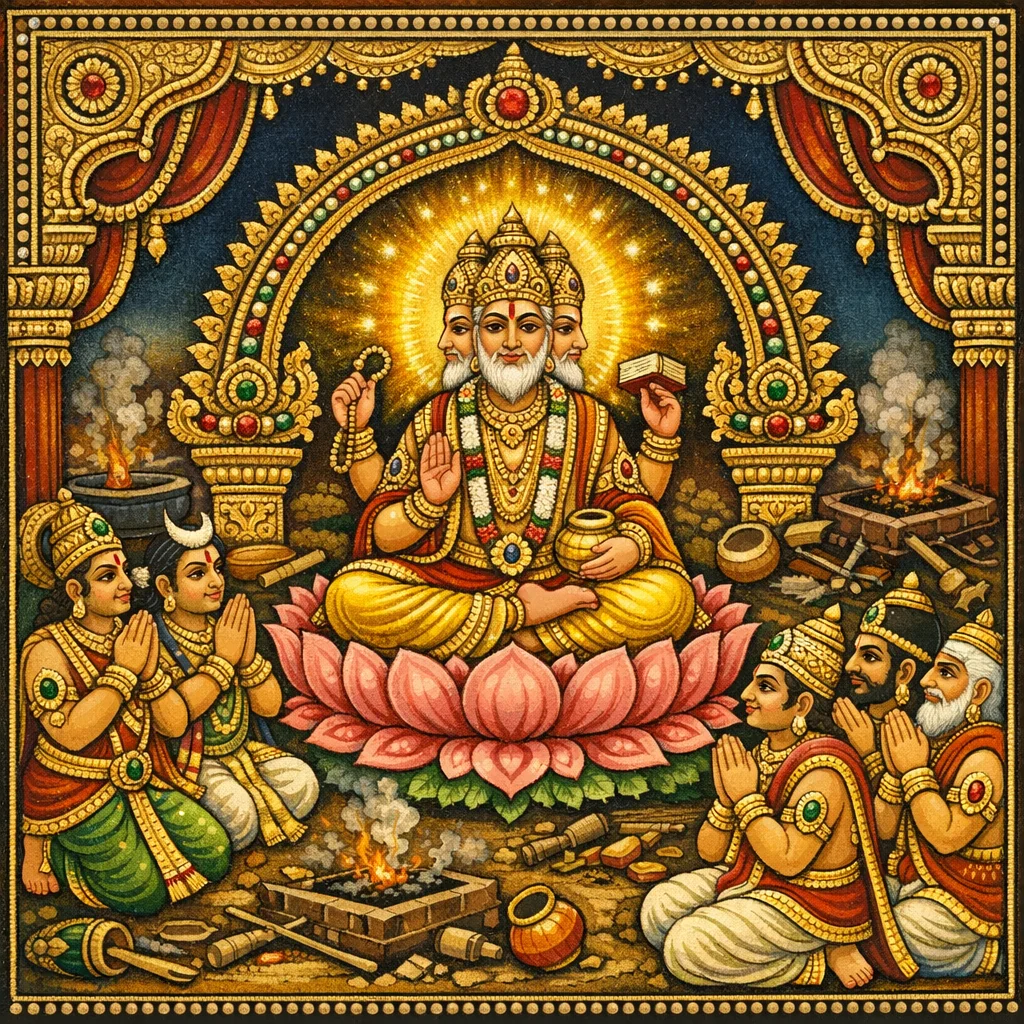
Adhyaya 52
Asamañjasa-tyāga (Abandoning Asamañjasa) — Sagara-carita Continuation
This adhyāya continues the Sagara-carita. The righteous King Sagara abandons his son Asamañjasa, favoring the virtuous Aṃśumān. Meanwhile, the numerous sons of Sumatī become cruel and adharmic, disrupting sacred sacrifices and behaving like asuras. This chaos deprives the gods and ancestors of offerings. The Devas approach Brahmā, who counsels patience and reveals that Kapila, a partial incarnation of Viṣṇu, will destroy the wicked sons to restore cosmic order.
Shlokas
Verse 1
इति श्रीब्रह्माण्डे महापुराणे वायुप्रोक्ते मध्यमभागे तृतीय उपोद्धातपादे सगरचरिते ऽसमञ्जसत्यागो नामैकपञ्चाशत्तमो ऽध्यायः // ५१// जैमिनिरुवाच त्यक्त्वा पुत्रं स धर्मात्मा सगरः प्रेम तद्गतम् / धर्मशीले तदा वाले चकारांशुमति प्रभुः
Thus, in the Śrī Brahmāṇḍa Mahāpurāṇa, in the middle section spoken by Vāyu, within the third introductory division of the Sagara narrative, is the fifty-first chapter called “The Banishment of Asamañjasa.” Jaimini said: having cast off his son, the righteous Sagara set his love where it rightly belonged; then the lordly king bestowed affection upon the virtuous boy Aṃśumān.
Verse 2
एतस्मिन्नेव काले तु सुमत्यास्तनया नृप / ववृधुः सघशः सर्वे परस्परमनुव्रताः
At that very time, O king, the sons of Sumati all grew up in bands, each following and cleaving to the other.
Verse 3
वज्रसंहननाः क्रूरा निर्दया निरपत्रपाः / अधर्मशीला नितरामेकघर्माण एव च
They were hard as vajra, cruel, merciless, and shameless. Given over to adharma, they were fiercely obstinate, fixed upon a single burning impulse.
Verse 4
एककार्याभिनिरताः क्रोधना मूढचेतसः / अधृष्याः सर्वभूतानां जनोपद्रवकारिणः
Absorbed in a single aim, wrathful and dull of mind, they seemed unassailable to all beings and became tormentors of the people.
Verse 5
विनयाचा रसन्मार्गनिरपेक्षाः समन्ततः / बबाधिरे जगत्सर्वमसुरा इव कामतः
Casting aside humility, right conduct, and the noble path, they oppressed the whole world on every side, like asuras, as their desire dictated.
Verse 6
विध्वस्तयज्ञसन्मार्गं भुवनं तैरुपद्रुतम् / निःस्वाध्याय वषट्कारं बभूवार्तं विशेषतः
By their oppression the righteous course of sacrifice was shattered; the whole world was afflicted, bereft of svādhyāya and the vaṣaṭ-cry, and fell into grievous distress.
Verse 7
विध्वस्यमाने सुभृशं सागरैर्वरदर्पितैः / प्रक्षोभं परमं जग्मुर्देवासुरमहोरगाः
As the oceans, swollen with pride from their boons, wrought fierce destruction, gods, asuras, and mighty serpents alike were seized by utmost turmoil.
Verse 8
धरासा सागराक्रान्ता न चलापि तदा चला / तपः समाधिभङ्गश्च प्रबभूव तपस्विनाम्
Then the earth, though overrun by the seas, did not stir at all; yet the tapas and samādhi of the ascetics were especially broken and disturbed.
Verse 9
हव्यकव्यपरिभ्रष्टास्त्रिदशाः पितृभिः सह / दुःशेन महाताविष्टा विरिञ्जभवनं ययुः
The Tridasha gods, deprived of the havya and kavya offerings, went with the Pitris—greatly distressed by misfortune—to the abode of Virinci (Brahma).
Verse 10
तत्र गत्वा यथान्यायं देवाः शर्वपुरोगमाः / शशंसुः सकलं तस्मै सागराणां विचेष्टितम्
Having gone there, the gods—led by Sharva (Shiva)—duly reported to him in full the strange doings of the oceans.
Verse 11
तच्छ्रत्वा वचनं तेषां ब्रह्मा लोकपितामहः / क्षणमन्तर्मना भूत्वा जगाद सुरसत्तमः
Hearing their words, Brahma, the grandsire of the worlds, became inwardly contemplative for a moment; then the foremost of the gods spoke.
Verse 12
देवाःशृणुत भद्रं वो वाणीमवहिता मम / विनङ्क्ष्यन्त्यचिरेमैव सागरा नात्र संशयः
O gods, may auspiciousness be yours—listen attentively to my words: before long the oceans shall perish; of this there is no doubt.
Verse 13
कालं कञ्चित्प्रतीक्षध्वं तेन सर्वं नियम्यते / निमित्तमात्रमन्यत्तु स एव सकलेशिता
Wait for a while; by Kala (Time) all things are governed. All else is but an instrument—He alone is the Lord of the whole.
Verse 14
तस्माद्युष्मद्धितार्थाय यद्वक्ष्यामि सुरोत्तमाः / सर्वैर्भवद्भिरधुना तत्कर्त्तव्यमतं द्रितैः
Therefore, O best of the gods, for your welfare I shall declare what is to be done; all of you must now, without sloth, hold it as your duty and carry it out.
Verse 15
विष्णोरंशेन भगवान्कपिलो जयतां वरः / जातो जगद्धितार्थाय योगीन्द्रप्रवरो भुवि
From a portion of Viṣṇu was born Bhagavān Kapila, the best among the victorious; upon earth he appeared for the welfare of the world, foremost of the lords of yoga.
Verse 16
अगस्त्यपीतसलिले दिव्यवर्षशतावधि / ध्यायन्नास्ते ऽधुनांऽभोधावेकान्ते तत्र कुत्र चित्
Even after Agastya drank up the ocean’s waters, he still abides now, meditating for a hundred divine years, in solitude somewhere within the sea.
Verse 17
गत्वा यूयं ममादेशात्कपिलं मुनिपुङ्गवम् / ध्यानाव सानमिच्छन्तस्तिष्ठध्वं तदुपह्वरे
Go, by my command, to Kapila, the foremost of sages; desiring the close of his meditation, remain waiting near his retreat.
Verse 18
समाधिविरतौ तस्य स्वाभिप्रायमशेषतः / नत्वा तस्मै वदिष्यध्वं स वः श्रेयो विधास्यति
When he withdraws from samādhi, understand his intent in full; then bow to him and speak. He will ordain what is best for you.
Verse 19
समाधिभङ्गश्च मुनेर्यथा स्यात्सागरैः कृतः / कुरुध्वं च तथा यूयं प्रवृत्तिं विबुधोत्तमाः
O best of the gods! As the oceans have broken the sage’s samādhi, so you too should act accordingly and set your endeavor in motion.
Verse 20
जैमिनिरुवाच इत्युक्तास्तेन विबुधास्तं प्रणम्य वितामहम् / गत्वा तं विबुधश्रेष्टं ते कृताञ्जलयो ऽब्रुवन्
Jaimini said: Thus addressed, the gods bowed to Vitāmaha; then they went to the foremost of the gods and, with hands folded, spoke.
Verse 21
देवा ऊचुः प्रसीद नो मुनिश्रेष्ठ वयं त्वां शरणं गताः / उपद्रुतं जगत्सर्वंसागरैः संप्रणश्यति
The gods said: Be gracious to us, O best of sages; we have come to you for refuge. The whole world, afflicted, is perishing because of the oceans.
Verse 22
त्वं किलाखिललोकानां स्थितिसहारकारणः / विष्णोरंशेन योगीन्द्रस्वरूपी भुवि संस्थितः
Truly you are the cause of the sustaining and the withdrawing of all worlds; as a portion of Viṣṇu, you abide on earth in the form of the Lord of yogins.
Verse 23
पुंसां तापत्रयार्त्तानामार्तिनाशाय केवलम् / स्वेच्छया ते धृतो देहो न तु त्वं तपतां वरः
Only to end the anguish of mortals tormented by the threefold afflictions have you, of your own will, assumed this body; O best of ascetics, you yourself do not suffer.
Verse 24
मनसैव जगत्सर्वं स्रष्टुं संहर्तुमेव च / विधातुं स्वेच्छया ब्रह्मन्भवाञ्छक्रोत्यसंशयम्
O Brahman, by mind alone you can, without doubt, create the entire world, dissolve it, and ordain it according to your own will.
Verse 25
त्वं नो धाता विधाता च त्वं गुरुस्त्वं परायणम् / परित्राता त्वमस्माकं विनिवर्त्तय चापदम्
You are our Creator and Ordainer; you are the Guru, you are the supreme refuge. You are our protector—turn away our calamity.
Verse 26
शरणं भव विप्रेन्द्र विप्रेद्राणां विशेषतः / सागरैर्दह्यमानानां लोकत्रयनिवासिनाम्
O foremost of sages, be a refuge—especially for the brahmanas—and for the dwellers of the three worlds who are being scorched by the oceans.
Verse 27
ननु वै सात्त्विकी चेष्टा भवतीह भवादृशाम् / त्रातुमर्हसि तस्मात्त्वं लोकानस्मांश्च सुव्रत
Indeed, such is the sāttvika conduct of great ones like you; therefore, O keeper of noble vows, you are worthy to protect the worlds and us as well.
Verse 28
न चेदकाले भगवन्विनङ्क्ष्यत्यखिलं जगत् / जैमिनिरुवाच इत्युक्तः सकलैर्देवैरुन्मील्य नयने शनैः
O Bhagavan, if you do not restrain it before its time, the entire world will perish. Jaimini said: thus addressed by all the gods, he slowly opened his eyes.
Verse 29
विलोक्य तानुवाचेदं कपिलः सूनृतं वचः / स्वकर्मणैव निर्दग्धाः प्रविनङ्क्ष्यन्ति सागराः
Seeing them, Kapila spoke gentle, truthful words: “Burned by their own deeds alone, the sons of Sagara shall perish.”
Verse 30
काले प्राप्ते तु युष्माभिः सतावत्परिपाल्यताम् / अहं तु कारणं तेषां विनाशाय दुरात्मनाम्
When the time arrives, you must uphold the truth; I shall be the cause of the destruction of those wicked-souled ones.
Verse 31
भविष्यामि सुरश्रेष्ठा भवतामर्थसिद्धये / मम क्रोधाग्नि विप्लुष्टाः सागराः पापचेतसः
O best of the gods, for the fulfillment of your purpose I shall be present; the sons of Sagara, sinful in mind, have been scorched by the fire of my wrath.
Verse 32
भविष्यन्तु चिरेणैव कालोपहतबुद्धयः / तस्माद्गतज्वरा देवा लोकाश्चैवाकुतोभयाः
Those whose minds are struck down by time will meet their end only after long delay; therefore let the gods be free of distress, and let the worlds be without fear from any quarter.
Verse 33
भवन्तु ते दुराचाराः क्षिप्रं यास्यन्ति संक्षयम् / तद्यूयं निर्भया भूत्वा व्रजध्वं स्वां पुरीं प्रति
Those of evil conduct will swiftly go to destruction; therefore, become fearless and return to your own city.
Verse 34
कालं कञ्चित्प्रतीक्षध्वं ततो ऽभीष्टमवाप्स्यथ / कपिलेनैवमुक्तास्ते देवाः सर्वे सवासवाः
Wait for a little while; then you shall attain what you desire. Thus addressed by Kapila, all the Devas, with Indra among them, rejoiced.
Verse 35
तं प्रणम्य ततो जग्मुः प्रतीताग्निदिवं प्रति / एतस्मिन्नन्तरे राजा सगरः पृथिवीपतिः
Bowing to him, they all departed, their hearts assured, toward the heavenly realm. In that very interval, King Sagara, lord of the earth, arrived.
Verse 36
वाजिमेधं महायज्ञं कर्तुं चक्रे मनोरथम् / आहृत्य सर्वसंभारान्वसिष्ठानुमते तदा
Then he resolved to perform the great sacrifice, the Vājimedha; and, with Vasiṣṭha’s consent, he had all the requisites gathered.
Verse 37
और्वाद्यैः सहितो विप्रैर्यथावद्दीक्षितो ऽभवत् / दीक्षां प्रविष्टो नृपतिर्हयसंचारणाय वै
With brahmins such as Aurva beside him, he was duly initiated according to rite. Having entered the consecration (dīkṣā), the king prepared for the horse’s ritual roaming.
Verse 38
पुत्रान्सर्वान्समाहूय संदिदेश महयशाः / संचारयित्वा तुरगं परीत्य पृथिवीतले
The greatly renowned (Sagara) summoned all his sons and commanded: “Let the steed be made to roam, circling over the earth’s surface (and guard it well).”
Verse 39
क्षिप्रं ममान्तिकं पुत्राः पुनराहर्तुमर्हथ / जैमिनिरुवाच ततस्ते पितुरादेशात्तमादाय तुरङ्गमम्
“Sons, swiftly bring him back into my presence.” Jaimini said—then, by their father’s command, they took that steed and set forth.
Verse 40
परिचङ्क्रमयामासुः सकले क्षितिमण्डले / विधिचोदनयैवाश्वः स भूमौ परिवर्तिततः
They made it roam across the whole circle of the earth; urged by ordained fate, that horse wandered upon the ground.
Verse 41
न तु दिग्विजयार्थाय करादानार्थमेव च / पृथिवीभूभुजा तेन पूर्वमेव विनिर्जिता
It was not for conquest of the quarters, nor merely for the taking of tribute; for that lord of the earth had already subdued the world before.
Verse 42
नृपाश्चोदारवीर्येण करदाः समरे कृताः / ततस्ते राजतनया निस्तोये लवणांबुधौ
By their noble valor the kings were made tributary in battle; then those princes entered the salt ocean, now bereft of waters.
Verse 43
भूतले विविशुर्हृष्टाः परिवार्य तुरङ्गमम्
Rejoicing, they surrounded the steed and entered into the earth.
Frequently Asked Questions
The Solar-royal Sagara cycle is advanced: Sagara’s rejection of Asamañjasa, elevation of Aṃśumān, and the collective behavior of Sagara’s numerous descendants (often called the Sāgaras) becomes the dynastic hinge that drives the next causal episode.
Ritual order is portrayed as a cosmological stabilizer: the ‘yajña-sanmārga’ is destroyed, svādhyāya and vaṣaṭkāra decline, devas and pitṛs lose havya-kavya shares, ascetics’ tapas/samādhi are disrupted, and multiple cosmic communities (devas/asuras/nāgas) experience agitation.
Kapila is introduced as a world-benefiting yogic authority, explicitly ‘born from a portion of Viṣṇu,’ to frame the impending resolution as divinely sanctioned correction: Time (Kāla) governs the outcome, but Kapila becomes the proximate instrument through which the Sāgaras’ adharma is checked.