Adhyaya 48
Vasiṣṭha-gamana (Vasiṣṭha’s Departure / The Episode of Sagara)
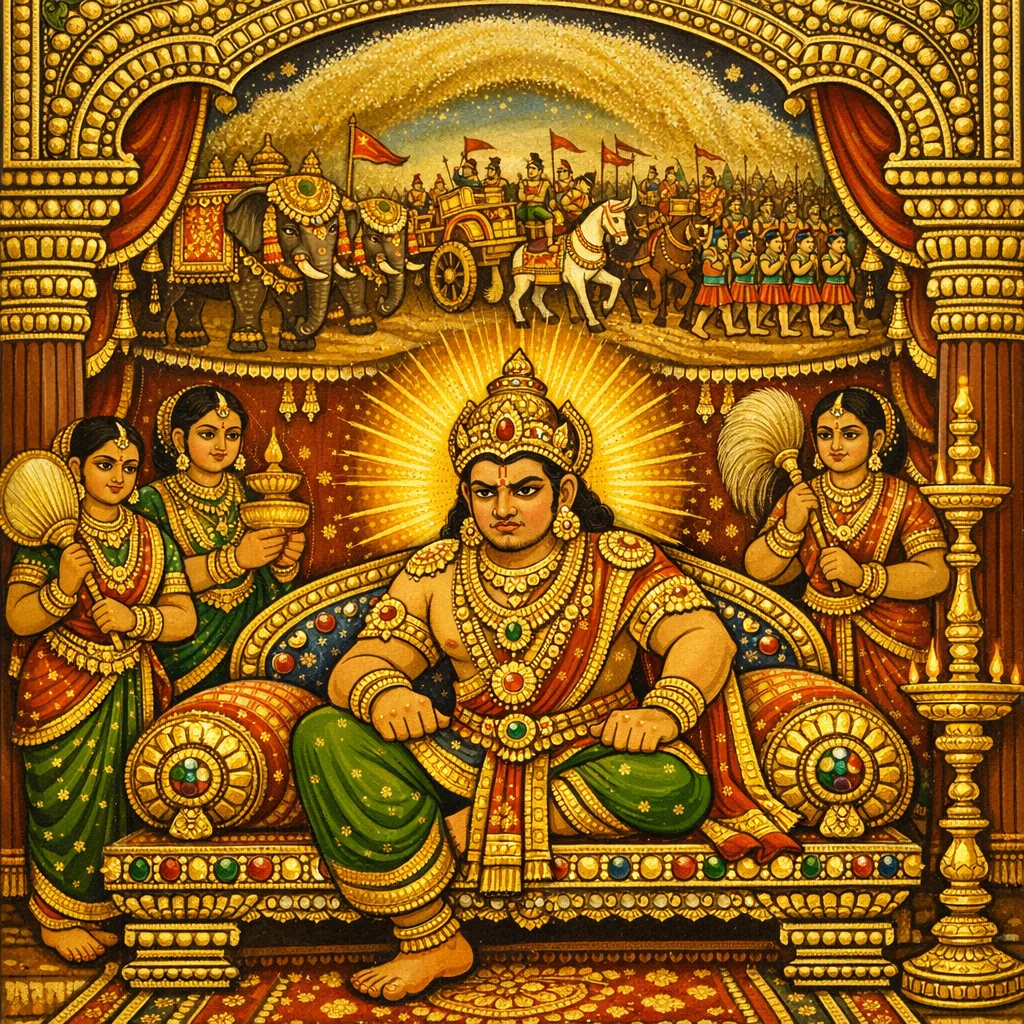
Framed as Jaimini’s narration, this chapter continues the Sagara-upākhyāna within the Ikṣvāku/Sūryavaṃśa dynastic memory (Vaṃśānucarita). After the departure of a venerable muni (linked to Vasiṣṭha-gamana), King Sagara rules from Ayodhyā—prosperous and versed in dharma and artha—yet inwardly unsettled, brooding over past injury and political humiliation. The verses portray his turmoil through sleeplessness and burning sighs, then turn to royal resolve: he vows to annihilate hostile lineages, makes auspicious preparations, and marches out with a vast fourfold army of chariots, elephants, horses, and infantry. The campaign is cast on a cosmic scale—dust-clouds, trembling earth, ocean-like formations—before focusing on a specific foe, the Haihayas, remembered as an ancient enmity. A hair-raising battle follows; Sagara, the enraged lord of Kosala, defeats the Haihaya kings, and the account (in the given portion) culminates in the destruction/burning of their city, establishing his imperial dominance while underscoring Purāṇic themes of kṣatriya vengeance, legitimacy, and the karmic weight of royal wrath.
Shlokas
Verse 1
इति श्रीब्रह्माण्डे महापुराणे वायुप्रोक्ते मध्यमभागे तृतीय उपोद्धातपादे सगरोपाख्याने वसिष्ठगमनं नाम सप्तचत्वारिंशत्तमो ऽध्यायः जैमिनिरुवाच गते तस्मिन्मुनिवरे सगरो राजसत्तमः / अयोध्यायामधिवस्न्पालयामास मेदिनीम्
Thus, in the Śrī Brahmāṇḍa Mahāpurāṇa, spoken by Vāyu, in the middle section, the third upoddhāta-pāda, within the Sagara narrative, is the forty-seventh chapter called “Vasiṣṭha’s Departure.” Jaimini said: when that foremost sage had gone, Sagara, best of kings, dwelling in Ayodhyā, ruled and protected the earth.
Verse 2
सर्वसंपद्गणोपेतः सर्वधर्मार्थतत्त्ववित् / वयसैव स बालो ऽभूत्कर्मणा वृद्धसंमतः
He was endowed with every kind of prosperity and knew the true principles of dharma and artha. Though young in years, by his deeds he was regarded as one mature and venerable.
Verse 3
तथापि न दिवा भुक्तें शेते वा निशि संस्मरन् / सुदीर्घं निःश्वसित्युष्णमुद्विग्नहृदयो ऽनिशम्
Yet he neither ate by day nor slept by night, ever lost in remembrance. With a troubled heart he ceaselessly breathed out long, burning sighs.
Verse 4
श्रुत्वा राजा स्वराज्यं निजगुरुमवजित्यारिभिः संगृहीतं मात्रा सार्द्धं प्रयान्तं वनमतिगहनंस्वर्गतं तं च तस्मिन् / शोकाविष्टः सरोषं सकलरिपुकुलोच्छित्तये सत्प्रतिज्ञश्चके सद्यः प्रतिज्ञां परिभवमनलं सोढुमिक्ष्वाकुवंश्यः
The king heard that his own preceptor had been dishonoured and his kingdom seized by enemies; with his mother he had gone to a most dense forest, and there attained heaven. Overwhelmed with grief and blazing with wrath, the Ikṣvāku scion could not endure the fire of humiliation, and at once made a firm vow to destroy the entire host of foes.
Verse 5
स कदाचिन्महीपालः कृतकौतुकमङ्गलः / रिपुं जेतुं मनश्चक्रे दिशश्च सकलाः क्रमात्
Once, that guardian of the earth, having performed auspicious rites and festive observances, set his mind on conquering the foe; and he planned, in due order, to march forth toward all the directions.
Verse 6
अनेकरथसाहस्रैर्गजाश्वरथसैनिकैः / सर्वतः संवृतो राजा निश्चक्राम पुरोत्तमात्
Surrounded on every side by thousands of chariots and by troops of elephants, horses, and chariot-warriors, the king marched out from Purottama.
Verse 7
शत्रून्हन्तुं प्रतस्थे निजबलनिवहेनोत्पतद्भिस्तुरङ्गैर्नासत्त्वोर्मिजालाकुलजलनिधिनिभेनाथ षाडङ्गिकेन / मत्तैर्मातङ्गयूथैः सकुलगिरिकुलेनैव भूमण्डलेन श्वेतच्छत्रध्वजौघैरपि शशिसुकराभातखेनैव सार्द्धम्
To slay the foes he set forth with his vast host—horses leaping high, a sixfold army like an ocean churned by a net of waves; herds of rut-maddened elephants, heavy as mountain ranges upon the earth; and with white parasols and surging banners shining like the moon and the sun.
Verse 8
तस्याग्रेसरसैन्ययूथचरणप्रक्षुण्णशैलोच्चयक्षोदापूरितनिम्नभागमवनीपालस्य संयास्यतः / प्रत्येकं चतुरङ्गसैन्यनिकरप्रक्षोदसंभूतभूरेणुप्रावृतिरुत्स्थली समभवद्भूमिस्तु तत्रानिशम्
As that lord of the earth marched forth, the lowlands were filled with dust from rocky heights ground down beneath the feet of the vanguard; and, from every division of the fourfold host, thick clouds of dust continually veiled the uplands there.
Verse 9
निघ्नन्दृप्ताननेकान्द्विपतुरगरथव्यूहसंभिन्नवीरान्सद्यः शोभां दधानो ऽसुरनिकरचमूर्निघ्नतश्चन्द्रमौलिः / दूरादेवाभिशंसन्नरिनगरनिरोधेषु कर्माभिषङ्गे तेषां शीघ्रापयानक्षणमभिदिशति प्राणिधैर्यं विधत्ते
Chandramauli, striking down many a proud foe and felling warriors shattered by the battle-formations of elephants, horses, and chariots, shone forth at once as he slew the hosts of asuras; and even from afar, intent on the work of hemming in enemy cities, he marked the moment of their swift withdrawal and steadied the courage of living beings.
Verse 10
विजिगीषुर्दिशो राजा राज्ञो यस्याभियास्यति
The king, eager for conquest, will advance toward those quarters where he intends to march against other kings.
Verse 11
विषयं स नृपस्तस्य सद्यः प्रणतिमेष्यति / विजित्य नृपतीन्सर्वान्कृत्वा च स्वपदानुगान्
That king will at once bring his realm to submission; conquering all other kings, he will make them followers at his own feet.
Verse 12
संकेत गामिनः कांश्चित्कृत्वा राज्ये न्यवर्त्तत / एवं स विसरन्दिक्षु दक्षिणाभिमुखो नृपः
After appointing certain men as signal-bearers (messengers and spies), he returned to his kingdom; thus ranging through the quarters, the king turned his face toward the south.
Verse 13
स्मरन्पूर्वकृतं वैरं हैहयानभ्यवर्त्तत / ततस्तस्य नृपैः सार्द्धं समग्ररथकुञ्जरैः
Remembering the enmity of old, he advanced upon the Haihayas; then he met the kings, arrayed with their full complement of chariots and war-elephants.
Verse 14
बभूव हैहयैर्वीरैः संग्रामो रोमहर्षणः / राज्ञां यत्र सहस्राणि स बलानि महाहवे
With the Haihaya heroes there arose a battle that made the hair stand on end; in that great war were thousands upon thousands of royal hosts.
Verse 15
निजघान महाबाहुः संक्रुद्धः कोसलेश्वरः / जित्वा हैहयभूपालान्भङ्क्त्वा दग्ध्वा च तत्पुरीम्
The mighty-armed lord of Kosala, inflamed with wrath, struck them down; having conquered the Haihaya kings, he shattered and burned their city.
Verse 16
निःशेषशून्या मकरोद्वैरान्तकरणो नृपः / समग्रबलसंमर्द्दप्रमृष्टाशेषभूतलः
That king ended the enmity of the Makara and left the earth as though utterly emptied; by the crush of his full might he trampled the whole face of the land.
Verse 17
हैहयानामशेषं तु चक्रे राज्यं रजःसमम् / राज्यं पुरीं चापहाय भ्रष्टैश्वर्या हतत्विषः
He made the entire realm of the Haihayas like dust; abandoning kingdom and city, they fell from sovereignty and lost their radiance.
Verse 18
राजानो हतभूयिष्ठा व्यद्रवन्त समन्ततः / अभिद्रुत्य नृपांस्तांस्तु द्रवमाणान्महीपतिः
Most of the kings were slain and fled in every direction; and the lord of the earth rushed upon those rulers as they ran.
Verse 19
जघान सानुगान्मत्तः प्रजाः क्रुद्ध इवान्तकः / ततस्तान्प्रति सक्रोधः सगरः समरे ऽरिहा
Maddened, he slew the people along with his followers, like Yama in wrath; then Sagara, slayer of foes, rose against them in battle, filled with anger.
Verse 20
मुमोचास्त्रं महारौद्रं भार्गवं रीपुभीषणम् / तेनोत्सृष्टातिरौद्रत्रिभुवनभयदप्रस्फुरद्भार्गवास्त्रज्वालादन्दह्यमानावशतनुततयस्ते नृपाः साद्य एव / वाय्वस्त्रावृत्तधूमोद्गमपटलतमोमुष्टदृष्टिप्रसारा भ्रेमुर्भूपृष्टलोठद्बहुलतमरजोगूढमात्रा मुहूर्त्तम्
He loosed the Bhārgava weapon, a most dreadful astra that terrified the foe. From the blazing flames of that exceedingly fierce Bhārgava-astra—spreading fear through the three worlds—those kings were at once burned down; and when the Wind-astra whirled up a thick curtain of smoke and darkness, their sight was snatched away for a moment, and they reeled in confusion, rolling upon the dust-veiled ground.
Verse 21
आगनेयास्त्रप्रतापप्रतिहतगतयो ऽदृष्टमार्गाः समन्ता द्भूपाला नष्टसंघाः परवशतनवो व्याकुलीभूतचित्ताः / भीताः संत्युक्तवस्त्रायुधकवचविभूषादिका मुक्तकेशा विस्पष्टोन्मत्तभावान्भृश तरमनुकुर्वन्त्यग्रतः शात्रवाणाम्
Struck down by the blazing might of the Agneyāstra, their advance was checked; seeing no path on any side, the kings, their hosts destroyed, wandered in bewilderment—bodies as if enslaved, minds in turmoil. In fear they cast away garments, weapons, armor, and ornaments; with hair unbound, they behaved like the plainly maddened before the enemy ranks.
Verse 22
विजित्य हैहयान्सर्वान्समरे सगरो बली / संक्षुब्धसागराकारः कांबोजानभ्यवर्त्तत
Sagara the mighty conquered all the Haihayas in battle; then, like the ocean churned into fury, he advanced upon the Kambojas.
Verse 23
नानावादित्रघोषाहतपटहरवाकर्णनध्वस्तधैर्याः सद्यः संत्यक्तराज्यस्वबलपुरपुरन्ध्रीसमूहा विमूढाः / कांबोजास्तालजङ्घाः शकयवनकिरातादयः साकमेते भ्रेमुर्भूर्यस्त्रभीत्या दिशि दिशि रिपवो यस्य पूर्वापराधाः
Smitten by the roar of many instruments and the thunder of war-drums, their courage was shattered; the bewildered foes at once abandoned kingdom, troops, cities, and their women’s retinues, and fled. Kambojas, Tālajaṅghas, Śakas, Yavanas, Kirātas and the rest—enemies stained with former offenses—wandered in every direction, terrified by the multitude of weapons.
Verse 24
भीतास्तस्य नरेश्वरस्य रिपवः केचित्प्रता पानलज्वालामुष्टदृशो विसृज्य वसतिं राज्यं च पुत्रादिभिः / द्विट्सैन्यैः समभिद्रुता वनभुवं संप्राप्य तत्रापि ते ऽस्तैमित्यं समुपागता गिरिगुहासुप्तोत्थितेन द्विषः
Some foes of that sovereign, as though their eyes were scorched by the flames of his prowess, abandoned home and kingdom along with sons and kin and fled. Driven hard by hostile armies, they reached the forest; yet even there they found no stillness, for the enemy—like one roused from sleep in mountain caves—pressed upon them again.
Verse 25
तालजङ्घान्निहत्याजौ राजा स बलवाहनान् / क्रमेण नाशयामास तद्राज्यमरिकर्षणः
Having slain the Tālajaṅghas in battle, that king—the crusher of foes—proceeded in due course to destroy the realm of the Balavāhanas as well.
Verse 26
ततो यवनकांबोजकिरातादीननेकशः / निजघान रुषाविष्टः पल्हवान्पारदानपि
Then, filled with rage, he destroyed the Yavanas, Kambojas, Kiratas, Pahlavas, and Paradas in great numbers.
Verse 27
हन्यमानास्तु ते सर्वे राजानस्तेन संयुगे / दुद्रुवुः संघशो भीता हतशिष्टाः समन्ततः
Being struck down by him in that battle, all those kings who survived the slaughter fled in groups, terrified, in all directions.
Verse 28
युष्माभिर्यस्य राज्यं बहुभिरपत्दृतं तस्य पुत्रो ऽधुनाहं हन्तुं वः सप्रतिज्ञं प्रसभमुपगतो वैरनिर्यातनैषी / इत्युच्चैः श्रावयाणो युधि निजचरितं वैरिभिर्नागवीर्यः क्षत्रैर्विध्वंसितेजाः सगरनरपतिः स्मारयामास भूपः
'I am the son of him whose kingdom was deceitfully taken by many of you. Now I have come to kill you, bound by a vow.' Proclaiming this loudly in battle, King Sagara reminded his enemies of his history.
Verse 29
तं दृष्ट्वा राजवर्यं सकलरिपुकुलप्रक्षयोपात्तदीक्षं भीताः स्त्रीबालपूर्वं शरणमभिययुः स्वासुसरक्षणाय / इक्ष्वाकूणां वसिष्ठं कुलगुरुमभितः सप्त राज्ञां कलेषु प्रख्याताः संप्रसूता नृपवररिपवः पारदाः पल्हवाद्याः
Seeing that excellent king vowed to destroy the enemy lineage, the Paradas and Pahlavas, terrified, sought refuge with Vasistha, putting women and children first to save their lives.
Verse 30
वसिष्ठमाश्रमोपान्ते वसंतमृषिभिर्वृतम् / उपगम्याब्रुवन्सर्वे कृताञ्जलिपुटा नृपाः
Approaching Vasistha, who was residing near the hermitage surrounded by sages, all those kings spoke with palms joined in reverence.
Verse 31
शरणं भंव नो ब्रह्मन्नार्त्तानामभयैषिणाम् / सगरास्त्राग्निनिर्दग्धशरीराणां मुमूर्षताम्
O Brahman! We are afflicted and seek fearlessness; our bodies are scorched by the weapon-fire of Sagara, and, near to death, we take refuge in you.
Verse 32
स हन्त्यसमानशेषेण वैरान्तकरणोन्मुखः / तस्माद्भयाद्धि निष्क्रान्ता वयं जीवितकाङ्क्षिणः
He, intent on ending the enmity, slays without leaving any remainder; from that very fear we have fled, longing to preserve our lives.
Verse 33
विभिन्नराज्यभोगर्द्धिस्वदारापत्यबान्धवाः / केवलं प्राणरक्षार्थं त्वां त्वयं शरणं गतः
Cut off from kingdom, pleasures, prosperity, and from our wives, children, and kin, we have come to you for refuge solely to save our lives.
Verse 34
न ह्यन्यो ऽस्ति पुमांल्लोके सौहृदेन बलेन वा / यस्तं निवर्त्तयित्वास्मान्पालयेन्महतो भयात्
In this world there is no other man—by friendship or by strength—who can turn him back and protect us from this great terror.
Verse 35
त्वं किलार्कान्वयभुवां राज्ञां कुलगुरुर् वृतः / तद्वंशपूर्वजैर्भूपैस्त्वतप्रभावश्च तादृशः
You have indeed been chosen as the lineage-guru of the kings born in the Solar Dynasty; even the ancestral rulers of that line acknowledged such power and majesty in you.
Verse 36
तेनायं सगरो ऽप्यद्य गुरुगौरवयन्त्रितः / भवन्निदेशं नात्येति वेलामिव महोदधिः
Therefore even Sagara today, restrained by reverence for the guru, does not overstep your command—just as the great ocean does not cross its shoreline.
Verse 37
त्वं नः सुहृत्पिता माता लोकानां च गुरुर्विभो / तस्मादस्मान्महाभाग परित्रातुं त्वमर्हसि
O Lord, you are our friend, our father and mother, and the guru of all the worlds; therefore, O greatly blessed one, you are worthy to protect and deliver us.
Verse 38
जैमिनिरुवाच इति तेषां वचः श्रुत्वा वसिष्ठो भगवानृषिः / शनैर्विलोकयामास शरणं समुपागतान्
Jaimini said: Hearing their words, the blessed sage Vasiṣṭha slowly cast his gaze upon those who had come seeking refuge.
Verse 39
वृद्धस्त्रीबालभूयिष्ठान्हतशेषान्नृपान्वयान् / दृष्ट्वा त्वतप्यद्भगवान्सर्वभूतानुकंपकः
Seeing the remaining members of the royal line—mostly the aged, women, and children, left after the slaughter—the blessed one, compassionate to all beings, was moved to sorrow.
Verse 40
चिरं निरूप्य मनसा तान्विलोक्य च सादरम् / उज्जीवयञ्छनैर्वाचा मा भैष्टेति महामतिः
After pondering long within his heart and looking upon them with respect, the great-minded sage gently revived their spirits with his words: “Do not fear.”
Verse 41
अथावोचन्महाभागः कृपया परयान्वितः / समये स्थापयामास राज्ञस्ताञ्जीवितार्थिनः
Then the greatly blessed one, filled with supreme compassion, spoke; and at the proper time he kept those kings—who sought their lives—secure.
Verse 42
भूपव्या कोपदग्धं नृपकुलविहिताशेषधर्मादपेतं कृत्वा तेषां वसिष्ठः समयमवनिपालप्रतिज्ञानिवृत्त्यै / गत्वा तं राजवर्यं स्वयमथ शनकैः सांत्वयित्वा यथावत्सप्राणानामरीणामपगमनविधावभ्यनुज्ञां ययाचे
Seeing the royal line scorched by wrath and fallen away from all dharma, Vasiṣṭha set a due term so the king’s vow might be brought to its close. Then he went himself to that foremost of kings, gently consoled him, and sought permission for the manner by which the foes might withdraw with their lives preserved.
Verse 43
सक्रोधो ऽपि महीपतिर्गुरुवचः संभावयंस्तानरीन्धर्मस्य स्वकुलोचितस्य च तथा वेषस्य संत्यागतः / श्रौतस्मार्त्तविभिन्नकर्मनिरतान्विप्रैश्च दूरोञ्झितान्सासून्केवलमत्यजन्मृतसमानेकैकशः पार्थिवान्
Though wrathful, the king honored the guru’s word and spared those enemy kings; yet he made them abandon the dharma and attire befitting their line. Cut off from Śrauta and Smārta rites and cast away by the brahmins, they were left with life alone—one by one, as if already dead.
Verse 44
अर्द्धमुण्डाञ्छकांश्चक्रे पल्हवान् श्मश्रुधारिणः / यवनान्विगतश्मश्रून्कांबोजांश्चबुकान्वितान्
He made the Śakas half-shaven; the Pahlavas he made bearded. The Yavanas he rendered without beards, and the Kāmbojas he marked upon the chin.
Verse 45
एवं विरूपानन्यांश्च स चकार नृपान्वयान् / वेदोक्तकर्मनिर्मुक्तान्विप्रैश्च परिवर्जितान्
In this same way he made other royal lines misshapen as well—cut off from the rites enjoined by the Veda and shunned by the brahmins.
Verse 46
कृत्वा संस्थाप्य समये जीवतस्तान्व्य सर्जयत् / ततस्ते रिपवस्तस्य त्यक्तस्वाचारलक्षणाः
Having established the conditions at that time, he released them alive. Consequently, those enemies of his abandoned their own characteristic rituals and behaviors.
Verse 47
व्रात्यतां समनुप्राप्ताः सर्ववर्णविनिन्तिताः / धिक्कृता सततं सर्वेनृशंसा निरपत्रपाः
They attained the status of Vratyas (outcasts), condemned by all social orders. They were constantly reviled by all, cruel and shameless.
Verse 48
क्रूराश्च संघशो लोके बभूवुर्म्लेछजातयः
And cruel Mleccha (barbarian) tribes came into existence in the world in great multitudes.
Verse 49
मुक्तास्तेनाथ राज्ञा शकयवनकिरातादयः सद्य एव त्यक्तस्वाचारवेषा गिरिगहनगुहाद्याशयाः संबभूवुः / एता अद्यापि सद्भिः सततमवमता जातयो ऽसत्प्रवृत्त्या वर्त्तन्ते दुष्टचेष्टा जगति नरपतेः पालयन्तः प्रतिज्ञाम्
Released by that king, the Sakas, Yavanas, Kiratas, and others immediately abandoned their own customs and dress, taking refuge in mountains and deep caves. Even today, these tribes, constantly despised by the virtuous, exist in the world with wicked conduct, fulfilling the king's vow.
Frequently Asked Questions
The Solar dynasty context is foregrounded through Sagara—an Ikṣvāku-vaṃśa king ruling from Ayodhyā (Kosala), presented as a key figure in Sūryavaṃśa narrative history.
Sagara’s digvijaya-style march and decisive war against the Haihayas, culminating in their defeat and the destruction/burning of their city (as indicated in the sample verses).
No. The sampled content belongs to the Sagara-upākhyāna (royal genealogy/war narrative), not the Lalitopākhyāna; it does not center on Śākta vidyā/yantra material.