Adhyaya 16
Śrāddha-kalpa: Dāna-phala-nirdeśa (Gifts in Śrāddha and Their Fruits)
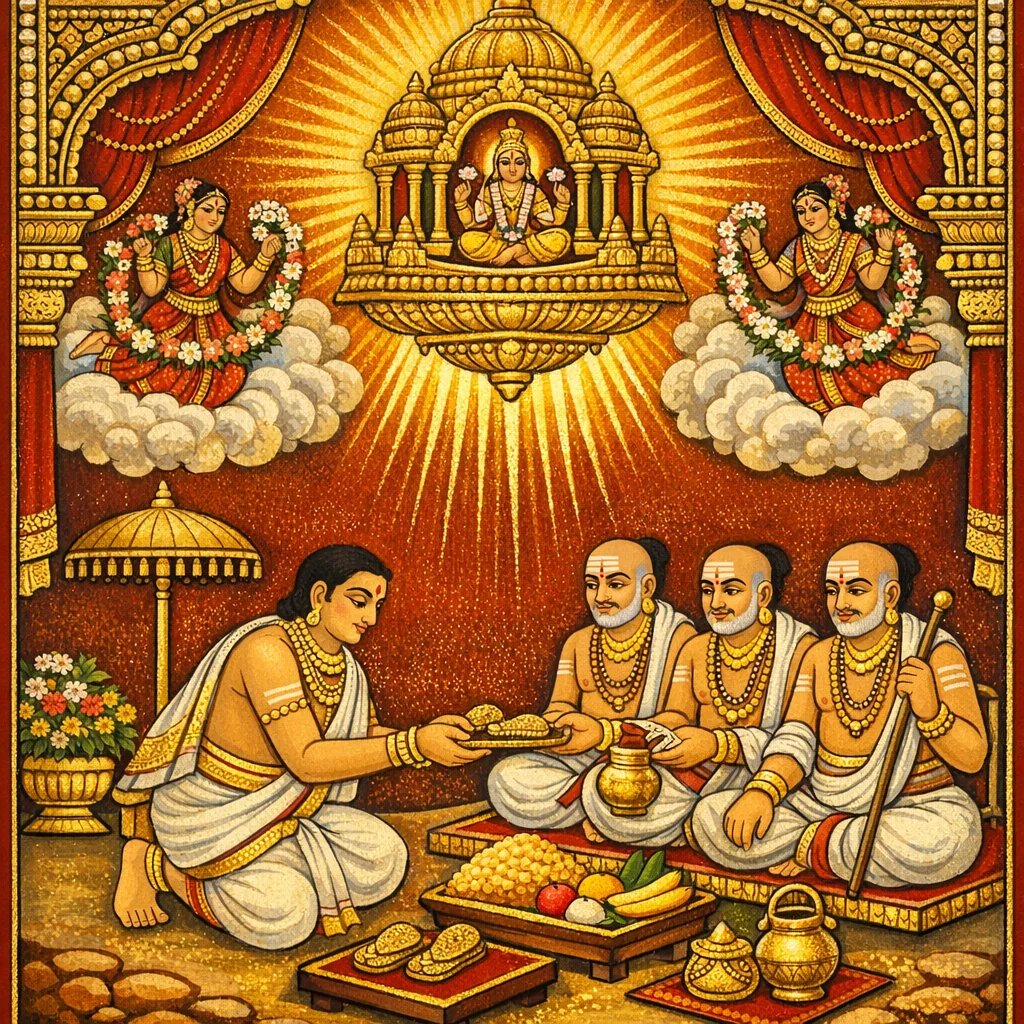
This chapter continues the śrāddha-kalpa in an instructional tone, giving a catalogue of the fruits (phala) of gifts (dāna) offered during śrāddha. Bṛhaspati presents dāna as a saving means (tāraṇa) that sustains beings and brings happiness on the path to heaven (svarga-mārga). It then lists exemplary offerings—food (anna), prepared dishes (savyañjana), yajñopavīta, kamaṇḍalu, footwear (pādukā/upānah), fans (tālavṛnta), parasols (chatra), shelters with bedding and food, garments, gems, and vehicles—each tied to vivid rewards such as radiant divine vimānas, apsarā companionship, longevity, prosperity, beauty, conveyances, fragrance and flowers, and heavenly honor. The chapter is ritual rather than genealogical, mapping offering-types and recipient contexts (especially brāhmaṇas and ascetics) to cosmographic afterlife imagery to motivate correct performance.
Shlokas
Verse 1
इति श्री ब्रह्माण्डे महापुराणे वायुप्रोक्ते मध्यभागे तृतीय उपोद्धातपादे श्राद्धकल्पे ब्राह्मणपरीक्षा नाम पञ्चदशो ऽध्यायः // १५// बृहस्पतिरुवाच अतः परं प्रवक्ष्यामि दानानि च फलानि च / तारणं सर्वभूतानां स्वर्गमार्गसुखावहम्
Thus, in the Śrī Brahmāṇḍa Mahāpurāṇa, in the middle section spoken by Vāyu, within the third Upoddhāta-pāda of the Śrāddha-kalpa, is the fifteenth chapter called “The Examination of the Brāhmaṇa.” Bṛhaspati said: Hereafter I shall declare the gifts of dāna and their fruits—those that ferry all beings across and bestow the bliss of the path to heaven.
Verse 2
लोके श्रेष्ठतम् सर्वमात्मनश्चैव यत्प्रियम् / सर्वं पितॄणां दातव्यं तेषामेवाज्ञयार्थिना
Whatever is most excellent in the world, and whatever is dearest to oneself—let all of that be given to the Pitṛs; thus acts one who seeks their sanction and grace.
Verse 3
जांबूनदमयं दिव्यं विमानं सूर्यसन्निभम् / दिव्याप्सरोभिः संपूर्णमन्नदो लभते ऽक्षयम्
A divine vimāna of Jāmbūnada-gold, radiant like the sun and filled with celestial apsarās—such imperishable reward is gained by the giver of food.
Verse 4
सव्यञ्जनं तु यो दद्यादहतं श्राद्धकर्मणि / आयुः प्राकाश्यमैश्वर्यं रूपं च लभते शुभम्
Whoever, in the śrāddha rite, gives unspoiled fresh food together with dishes, gains long life, radiant renown, prosperity, and auspicious beauty.
Verse 5
यज्ञोपवीतं यो दद्याच्छ्राद्धकाले तु यज्ञवित् / पावनं सर्व विप्राणां ब्रह्मदानस्य तत्फलम्
One who knows the yajña, if at the time of śrāddha he gives the yajñopavīta (sacred thread) in charity, thereby purifies all vipras; such is the fruit of brahma-dāna.
Verse 6
प्लुतं विप्रेषु यो दद्याच्छ्राद्धकाले कमडलुम् / मधुक्षीराज्यदधिभिर्दातारमुपतिष्ठते
Whoever, at the time of Śrāddha, gives the excellent kamaṇḍalu to the brāhmaṇas—merit attended by honey, milk, ghee, and curd comes and abides with the giver.
Verse 7
चक्राविद्धं च यो दद्याच्छ्राद्धकाले कमण्डलुम् / धेनुं सलभते दिव्यां पयोदां सुखदो हिनीम्
Whoever, at the time of Śrāddha, gives a kamaṇḍalu marked with the cakra, attains a divine cow—abundant in milk, bestowing happiness, and most excellent.
Verse 8
तूलपूर्णे च यो दद्यात्पादुके श्राद्धकर्मणि / शोभनं लभते यानं पादयोः सुखमेधते
Whoever, in the Śrāddha rite, gives pādukas filled with cotton, gains a splendid conveyance, and comfort for the feet increases.
Verse 9
व्यचनं तालवृन्तं च दत्त्वा विप्राय सत्कृतम् / प्राप्नुयात्सर्वपुष्पाणि सुगन्धीनि मृदूनि च
By respectfully giving a brāhmaṇa a fan (vyajana) and a palm-stalk handle, one attains all flowers—fragrant and tender.
Verse 10
श्राद्धे ह्युपानहौ दत्त्वा ब्राह्मणेभ्यः सदा बुधः / दिव्यं स लभते यानं वाजियुक्तं नवं तथा
The wise one who, in Śrāddha, gives upānahau (footwear) to the brāhmaṇas attains a divine conveyance—new and drawn by horses.
Verse 11
श्राद्धे छत्रं तु यो दद्यात्पुष्पमालान्वितं तथा / प्रासादो ह्युत्तमो भूत्वा गच्छन्तमनुगच्छति
Whoever, at the śrāddha, gives a parasol adorned with a garland of flowers—an excellent reward, becoming like a noble palace, follows that person as they go.
Verse 12
शरणं रत्नसंपूर्णं सशय्याभोजनं बुधः / श्राद्धे दत्त्वा यतिभ्यस्तु नाकपृष्ठे महीयते
The wise one who, at the śrāddha, gives to the yatis a refuge filled with jewels, together with bed and food, is honored upon the heavenly heights.
Verse 13
सुक्तावैदूर्यवासांसि रत्नानि विविधानि च / वाहनानि च दिव्यानि प्रयुतान्यर्बुदानि च
He gains garments set with pearl and vaidūrya, jewels of many kinds, divine vehicles, and riches beyond count—by the tens of thousands and crores.
Verse 14
सुमहद्व्योमगं पुण्यं सर्वकामसमन्वितम् / चन्द्रसूर्यनिभं दिव्यं विमानं लभते ऽक्षयम्
He obtains an imperishable, divine vimāna—vast, moving through the sky, filled with merit and all desired blessings, radiant like the moon and the sun.
Verse 15
अप्सरोभिः परिवृतं कामगं सुमनोजवम् / वसेत्स तु विमानाग्रे स्तूयमानः समन्ततः
Surrounded by apsarās, moving at will and swift as the mind, he dwells at the fore of the vimāna, praised from every side.
Verse 16
दिव्यैःपुष्पैश्चितश्चाहुर्दानानां परमं बुधाः / सुश्लक्ष्मानि सुवर्णानि श्राद्धे पात्राणि दापयेत्
The wise declare that a gift adorned with divine flowers is the highest of all gifts. In the śrāddha rite, one should bestow smooth, radiant vessels of gold.
Verse 17
रसास्तमुपतिष्ठन्ति भक्ष्यं सौभाग्यमेव च / तिलानिक्षूंस्तथा श्राद्धे द्विजेभ्यः संप्रयच्छति
To him come rich flavors, wholesome foods, and good fortune as well. In the śrāddha, he reverently offers sesame and sugarcane to the dvijas.
Verse 18
मित्राणि लभते लोके स्त्रीषु सौभाग्यमेव च / यः पात्रं तैजसं दद्यान्मनोज्ञ श्राद्धभोजनैः
He gains friends in the world and also good fortune among women. Whoever gives a radiant vessel together with pleasing śrāddha foods receives such blessings.
Verse 19
पात्रं भवति कामाना रूपस्य च धनस्य च / राजतं काञ्चनं वापि यो दद्याच्छ्राद्धकर्मणि
He becomes a worthy recipient of desires fulfilled, beauty, and wealth. Whoever, in the śrāddha rite, gives silver or gold attains this merit.
Verse 20
दानात्तु लभते कामान्प्राकाश्यं धनमेव च / धेनुं श्राद्धे तु यो दद्याद्गृष्टिं कुम्भापदोहनीम्
Through giving, one gains desires fulfilled, radiant renown, and wealth. Whoever, in the śrāddha, donates a milch cow fit to be milked into a pot attains this reward.
Verse 21
गावस्तमुपतिष्ठन्ति नरं पुष्टिस्तथैव च / दद्याद्यः शिशिरे चाग्निं बहुकाष्ठं प्रयत्नतः
He who, in the cold season, diligently gives the gift of fire with abundant firewood—cows attend upon that man, and nourishment and strength come to him.
Verse 22
कायाग्निदीप्तिं प्राकाश्यं सौभाग्यं तभते नरः / इन्धनानि तु यो दद्या द्द्विजेभ्यः शिशिरागमे
He who, at the onset of winter, gives fuel to the twice-born attains the blaze of the body’s fire, radiance, clarity, and auspicious fortune.
Verse 23
नित्यं जयति संग्रामे श्रिया जुष्टस्तु जायते / सुरभीणि च माल्यानि गन्धवन्ति तथैव च
He ever conquers in battle, is born under the favor of Śrī-Lakṣmī, and receives fragrant garlands and sweet perfumes.
Verse 24
पूजयित्वा तु पात्रेभ्यः श्राद्धे सत्कृत्य दापयेत् / गन्धमाल्यं महात्मानं सुखानि विविधानि च
In the śrāddha rite, having worshiped the worthy recipients and honored them well, one should bestow perfumes and garlands, gifts fit for the great-souled, and diverse comforts.
Verse 25
दातारमुपतिष्ठन्ति युवत्यश्च पतिव्रताः / शयनासनयानानि भूमयो वाहनानि च
To the giver draw near young women devoted to their husbands; and he gains beds, seats, conveyances, lands, and vehicles.
Verse 26
श्राद्धेष्वेतानि यो दद्यादश्वमेधफलं लभेत् / श्राद्धकाले गुणवति विप्रे वै समुपस्थिते
Whoever gives these offerings in the śrāddha attains the fruit of the Aśvamedha, especially when, at the time of śrāddha, a virtuous brāhmaṇa is duly present.
Verse 27
इष्टद्रव्यं च यो दद्यात्स्मृतिं मेधां च विन्दति / सर्पिःपूर्णानि पात्राणि श्राद्धे सत्कृत्य दापयेत्
Whoever gives a cherished offering gains memory and keen understanding. In the śrāddha, one should respectfully bestow vessels filled with ghee.
Verse 28
कुम्भोपदोहगृष्टीनां बह्वीनां फलमश्नुते / श्राद्धे यथेप्सितं दत्त्वा पुण्डरीकफलं लभेत्
He enjoys the reward as though he had gifted many cows yielding milk enough to fill jars. By giving in the śrāddha as desired, he attains the fruit of Puṇḍarīka.
Verse 29
वनं पुष्पफलोपेतं दत्त्वा गोसवमश्नुते / कूपारामतडागानि क्षेत्रगोष्ठगृहाणि च
By gifting a forest adorned with flowers and fruits, one enjoys the fruit of the Gosava sacrifice. Likewise, gifting wells, gardens, ponds, fields, cowsheds, and houses brings merit.
Verse 30
दत्त्वा मोदन्ति ते स्वर्गे नित्यमाचन्द्रतारकम् / स्वास्तीर्णं शयनं दत्त्वा श्राद्धेरत्नविभूषितम्
Having given thus, they rejoice in heaven for as long as the moon and stars endure. In the śrāddha, gifting a well-spread bed adorned with jewels yields the same reward.
Verse 31
पितरस्तस्य तुष्यन्ति स्वर्गलोकं समशनुते / अस्मिंल्लोके च संपन्नं स्यन्दनं च सुवाहनैः
His Pitṛs are satisfied; he attains the heavenly world of Svarga. In this world too he becomes prosperous and gains a splendid chariot with excellent steeds.
Verse 32
अष्टाभिः पूज्यते चात्र धनधान्यैश्च वर्द्धते / पर्णकौशेयपट्टोर्णे तथा प्रावारकंबलौ
Here he is honored in eight ways and increases in wealth and grain. He gains leaf-garments, silk, fine cloth, wool, and also cloaks and blankets.
Verse 33
अजिनं काञ्चनं पट्टं प्रवेणीं मृगलोमकम् / दद्यादेतानि विप्राणां भोजयित्वा यथाविधि
Deerskin (ajina), gold, fine cloth (paṭṭa), a woven braid (praveṇī), and deer-hair—having fed the brāhmaṇas according to rule, one should give these as gifts.
Verse 34
प्राप्नोति श्रद्धधानस्तु वाजपेयफलं नरः / बहुभार्याः सुरूपाश्च पुत्रा भृत्याश्च किङ्कराः
A man endowed with śraddhā attains the fruit of the Vājapeya sacrifice: many wives, handsome sons, and servants and attendants to obey his call.
Verse 35
वशे तिष्ठन्ति भूतानि लोके चास्मिन्निरामयम् / कौशेयं क्षौमकार्पासं दुकूलं गहनं तथा
Beings remain under his sway, and in this world he is free from illness. He also gains silk, linen, cotton, fine garments (dukūla), and other excellent robes.
Verse 36
श्राद्धे चैतानि यो दद्यात्कामानाप्नोत्यनुत्तमान् / अलक्ष्मीं नाशयन्त्येते तमः सूर्योदयो यथा
Whoever gives these offerings in the śrāddha attains the highest desires; they destroy alakṣmī (misfortune), as sunrise dispels darkness.
Verse 37
भ्राजते य विमानाग्रे नक्षत्रेष्विव चन्द्रमाः / वासो हि सर्वदैवत्ये सर्वदेवैरभिष्टुतम्
As the moon shines at the fore of the vimāna amid the stars, so does clothing, in rites for all the deities, stand radiant—praised by all the gods.
Verse 38
वस्त्राभावे क्रिया नास्ति य५दानतपांसि च / तस्माद्वस्त्राणि देयानि श्राद्धकाले तु नित्यशः
Without clothing, no rite is possible—neither sacrifice, nor charity, nor austerity; therefore, at the time of śrāddha, garments should always be given.
Verse 39
तानि सर्वाण्यवाप्नोति श्राद्धे दत्त्वा तु मानवः / नित्यश्राद्धे तु यो दद्यात्प्रयतस्तत्परायणः
By giving in the śrāddha, a person obtains all those fruits; and one who, careful and devoted, performs the daily śrāddha should likewise give.
Verse 40
सर्वकामानवाप्नोति राज्यं स्वगे तथव च / सर्वकामसमृद्धस्य यज्ञस्य फलमश्नुते
He attains all desires, and kingship in heaven as well; he partakes of the fruit of a sacrifice (yajña) rich with every wish.
Verse 41
भक्ष्यजातं तु सुकृतं स्वस्तिकाद्यं सशर्करम् / कृसर मधुसर्पिश्च पयः पायसमेव च
Well-prepared sacred foods—auspicious dishes such as svastika offerings with sugar; also kṛsara, honey with ghee, milk, and payasa.
Verse 42
स्निग्धप्रायाश्च यो दद्यादग्निष्टोमफलं लभेत् / दधिगव्यमसंसृष्टं भक्ष्यान्नानाविधांस्तथा
Whoever gives offerings rich with sacred unctuousness, such as ghee, attains the fruit of the Agniṣṭoma sacrifice; and also gives pure, unmixed curd, holy products of cow’s milk, and various foods and sweets.
Verse 43
दत्त्वा न शोचते श्राद्धे वर्षासु च मघासु च / घृतेन भोजयेद्विप्रान्घृतं भूमौ समुत्सृजोत्
By giving at the śrāddha, in the rainy season, and at the time of the Maghā asterism, one does not grieve; let him feed the brāhmaṇas with ghee, and offer/pour ghee upon the earth.
Verse 44
छायायां हस्तिनश्चैव दत्त्वा श्राद्धेन शोचते / ओदनं पायसं सर्पिर्मधुमूलफलानि च
Even if one gives in the shade, and even if one gives to an elephant, through the śrāddha one may yet grieve; therefore offer cooked rice, payasa, ghee, honey, roots, and fruits.
Verse 45
भक्ष्यांश्च विविधान्दत्त्वा परत्रेह च मोदते / शर्कराक्षीरसंयुक्ताः पृथुका नित्यमक्षयाः
By giving various sacred foods, one rejoices both here and hereafter; pṛthukā mixed with sugar and milk bestow merit that is ever undiminished.
Verse 46
स्यात्तु संवत्सरं प्रीतिः शाकैर्मांसरसेन च / सक्तुलाजास्तथापूपाः कुल्माषा व्यञ्जनैः सह
By offering greens with meat-broth, and also saktu, parched grains, cakes, and kulmāṣa together with savory dishes, one gains delight that lasts for a full year.
Verse 47
सर्पिःस्निग्धानि सर्वाणि दध्ना संस्कृत्य भोजयेत् / श्राद्धेष्वेतानि यो दद्यात्पद्मं स लभते निधिम्
Let all foods be made rich with ghee and prepared with curd, then served; whoever gives these in the śrāddha attains the treasure called Padma-nidhi.
Verse 48
नवसस्यानियो दद्याच्छ्राद्धे सत्कृत्य यत्नतः / सर्वभोगानवाप्नोति पूज्यते च दिवं गतः
Whoever, in the śrāddha, respectfully and diligently gives the grains of the new harvest attains all enjoyments, and, having gone to heaven, is honored there.
Verse 49
भक्ष्यभोज्यानि पेयानि चोष्यलेङ्यवराणि च / भोजनाग्रासनं दत्त्वा अतिथिभ्यः कृताञ्जलिः
Offer foods to chew and eat, and drinks, and the finest of what is sucked and licked; giving the guests the first morsel of the meal, remain with palms joined in reverence.
Verse 50
सर्वयज्ञक्रतूनां हि फलं प्राप्नोत्यनुत्तमम् / क्षिप्रमत्युष्णमक्लिष्टं दद्यादन्नं बुभुक्षते
He attains the unsurpassed fruit of all sacrifices and rites; to one who is hungry, one should quickly give food that is not overly hot, without causing distress.
Verse 51
सव्यञ्जनं तथा स्निग्धं भक्त्या सत्कृत्य यत्नतः / तरुणादित्यसंकाशं विमानं हंसवाहनम्
One who, with devotion and careful honor, offers food with condiments—rich and soothing—attains a swan-borne vimāna, radiant like the youthful sun.
Verse 52
अन्नदो लभते नित्यं कन्याकोटीस्तथैव च / अन्नदानात्परं दानं नान्यत्किञ्चित्तु विद्यते
The giver of food ever attains the merit of kanyā-koṭi; no gift is higher than the gift of food.
Verse 53
अन्नाद्भूतानि जायन्ते जीवन्ति प्रभवन्ति च / जीवदानात्परं दानं नान्यत्किञ्चन विद्यते
From food beings are born, by food they live and thrive; no gift surpasses the gift of life (jīva-dāna).
Verse 54
अन्नाल्लोकाः प्रतिष्ठन्ति लोकदानस्य तत्फलम् / अन्नं प्रजापतिः साक्षात्ते न सर्वमिदं ततम्
By food the worlds are upheld—this is the fruit of ‘giving the worlds’; food is Prajāpati himself, and by it all this is pervaded.
Verse 55
तस्मादन्नसमं दानं न भूतं न भविष्यति / यानि रत्नानि मेदिन्यां वाहनानि स्त्रियस्तथा
Therefore no gift equal to the gift of food has existed, nor shall it exist; even though the earth holds jewels, conveyances, and women.
Verse 56
क्षिप्रं प्राप्नोति तत्सर्वं पितृभक्तस्तु यो नरः / प्रतिश्रयं च यो दद्यादतिथिब्यः कृताञ्जलिः
The man devoted to the Pitṛs swiftly attains all this; and he who, with joined palms, grants shelter to guests as well.
Verse 57
देवास्तं संप्रतीच्छन्ति दिव्यातिथ्यैः सहस्रशः / सर्वाण्येतानि यो दद्यात्पृथिव्यामेकराड्भवेत्
The gods receive him with thousands of divine honors of hospitality; he who gives all these gifts becomes a sole sovereign upon the earth.
Verse 58
त्रिभिर्द्वाभ्यामथैकेन दानेन तु सुखी भदेत् / दानानि परमो धर्मः सद्भिः सत्कृत्य पूजितः
By three gifts, by two, or even by one, a person may become happy; giving is the highest dharma, honored and worshiped by the good.
Verse 59
त्रैलोक्यस्या धिपत्यं हि दानेनैव ध्रुवं स्थितम् / अराजा लभते राज्यमधनश्चोत्तमं धनम् / क्षीणायुर्लभते चायुः पितृभक्तः सदा नरः
Sovereignty over the three worlds is firmly established by giving alone; the one without a kingdom gains a kingdom, the poor gain excellent wealth; the short-lived gain life—thus for the man ever devoted to the Pitṛs.
Frequently Asked Questions
A śrāddha-kalpa dāna-phala index: specific gifts offered during śrāddha are paired with explicitly described outcomes (longevity, prosperity, vehicles/vimānas, heavenly honors).
Bṛhaspati speaks, presenting dāna as ‘tāraṇa’ (a means of deliverance/support) and as a source of svarga-mārga sukha, i.e., pleasurable and elevated post-mortem trajectories.
No; the sampled content is ritual-prescriptive and motivational, focusing on śrāddha offerings and their rewards rather than vamsha lists, bhuvana-kośa measurements, or Lalitopakhyana vidyā/yantra narratives.