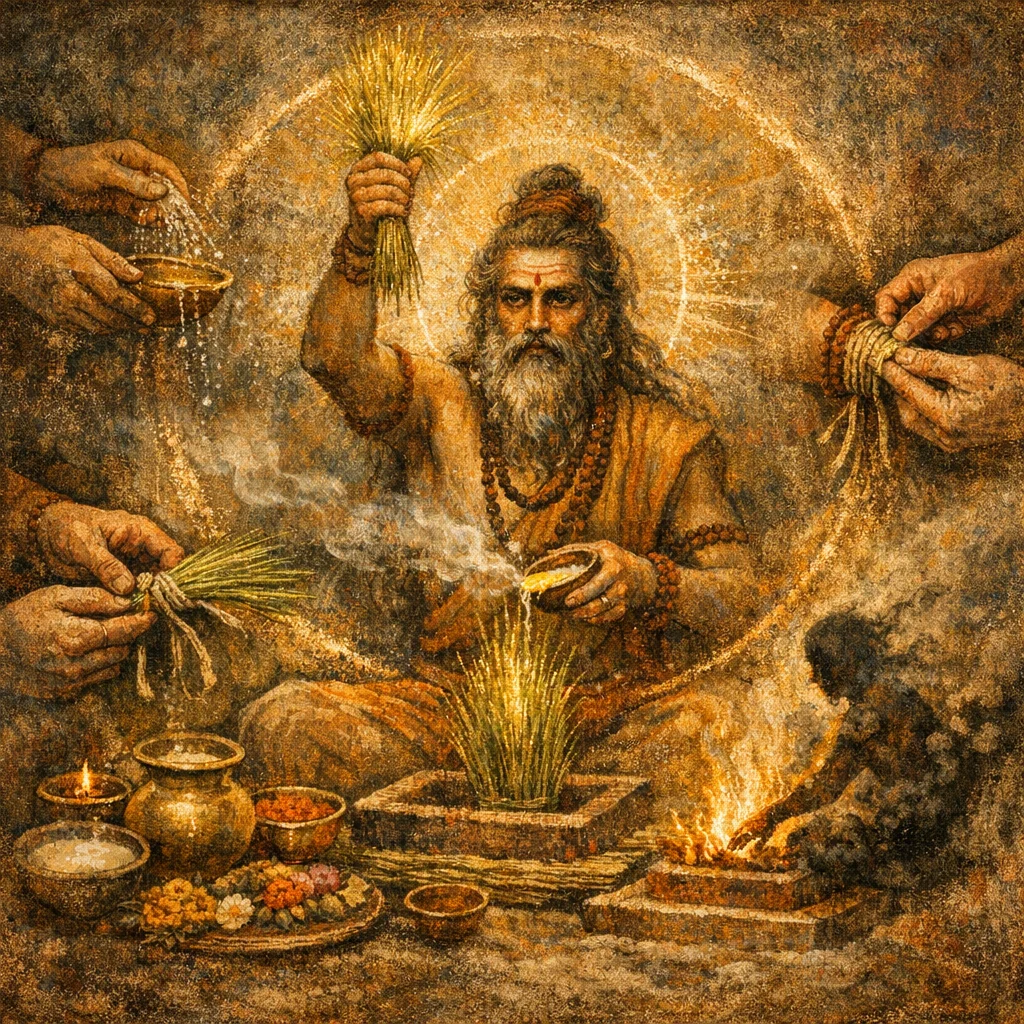
Sukta 33
Rishi: Atharvanic tradition (maṇi-hymn attribution varies by anukramaṇī; commonly treated as Atharvan/Angirasic).
Devata: Protective power embodied in the bound object (rakṣoghna/viṣaghna ojas).
Chandas: Anuṣṭubh (4 pādas of ~8 syllables; late AV style).
Mantras
Mantra 1
दर्भः। सहस्रार्घः शतकाण्डः पयस्वानपामग्निर्वीरुधां राजसूयम्। स नोऽयं दर्भः परि पातु विश्वतो देवो मणिरायुषा सं सृजाति नः
Darbha—of thousandfold worth, hundred-stemmed, rich in sap; the Fire of Waters, the royal consecration of plants. May this our Darbha guard us round about from every side: the divine Amulet conjoineth us with life and length of days.
Mantra 2
घृतादुल्लुप्तो मधुमान् पयस्वान् भूमिदृंहोऽच्युतश्च्यावयिष्णुः । नुदन्त्सपत्नानधरांश्च कृण्वन् दर्भा रोह महतामिन्द्रियेण
Anointed with ghee, honeyed, rich in sap; Earth-firmer, unshaken, and dislodging: driving the rivals forth and making them low—O Darbha, grow thou with mighty Indra-power.
Mantra 3
त्वं भूमिमत्येष्योजसा त्वं वेद्यां सीदसि चारुरध्वरे। त्वां पवित्रमृषयोऽभरन्त त्वं पुनीहि दुरितान्यस्मत्
Thou passest over the Earth with vigor; thou sittest on the altar, fair in the sacrifice. The Seers brought thee as the Purifier: do thou cleanse away from us the evils and the ill chances.
Mantra 4
तीक्ष्णो राजा विषासही रक्षोहा विश्वचर्षणिः । ओजो देवानां बलमुग्रमेतत् तं ते बध्नामि जरसे स्वस्तये
A keen King, a conqueror of poison, a slayer of demons, of universal sway—this is the gods’ might, their strength, this dread power: that do I bind upon thee for old age, for welfare.
Mantra 5
दर्भेण त्वं कृणवद् वीर्याऽणि दर्भं बिभ्रदात्मना मा व्यथिष्ठाः । अतिष्ठाया वर्चसाधान्यान्त्सूर्य इवा भाहि प्रदिशश्चतस्रः
With darbha do thou accomplish powers; bearing darbha on thine own person, be not dismayed. Standing forth, establishing splendor, shine like the Sun unto the four quarters.
Frequently Asked Questions
Here maṇi means a consecrated protective object—specifically darbha grass shaped and bound as an amulet—treated as a vessel of divine ojas (power).
It is aimed at protection and healing: neutralizing poison, repelling demonic/hostile forces, removing durita (misfortune/evil influence), and securing welfare with long life.
Darbha is praised and purified, placed on the ritual seat/altar as a pavitra, then fashioned into an amulet and physically tied onto the person while reciting the binding verse for svasti and jaras.