Adhyaya 226
Chapter 226 — राजधर्माः (Rājadharma: Royal Duties and Daṇḍanīti)
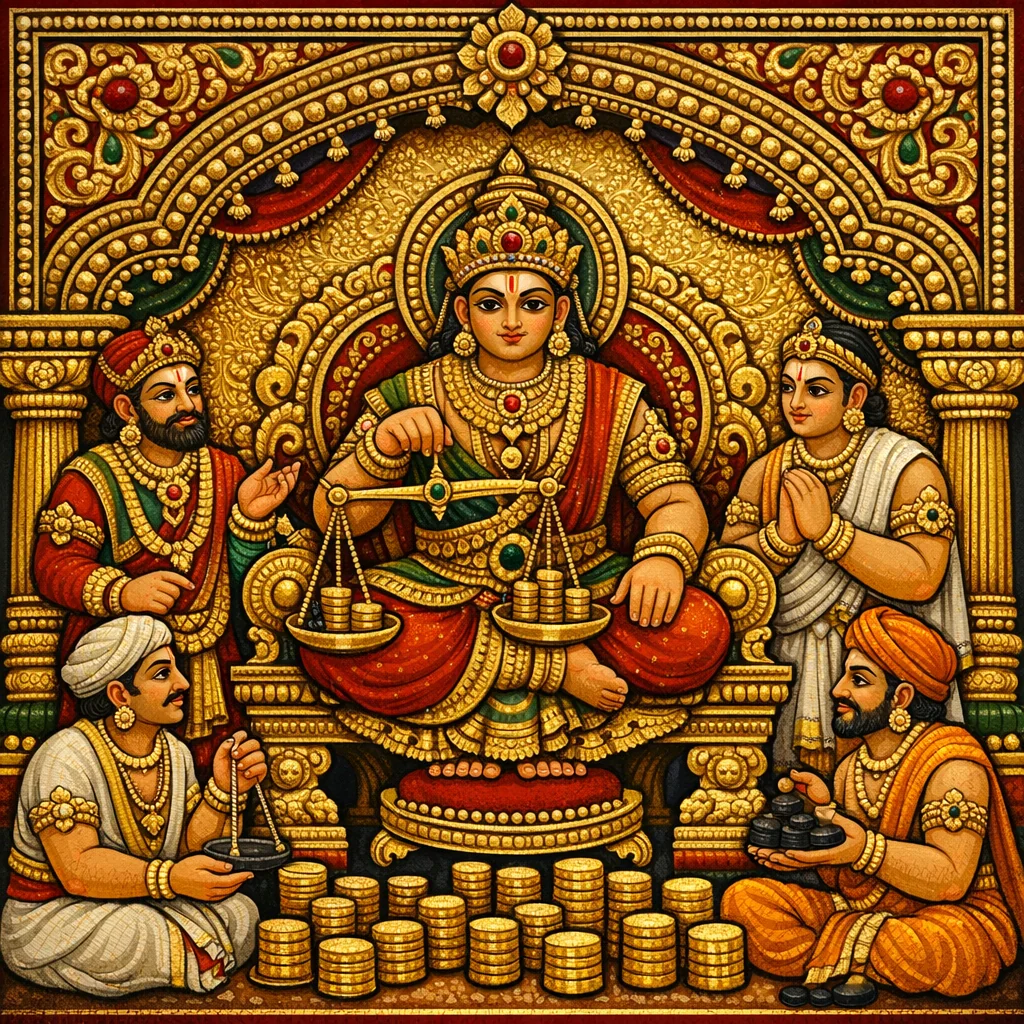
This chapter serves as a daṇḍanīti manual within rājadharma, explaining how a king preserves order through measured, graded punishments grounded in standard measures. It first defines weight and coin equivalences (kṛṣṇala, triyava, suvarṇa, niṣka, dharaṇa, kārṣāpaṇa/paṇa) and applies them to scaled fines, especially the three levels of sāhasa (first/intermediate/highest). It then lists judicial penalties for false robbery claims, lying before the royal protector/judge, fabricated testimony, and misappropriation or destruction of deposits (nikṣepa). It covers commercial and labor disputes (selling another’s property, nondelivery after payment, taking wages without work, rescinding sales within ten days), marriage fraud and the remarriage of a previously given bride, and negligence by guardians/watchmen. Public order extends to planning and security (village boundary measures, ramparts), boundary violations, and theft gradations up to capital punishment for major theft and abduction. Penalties for insult and misconduct are set by social rank, including mutilations in severe cases, while Brahmin punishment emphasizes banishment over bodily harm. Corruption is targeted: guards, ministers, and judges who abuse office face confiscation and exile. Finally, the state’s response to grave crimes (arson, poisoning, adultery, assault), market fraud (adulteration, counterfeit), sanitation violations, and procedural abuses (improper summons, escape from custody) is prescribed, presenting governance as a disciplined, truth-centered instrument of dharma.
Shlokas
Verse 1
इत्य् आग्नेये महापुराणे सामाद्युपायो नाम पञ्चविंशत्यधिकद्विशततमो ऽध्यायः अथ षड्विंशत्यधिकद्विशततमो ऽध्यायः राजधर्माः पुष्कर उवाच दण्डप्रणयनं वक्ष्ये येन राज्ञः परा गतिः त्रियवं कृष्णलं विद्धि पापस्तत्पञ्चकं भवेत्
Thus ends, in the Agni Mahāpurāṇa, the two-hundred-and-twenty-fifth chapter called “The Means beginning with Conciliation (Sāma)”. Now begins the two-hundred-and-twenty-sixth chapter on “Royal Duties (Rājadharma)”. Puṣkara said: “I shall explain the laying down of punishments (and fines), by which a king attains the highest course of duty. Know that a ‘triyava’ equals a ‘kṛṣṇala’; for sinful offences, the penalty becomes five times that measure.”
Verse 2
कृष्णलानां तथा षष्ट्या कर्षार्धं रामकीर्तितं सुवर्णश् च विनिर्दिष्टो राम षोडशमापकः
Rāma has stated that sixty kṛṣṇalā (black guñjā-seeds) constitute a half-karṣa. A suvarṇa is also defined: it is a measure of sixteen (units).
Verse 3
निष्कः सुवर्णाश् चत्वारो धरणं दशभिस्तु तैः ताम्ररूप्यसुवर्णानां मनमेतत् प्रकीर्तितं
A niṣka consists of four suvarṇas; and a dharaṇa is reckoned by ten of those suvarṇas. Thus is declared this standard of weight for copper, silver, and gold.
Verse 4
ताम्रकैः कार्षिको राम प्रोक्तः कार्षापणो बुधैः पणानां द्वे शते सार्धं प्रथमः साहसः स्मृतः
O Rāma, the kārṣika—known among the learned as the kārṣāpaṇa—is defined in terms of copper coins; and two hundred and fifty paṇas are remembered as the first grade of sāhasa (penal fine).
Verse 5
मध्यमः पञ्च विज्ञेयः सहस्रमपि चोत्तमः चौरैर् अमूषितो यस्तु मूषितो ऽस्मीति भाषते
The intermediate fine is to be understood as five hundred, and the highest as a thousand. But one who has not been robbed by thieves, yet declares, “I have been robbed,” is liable to punishment accordingly.
Verse 6
तत्प्रदातरि भापाले स दण्ड्यस्तावदेव तु यो यावद्विपरीतार्थं मिथ्या वा यो वदेत्तु तं
Before the judge/royal protector, if a person gives a statement whose meaning is inverted—contrary to the facts—or speaks falsely, then he should be punished to that very extent, proportionate to the harm caused.
Verse 7
तौ नृपेण ह्य् अधर्मज्ञौ दाप्यौ तद्द्विगुणं दमं कूटसाक्ष्यन्तु कुर्वाणांस्त्रीन् वर्णांश् च प्रदापयेत्
Those two, being knowers of unrighteousness (adharma), should be made by the king to pay a fine twice that amount. But those who commit false testimony—fabricated evidence—among the three varṇas should be punished, each according to his class.
Verse 8
विवासयेद्ब्राह्मणन्तु भोज्यो विधिर् न हीरतः निक्षेपस्य समं मूल्यं दण्ड्यो निक्षेपभुक् तथा
But in the case of a Brāhmaṇa, the punishment should be banishment; corporal punishment is not prescribed for him. One who consumes or misappropriates a deposit (nikṣepa) is also to be fined an amount equal to the value of that deposit.
Verse 9
तथाचाष्टौ इति छ , ज च ताम्रिकैः कार्षिक इत्य् आदिः, साहसः स्मृत इत्य् अन्तः पाठः झ पुस्तके नास्ति यो यावदित्यादिः, तद्द्विगुणं दममित्यन्तः पाठः झ पुस्तके नास्ति वस्त्रादिकस्य धर्मज्ञ तथा धर्मो न हीयते यो निक्षेपं घातयति यश्चानिक्षिप्य याचते
Thus, in some recensions (cha and ja) the reading begins with “eight …; from the copper coin up to the kārṣika,” while the closing phrase “is declared to be sāhasa (violent wrongdoing)” is absent in the jha manuscript. Likewise, the passage beginning “whoever, to the extent …” and ending “the fine is double that” is absent in the jha manuscript. In cases involving garments and similar goods, a knower of dharma should decide so that dharma is not diminished: punishable are one who destroys or tampers with a deposited item (nikṣepa), and one who demands it without having deposited it.
Verse 10
तावुभौ चौरवच्छास्यौ दण्ड्यौ वा द्विगुणं दम अज्ञानाद्यः पुमान् कुर्यात् परद्रव्यस्य विक्रयं
Both of those persons should be punished as thieves, or else fined a penalty twice the value involved. A man who, out of ignorance, sells another person’s property is likewise liable to such punishment.
Verse 11
निर्दोषो ज्ञानपूर्वकन्तु चौरवद्दण्डमर्हति मूल्यमादाय यः शिल्पं न दद्याद् दण्ड्य एव सः
Even if he claims to be blameless, one who knowingly commits the act deserves punishment like a thief. He who, after taking payment, does not deliver the workmanship or service is certainly to be punished.
Verse 12
प्रतिश्रुत्याप्रदातारं सुवर्णं दण्डयेन्नृपः भृतिं गृह्य न कुर्याद्यः कर्माष्टौ कृष्णला दमः
The king should punish one who, having promised, does not deliver the gold. And one who takes wages but does not perform the work—his fine is eight kṛṣṇalās.
Verse 13
अकाले तु त्यजन् भृत्यं दण्ड्यः स्यात्तावदेव तु क्रीत्वा विक्रीय वा किञ्चिद्यस्येहानुशयो भवेत्
If one dismisses a servant at an improper time, he is liable to a fine in that very amount. Likewise, if after buying or selling something a person later feels regret and seeks to retract, the same rule applies.
Verse 14
सो ऽन्तर्दशाहात्तत्स्वामी दद्याच्चैवाददीत च परेण तु दशाहस्य नादद्यान्नैव दापयेत्
If it is within ten days, the true owner should give the article back and should also accept it when it is returned. But after ten days have passed, he should neither accept it nor cause it to be handed over by compulsion.
Verse 15
आददद्धि ददच्चैव राज्ञा दण्ड्यः शतानि षट् वरे दोषानविख्याप्य यः कन्यां वरयेदिह
Whoever, without disclosing the groom’s defects, seeks a maiden’s hand here—whether he takes property or gives it as well—shall be punished by the king with a fine of six hundred (paṇas).
Verse 16
दत्ताप्यदत्ता सा तस्य राज्ञा दण्ड्यः शतद्वयं प्रदाय कन्यां यो ऽन्यस्मै पुनस्तां सम्प्रयच्छति
Even if she has been formally given, she is to be treated as not given: the man who, after giving a maiden in marriage, gives that same girl again to another shall be punished by the king and made to pay a fine of two hundred (paṇas).
Verse 17
दण्डः कार्यो नरेन्द्रेण तस्याप्युत्तमसाहसः सत्यङ्कारेण वाचा च युक्तं पुण्यमसंशयं
Punishment (daṇḍa) should be administered by the king; even that should be carried out with the highest prudence and restraint. When joined with a truthful pledge and truthful speech, it is certainly meritorious—without doubt.
Verse 18
लुब्धो ऽन्यत्र च विक्रेता षट्शतं दण्डमर्हति दद्याद्धेनुं न यः पालो गृहीत्वा भक्तवेतनं
A greedy man who sells elsewhere the property entrusted to him deserves a fine of six hundred (pāṇas). Likewise, the cowherd who, having taken his maintenance and wages, does not deliver the cow back to its owner is to be penalized.
Verse 19
स तु दण्ड्यः शतं राज्ञा सुवर्णं वाप्यरक्षिता चौरवद्वधमर्हतोति घ , ञ च वरयेद्यदि इति घ , ञ च धनुःशतं परीणाहो ग्रामस्य तु समन्ततः
Such a negligent watchman/guardian is to be punished by the king with a fine of one hundred suvarṇas; and if he leaves it unguarded, he deserves death like a thief. If he wards off the crime, then—according to the cited legal reading—the village boundary is to extend all around to a circumference of one hundred bow-lengths.
Verse 20
द्विगुणं त्रिगुणं वापि नगरस्य च कल्पयेत् वृतिं तत्र प्रकुर्वीत यामुष्ट्रो नावलोकयेत्
One should design the enclosing perimeter (rampart or wall) of the town to be twice, or even three times, the measure; and there one should build a defensive enclosure so high that even a camel could not look over it.
Verse 21
तत्रापरिवृते धान्ये हिंसिते नैव दण्डनं गृहन्तडागमारामं क्षेत्रं वा भीषया हरन्
When the grain has not been properly enclosed and secured, there is no punishment even if it is damaged. Likewise, one who, under threat or coercion, takes away a house, a pond, a garden, or a field is not to be punished.
Verse 22
शतानि पञ्च दण्ड्याः स्यादज्ञानाद् द्विशतो दमः मर्यादाभेदकाः सर्वे दण्ड्याः प्रथमसाहसं
For an offence committed in ignorance, the fine should be five hundred; for one committed knowingly, the penalty is two hundred more. All who violate established boundaries are to be punished with the first (lowest) grade of sāhasa.
Verse 23
शतं ब्राह्मणमाक्रुश्य क्षत्रियो दण्डमर्हति वैश्यश् च द्विशतं राम शूद्रश् च बधमर्हति
For abusing a brāhmaṇa, a kṣatriya deserves a fine of one hundred (paṇas); a vaiśya, two hundred—O Rāma; and a śūdra deserves capital punishment.
Verse 24
पञ्चाशद्ब्राह्मणो दण्ड्यः क्षत्रियस्याभिशंसने वैश्ये वाप्यर्धपञ्चाशच्छूद्रे द्वादशको दमः
A Brāhmaṇa is to be fined fifty (paṇas) for reviling a Kṣatriya; for (reviling) a Vaiśya, half of fifty; and for (reviling) a Śūdra, the fine is twelve (paṇas).
Verse 25
क्षत्रियस्याप्नुयाद्वैश्यः साहसं पूर्वमेव तु शूद्रः क्षत्रियमाक्रुश्य जिह्वाच्छेदनमाप्नुयात्
A Vaiśya, in the case of an offence against a Kṣatriya, should be subjected to the previously stated sāhasa-penalty for violent transgression. But if a Śūdra reviles a Kṣatriya, he should incur the cutting off of the tongue.
Verse 26
धर्मोपदेशं विप्राणां शूद्रः कुर्वंश् च दण्डभाक् श्रुतदेशादिवितथी दाप्यो द्विगुणसाहसं
A Śūdra who gives instruction on dharma to Brahmins becomes liable to punishment; and one who falsely claims authoritative learning, place of study, and the like shall be made to pay a fine amounting to double the sāhasa-penalty.
Verse 27
उत्तमः साहसस्तस्य यः पापैर् उत्तमान् क्षिपेत् प्रमादाद्यैर् मया प्रोक्तं प्रीत्या दण्डार्धमर्हति
The highest degree of sāhasa applies to one who, through wicked persons, hurls down (or has cast down) respectable people. If it occurs due to negligence and the like—as I have stated—then, out of leniency, he deserves only half the prescribed punishment.
Verse 28
मातरं पितरं ज्येष्ठं भ्रातरं श्वशुरं गुरुं आक्षारयञ्च्छतं दण्ड्यः पन्थानं चाददद्गुरोः
One who reviles—uttering abusive words against—one’s mother, father, elder, brother, father-in-law, or teacher shall be fined one hundred (paṇas); and one who takes away or obstructs the teacher’s right of way shall likewise be punished.
Verse 29
अन्त्यजातिर्द्विजातिन्तु येनाङ्गेनापराध्नुयात् तदेव च्छेदयेत्तस्य क्षिप्रमेवाविचारयन्
If a person of an antyajāti (the lowest social group) commits an offence against a twice-born (dvija) by means of a particular limb, that very limb should be cut off—swiftly, without delay in deliberation.
Verse 30
अवनिष्ठीवतो दर्पाद् द्वावोष्ठौ छेदयेन्नृपः अपमूत्रयतो मेढ्रमपशब्दयतो गुदं
If someone, out of arrogance, spits upon the ground, the king should cut off his two lips; for one who urinates improperly (in a forbidden or public manner), he should cut off the penis; and for one who utters obscene, indecent words, he should cut off the anus.
Verse 31
उत्कृष्टासनसंस्थस्य नीचस्याधोनिकृन्तनं यो यदङ्गं च रुजयेत्तदङ्गन्तस्य कर्तयेत्
For a low-born offender who sits upon a superior seat, the punishment is cutting off the lower part (beneath). And whoever injures a particular limb, one should cut off that very limb of his.
Verse 32
अर्धपादकराः कार्या गोगजाश्वोष्ट्रघातकाः वृक्षन्तु विफलं कृत्त्वा सुवर्णं दण्डमर्हति
Those who kill cows, elephants, horses, or camels should be made to pay a fine of half a pāda. But one who makes a fruit-bearing tree barren deserves a penalty of one suvarṇa.
Verse 33
द्विगुणं दापयेच्छिन्ने पथि सीम्नि जलाशये द्रव्याणि यो हरेद्यस्य ज्ञानतो ऽज्ञानतो ऽपिवा
If anyone takes another’s goods at a broken passage or roadway, at a boundary line, or at a reservoir—whether knowingly or even unknowingly—he shall be made to pay double the value.
Verse 34
स तस्योत्पाद्य तुष्टिन्तु राज्ञे दद्यात्ततो दमं यस्तु रज्जुं घटं कूपाद्धरेच्छिन्द्याच्च तां प्रपां
Having satisfied the injured party by restoring what is due, he shall thereafter pay a fine to the king. But whoever removes from a well the rope and the water-pot, or cuts or damages the public water-shed (prapā), is liable to punishment and fine.
Verse 35
स दण्डं प्राप्नुयान् मासं दण्ड्यः स्यात् प्राणितारने धान्यं दशभ्यः कुम्भेभ्यो हरतो ऽभ्यधिकं बधः
He shall incur a penalty of one month; and where the act is done to save a living being, he is liable only to punishment (in a mitigated form). But one who steals grain in an amount exceeding ten kumbhas is to be executed.
Verse 36
शेषे ऽप्येकादशगुणं तस्य दण्डं प्रकल्पयेत् सुवर्णरजतादीनां नृस्त्रीणां हरणे बधः
And in the remaining cases as well, one should prescribe for him a punishment elevenfold. For the stealing of gold, silver, and the like, and for the abduction of men or women, the penalty is execution.
Verse 37
येन येन यथाङ्गेन स्तेनो नृषु विचेष्टते तत्तदेव हरेदस्य् प्रत्यादेशाय पार्थिवः
With whatever limb, and in whatever manner, a thief acts among people, the king shall take that very limb from him, as retributive punishment.
Verse 38
ब्राह्मणः शाकधान्यादि अल्पं गृह्णन्न दोषभाक् गोदेवार्थं हरंश्चापि हन्याद्दुष्टं बधीद्यतं
A brāhmaṇa who takes a small quantity of vegetables, grain, and the like incurs no fault. And even when taking (resources) for the sake of cows and the gods, he may strike down a wicked person and may restrain (bind) one who is intent on wrongdoing.
Verse 39
गृहक्षेत्रापहर्तारं तथा पत्न्यभिगामिनं अग्निदं गरदं हन्यात्तथा चाभ्युद्यतायुधं
One should slay the robber of house or land, likewise the violator who approaches another’s wife; also the arsonist and the poisoner, and likewise one who has raised a weapon to strike.
Verse 40
राजा गवाभिचाराद्यं हन्याच्चैवाततायिनः परस्त्रियं न भाषेत प्रतिषिद्धो विशेन्न हि
The king should punish offences beginning with cattle-sorcery and the like, and he should also slay (or execute) the ātatāyin (violent aggressor). He should not converse with another man’s wife; and one who has been forbidden (entry) should certainly not enter.
Verse 41
अदण्ड्या स्त्री भवेद्राज्ञा वरयन्तो पतिं स्वयं उत्तमां सेवमानः स्त्री जघन्यो बधमर्हति
A woman is not to be punished by the king when she herself chooses her husband. But a man of the lowest sort who approaches a woman of high status is deserving of execution.
Verse 42
भर्तारं लङ्घयेद्या तां श्वभिः सङ्घातयेत् स्त्रियं सवर्णदूषितां कुर्यात् पिण्डमात्रोपजीविनीं
Verse 43
ज्यायसा दूषिता नारी मुण्डनं समवाप्नुयात् वैश्यागमे तु विप्रस्य क्षत्रियस्यान्त्यजागमे
A woman defiled by intercourse with a man of higher social rank should undergo head-shaving as a mark of expiation. Likewise, if a Brāhmaṇa has intercourse with a Vaiśyā woman, and if a Kṣatriya has intercourse with an Antyajā (outcaste) woman, head-shaving is prescribed.
Verse 44
क्षत्रियः प्रथमं वैश्यो दण्ड्यः शूद्रागमे भवेत् गृहीत्वा वेतनं वेश्या लोभादन्यत्र गच्छति
A Kṣatriya or a Vaiśya is to be punished for first approaching a Śūdra woman; likewise, a courtesan who, after taking her fee, goes elsewhere out of greed is punishable.
Verse 45
वेतनन्द्विगुणं दद्याद्दण्दञ्च द्विगुणं तथा भार्या पुत्राश् च दासाश् च शिष्यो भ्राता च सोदरः
He should pay wages at twice the amount, and likewise a fine at twice the amount; (this rule extends, as applicable, to) the wife, sons, servants, the student, and also the brother—one born of the same womb.
Verse 46
कृटापराधास्ताड्याः सूरज्वा वेणुदलेन वा पृष्ठे न मस्तके हन्याच्चौरस्याप्नोति किल्विषं
Those who have committed a minor offence should be beaten with a strap/whip or with a split bamboo; they should be struck on the back, not on the head. One who strikes a thief contrary to this rule incurs sin.
Verse 47
रक्षास्वधिकृतैयस्तु प्रजात्यर्थं विलुप्यते तेषां सर्वस्वमादाय राजा कुर्यात् प्रवासनं
But if a person appointed with authority for protection (a guard or official) plunders the people for his own gain, the king, after confiscating all his property, should impose banishment upon him.
Verse 48
ये नियुक्ताः स्वकार्येषु हन्युः कार्याणि कर्मिणां निर्घृणाः क्रूरमनसस्तान्निःस्वान् कारयेन्नृपः
Those officials who, though appointed to their own duties, cruelly and without compassion obstruct the affairs of working people—such hard‑hearted men the king should reduce to destitution by stripping their wealth and position.
Verse 49
अमात्यः प्राड्विवाको वा यः कुर्यात् कार्यमन्यथा तस्य सर्वस्वमादाय तं राजा विप्रवासयेत्
If a minister or a chief judge conducts a matter in an improper and perverse manner, the king, after confiscating all his property, should banish him from the realm.
Verse 50
गुरुतल्पे भयः कार्यः सुरापाणे सुराध्वजः स्तेयेषु श्वपदं विद्याद् ब्रह्महत्याशिरः पुमान्
For violating the guru’s bed (gurutaḷpa), one should recognize the mark as “fear”; for drinking liquor, the mark is a “banner of liquor”; for thefts, know the mark as a “beast of prey”; and the slayer of a brāhmaṇa is a man bearing the “head of Brahma-hatyā” as his emblem.
Verse 51
शूद्रादीन् घातयेद्राजा पापान् विप्रान् प्रवासयेत् महापातकिनां वित्तं वरुणायोपपादयेत्
The king should put to death Śūdras and others of the non‑Brahmin classes who are guilty of grave wrongdoing; sinful Brahmins he should banish. The wealth of those who have committed major sins (mahāpātakas) he should dedicate as an offering to Varuṇa.
Verse 52
ग्रामेष्वपि च ये केचिच्चौराणां भक्तदायकाः भाण्डारकोषदाश् चैव सर्वांस्तानपि घातयेत्
And in the villages too, whoever provides sustenance to thieves, and likewise whoever plunders the storehouses and the treasury—the king should have all of them put to death as well.
Verse 53
राष्ट्रेषु राष्ट्राधिकृतान् सामन्तान् पापिनो हरेत् सन्धिं कृत्वा तु ये चौर्यं रात्रौ कुर्वन्ति तस्कराः
In the kingdoms, the king should seize and remove the wicked feudatories and provincial officers. And those robbers who, after making a pact (with others), commit theft at night—(they too) should be apprehended.
Verse 54
तेषां च्छित्वा नृपो हस्तौ तीक्ष्णे शूले निवेशयेत् तडागदेवतागारभेदकान् घातयेन्नृपः
Having cut off their hands, the king should impale them on a sharp stake; the king should put to death those who break into (or damage) tanks/reservoirs and the houses/temples of deities.
Verse 55
समुत्सृजेद्राजमार्गे यस्त्वमेध्यमनापदि स हि कार्षापणन्दण्ड्यस्तममेध्यञ्च शोधयेत्
Whoever, without emergency, discharges filth on the king’s highway—he is to be fined one kārṣāpaṇa, and he must also have that filth cleaned away.
Verse 56
प्रतिमासङ्क्रमभिदो दद्युः पञ्चशतानि ते समैश् च विषमं यो वा चरते मूल्यतो ऽपि वा
Those who violate the monthly transfer/rotation regulations shall pay a fine of five hundred (pañcaśatāni). Likewise, whoever conducts dealings in an irregular (unfair) manner with equals—or even by manipulating the stated price/value—shall (also) be penalized.
Verse 57
समाप्नुयान्नरः पूर्वं दमं मध्यममेव वा द्रव्यमादाय वणिजामनर्घेणावरुन्धतां
A man should first obtain the earlier (agreed) price, or else the middle (fair) price; having taken the goods, he should not bind (i.e., hold up or coerce) the merchants by demanding an excessive (unfair) price.
Verse 58
राजा पृथक् पृथक् कुर्याद्दण्डमुत्तमसाहसं द्रव्याणां दूषको यश् च प्रतिच्छन्दकविक्रयी
The king shall, in each case separately, impose the penalty of the highest grade of sāhasa on one who adulterates goods, and also on one who sells counterfeit (goods).
Verse 59
मध्यमं प्राप्नुयाद्दण्डं कूटकर्ता तथोत्तमं कलहापकृतं देयं दण्डश् च द्विगुणस्ततः
A forger (one who fabricates a false document/evidence) should receive the middle-grade punishment; likewise, the instigator of a quarrel should receive the highest punishment. For the harm done by provoking a quarrel, compensation must be paid, and thereafter the fine is to be doubled.
Verse 60
अभक्ष्यभक्ष्ये विप्रे वा शूद्रे वा कृष्णलो दमः तुलाशासनकर्ता च कूटकृन्नाशकस्य च
For a brāhmaṇa or a śūdra who eats what is forbidden as food, the fine is one kṛṣṇala. Likewise, for one who makes (or manipulates) a weighing-scale or a measuring-rod, and for one who destroys (the evidence against) a forger, the penalty is the same.
Verse 61
एभिश् च व्यवहर्ता यः स दाप्यो दममुत्तमं विषाग्निदां पतिगुरुविप्रापत्यप्रमापिणीं
And whoever engages in dealings (or litigation) connected with these persons—such a man shall be made to pay the highest fine: namely, one who administers poison or fire, and one who kills a husband, a teacher, a Brāhmaṇa, or a child.
Verse 62
विकर्णकरनासौष्ठी कृत्वा गोभिः प्रवासयेत् क्षेत्रवेश्मग्रामवनविदारकास् तथा नराः
Having inflicted the mutilations of a split ear, a cut ear, and (the cutting of) the nose and lip, he should banish—along with their cattle—those men who devastate fields, houses, villages, and forests.
Verse 63
राजपत्न्यभिगामी च दग्धव्यास्तु कटाग्निना ऊनं वाप्यधिकं वापि लिखेद्यो राजशासनं
One who has intercourse with the king’s wife should be burned with a fierce fire; likewise, whoever writes (issues/records) a royal decree with anything omitted or added (i.e., altered from the king’s intent) is culpable.
Verse 64
पारजायिकचौरौ च मुञ्चतो दण्ड उत्तमः राजयानासनारोढुर्दण्ड उत्तमसाहसः
For one who releases (sets free) an adulterer and a thief, the highest penalty is prescribed. For one who mounts the royal conveyance or seat, the penalty is the highest sāhasa-fine (i.e., the gravest class of punitive fine).
Verse 65
यो मन्येताजितो ऽस्मीति न्यायेनापि पराजितः तमायान्तं पराजित्य दण्डयेद् द्विगुणं दमं
If someone, though defeated even by due process of law, imagines, “I am not defeated,” then when he returns (to renew the dispute), having subdued him again, one should punish him with a fine twice as great.
Verse 66
आह्वानकारी बध्यः स्यादनाहूतमथाह्वयन् दाण्डिकस्य च यो हस्तादभिमुक्तः पलायते
One who issues a summons (without authority) should be confined; and likewise, one who summons a person who has not been summoned (i.e., improperly calls another). Also, whoever, having been released from the hand/custody of the officer of punishment (the constable/executioner), runs away—[is liable to punishment].
Verse 67
हीनः पुरुषकारेण तद् दद्याद्दाण्डिको धनं
If a person is deficient in personal effort (i.e., lacks the means or capacity to make restitution through his own labor), then the one liable to punishment shall pay that amount in money as a fine/compensation.
Frequently Asked Questions
It standardizes the metrics for legal penalties by defining weight/coin units (kṛṣṇala, suvarṇa, niṣka, dharaṇa, kārṣāpaṇa/paṇa) and then uses these to compute graded fines such as the three levels of sāhasa.
By treating justice, truthful speech, and proportionate punishment as dharmic acts: the king’s restraint, accuracy in measure, and suppression of corruption are framed as moral disciplines that protect society and uphold ṛta-like order.