Sarga 45
अयोध्यावासिजनानुरागः — The People and Brahmins Follow Rama toward Exile
अयोध्याकाण्ड
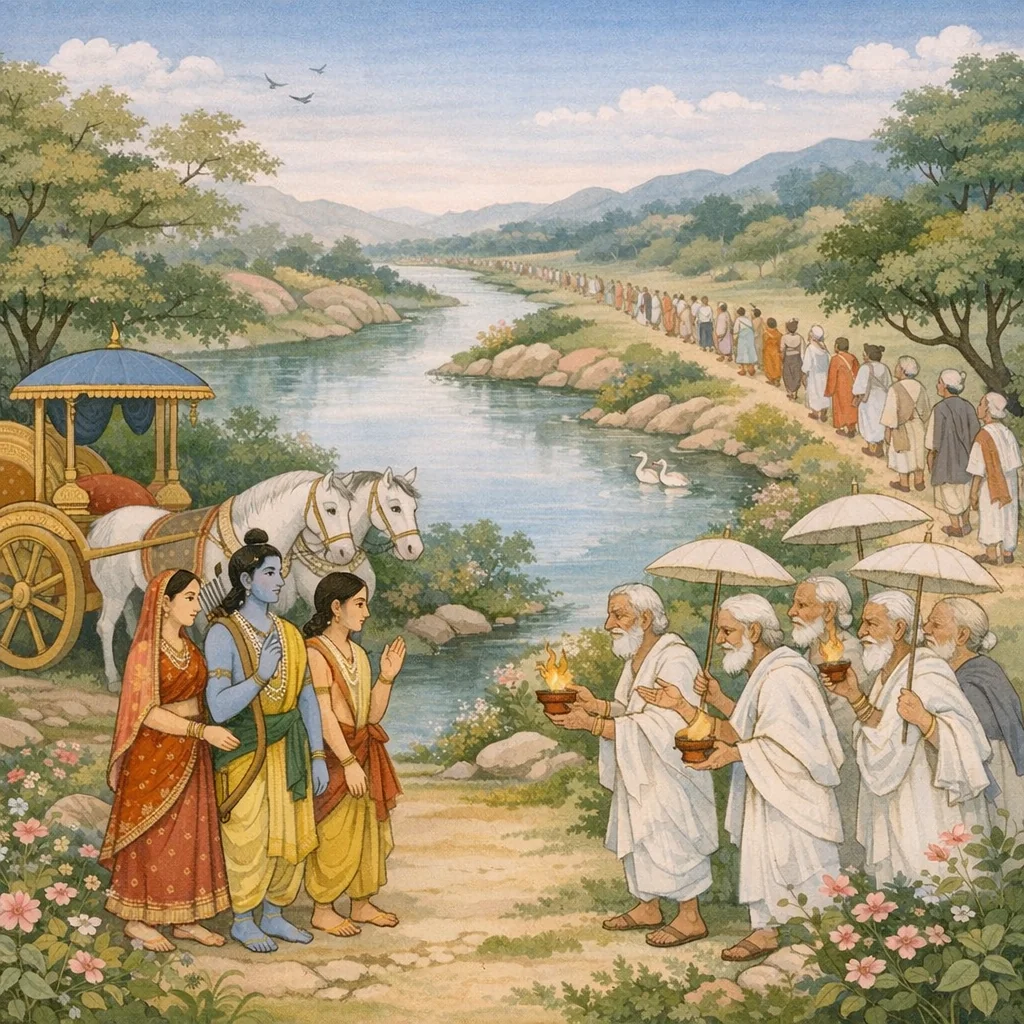
Sarga 45 depicts the public and ritual community’s response as Rāma departs for forest-exile. The citizens remain devoted and continue following his chariot even when the king’s party and friends attempt to send them back by force. Rāma addresses the Ayodhyā residents with paternal affection, redirecting their loyalty toward Bharata and urging obedience to royal command, framing civic stability as part of dharma. Yet the subjects’ longing for Rāma’s kingship intensifies precisely because of his steadfast righteousness. Aged brahmins, described as senior in wisdom, age, and spiritual energy, lament from a distance and even entreat the horses to turn back, arguing that a master of purified resolve should be carried cityward, not forestward. Moved by compassion, Rāma dismounts and proceeds on foot with Sītā and Lakṣmaṇa so as not to leave the brahmins behind. The brahmins further declare that the entire brahminical order, with sacred fires borne on shoulders, is following him; they offer shade with Vajapeya-acquired umbrellas, and insist their decision is fixed—if Rāma disregards dharma, what remains of the righteous path? They plead for his return, citing unfinished sacrifices and the devotion of all beings, even trees and birds. The river Tamasā appears as if symbolically restraining him, and Sumantra tends the horses near its banks, marking a liminal pause between city and forest.
Shlokas
Verse 1
अनुरक्ता महात्मानं रामं सत्यपराक्रमम्।अनुजग्मुः प्रयान्तं तं वनवासाय मानवाः।।।।
Devoted to the great-souled Rāma—whose true strength was fidelity to truth—the people followed him as he set out for life in the forest.
Verse 2
निवर्तितेऽपि च बलात्सुहृद्वर्गे च राजनि।नैव ते संन्यवर्तन्त रामस्यानुगता रथम्।।।।
Even though the king and the circle of friends were forcibly made to turn back, those who had followed Rama did not return at all; they kept going after Rama’s chariot.
Verse 3
अयोध्यानिलयानां हि पुरुषाणां महायशाः।बभूव गुणसम्पन्नः पूर्णचन्द्र इव प्रियः।।।।
To the men dwelling in Ayodhya, the illustrious Rama—rich in virtues—was beloved like the full moon.
Verse 4
स याच्यमानः काकुत्स्थः स्वाभिः प्रकृतिभिस्तदा।कुर्वाणः पितरं सत्यं वनमेवान्वपद्यत।।।।
Though earnestly entreated by his own people, Rāma—the scion of the Kakutsthas—went on to the forest, intent on making his father’s word stand as truth.
Verse 5
अवेक्षमाणः सस्नेहं चक्षुषा प्रपिबन्निव।उवाच रामः स्नेहेन ताः प्रजाः स्वाः प्रजा इव।।।।
Gazing on them with affection—as though drinking them in with his eyes—Rāma spoke tenderly to the people, as to his own children.
Verse 6
या प्रीतिर्बहुमानश्च मय्ययोध्यानिवासिनाम्।मत्प्रियार्थं विशेषेण भरते सा निवेश्यताम्।।।।
“Citizens of Ayodhyā, the love and honour you have shown toward me—let that, for my sake, be placed especially in Bharata.”
Verse 7
स हि कल्याणचारित्रः कैकेय्यानन्दवर्धनः।करिष्यति यथावद्वः प्रियाणि च हितानि च।।।।
“For Bharata is of noble conduct, a joy to Kaikeyī; he will duly do for you what is both pleasing and truly beneficial.”
Verse 8
ज्ञानवृद्धो वयोबालो मृदुर्वीर्यगुणान्वितः।अनुरूपः स वो भर्ता भविष्यति भयापहः।।।।
“Though young in years, he is mature in wisdom—gentle, yet endowed with valour and virtues. He will be a fitting protector for you, one who removes fear.”
Verse 9
स हि राजगुणैर्युक्तो युवराजः समीक्षितः।अपि चापि मया शिष्टैः कार्यं वो भर्तृशासनम्।।।।
“He is indeed endowed with royal qualities and is recognized as the heir-apparent. Therefore, you must carry out the ruler’s command—just as I have done, and as the disciplined do.”
Verse 10
न च सन्तप्येद्यथा चासौ वनवासं गते मयि।महाराजस्तथा कार्यो मम प्रियचिकीर्षया।।।।
If you wish to do what is dear to me, act so that the great king does not sink into grief after I have gone to the forest.
Verse 11
यथा यथा दाशरथि र्धर्म एवास्थितोऽभवत्।तथा तथा प्रकृतयो रामं पतिमकामयन्।।।।
The more Daśaratha’s son stood firmly in dharma alone, the more the subjects longed for Rāma as their lord and king.
Verse 12
बाष्पेण पिहितं दीनं रामः सौमित्रिणा सह।चकर्षेव गुणैर्बद्ध्वा जनं पुरनिवासिनम्।।।।
With Lakṣmaṇa beside him, Rāma drew after him the city-dwellers—wretched and veiled in tears—as though he had bound them fast with his virtues.
Verse 13
ते द्विजास्त्रिविधं वृद्धा ज्ञानेन वयसौजसा।वयः प्रकम्पशिरसो दूरादूचुरिदं वचः।।।।
Those brāhmaṇas—aged in three ways, by wisdom, by years, and by spiritual vigor—stood at a distance and spoke these words, their heads trembling with age.
Verse 14
वहन्तो जवना रामं भो भो जात्यास्तुरङ्गमाः।निवर्तध्वं न गन्तव्यं हिता भवत भर्तरि।।।।
“O swift horses of noble breed, carrying Rāma—turn back! Go no farther. Be beneficent to your master.”
Verse 15
कर्णवन्ति हि भूतानि विशेषेण तुरङ्गमाः।यूयं तस्मान्निवर्तध्वं याचनां प्रतिवेदिताः।।।।
Creatures do have ears—and horses especially are keen of hearing. Therefore, having understood our entreaty, turn back.
Verse 16
धर्मतः स विशुद्धात्मा वीरः शुभदृढव्रतः।उपवाह्यस्तु वो भर्ता नापवाह्यः पुराद्वनम्।।।।
He is righteous, pure in heart, heroic, and firm in his auspicious resolve. Your lord should be borne back—he should not be carried onward from the city into the forest.
Verse 17
एवमार्तप्रलापांस्तान् वृद्धान् प्रलपतो द्विजान्।अवेक्ष्य सहसा रामो रथादवततार ह।।।।
Seeing those aged brahmins lamenting so piteously, Rama at once descended from the chariot.
Verse 18
पद्भ्यामेव जगामाथ ससीत स्सहलक्ष्मणः।सन्निकृष्टपदन्यासो रामो वनपरायणः।।।।
Then Rama—bound for the forest—went on foot, with Sita and Lakshmana beside him, placing his steps slowly and close.
Verse 19
द्विजातींस्तु पदातींस्तान् रामश्चारित्रवत्सलः।न शशाक घृणाचक्षुः परिमोक्तुं रथेन सः।।।।
But Rama—fond of upright conduct, with eyes of compassion—could not bring himself to ride on in the chariot and leave those brahmins walking on foot behind.
Verse 20
गच्छन्तमेव तं दृष्ट्वा रामं सम्भ्रान्तचेतसः।ऊचुः परमसन्तप्ता रामं वाक्यमिदं द्विजाः।।।।
Seeing Rama continuing on his way, the brahmins—deeply distressed and with minds in turmoil—spoke these words to Rama.
Verse 21
ब्राह्मण्यं सर्वमेतत्त्वां ब्रह्मण्यमनुगच्छति।द्विजस्कन्धाधिरूढास्त्वामग्नयोऽप्यनुयान्त्यमी।।।।
This whole community of brahmins follows you, O well-wisher of the brahmins; and even these sacred fires, borne upon brahmins’ shoulders, go after you.
Verse 22
वाजपेयसमुत्थानि छत्राण्येतानि पश्य नः।पृष्ठतोऽनुप्रयातानि मेघानिव जलात्यये।।।।
Look at these umbrellas obtained through the Vājapeya sacrifice: they are coming along behind us, like clouds at the end of the rainy season.
Verse 23
अनवाप्तातपत्रस्य रश्मिसन्तापितस्य ते।एभिश्छायां करिष्यामः स्वैश्छत्रैर्वाजपेयिकैः।।।।
Since you have no sunshade and are scorched by the sun’s rays, we will make shade for you with these our Vājapeya umbrellas.
Verse 24
या हि नः सततं बुद्धिर्वेदमन्त्रानुसारिणी।त्वत्कृते सा कृता वत्स वनवासानुसारिणी।।।।
Dear child, the very mind of ours that has always followed the Vedic hymns has now, for your sake, been turned toward the discipline of forest-dwelling.
Verse 25
हृदयेष्वेव तिष्ठन्ति वेदा ये नः परं धनम्।वत्स्यन्त्यपि गृहेष्वेव दाराश्चारित्ररक्षिताः।।।।
The Vedas—our highest treasure—remain established in our hearts; and our wives, guarded by fidelity, will stay at home.
Verse 26
न पुनर्निश्चयः कार्यस्त्वद्गतौ सुकृता मतिः।त्वयि धर्मव्यपेक्षे तु किं स्याद्धर्मपथे स्थितम्।।।।
No second decision should be made—our resolve to go with you is firmly set. But if you yourself disregard dharma here, then what will remain standing on the path of righteousness?
Verse 27
याचितो नो निवर्तस्व हंसशुक्लशिरोरुहैः।शिरोभिर्निभृताचार महीपतनपांसुलैः।।।।
We beg you—please turn back—while our heads, with swan-white hair and dusted from falling to the ground in humble conduct, are bowed before you.
Verse 28
बहूनां वितता यज्ञा द्विजानां य इहागताः।तेषां समाप्तिरायत्ता तव वत्स निवर्तने।।।।
Many Brahmins who have arrived here have begun their sacrifices; dear child, the completion of those rites now depends upon your returning.
Verse 29
भक्तिमन्ति हि भूतानि जङ्गमाजङ्गमानि च।याचमानेषु राम त्वं भक्तिं भक्तेषु दर्शय।।।।
Rama, all beings—moving and unmoving—are devoted to you; since they are pleading, show devotion in return toward your devotees.
Verse 30
अनुगन्तुमशक्ता स्त्वां मूलैरुद्धतवेगिनः।उन्नता वायुवेगेन विक्रोशन्तीव पादपाः।।।।
The trees, lifted and driven by the wind’s force, seem as though they would follow you; yet bound by their roots and unable to go, they appear to cry out.
Verse 31
निश्चेष्टाहारसञ्चारा वृक्षैकस्थानविष्ठिताः।पक्षिणोऽपि प्रयाचन्ते सर्वभूतानुकम्पिनम्।।।।
Even the birds, ceasing their search for food and sitting motionless in one place upon the trees, seem to implore him—the one compassionate to all beings.
Verse 32
एवं विक्रोशतां तेषां द्विजातीनां निवर्तने।ददृशे तमसा तत्र वारयन्तीव राघवम्।।।।
As those Brahmins thus cried out for his return, the river Tamasa appeared there, as though it too were trying to hold back Rāghava (Rama).
Verse 33
ततः सुमन्त्रोऽपि रथाद्विमुच्यश्रान्तान्हयान्सम्परिवर्त्य शीघ्रम्।पीतोदकांस्तोयपरिप्लुताङ्गानचारयद्वै तमसाविदूरे।।।।
Then Sumantra, too, unyoked the weary horses from the chariot, quickly letting them roll and rest; after giving them water to drink and bathing their limbs, he released them to graze not far from the river Tamasā.
Frequently Asked Questions
Rāma must balance compassion for grieving subjects and brahmins with unwavering commitment to his father’s vow; he refuses to abandon dharma, yet modifies conduct by alighting from the chariot and walking so he does not ‘ride away’ while elders follow on foot.
The chapter frames righteousness as socially generative: Rāma’s adherence to dharma increases public desire for his kingship, while also teaching that civic stability requires channeling personal devotion into lawful succession—hence his instruction to place their loyalty in Bharata and obey the king’s order.
The river Tamasā functions as a liminal landmark between Ayodhyā and the forest, while the cultural markers include brahmin-led sacrificial practice (Vajapeya), portable sacred fires, and ritual umbrellas (chatra/ātapatra) repurposed as protective shade for the exiled prince.