Adhyaya 72
Yudhiṣṭhira’s Rājasūya Resolve and the Slaying of Jarāsandha
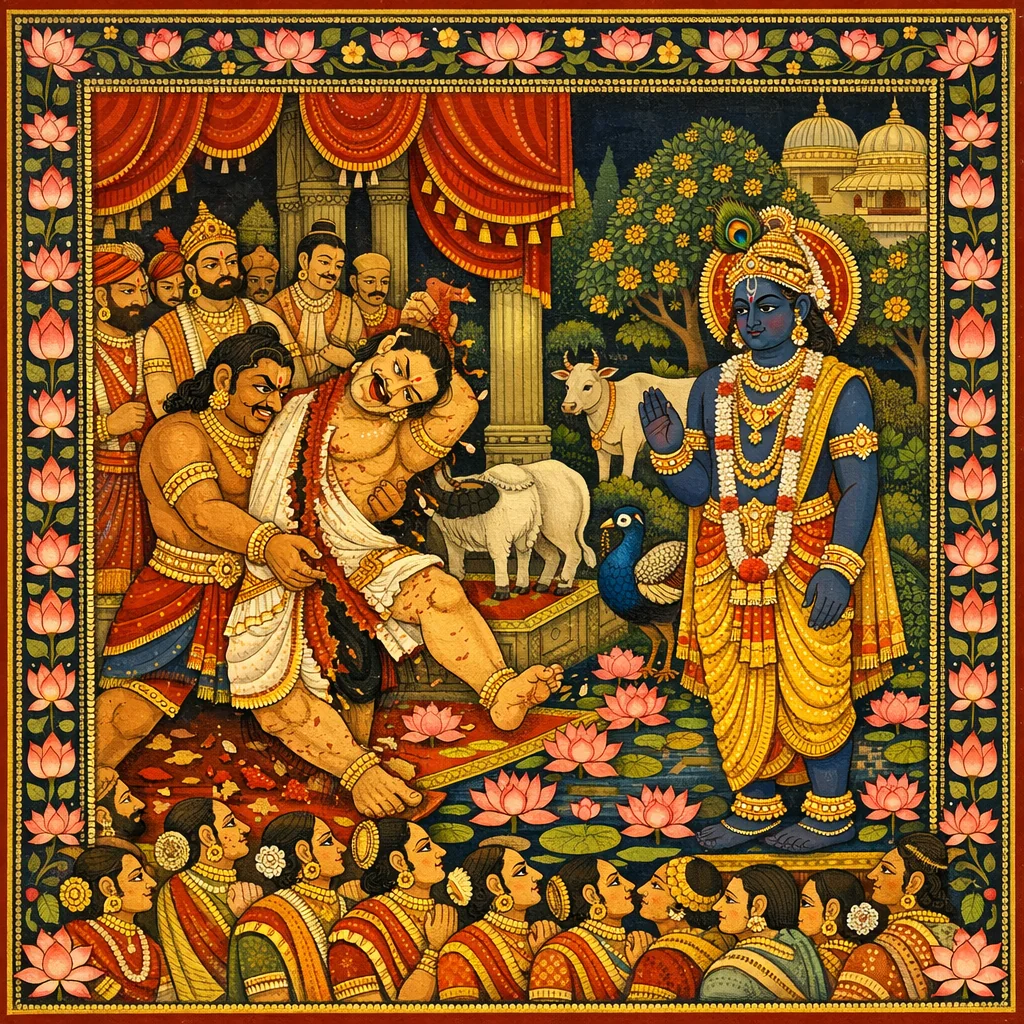
In the royal sabhā, Yudhiṣṭhira petitions Kṛṣṇa to sanction the Rājasūya-yajña, aiming to demonstrate the supremacy of bhakti and the auspicious destiny of those who worship the Lord. Kṛṣṇa approves, instructing that the Pāṇḍavas first perform digvijaya—subduing kings and gathering wealth. The brothers conquer the directions, but Jarāsandha remains unconquered, blocking the sacrifice’s universal sovereignty. Recalling Uddhava’s strategy, Kṛṣṇa, Arjuna, and Bhīma disguise themselves as brāhmaṇas and approach Jarāsandha as guests, requesting a ‘gift’ of battle. Jarāsandha agrees, refuses to fight Kṛṣṇa, selects Bhīma as his equal, and a prolonged club-and-fist duel ensues without decision. Knowing Jarāsandha’s secret of being rejoined at birth by Jarā, Kṛṣṇa signals Bhīma to split him; Bhīma tears Jarāsandha apart, ending his tyranny. Kṛṣṇa then enthrones Jarāsandha’s son Sahadeva and frees the imprisoned kings, setting the stage for Yudhiṣṭhira’s successful Rājasūya and the next unfolding of imperial dharma under divine guidance.
Shlokas
Verse 1
श्रीशुक उवाच एकदा तु सभामध्य आस्थितो मुनिभिर्वृत: । ब्राह्मणै: क्षत्रियैर्वैश्यैर्भ्रातृभिश्च युधिष्ठिर: ॥ १ ॥ आचार्यै: कुलवृद्धैश्च ज्ञातिसम्बन्धिबान्धवै: । शृण्वतामेव चैतेषामाभाष्येदमुवाच ह ॥ २ ॥
Śukadeva Gosvāmī said: One day, as King Yudhiṣṭhira sat in the royal assembly surrounded by eminent sages, brāhmaṇas, kṣatriyas and vaiśyas, and also by his brothers, spiritual masters, family elders, blood relations, in-laws and friends, he addressed Lord Kṛṣṇa as everyone listened.
Verse 2
श्रीशुक उवाच एकदा तु सभामध्य आस्थितो मुनिभिर्वृत: । ब्राह्मणै: क्षत्रियैर्वैश्यैर्भ्रातृभिश्च युधिष्ठिर: ॥ १ ॥ आचार्यै: कुलवृद्धैश्च ज्ञातिसम्बन्धिबान्धवै: । शृण्वतामेव चैतेषामाभाष्येदमुवाच ह ॥ २ ॥
Śukadeva Gosvāmī said: One day, as King Yudhiṣṭhira sat in the royal assembly surrounded by eminent sages, brāhmaṇas, kṣatriyas and vaiśyas, and also by his brothers, spiritual masters, family elders, blood relations, in-laws and friends, he addressed Lord Kṛṣṇa as everyone listened.
Verse 3
श्रीयुधिष्ठिर उवाच क्रतुराजेन गोविन्द राजसूयेन पावनी: । यक्ष्ये विभूतीर्भवतस्तत् सम्पादय न: प्रभो ॥ ३ ॥
Śrī Yudhiṣṭhira said: O Govinda, I desire to worship Your auspicious, opulent expansions by the Rājasūya sacrifice, the king of Vedic ceremonies. Please make our endeavor a success, my Lord.
Verse 4
त्वत्पादुके अविरतं परि ये चरन्ति ध्यायन्त्यभद्रनशने शुचयो गृणन्ति । विन्दन्ति ते कमलनाभ भवापवर्ग- माशासते यदि त आशिष ईश नान्ये ॥ ४ ॥
Purified persons who constantly serve, meditate upon and glorify Your shoes, which destroy everything inauspicious, are sure to obtain freedom from material existence, O lotus-naveled one. Even if they desire something in this world, they obtain it, whereas others — those who do not take shelter of You — are never satisfied, O Lord.
Verse 5
तद् देवदेव भवतश्चरणारविन्द- सेवानुभावमिह पश्यतु लोक एष: । ये त्वां भजन्ति न भजन्त्युत वोभयेषां निष्ठां प्रदर्शय विभो कुरुसृञ्जयानाम् ॥ ५ ॥
Therefore, O Lord of lords, let the people of this world see the power of devotional service rendered to Your lotus feet. Please show them, O almighty one, the position of those Kurus and Sṛñjayas who worship You, and the position of those who do not.
Verse 6
न ब्रह्मण: स्वपरभेदमतिस्तव स्यात् सर्वात्मन: समदृश: स्वसुखानुभूते: । संसेवतां सुरतरोरिव ते प्रसाद: सेवानुरूपमुदयो न विपर्ययोऽत्र ॥ ६ ॥
Within Your mind there can be no such differentiation as “This one is mine, and that is another’s,” because You are the Supreme Absolute Truth, the Soul of all beings, always equipoised and enjoying transcendental happiness within Yourself. Just like the heavenly desire tree, You bless all who properly worship You, granting their desired fruits in proportion to the service they render You. There is nothing wrong in this.
Verse 7
श्रीभगवानुवाच सम्यग् व्यवसितं राजन् भवता शत्रुकर्शन । कल्याणी येन ते कीर्तिर्लोकाननु भविष्यति ॥ ७ ॥
The Supreme Personality of Godhead said: Your decision is perfect, O King, and thus your noble fame will spread to all the worlds, O tormentor of your enemies.
Verse 8
ऋषीणां पितृदेवानां सुहृदामपि न: प्रभो । सर्वेषामपि भूतानामीप्सित: क्रतुराडयम् ॥ ८ ॥
Indeed, My lord, for the great sages, the forefathers and the demigods, for Our well-wishing friends and, indeed, for all living beings, the performance of this king of Vedic sacrifices is desirable.
Verse 9
विजित्य नृपतीन्सर्वान् कृत्वा च जगतीं वशे । सम्भृत्य सर्वसम्भारानाहरस्व महाक्रतुम् ॥ ९ ॥
First conquer all kings, bring the earth under your control and collect all the required paraphernalia; then execute this great sacrifice.
Verse 10
एते ते भ्रातरो राजल्ँ लोकपालांशसम्भवा: । जितोऽस्म्यात्मवता तेऽहं दुर्जयो योऽकृतात्मभि: ॥ १० ॥
These brothers of yours, O King, have taken birth as partial expansions of the demigods ruling various planets. And you are so self-controlled that you have conquered even Me, who am unconquerable for those who cannot control their senses.
Verse 11
न कश्चिन्मत्परं लोके तेजसा यशसा श्रिया । विभूतिभिर्वाभिभवेद् देवोऽपि किमु पार्थिव: ॥ ११ ॥
No one in this world, even a demigod — what to speak of an earthly king — can defeat My devotee with his strength, beauty, fame or riches.
Verse 12
श्रीशुक उवाच निशम्य भगवद्गीतं प्रीत: फुल्लमुखाम्बुज: । भ्रातृन् दिग्विजयेऽयुङ्क्त विष्णुतेजोपबृंहितान् ॥ १२ ॥
Śukadeva Gosvāmī said: Upon hearing these words sung by the Supreme Lord, King Yudhiṣṭhira became joyful, and his face blossomed like a lotus. Thus he sent forth his brothers, who were empowered with Lord Viṣṇu’s potency, to conquer all directions.
Verse 13
सहदेवं दक्षिणस्यामादिशत् सह सृञ्जयै: । दिशि प्रतीच्यां नकुलमुदीच्यां सव्यसाचिनम् । प्राच्यां वृकोदरं मत्स्यै: केकयै: सह मद्रकै: ॥ १३ ॥
He sent Sahadeva to the south with the Sṛñjayas, Nakula to the west with the Matsyas, Arjuna to the north with the Kekayas, and Bhīma to the east with the Madrakas.
Verse 14
ते विजित्य नृपान्वीरा आजह्रुर्दिग्भ्य ओजसा । अजातशत्रवे भूरि द्रविणं नृप यक्ष्यते ॥ १४ ॥
After defeating many kings with their prowess, these heroic brothers brought back abundant wealth for Yudhiṣṭhira Mahārāja, who was intent on performing the sacrifice, O King.
Verse 15
श्रुत्वाजितं जरासन्धं नृपतेर्ध्यायतो हरि: । आहोपायं तमेवाद्य उद्धवो यमुवाच ह ॥ १५ ॥
When King Yudhiṣṭhira heard that Jarāsandha remained undefeated, he set to pondering, and then the primeval Lord, Hari, told him the means Uddhava had described for defeating Jarāsandha.
Verse 16
भीमसेनोऽर्जुन: कृष्णो ब्रह्मलिङ्गधरास्त्रय: । जग्मुर्गिरिव्रजं तात बृहद्रथसुतो यत: ॥ १६ ॥
Thus Bhīmasena, Arjuna and Kṛṣṇa disguised themselves as brāhmaṇas and went to Girivraja, my dear King, where the son of Bṛhadratha was to be found.
Verse 17
ते गत्वातिथ्यवेलायां गृहेषु गृहमेधिनम् । ब्रह्मण्यं समयाचेरन् राजन्या ब्रह्मलिङ्गिन: ॥ १७ ॥
Disguised as brāhmaṇas, the royal warriors approached Jarāsandha at home during the appointed hour for receiving guests. They submitted their entreaty to that dutiful householder, who was especially respectful to the brahminical class.
Verse 18
राजन् विद्ध्यतिथीन् प्राप्तानर्थिनो दूरमागतान् । तन्न: प्रयच्छ भद्रं ते यद्वयं कामयामहे ॥ १८ ॥
[Kṛṣṇa, Arjuna and Bhīma said:] O King, know us to be needy guests who have come to you from afar. We wish all good unto you. Please grant us whatever we desire.
Verse 19
किं दुर्मर्षं तितिक्षूणां किमकार्यमसाधुभि: । किं न देयं वदान्यानां क: पर: समदर्शिनाम् ॥ १९ ॥
What can the tolerant not bear? What will the wicked not do? What will the generous not give in charity? And who will those of equal vision see as an outsider?
Verse 20
योऽनित्येन शरीरेण सतां गेयं यशो ध्रुवम् । नाचिनोति स्वयं कल्प: स वाच्य: शोच्य एव स: ॥ २० ॥
He indeed is to be censured and pitied who, though able to do so, fails to achieve with his temporary body the lasting fame glorified by great saints.
Verse 21
हरिश्चन्द्रो रन्तिदेव उञ्छवृत्ति: शिबिर्बलि: । व्याध: कपोतो बहवो ह्यध्रुवेण ध्रुवं गता: ॥ २१ ॥
Hariścandra, Rantideva, Uñchavṛtti Mudgala, Śibi, Bali, the legendary hunter and pigeon, and many others have attained the permanent by means of the impermanent.
Verse 22
श्रीशुक उवाच स्वरैराकृतिभिस्तांस्तु प्रकोष्ठैर्ज्याहतैरपि । राजन्यबन्धून् विज्ञाय दृष्टपूर्वानचिन्तयत् ॥ २२ ॥
Śukadeva Gosvāmī said: From the sound of their voices, their physical stature and the marks of bowstrings on their forearms, Jarāsandha could tell that his guests were of the royal order. He began to think he had seen them somewhere before.
Verse 23
राजन्यबन्धवो ह्येते ब्रह्मलिङ्गानि बिभ्रति । ददानि भिक्षितं तेभ्य आत्मानमपि दुस्त्यजम् ॥ २३ ॥
[Jarāsandha thought:] These are surely members of the royal order dressed as brāhmaṇas, but still I must grant their request for charity, even if they beg me for my own body.
Verse 24
बलेर्नु श्रूयते कीर्तिर्वितता दिक्ष्वकल्मषा । ऐश्वर्याद् भ्रंशितस्यापि विप्रव्याजेन विष्णुना ॥ २४ ॥ श्रियं जिहीर्षतेन्द्रस्य विष्णवे द्विजरूपिणे । जानन्नपि महीं प्रादाद् वार्यमाणोऽपि दैत्यराट् ॥ २५ ॥
Indeed, the spotless glories of Bali Mahārāja are heard throughout the world. Lord Viṣṇu, wishing to recover Indra’s opulence from Bali, appeared before him in the guise of a brāhmaṇa and made him fall from his powerful position. Though aware of the ruse and forbidden by his guru, Bali, king of the demons, still gave Viṣṇu the whole earth in charity.
Verse 25
बलेर्नु श्रूयते कीर्तिर्वितता दिक्ष्वकल्मषा । ऐश्वर्याद् भ्रंशितस्यापि विप्रव्याजेन विष्णुना ॥ २४ ॥ श्रियं जिहीर्षतेन्द्रस्य विष्णवे द्विजरूपिणे । जानन्नपि महीं प्रादाद् वार्यमाणोऽपि दैत्यराट् ॥ २५ ॥
Indeed, the spotless glories of Bali Mahārāja are heard throughout the world. Lord Viṣṇu, wishing to recover Indra’s opulence from Bali, appeared before him in the guise of a brāhmaṇa and made him fall from his powerful position. Though aware of the ruse and forbidden by his guru, Bali, king of the demons, still gave Viṣṇu the whole earth in charity.
Verse 26
जीवता ब्राह्मणार्थाय को न्वर्थ: क्षत्रबन्धुना । देहेन पतमानेन नेहता विपुलं यश: ॥ २६ ॥
What is the use of an unqualified kṣatriya who goes on living but fails to gain everlasting glory by working with his perishable body for the benefit of brāhmaṇas?
Verse 27
इत्युदारमति: प्राह कृष्णार्जुनवृकोदरान् । हे विप्रा व्रियतां कामो ददाम्यात्मशिरोऽपि व: ॥ २७ ॥
[Śukadeva Gosvāmī continued:] Thus making up his mind, the generous Jarāsandha addressed Kṛṣṇa, Arjuna and Bhīma: “O learned brāhmaṇas, choose whatever you wish. I will give it to you, even if it is my own head.”
Verse 28
श्रीभगवानुवाच युद्धं नो देहि राजेन्द्र द्वन्द्वशो यदि मन्यसे । युद्धार्थिनो वयं प्राप्ता राजन्या नान्यकाङ्क्षिण: ॥ २८ ॥
The Supreme Lord said: O exalted King, give us battle in the form of a duel, if you think it fitting. We are princes and have come to beg a fight. We have no other request to make of you.
Verse 29
असौ वृकोदर: पार्थस्तस्य भ्रातार्जुनो ह्ययम् । अनयोर्मातुलेयं मां कृष्णं जानीहि ते रिपुम् ॥ २९ ॥
Over there is Bhīma, son of Pṛthā, and this is his brother Arjuna. Know Me to be their maternal cousin, Kṛṣṇa, your enemy.
Verse 30
एवमावेदितो राजा जहासोच्चै: स्म मागध: । आह चामर्षितो मन्दा युद्धं तर्हि ददामि व: ॥ ३० ॥
[Śukadeva Gosvāmī continued:] Thus challenged, Magadharāja laughed out loud and contemptuously said, “All right, you fools, I’ll give you a fight!
Verse 31
न त्वया भीरुणा योत्स्ये युधि विक्लवतेजसा । मथुरां स्वपुरीं त्यक्त्वा समुद्रं शरणं गत: ॥ ३१ ॥
“But I will not fight with You, Kṛṣṇa, for You are a coward. Your strength abandoned You in the midst of battle, and You fled Your own capital of Mathurā to take shelter in the sea.
Verse 32
अयं तु वयसातुल्यो नातिसत्त्वो न मे सम: । अर्जुनो न भवेद् योद्धा भीमस्तुल्यबलो मम ॥ ३२ ॥
“As for this one, Arjuna, he is not as old as I, nor is he very strong. Since he is no match for me, he should not be the contender. Bhīma, however, is as strong as I am.”
Verse 33
इत्युक्त्वा भीमसेनाय प्रादाय महतीं गदाम् । द्वितीयां स्वयमादाय निर्जगाम पुराद् बहि: ॥ ३३ ॥
Having said this, Jarāsandha offered Bhīmasena a huge club, took up another himself and went outside the city.
Verse 34
तत: समेखले वीरौ संयुक्तावितरेतरम् । जघ्नतुर्वज्रकल्पाभ्यां गदाभ्यां रणदुर्मदौ ॥ ३४ ॥
The two heroes thus began battling each other on the level fighting grounds outside the city. Maddened with the fury of combat, they struck each other with their lightning-bolt-like clubs.
Verse 35
मण्डलानि विचित्राणि सव्यं दक्षिणमेव च । चरतो: शुशुभे युद्धं नटयोरिव रङ्गिणो: ॥ ३५ ॥
As they skillfully circled left and right, like actors dancing on a stage, the fight presented a magnificent spectacle.
Verse 36
ततश्चटचटाशब्दो वज्रनिष्पेससन्निभ: । गदयो: क्षिप्तयो राजन्दन्तयोरिव दन्तिनो: ॥ ३६ ॥
When Jarāsandha’s and Bhīmasena’s clubs loudly collided, O King, the sound was like the impact of the big tusks of two fighting elephants, or the crash of a thunderbolt in a flashing electrical storm.
Verse 37
ते वै गदे भुजजवेन निपात्यमाने अन्योन्यतोंऽसकटिपादकरोरुजत्रुम् । चूर्णीबभूवतुरुपेत्य यथार्कशाखे संयुध्यतोर्द्विरदयोरिव दीप्तमन्व्यो: ॥ ३७ ॥
They swung their clubs at each other with such speed and force that as the clubs struck their shoulders, hips, feet, hands, thighs and collarbones, the weapons were crushed and broken like branches of arka trees with which two enraged elephants furiously attack each other.
Verse 38
इत्थं तयो: प्रहतयोर्गदयोर्नृवीरौ क्रुद्धौ स्वमुष्टिभिरय:स्परशैरपिष्टाम् । शब्दस्तयो: प्रहरतोरिभयोरिवासी- न्निर्घातवज्रपरुषस्तलताडनोत्थ: ॥ ३८ ॥
Their clubs thus ruined, those great heroes among men angrily pummeled each other with their iron-hard fists. As they slapped each other, the sound resembled the crash of elephants colliding or harsh thunderclaps.
Verse 39
तयोरेवं प्रहरतो: समशिक्षाबलौजसो: । निर्विशेषमभूद् युद्धमक्षीणजवयोर्नृप ॥ ३९ ॥
As they thus fought, this contest between opponents of equal training, strength and stamina reached no conclusion. And so they kept on fighting, O King, without any letup.
Verse 40
शत्रोर्जन्ममृती विद्वाञ्जीवितं च जराकृतम् । पार्थमाप्याययन् स्वेन तेजसाचिन्तयद्धरि: ॥ ४० ॥
Lord Kṛṣṇa knew the secret of His enemy Jarāsandha’s birth and death, and also how he had been given life by the demoness Jarā. Considering all this, Lord Kṛṣṇa imparted His special power to Bhīma.
Verse 41
सञ्चिन्त्यारिवधोपायं भीमस्यामोघदर्शन: । दर्शयामास विटपं पाटयन्निव संज्ञया ॥ ४१ ॥
Having determined how to kill the enemy, that Lord of infallible vision made a sign to Bhīma by tearing in half a small branch of a tree.
Verse 42
तद् विज्ञाय महासत्त्वो भीम: प्रहरतां वर: । गृहीत्वा पादयो: शत्रुं पातयामास भूतले ॥ ४२ ॥
Understanding this sign, mighty Bhīma, the best of fighters, seized his opponent by the feet and threw him to the ground.
Verse 43
एकं पादं पदाक्रम्य दोर्भ्यामन्यं प्रगृह्य स: । गुदत: पाटयामास शाखमिव महागज: ॥ ४३ ॥
Bhīma pressed down on one leg with his foot while grabbing Jarāsandha’s other leg in his hands, and just as a great elephant might break the branch of a tree, Bhīma tore Jarāsandha apart from the anus upward.
Verse 44
एकपादोरुवृषणकटिपृष्ठस्तनांसके । एकबाह्वक्षिभ्रूकर्णे शकले ददृशु: प्रजा: ॥ ४४ ॥
The King’s subjects then saw him lying in two separate pieces, each with a single leg, thigh, testicle, hip, shoulder, arm, eye, eyebrow and ear, and with half a back and chest.
Verse 45
हाहाकारो महानासीन्निहते मगधेश्वरे । पूजयामासतुर्भीमं परिरभ्य जयाच्युतौ ॥ ४५ ॥
With the death of the lord of Magadha, a great cry of lamentation arose, while Arjuna and Kṛṣṇa congratulated Bhīma by embracing him.
Verse 46
सहदेवं तत्तनयं भगवान् भूतभावन: । अभ्यषिञ्चदमेयात्मा मगधानां पतिं प्रभु: । मोचयामास राजन्यान्संरुद्धा मागधेन ये ॥ ४६ ॥
The immeasurable Supreme Personality of Godhead, the sustainer and benefactor of all living beings, coronated Jarāsandha’s son, Sahadeva, as the new ruler of the Magadhas. The Lord then freed all the kings Jarāsandha had imprisoned.
Frequently Asked Questions
Yudhiṣṭhira seeks the Rājasūya to honor Kṛṣṇa’s divine expansions and to establish righteous sovereignty that publicly demonstrates bhakti’s power: those who take shelter of the Lord attain auspiciousness and fulfillment, whereas those who do not remain unsatisfied. The rite becomes a vehicle for glorifying Bhagavān and organizing society under dharma.
Kṛṣṇa knew the mystery of Jarāsandha’s life—he had been born in two halves and rejoined by the demoness Jarā, making ordinary defeat ineffective. Kṛṣṇa therefore signaled the correct method by splitting a twig, instructing Bhīma to tear Jarāsandha into two, preventing rejoining and ensuring final death in accordance with destiny and dharma.
Sahadeva went south with the Sṛñjayas, Nakula went west with the Matsyas, Arjuna went north with the Kekayas, and Bhīma went east with the Madrakas—collecting tribute and establishing Yudhiṣṭhira’s authority required for the Rājasūya.
Jarāsandha is portrayed as scrupulous about guest-reception and brāhmaṇa-respect, valuing lasting fame (yaśas) over bodily preservation. The chapter frames dāna and kṣatriya honor through exemplars like Bali and Hariścandra: even when aware of a ruse, a ruler may uphold the vow of giving to preserve dharmic reputation.
It establishes the ethical purpose of the campaign: removing oppression and restoring legitimate rule. By installing Jarāsandha’s son Sahadeva and releasing captives, Kṛṣṇa aligns political power with loka-saṅgraha and clears the final obstacle to Yudhiṣṭhira’s Rājasūya, integrating statecraft with divine compassion.