Adhyaya 65
Balarāma Visits Vraja: Consoling the Gopīs and Dragging the Yamunā
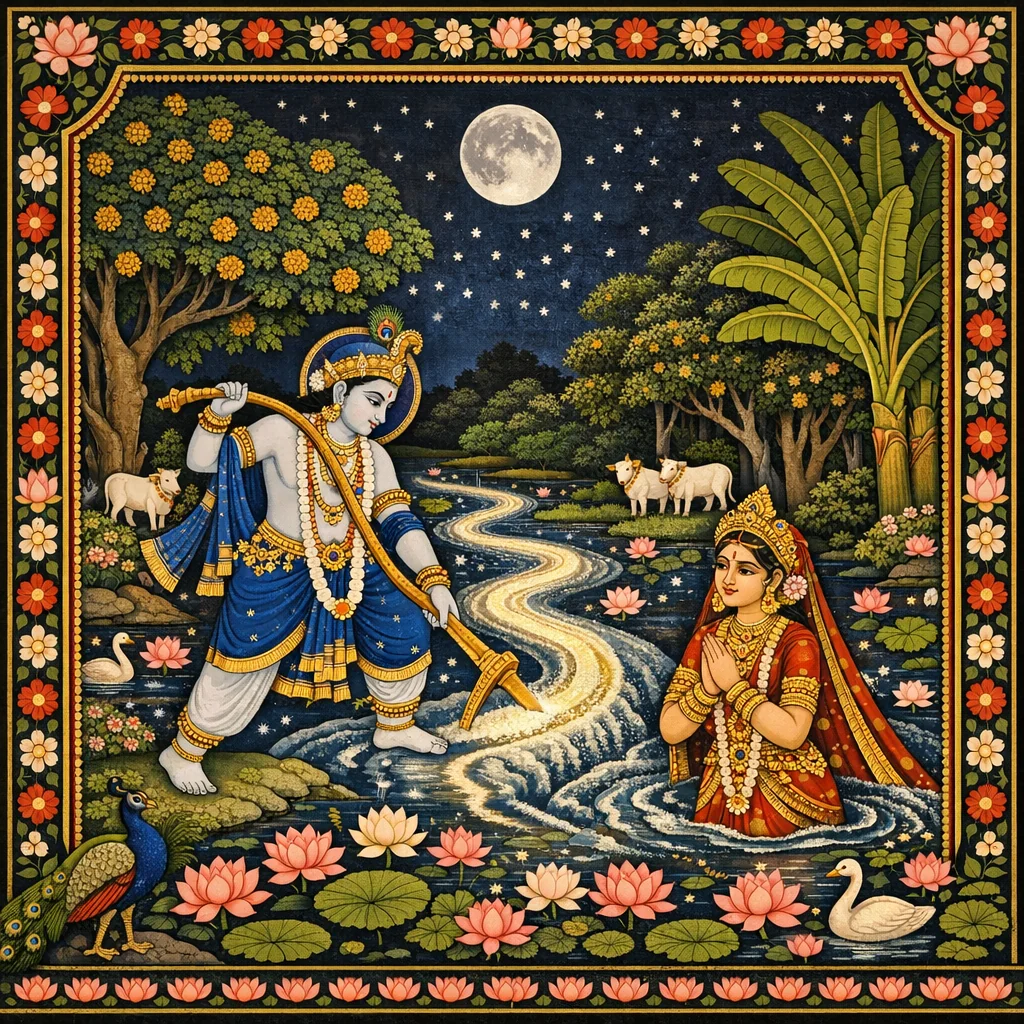
Continuing the Dvārakā-centered flow of the later Tenth Canto, this chapter bridges royal Kṛṣṇa-līlā with Vraja’s unresolved emotions of separation. Balarāma journeys to Nanda Gokula to reassure Kṛṣṇa’s well-wishers. Nanda and Yaśodā receive Him with parental affection and prayers for protection, and the cowherds inquire about their relatives’ safety and Kṛṣṇa’s remembrance. The young gopīs, still wounded by viraha (separation), voice pointed doubts about Kṛṣṇa’s promises and the reliability of His words, then break down remembering His gestures and embraces. Expert in sāma (conciliation), Balarāma comforts them by delivering Kṛṣṇa’s confidential messages. He remains through Madhu and Mādhava months, enjoying Vraja’s spring nights. In a moonlit Yamunā garden, vāruṇī liquor appears by Varuṇa’s arrangement; Balarāma drinks and sports with women. When Yamunā ignores His summons, He drags her with His plow, forcing her into channels; the river-goddess surrenders and is released. The chapter closes by pointing to the river’s altered course as a lasting testimony, and it sets up the onward movement from Vraja’s intimacy back toward the broader arc of Yādava affairs.
Shlokas
Verse 1
श्रीशुक उवाच बलभद्र: कुरुश्रेष्ठ भगवान् रथमास्थित: । सुहृद्दिदृक्षुरुत्कण्ठ: प्रययौ नन्दगोकुलम् ॥ १ ॥
Śukadeva Gosvāmī said: O best of the Kurus, once Lord Balarāma, eager to visit His well-wishing friends, mounted His chariot and traveled to Nanda Gokula.
Verse 2
परिष्वक्तश्चिरोत्कण्ठैर्गोपैर्गोपीभिरेव च । रामोऽभिवाद्य पितरावाशीर्भिरभिनन्दित: ॥ २ ॥
Having long suffered the anxiety of separation, the cowherd men and their wives embraced Lord Balarāma. The Lord then offered respects to His parents, and they joyfully greeted Him with prayers.
Verse 3
चिरं न: पाहि दाशार्ह सानुजो जगदीश्वर: । इत्यारोप्याङ्कमालिङ्ग्य नेत्रै: सिषिचतुर्जलै: ॥ ३ ॥
[Nanda and Yaśodā prayed,] “O descendant of Daśārha, O Lord of the universe, may You and Your younger brother Kṛṣṇa ever protect us.” Saying this, they raised Śrī Balarāma onto their laps, embraced Him and moistened Him with tears from their eyes.
Verse 4
गोपवृद्धांश्च विधिवद् यविष्ठैरभिवन्दित: । यथावयो यथासख्यं यथासम्बन्धमात्मन: ॥ ४ ॥ समुपेत्याथ गोपालान् हास्यहस्तग्रहादिभि: । विश्रान्तं सुखमासीनं पप्रच्छु: पर्युपागता: ॥ ५ ॥ पृष्टाश्चानामयं स्वेषु प्रेमगद्गदया गिरा । कृष्णे कमलपत्राक्षे सन्न्यस्ताखिलराधस: ॥ ६ ॥
Lord Balarāma then paid proper respects to the elder cowherd men, and the younger ones all greeted Him respectfully. He met them all with smiles, handshakes and so on, dealing personally with each one according to age, degree of friendship, and family relationship. Then, after resting, the Lord accepted a comfortable seat, and they all gathered around Him. With voices faltering out of love for Him, those cowherds, who had dedicated everything to lotus-eyed Kṛṣṇa, asked about the health of their dear ones [in Dvārakā], and Balarāma in turn asked about the cowherds’ welfare.
Verse 5
गोपवृद्धांश्च विधिवद् यविष्ठैरभिवन्दित: । यथावयो यथासख्यं यथासम्बन्धमात्मन: ॥ ४ ॥ समुपेत्याथ गोपालान् हास्यहस्तग्रहादिभि: । विश्रान्तं सुखमासीनं पप्रच्छु: पर्युपागता: ॥ ५ ॥ पृष्टाश्चानामयं स्वेषु प्रेमगद्गदया गिरा । कृष्णे कमलपत्राक्षे सन्न्यस्ताखिलराधस: ॥ ६ ॥
Lord Balarāma then paid proper respects to the elder cowherd men, and the younger ones all greeted Him respectfully. He met them all with smiles, handshakes and so on, dealing personally with each one according to age, degree of friendship, and family relationship. Then, after resting, the Lord accepted a comfortable seat, and they all gathered around Him. With voices faltering out of love for Him, those cowherds, who had dedicated everything to lotus-eyed Kṛṣṇa, asked about the health of their dear ones [in Dvārakā], and Balarāma in turn asked about the cowherds’ welfare.
Verse 6
गोपवृद्धांश्च विधिवद् यविष्ठैरभिवन्दित: । यथावयो यथासख्यं यथासम्बन्धमात्मन: ॥ ४ ॥ समुपेत्याथ गोपालान् हास्यहस्तग्रहादिभि: । विश्रान्तं सुखमासीनं पप्रच्छु: पर्युपागता: ॥ ५ ॥ पृष्टाश्चानामयं स्वेषु प्रेमगद्गदया गिरा । कृष्णे कमलपत्राक्षे सन्न्यस्ताखिलराधस: ॥ ६ ॥
Lord Balarāma then paid proper respects to the elder cowherd men, and the younger ones all greeted Him respectfully. He met them all with smiles, handshakes and so on, dealing personally with each one according to age, degree of friendship, and family relationship. Then, after resting, the Lord accepted a comfortable seat, and they all gathered around Him. With voices faltering out of love for Him, those cowherds, who had dedicated everything to lotus-eyed Kṛṣṇa, asked about the health of their dear ones [in Dvārakā], and Balarāma in turn asked about the cowherds’ welfare.
Verse 7
कच्चिन्नो बान्धवा राम सर्वे कुशलमासते । कच्चित् स्मरथ नो राम यूयं दारसुतान्विता: ॥ ७ ॥
[The cowherds said:] O Rāma, are all our relatives doing well? And Rāma, do all of you, with your wives and children, still remember us?
Verse 8
दिष्ट्या कंसो हत: पापो दिष्ट्या मुक्ता: सुहृज्जना: । निहत्य निर्जित्य रिपून् दिष्ट्या दुर्गं समाश्रिता: ॥ ८ ॥
It is our great fortune that sinful Kaṁsa has been killed and our dear relatives have been freed. And it is also our good fortune that our relatives have killed and defeated their enemies and found complete security in a great fortress.
Verse 9
गोप्यो हसन्त्य: पप्रच्छू रामसन्दर्शनादृता: । कच्चिदास्ते सुखं कृष्ण: पुरस्त्रीजनवल्लभ: ॥ ९ ॥
[Śukadeva Gosvāmī continued:] Honored to have the personal audience of Lord Balarāma, the young gopīs smiled and asked Him, “Is Kṛṣṇa, the darling of the city women, living happily?
Verse 10
कच्चित् स्मरति वा बन्धून् पितरं मातरं च स: । अप्यसौ मातरं द्रष्टुं सकृदप्यागमिष्यति । अपि वा स्मरतेऽस्माकमनुसेवां महाभुज: ॥ १० ॥
“Does He remember His family members, especially His father and mother? Do you think He will ever come back even once to see His mother? And does mighty-armed Kṛṣṇa remember the service we always did for Him?
Verse 11
मातरं पितरं भ्रातृन् पतीन् पुत्रान् स्वसृनपि । यदर्थे जहिम दाशार्ह दुस्त्यजान् स्वजनान् प्रभो ॥ ११ ॥ ता न: सद्य: परित्यज्य गत: सञ्छिन्नसौहृद: । कथं नु तादृशं स्त्रीभिर्न श्रद्धीयेत भाषितम् ॥ १२ ॥
“For Kṛṣṇa’s sake, O descendant of Dāśārha, we abandoned our mothers, fathers, brothers, husbands, children and sisters, even though these family relations are difficult to give up. But now, O Lord, that same Kṛṣṇa has suddenly abandoned us and gone away, breaking off all affectionate ties with us. And yet how could any woman fail to trust His promises?
Verse 12
मातरं पितरं भ्रातृन् पतीन् पुत्रान् स्वसृनपि । यदर्थे जहिम दाशार्ह दुस्त्यजान् स्वजनान् प्रभो ॥ ११ ॥ ता न: सद्य: परित्यज्य गत: सञ्छिन्नसौहृद: । कथं नु तादृशं स्त्रीभिर्न श्रद्धीयेत भाषितम् ॥ १२ ॥
“For Kṛṣṇa’s sake, O descendant of Dāśārha, we abandoned our mothers, fathers, brothers, husbands, children and sisters, even though these family relations are difficult to give up. But now, O Lord, that same Kṛṣṇa has suddenly abandoned us and gone away, breaking off all affectionate ties with us. And yet how could any woman fail to trust His promises?
Verse 13
कथं नु गृह्णन्त्यनवस्थितात्मनो वच: कृतघ्नस्य बुधा: पुरस्त्रिय: । गृह्णन्ति वै चित्रकथस्य सुन्दर- स्मितावलोकोच्छ्वसितस्मरातुरा: ॥ १३ ॥
“How can intelligent city women possibly trust the words of one whose heart is so unsteady and who is so ungrateful? They must believe Him because He speaks so wonderfully, and also because His beautiful smiling glances arouse their lust.
Verse 14
किं नस्तत्कथया गोप्य: कथा: कथयतापरा: । यात्यस्माभिर्विना कालो यदि तस्य तथैव न: ॥ १४ ॥
“Why bother talking about Him, dear gopī? Please talk of something else. If He passes His time without us, then we shall similarly pass ours [without Him].”
Verse 15
इति प्रहसितं शौरेर्जल्पितं चारु वीक्षितम् । गतिं प्रेमपरिष्वङ्गं स्मरन्त्यो रुरुदु: स्त्रिय: ॥ १५ ॥
While speaking these words, the young cowherd women remembered Lord Śauri’s laughter, His pleasing conversations with them, His attractive glances, His style of walking and His loving embraces. Thus they began to cry.
Verse 16
सङ्कर्षणस्ता: कृष्णस्य सन्देशैर्हृदयंगमै: । सान्त्वयामास भगवान् नानानुनयकोविद: ॥ १६ ॥
The Supreme Lord Balarāma, the attractor of all, being expert at various kinds of conciliation, consoled the gopīs by relaying to them the confidential messages Lord Kṛṣṇa had sent with Him. These messages deeply touched the gopīs’ hearts.
Verse 17
द्वौ मासौ तत्र चावात्सीन्मधुं माधवमेव च । राम: क्षपासु भगवान् गोपीनां रतिमावहन् ॥ १७ ॥
Lord Balarāma, the Personality of Godhead, resided there for the two months of Madhu and Mādhava, and during the nights He gave His cowherd girlfriends conjugal pleasure.
Verse 18
पूर्णचन्द्रकलामृष्टे कौमुदीगन्धवायुना । यमुनोपवने रेमे सेविते स्त्रीगणैर्वृत: ॥ १८ ॥
In the company of numerous women, Lord Balarāma enjoyed in a garden by the Yamunā River. This garden was bathed in the rays of the full moon and caressed by breezes bearing the fragrance of night-blooming lotuses.
Verse 19
वरुणप्रेषिता देवी वारुणी वृक्षकोटरात् । पतन्ती तद् वनं सर्वं स्वगन्धेनाध्यवासयत् ॥ १९ ॥
Sent by the demigod Varuṇa, the divine vāruṇī liquor flowed from a tree hollow and made the entire forest even more fragrant with its sweet aroma.
Verse 20
तं गन्धं मधुधाराया वायुनोपहृतं बल: । आघ्रायोपगतस्तत्र ललनाभि: समं पपौ ॥ २० ॥
The wind carried to Balarāma the fragrance of that flood of sweet liquor, and when He smelled it He went [to the tree]. There He and His female companions drank.
Verse 21
उपगीयमानो गन्धर्वैर्वनिताशोभिमण्डले । रेमे करेणुयूथेशो माहेन्द्र इव वारण: ॥ २१ ॥
As the Gandharvas sang His glories, Lord Balarāma enjoyed within the brilliant circle of young women. He appeared just like Indra’s elephant, the lordly Airāvata, enjoying in the company of she-elephants.
Verse 22
नेदुर्दुन्दुभयो व्योम्नि ववृषु: कुसुमैर्मुदा । गन्धर्वा मुनयो रामं तद्वीर्यैरीडिरे तदा ॥ २२ ॥
At that time kettledrums resounded in the sky, the Gandharvas joyfully rained down flowers, and the great sages praised Lord Balarāma’s heroic deeds.
Verse 23
उपगीयमानचरितो वनिताभिर्हलायुध: । वनेषु व्यचरत् क्षीवो मदविह्वललोचन: ॥ २३ ॥
As His deeds were sung, Lord Halāyudha wandered as if inebriated among the various forests with His girlfriends. His eyes rolled from the effects of the liquor.
Verse 24
स्रग्व्येककुण्डलो मत्तो वैजयन्त्या च मालया । बिभ्रत् स्मितमुखाम्भोजं स्वेदप्रालेयभूषितम् । स आजुहाव यमुनां जलक्रीडार्थमीश्वर: ॥ २४ ॥ निजं वाक्यमनादृत्य मत्त इत्यापगां बल: । अनागतां हलाग्रेण कुपितो विचकर्ष ह ॥ २५ ॥
Intoxicated with joy, Lord Balarāma sported flower garlands, including the famous Vaijayantī. He wore a single earring, and beads of perspiration decorated His smiling lotus face like snowflakes. The Lord then summoned the Yamunā River so that He could play in her waters, but she disregarded His command, thinking He was drunk. This angered Balarāma, and He began dragging the river with the tip of His plow.
Verse 25
स्रग्व्येककुण्डलो मत्तो वैजयन्त्या च मालया । बिभ्रत् स्मितमुखाम्भोजं स्वेदप्रालेयभूषितम् । स आजुहाव यमुनां जलक्रीडार्थमीश्वर: ॥ २४ ॥ निजं वाक्यमनादृत्य मत्त इत्यापगां बल: । अनागतां हलाग्रेण कुपितो विचकर्ष ह ॥ २५ ॥
Intoxicated with joy, Lord Balarāma sported flower garlands, including the famous Vaijayantī. He wore a single earring, and beads of perspiration decorated His smiling lotus face like snowflakes. The Lord then summoned the Yamunā River so that He could play in her waters, but she disregarded His command, thinking He was drunk. This angered Balarāma, and He began dragging the river with the tip of His plow.
Verse 26
पापे त्वं मामवज्ञाय यन्नायासि मयाहुता । नेष्ये त्वां लाङ्गलाग्रेण शतधा कामचारिणीम् ॥ २६ ॥
[Lord Balarāma said:] O sinful one disrespecting Me, you do not come when I call you but rather move only by your own whim. Therefore with the tip of My plow I shall bring you here in a hundred streams!
Verse 27
एवं निर्भर्त्सिता भीता यमुना यदुनन्दनम् । उवाच चकिता वाचं पतिता पादयोर्नृप ॥ २७ ॥
[Śukadeva Gosvāmī continued:] Thus scolded by the Lord, O King, the frightened river-goddess Yamunā came and fell at the feet of Śrī Balarāma, the beloved descendant of Yadu. Trembling, she spoke to Him the following words.
Verse 28
राम राम महाबाहो न जाने तव विक्रमम् । यस्यैकांशेन विधृता जगती जगत: पते ॥ २८ ॥
[Goddess Yamunā said:] Rāma, Rāma, O mighty-armed one! I know nothing of Your prowess. With a single portion of Yourself You hold up the earth, O Lord of the universe.
Verse 29
परं भावं भगवतो भगवन् मामजानतीम् । मोक्तुमर्हसि विश्वात्मन् प्रपन्नां भक्तवत्सल ॥ २९ ॥
My Lord, please release me. O soul of the universe, I didn’t understand Your position as the Supreme Godhead, but now I have surrendered unto You, and You are always kind to Your devotees.
Verse 30
ततो व्यमुञ्चद् यमुनां याचितो भगवान् बल: । विजगाह जलं स्त्रीभि: करेणुभिरिवेभराट् ॥ ३० ॥
[Śukadeva Gosvāmī continued:] Thereupon Lord Balarāma released the Yamunā and, like the king of the elephants with his entourage of she-elephants, entered the river’s water with His female companions.
Verse 31
कामं विहृत्य सलिलादुत्तीर्णायासीताम्बरे । भूषणानि महार्हाणि ददौ कान्ति: शुभां स्रजम् ॥ ३१ ॥
The Lord played in the water to His full satisfaction, and when He came out Goddess Kānti presented Him with blue garments, precious ornaments and a brilliant necklace.
Verse 32
वसित्वा वाससी नीले मालामामुच्य काञ्चनीम् । रेये स्वलङ्कृतो लिप्तो माहेन्द्र इव वारण: ॥ ३२ ॥
Lord Balarāma dressed Himself in the blue garments and put on the gold necklace. Anointed with fragrances and beautifully adorned, He appeared as resplendent as Indra’s royal elephant.
Verse 33
अद्यापि दृश्यते राजन् यमुनाकृष्टवर्त्मना । बलस्यानन्तवीर्यस्य वीर्यं सूचयतीव हि ॥ ३३ ॥
Even today, O King, one can see how the Yamunā flows through the many channels created when it was dragged by the unlimitedly powerful Lord Balarāma. Thus she demonstrates His prowess.
Verse 34
एवं सर्वा निशा याता एकेव रमतो व्रजे । रामस्याक्षिप्तचित्तस्य माधुर्यैर्व्रजयोषिताम् ॥ ३४ ॥
Thus for Lord Balarāma all the nights passed like a single night as He enjoyed in Vraja, His mind enchanted by the exquisite charm and beauty of Vraja’s young ladies.
Frequently Asked Questions
Their speech is the hallmark of viraha-bhakti: intense love expresses itself as complaint, irony, and apparent reproach, yet the mind cannot leave Kṛṣṇa for even a moment. In Bhāgavata theology, such “contrary” emotions are not mundane fault-finding but deepen remembrance (smaraṇa) and reveal the gopīs’ exclusive dependence (ananya-śaraṇatā).
It shows poṣaṇa and divine reciprocity: Kṛṣṇa does not abandon His devotees’ hearts, and He arranges consolation through His elder brother. Balarāma functions as the stabilizing, supportive principle (Saṅkarṣaṇa)—protecting the devotional community and sustaining Vraja’s emotional continuity within the broader narrative of Dvārakā.
On the līlā level, Yamunā disregards His summons, and the Lord asserts His authority playfully yet decisively. Theologically, Halāyudha’s act reveals His divine potency over nature and sacred geography: the river’s channels become a visible, enduring marker of līlā. Yamunā’s surrender underscores the Purāṇic theme that even deities honor Bhagavān when His true position is recognized.
In this narration, Kānti appears as a divine personification associated with splendor/beauty who offers royal adornments after Balarāma’s water-sport. The episode highlights the Lord’s aiśvarya (divine opulence) even within pastoral play, and it frames His enjoyment as sanctioned and celebrated by higher cosmic beings.